4 feet 2 mouths

walking and eating our way around the world

Archive for the month “February, 2013”

Trekking Tiger Leaping Gorge (by Nathan)

Mother nature's craftsmanship: Tiger Leaping Gorge

Mother nature’s craftsmanship: Tiger Leaping Gorge

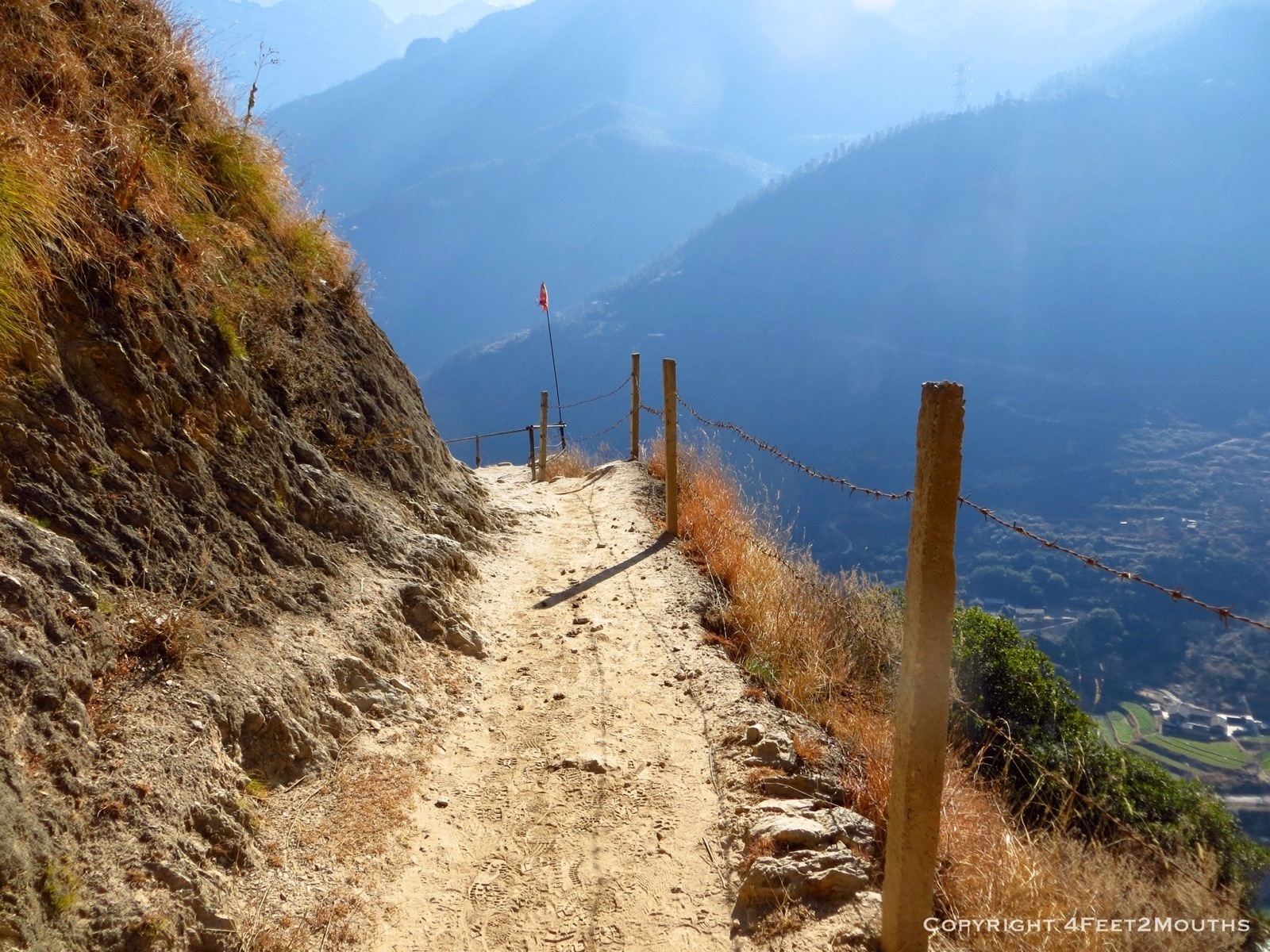
What is it about canyons that can so intimately engage human kind? Observing the intricacies of the water-weathered terrain is like reviewing the life’s work of a master craftsmen. Each fluctuation in the landscape is a hard-earned blow of hammer and chisel, each contour sanded smooth and the landscape fiddled with over millions of years of geologic time. Tiger Leaping Gorge is one of the inspiring and beautiful masterpieces in this world. Enormous mountains jut vertically into the sky and the rather calm Yangtze River is transformed into a violent earth-carving tool. There is no better way to observe this type of landscape than walking; hiking the cliff’s edge is the best way to experience earth’s craftsmanship.
Cliff edge of Tiger Leaping Gorge

Cliff edge of Tiger Leaping Gorge

Finally we hiked Tiger Leaping Gorge! I have wanted to hike this stretch of canyon for four years now. We originally learned about it in a favorite travel book of ours called Lost On Planet China by J. Maarten Troost. After our first trip to China, we knew that we needed to spend some more time exploring this country. We needed more time to eat its delicious food and see the depths of natural and historic sights that there were on offer. Yunnan and Tiger Leaping Gorge remained a central element of our travel planning for this entire year abroad.
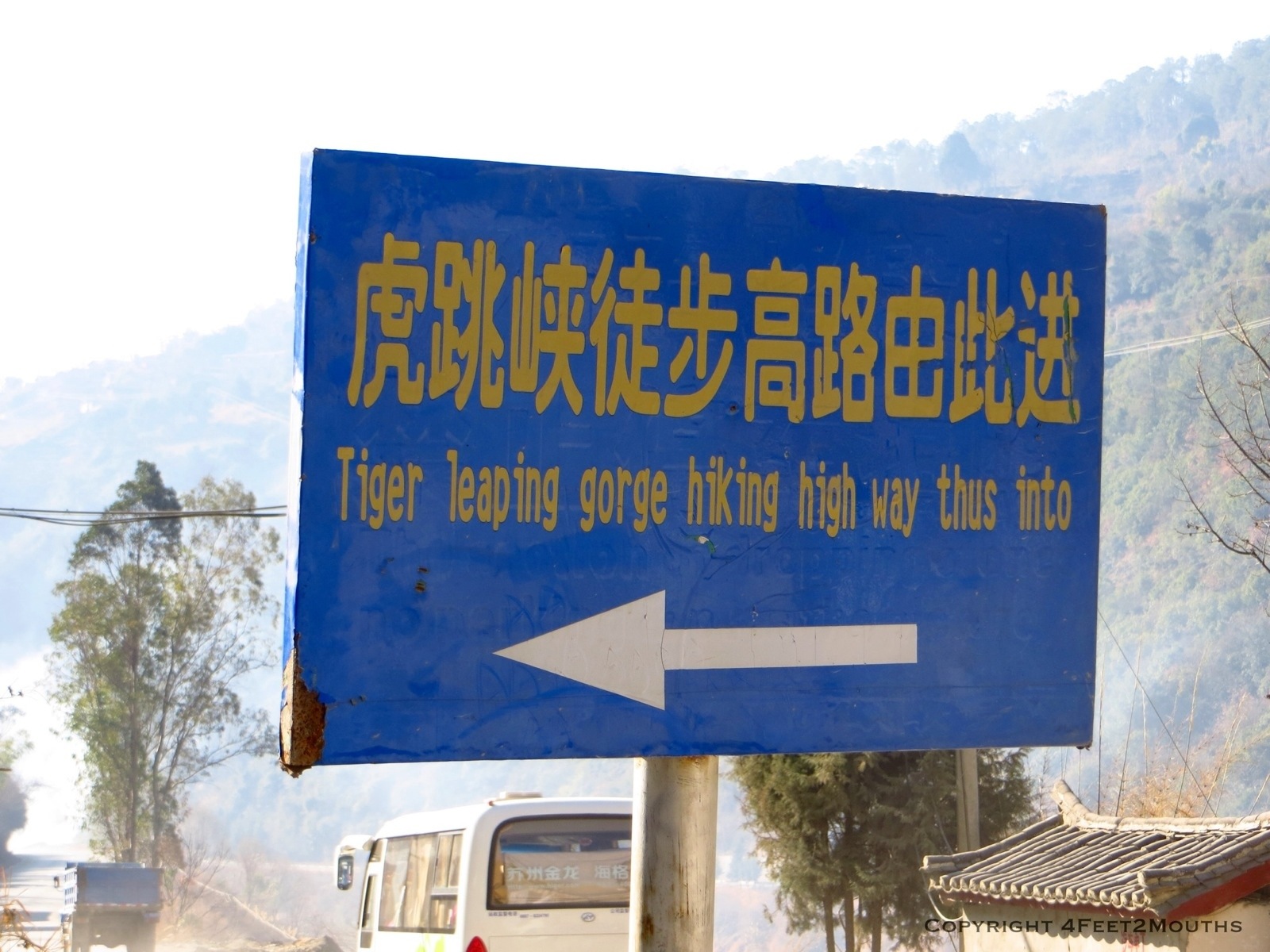
Hiking trail signage at beginning of trail
Hiking trail signage at beginning of trail

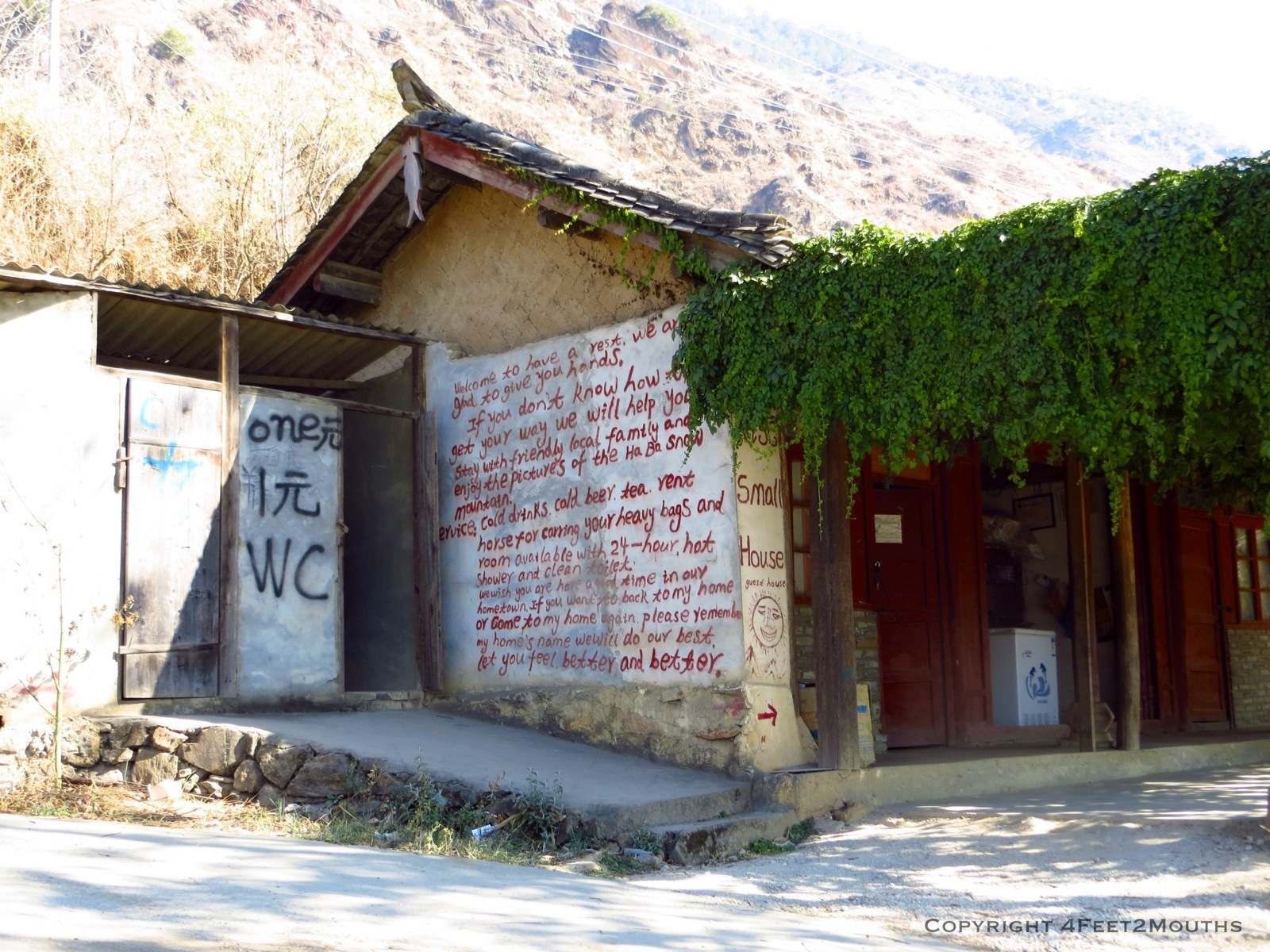
Turn right at " This Small House"

Turn right at ” This Small House”

We started the hike in Qiaotou after taking a early morning bus from Lijiang. We stopped at the one guesthouse in town, Jane’s, to drop off our excess luggage and we began the hike up the hillside. I had expected few or no signage, so it was nice to see the frequent yellow and blue arrows leading us from Jane’s to the trail. The one tricky spot came at about 2-3 km into the walk-at “this small house.”‘ Turn off the paved road and walk through the courtyard onto the marked dirt path.
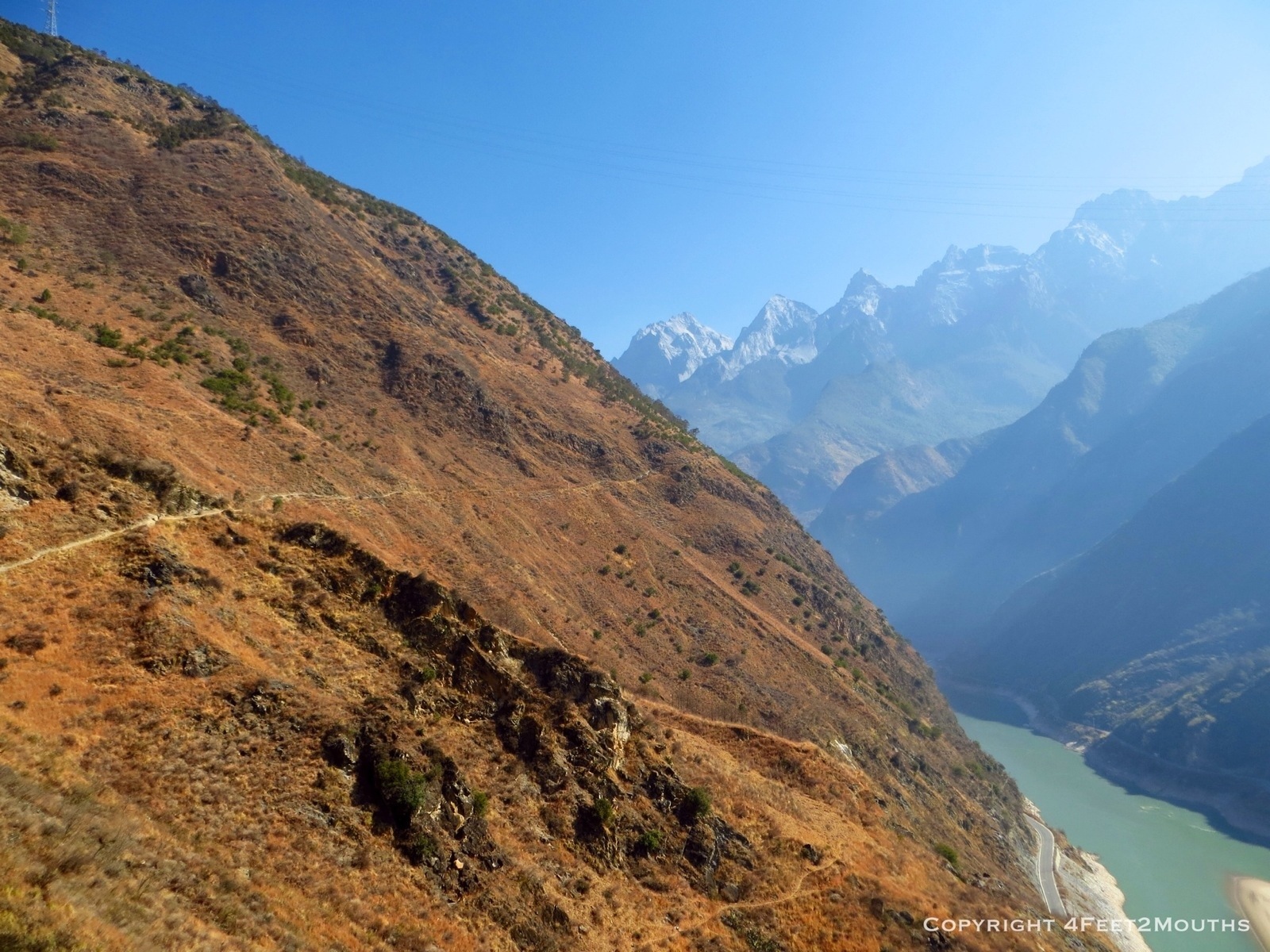
The enormous entrance into Tiger Leaping Gorge

The enormous entrance into Tiger Leaping Gorge

The rocky foot trail

The rocky foot trail

We were immediately struck with an enormous depth and magnificence of the canyon. The steepness of the cliffs appeared near vertical and the sparsely snowcapped mountains were so high, but so close. The footpath was well worn, a couple feet wide, but very rocky and unmaintained.

Wall of corn
Wall of corn

The tiny village with Naxi Guesthouse

The tiny village with Naxi Guesthouse

We walked for another twenty minutes to Naxi Guesthouse for some lunch. The women were very nice and fixed us some simple and slightly bland Chinese food. We admired the wall of corn that dried in the sun and then we began our steep ascent up the mountainside. Late January has to be the perfect time to hike this trek. We had sunny weather around 15-20C (60-70F) and we saw almost no tourists. Off-season tourism in China is proving to be the way to travel.

Tree clinging onto the cliff

Tree clinging onto the cliff

We reached the bottom of the infamous “28 bends” after already counting to ten. We had been climbing for seven kilometers but we determined that the real climb starts at a small building that sells drinks during high season. Carmen and I pushed on up through the switchbacks and we slowly but steadily climbed up the cliffside. For anyone who decides to count the bends, I recommend only counting full switchbacks that take at least five to ten minutes to cross. I was pleasantly surprised to reach the top with only counting 25. Both of us had actually expected a much more difficult and challenging ascent.

Self-portrait at top of 28 bends

Self-portrait at top of 28 bends

Steep vertical cliffs carved by the Yangtze River

Steep vertical cliffs carved by the Yangtze River

In total from Qiaotou the climb to this point was maybe 800m. The lookout point at top only met the elevation of slightly below the middle of the mountain across the canyon. We could not help but compare the climb and canyon with some of treks earlier this year. Colca Canyon in Peru is the worlds deepest canyon, but the mountains are very rounded so although the hiking was much more challenging, the landscape was not as drastic as the Chinese gorge in front of us. The Grand Canyon is unmatched for its beauty and hiking, in my opinion.  Tiger Leaping Gorge has steep vertical mountains but the red Navajo sandstone and ease of do-it-yourself hiking in America is very rewarding.

Carmen hugging the pine needle mound

Carmen hugging the pine needle mound

Every couple hours we would encounter a tiny village or a series of small plots of farmland. Carmen in particular enjoyed this tower of pine needles that looked so soft that she could hug it. Of course this type of thing always turns out more prickly than she could have expected.

Pipeline eyesore

Pipeline eyesore

They are building like crazy in China…everywhere. As we walked through each town we started noticing that every building had a brand new solar water heater on the roof, then we realized that some towns had ten to twenty buildings that were less than a year old. Even here on the steep cliffs of the Yangtze River, the Chinese are flocking to inhabit and make a living for themselves. Unfortunately this development does not care about the aesthetics of the landscape. This water pipeline was just one of many that snaked through the landscape. The placement of electric lines on the trail is also very discouraging as some awesome photo spots are plagued with droopy wires and decrepit leaning and fallen electric poles. Nevertheless, the scenery is beautiful and we just walked passed it in search of another awesome lookout and there were many places to enjoy the view.
View from the toilet

View from the toilet

Our serene mountain getaway- Half Way Guesthouse

Our serene mountain getaway- Half Way Guesthouse

Stark peak of Jade Dragon Snow Mountain at 5600m high

Stark peak of Jade Dragon Snow Mountain at 5600m high

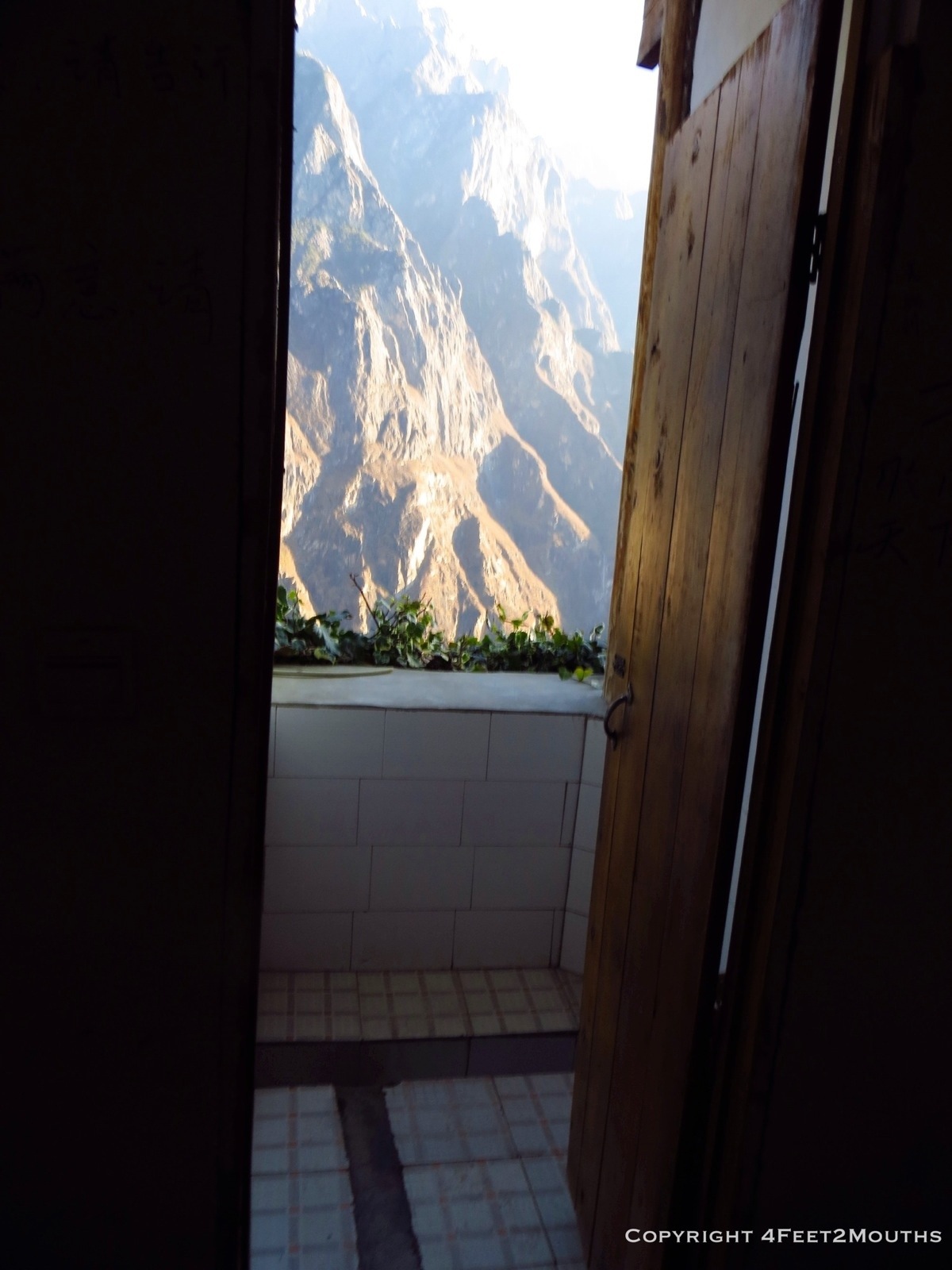
Most specifically, the bathroom at our Half Way Guesthouse had one of the best views. Turning our heads just slightly mid-squat and we were faced with 4000m of glorious mountain across the river. Unfortunately we did not want to get too distracted and become unbalanced. Losing aim has bad consequences when hovering over a trough. There was an even better view from the dining hall and roof that looked unobstructed into the gorgeous gorge.

Carmen hiking at sunrise

Carmen hiking at sunrise

Waterfall crossing along trail

Waterfall crossing along trail

We were comfortable exhausted after over 16km (10mi) of hiking. We grabbed an early dinner and drifted into deep rejuvenating sleep. We woke before sunrise to get a jump on the hike ahead of us. As the dawn light broke through the canyon we traversed the rocky path. There were a few waterfalls but they were not too challenging or wet for us to cross. After about 8km (5mi) we found ourselves in the tiny tourist town of Walnut Garden.

The gorge from sunshine trail

The gorge from sunshine trail

We passed the cool hours of the morning with some breakfast and tea. The sun was slowly finding its way into the canyon and it was not until about 10:30am that we felt there was enough sun to not freeze our butts off walking down into the depths of the gorge. We started from Sean’s Guesthouse and followed the “sunshine trail” deep into the canyon. After about forty-five minutes of walking a young girl offers to sell us some drinks and candy. We politely turned her down, then she insists on us paying a fee to use e trail that we just walked. We had expected this but it is still frustrating to pay a park entrance fee then again pay some tart that stands in middle of the trail. We haggle a bit and settle on 10¥ for Carmen and I to use the trail in only one-direction.

Be careful not to cross this

Be careful not to cross this

We walk around the corner and were stopped abruptly by a mean-looking bulldog-faced girl. Now, she has the same sign as the other girl, but she is charging for the “ladder trail photo spot.” We were planning on using this trail, but charging to take a photo is ridiculous. We knew that there was a toll booth at the top of the ladder trail that we suspected would also try to charge us. So I decided to step passed her. She jumps in front and growls and screams and starts pumping her tiny balled fist into her pudgy left hand. I found this display of violence comical and disgraceful. I paid a hefty tourist ticket to get in the park but it is not acceptable to bully tourists for more cash.

Then I noticed a brief moment when she was distracted, the wind fluttered, her phone beeped and in three steps I was passed her. I unleashed the dragon from the cage. She screamed, squealed and barked everything she could at me. The intensity of her anger sprayed heavily on my face with thick insults. Standing on her tippy toes she gripped my jacket as if she planned on throwing me to the other side of the mountain. I stayed calm, happy that I maintained composure in China. I look at Carmen and I see one of those faces that immediately humbles me and sets me on track. I see a face that says, “What are you doing? Now I am fucking trapped over here while you and that crazy bitch are arguing over $3.25!” I convince Broozie Lee to stop pumping her fists and we pay the full toll (or maybe I got across from free and Carmen paid double). Looking back at it, this incident reflects the challenges of a miscommunication. If I knew I would not get charged at the top for the same trail, or if I knew that they actually maintained the trail (which turned out to be clean, safe and well-maintained) then maybe this would have been smoother.

Tourist rock on the Yangtze River near Tiger Leaping Rock

Tourist rock on the Yangtze River near Tiger Leaping Rock

Another five minutes and we were on the main tourist viewing spot, Tiger Leaping Rock. The legend has it that a magnificent tiger fled human hunters by traversing the steep mountains. The hunters encroached on the tiger and cornered up him against the Yangtze River. The tight canyon confined the river into a raging pulsing body of rapids and waterfalls. The panic-stricken tiger paced on the last remaining landform expecting his inevitable death. As the hunters encroached down the hillside the tiger leapt in desperation. The river raged below, but gloriously, the tiger flew over the tumultuous water and landed gracefully on the river bank. The distance was too great for the hunters. The tiger swiftly climbed and disappeared into the mountains. The people and the place were forever changed with the memory of the tiger and the remaining Tiger Leaping Rock.

Yangtze Rapids

Yangtze Rapids

We sat on one of the rocks and admired the river as the water violently slammed against the rocks causing one of the most abusive rapids I could ever imagine. We were forced to yell across the thundering sound. There are a handful of places to visit at the water, but many of them require bribing this one family for each photo. I think the best spot is the free on e at the end of the trail. The mountains ascend almost vertically from the water’s edge and the Yangtze snakes in the the distance.

Ladder trail up from Tiger Leaping Rock

Ladder trail up from Tiger Leaping Rock

We climbed out of the canyon to discover that the ladder trail had significantly more elevation gain and was more challenging (exposed in the sun) than the 28 bends. There actually is a sixty foot ladder (optional for those that trust Chinese safety standards). We huffed and puffed our way to the top excited to have completed a wonderful Tiger Leaping Gorge trek. The scenery throughout our two days was magical.  It is impressive how  for just a short distance these mountains confine the river to create a drastic and impressive landscape. It is possible to look in both directions to see the mountains and canyon disappear, the Yangtze flattens and resumes a gentle flow across the landscape. Back at the cliff’s edge, the river no longer takes on the characteristics of thrashing through the canyon. The whitewater softly meanders through Tiger Leaping Gorge slowly carving and chiseling it more elegantly than ever before.

Getting Lost in Lijiang (by Carmen)

Jade Dragon Mountain viewed from the new public square

Jade Dragon Mountain viewed from the new public square

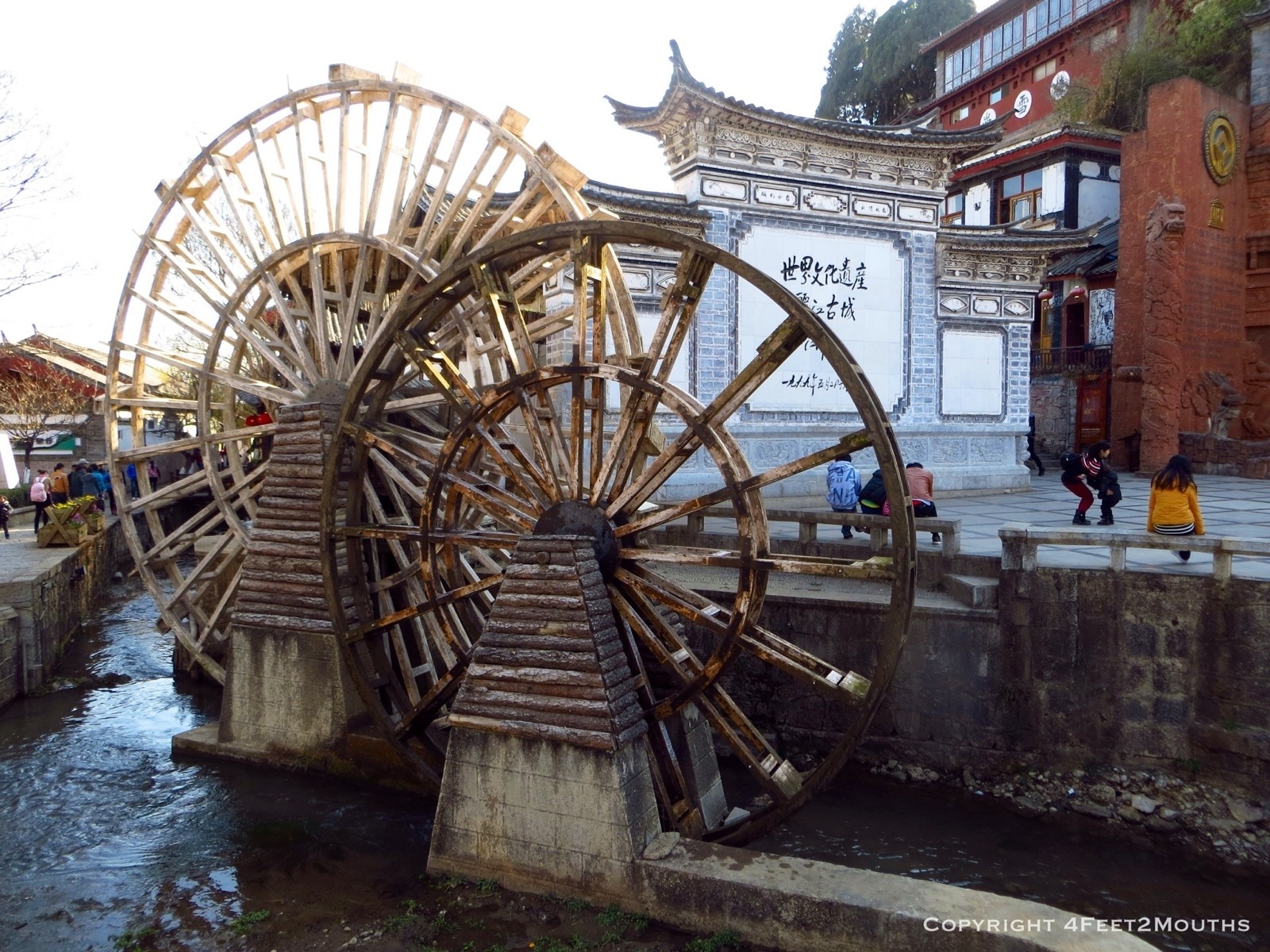
Lijiang is located in a very picturesque setting, which is part of the problem. Chinese tourists love picturesque so the tourism agency has been doing its best to make the town as cute and profitable as possible. This includes building up the old town, charging a high ticket price for the sites and creating non-stop souvenir shops. The commerciality and new structures made to look old reminded us of Disneyland hence Nathan determined we were in Chisneyland.

"Old" water wheels in the new public square

“Old” water wheels in the new public square

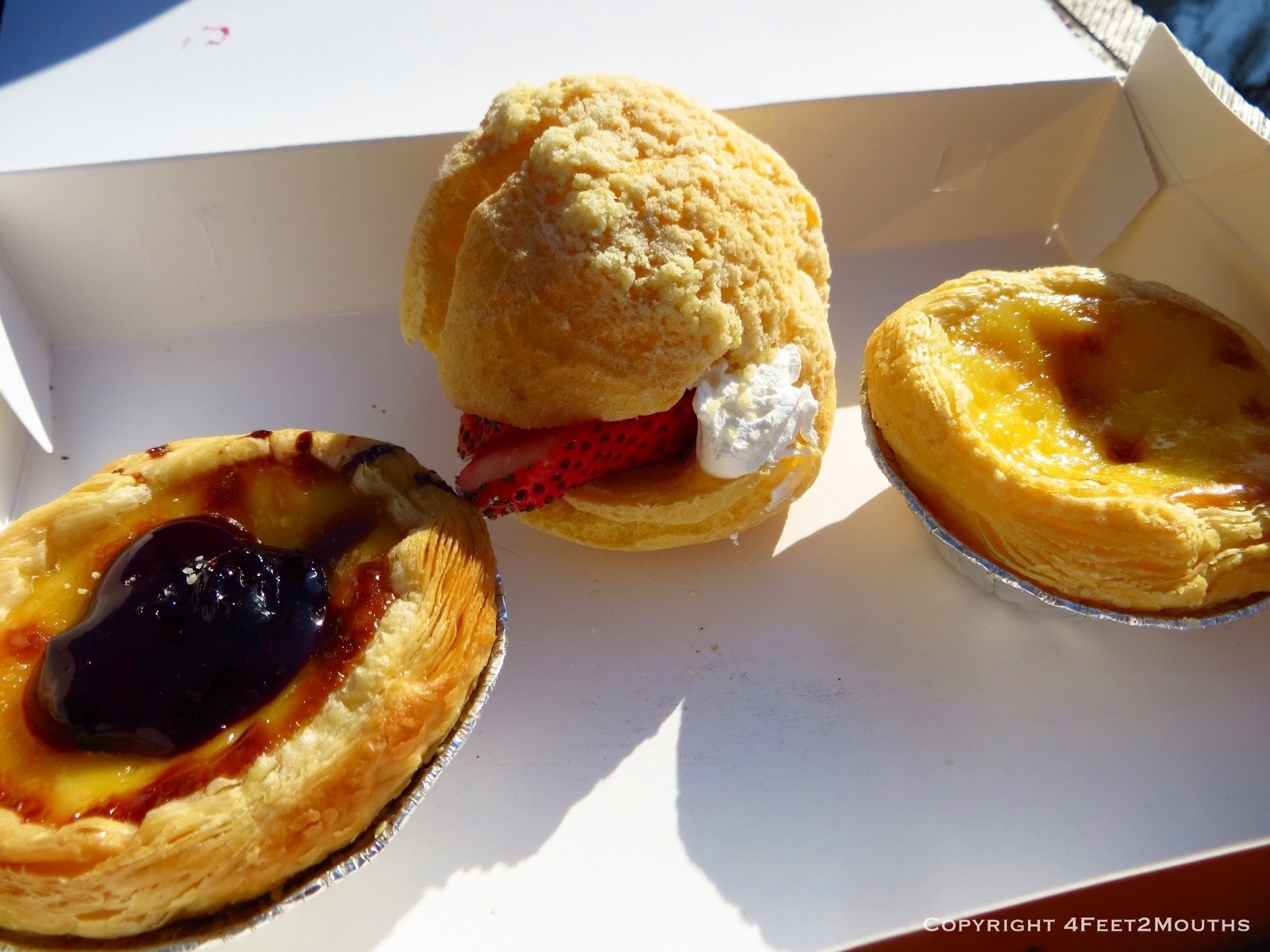
Baked egg custard tarts and strawberry shortcake

Baked egg custard tarts and strawberry shortcake

We started our explorations in the new public square just north of the old town. We picked up a few baked goods and sat down to people watch. It wasn’t long before people wanted to take our picture though. The people watchers became the watched.

Naxi women and man performing traditional dances

Naxi women and man performing traditional dances

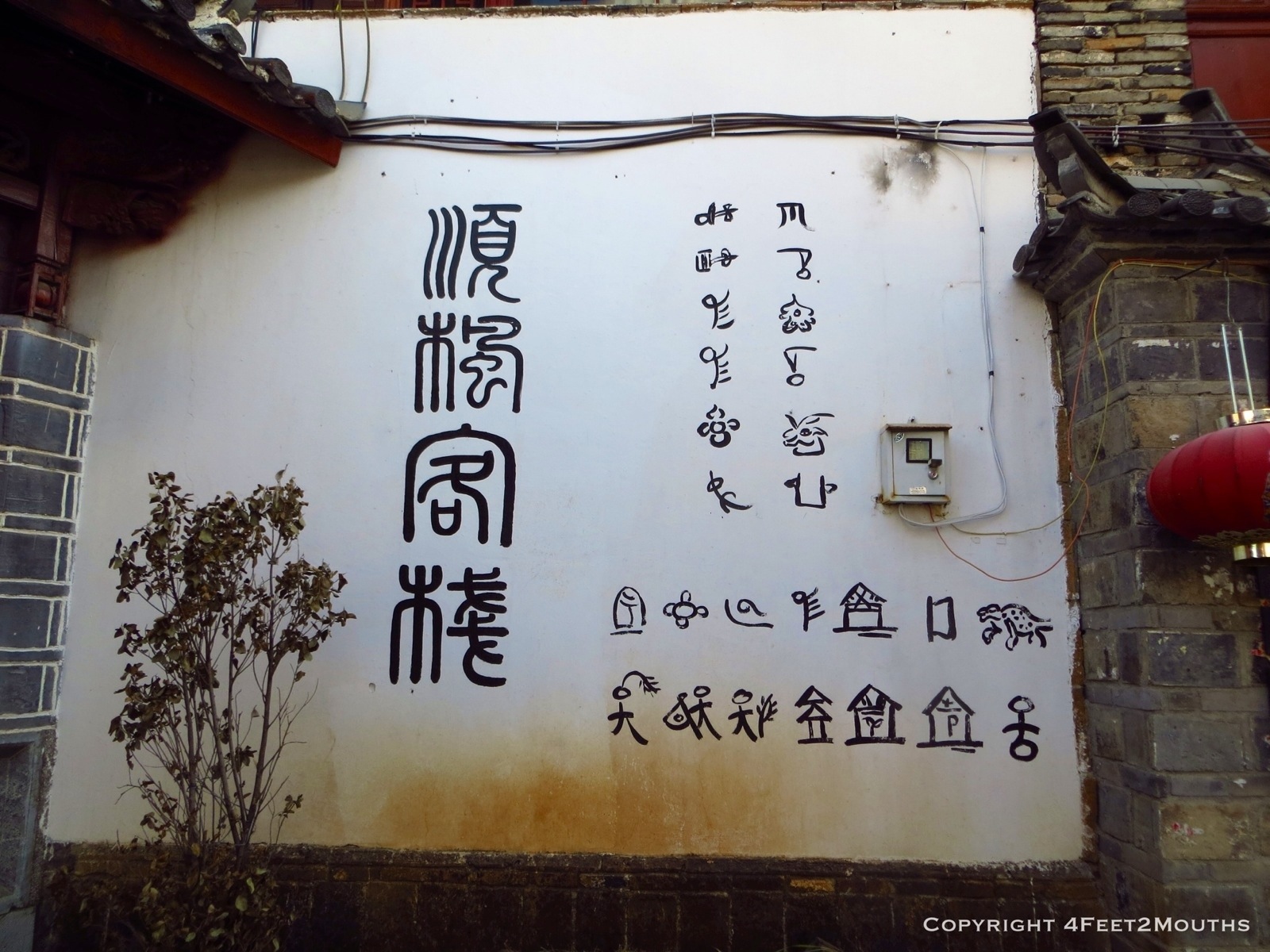
Naxi writing

Naxi writing

In the square they have elderly Naxi perform traditional dances. The Naxi are the local tribe and have interesting cultural legacies. Especially it’s pictographic writing, which could be compared to Egyptian hieroglyphics. The Dongba Culture Museum compares to two scripts in an interesting exhibit. As for the dancing, I hope they get paid for their work. We saw them dancing in the mornings, afternoons and evenings!

An uncrowded shopping street in old town

An uncrowded shopping street in old town

But most people aren’t here to dance. It seems they are here to shop. There are stores selling clothing, paper goods, jewelry, wind chimes, combs made of horns, yak meat, and musical drums. Repeat this 100 times.

Pretty canal lined with hotels

Pretty canal lined with hotels

Mu Family Mansion

Mu Family Mansion

For me, the real beauty was in the side streets off the shopping lanes. Here we found mostly hotels, tiny cafes and a pretty temple. The meandering paths reminded me of Venice in the utter inability to keep ones orientation. It’s impossible not to get lost. One of our landmarks we walked past multiple times was the Mu Mansion, a historic building to the south where hawk handlers gather for photo ops.

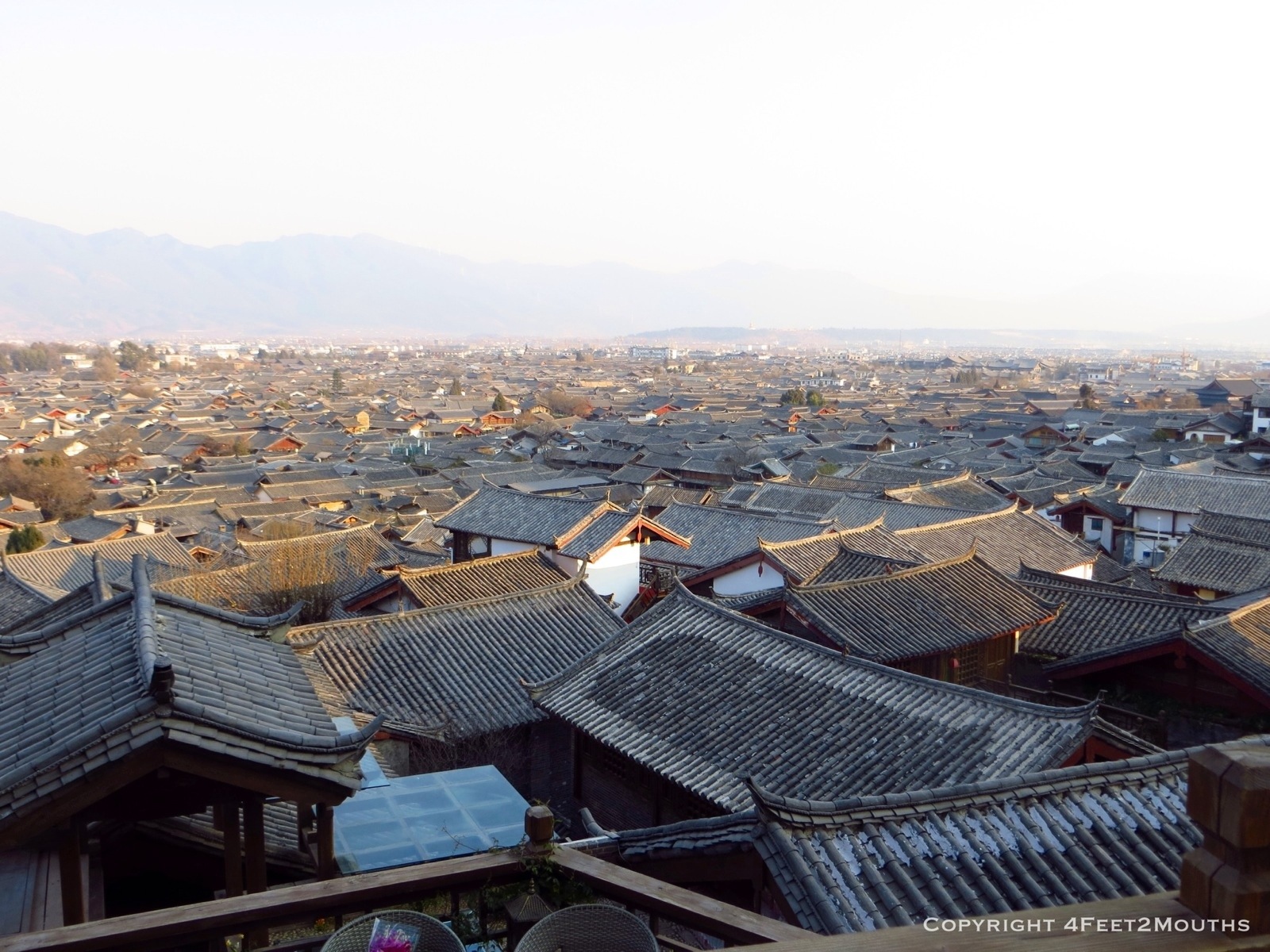
Rooftop view of the old town

Rooftop view of the old town

During sunset we climbed a hill to get a view of old town from above. We found a clearing by a temple and watched the sun cast golden light on the roofs. Since we had a birds eye view we tried to get our bearings within the old town. It was impossible.

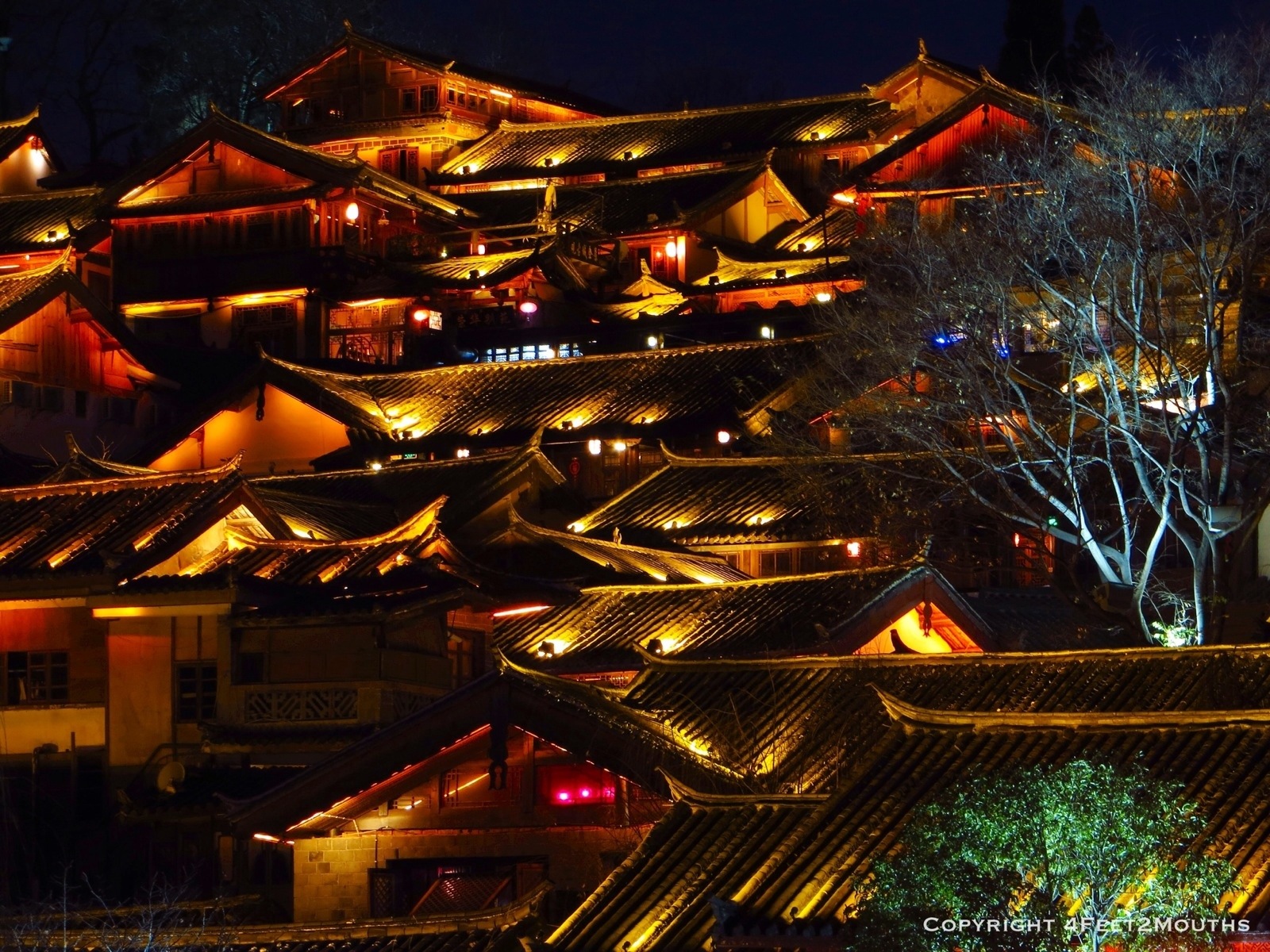
Lijiang by night

Lijiang by night

Tibetan veggie curried momos

Tibetan veggie curried momos

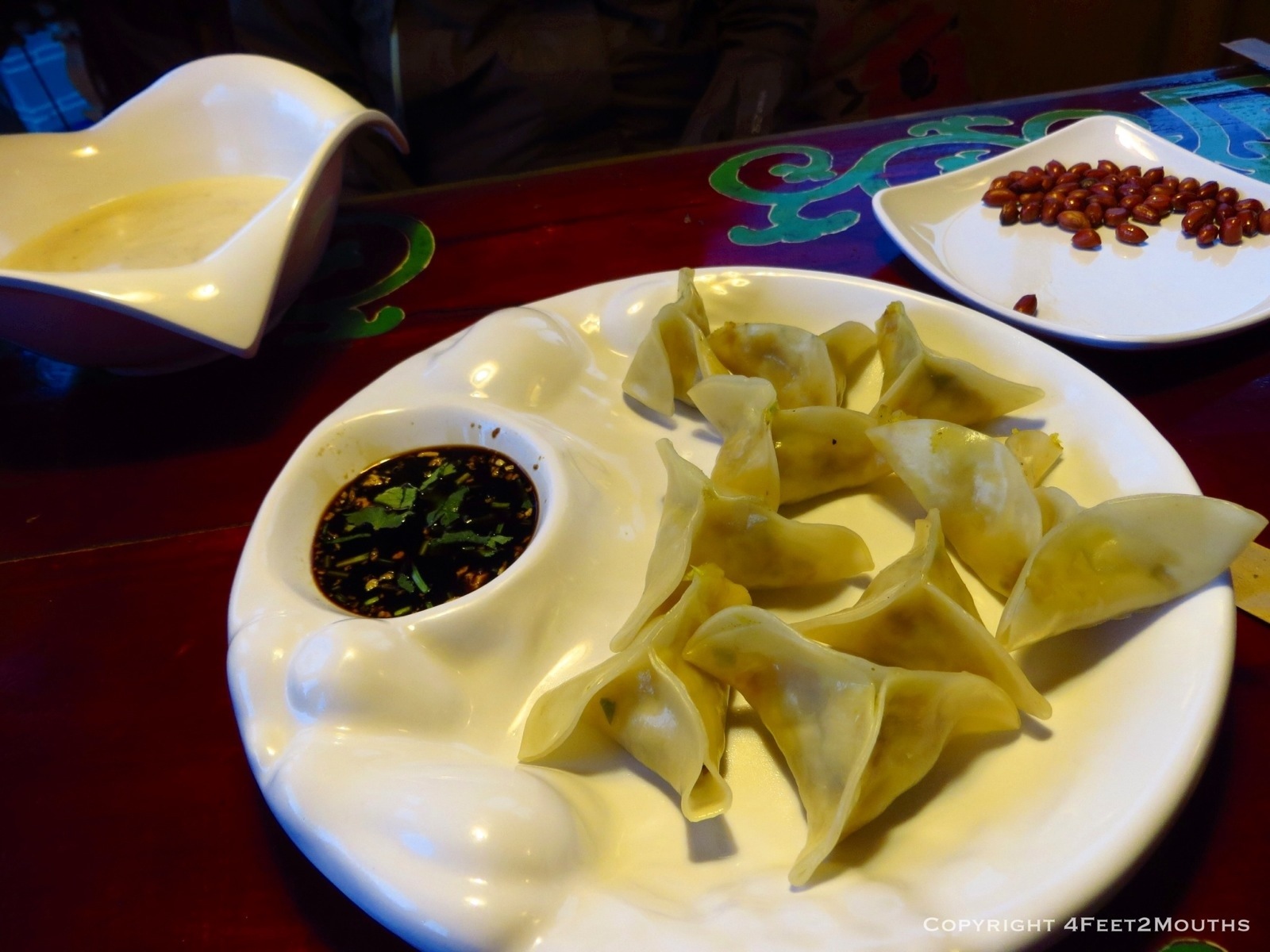
At night we just wanted something light, so we sampled the dumplings at a local Tibetan restaurant. The curried veggie momos (dumplings) were simple and good, showing the influence of Tibet’s proximity to India. I also loved the atmosphere at the peaceful, upstairs cafe.

Metal goods at the market

Metal goods at the market

Our favorite place for breakfast is always the market and in the southwest corner of old town we found it. We walked past stalls of pretty copperware before finding the food court. Spicy fried potatoes and beef noodle soup filled us up. When we went to try the local fried bread, called a baba, the vendor had sold out. Sadness.

Jade Dragon Mountain viewed from Black Dragon Pool Park

Jade Dragon Mountain viewed from Black Dragon Pool Park

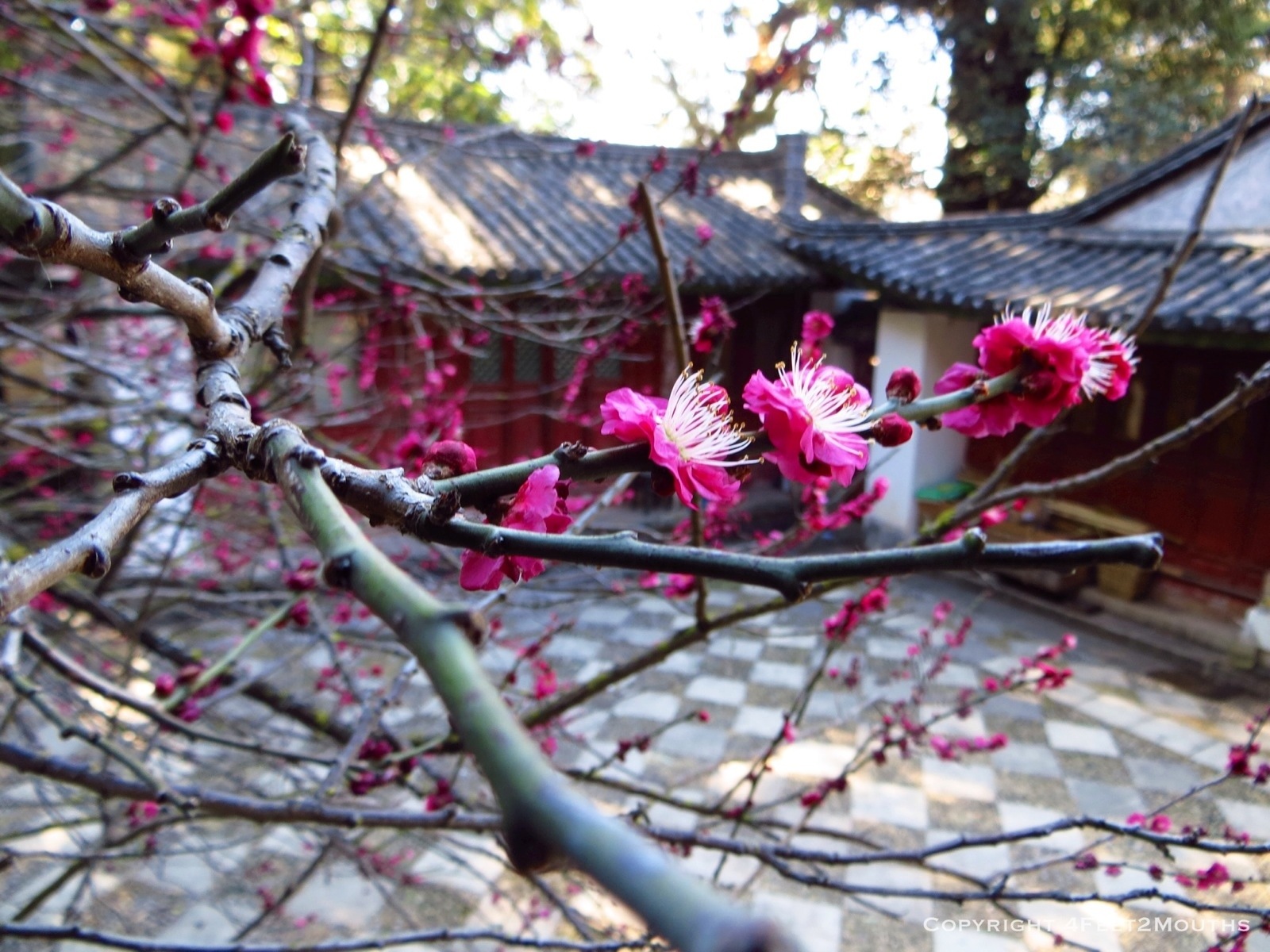
Cherry blossoms in a courtyard

Cherry blossoms in a courtyard

Small bridge at the park

Small bridge at the park

Exiting the market we reentered Chisneyland and made our way through the maze. We wanted to catch a glimpse of the Jade Dragon Mountain, a set of beautiful craggy mountains north of the city. The Black Dragon Pool Park has a good vista but we didn’t care for the $13 per person entrance fee. As we passed the park looking for a good alternative view two local women told us they’d sneak us in for a fraction of the price. Now, this isn’t something we normally do but I think just for the fun of getting away with something we said yes.  And it was indeed a pretty park with good vistas, but I think I would have been disappointed if I had paid full price.

Clay pot rice with fermented veggies and celery soup

Clay pot rice with fermented veggies and celery soup

As we walked back towards the old town we passed a couple eating clay pot rice and had to have some. It was accompanied with some spicy, fermented zucchini and cabbage as well as a very light celery soup.

Boiled Dumpling Aunty!

Boiled Dumpling Aunty!

For our final meal in Lijiang we really wanted some home style cooking. Miraculously, we were able to locate a dumpling restaurant we had passed on one of our lost walk abouts. I think it was the name the got me – Boiled Dumpling Aunty. Indeed, when we walked in, it was just two ladies, two tables, a blaring TV and a whole lot of dumplings. We ordered a variety of pork and beef fillings and waited with anticipation. They were amazing! Especially when dipped in our sauce that we customized with black vinegar, soy sauce, chopped garlic, chili powder and cilantro. It was a delicious meal that helped redeem a town that tries to hard to impress the tourist masses.

A elder checking out the touring masses in the main square

A elder checking out the touring masses in the main square

Shaking Off The Beaten Track in Shaxi (by Nathan)

Shaxi historic theater

Shaxi historic theater

The idea of finding a place that is beautiful, historic and free of crowds in China sounds like a myth. Few places have been untouched by tourism in China.  If a town has the slightest bit of charm then the Chinese have already torn down most of it and added a few hundred shops with an entrance ticket to visit the town. I am afraid that my writing this post may influence and change a truly wonderful town forever. A special thanks to our friends Adam and Yun for recommending this place. We loved the tiny town of Shaxi; there was charm, and a rustic simplicity to it that made it easy to explore, relax and enjoy being in China.

Winter park in Shaxi

Winter park in Shaxi

The town originated from one of the original tea and horse caravan villages of two thousand years ago. Horses were constantly being traded from Tibet to Southeast Asia for tea and the subtle valley surrounding Shaxi was the ideal place for a stopover. Fortunately it takes a little hoop jumping to get to Shaxi. We rode a regional bus to Jianchuan from Dali, then a tiny minivan to Shaxi, this two-step process is usually enough to shed off ninety-nine percent of the tourists. A highway is planned for completion near the town in the next year, so I imagine this little village in the Himilayan foothills will soon be changed and made into another Chinese shopping mall.

Rustic painted building

Rustic painted building

There is just one paved road with a handful of tiny restaurants, shops and craftspeople. A historic cobble-stoned path, Sideng Road, leads down to the historic center with an original theater from the Qing dynasty four hundred years ago. It is easy and fun to get lost in the winding rock pathways. The rustic wood-framed buildings with tile roofs appear unchanged for thousands of years.

Five hundred year old bridge over the Heihui river

Five hundred year old bridge over the Heihui river

Carmen and I immediately set out to exploring the town. It did not take long, because soon we had passed by everything there was to see a couple times. Down in the valley the Heihui River cuts through the terrain. There is a traditional Chinese bridge near the town and supposedly an even older one downstream connecting another village. We did not get that far as our bigger exploration of the area was spent hiking into the mountains.

Breakfast beef noodles

Breakfast beef noodles

Mountain tombstones

Mountain tombstones

We grabbed a hearty breakfast of beef noodles, we glanced at crude map and we set out to wonder through the mountains and villages of Shaxi. Our original destination was the “White Dragon Pool,” but after hiking for six hours on trails that we thought was the correct one I can say that we did not find the pool. We did find stunning views, several rock carvings and tombstones tucked into the mountainside.

Terraced farmland east of Shaxi

Terraced farmland east of Shaxi

Springtime cherry blossoms

Springtime cherry blossoms

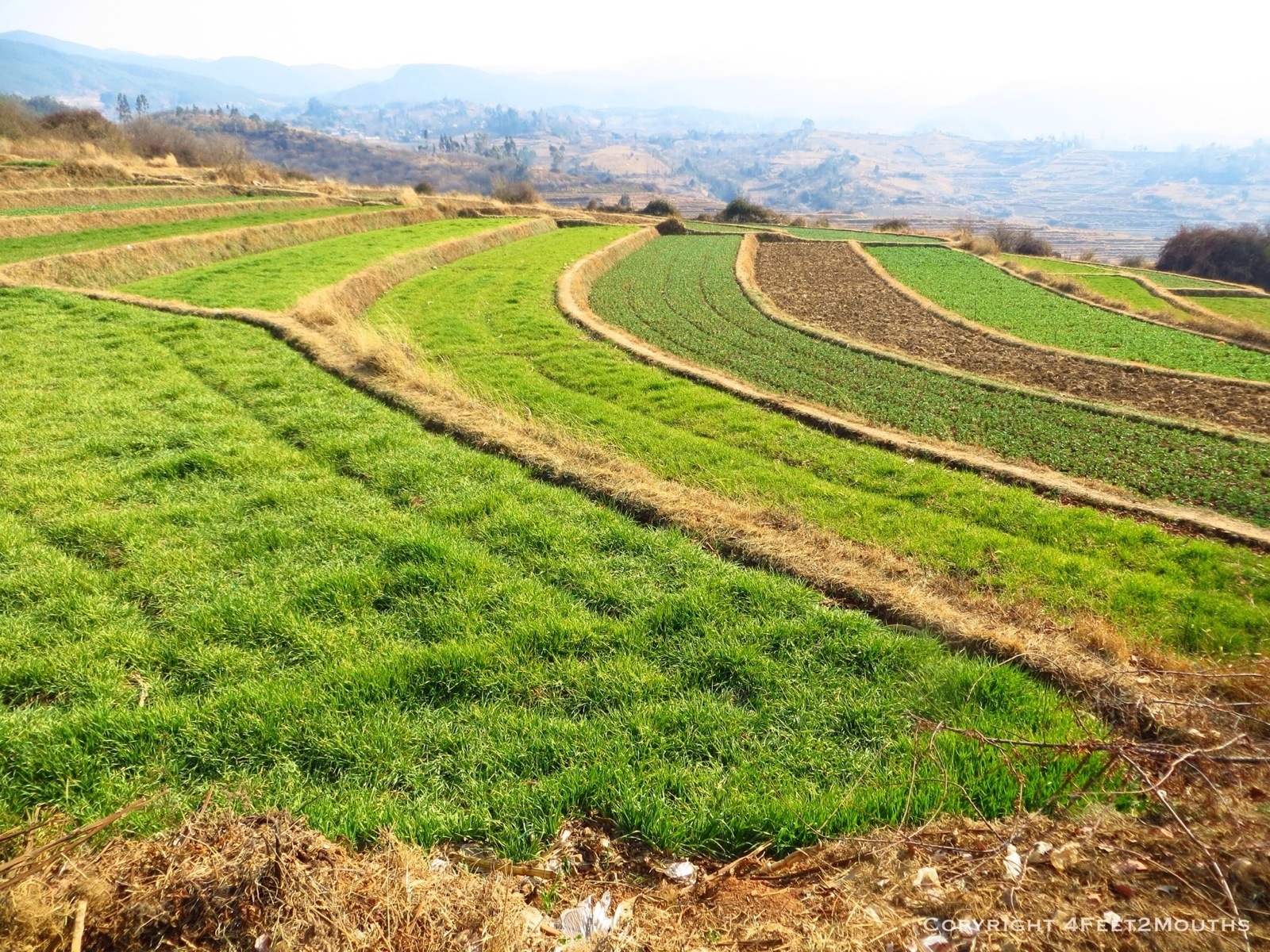
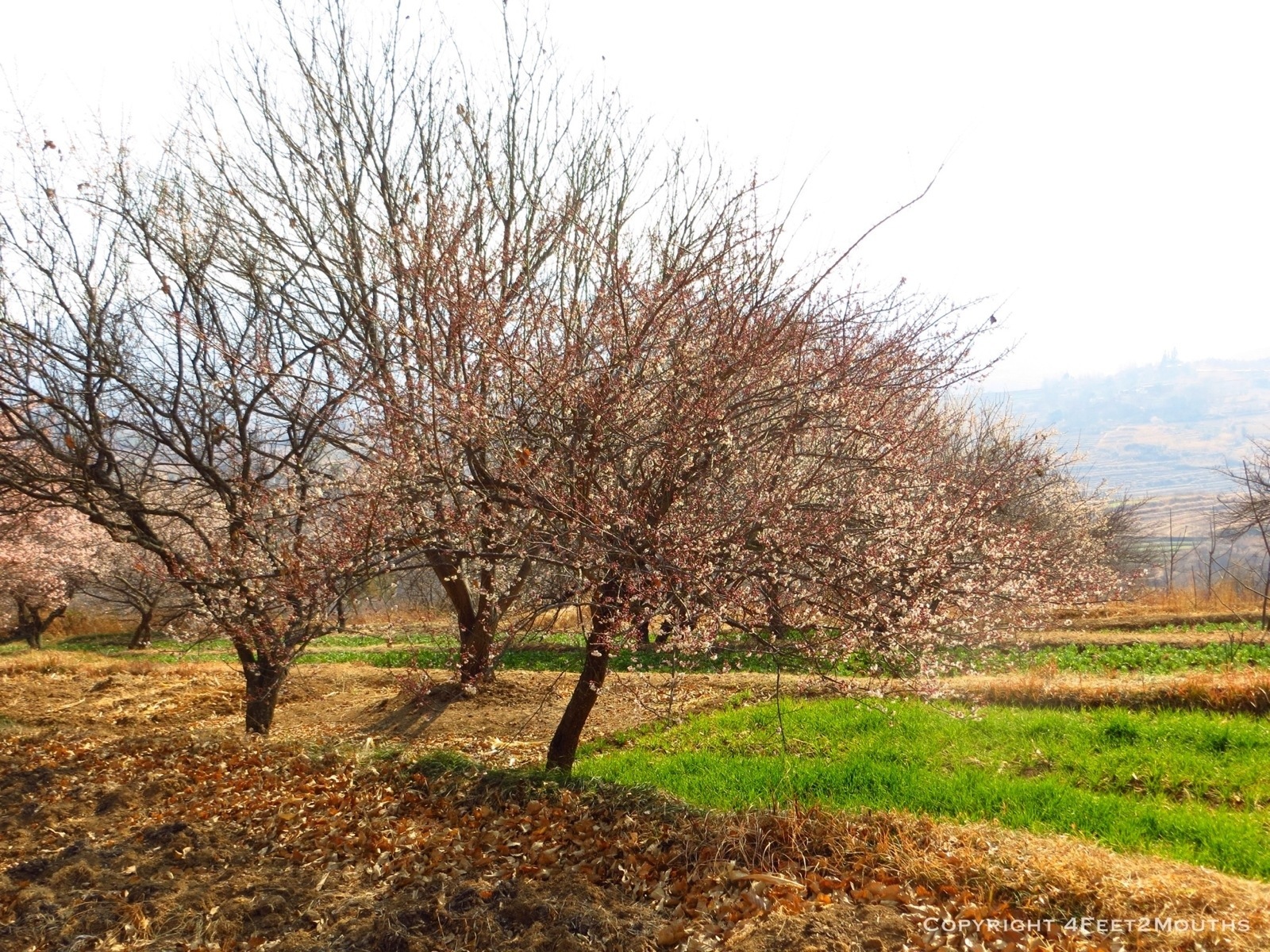
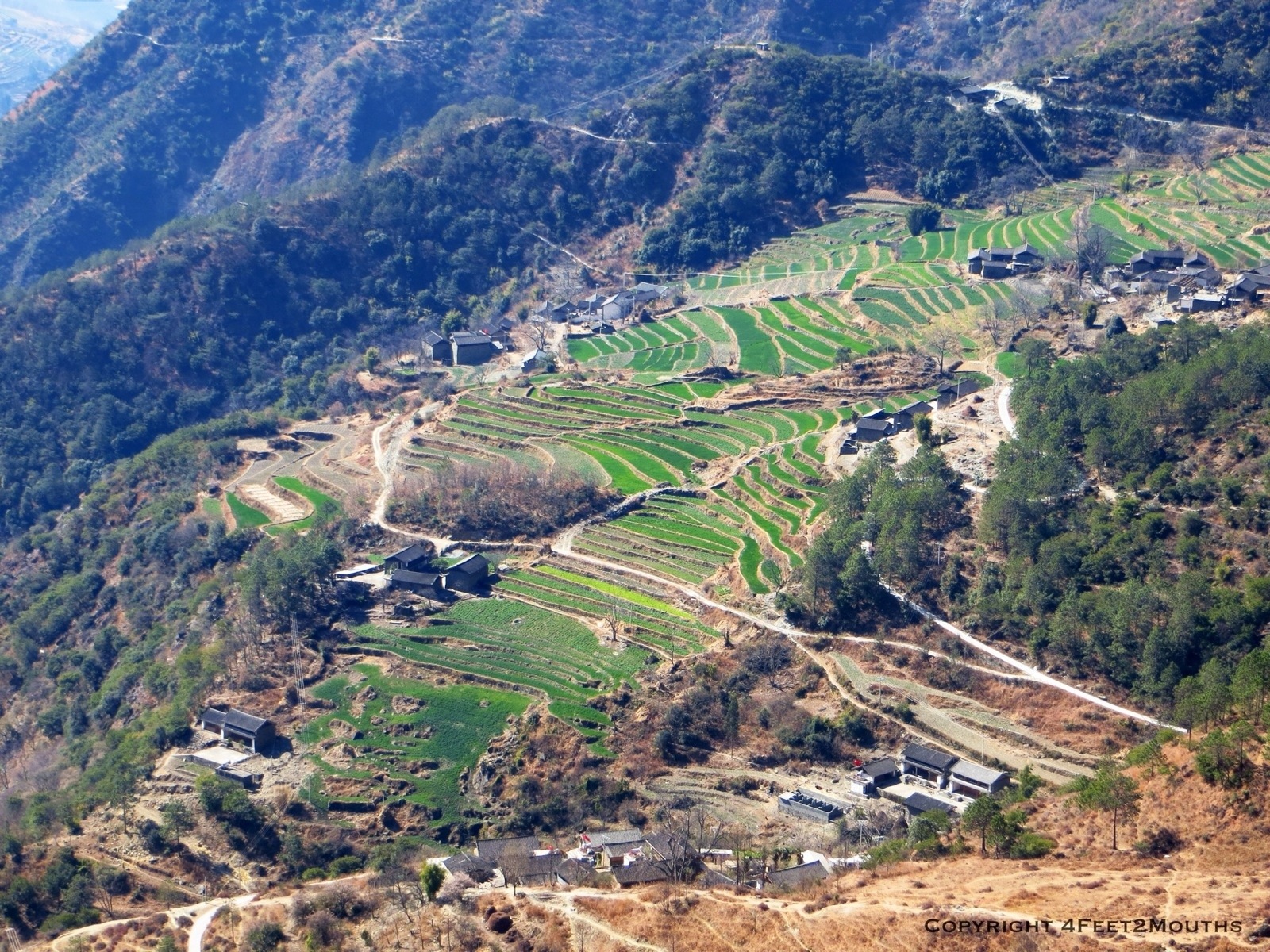
We passed through delicately terraced farmland green with sprouting vegetables, corn, rice and even a few cherry trees with blossoms already encouraging spring. Our path varied from a groomed dirt road, to a passable foot trail to bush whacking up a few creeks. The temperatures were brisk, but warm and enjoyable for a winter day.

Friendly family of donkeys

Friendly family of donkeys

Farmland near Shaxi

Farmland near Shaxi

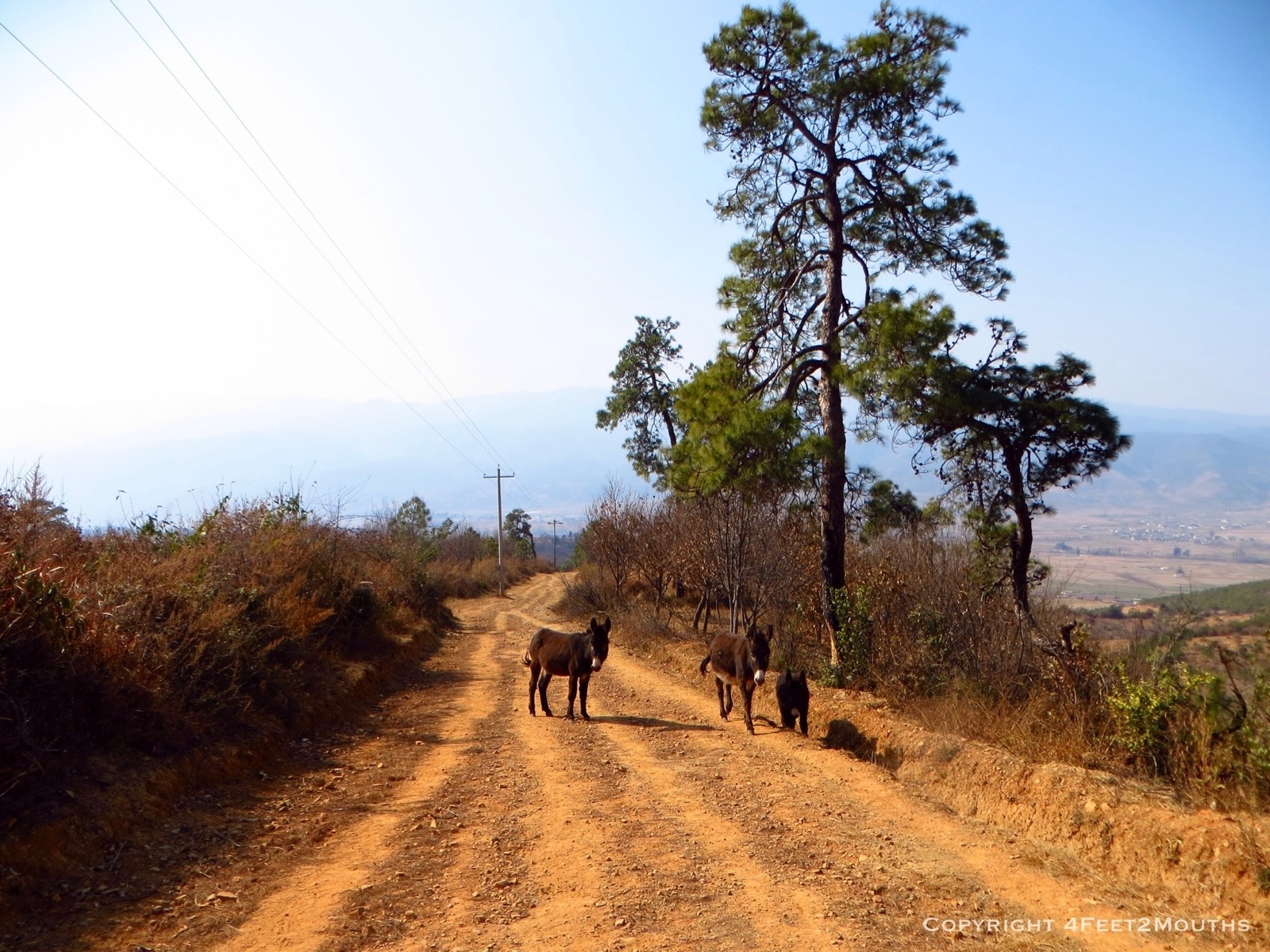
On our return hike we found a family of donkeys traversing the path in the opposite direction. We approached a little wearily being careful to see how they’d react to us. Then the foal stepped towards us and affectionately nudged its head against our outstretched hands. The adults did the same, leaning their bodies towards us, eager as dogs for a little petting. We said our goodbyes and continued down the mountainside. The farm huts and terraces enhanced the landscape all around us.

Our stop in Shaxi was peaceful; China without the negative aspects of Chinese tourism. The town and surrounds are very timeless.  The old and beautiful type of place travelers dream of. I am excited that we had the opportunity to explore and enjoy it while it still exists.

Drinking in the Views of Dali (by Carmen)

Dali old town

Dali old town

Dali is a town with Erhai Lake to its east and tall mountains towering over it to the west. It may be small in size but it has a long history. Centuries ago, it was the capital of the Yunnan region. Today, it retains a pretty, old town atmosphere as well as cultural ties to the Bai, a tribe that has lived in this valley for thousands of years.

Brooms at the Bai market

Brooms at the Bai market

Our introduction to Dali occurred with the great hostel search. Unfortunately we got lost on our way to the hostel but we did find a Bai market near the western city gate. I loved the mounds of natural brooms as well as the chili vendors that were grinding fresh chilies into powder right before your eyes.

Beautiful paintings found on our hostel

Beautiful paintings found on our hostel

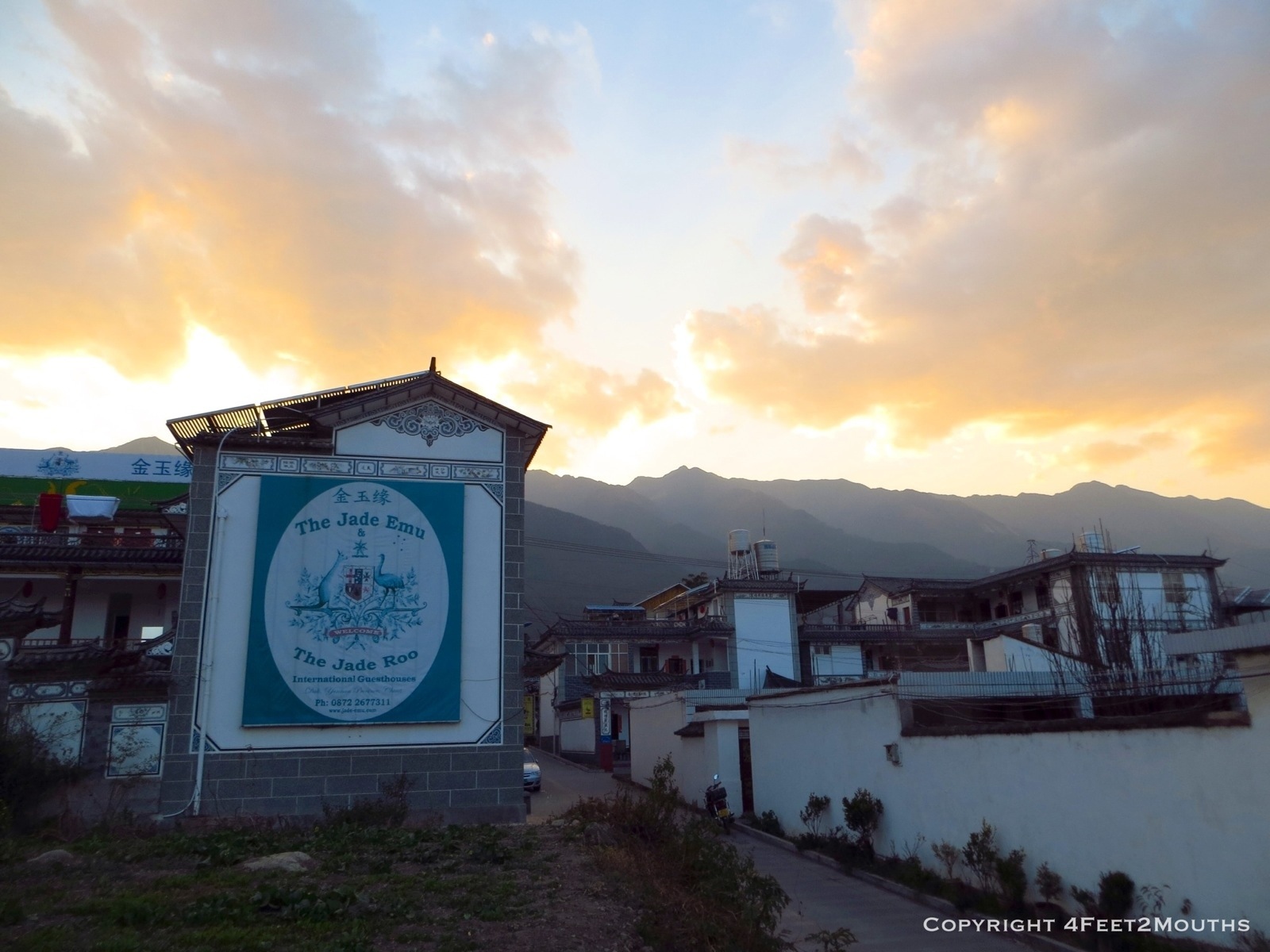
Our hostel, the Jade Emu, at sunset with the Green Mountains behind it

Our hostel, the Jade Emu, at sunset with the Green Mountains behind it

We finally did make it to our hostel, the Jade Emu, right around sunset. It was a lovely place with special touches for the western traveler. For example, free access to an Internet portal that allows you to view sites typically banned in China! It was also decorated with splendid paintings that we saw on many of the homes in the area.

Tofu, mushrooms and cheese at Cang Er Chun

Tofu, mushrooms and cheese at Cang Er Chun

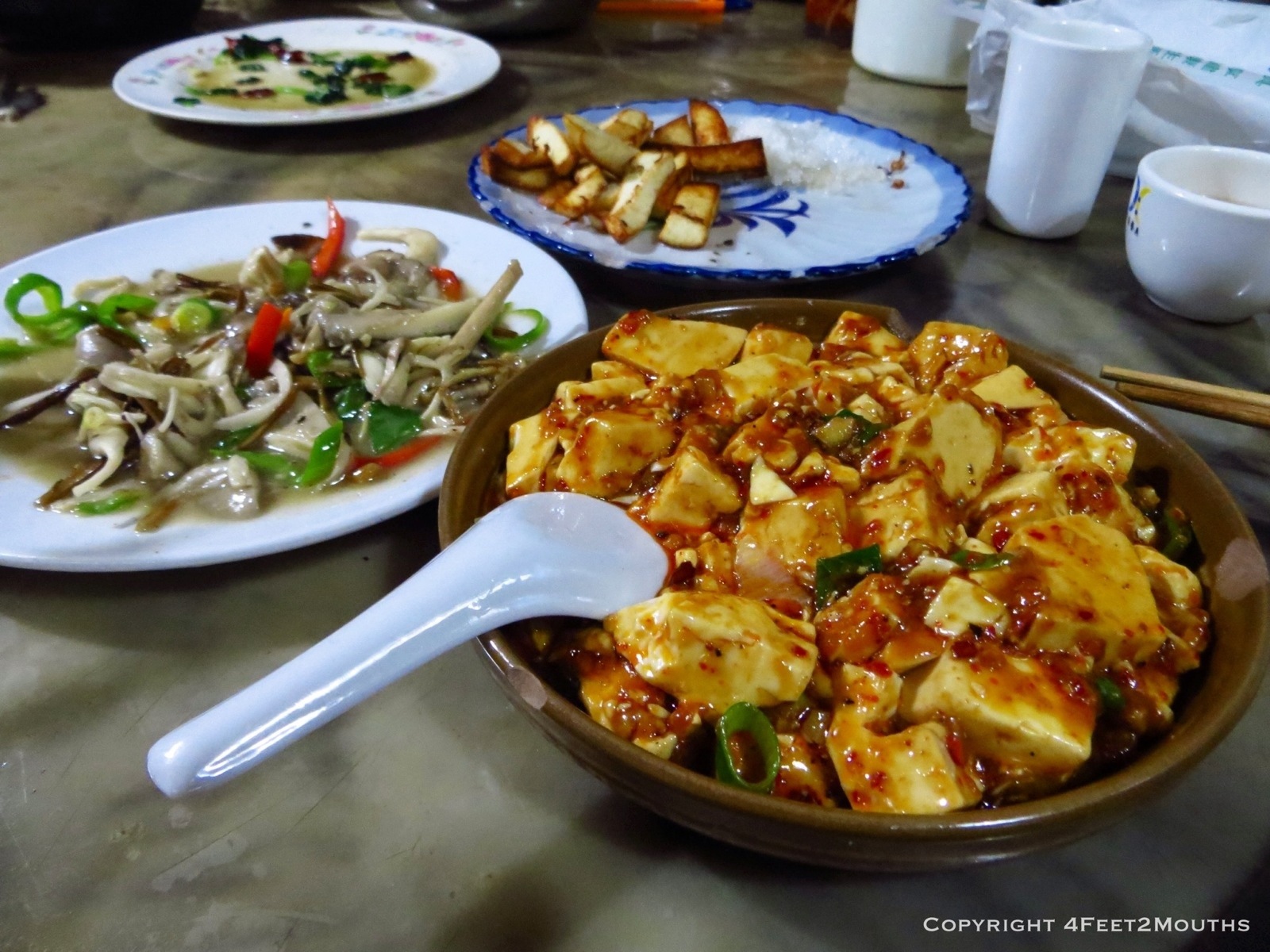
We quickly left for dinner and ended up at Cang Er Chun. We are trying to maximize consumption of the famous Yunnan mushrooms so we ordered a dish of them, some fried local goat cheese (oddly served with sugar) and ma po tofu. The latter is one of my favorite dishes and I welcomed the numbing spice of the Sichuan peppercorns. Afterwards, we walked around and found an expat bar with a Scottish band playing some songs. Dali definitely has a foreigner presence attracted to its cute surrounds. But this bar had a good mix of Chinese and westerners grooving to the tunes.

View along the south city wall

View along the south city wall

Holy napa cabbage idolization

Holy napa cabbage idolization

The next morning we were ready to explore the old town. Many of the Chinese tourists congregate on the tourist shopping streets, which aren’t very interesting. But it’s easy to get away from the crowds. It was pretty much just us as we walked along the south city wall. At the end was a small temple to overlook the town and lake. Inside the temple, there was a awesome carved napa cabbage at the center of an altar. Evidence of the importance of good food in China.

Buddhist meal at Yi Ran Tang

Buddhist meal at Yi Ran Tang

Near the city wall, a Buddhist restaurant called Yi Ran Tang serves a very inexpensive buffet. You can pile as much as you want on your plate for about $1 but the catch is that you have to eat everything you take. I’m talking every last grain of rice. Nathan and I practiced scooping rice grains with our chop sticks in their peaceful, newly built courtyard next to the buffet.

Bai-style Catholic church

Bai-style Catholic church

Jesus in Dali

Jesus in Dali

We kept the religious theme going by visiting the town’s Catholic church. It was the most unique church I’ve ever been to since it was built in the Bai style of architecture. We marveled at the exterior paintings, which didn’t have much to do with Christianity, and took a peak the blue painted interior. They provided a flyer describing the church’s difficulties during the cultural revolution as well as explaining how “Jesus Christ started the Catholic Church before he died…”. Hmmm. I thought the building was a really cool cultural fusion and is definitely worth seeking out in Dali.

Nathan's drink

Nathan’s drink

As a refresher, Nathan couldn’t pass up a chance to try a sour tamarind drink from a popular street vendor. She spent time on each cup, sprinkling in a variety of a spices and juices, resulting in a nicely sour treat.

The Three Pagodas

The Three Pagodas

Inside one of the temples behind the pagodas

Inside one of the temples behind the pagodas

View from the hill

View from the hill

We saved the afternoon for Dali’s major historical attraction, the three pagodas. The tallest of these is 16 stories and built in the mid 800s! It is amazing it has lasted this long though I’m not sure how many restorations it has had. Behind the pagodas a series of temples stretches at least a kilometer uphill. Each temple ensconced beautiful statues of Buddha, Buddhist leaders or local gods. The ticket was expensive (most are in China) but well worth it.

Spicy chicken, veggies and fried rice

Spicy chicken, veggies and fried rice

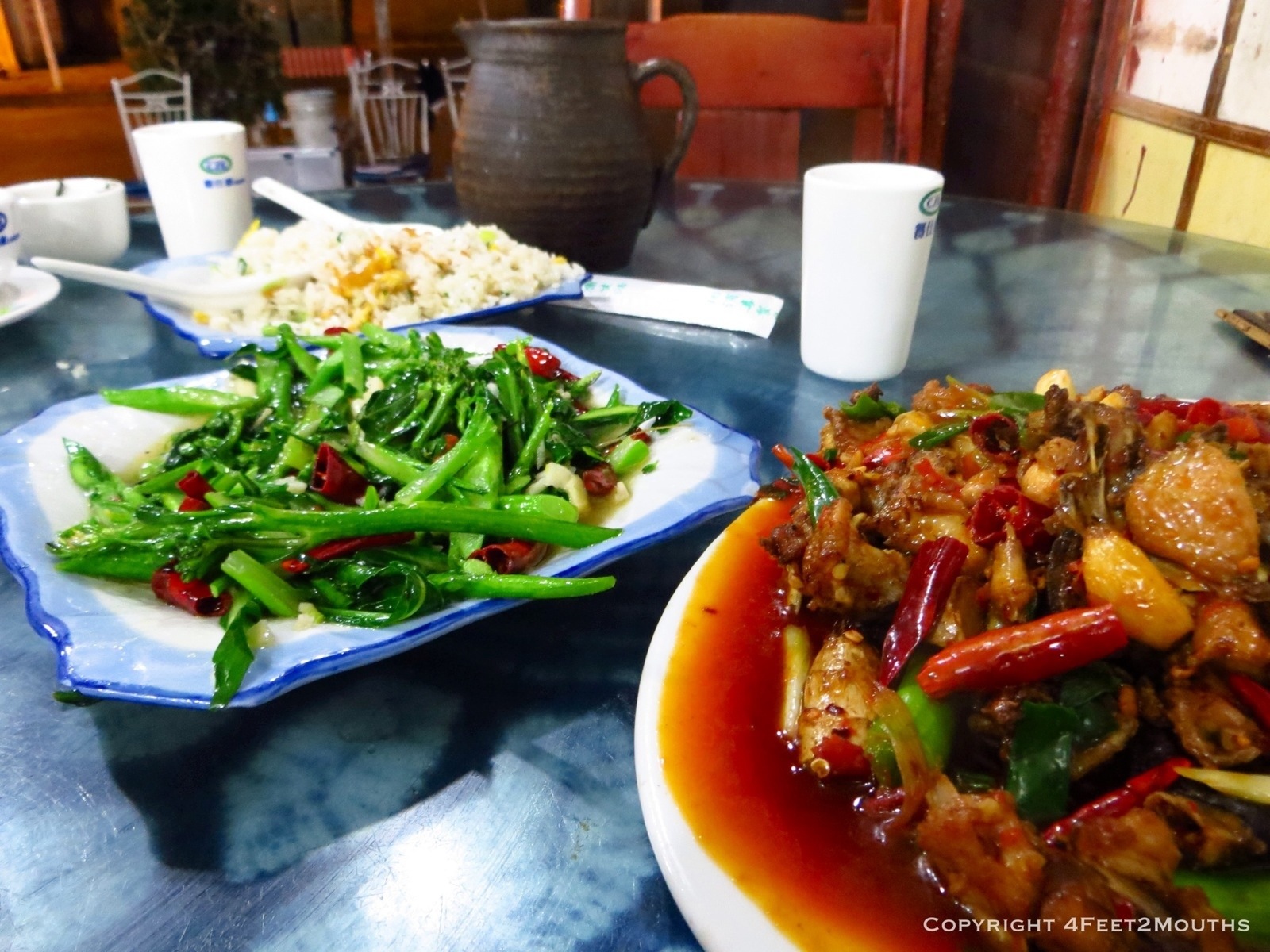
We finished off the night by choosing the restaurant with the most diners in it.  Our pointing got us some greens, fried rice and a spicy, garlicy chicken dish.  I liked the chicken but there were so many bones it took forever to eat.  This is true of a lot of Chinese chicken and fish dishes.

Older Bai women on the tourist shopping street

Older Bai women on the tourist shopping street

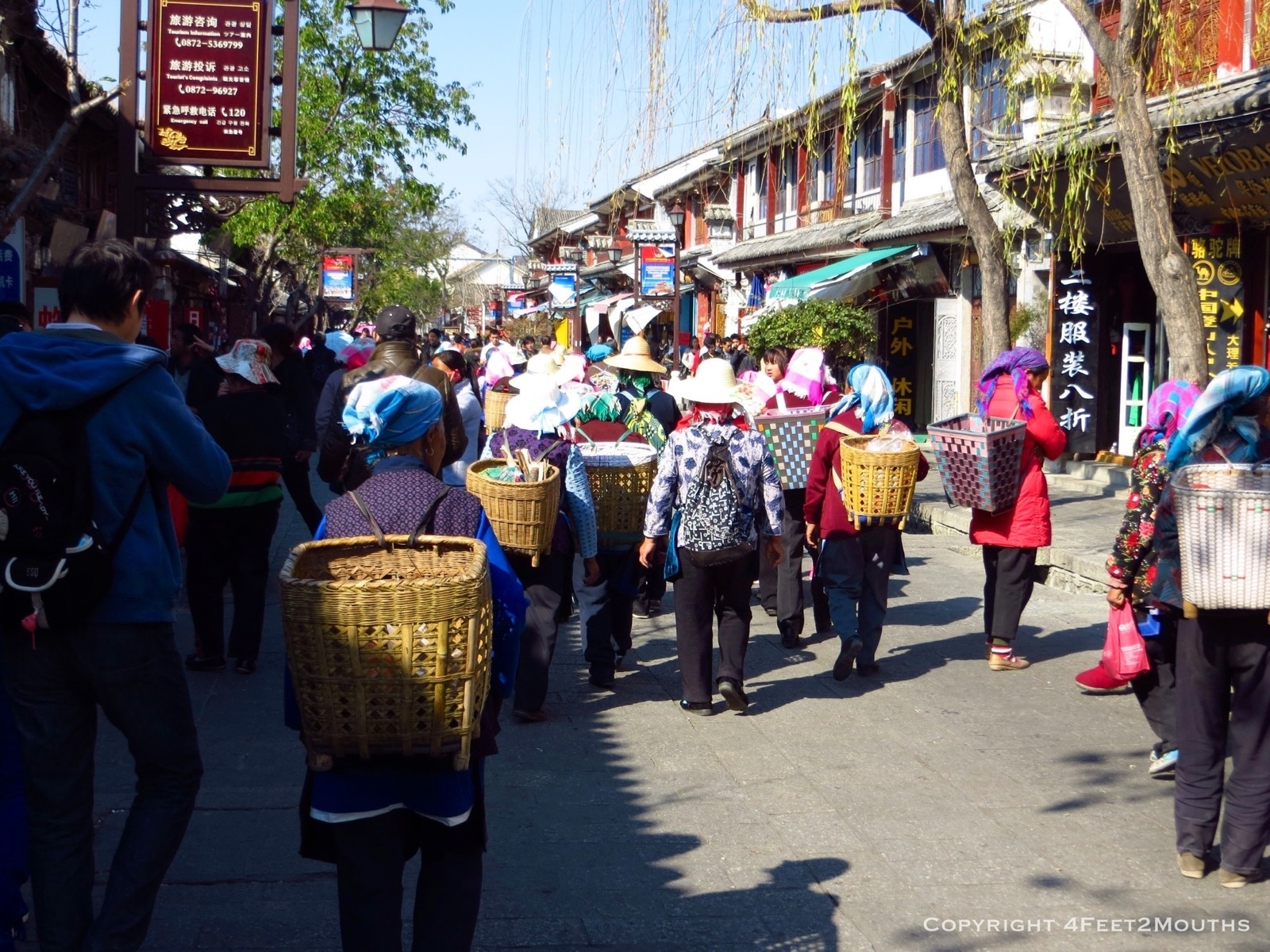
Our last day in Dali we spent a bit more time in the old town. As we walked around we noticed a group of Bai women moving in a hurry. We followed them as they rushed their way through the main tourist drag, stopping to say hello to a few shop owners. I’m still not sure why they were rushing so, but what sticks out in my mind was a middle aged woman with a deformed foot. She was keeping up with the others by hopping along on her one good foot. I wonder if she didn’t have a crutch by choice or if it was the poor medical care. Probably the latter, which shows the dichotomy of rich Chinese tourists and poor locals. Reminders are everywhere!

Baiju shop

Baiju shop

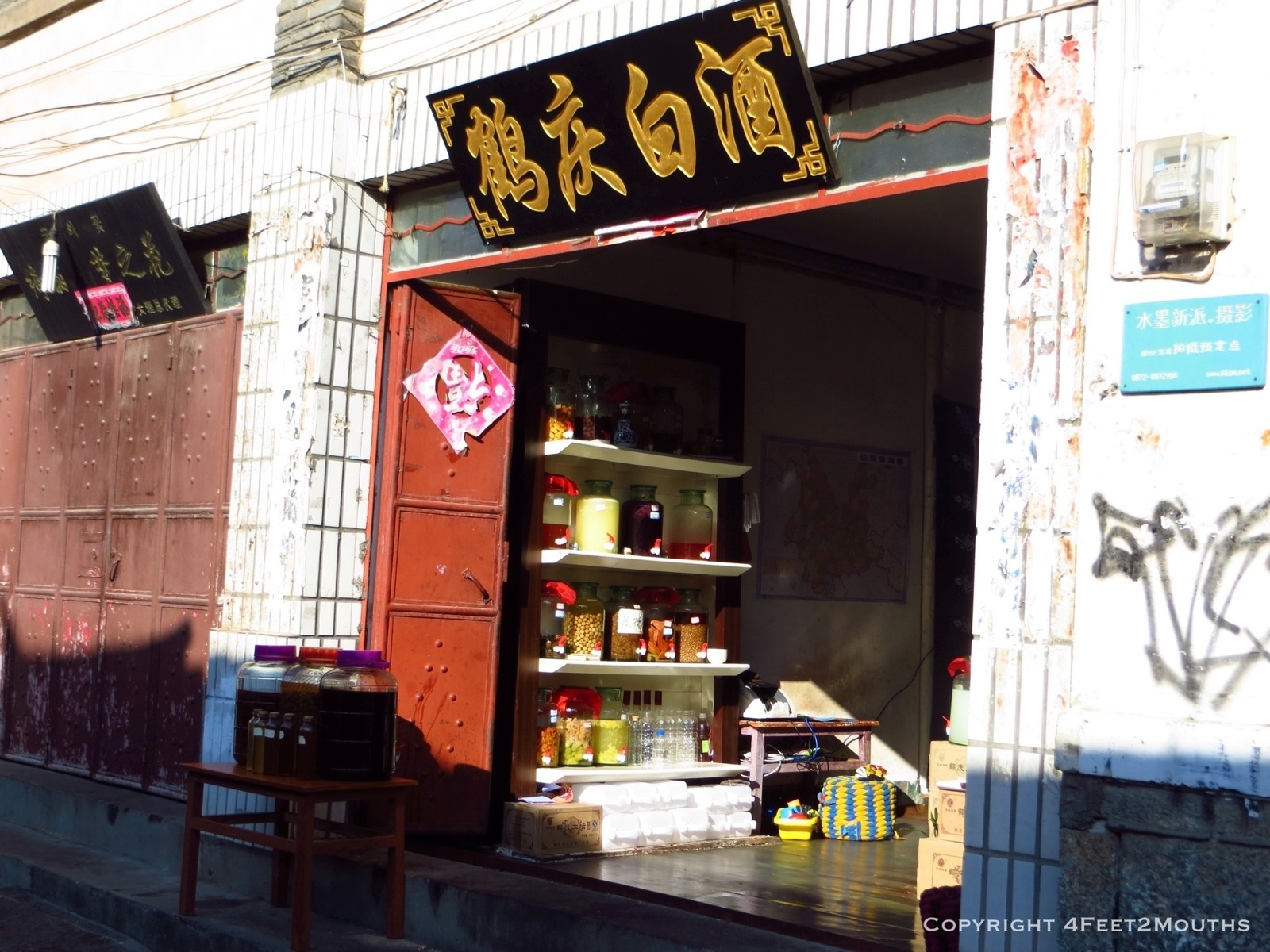
We did do some shopping ourselves, at the local baiju (rice wine) shop. The owner had created a number of specialty flavors and we settled on a pineapple-rice liquor that had a sour, sweet and slightly fermented taste.

Awesome shao er quai

Awesome shao er quai

Nearby, a woman was selling some delicious shao er quai, a street snack Adam had recommended. It is rice pancake that is grilled and smeared with a variety of sweet, nutty and spicy sauces. This is wrapped around a Chinese doughnut and served warm. Good stuff. This lady was particularly good because she rolled out the rice pancake fresh, instead of having pre-made ones ready to heat up.

Scrumptious coffee and cookies at Sweet Tooth

Scrumptious coffee and cookies at Sweet Tooth

Our final stop was to satisfy our sweet cravings at a cafe appropriately named Sweet Tooth. Our French pressed coffee was great and the tiny cookies were spot on. Chocolate chip, white chocolate, oatmeal raisin…it’s been so long.

Small bus between Yunnan towns

Small bus between Yunnan towns

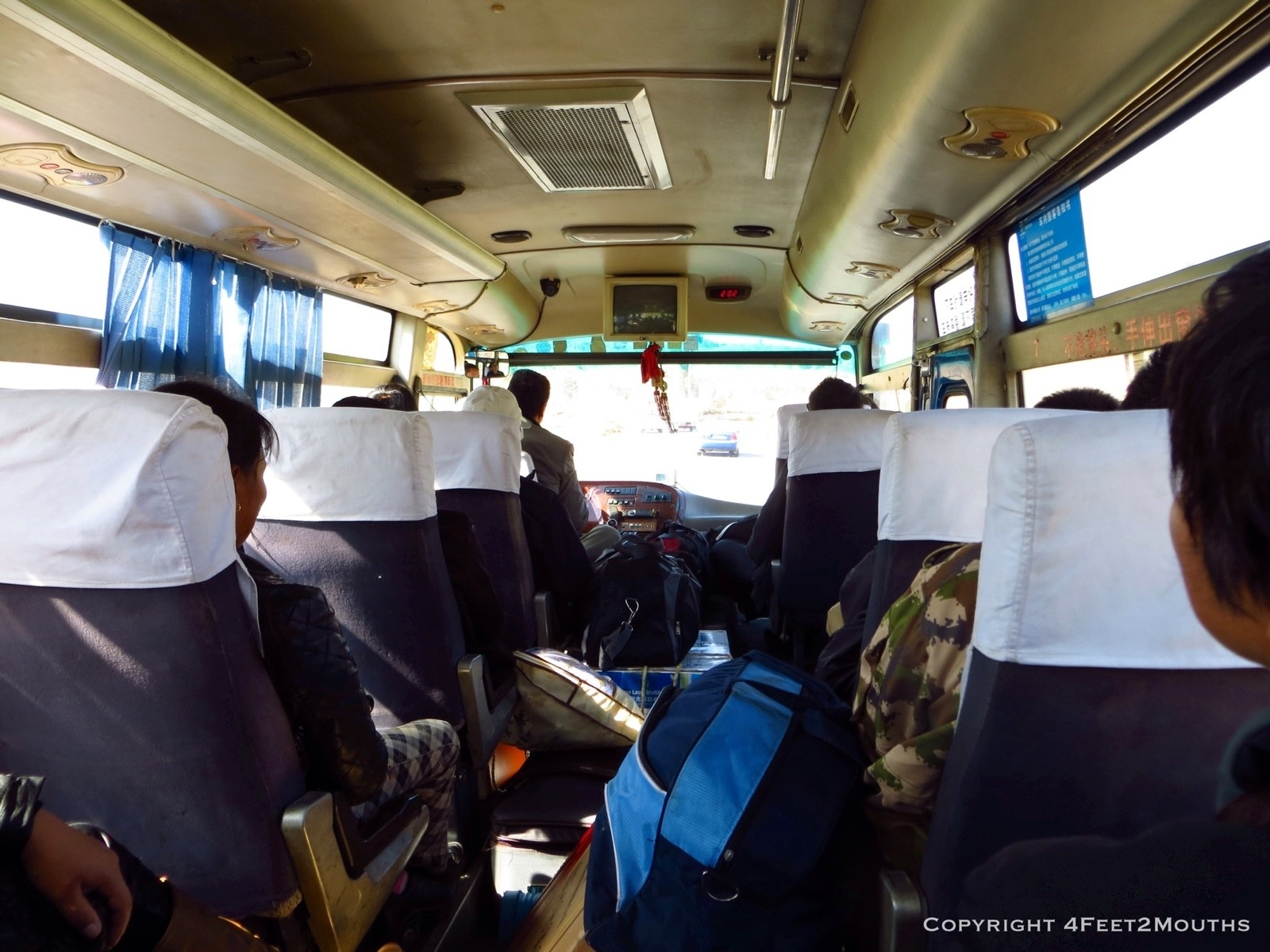
Before long it was time to board a bus to our next destination, Shaxi. We crowded on to the local bus, chatted with a friendly English speaking local and wound our way higher in the mountains (and deeper into the cold!).

Catching Up in Kunming (by Carmen)

Kunming airport

Kunming airport

Our welcome to China occurred at the Kunming International Airport, a brilliant new building held up by warm, sinuous supports. Nathan and I had been looking forward to returning to China ever since we first visited in 2009.  But, like India, we were also a little anxious. There are things we love about China. The incredible food, the vibrant street life, the beautiful historical architecture all enchanted us. But the intense traffic, incessant smoking and hacking, kids being allowed to piss and shit on the sidewalk, seriously unhygienic bathrooms, and the governments rapid destruction of the beautiful historic architecture were all turn offs. Trying to navigate everything with only a few key phrases of Chinese complicates everything as well.

China, put simply, is not for beginners. If you want to veer off the major shopping streets and get at the heart of the country and its people, it takes research, effort, patience and a whole lot of pointing. Nathan and I knew what we were getting into so we decided to take some time to warm up to China. We wanted to spend a few days in Kunming, the capital of the Yunnan province, to catch up on some things and better plan our trip through the rest of China. Unfortunately, our plan backfired a bit since the slow, censored Chinese internet did not take kindly to our research needs. But when the frustration got too much, walking the streets of laid back Kunming provided a welcome respite to breathe and regroup.

Tofu noodles

Tofu noodles

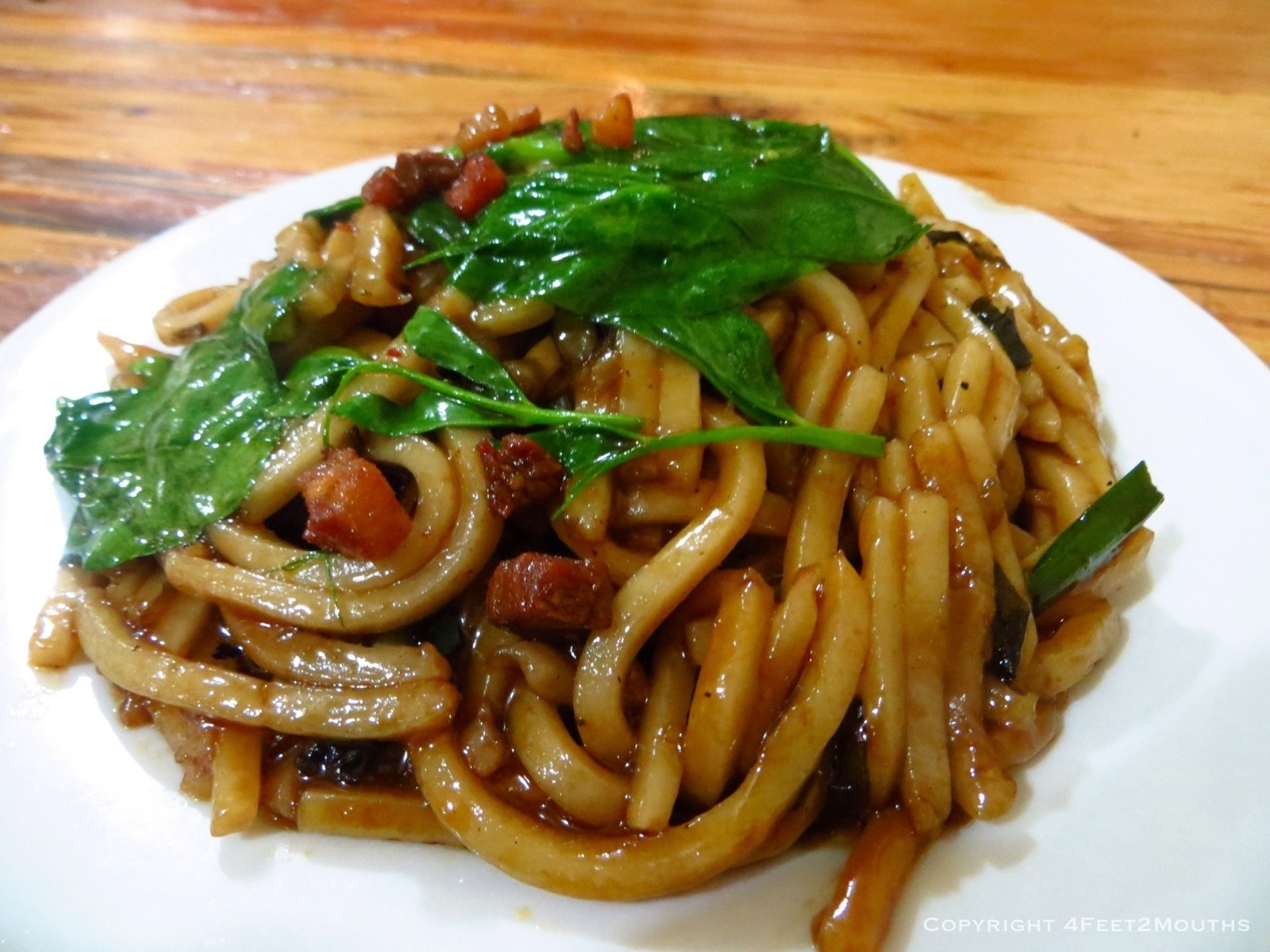
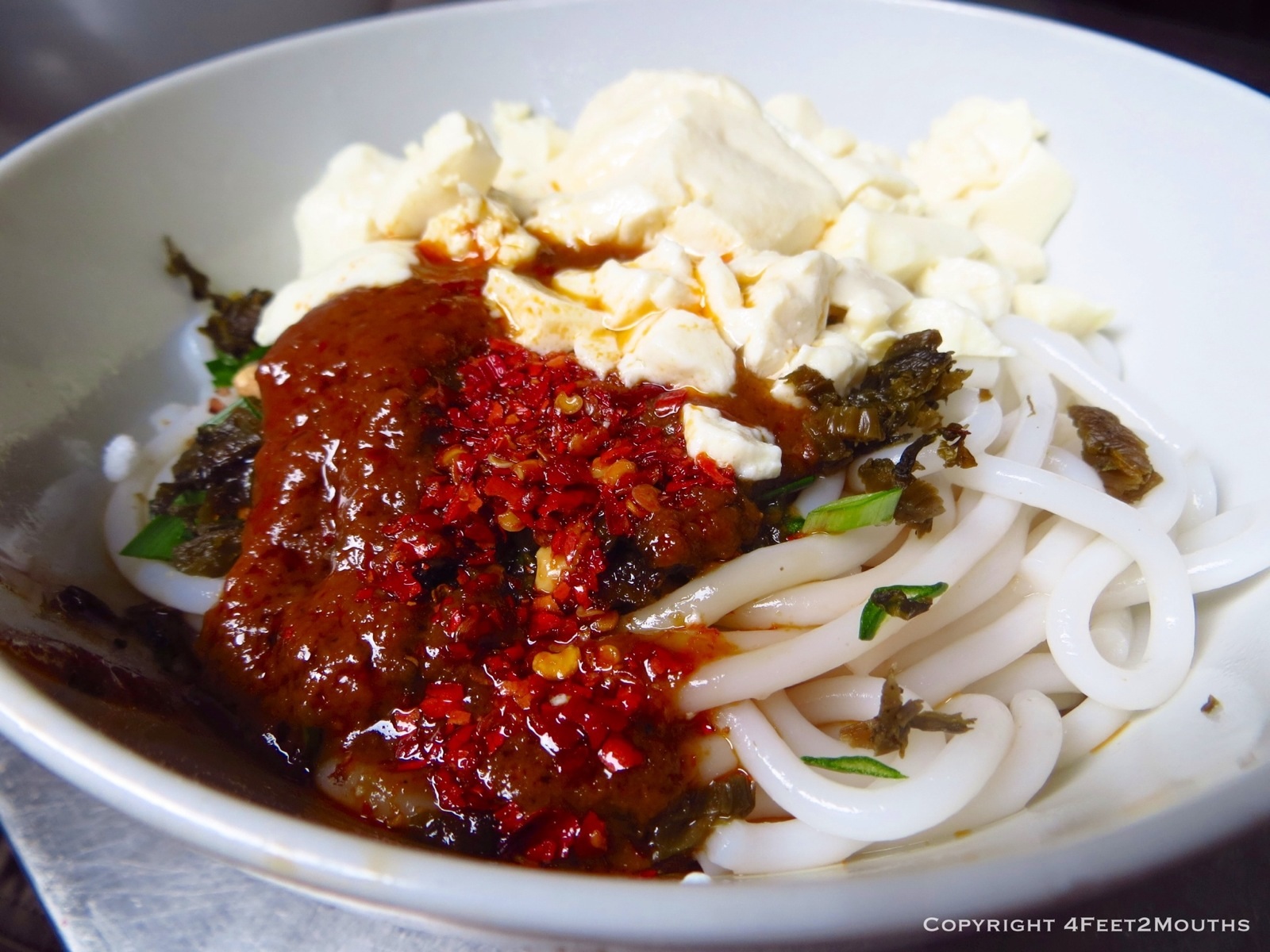
We were lucky. We got great recommendations from friends.  Our friend Adam had actually lived in Kunming a few years ago, he met his wife here, and has made numerous return visits. He was kind enough to give us a few recommendations on food and we excitedly worked our way down the list. The first item was dou hua mi xian jia mao (豆花米线加帽), a rice noodle dish that is topped with soft tofu, a savory red pork sauce, peanuts and chives. We found it at a little stall in the popular market near our hostel. The fresh tofu was so silky and you could taste the soy beans used to make it.

Mushroom steamed bun

Mushroom steamed bun

We had heard that mushrooms are the specialty of Yunnan and by luck we found a mushroom filled steamed bun while perusing the market after our noodles. Like the noodles, it was phenomenal with extremely rich, flavorful mushrooms mixed with minced onions. Oh yeah.

Grilled tofu

Grilled tofu

Main shopping square

Main shopping square

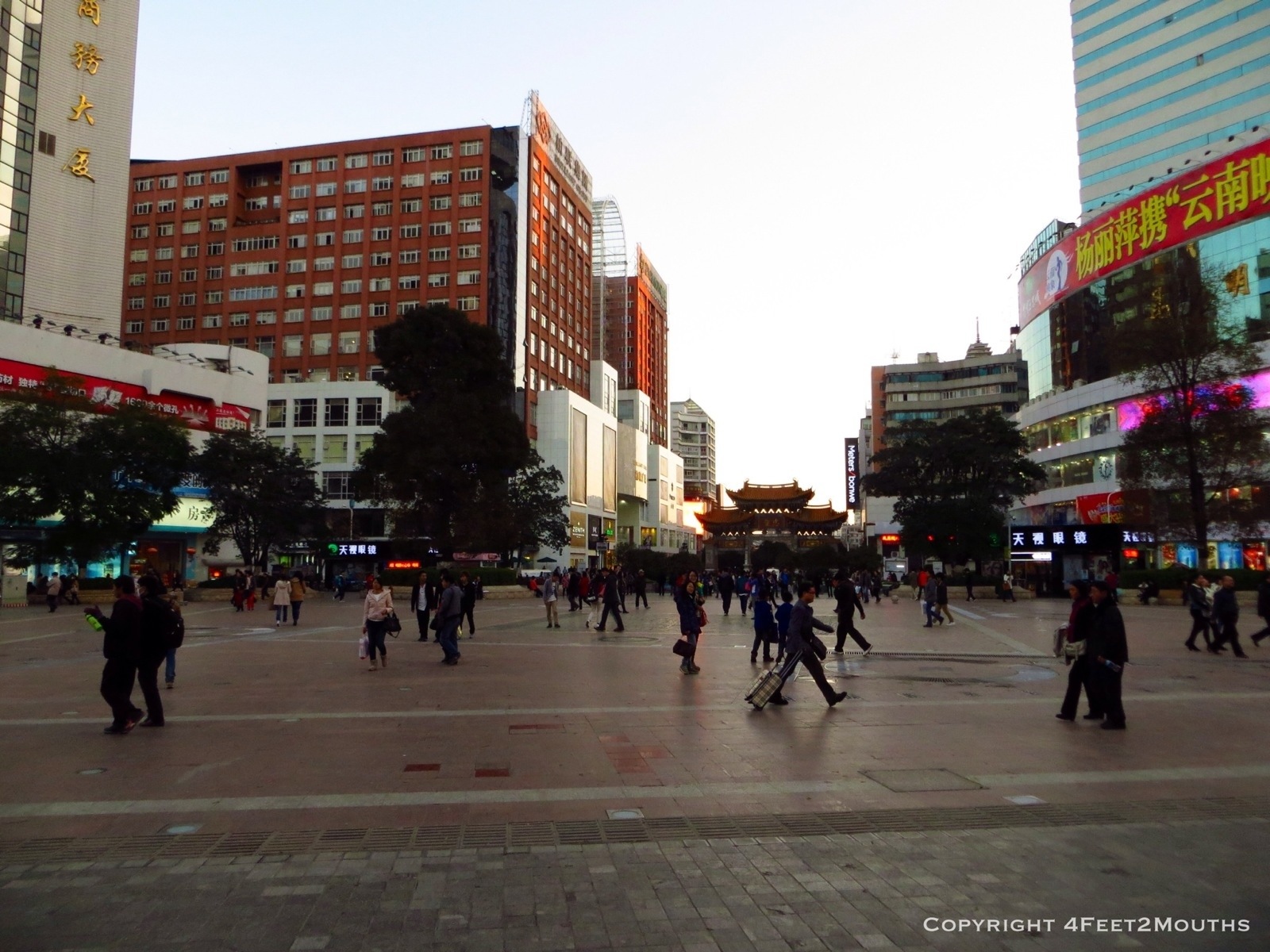
After doing a bit of work back at the hostel we ventured out again for some dinner. We ended at a grilled tofu stall that topped its tofu patties with a peanut sauce, chili sauce and some fried wonton bits. In a word, tasty. As we walked we also noticed a few Muslim Chinese restaurants. Yunnan hosts a large Muslim community with rocky historical relations with the Han Chinese. This may play a part in the current government’s redevelopment of the old Muslim quarter in Kunming, including the destruction of the 400 year old mosque. They did replace the mosque but I heard it was so garish that I didn’t bother to go see it. As Nathan and I walked on Kunming’s main shopping street we were close to the old Muslim neighborhood but traces were few and far between. Mostly, one is able to see a restaurant here and there. I hope that the community lives on somewhere and that I just can’t see the signs (literally, because they are written in mandarin).

Nathan and the seagulls

Nathan and the seagulls

Another day in Kunming decided to take a break from catching up and be tourists again. First we walked over to Green Lake Park, a green space with a series of islands linked by small bridges. In the winter flocks of red beaked seagulls spend their days in the park getting fat off the bread the locals feed them. Nathan was even able to have them pluck the food from his hands. We walked along the park, soaking up the sun for warmth. Since leaving the oppressing heat of Bangkok, we were quickly plunged into a crisp winter cold of 30 to 40 degrees. And there was no escaping it as nowhere has heaters – not our hostel, restaurants or cafes. Brrr!

Heavenly Manna restaurant

Heavenly Manna restaurant

Us with Yun

Us with Yun

After the park we had lunch plans with a friend of Adam’s who is from Kunming. Yun asked us to meet her at Heavenly Manna Restaurant on Wenhua Xiang. She told us about life in Kunming and her job helping foreign exchange students adjust to life in China. Meanwhile we devoured some amazing dishes. My absolute favorite was a cumin beef dish served with crispy fried mint leaves. It was so mouthwatering I could not stop myself from scooping thirds and fourths on my plate! We also sampled some stir fried greens, yellow corn fried with rich egg yolks and a light soup. At the end of our lunch, we thanked Yun for her stories and advice. But Nathan and I weren’t quite ready to brave a walk in the cold. So we went next door to Salvador’s, an expat owned bar owned serving some familiar favorites. Nathan splurged on Rouge River Amber Ale from Oregon to take a break from all the light beers Asia has to offer. I opted for a hot rum apple cider to take the chill off.

Yuantong Temple entrance

Yuantong Temple entrance

Intricate Chinese decorative painting

Intricate Chinese decorative painting

Center of Yuantong Temple

Center of Yuantong Temple

When we did finally leave we made our way to Yuantong Temple. It is one of the oldest and biggest Buddhist temples in Kunming and it was a thoroughly pleasant place to be. We encountered a group of monks chanting as part of a ceremony that we did not understand. But it certainly added to the ambiance.

Rice noodles in rich spicy broth

Rice noodles in rich spicy broth

Stir fried rice noodles

Stir fried rice noodles

As we left the temple we already had a dinner place in mind – a crowded restaurant serving variations of rice noodles. This involved a lot of pointing and bringing the woman taking orders around the restaurant in order to show exactly what we wanted. It worked!

Chinese doughnut with savory pudding

Chinese doughnut with savory pudding

We found another cheap joint for breakfast the next morning just north of our hostel. The man out front was frying up mounds of Chinese doughnuts, which are long wands of dough and aren’t sweet. From his wife, Nathan and I ordered two dipping sauces for our doughnuts. One was a warm sweetened soy milk and the other a thick savory pudding. It was plenty filling and cost a whole $1.13 for the both of us.

Walmart Supercenter

Walmart Supercenter

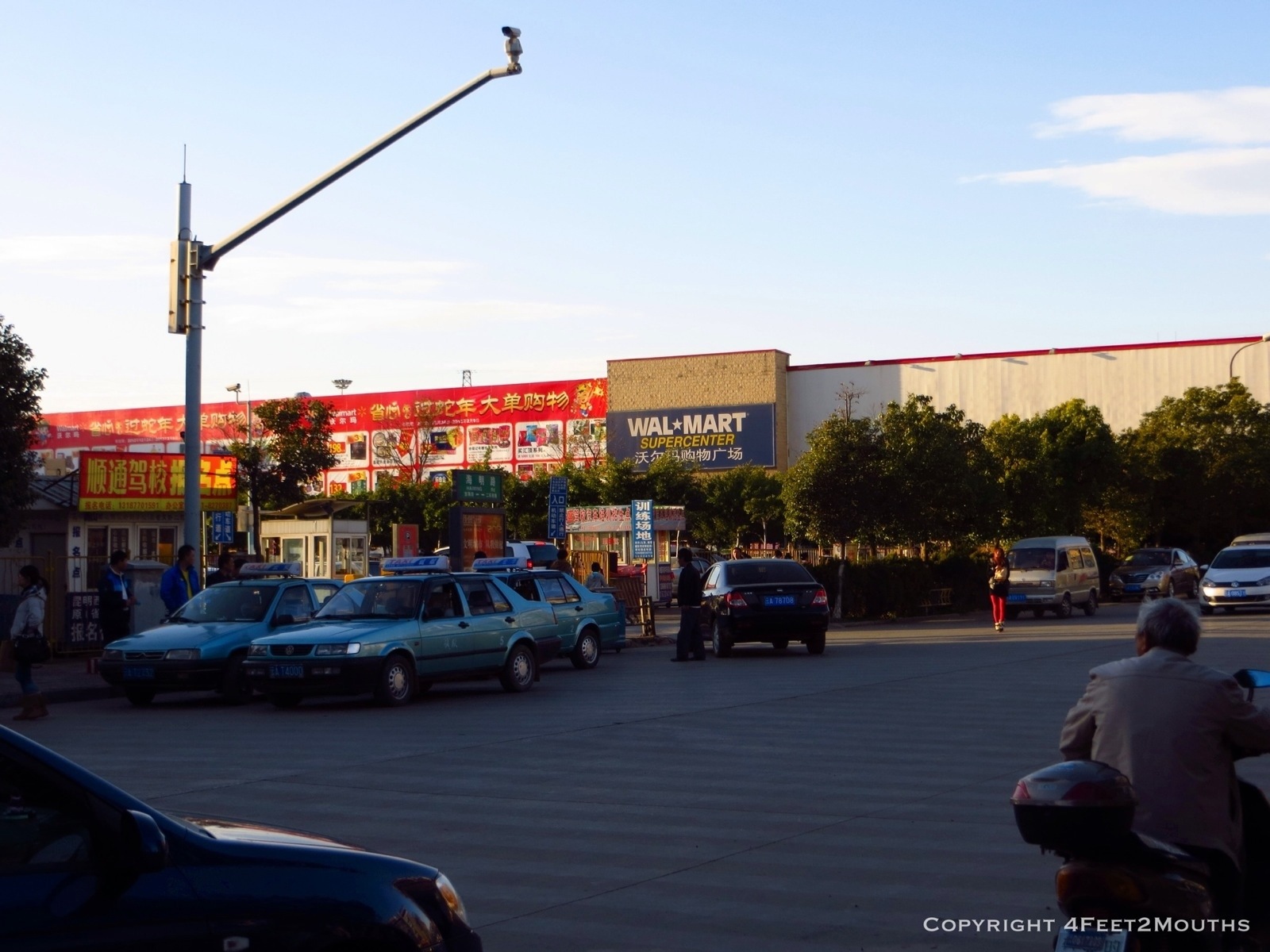
For dinner we went in a different direction, literally and figuratively. We boarded a bus to the southeast of the city and encountered the evidence of China’s rapid urbanization. Freeway overpasses appeared and streets got wider. We got dropped off on the edge of a highway and had to walk with others along the edge of the road, no sidewalk, until we got to some smaller, more manageable streets. In the new China, they do pay attention to the public transit infrastructure but the pedestrian connections to transit are unfortunately ignored.

We eventually found ourselves in a strange area that was felt like a business park but was interspersed with a few corporate looking strip malls and gigantic apartment blocks. It seemed like a very boring place to live. And in the middle of it all was a super center Walmart surrounded by a large parking lot. Just like in the US, it had everything you could want and more. They certainly cater to their market here as this Walmart is filled with all the local foods – smoked pig faces, fermented tofu and black footed chickens. It seemed extremely popular and does not bode well for all the mom and pop shops in Kunming. Not that the urban planners left much room for these types of family owned stores in the new parts of town.

Mushroom hot pot and sides at Dian Jun Wang

Mushroom hot pot and sides at Dian Jun Wang

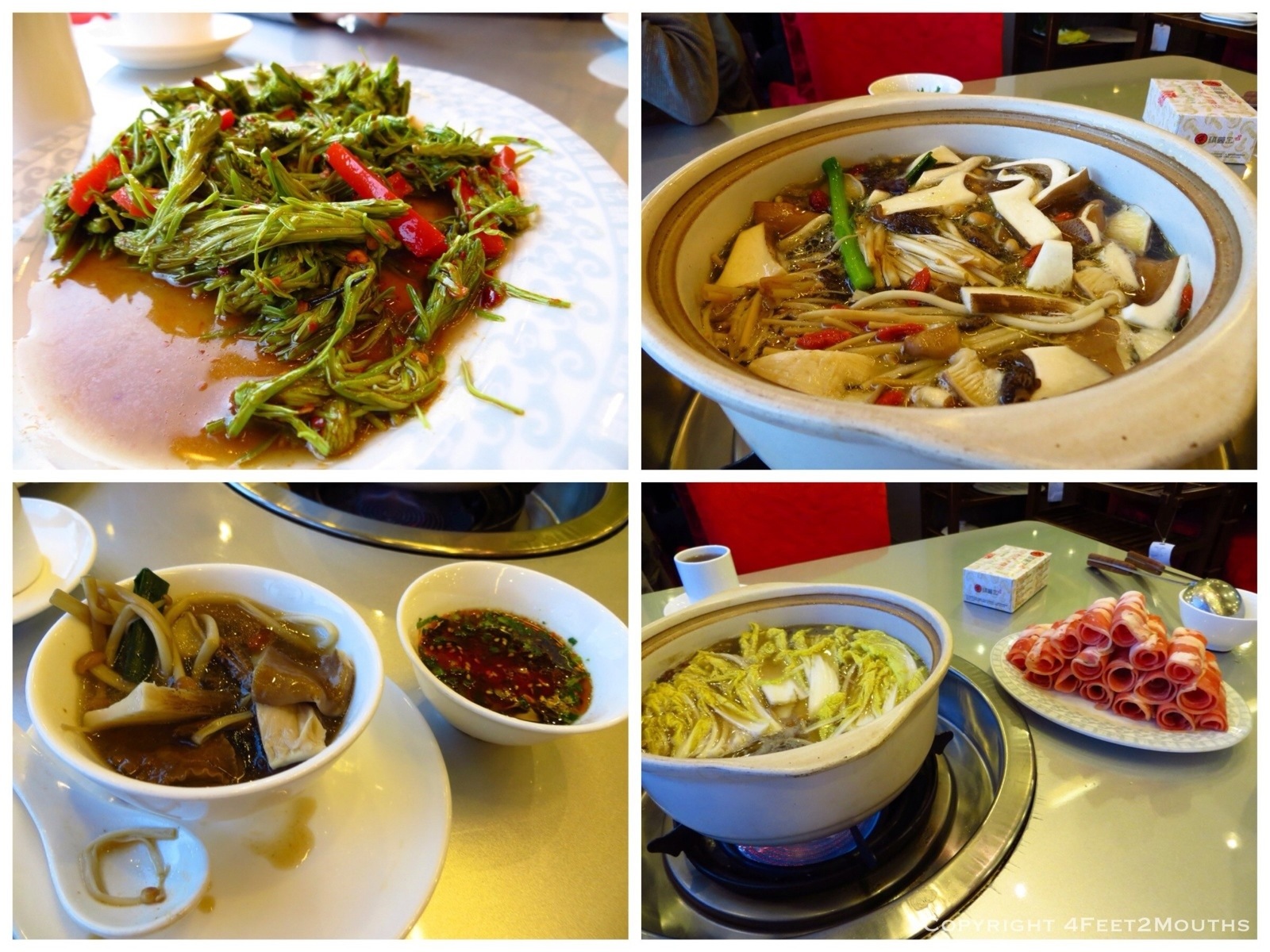
But back to the food. Yun praised Dian Jun Wang which seems to be a local, high end chain. It was a good thing we were hungry when we sat down because we were in for a feast. The specific reason for our visit was mushroom hot pot. Yunnan is known for its bounty of mushrooms and we were ready for them. With a combination of pictures, pointing and guessing we ended up with a nice rounded meal. As a starter we were delivered a vinegary vegetable dish that had the the texture of softened pine needles and may have actually been pine needles. That may not sound appealing but it was very good. Then came the broth that was kept on a burner on our table, to which a selection of mushrooms was added. Once cooked, the mushrooms were spooned into our bowls and we could dip then in a spicy dipping sauce. Next, we cooked and ate rice cakes and cabbage. And finally, thinly shaved beef. We drank a much of the broth as we could but we were getting dangerously full.

Dian Jun Wang was a wonderful meal and we were well taken care of by the numerous staff. With tea, the bill came to $54. I believe it to be well worth the money, but the price did point out the dichotomy of rich and poor in China. Especially compared to our incredibly cheap breakfast that same day. The husband and wife making Chinese doughnuts could not afford to eat at Dian Jun Wang nor are they given space to work in these newly planned communities. Which is too bad because they are part of what makes China great! My favorite food is always in the hole-in-the-wall eateries anyway.

It was a good thing we took things slow for our first few days in China. It can be equal parts charming and frustrating and from the start we experienced both emotions. Two months in China? Bring it on!

One Night in Bangkok (by Nathan)

One night in Bangkok makes a hard man humble
Not much between despair and ecstasy
One night in Bangkok and the tough guys tumble
Can’t be too careful with your company
I can feel the Devil walking next to me

Bangkok, Oriental setting
And the city don’t know what the city is getting
The creme de la creme of the chess world
In a show with everything but Yul Brynner

Time flies, doesn’t seem a minute
Since the Tirolean Spa had the chess boys in it
All change, don’t you know that when you
Play at this level, there’s no ordinary venue

One night in Bangkok and the world’s your oyster
The bars are temples but the pearls ain’t free
You’ll find a God in every golden cloister
And if you’re lucky then the God’s a she
I can feel an angel sliding up to me

by Murray Head

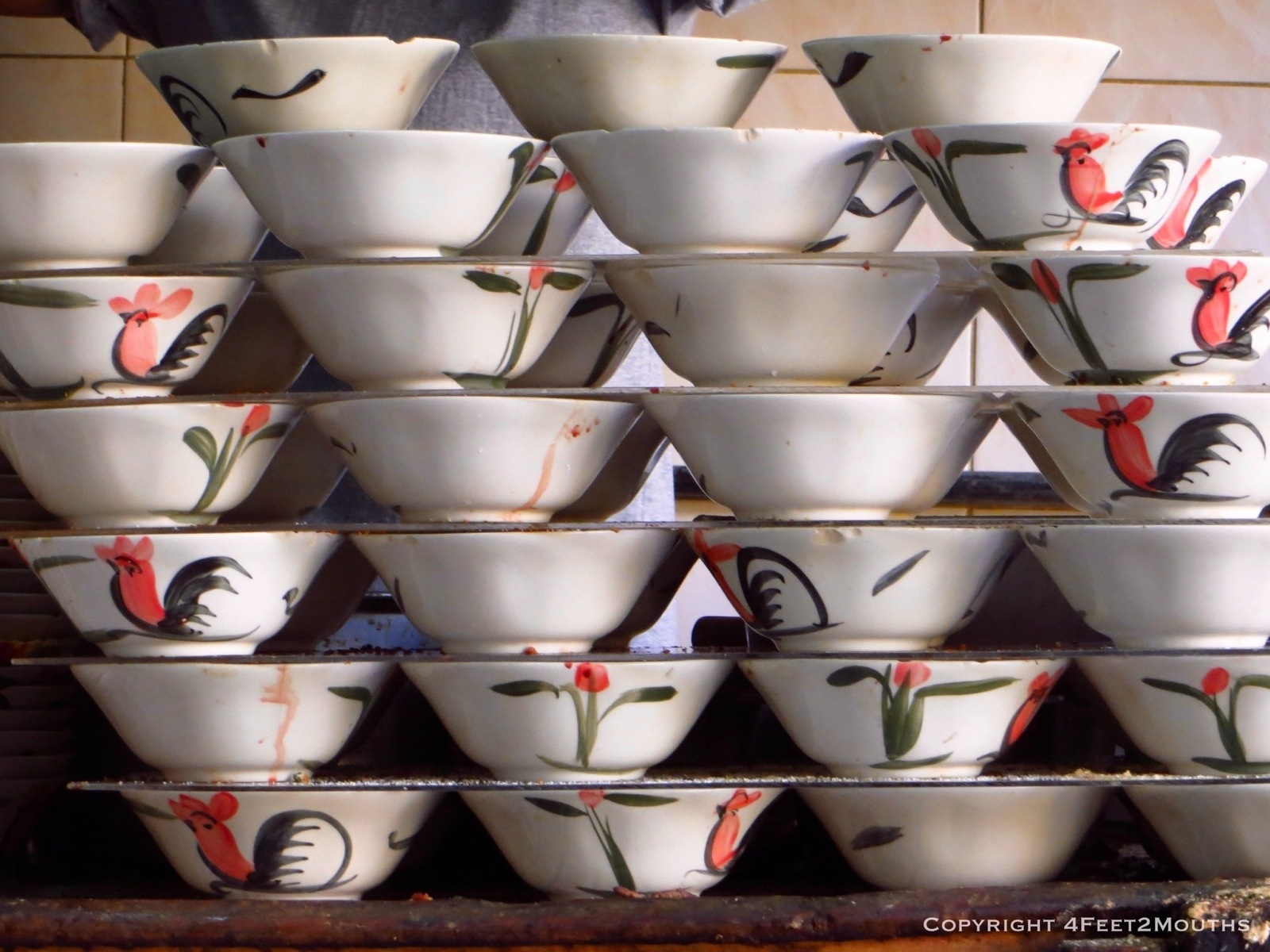
Bowls and bowls of boat noodles

Bowls and bowls of boat noodles

Yes, almost by circumstance I decided to relive one of my favorite 80’s songs, Murray Heads’s “One Night in Bangkok”. Our chess match involved all the the intricacies and intelligence of maneuvering around the world and the reward was a day to enjoy Thai food. Of all places to have a one-day layover, Bangkok is a delicious place to be stuck with twenty-four hours to burn. The epicenter of Thai food is guaranteed to tantalize with vibrant flavors and leave the mouth panting for more while the stomach pleads for it all to stop. Thus, as expected, we spent our last day in Thailand eating, walking and eating a bit more and fulfilling everything that 4feet2mouths can be.

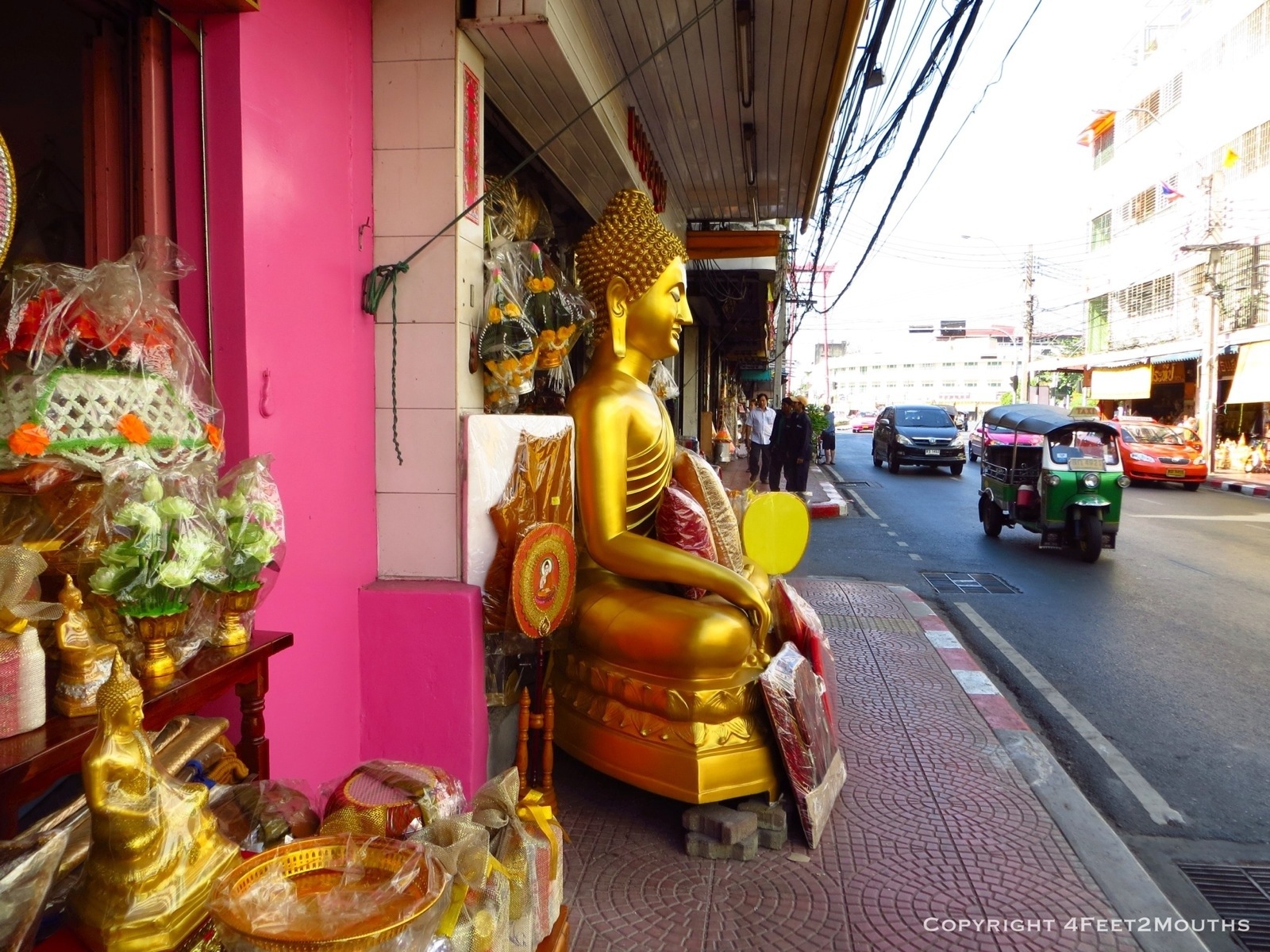
Roadside golden Buddha

Roadside golden Buddha

The challenge of securing a Chinese visa is that proof-of-entrance and exit is required. Thus, six months ago we took a stab-in-the-dark and booked a flight to Kunming from Bangkok. In hindsight it would have been slightly easier and cheaper to just bus over from Northern Laos, but we would have had to fake a flight at the Chinese Consulate in San Francisco. Thus When we finally returned to Thailand, it felt very natural, and it was welcoming and exciting to be in a place that we had explored and enjoyed six weeks ago. Within 10 minutes of our hotel we were graced by a hundred Buddhas that were humbly meditating the streets and awaiting to be purchased and set into future Thai temples.

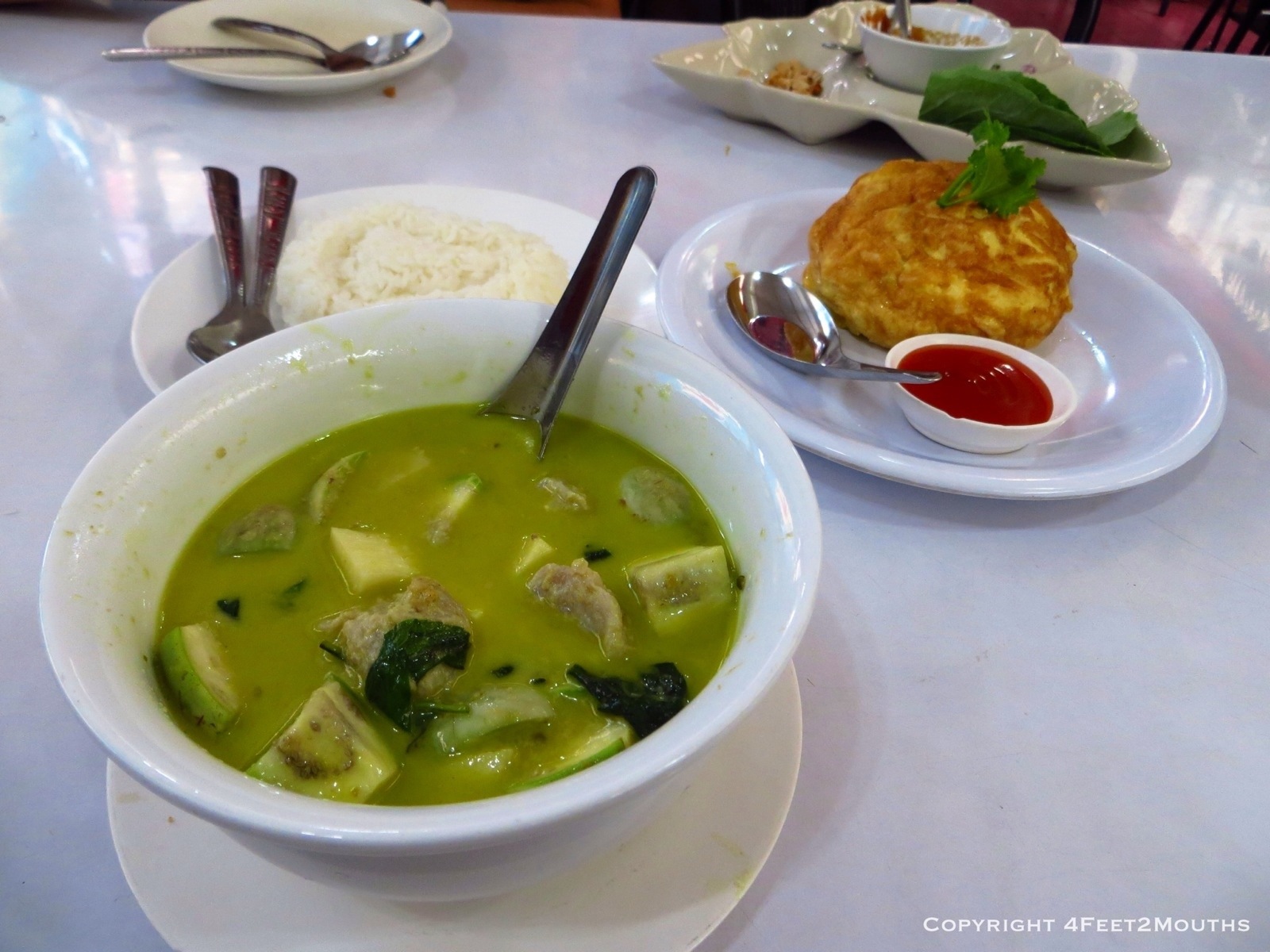
Green curry and crab soufflé at Krua Apsorn

Green curry and crab soufflé at Krua Apsorn

The deliciously simple miang khanna at Krua Apsorn

The deliciously simple miang khanna at Krua Apsorn

There was really one destination that we had in mind, Thanon Dinson. This two block street is all that you need to know for excellent Thai food. There is everything from noodles, barbecue, soups and rice dishes; and everything is excellent. Our first place was Krua Apsorn. this mid-range restaurant serves mostly central Thai cuisine of very high quality. We ordered a fish ball and baby eggplant green curry and crab soufflé. The star of the restaurant was the extremely simple and fresh appetizer called miang khanna. A platter arrived with lime wedges, ginger, chopped onion, peanuts, pork cracklings, dried shrimp, betel leaves and a tamarind sauce. We rolled up some of everything and took a bite that exploded with textures and flavors. We will definitely be recreating this one at home!

Boat noodle perfection

Boat noodle perfection

Literally across the street and to the right a little bit is a delicious spot for boat noodles. This is the birth place of our “dirty noodles” concept that the best soup shops are fast, cheap, and deserve with people. They pulled a couple bowls off the stack and added the noodle thickness of our choice. It was up to us to make it special with some added chili, vinegar and a dash of sugar.

Tranquil canal on Dipsom Road

Tranquil canal on Dipsom Road

We crossed the street again I and enjoyed the serene canal. It was a really warm, but peaceful day. We could not expect anything better on our last day in Thailand.

Colorful Thai traffic jam

Colorful Thai traffic jam

Riding the canal boat

Riding the canal boat

The Klong San Sap canal boat public transit in Bangkok is wonderful. There is an elevated rail and plently of colorful taxies, but the canal system is the more fun way to get around. We did not get to experience this on our first trip. But this time we conveniently found ourselves making trips from Old town to near the MBK mall. We loaded onto the thirty person boat and it roared down the twenty foot wide canal. At first I wondered why the ticket operator was wearing a helmet, then suddenly the whole roof of the boat collapsed swiftly to clear the bridge ahead. They had actually designed the boat so that the roof was hinged to drop the height three feet and at these brief moments the driver maneuvered the boat peering through the three inches of visible windshield. We gripped our seat for the first few times, but ultimately the experience proved enjoyable and entertaining.

The must-visit Thanon Mahannop fish soup shop.

The must-visit Thanon Mahannop fish soup shop.

Delectable Thai fish soup

Delectable Thai fish soup

Can you imagine the anxiety of eating your last Thai meal? What if you knew you could not have Thai food for eight weeks?  Funny, yes, but we took this very serious. Our final morning in Bangkok was spent roaming the streets for something that might sustain our memory of Thai cuisine.  We scoured the streets to find something that would be sour, spicy, sweet, salty and savory. Our first thought was the fabulous pad thai at Thip Sanai on 313 Thanon Mahachai, but it was closed! Thus, we drifted to our trusty Thanon Dinso. What we discovered was one of the best meals of all Thailand. We peered up a side street called Thanon Mahannop, just west of Thanon Dinso. We found a small crowd of people outside a tiny restaurant on the south side of the street. We snagged a table and pointed for two bowls of what everyone else was having…some sort of stew. The bowls arrived with a red broth packed with lemongrass and chunks of fish. This was the most intensely flavored wonderful dish. Any discussion of it and I watch Carmen lick her lips remembering the flavors. The stew was spicy, the fish tender and the sour lemongrass potent. This was an awesome find for our last Thai meal.

And just as quick as One Night in Bangkok came into existence, our layover was finished. Backpacks were cinched tight and thrown over our shoulders once more.  China, our final frontier, loomed just to the north.

Wat Hopping in Chiang Mai (by Carmen)

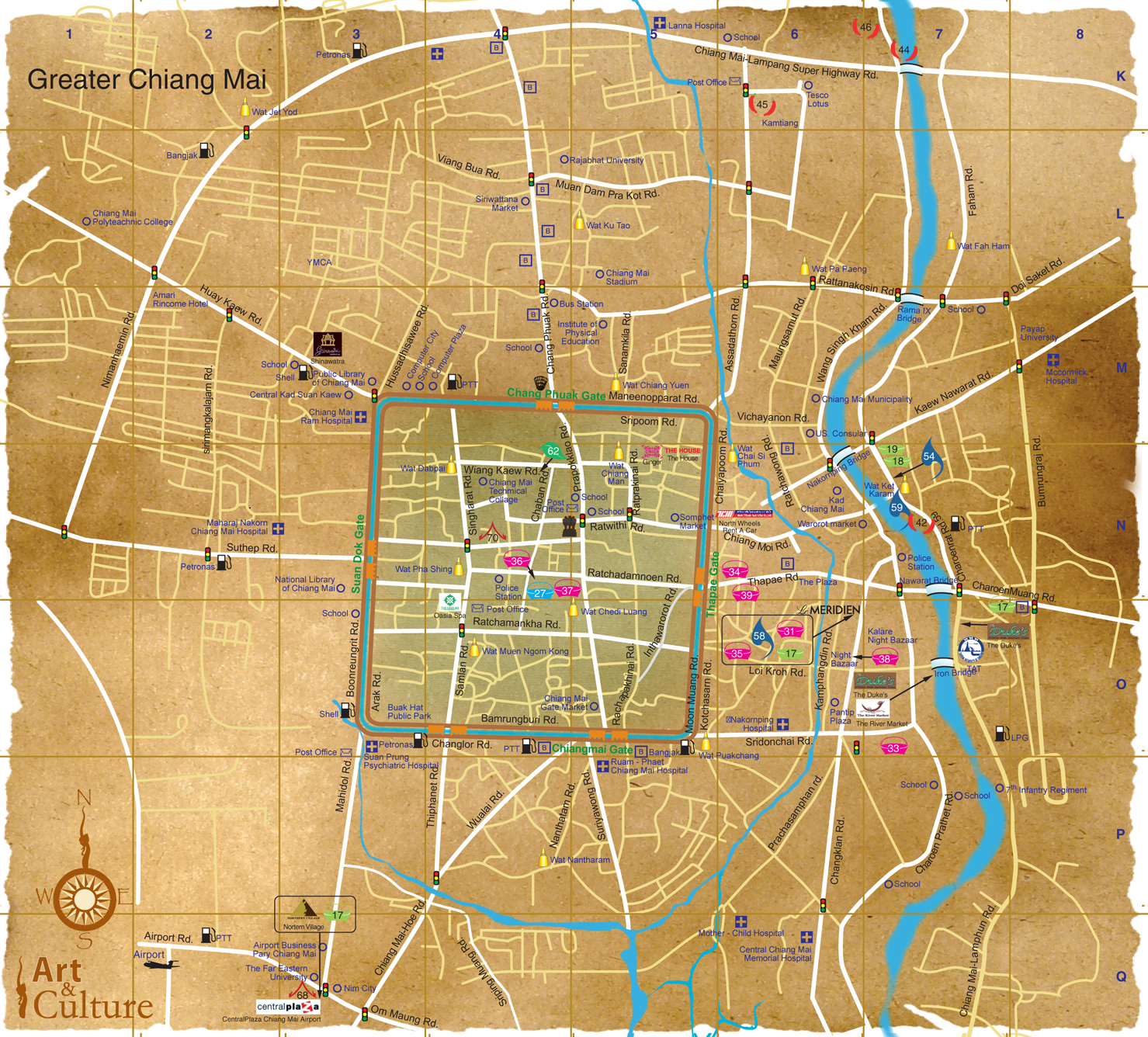
Chiang Mai, the square city

Chiang Mai, the square city (photo credit: artandcultureasia.com)

The city of Chiang Mai was born on Thursday the 8th day of waxing moon, 1296AD, at 4:00am, in the year of the monkey. This we learned at the city’s history museum, which explained that Chiang Mai, like people, has certain personality traits as well periods of good and bad health. I liked this personification of cities and I knew Chiang Mai and I would get along just fine. First of all, I liked its shape. Not many cities have such a strong square moat, with remainders of its crumbling city wall still presiding over residents.

Khao Kha Mu

Khao Kha Mu

And, of course, there was the delicious food. Fortunately for us, Julia and Jonathan had been in Chiang Mai just before we got there and provided some noteworthy recommendations. Two were just north of the city gate, at the Chang Puek market. Recognizable by their cowboy hats, the pork choppers at the khao kha mu (stewed pork over rice) stall are working non-stop to fill the mountain of orders. We joined the crowds, got our plate and doused it with a sweet spicy chili sauce on the table. The slightly sweet pork mingled perfectly with the tangy sauce.
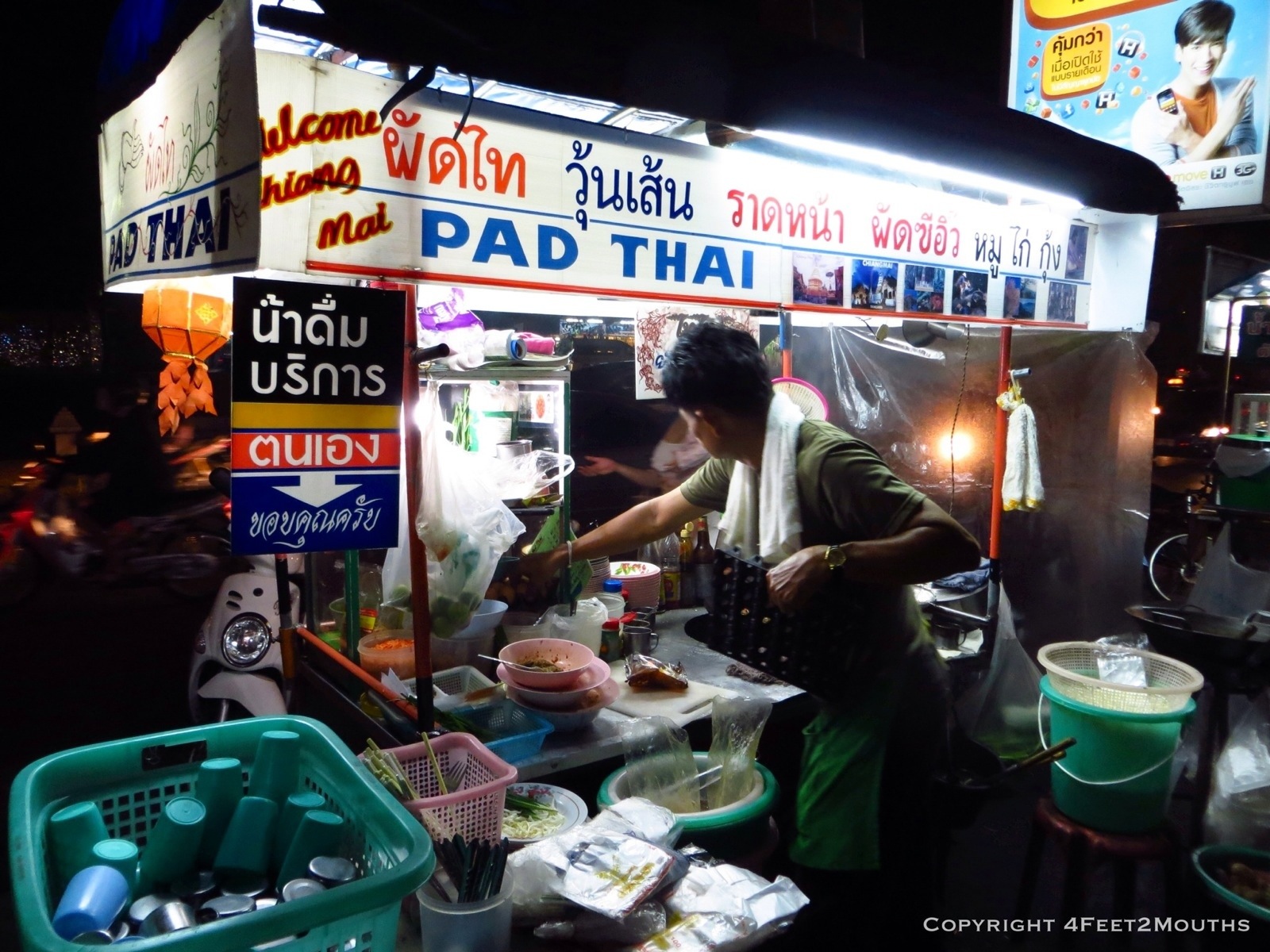
Pad thai stall

Pad thai stall

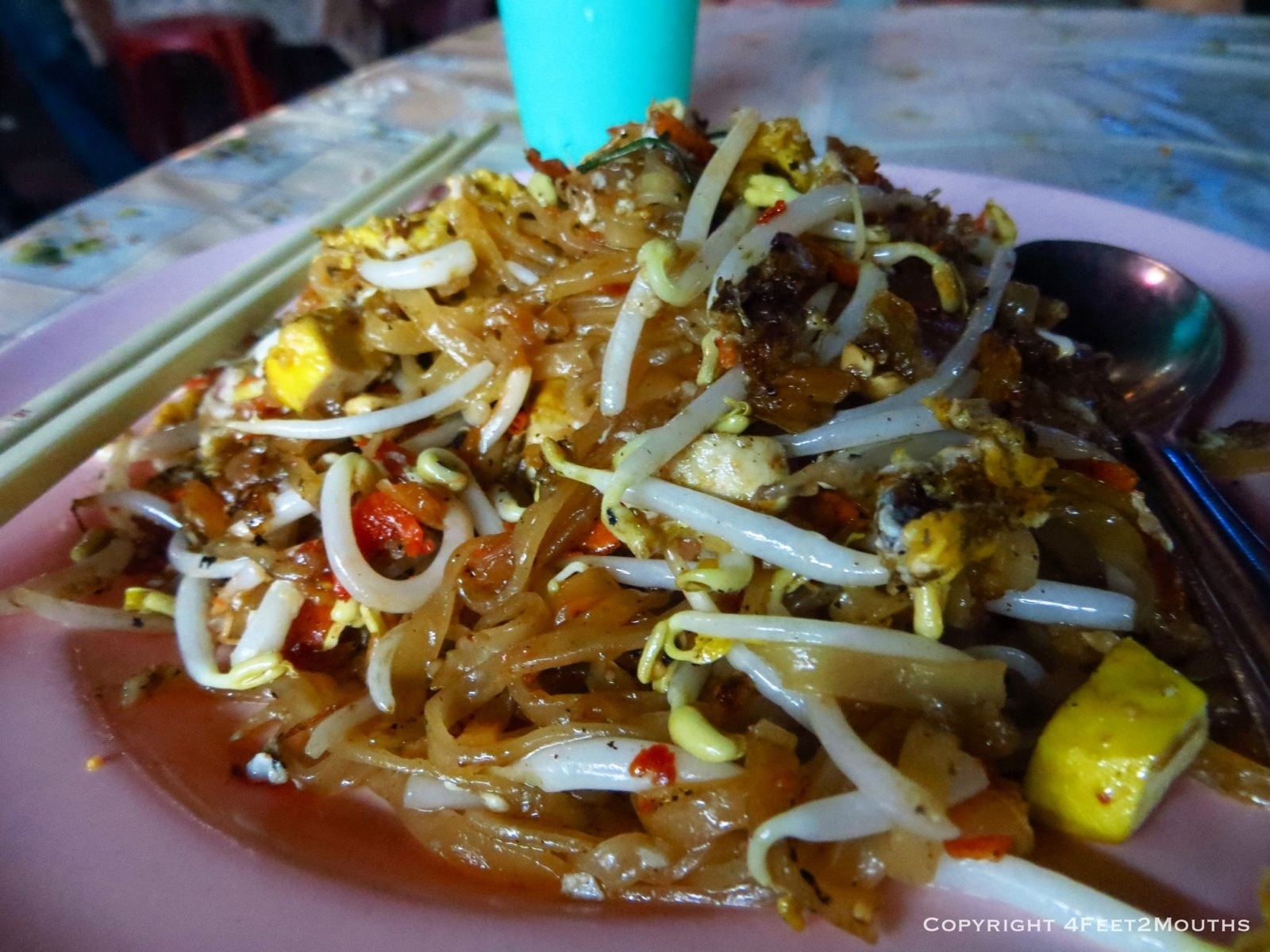
Pad thai close up

Pad thai close up

At the same market, look for the lone man towards the end pumping out pad thai. It was perfect. His pad Thai uses good tamarind paste so is more sour than the ones I’ve eaten in the States. The “original” mix he offered involved tofu, eggs, and dried shrimp. Many thanks to Mark at the Travelfish Thailand blog for pointing out this market!

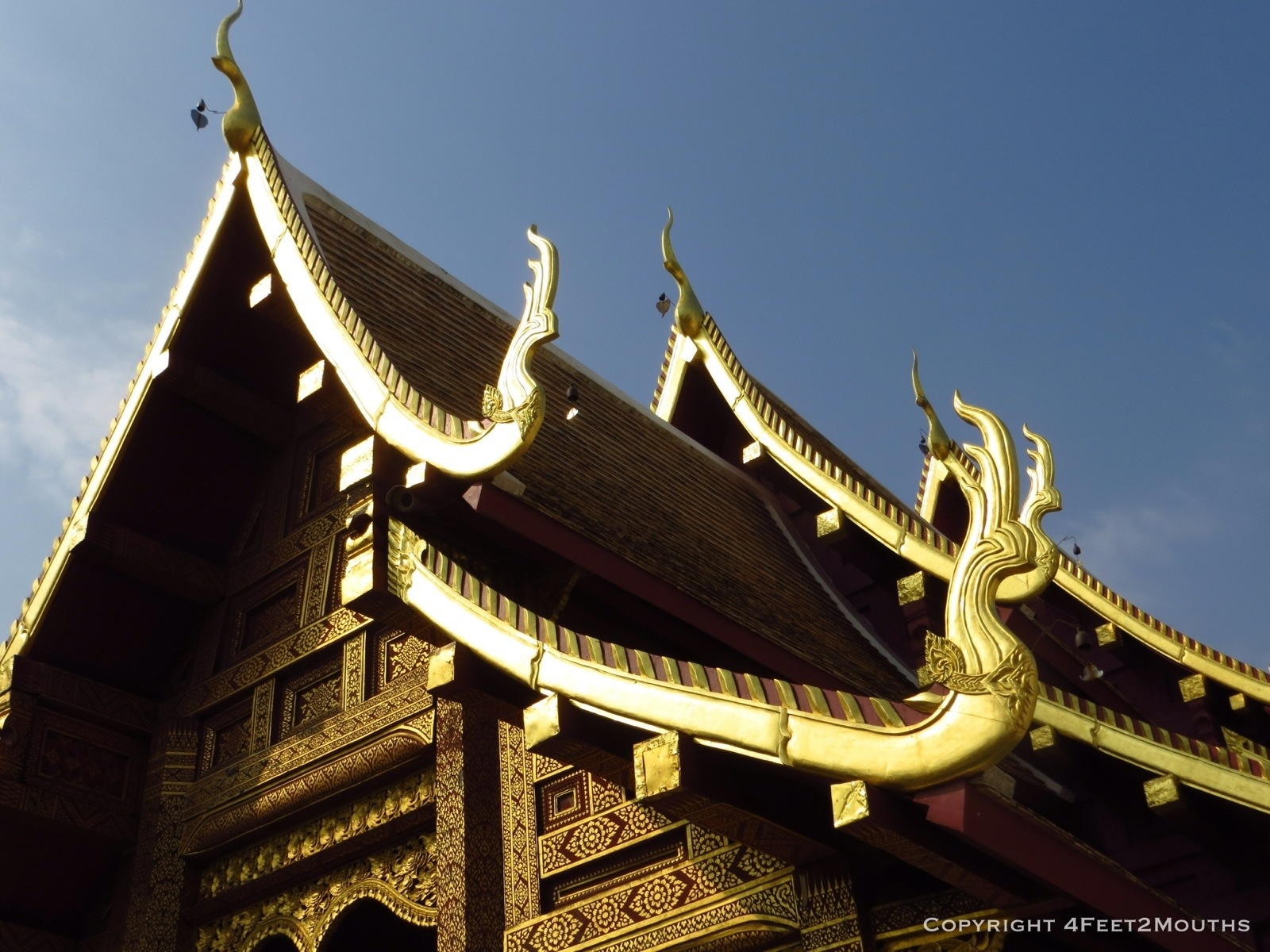
Wat Phan Tao

Wat Phan Tao

Wat Monthian

Wat Monthian

We were not in Chiang Mai for food alone. As the capital of the Lanna kingdom for centuries, Chiang Mai was also a spiritual center leaving a legacy of wats. Every street seems to have two or three. Some are more famous than others, such as the dark teak wood Wat Phan Tao. But all of them have a beauty to them. We really enjoyed Wat Monthian, on the northern border of the old town.

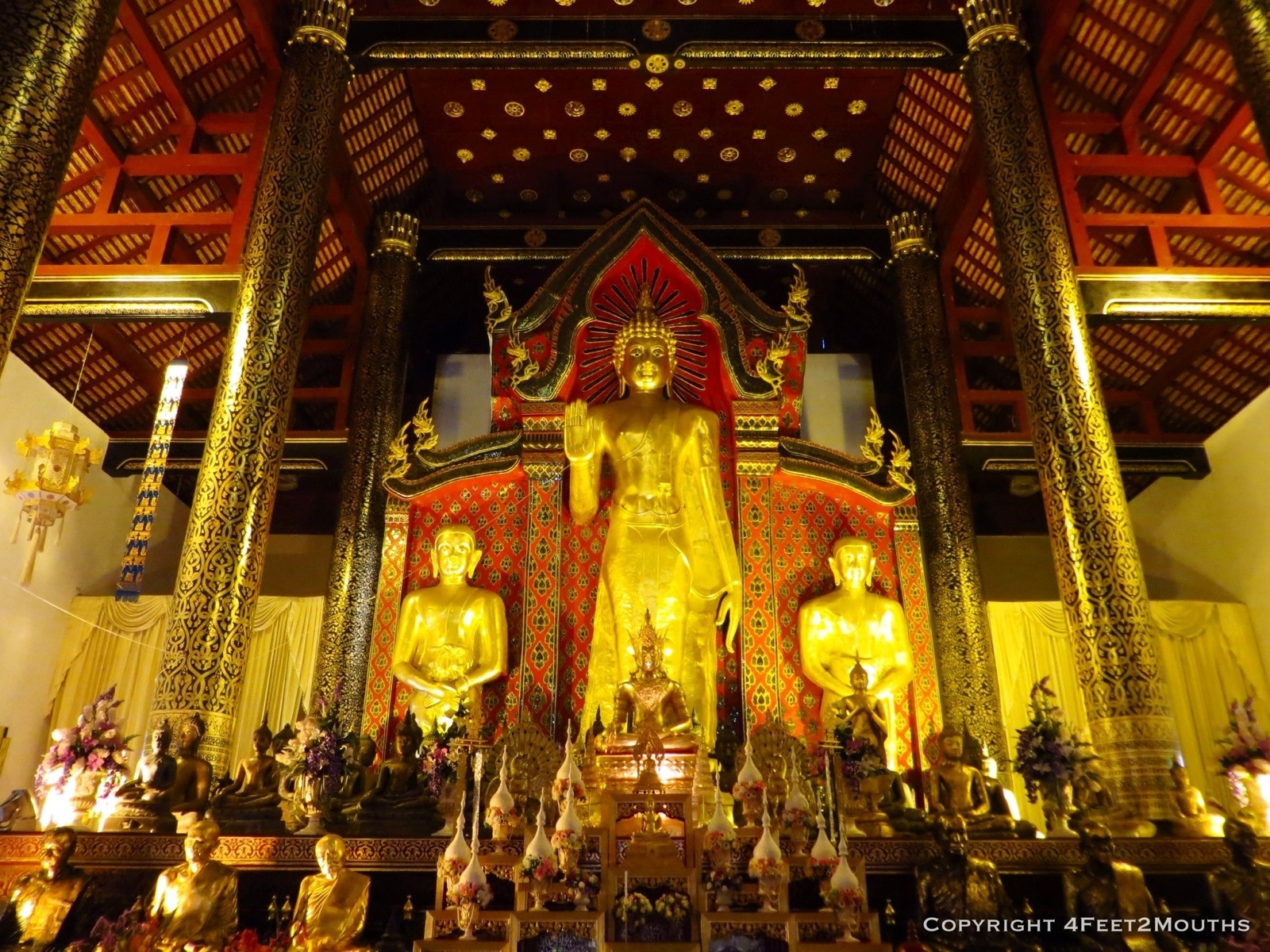
Buddha presiding over Wat Chedi Luang

Buddha presiding over Wat Chedi Luang

Flags inside Wat Chedi Luang

Flags inside Wat Chedi Luang

The namesake chedi

The namesake chedi

Another one of the well known wats is Chedi Luang. It’s large golden Buddha had a string attached to his finger that wound its way around the temple interior. From the string, people hung flags with images from the Chinese zodiac. It was a peaceful place to kneel below the flags, on the thick carpet, and quietly observing people coming into pray. Afterwards, we went to the back of the wat to see the oldest chedi (sacred site usually in a mound or pyramid shape) in Chiang Mai.

Buns!

Buns!

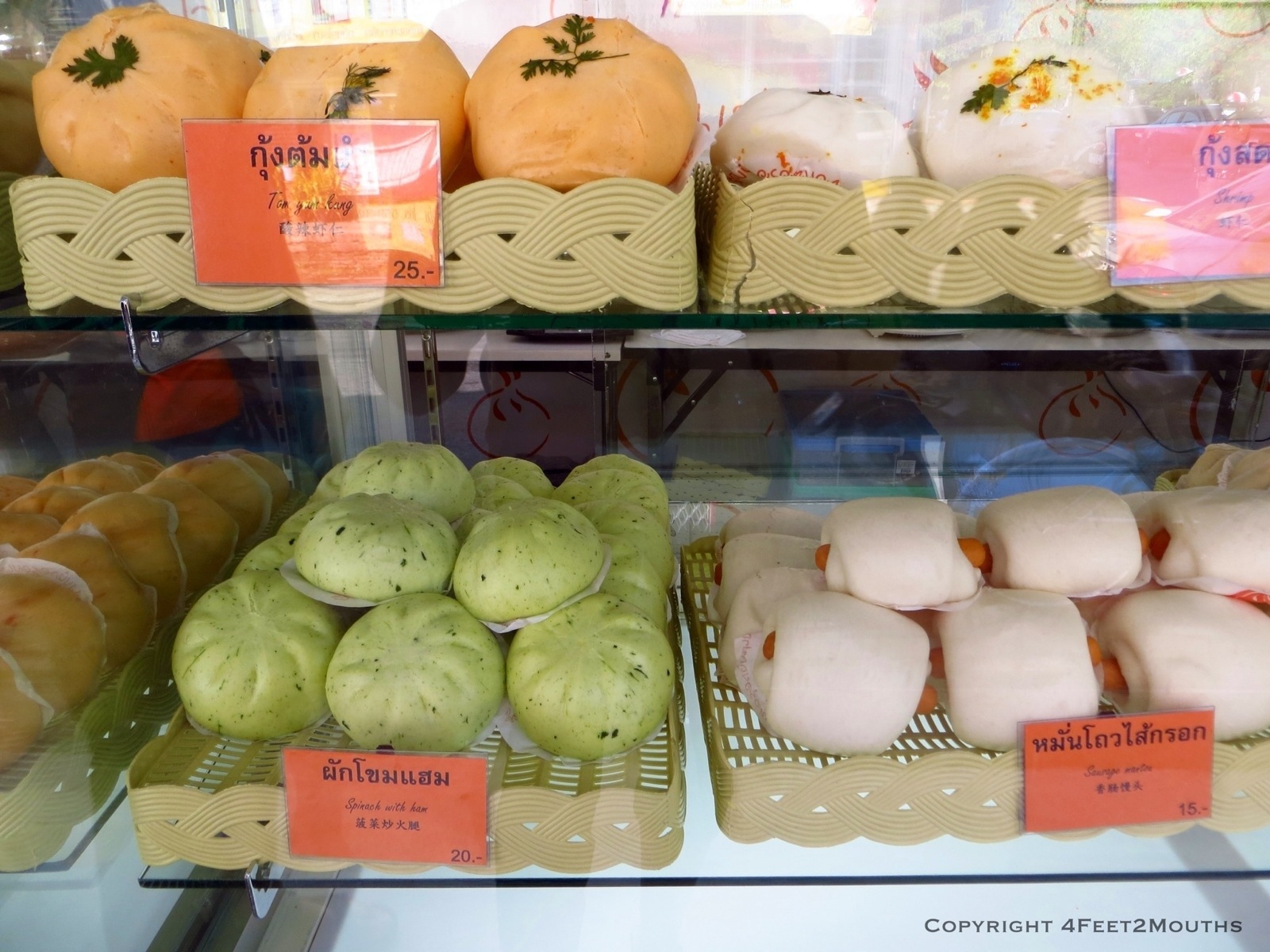
The next day was an important one. It was Nathan’s turn to celebrate his birthday! So what does one do in Chiang Mai to celebrate? Take a bike ride to a nearby wat of course. But wait! On the way we spied a shop selling a variety of colorful steamed buns. I’m used to these being filled by Chinese style pork or red bean paste, but these were different. There was everything from taro to spinach and cheese filled buns. We opted for pandanus and Thai pork buns. They were both good but the latter was revelatory! The lemongrass in the filling was so good and I was soon dreaming up ways to market these fusion bun treats.

White chedis at Wat Suan Dok

White chedis at Wat Suan Dok

Close up chedi

Close up chedi

We did eventually make it to the Wat Suan Dok. It had a number of white chedis for some fun photos.

Huen Phen

Huen Phen

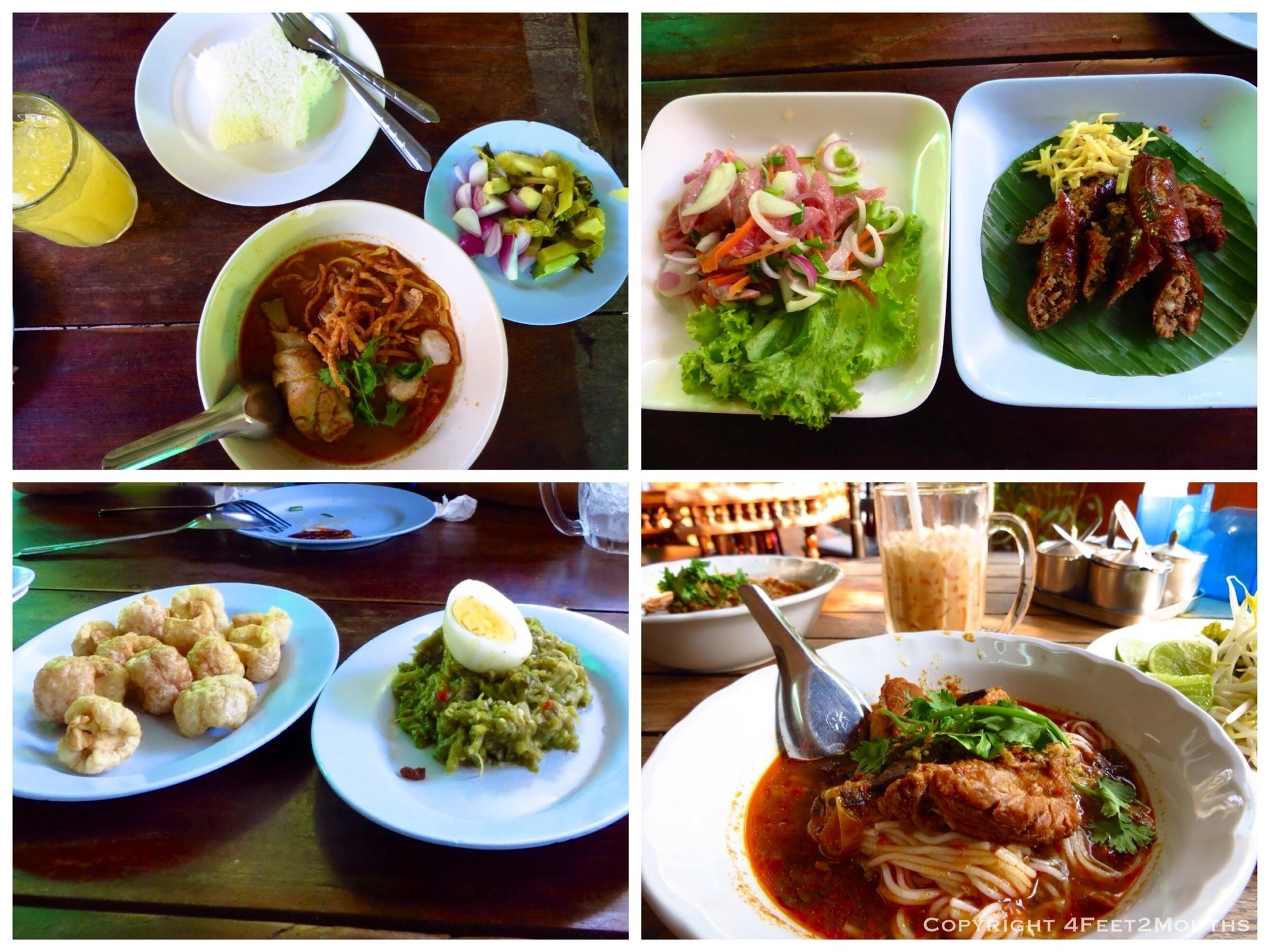
To add a bit of surprise to Nathan’s birthday I researched a place for a good but laid back lunch. Huen Phen fit the bill and offered some great eats in casual surroundings. My favorite was the amazing Thai sausage. I had read about it online and I think it lived up to the hype. It was super tender and well spiced. Another great dish was the khao soi, a curry based soup complimented with pickled veggies to sprinkle in. We even came back the next day, when the little khanom jeen nam ngiaw place we had looked up ended up being closed. Huen Phen’s version lifted our spirits with its rich pork broth, which Nathan likened to Mexican posole.

After our large birthday lunch, we biked our way over to a Thai massage parlor. They are everywhere and hard to resist! Our muscles got twisted and stretched into loose submission. I looked over to see Nathan’s brutish looking masseuse pulling his arms back with all her might while Nathan winced. As we were getting dressed we realized that our masseuses were former prisoners that had participated in a job training program. That explains a few things…

Happy birthday Nathan!

Happy birthday Nathan!

And then there was cake. Not far from our hostel was the Fern Forest Cafe. It turns out the Thai love their cakes so we had plenty to choose from. We opted for a coconut cake with fresh coconut strips lying on top and a brownie with ice cream.

Mango sticky rice

Mango sticky rice

Night market lanterns

Night market lanterns

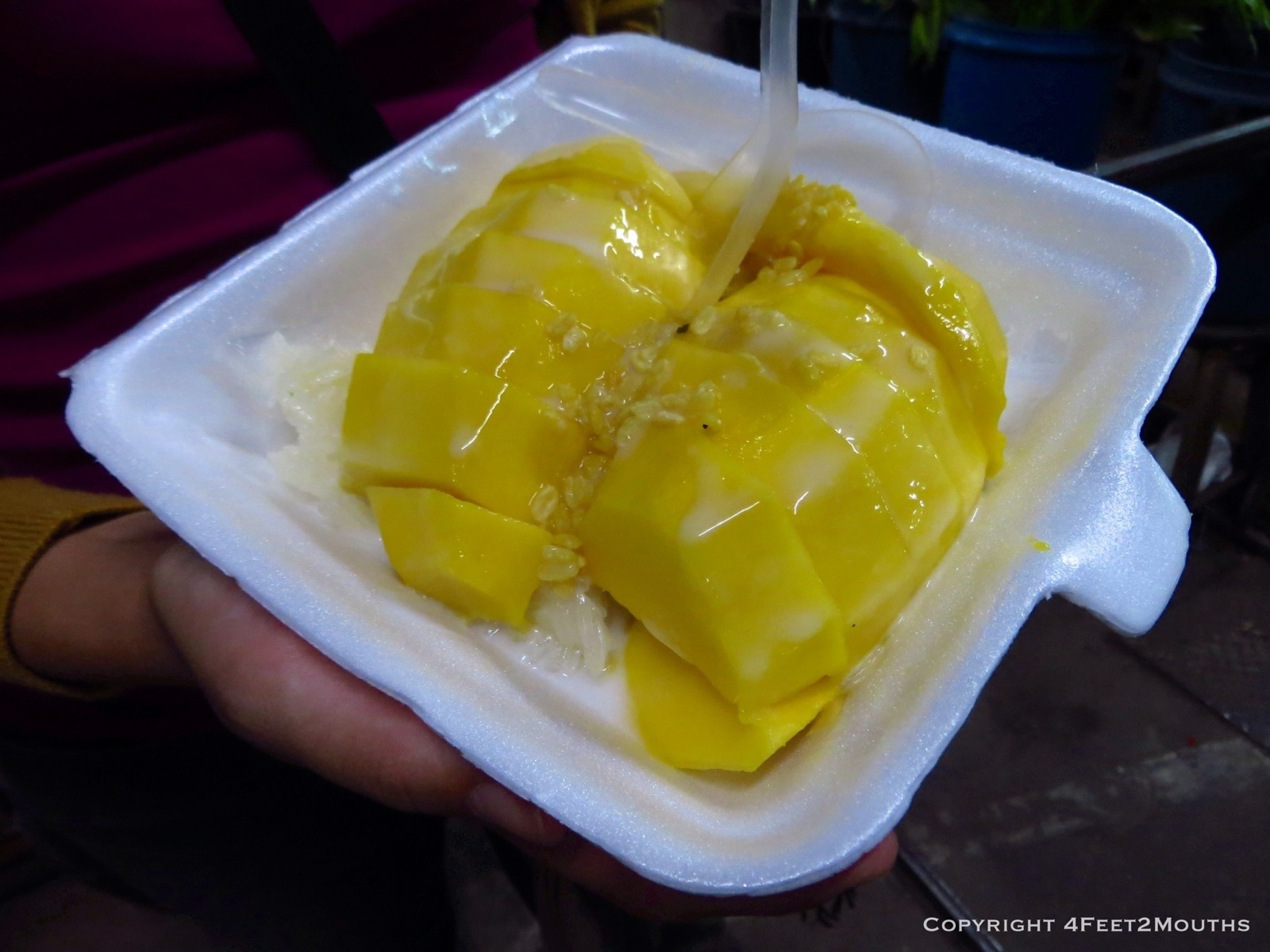
But when it’s your birthday, you can eat all the dessert you want. So that night we bought a final mango sticky rice at the Saturday market. Chiang Mai is particularly known for it’s Sunday market, so I was under the impression that the Saturday one would be rather small. I was completely wrong. It took us two hours to walk through the crowds while checking out the merchandise! Amazingly, there weren’t many vendors selling the same thing.

Dumplings at Sompetch

Dumplings at Sompetch

The following morning Nathan went on a nice healthy run while I slept in (this is usually the way it goes). On his way back he noticed people fighting for tables at a nearby restaurant. That was all it took for us to make it our choice for breakfast. And it was a good one! We enjoyed a variety of savory and delicious dumplings as well as some congee.

Temple roof outline at dusk

Temple roof outline at dusk

Our last day was filled with visiting the city museum and then the mother of Chiang Mai’s markets – the Sunday Walking Street. We were prepared for this one because of our experience at the Saturday market. As expected it was huge and glorious with shoppers shuffling en masse down the main drag of the old town. After perusing the goods and soaking in the vibrant atmosphere it was time for us to catch a bus. Goodbye Chiang Mai, it was wonderful to meet you!

Tribal Villages and Foraged Food of the Nam Ha Jungle (by Nathan)

Riverside canoe at Sopsine village

Riverside canoe at Sopsine village

Real Laos is in the jungle, deep within the banana trees and bamboo forests. Eighty percent of the population of Laos lives in rural communities. Many people live in tiny sleepy valley towns, but some communities are tucked deep into the mountains. Tiny muddy trails meander through the forests connecting the stilt villages of the mountain. We wanted to visit this more rugged Laos, we wanted to learn more about the bountiful food source of the jungle and learn about traditional Laos people. I was getting a little restless and a hike in the mountains was just what I needed. So we packed bare essential packs and loaded into a tuk tuk to bring us to the base of the Nam Ha national protected area.

Sweet jelly and bean soup

Sweet jelly and bean soup

Tiny colorful river fish

Tiny colorful river fish

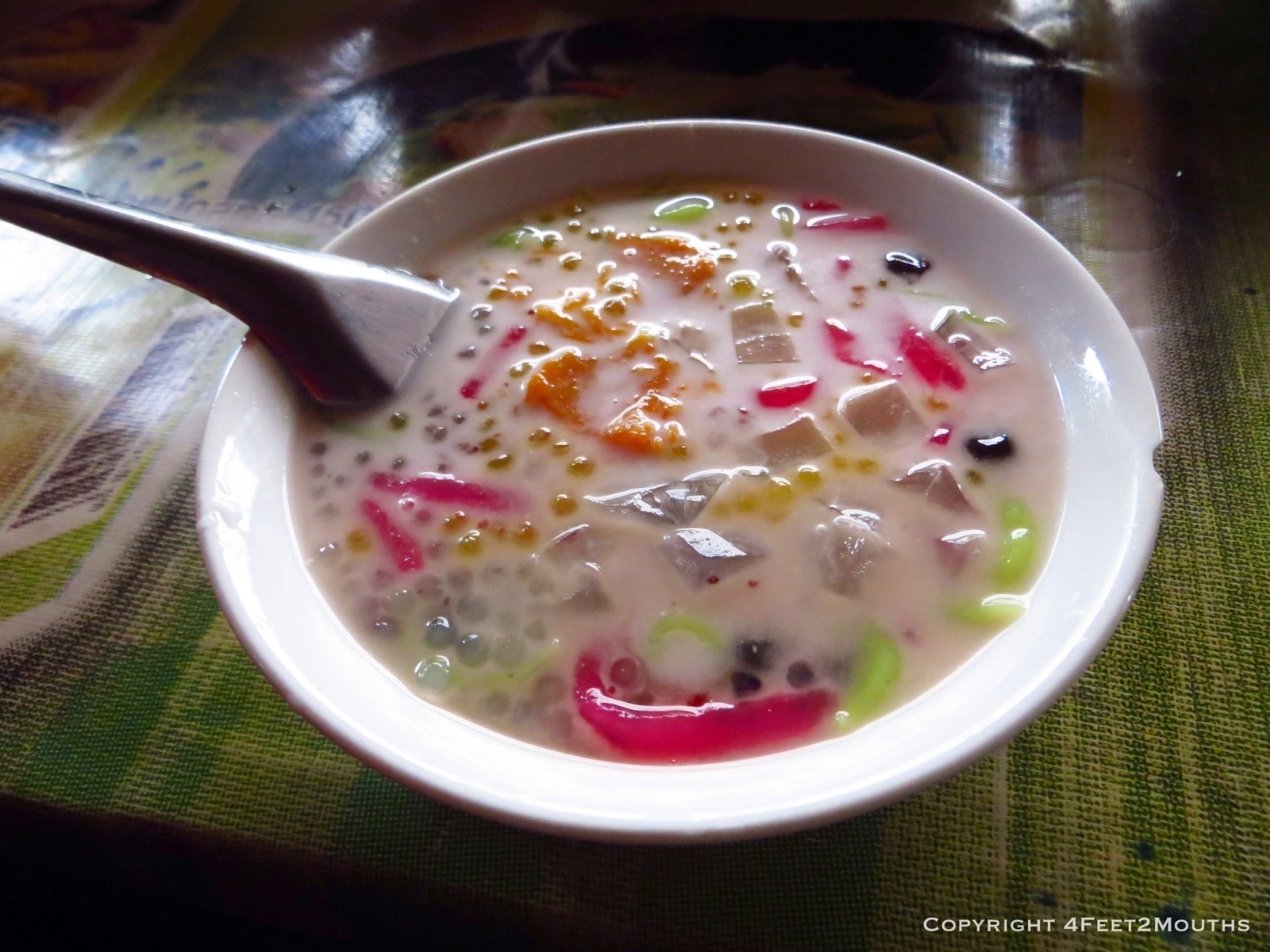
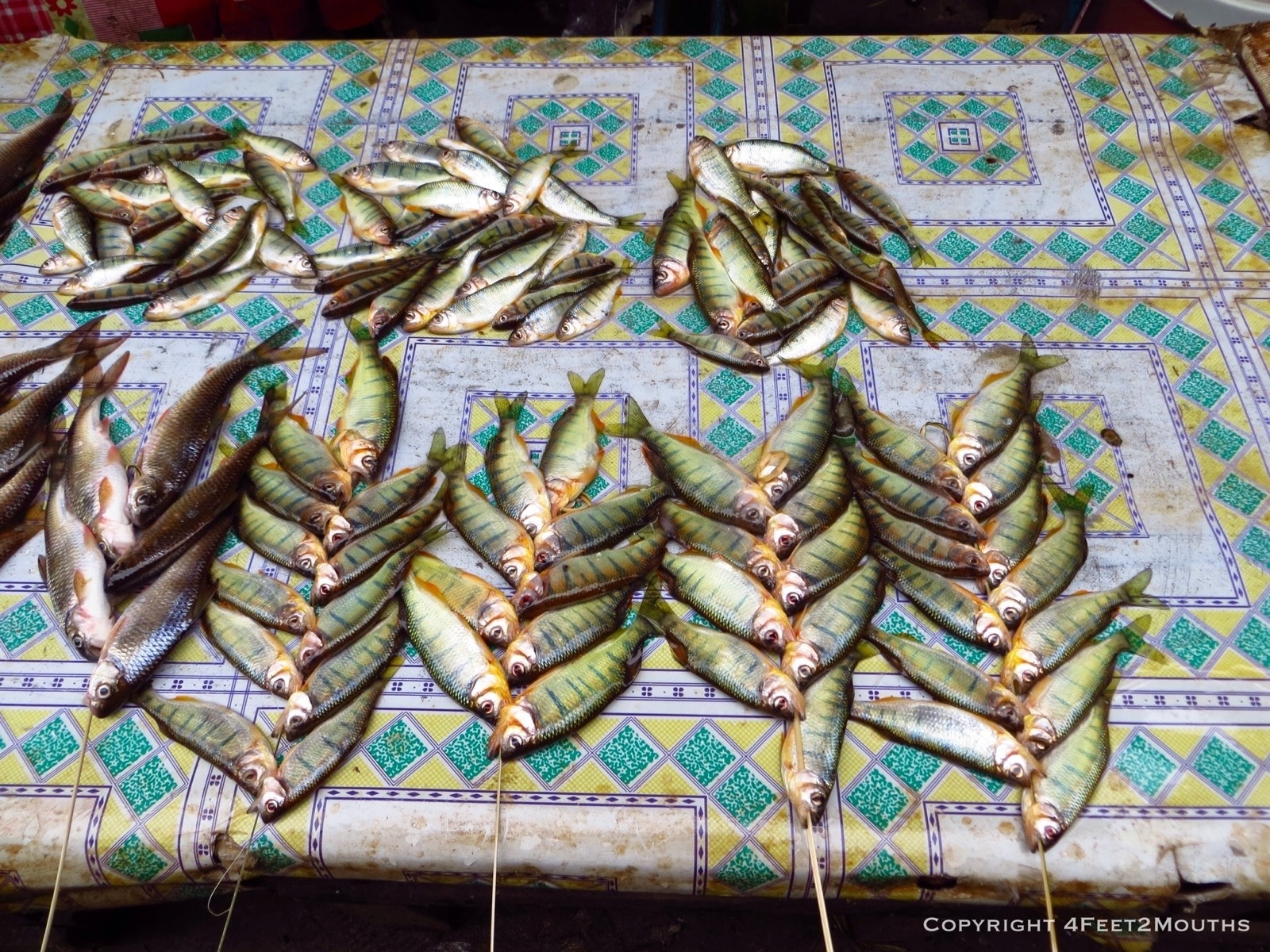
Our first stop was the local market in the city of Luang Namtha. Carmen and I had visited this market a day earlier so we went for our favorites. Some sweet soup with a mix of jellies, beans and sweet milk was first on the menu. On the other side of the market there were these tiny fish that shined with iridescent greens and blues as we passed as well as the usual chopping blocks stacked with meat, blankets mounded with vegetables and a few caged rodents, chicken and ducks for sale at the perimeter. I had been eyeing some local lao lao, a rice liquor similar to what we had in Vietnam.  But this moonshine was more raw and burning, a toxically good late night sipper. It sold in re-used plastic water bottles that often have caps or plastic wrap and a rubber band. I bought one thinking it would be fun to share with the guide and other people in our trekking group.

Carmen being taxied across the river

Carmen being taxied across the river

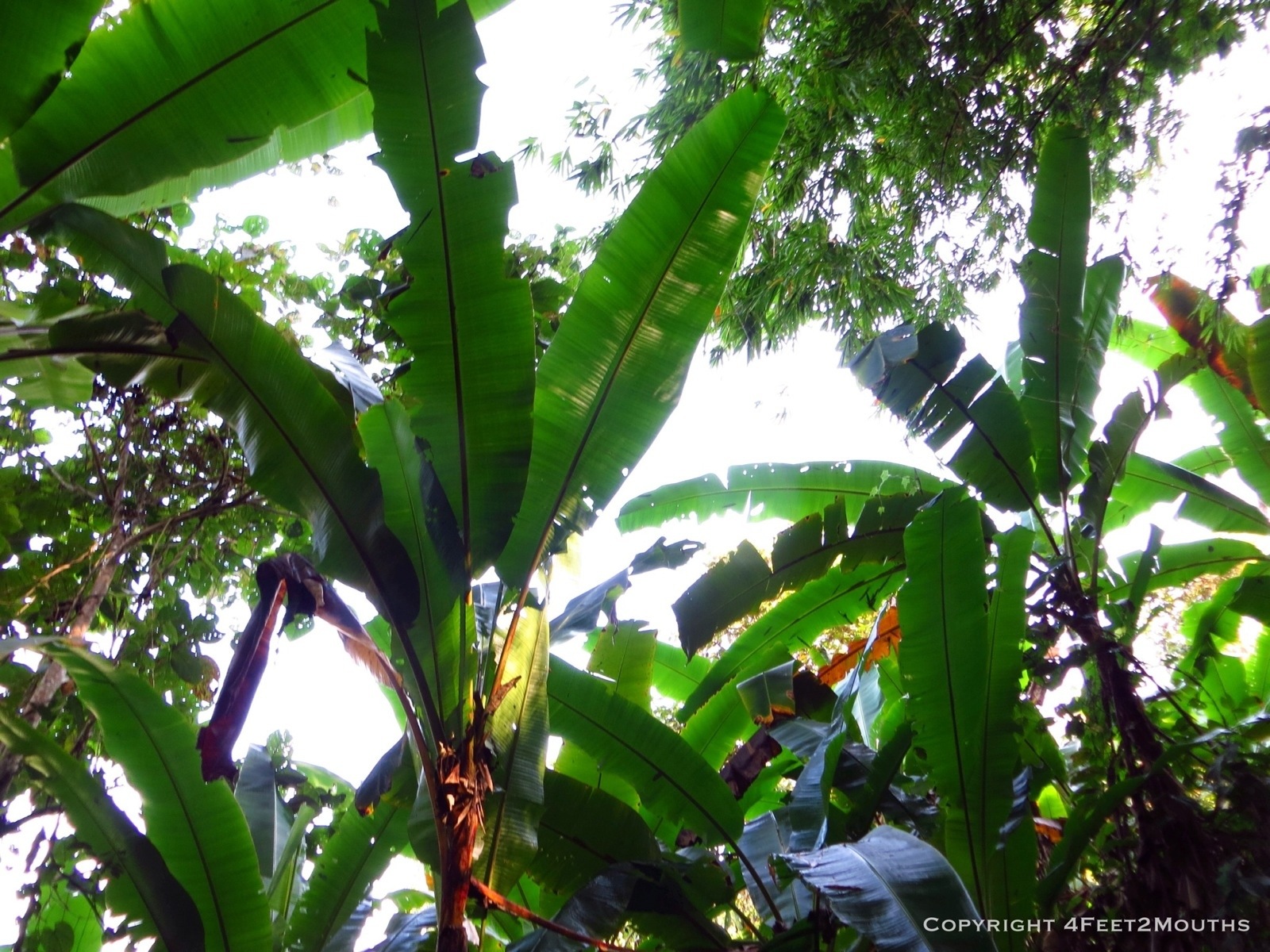
Dense banana leaves provided constant shade

Dense banana leaves provided constant shade

Interwoven bamboo forests

Interwoven bamboo forests

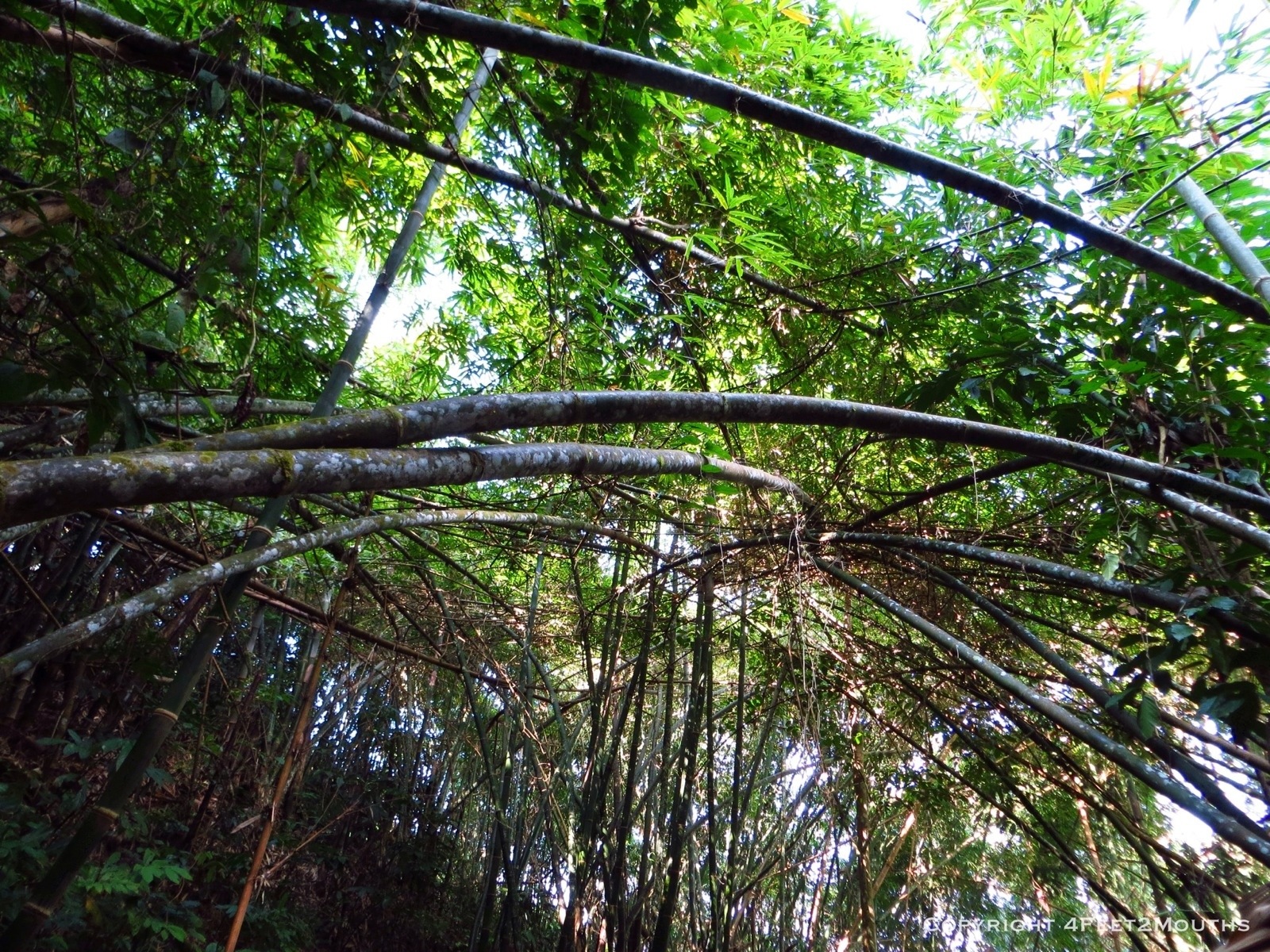
Our hiking began when the tuk tuk stopped at a tiny hut alongside a dirt road. We wobbled onto a tiny canoe to the other side of the river, our trail head. Our guide, Singh, was immediately resourceful in hacking away at the bamboo to create us all walking poles. We stopped to dig up some fresh galangal and to look at the funny local potato. There was almost no visible sunlight as the banana trees and bamboo forests were extremely thick filtering everything in bright greens. The hike was steep and damp. We clambered up the slippery hillside along tiny foot holes dug into the trail. It was wonderful to be walking again, Carmen quickly fell into Camino-like meditations and I enjoyed powering up the hillside.

Bamboo water bottle

Bamboo water bottle

Lunch on banana leaves below a rattan hut

Lunch on banana leaves below a rattan hut

The pace was slow and steady with many breaks. We would stop to discuss local plant life, or try on banana leaf hats, sip fresh bamboo water or test our skills on a crafted bamboo flute. The trail leveled and we pulled off our packs at a rattan hut in the forest. With some banana leaves as our table we consumed our first lunch in the jungle. The food was bought from the market that morning and consisted of a cold pork laab salad with mint and chilies  There was mashed rattan and banana flower salad and a heaping mound of the Laos staple, sticky rice. Re-fueled, we continued through the thicket back to the river Nam Thong.

Animals sharing a feed bowl

Animals sharing a feed bowl

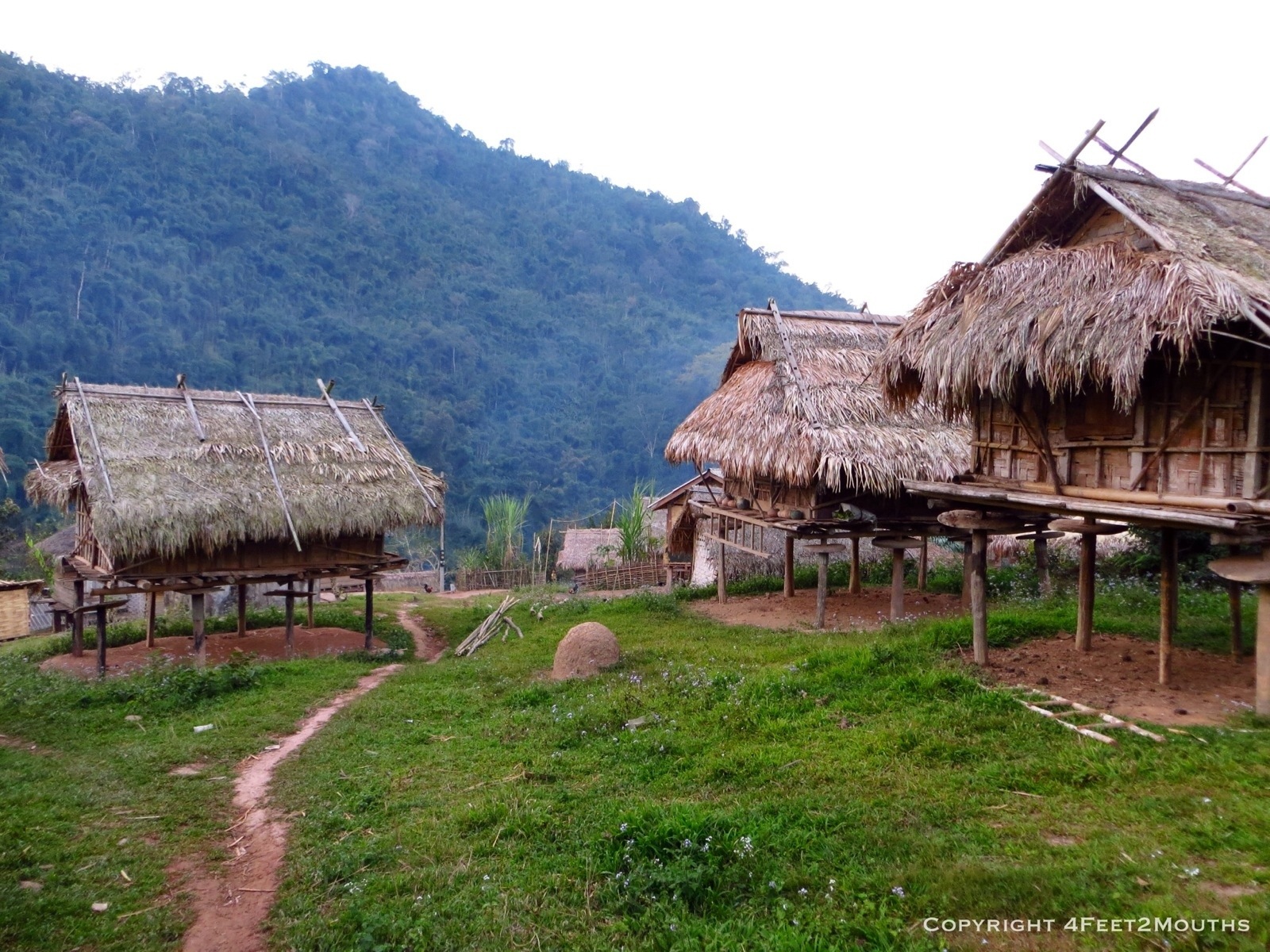
Khmmu food storage at Sopsine

Khmmu food storage at Sopsine

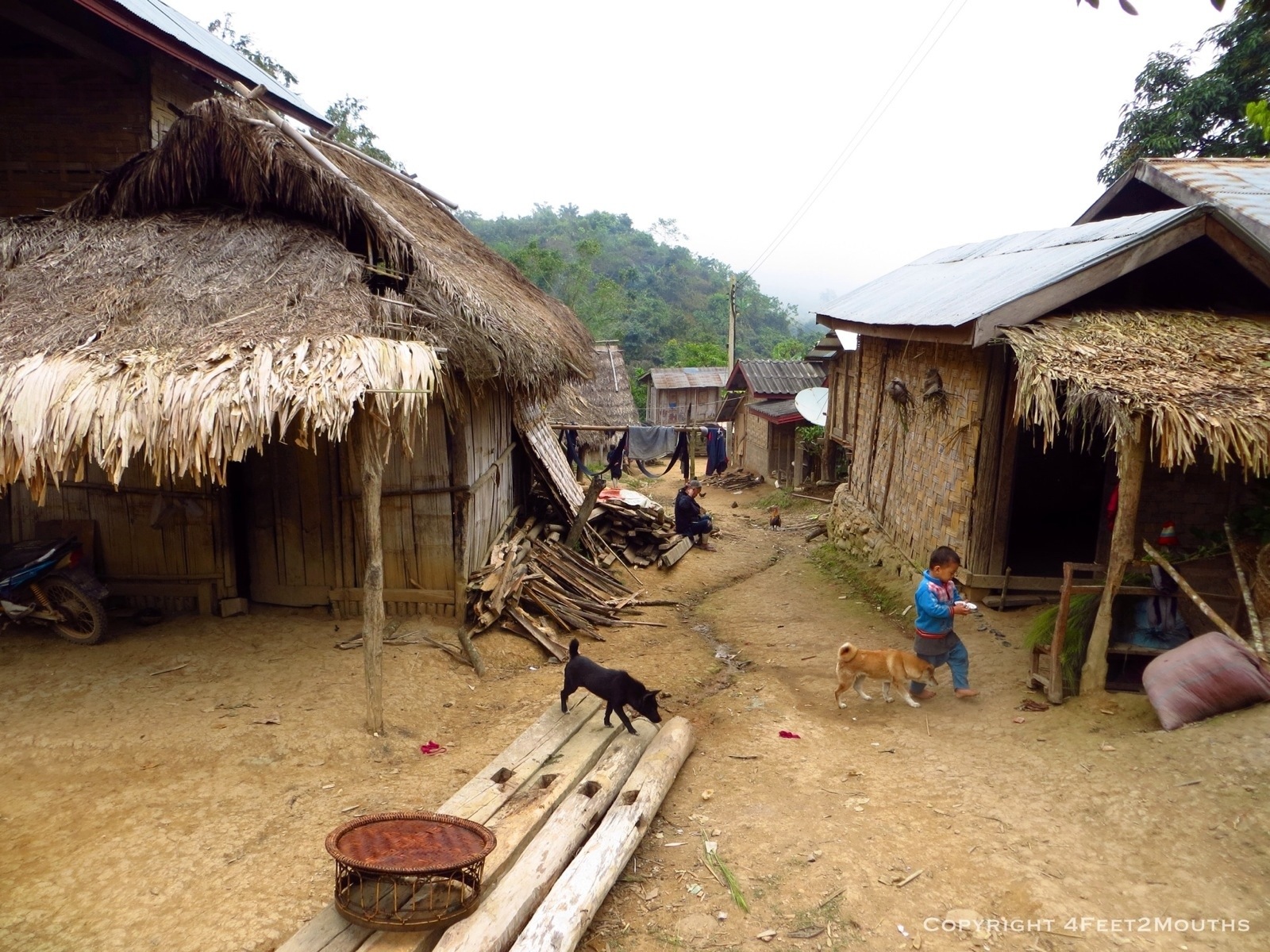
Our first night in the jungle was a home stay with the Khmmu people in Sopsine. There was a dirt road connecting the village from a few years ago, but only a few traveled to town each day. The people mostly survive on subsistence foraging and farming. The whole village was active with fifty or so playing children and hundreds of dogs, pigs, chickens and ducks. At feed time, one of the teenage boys pours some grainy slop in a tire and all his animals attack it with ferocity. It was fun watching piglets of just a few pounds try to fill themselves along roosters and comparably sized puppies. The buildings were fascinating to me of course.  Everyone built their one-story, one bedroom homes on stilts. The kitchens were outside and elevated as well. There was one water faucet in town that was active with hundreds of people that evening. Everyone bathed (fully clothed) at the faucet or the river, and the townspeople were just as intrigued to watch and observe us at we were at them.

Carmen jungle creek crossing

Carmen jungle creek crossing

It was a sad decision for Carmen and I to get rid of our hiking boots after the Camino when we knew that we would be doing more trekking. But it was more important to save weight on our backs than protect our feet. Carmen was cursing that decision after our first day of trekking. The path was slippery and all of us tripped at some point of the hike. Carmen took the trophy.  She typically is more careful and precise in her walking than me, so when she falls the yell and crash is heard throughout the forest. I turned back to see Carmen arms spread out from her sides, mud caked onto her hips and elbows and her right leg twisted behind her. We get her up, we rub some tiger balm onto her sprained ankle and knee and we hobbled down the hillside. In the village that night we were impressed to learn the genuine concern and sympathy that the local women had for Carmen. One insisted that she create a local medicine to apply to Carmen’s ankle; looking at the ingredients of ginger and salt, Carmen decides to proceed. The woman’s face is thick-skinned and weathered, the room is dimly lit by candles, she bends over to more closely examine Carmen’s foot. She looks at it with deep intensity, so close her nose is almost touching the skin, then “wchieu!” The woman begins spitting all over Carmen’s foot. Apparently the proper procedure to make the paste was in the mouth. The she rubs the foot vigorously with her hands and begins blowing on it. Carmen puts her sock on and we look at each other a little confused and desperately trying to restrain ourselves from the unpredictable laughter.

Lao Hai tasting

Lao Hai tasting

That night we also had a healing elixir that we could all enjoy. Our guide Singh learned my interest to try any local concoction of fermented liquor and was excited to share a real Lao specialty. Lao hai is made from rice and husks sealed with yeast and water in a clay jar. It ferments for several weeks, the the two foot clay pot is muscled to some party location. The earth seal is broken and long bamboo straws are inserted into the fermented mash. They then add many cup filled of water which causes the swollen rice kernels to replace the alcohol with water. After a few minutes the bottom of the jar is filled with a delicious alcoholic juice. The taste was extremely sour, sweet with a touch of fermented funk; most specifically like a starburst candy rubbed around in the sediment of an unfiltered beer. After each series of gulps, the liquid would be replaced with additional water until the liquid at the bottom no longer tasted alcoholic. Unfortunately just sipping was not allowed, at first I was encouraged to drink one cup full, then two, then three, then…we acquired another lao hai clay pot…then four more cups of liquor. Then I stopped. It was just a little shy of the apex, but I did good; unfortunately the girl with a sensitive stomach did not fair so well that night and our guide was hungover the next day. Me, well I woke up fresh as a daisy to nearly fifty roosters causing a commotion over tussling a few chicken feathers, if you know what I mean?

Fire in the jungle to cook our lunch

Fire in the jungle to cook our lunch

Heart of rattan and banana flower stew

Heart of rattan and banana flower stew

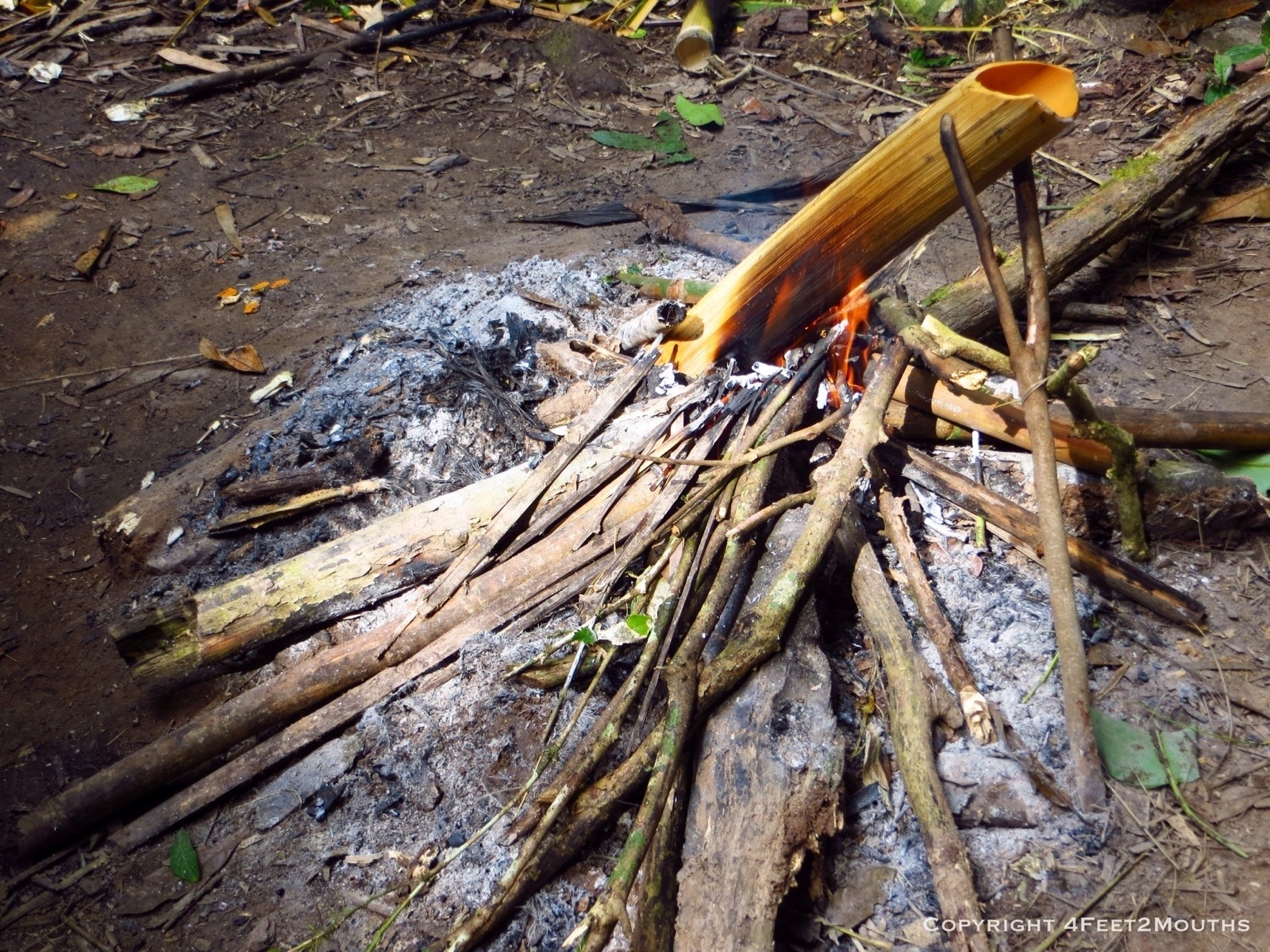
Our second day of hiking would be about 13 miles (20 km) up and down the jungle ridges and following a creek through the forest. The water flow was mild, but we crossed some thirty times on our way to the lunch locations. For lunch, or local guides from Sopsine foraged for several stocks of rattan, we stripped them of their spiny bark and separated the crisp pearly heart. The banana flower was also deconstructed and the most tender pedals and filaments were kept and the bitter tougher sections discarded. They chopped a four inch diameter section of bamboo into a two foot vessel. In goes the rattan, banana flower and water; then stuff from the packs: onion, chili peppers, pre-cooked beef. This bubbled and stewed over the fire for 45 minutes when it was drained into a bamboo boat serving dish. A handful of sticky rice on a banana leaf plate and we feasted.

Our local guide cutting down banana tree

Our local guide cutting down banana tree

Butterfly in the forest

Butterfly in the forest

At the time it felt so easy and resourceful to use the jungle in this manner. We were able to feed and use the everything around us. I followed our fourteen-year-old guide into the forest. He was wearing flip flops that I saw him repairing earlier, I had my sneakers. He moved so fluid through the jungle that my loud trampling run could barely keep up. We make it to a grove of banana trees and he points at the leaf above. I think he is going to climb the fifteen foot stalk for a flower or leaf, instead I dive for cover as he slices through the eight inch trunk with four on-target whacks with his machete. He cuts off two of the six-foot leaves and we drag them to serve as a table-cloth. The area of our hike is a national protected area, but it felt like the local people and the tour groups do little to actually protect it. As a tourist, and outsider to the area, regretfully I am also a contributor.

Ants diligently and resourcefully traversing a log

Ants diligently and resourcefully traversing a log

Creek mushroom

Creek mushroom

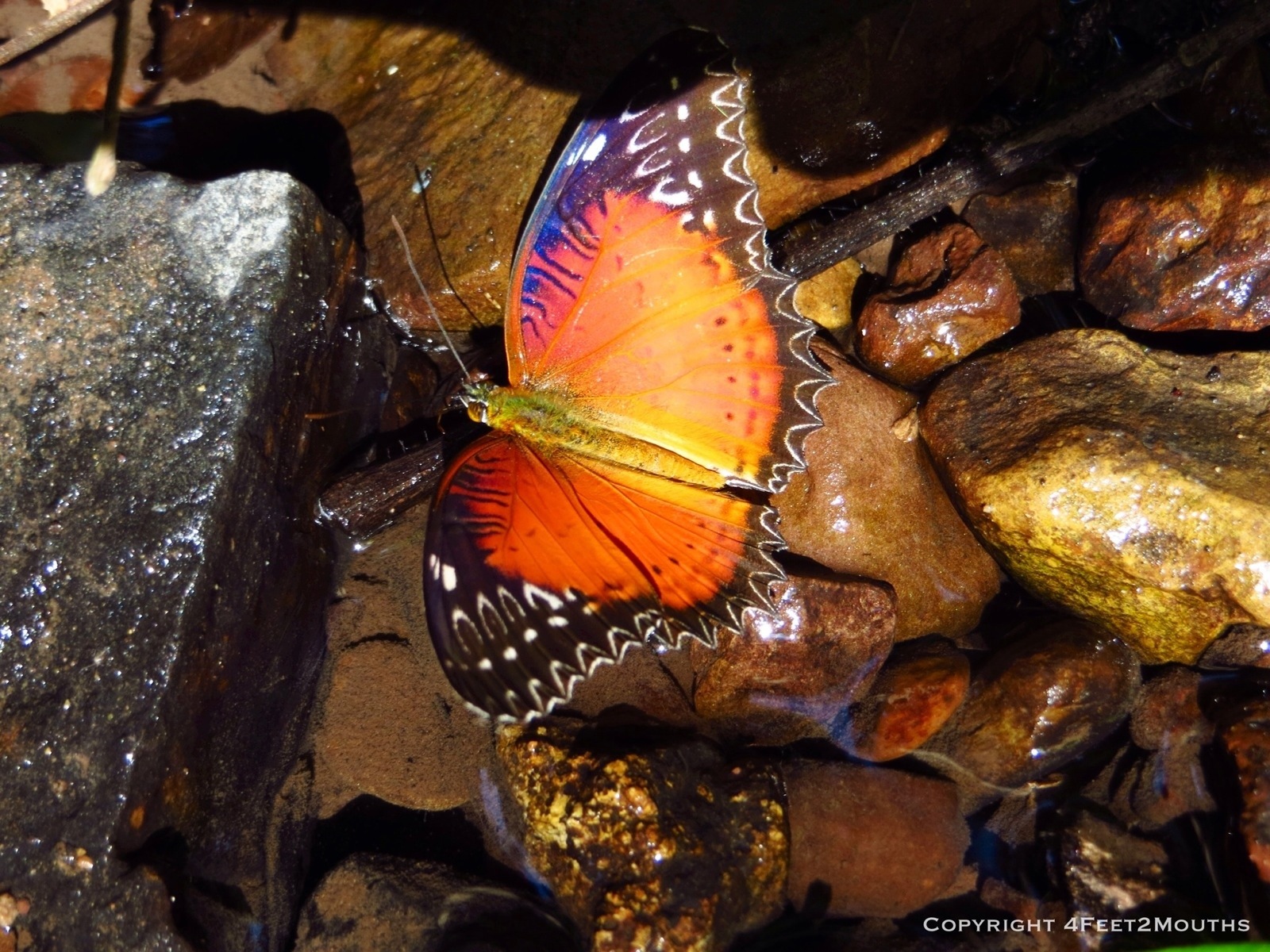
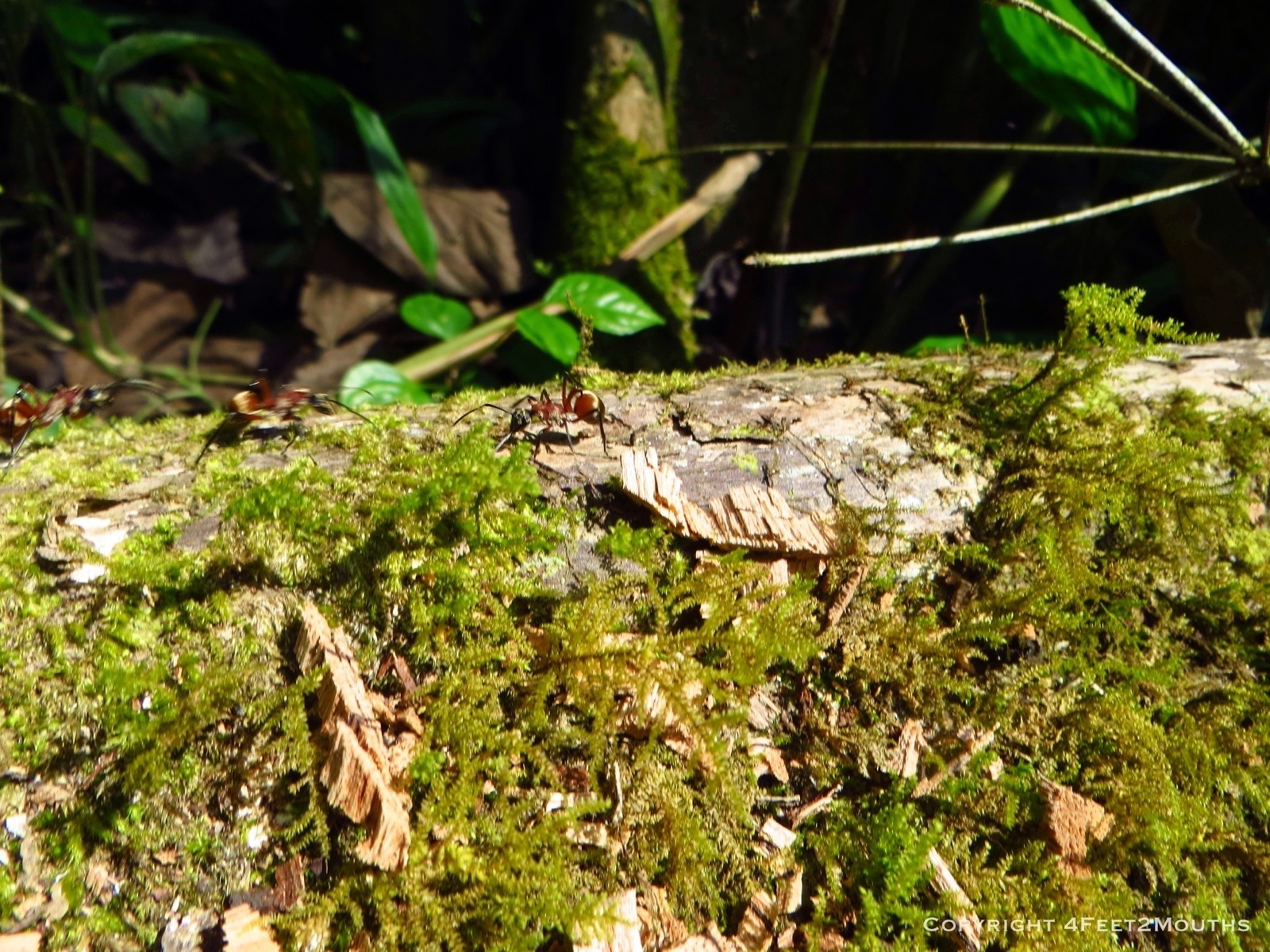
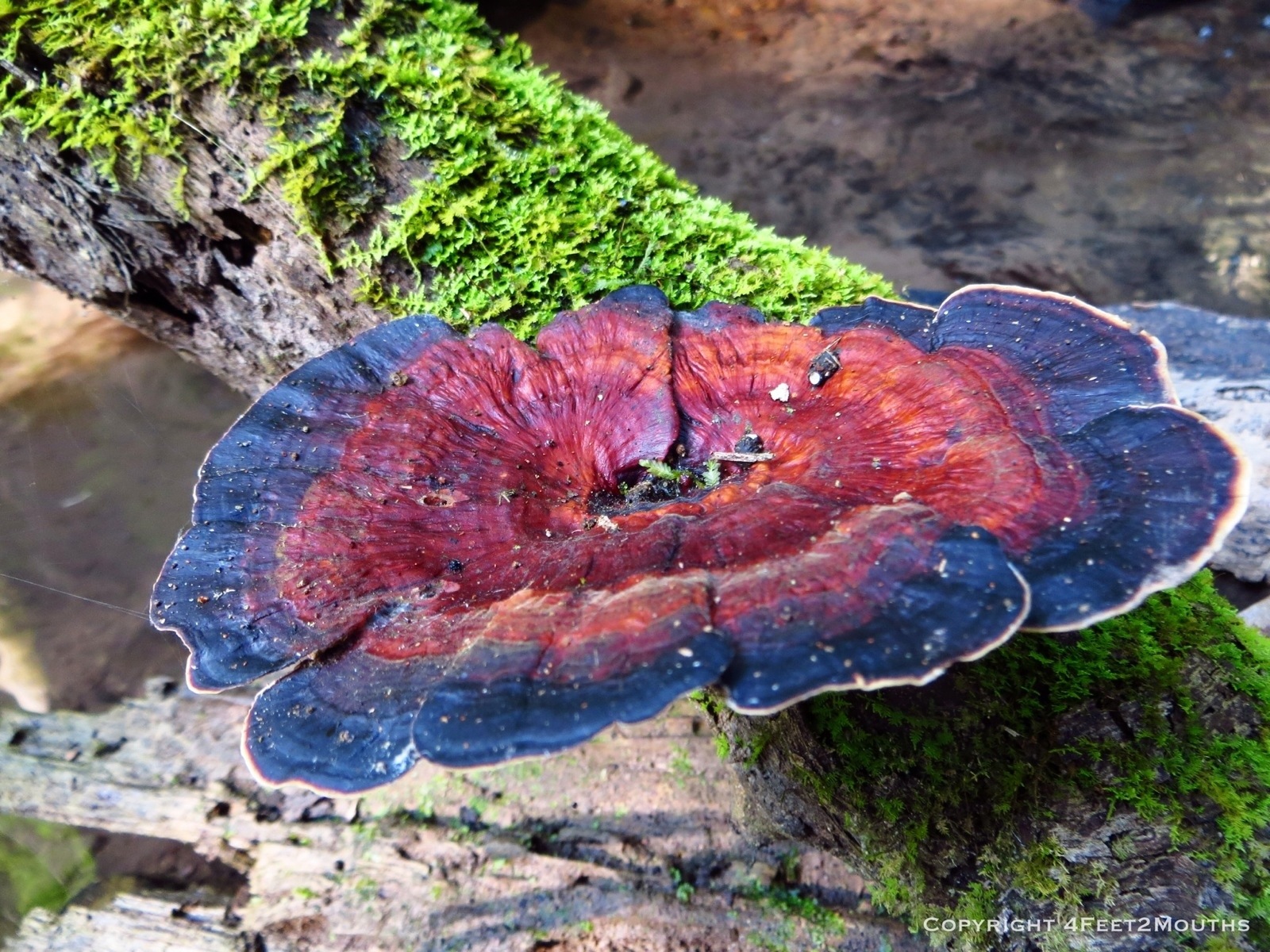
Shortly after this I started noticing the heaps of rattan and banana scraps that have been left in the river, the forests of banana trees decimated and the enormous teak trees felled and milled into timber. I also noticed the beauty in the small creatures of the forest: a handful of ants, a butterfly and a mushroom. We passed three hunters that were illegally (but hungrily) searching for monkeys and birds on our trail. We did not see any animal wildlife during the three days. Singh, was really empowering as a guide, he literally picked up every piece of plastic he saw during our trek. Nevertheless, he still lit the fire with plastic bags as the starter. I think the people generally care about their environment and jungle, but their people have been surviving here for hundreds of years despite the imaginary protection zone that encroaches near their village. I have mixed feelings- I thoroughly enjoyed learning about surviving on the jungle, but I was uncomfortable seeing the effects of tourists like me to the jungle. The jungle is bountiful and I am happy that we had a chance to experience it.

Carmen under our "hut" next to the fire

Carmen under our “hut” next to the fire

Cheers! Real bamboo cups

Cheers! Real bamboo cups

That night we were roughing it. We laid out our cheap borrowed polyester sleeping bags on banana leaves beneath a tiny bamboo and banana leaf shack. We had a fire that I turned into a bonfire and I was later scolded for using up all the wood (that I gathered). We cooked again over the fire, but the night was short. We were all tired, a little cold and eager for the deep sleep that accompanies a long day of hiking.

Nam Khone farmland

Nam Khone farmland

Village street of Nam Khone

Village street of Nam Khone

Traditional Lentan fabric-making

Traditional Lentan fabric-making

The next morning we woke early with hot chocolate from bamboo mugs and fried rice our of banana leaf bowls. About a half hour walk into the jungle and the trees disappeared to make way for the Lentan village of Nam Khone. Many of the people of these communities have heritage from from Tibet and southern China as they were once refugees that settled in Laos two hundred years ago during Chinese civil war. The houses were mostly built on stilts with tangled alleyways confused with roaming farm animals and children. We hung out at the new school that the E.U. had built as well as watching a group of women unwind and prepare to weave a traditional fabric. The women tie their hair in a tall bun above their head that is decorated with silver coins, a thick indigo fabric is wrapped around their body and white wool angle-warmers finish the traditional outfit. We crossed through the village to rejoin the trail that climbed into the bamboo forest.

Three farmers carry their daily harvest across the river

Three farmers carry their daily harvest across the river

We hiked for several more hours that day. We cooked again using rattan, banana flowers and bamboo. It was so nice to be hiking again, up and down the mountains and through the forest is always an exhilarating experience that I enjoy. The end of our trek was met with a quick swim in the River Nam Thong and walk through the roadside village of Bom Pieam. We loaded into the tuk tuk and bounced our way to Luang Namtha. The jungle was a wonderful opportunity. We were able to gain insight about the people and their environment as well as forage for some of our own food. The impacts of our presence was not fully positive, but I value the experience enough that I would probably do it again.

Rice noodles with red sauce

Rice noodles with red sauce

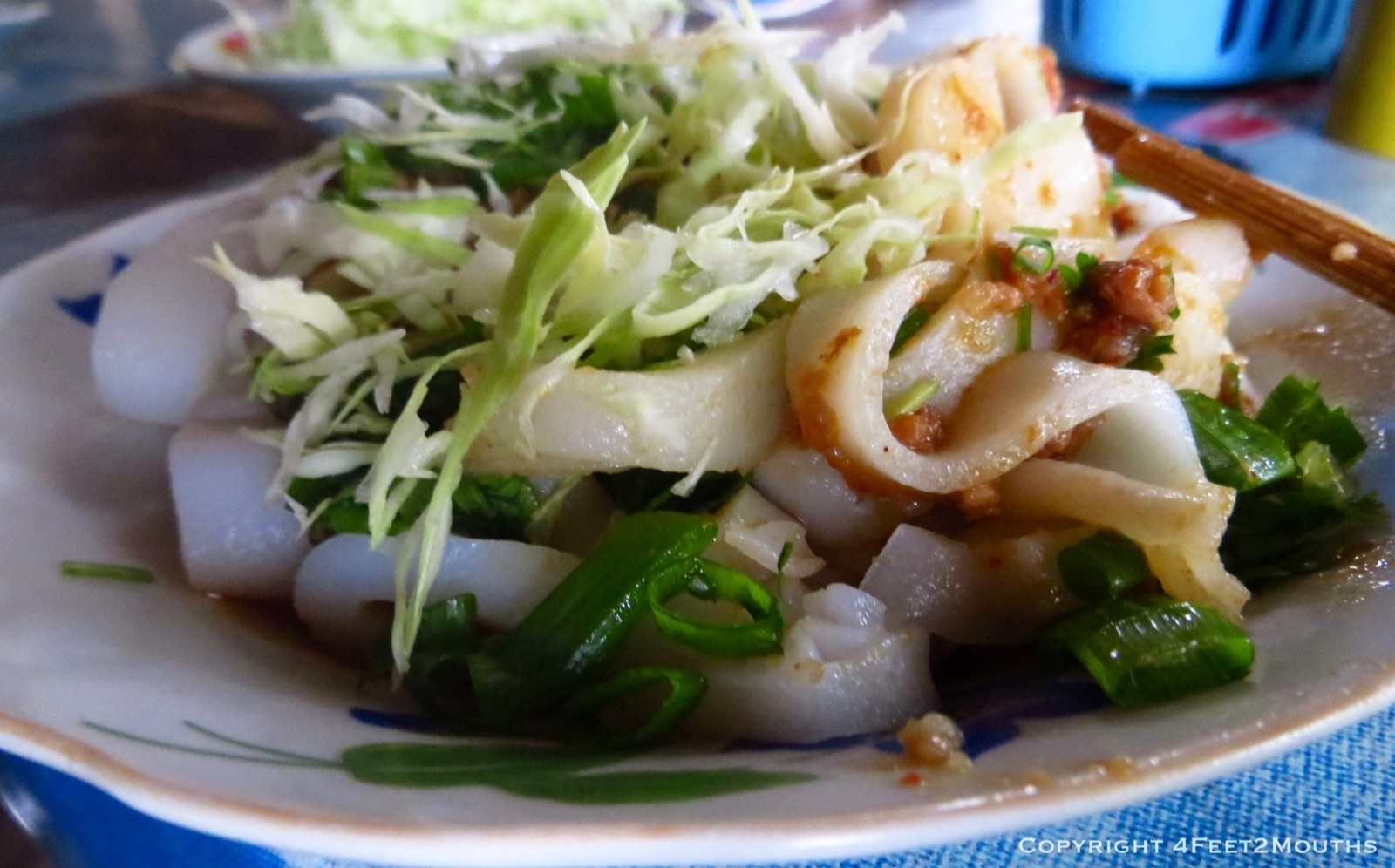
That night we again slept like babies, exhausted from our trek. Our morning was rushed, we packed, checked-out and scurried around town in search of breakfast. We settled on someone’s front yard turned into a restaurant. We were given steaming bowls of rice noodles with some mysterious red sauce. I do not know if this was intended, but the end product was a delicious pasta bolognaise. Spicy and thick with tomatoes and herbs, we shoved in chop stick full after chop stick full. What luck for us to find a delicious local dish that could please our nostalgic appetites.

Nam Ha Jungle trekking map

Nam Ha Jungle trekking map

We Found Uncensored Internet! (by Nathan)

Yuan Yang Rice Terraces

Yuan Yang Rice Terraces

Thank you for your patience as we made our first pass at China. We are now in Hong Kong with this wonderful thing called fast uncensored Internet. We have so many spectacular stories to share with you. First we have to rewind to South East Asia where we were exploring Laos, then we’ll stop over in Thailand…then…Ch Ch China!

Yunnan spicy tofu rice noodles

Yunnan spicy tofu rice noodles

Post Navigation