4 feet 2 mouths

walking and eating our way around the world

Archive for the month “March, 2013”

Why Chongqing Hot Pot Has Ruined My Clothes And I Still Love It Anyway (by Nathan)
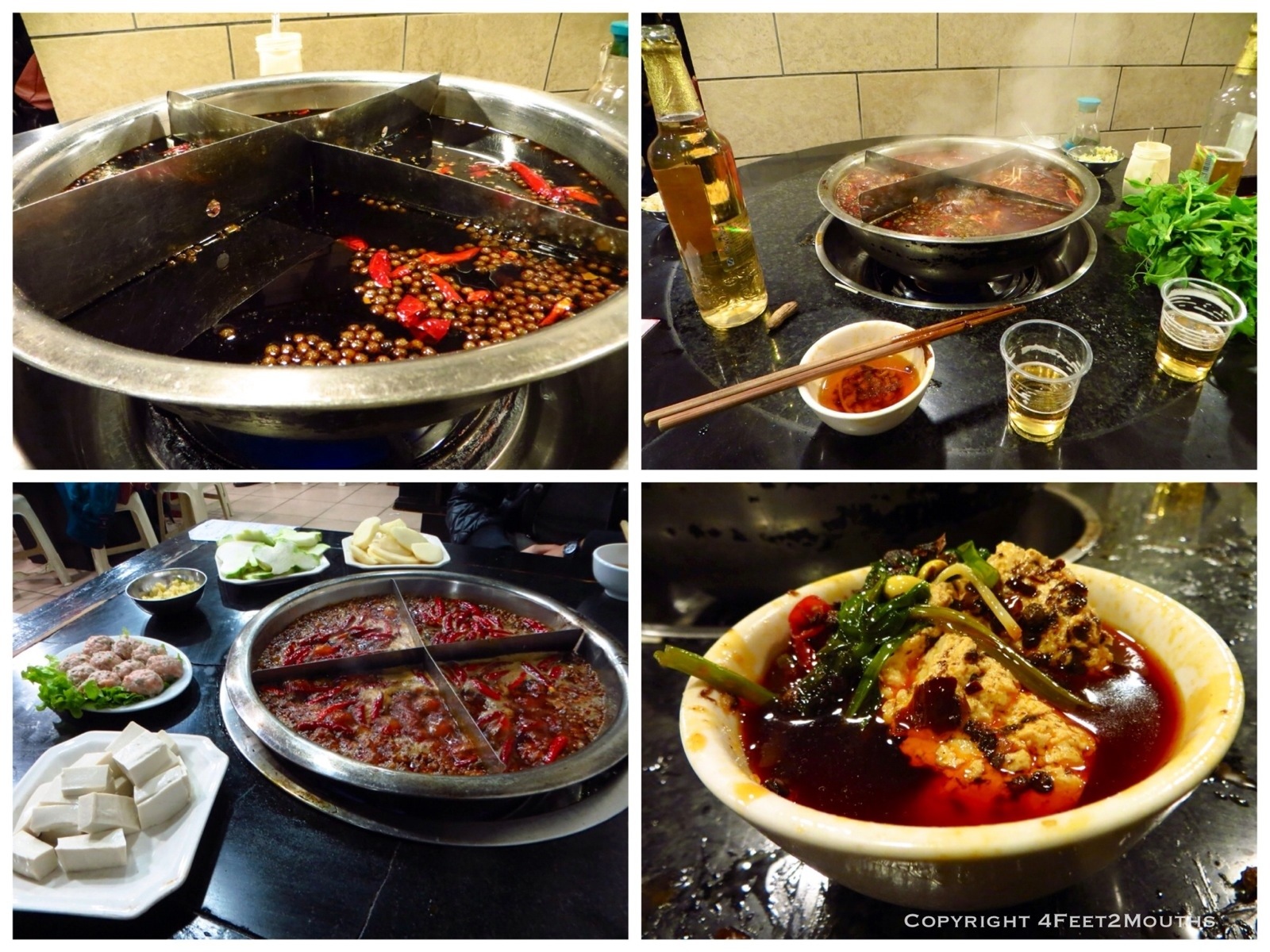
The glorious Chongqing hot pot

The glorious Chongqing hot pot

Hot pot is more than dinner, it is an experience, and in Chongqing, it is a ritual.  A huge pot gurgles and spits spicy broth in the middle of the table.  Countless plates of vegetables and meats are ordered and plopped in the broth.  The cooked treasures are then fished out with chopsticks then dunked in crushed garlic and sesame oil and shoveled into hungry mouths.  In our visit to Chongqing we were determined master eating hot pot, which to us, meant getting through the meal without dripping it on ourselves.  I was hopeless and I had to revise my goal to ten blotches; Carmen had amazing skill and grace until I accidentally flung a slippery piece of tofu into her bowl and splashed oil all over her shirt and pants.  Not good when we only packed two pairs of pants.

Chongqing apartment towers as seem from a cable car
Chongqing apartment towers as seem from a cable car

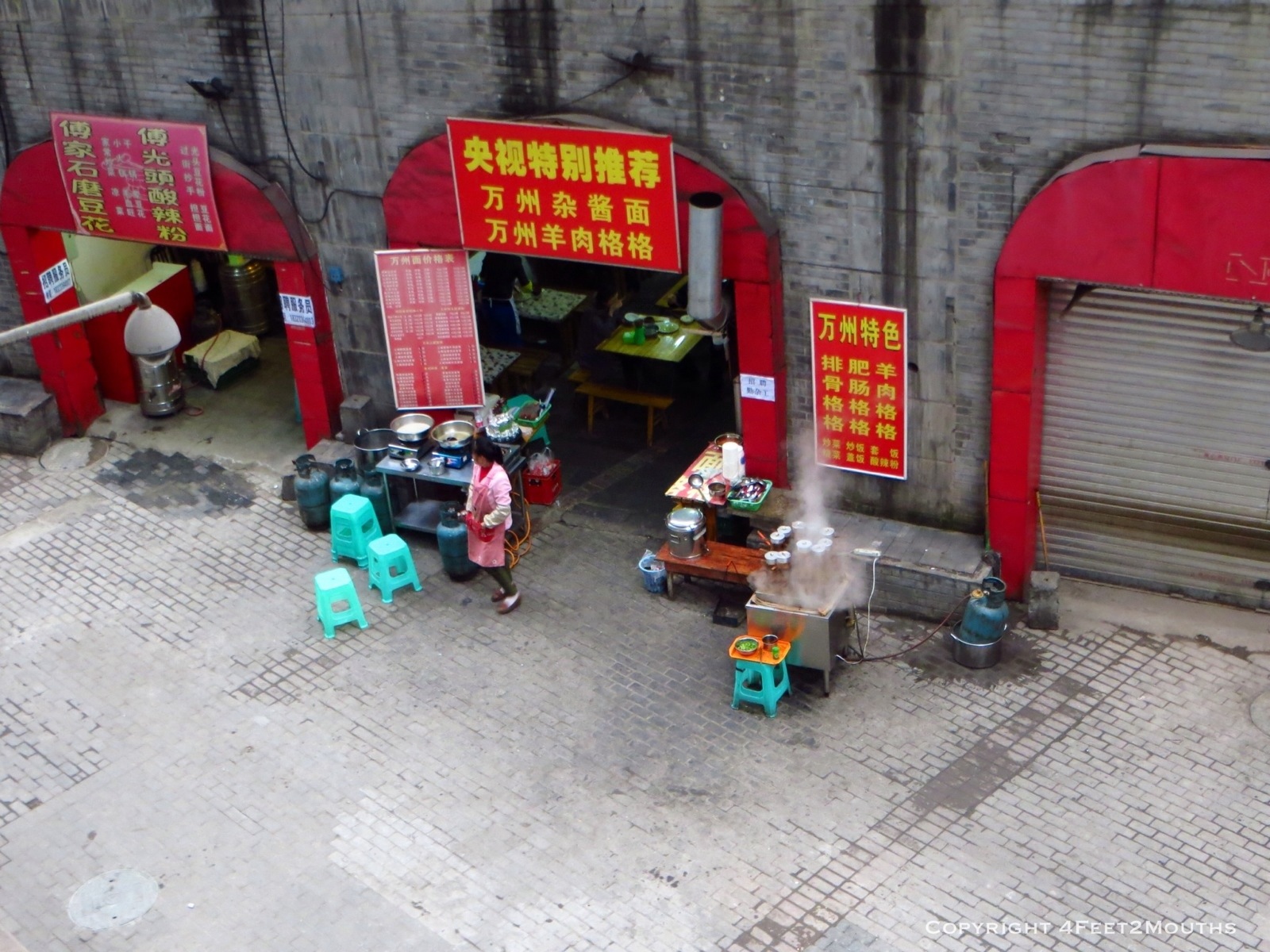
Tiny restaurants fill every nook and cranny

Tiny restaurants fill every nook and cranny

We have tried hot pot before, but no place compares to Chongqing.  This city is the ChongKING of hot pot and everyone in China knows it.  It is a signature dish of the city and hot pot shops around the world try to mimic the deliciousness that Chongqing residents have invented.  Hot pot shops are scattered all over the city.  They are everywhere, but several months ago there used to be even more of them.  A recent law made it illegal to sell hot pot on the sidewalk, thus destroying one of the signature street foods of the world and driving it indoors.  Nevertheless hotpot can still be found in lean-to shacks, high rise towers and even tucked into miniscule inhabitable spaces and bomb shelters.
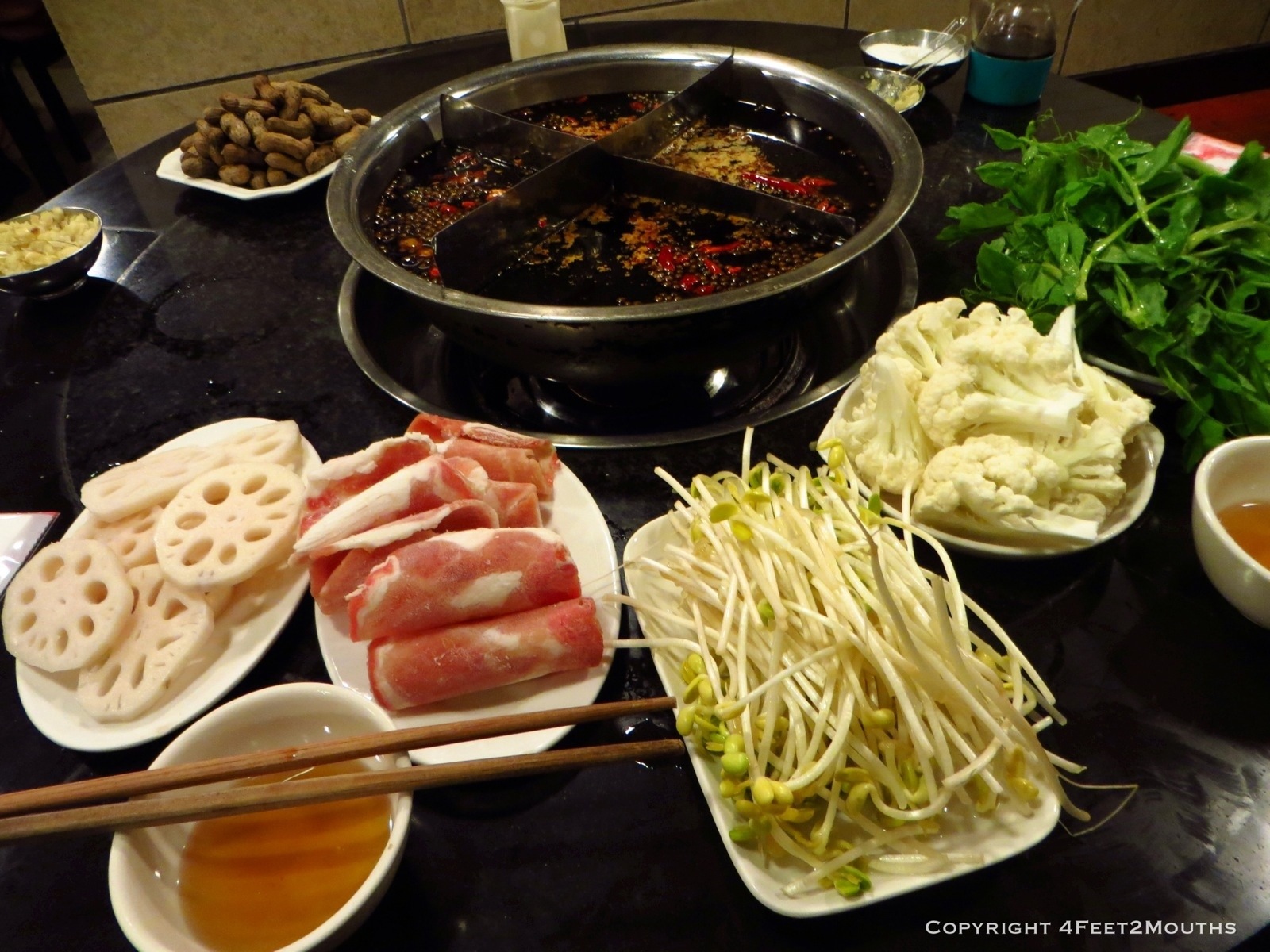
More glorious hot pot with lotus root, bean sprouts, shaved beef and cauliflower

More glorious hot pot with lotus root, bean sprouts, shaved beef and cauliflower

The whole process starts with sitting down at a table in some run-down restaurant; we found two: YèfùHuǒguō and Dòngtíngxiān Huǒguō (in an old bomb shelter) in a guide book and decided to give both try.  The center of our table had a depression in it and there was a rubber tube coming out of the floor to pump the natural gas to the burner.  Immediately upon sitting down the waitress was hovering over us.  We ordered ours zhōng là which is medium/very spicy (around  7-8 out of 10).  She scurried off to the kitchen and came back with a thick red fluid with thirty or so of dried chilies and hundreds of Sichuan peppercorns. We attempted in both cases to communicate the types of meat, tofu and vegetables that we wanted.  When that failed we resorted to walking in the kitchen to point out a few items that we felt were essential.  Eight or so plates showed up heaped with vegetables and frozen slivers of meat.  Our favorites were the lotus root slices, long-shooted mushrooms, and Dòngtíngxiān Huǒguō had some tofu that was some of the best of my life.

Cooking the ingredients is simple: throw them in the boiling pot, wait, pull them out and eat.  The cooked ingredients come out dripping with flavor and sizzling with heat.  The bubbling spicy fire broth is so hot that I still have not figured out whether it is called hot pot because of temperature or spice, but there were plenty of both.  We enjoyed our feast with our mouths tingling on fire and accompanied by an essential beer.  We walked away dizzy from the heat, stuffed to the brim, with our mouths still numb from Sichuan peppercorns.

Arhat temple tucked within Chongqing highrises

Arhat temple tucked within Chongqing highrises

Arhat statue

Arhat statue

One fun sight to visit in Chongqing is the Arhat temple.  The tiny one-story complex is situated right in the center of town and surrounded by 100m skyscrapers.  The temple is one of the ancient structures in Chongqing at over 1000 years old complete with ancient stone carving and scary warrior gods.  There is a hall inside that houses hundreds of statues of arhats or monks that had found enlightenment.

Chickpea Noodle soup for breakfast

Chickpea Noodle soup for breakfast

Tofu, rice and pickled cabbage breakfast

Tofu, rice and pickled cabbage breakfast

Our hostel was at the bottom of the hill, but close to the garmet distribution market.  We found an excellent food stall around the corner that served up some of our favorite fare: noodles and tofu.  The noodles were pretty standard but impressively spicy and the added chickpeas were a nice change.  We watched the owner scoop out the tofu out of a huge tub filled with water, she served it with some white rice and picked cabbage.

Historic Chongqing housing
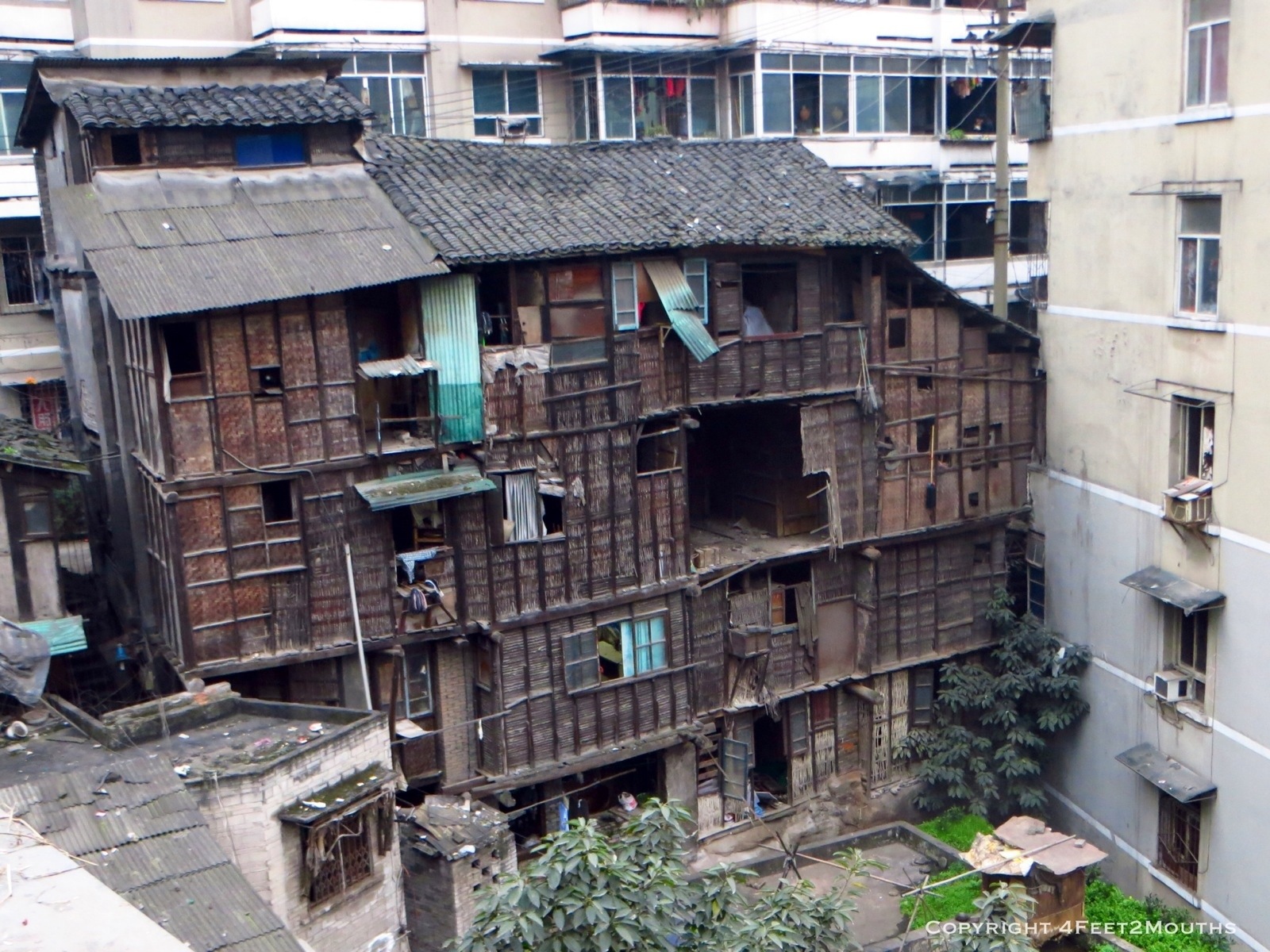
Historic Chongqing housing

Traditional four-story home still with residents

Traditional four-story home still with residents

The great hall and plaza of of the people

The great hall and plaza of of the people

Chongqing has a pleasant array of historic and new architecture.  The traditional houses were built from wood stilts that were up to four-stories.  Many of these buildings have been replaced by modern high-rises, but there are a few neighborhoods that have a few leaning and partially condemned buildings still in use.  There is a rather new plaza near the great hall of the people and the three gorges dam museum. The plaza is one of the few places in China that is good for people watching.  There were several groups of people exercising in a way we had never seen before.  They would spin a top on the plaza paving then slap it with a long whip to get it going faster.  The chatter of kids and people talking is shared with the cracking of whips every few seconds.

Two travelers
Two travelers

Man carrying huge package down the Chongqing hills

Man carrying huge package down the Chongqing hills

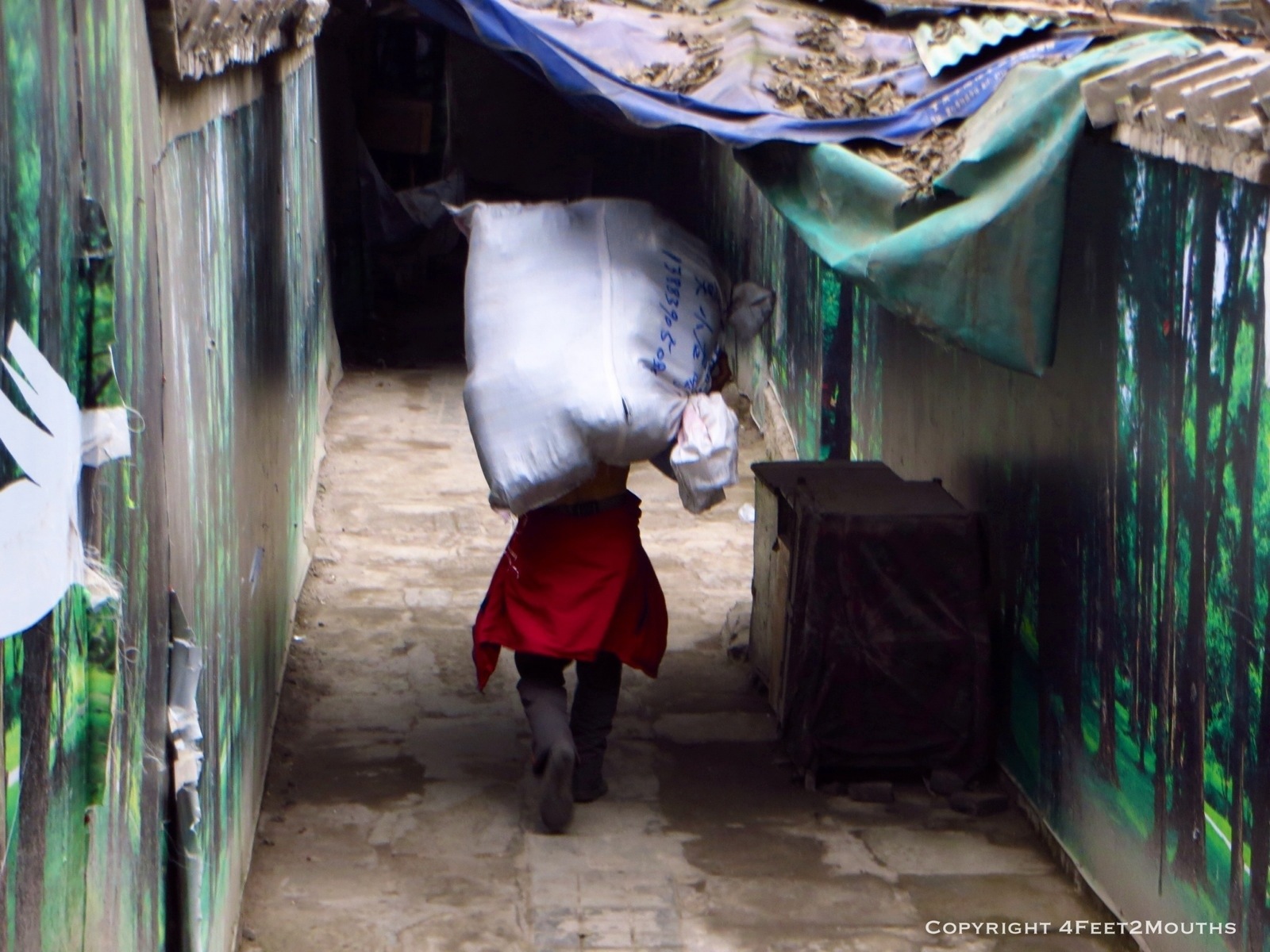
We immediately fell in love with Chongqing.  Maybe it is the hills, or the spicy food, but everything felt familiar and enjoyable throughout our stay.   I think it was that we were getting nostalgic for San Francisco.  Chongqing is both older and newer than San Francisco.  We watched several Chongqing men carrying enormous packages on their backs up and down the stairways and I wondered if that type of thing existed in SF a hundred and fifty years ago.  Chongqing is about as far away from fixie bike messengers as SF is to having an urban density anywhere close to Chongqing. Differences and similarities are broad, and there is never enough time explore either fully.

Carmen exploring a narrow alleyway

Carmen exploring a narrow alleyway

Yellow Húguang stairway

Yellow Húguang stairway

The city has its share of picturesque alleys, stairways and winding streets.  We roamed up and down the steep mountainside and sniffing at the air every time we passed spicy sizzling food.

Pan-fried Sichuan long beans

Pan-fried Sichuan long beans

Ma po dofu, ribs, rabbit dry pot and pastry; all spicy and delicious at Shùnfēng 123

Ma po dofu, ribs, rabbit dry pot and pastry; all spicy and delicious at Shùnfēng 123

We could not wait to get into the Sichuan region to the west.  Chongqing and Sichuan share their love for spicy food and for many years now Carmen and I have been obsessed with cooking and eating Sichuan.  So we went to a slightly more upper scale place than we are used to going.  I forgot all rules and ordered without abandon with the excellent picture menu. The Sichuan rabbit dry pot was fantastic, but too much work to pull off the meat from the shattered bones.  Long beans and ma po dofu remain one of my favorites and will continue to be ordered over the next few weeks.

Húguang Guild Hall

Húguang Guild Hall

Rooftop daemon

Rooftop daemon

Another cool sight is the Húguang Guild Hall.  This historic complex used to be a meeting place for local and regional merchants.  We explored the hillside buildings and opera stages and admired the ornate carvings and ornaments.
Crazy knife-shaved noodle shop

Crazy knife-shaved noodle shop

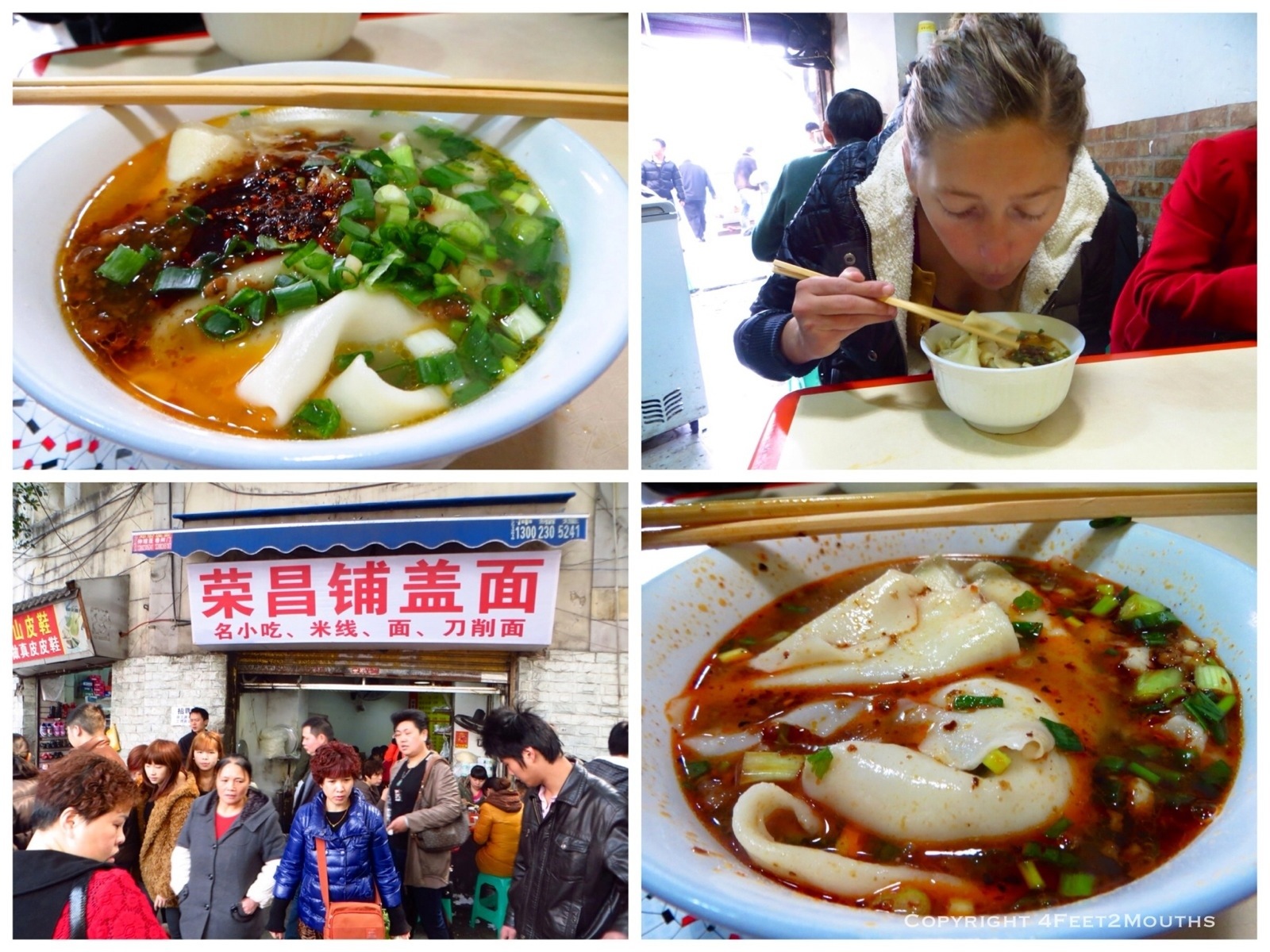
Chongqing is simply a great city.  There is history and culture, but few big sights to attract tons of tourists.  It has impressive density and charm that has definitely fascinated us and we will definitely return some day.  We are obviously attracted to crowded places and even more so when food is involved.  We passed this knife-shaved noodle place ten times while exploring Chongqing.  The day we decided to get the noodles happened to be our last few moments in the city.  With our backpacks on we pushed and shoved our way into the tiny restaurant.  We sat in the back and two bowls were dropped in front of us. The noodle was more of a thin sheet of pasta and the broth rich and tangy.  With our hunger filled we boarded the brand new subway to the high speed train station. It was finally time to enter Sichuan and one of our most anticipated cities- Chengdu.

Nathan at the doorway of Yangtze River Hostel

Nathan at the doorway of Yangtze River Hostel

Up and Down in Zhangjiajie (by Carmen)

Snow frosted limestone tower

Snow frosted limestone tower

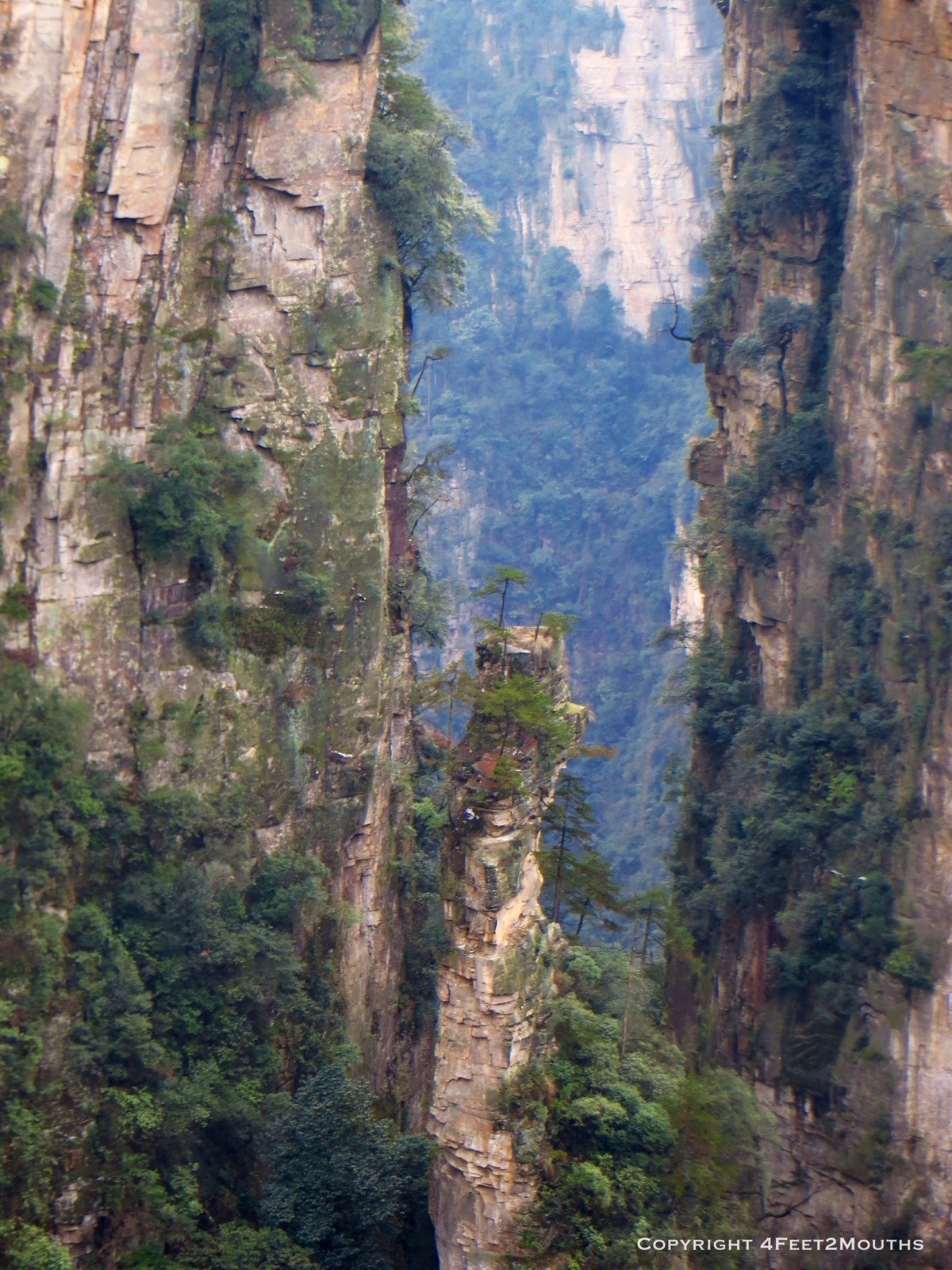
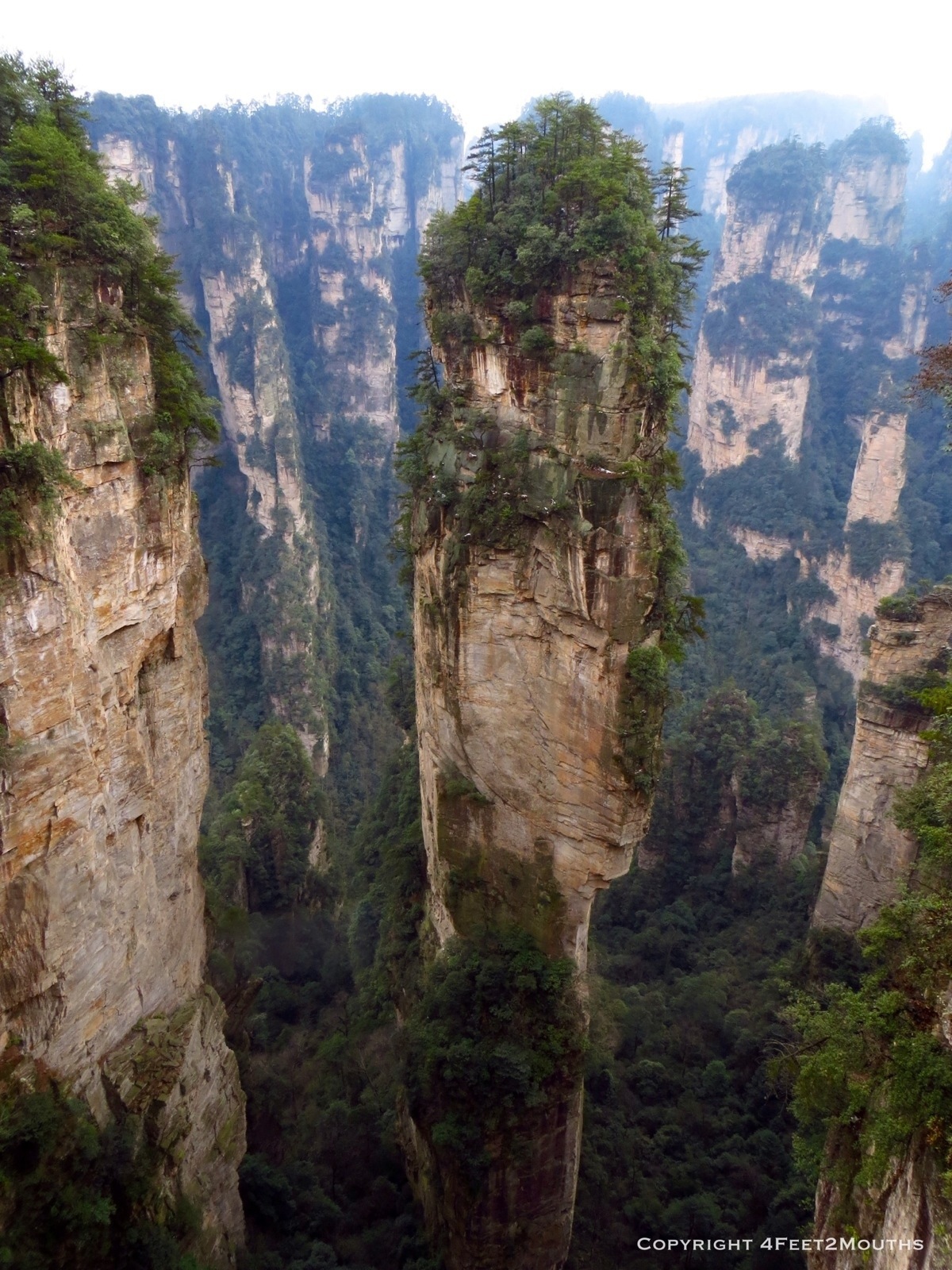
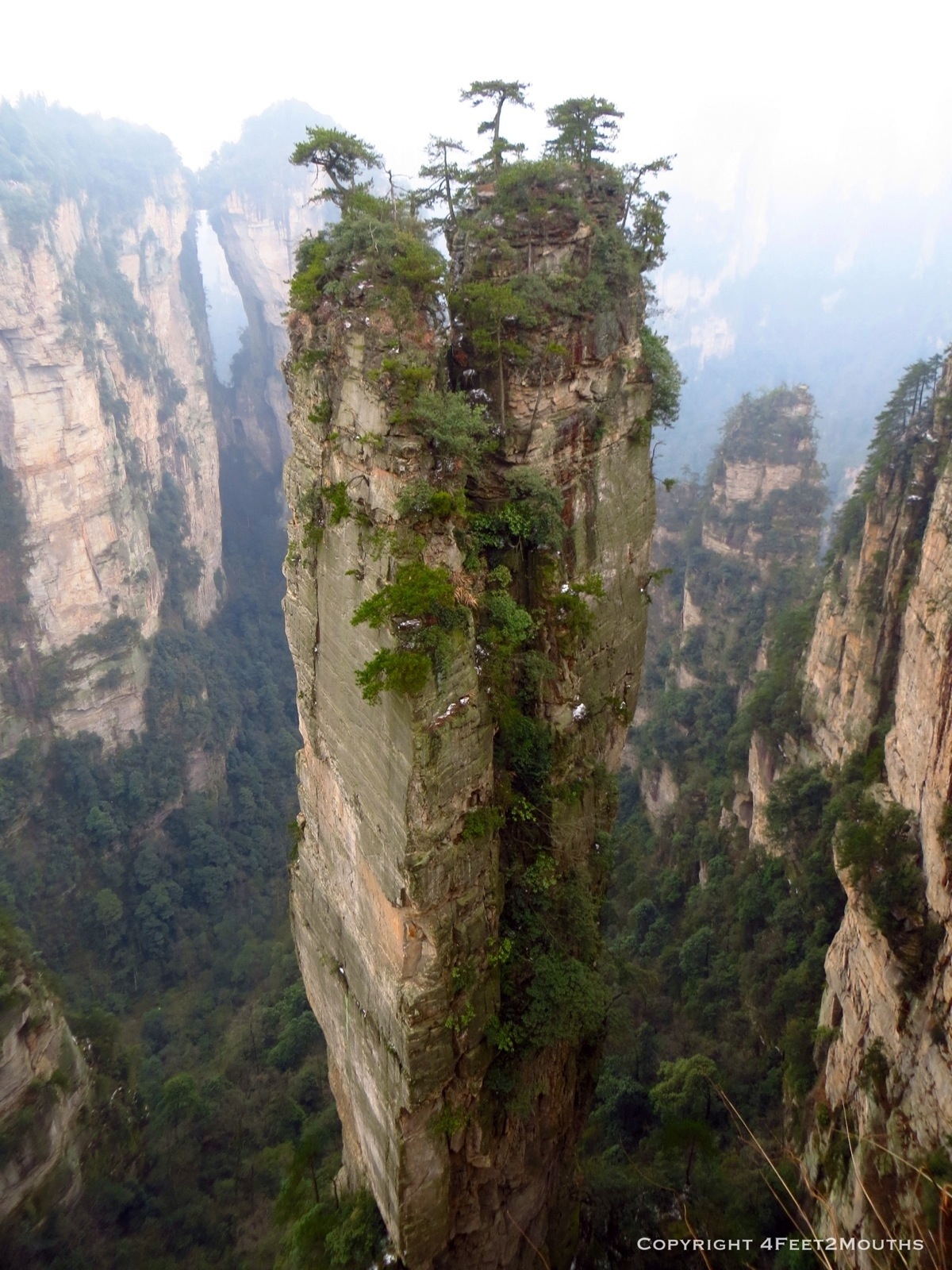
As we embarked on the China portion of our trip, there were a handful of places and experiences that were absolute musts: hiking Tiger Leaping Gorge, watching sunset on flooded rice terraces, eating lots of Sichuan food, and seeing Zhangjiajie (also called Wulingyuan). You may not have heard of it but you’ve probably seen pictures. The ethereal landscape of towering limestone pillars mysteriously shrouded by mist has become a well photographed corner of China. We boarded a bus from Changsha in order to see them for ourselves.

Mossy stream bed

Mossy stream bed

Monkey considering whether or not to attack

Monkey considering whether or not to attack

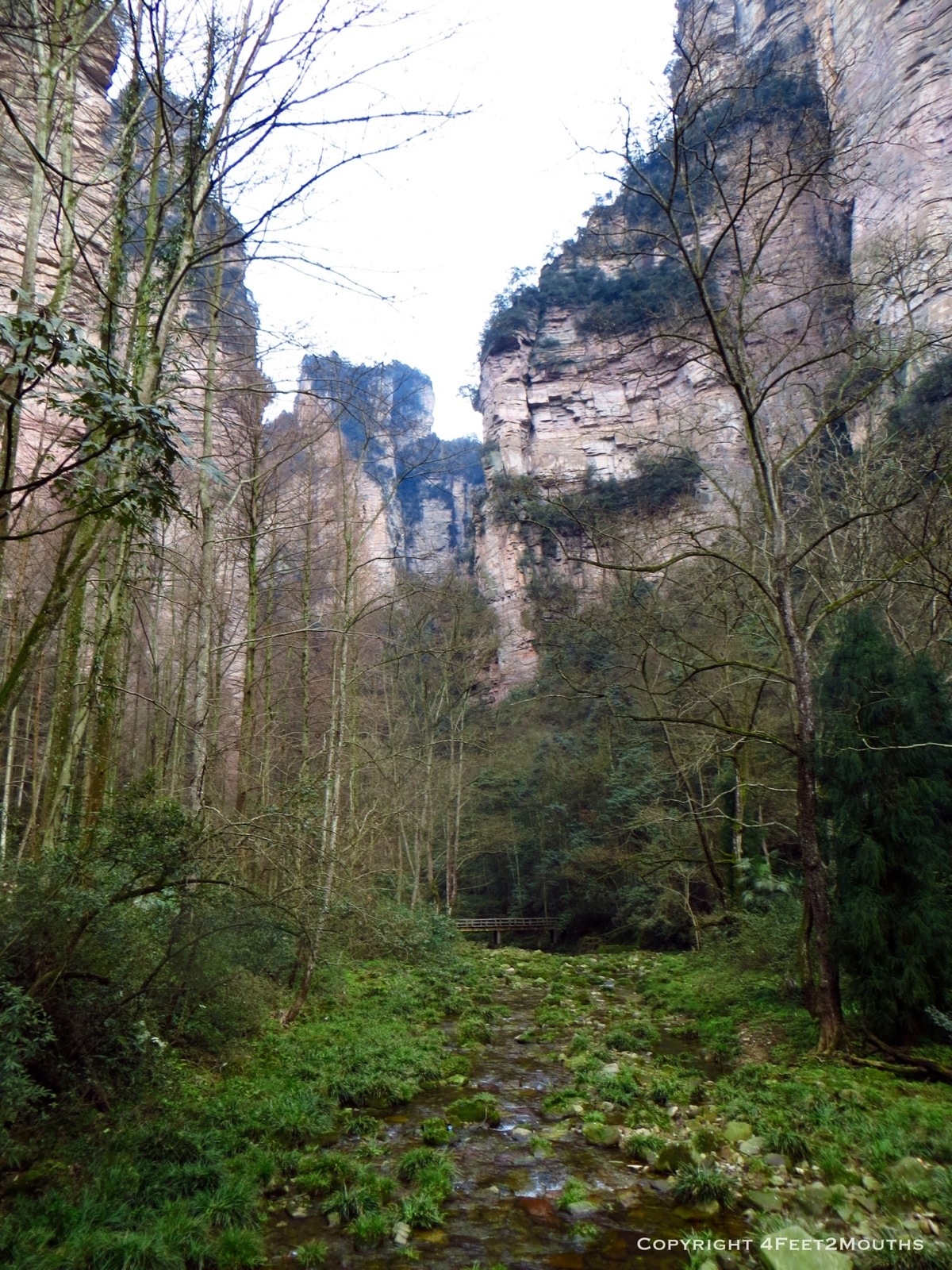
After buying the entry ticket and making it through the aggressive vendors at the front gate, we entered a place of quiet and calm. Even the one monkey we saw was pretty chill. I was happy about this since I had read that they like to attack people for food. We walked along a paved path following a mossy stream bed called the Golden Whip. In fact, our entire walk over the next few days would be on paved paths since the Chinese generally don’t care for the whole dirt trail thing in their parks.

Misty cliff view

Misty cliff view

Thin pillar tower

Thin pillar tower

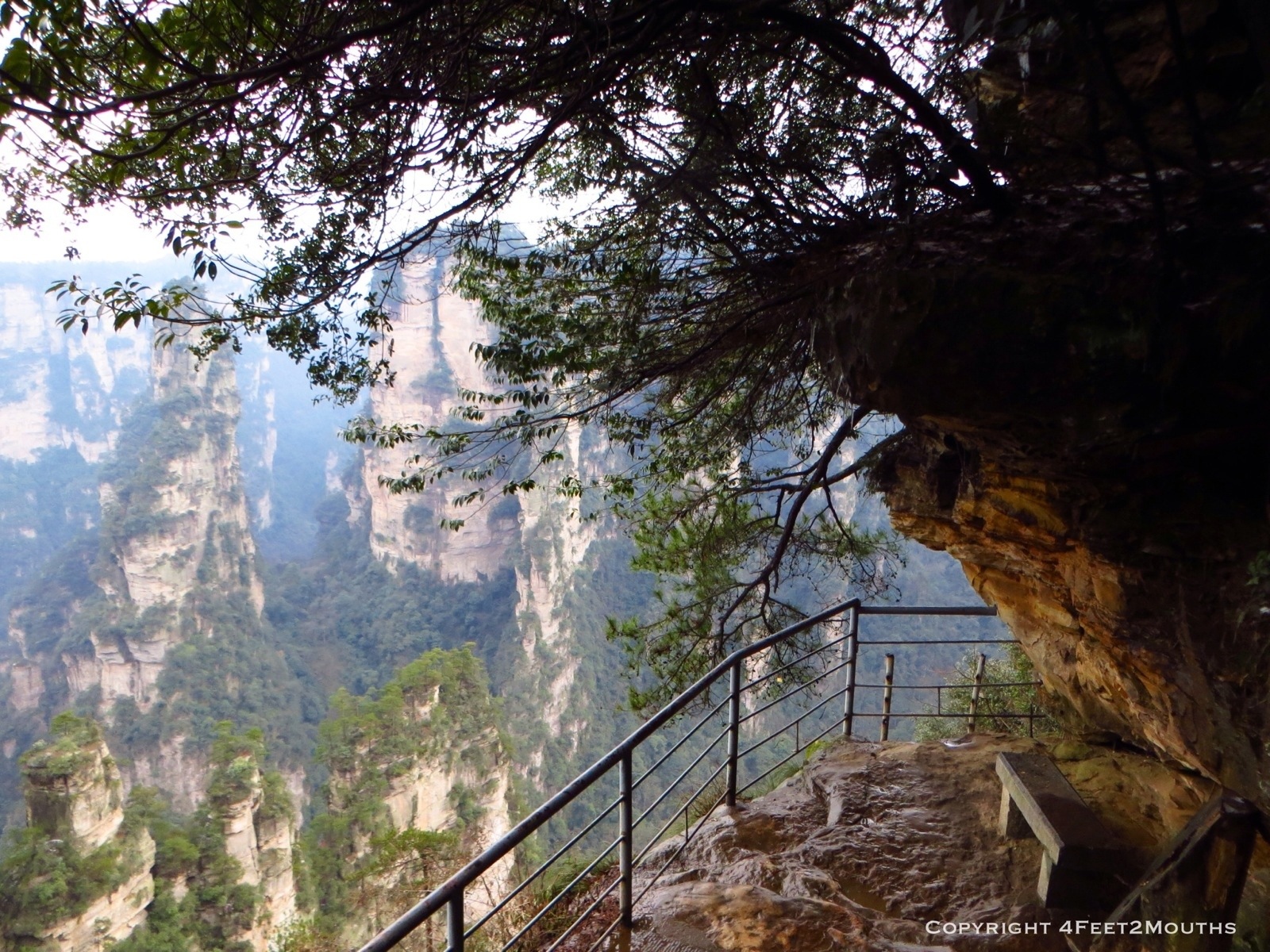
And then we went up. Endless staircases climbed from the stream bed to the cliff edge over 1000 ft (300 m) above. It was so high, we passed the snow line and in the shadows snow crystals would crunch beneath our feet. Breathlessly we made it to the top and took in the stunning view of the canyon.

See the tiny people at the viewpoint?

See the tiny people at the viewpoint?

The viewing platforms the park had built were right on the edge! We lingered to enjoy the views and watched as tour bus groups would rush in, take a zillion photos of themselves, then run to the next platform.

Avatar mountain banshee

Avatar mountain banshee

Hallelujah Mountain

Hallelujah Mountain

Soon enough it was time to find some mountain banshees and fly around the park for a closer look at the towers. Park officials insist that Zhangjiajie was the inspiration for Avatar, though James Cameron doesn’t whole heartedly support this assumption. I could definitely see the similarities. To solidify the connection there was an official ceremony to rename one of the towers Hallelujah Mountain, the name of the fictional floating rocks in the movie. And of course they installed the banshee photo op. Classic.

Number 1 Natural bridge

Number 1 Natural bridge

Locks of love

Locks of love

Thin tower with bridge in background

Thin tower with bridge in background

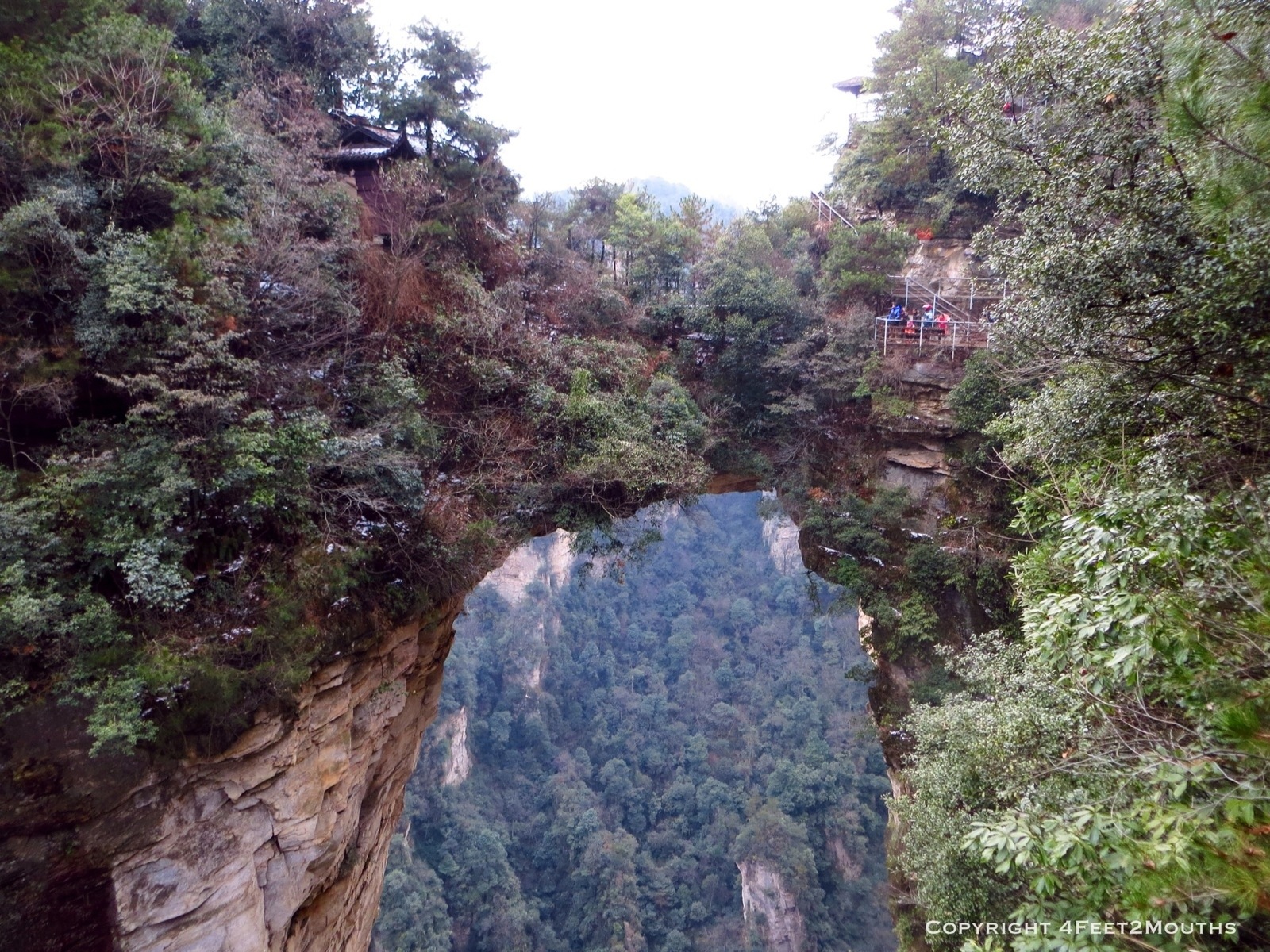
Shortly after our banshee ride we came upon the “Number 1 Natural Bridge.” China likes to name lots of things “Number 1,” but I might actually agree with them on this. It was spectacular. Walking on it was exhilarating. I suppose since it is such a special spot, people have started placing locks on the fences to symbolize love, friendship or even wishes.

Bench with awesome view

Bench with awesome view

Sunlit tree

Sunlit tree

We walked along the cliff edge path for about an hour enjoying the view. As the sun began to set we made our way to our lodging for the night. Our hostel was a simple one within the park bounds. Since there was nowhere to go at night everyone ate and played in the main common room. We bundled up to survive the freezing indoor temperatures (no heat of course) and played cards while gobbling up some fried rice.
Escher-esque stairs

Escher-esque stairs

Nathan the map reader

Nathan the map reader

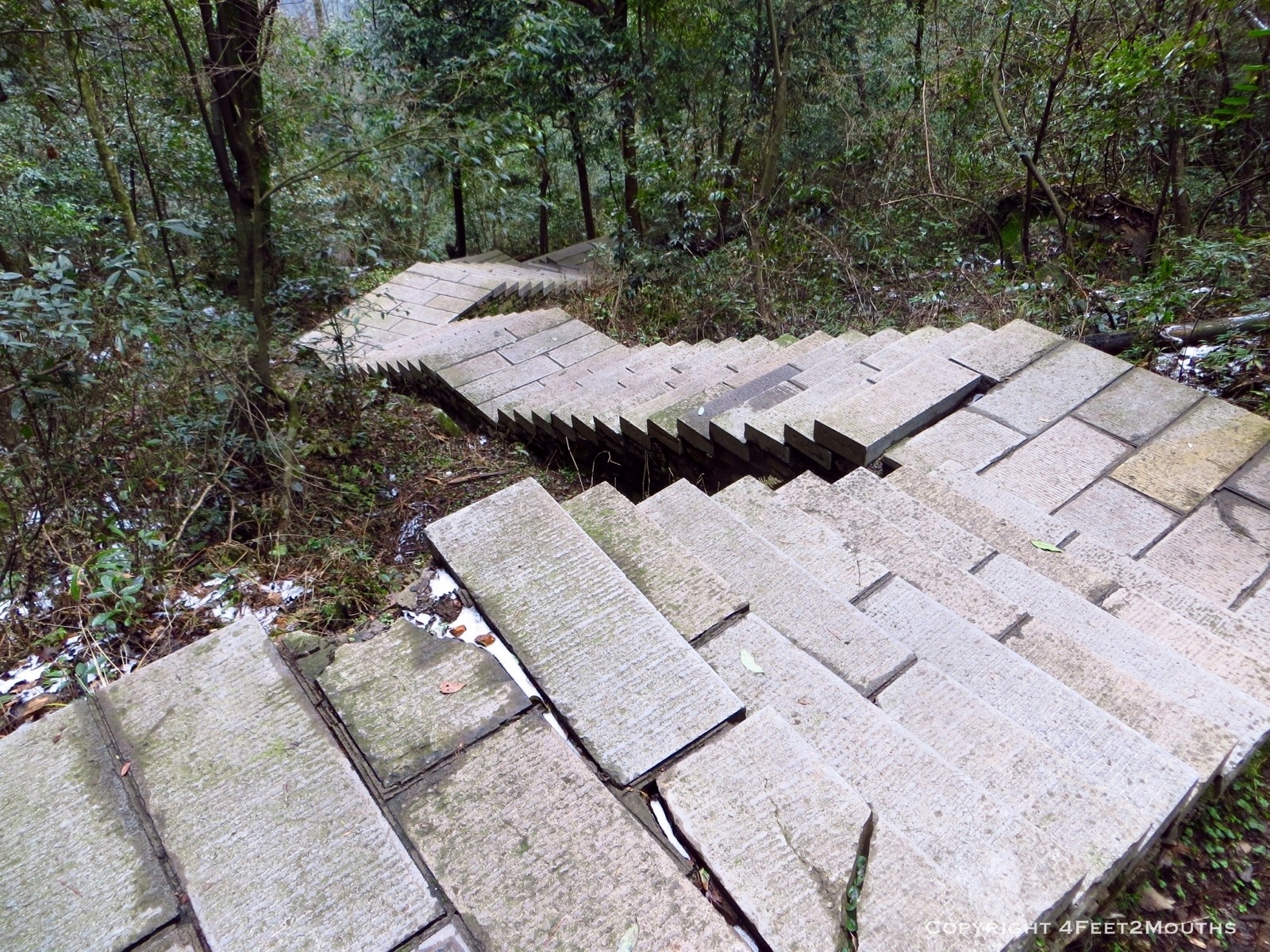
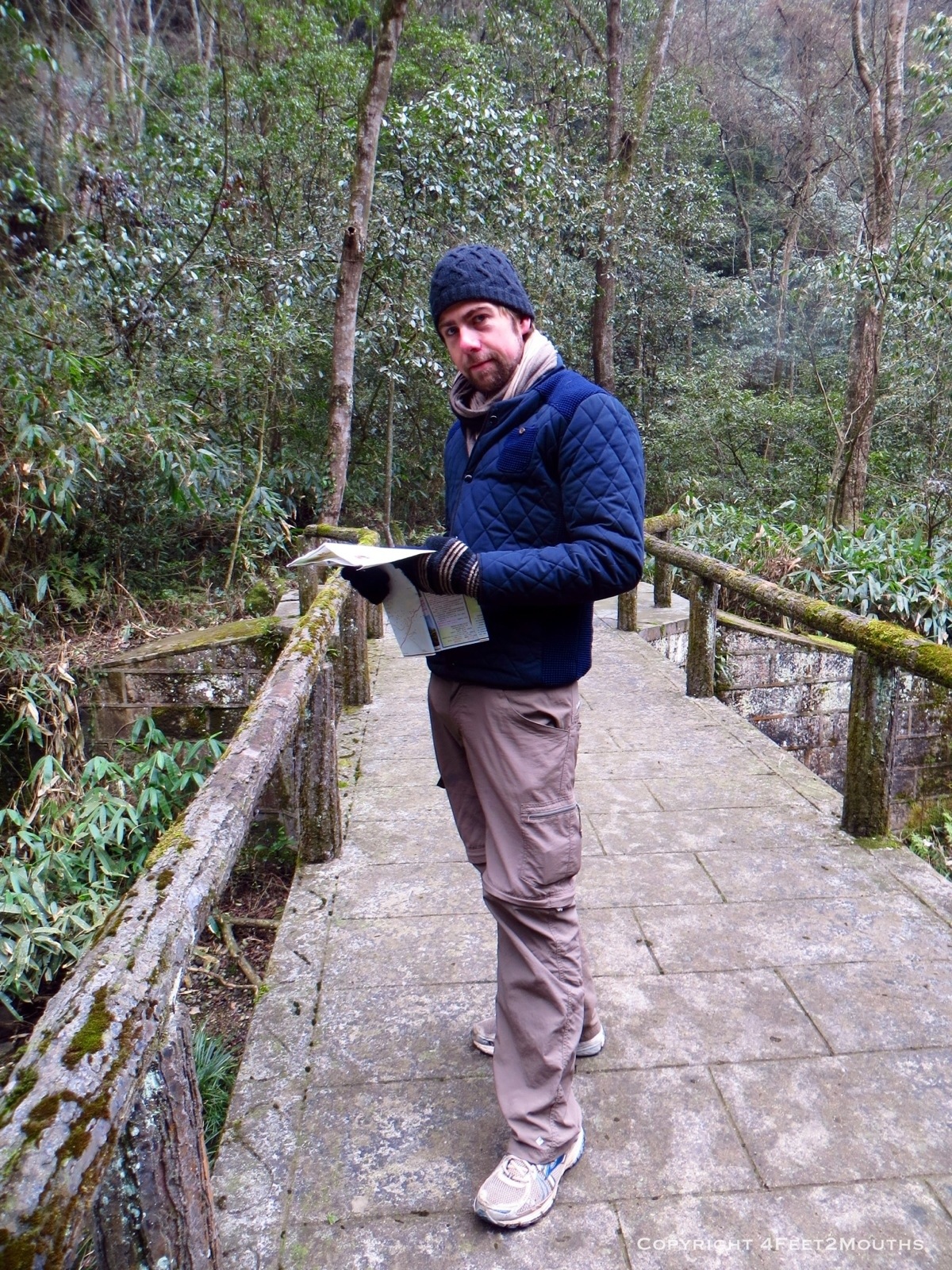
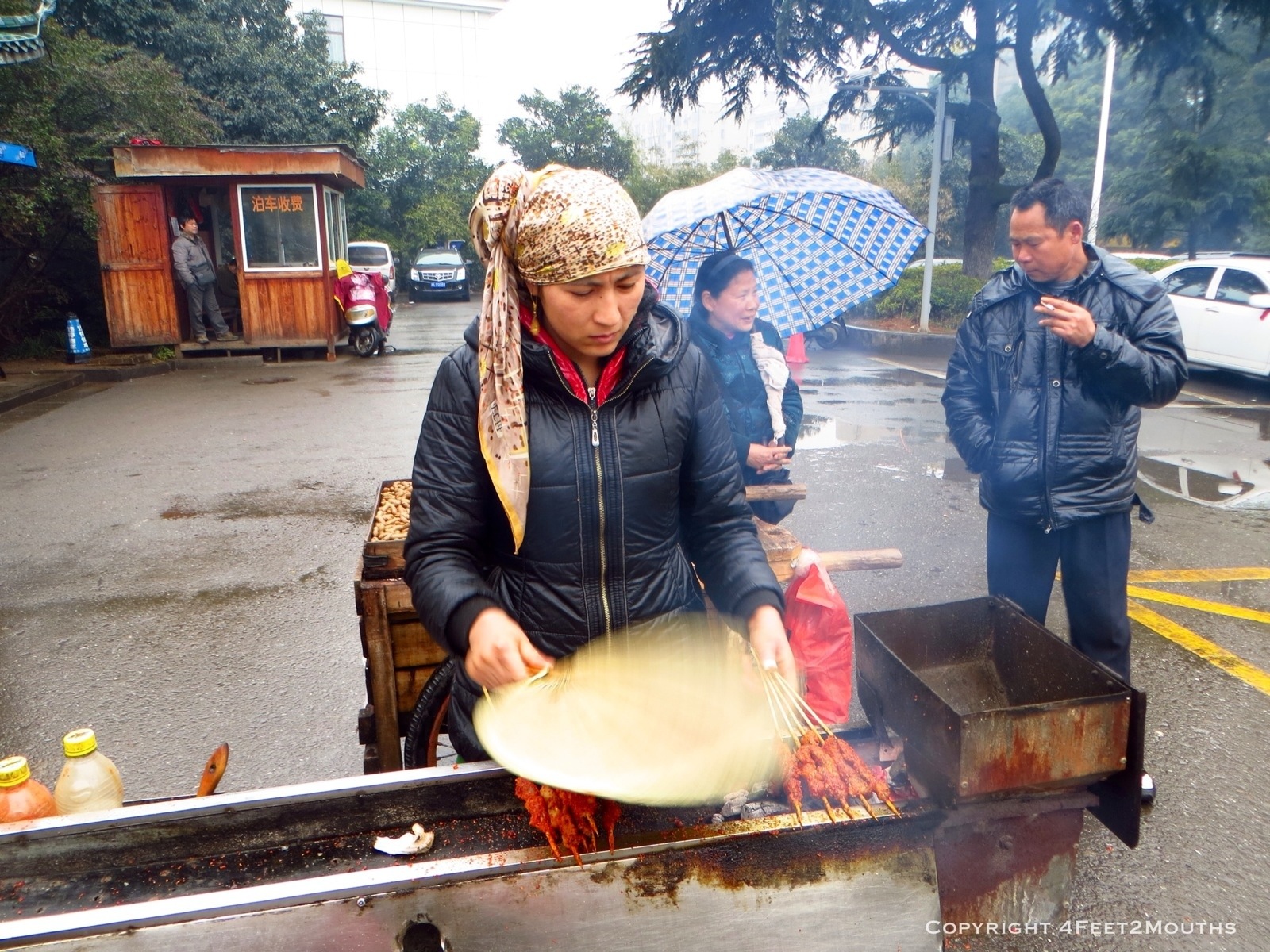
Our plan for the next day was to hike to a nearby village in the morning and then head to some eastern viewpoints in the afternoon. The only problem was our map. Even the best map you can buy is mediocre with no real scale or indication of topography. We ended up going all the way back down to the stream bed, then back up almost to the cliff’s edge, then back down, then back up, then…well you get the picture. So. Many. Stairs. It was exhausting and it ended up taking the better part of the day.

Fog rolling in

Fog rolling in

Dramatic cliffs

Dramatic cliffs

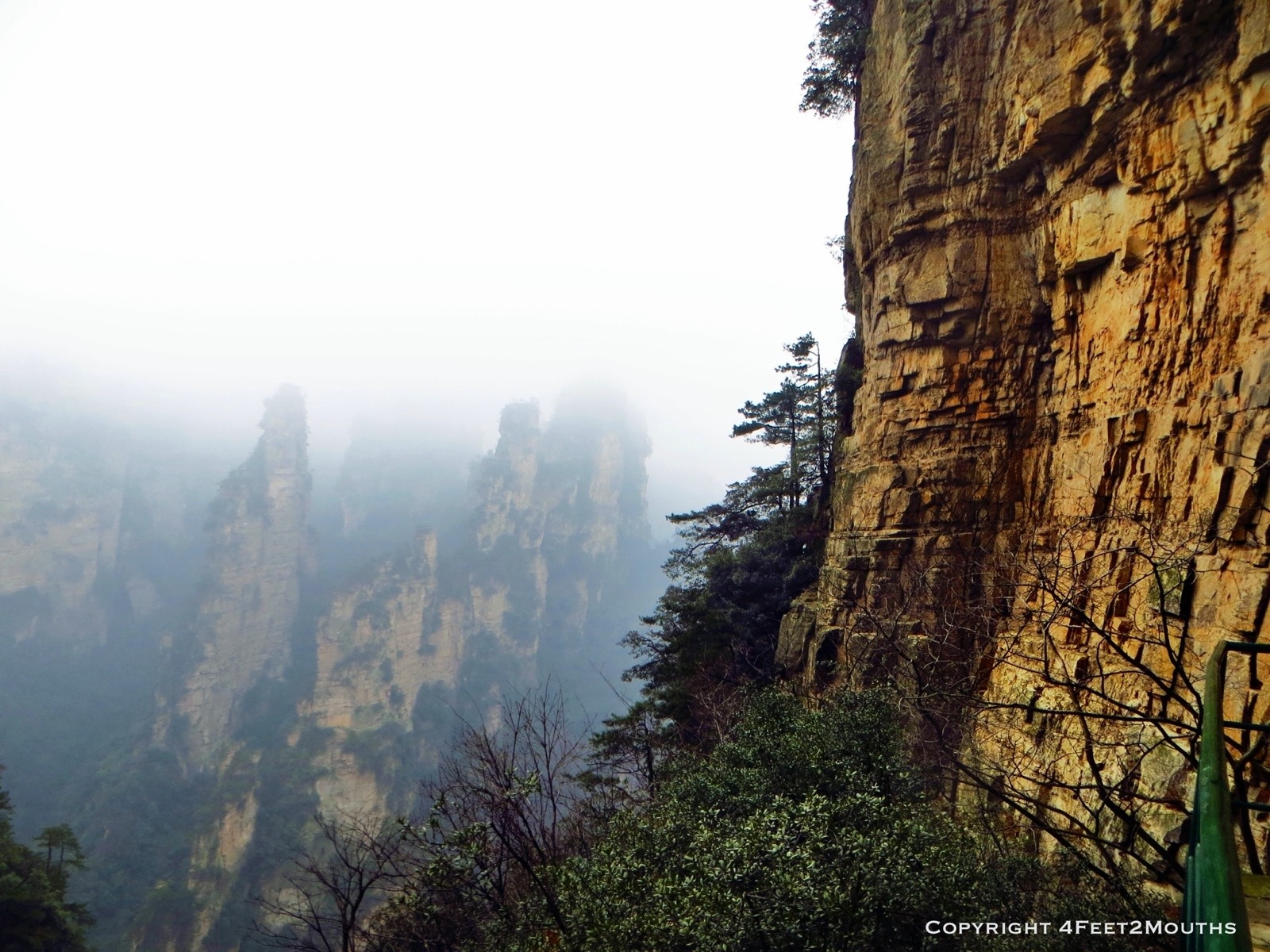
For all of our efforts, we didn’t get to see as much as we would have liked as the fog started hemming us in. We finally made it to the main park road and I hopped a park shuttle to the hostel. Nathan pushed on to the eastern views.

Looking down on thin towers

Looking down on thin towers

The Two Towers

The Two Towers

Fortunately, the fog situation was a little better to the east and Nathan got some great shots. It started getting dark and I was relieved when he walked through the hostel door. Turned out he caught the last shuttle bus back!
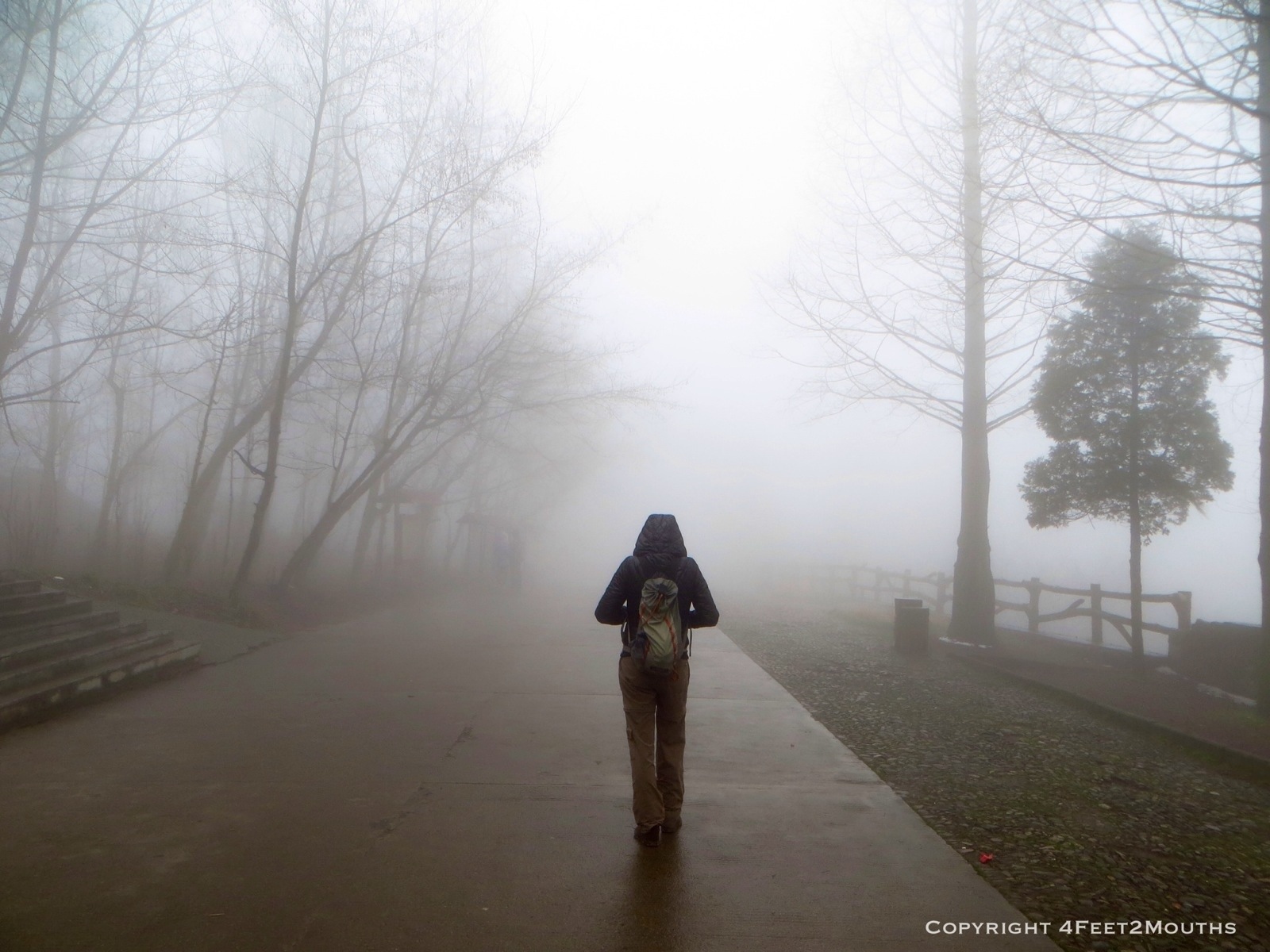
Me in the fog

Me in the fog

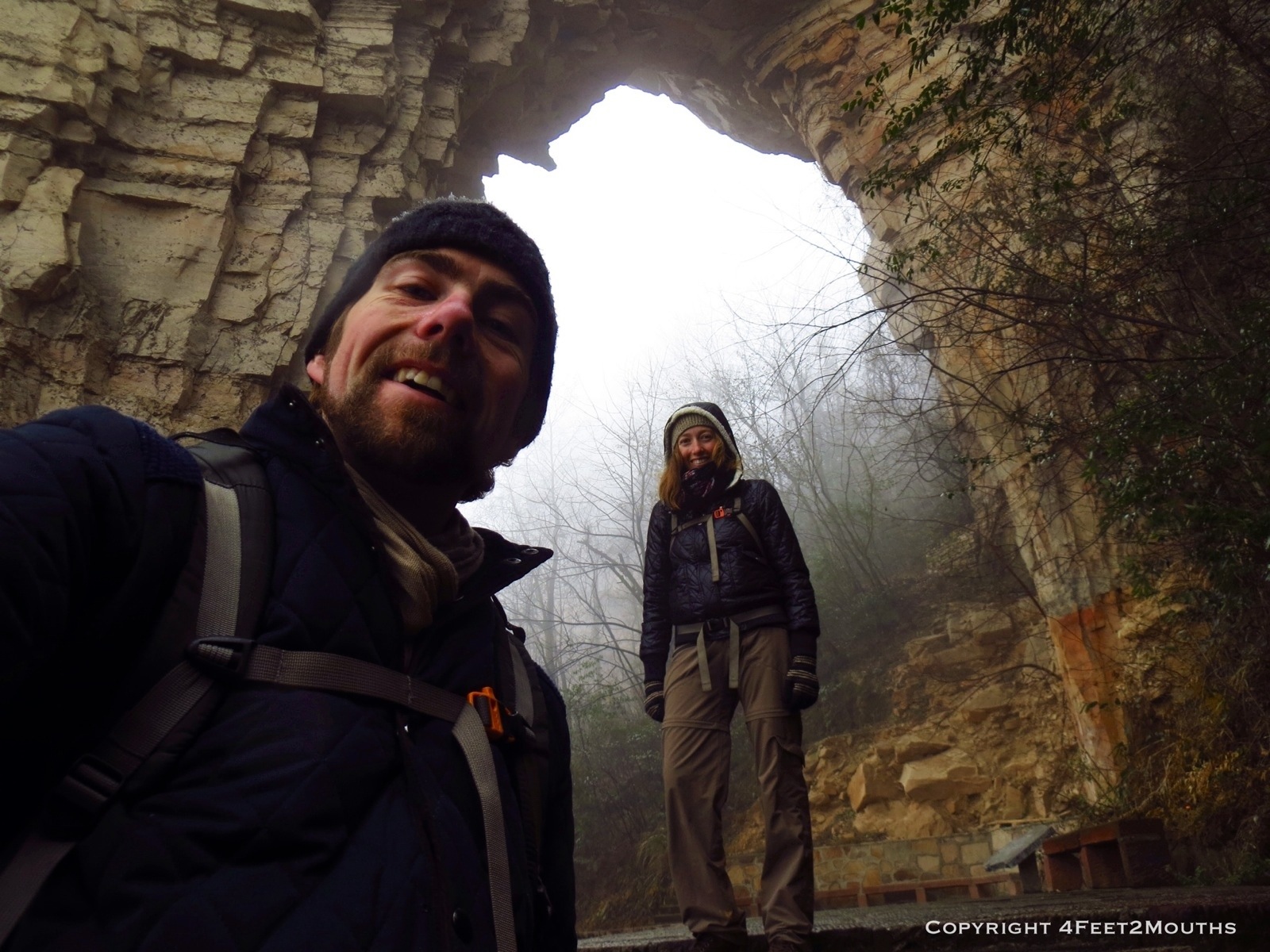
Us with a limestone arch

Us with a limestone arch

Our third and final day in the park we were completely fogged out. Literally we could not see more than 100 feet in front of us and all the viewpoints were simply walls of white. What made it even more sad was that two days later perfect sunny days were expected. Sigh. We climbed down the cliff stairs one final time vowing to return one day to see what we missed.

Market street in Zhangjiajie City

Market street in Zhangjiajie City

Noodles from the classically dingy restaurant

Noodles from the classically dingy restaurant

Our stay in the park was sandwiched between two days in Zhangjiajie City, 40 minutes southwest of the park. We weren’t expecting much from the city as we were only there for the nature but we really enjoyed our stay. A block up from the cleaned up shopping main street was a narrow market street that was just our style. Inside a dingy cafe, we ate some yummy noodles in a slightly tangy broth while rubbing elbows with locals at the one communal table.

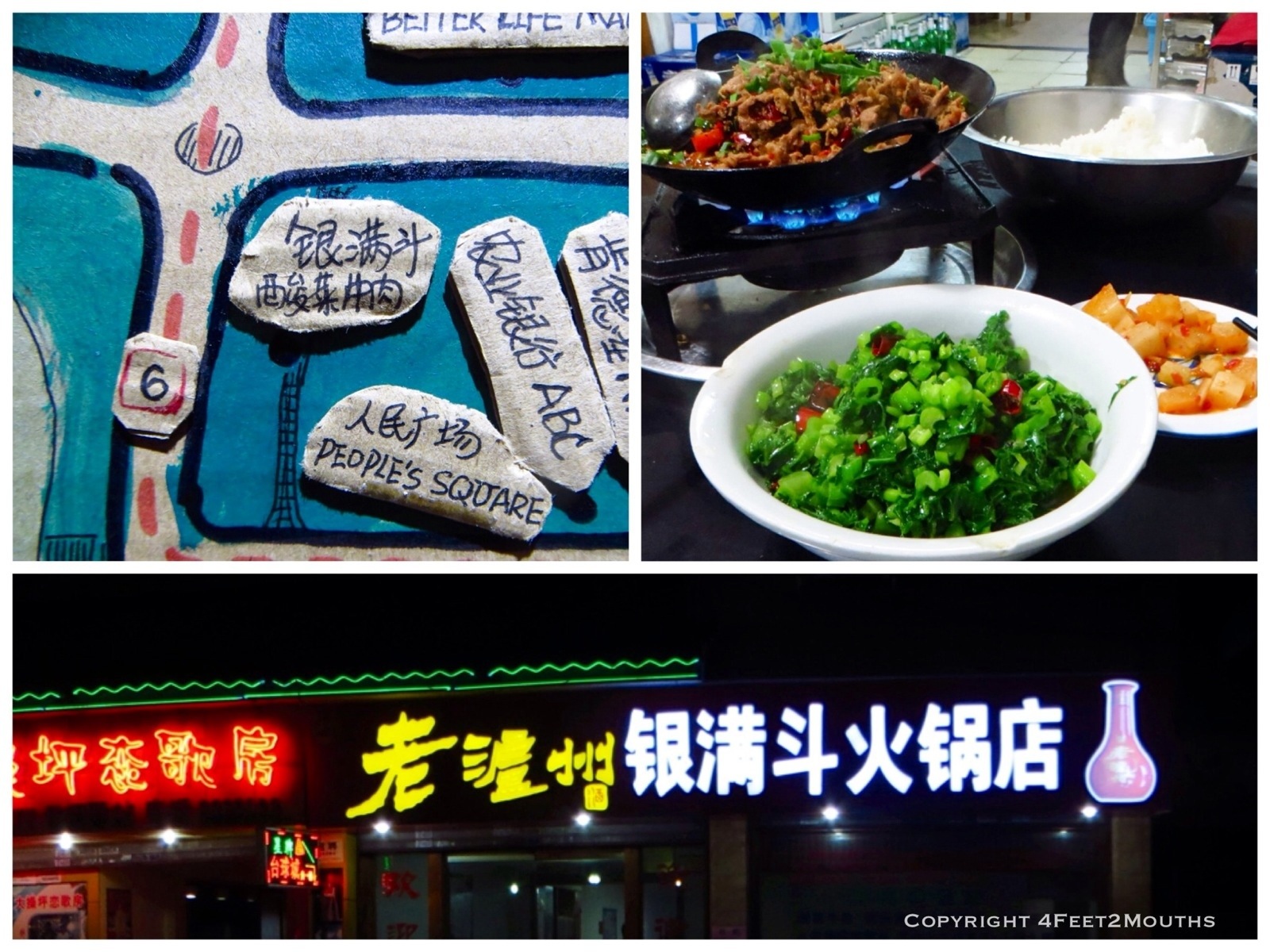
Sizzling beef

Sizzling beef

Another fun eatery sat in the middle of a lane just east of the main square. Our hostel pointed us to it on their homemade map and recommended some dishes. A warm plate of beef kept hot with a table burner and a large plate of stir fried greens were placed before us and we did our best to eat it all. Its deliciousness ensured we were extra full that night.
View from our room's balcony

View from our room’s balcony

Complex the Bajie hostel is located in
Complex the Bajie hostel is located in

With full stomachs we slept well at our hostel, the Bajie. It was one of our most comfortable stays in China. I wish we could have stayed more nights there but it’s a little tricky to find. Upon arriving to the city, after walking up and down the street five times in the rain at night we eventually gave up and stayed somewhere else. Those are the not so fun parts of traveling that simply come with the territory.

Finally, we said goodbye to Zhangjiajie. We liked the town and the park and want to return someday. And next time, we will be able to find our hostel!

Chowing Down With the Chairman In Changsha (by Nathan)

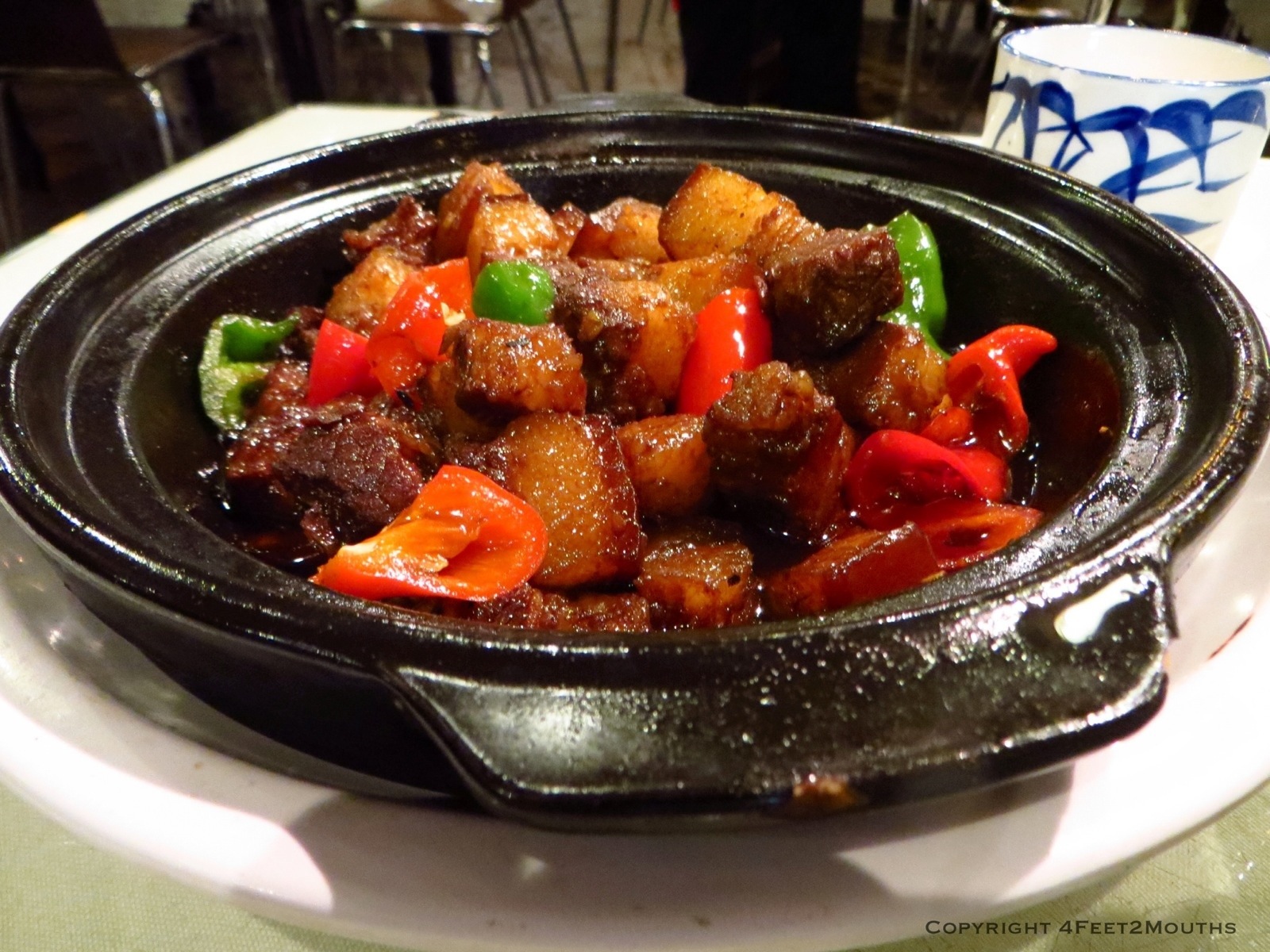
Mao's pork belly, the reason to come to Changsha

Mao’s pork belly, the reason to come to Changsha

Sometimes people travel to a place for sights, scenery or culture but we visited Changsha for one single reason- food! Changsha is the capital of the Hunan Province and king among one of the most delectable and delicious cuisines. It is also pretty close to the place where Mao was born, but that had little significance to our trip.

The ultra-modern and brand new Guangzhou high-speed rail station

The ultra-modern and brand new Guangzhou high-speed rail station

We reluctantly left the wonderful and clean Hong Kong to explore more of China. We love many aspects of China, we hate many parts too; Hong Kong allowed us to catch our breath, restore our health and ready ourselves for four more weeks of Chinese mayhem. We boarded a high-speed train from Hong Kong to Guangzhou, then a subway subway to the other train station and another high-speed train. Traveling by train at 380kmh (240mph) is wonderful experience. The hillside farms and villages indiscernibly flutter passed and we sit back comfortably and read our books. In just a few hours the warm humidity disappeared and we entered the cold landscape of south-central China.

Delicious pork and green peppers at Okuwu

Delicious pork and green peppers at Okuwu

We stayed at the one Hosteling International in town. This organization has been failsafe for us to find affordable rooms that are clean. Often there is staff that speaks English and sometimes we’ll opt for the upgrade that has a western toilet :) We roamed the main street for dinner options. It wasn’t late, but 8pm is really pushing it for dinner in China. We walked by an open room that was packed with groups of people sitting at round tables. We squeezed through the chairs, we waved our hands at the sixty people that were now staring at us and we sat next to the wall. The waitress came over with some tea and gave us a crude translation of five dishes on their menu. I opted for the point-and-order-method. I stood up and gestured for the perplexed women to follow me. The table in the corner had some pork belly that looked good. When I pointed at it she waved her hands and gave a cough. I interpreted this to mean that they had ran out (I’m often left guessing in these situations). I opted for the sizzling beef and bell pepper dish on that table next to ours and the seasonal greens that another waitress was carrying. I ordered some steamed rice and we were good to go. The restaurant was named Okuwu and it was a delicious find. The vegetables and meat were fantastic; the service was smiling and friendly. We liked it so much that we returned a few nights later for the pork belly.

Hunan feast at Huogongdian

Hunan feast at Huogongdian

Crispy and fragrant stinky tofu

Crispy and fragrant stinky tofu

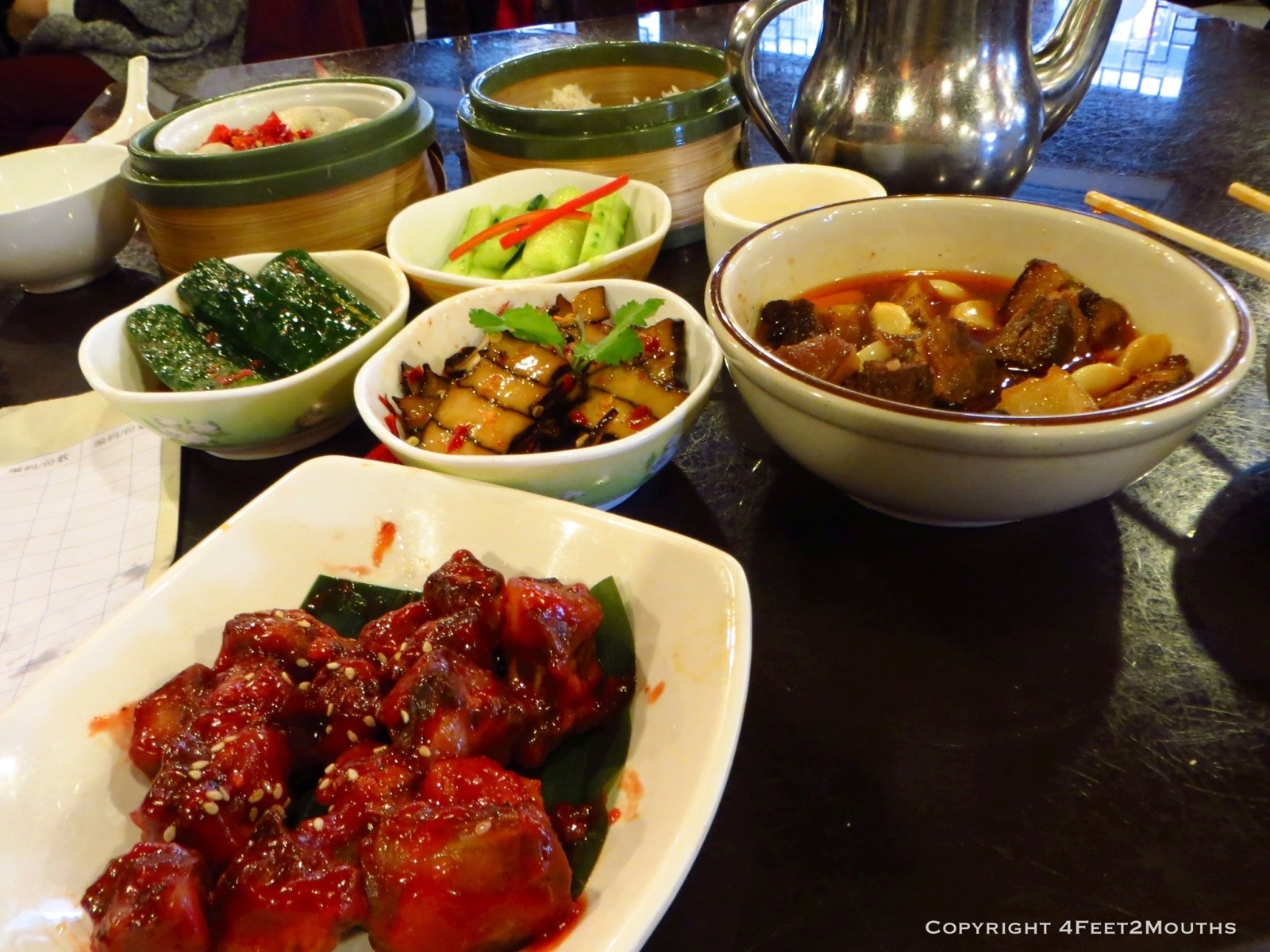
The next few days we decided to take a culinary tour of Hunan cuisine. There was supposed to be this amazing museum with a 2,100 year old mummy that is so well preserved that the skin is still supple. Unfortunately, the museum will be renovated over the next three years. With little to do, our thoughts lingered on finding the best Hunan specialties. There is a pretty famous, and rightly so, restaurant named Huogongdian. They serve tapas-sized portions of local favorites. We selected a handful of specialties from the carts and we had to leaned back in awe when we realized the feast we had just ordered. The prize dish at most Hunan restaurants is the mao shi hong shao riu, a red braised pork belly dish in a spicy broth with onions, dried and fresh peppers. It was supposedly Mao Zedong’s favorite dish and definitely one of mine too. We also ordered chou doufu, a fried tofu dish. Not ordinary tofu, but tofu that has fermented and molded with a thick fur then deep fried until the mold turns blackish purple. The pungent smell of this dish is distinctly burned and almost sour; the taste is slightly funky and roasted, but not awful. Most blue cheese is way funkier and the Chinese think westerners are crazy for eating that!

Fisherman in the city park

Fisherman in the city park

 Lake pagodas


Lake pagodas

Locals having a rainy afternoon stroll

Locals having a rainy afternoon stroll

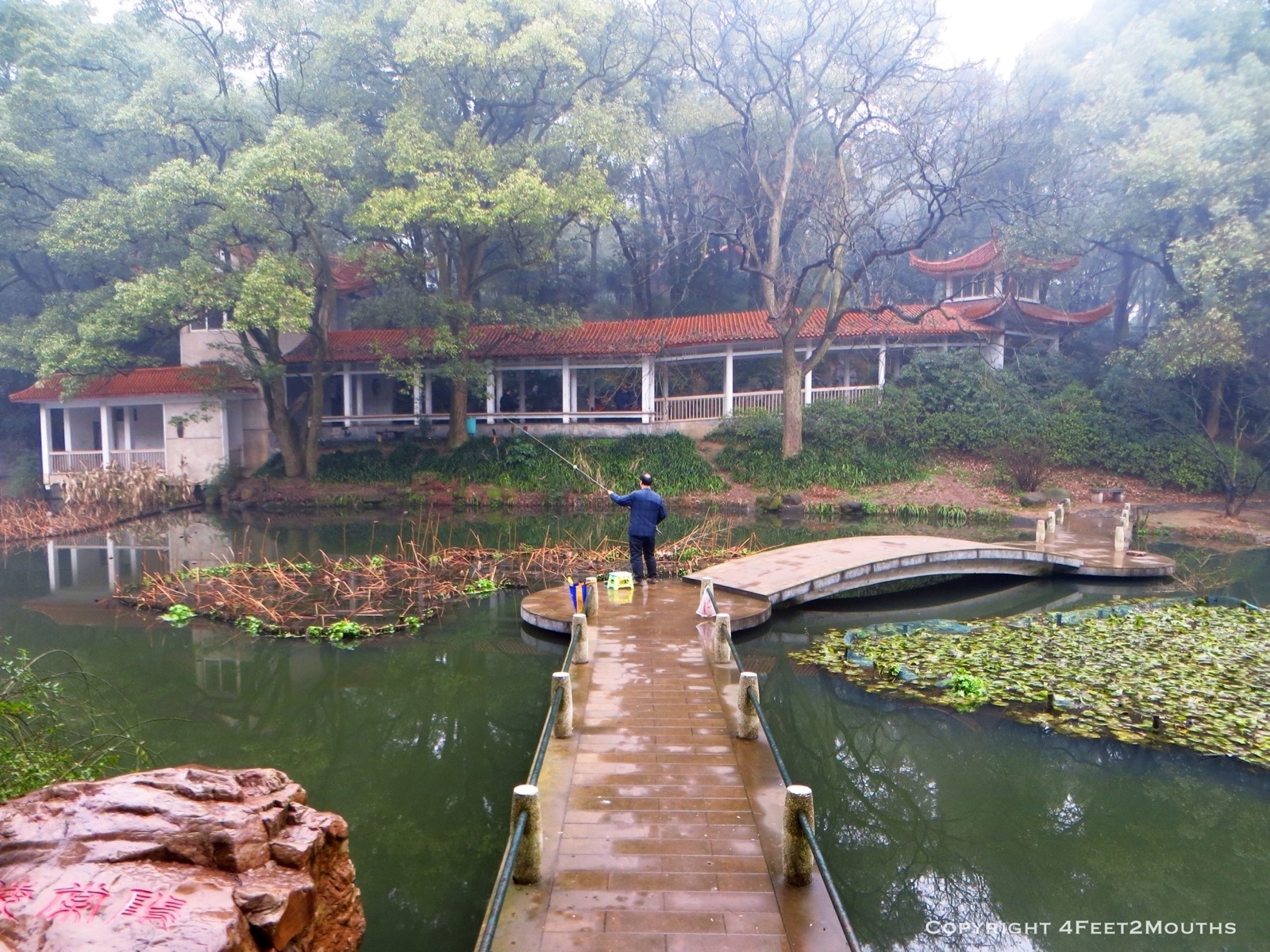
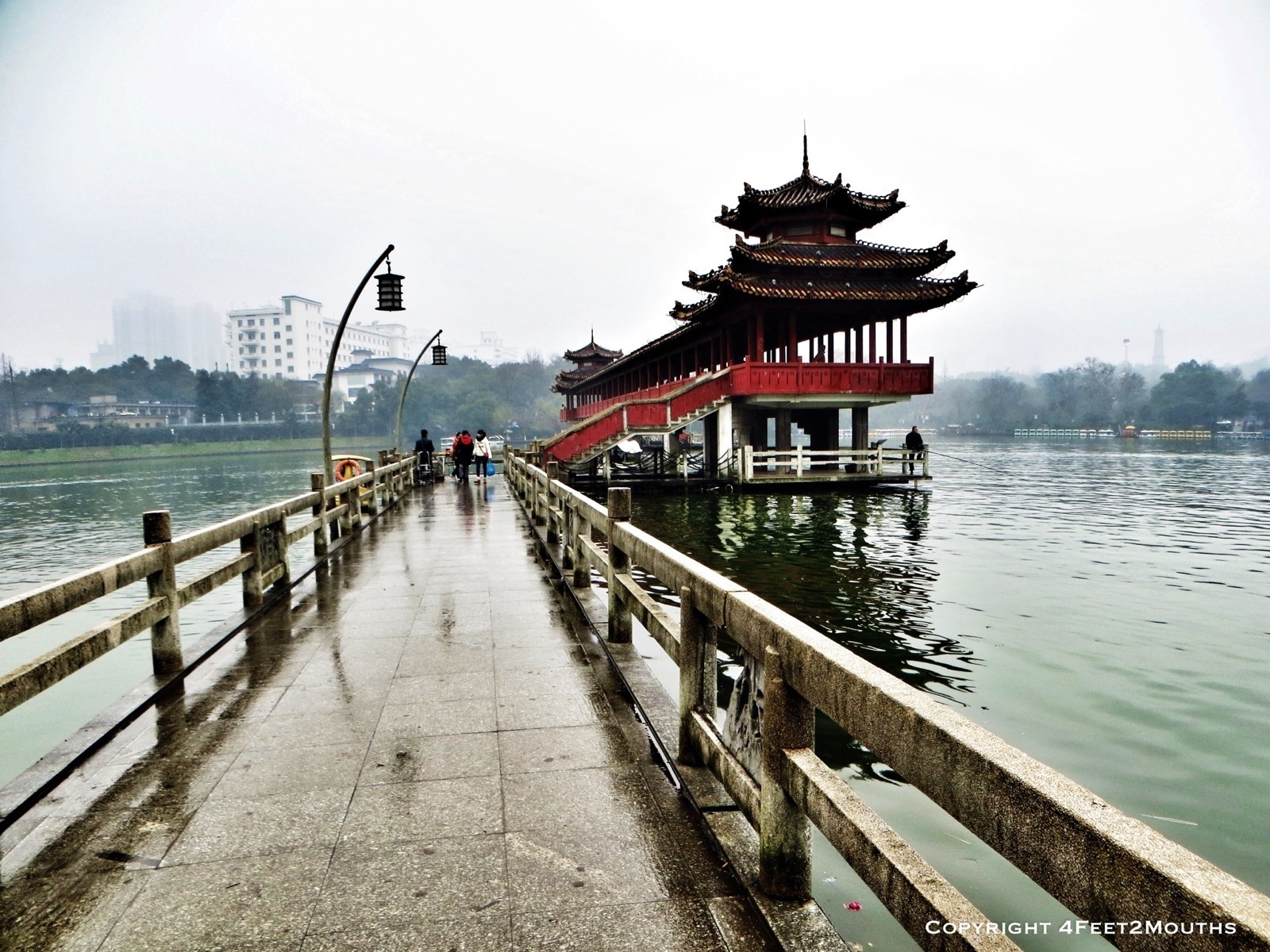
There is a pleasant park in Changsha with a small lake. The park has several rolling hills and plenty of waking paths. We enjoyed watching this fisherman scavenge one of the small ponds for what small carp might be hiding there. There also was a serpentine set of bridges and pagodas that crossed a narrow section of the lake. We strolled on the paths enjoying the remnants of winter trees and cloud-filled skies.

Uyghur woman fans coals alas she grills shish kabobs

Uyghur woman fans coals alas she grills shish kabobs

Fantastic street lamb kabobs

Fantastic street lamb kabobs

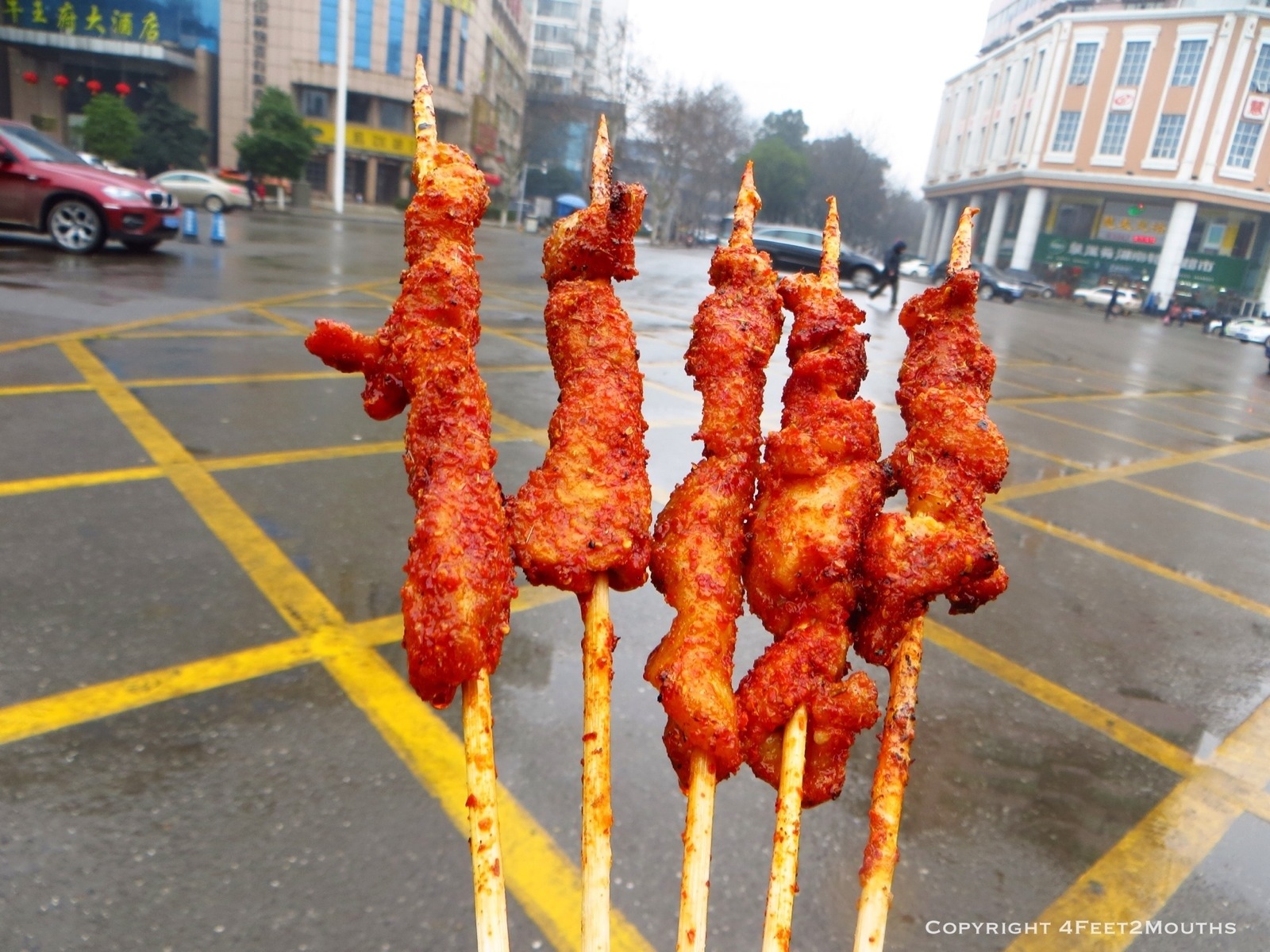
One development from our trip to China has been an intense fascination and interest in western Asia. The constant mix of cultures along the Silk Road has created a wealth of history and a richness of food that we want to explore. We loved Turkey and one of our future trips will need to be to Kirgizstan and Kazakhstan. China has a rather large population of the Muslim Uyghur people. They are a significant minority among the Han and are abundant in every city that falls in line with the historic trade routes of the Silk Road. Changsha was one of these trade cities. The Uyghur people we see are most often street vendors, they wear semi-traditional Muslim clothing and are often very friendly to us. They roast shish kabobs of mutton or goat on long wooden skewers over a coal fire. They fan the coals and season the meat with a sour blend of spices and pepper. We grabbed five skewers at the park entrance for ¥10 ($1.50) and we continued our walk through Changsha.

Additional pork and squid kabobs at "food corner"

Additional pork and squid kabobs at “food corner”

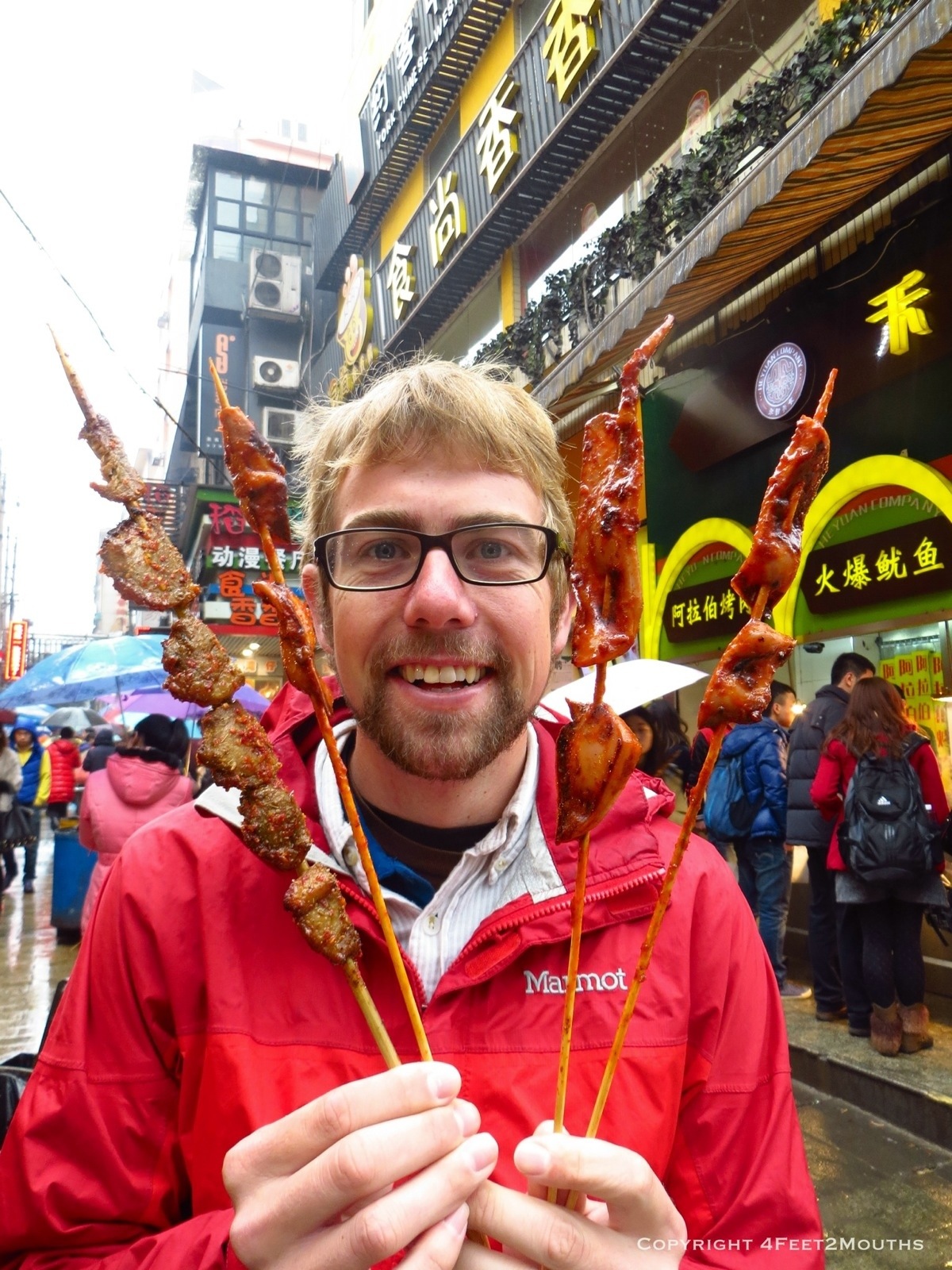
In the main downtown, there is an open-air hawker center that mostly sells skewered meats and stinky tofu in paper cups. This was a Chinese version of the Uyghur kabobs that uses similar seasoning, but the use othermeats like pork and squid. These were good, but the woman at the park entrance had created something amazing.

Fresh hand-cut Uyghur noodles

Fresh hand-cut Uyghur noodles

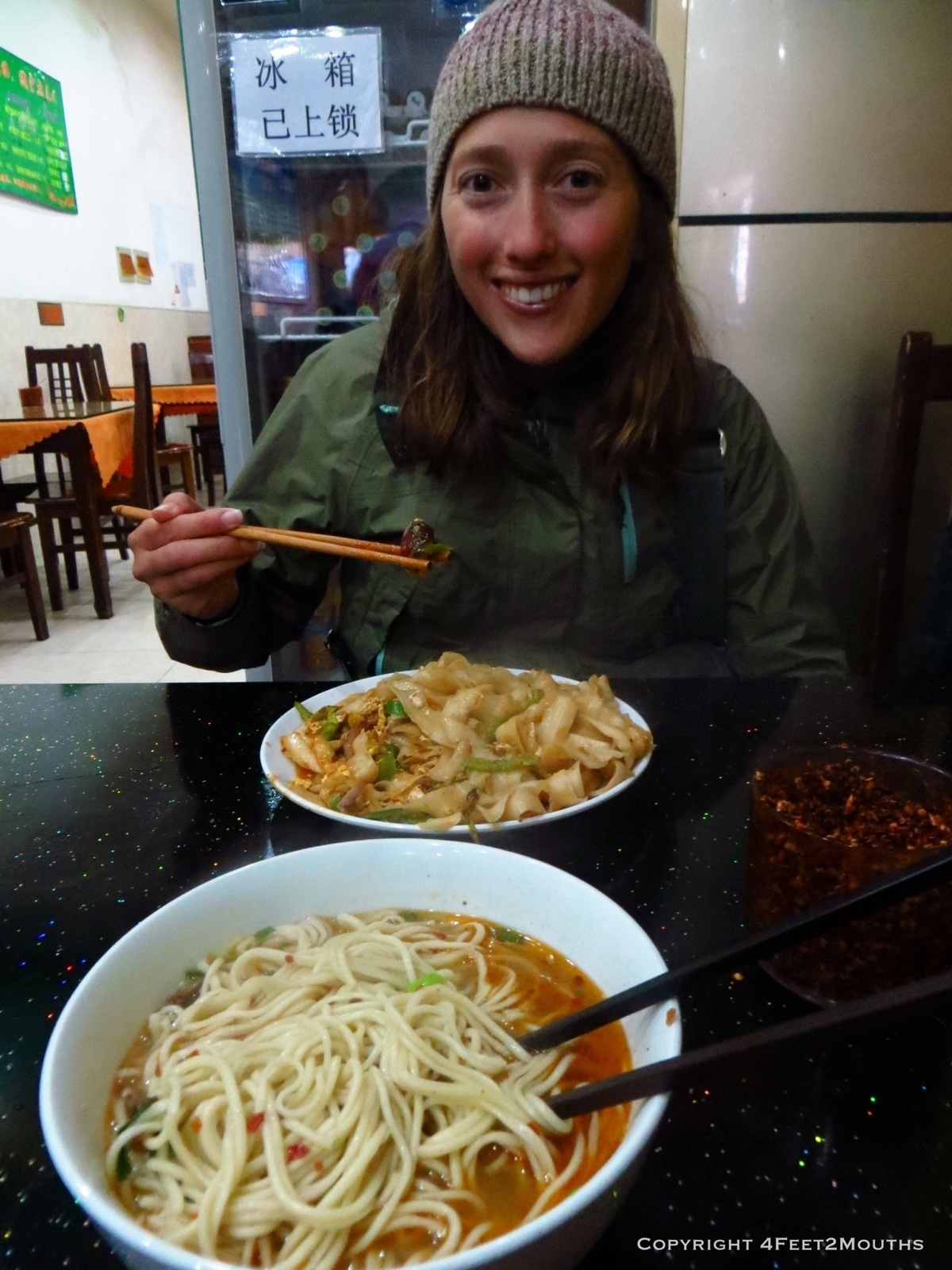
A few dive restaurants had caught our eye walking around. At the front of the restaurant there would be a huge mound of dough sitting on the table and a Uyghur man stretching out huge lengths of noodles. We walked into one of these at lunch time and selected two dishes that we saw other people eating. Mine was a pretty standard beef noodle soup ubiquitous in China, but Carmen had this amazing hand-cut flat noodle with an onion broth poured over the top.

My arsenal of firecrackers

My arsenal of firecrackers

It will be difficult to forget the tastes and variety of food in Changsha. But I will be happy to forget the incessant firecrackers that would go off every morning at 7am. During Chinese New Year, shop owners and families celebrate with reels of firecrackers at all hours of the day. I too am a pyro at heart. Carmen sent me off to go play with the kids down the street. I found three six-year-olds with a lighter more than willing to show me how to light a cracker and throw it in the air. Then I pulled out the 10 inch coffee can sized reel out of a bag. We were all excited; we strung out the fireworks along the playground wall and I lit one end, my friends lit the other. For two to three minutes we watched fireworks explode in the night. The intense sound echoed off the buildings and fiery debris spewed out into the night air. It was so loud and so fun! We were celebrating over a year of travel and welcoming the year of the snake. It will be hard to pull it off, but maybe this year will be better than the last? We’ll at least try.

My ears were still ringing when we boarded our bus to Zhangjiajie. I was excited for the mountain landscape that is one of the most unique land formations in the world…

Feeling Free in Hong Kong (by Carmen)

Spectacular Hong Kong skyline

Spectacular Hong Kong skyline

Hong Kong was the first stop on our Asia trip in 2009 and we absolutely loved it. When people asked what our favorite city of the trip had been, the answer was obvious. From our first dim sum bite, the city enchanted us. With the sky high architecture, and we were awestruck. But just around the corner, amid all the modernity, we would find an old school market that would bring us back down to earth. I always said I could easily live in Hong Kong.

And yet, over time I began to feel a little jaded. Perhaps my memory of Hong Kong was colored by the fact that it was my first time outside the western world. Maybe as a more seasoned traveler, my second visit to Hong Kong would reveal that it was actually too congested or too westernized or too sanitized or just not to my liking anymore. That I had put it on a pedestal that it wasn’t really worthy of.

Hong Kong, how could I have ever doubted you? You are everything I remembered and more.

Dumplings boiled and fried

Dumplings boiled and fried

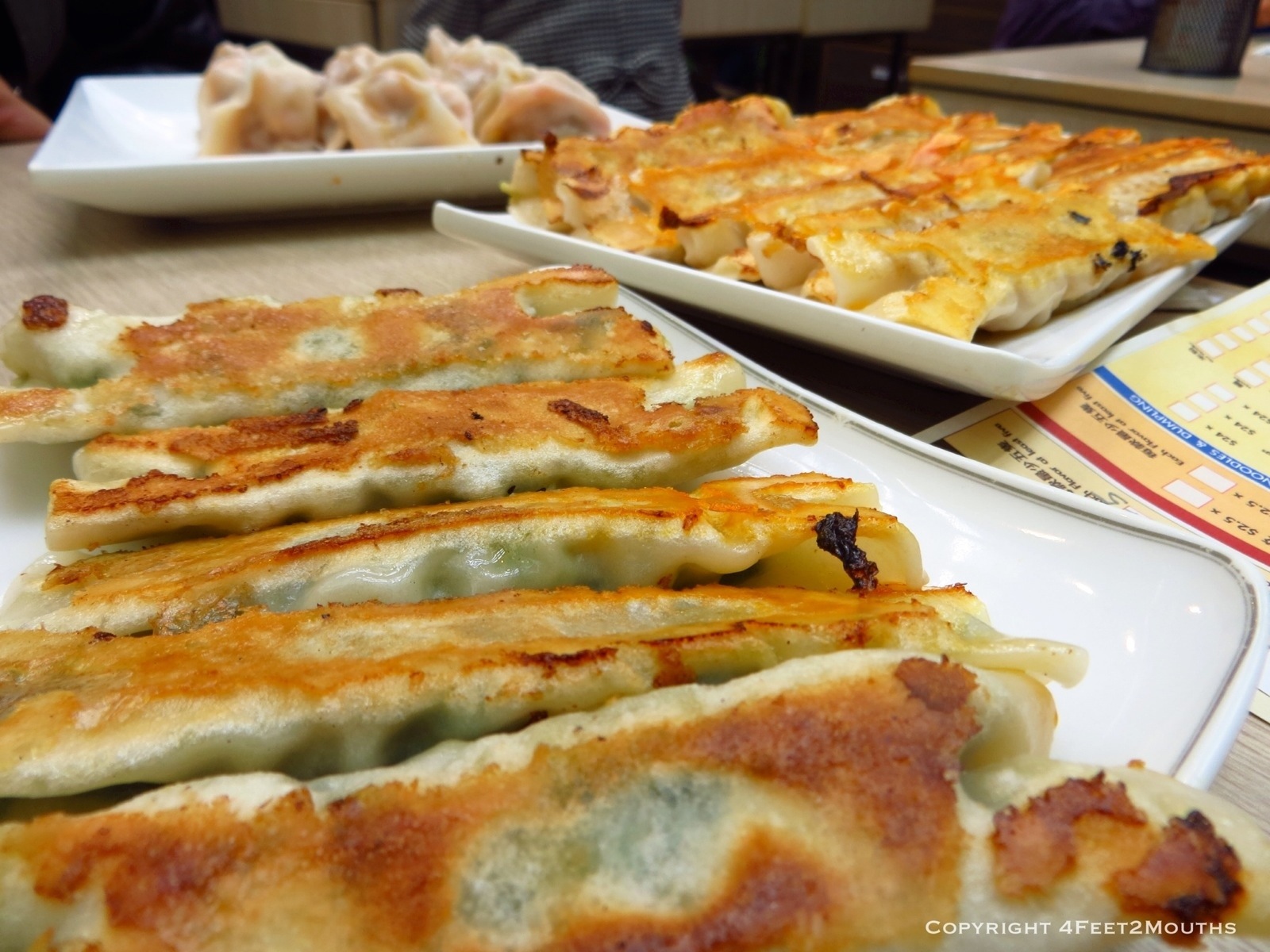
We needed some food fast when we got off the train and within our first block walking we were drawn to a dumpling restaurant. Backpacks and all, we squeezed our way in for some boiled kim chi dumplings. We also sampled some fried pork, leek and yellow curry varieties. They were simple, fast, great. Wow, HK. You had me at hello.

Our visit to HK was partially dictated by our need to reset our China visa. Because, really, this isn’t the best time to see the city. For one, the new year week is expensive as Chinese tourists flood the city. At the same time, all offices and many family owned shops and restaurants are closed. It’s a strange time. We decided to make use of our visit here to take full advantage of the fast, uncensored internet. Oh my god! It felt like I was re-entering the modern world. I didn’t realize how much I had missed posting on the blog, reading other blogs, reading BBC news, all my Google calendars, docs, etc. This excitement was compounded by what I saw on the street – Belgian beer bars, restaurants decorated with colors other than red and gold – it was exhilarating. Yes, some of these factors are simply the western influence on the city. Hong Kong is not considered “true” China.  All I know is that the city made me feel free.

Fireworks in the harbor

Fireworks in the harbor

There was one benefit of visiting during the new year – fireworks. Nathan and I saw the best fireworks show of our lives! It was even better than Nathan’s previous best at Mariachi USA :) They were plentiful, beautiful and well timed. All of it, of course, with the backdrop of HK Island skyscrapers.

Yumminess at Crystal Jade

Yumminess at Crystal Jade

Crystal Jade on the 3rd Floor

Crystal Jade on the 3rd Floor

There is so much to see in HK but this trip was not for sightseeing. We had a lot of work to do – blogging, wedding planning, trip planning all takes time. The slow internet in China wasn’t cutting it for us so things had piled up again. After a long day at the hostel computer we asked the receptionist for a restaurant recommendation. He directed us to a place just a couple blocks away. Nathan was skeptical, thinking that the rec. was based more on proximity than good quality. But he need not have worried. Crystal Jade, on the third floor of a mall, was delicious. We were seated right away, our tea cups were kept full and the Shanghai cuisine was delightful. Of course we had to eat the xiao long bao (soup dumplings) which are steamed pork dumplings with warm broth sealed inside. We complimented these with more pork in a sweet dough wrap. Then the noodles, with a thick savory sauce that we could thin to our liking with broth.

Honeymoon Desserts

Honeymoon Desserts

Fortunately, we saved room for dessert. Also near our hostel, we had noticed this place because of the crowds. It was a tiny dessert cafe called Honeymoon Desserts.  I opted for mango, pomelo, grass jelly and tapioca balls in a sweet soup topped with a scoop of green tea ice cream. Yum! Nathan had a warm walnut and black sesame soup. Inside hid a few glutinous rice balls filled with ground peanuts. Impressive stuff.

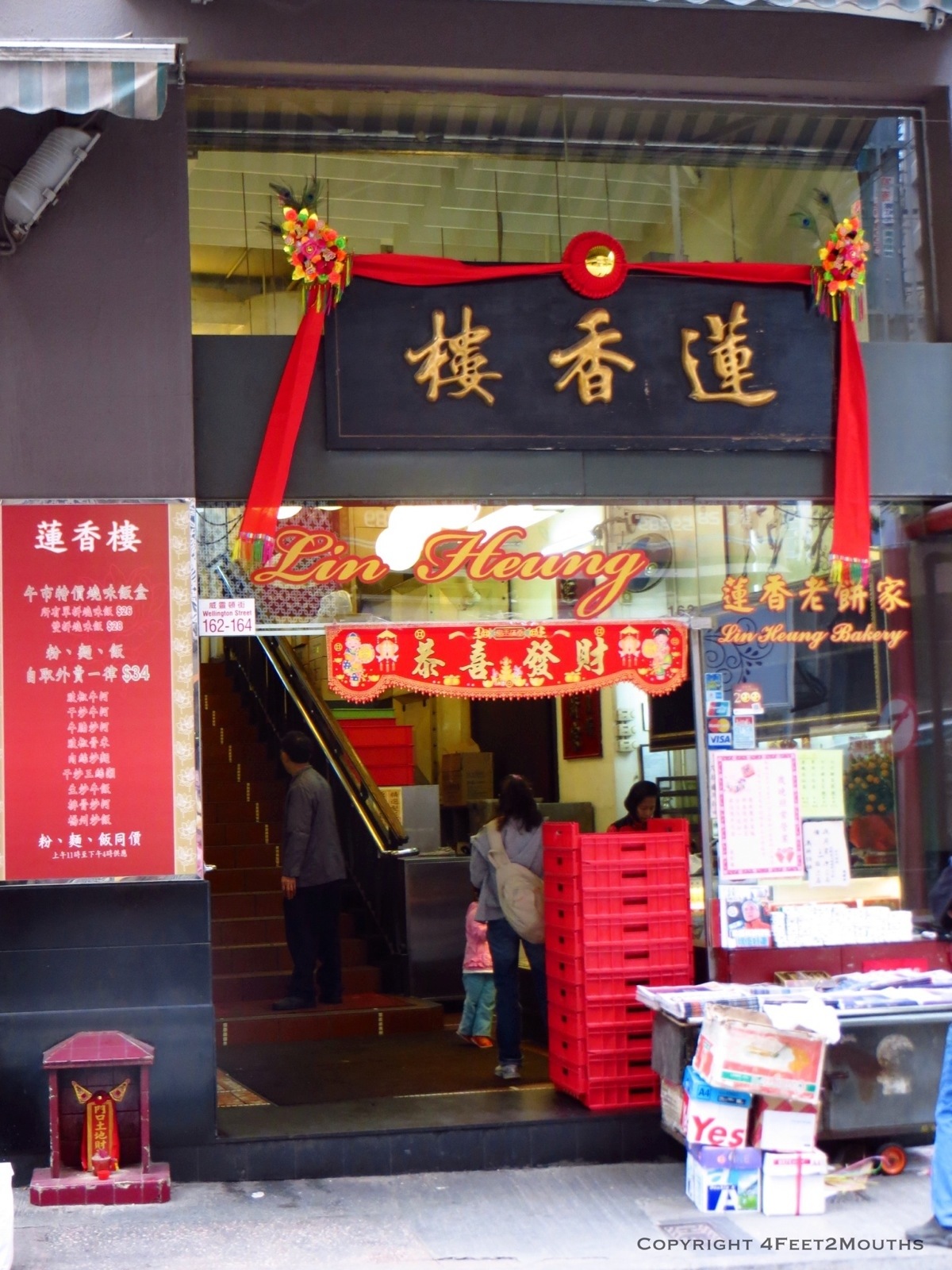
Entrance to Lin Heung

Entrance to Lin Heung

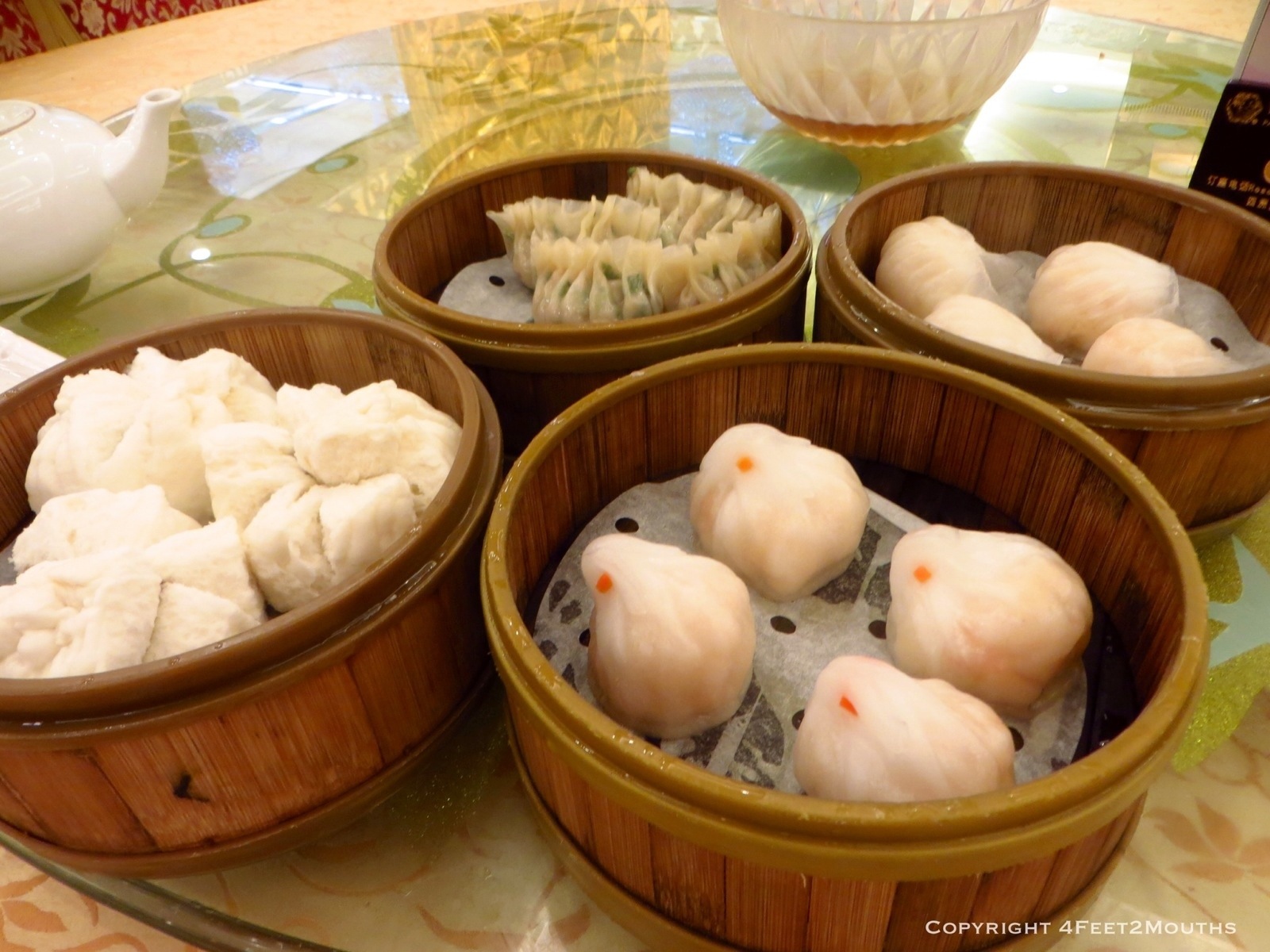
Lin Heung dim sum

Lin Heung dim sum

Siu mai

Siu mai

To start off another “work” day we went to one of our favorite places in Hong Kong. Lin Heung is the real deal. A little grungy, slightly grumpy service and excellent dim sum. On our first visit in 2009, it was a summer weekday. Old regulars were hanging out, reading the paper, as carts were pushed by. In that same trip we visited again on a weekend. The place was transformed into a madhouse of people pushing for dim sum. The carts barely made it out of the kitchen before being stripped bare. On this visit, things were pretty crazy again. The pushing was even more aggressive than I remember. Perhaps because there were more mainland Chinese holidaymakers? Not sure. The dim sum was predictably good but I am excited to visit again when it’s calm.

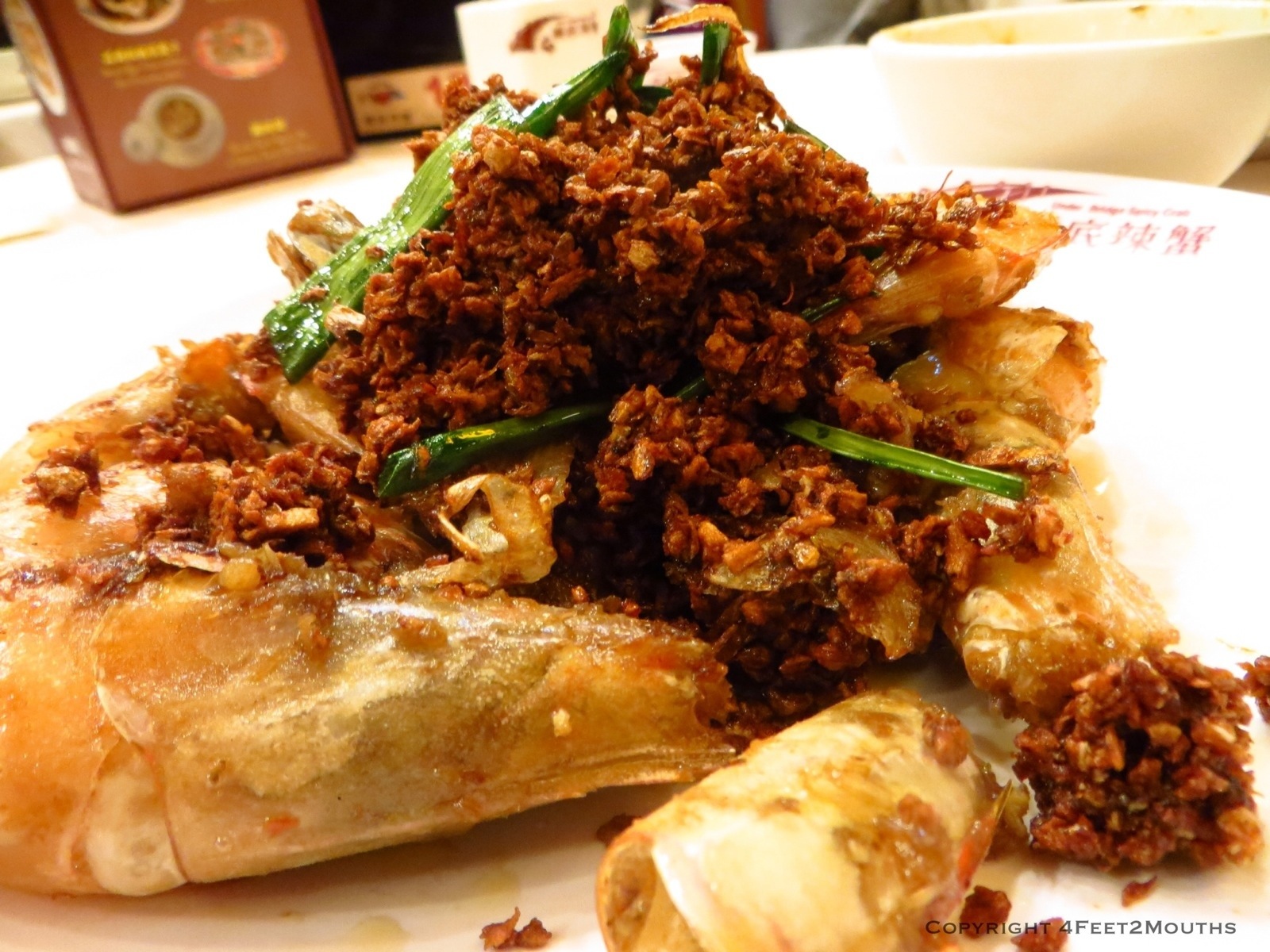
Under Bridge Spicy Crab

Crispy shrimp from Under Bridge Spicy Crab restaurant

The dim sum held us over until dinner, when we were ready to feast again. Again near our hostel, we went to Under Bridge Spicy Crab Restaurant. As we waited for our table we looked longingly at the crab covered in crispy fried garlic. That is, until we saw the price. A crab for two for $60 (USD). Must have been inflated for the holidays. We instead switched our sights to garlic crusted shrimp which turned out to be an excellent substitute.

Hokkaido Milk Restaurant

Hokkaido Milk Restaurant

Another one of our fave HK eateries is Australia Dairy Company which is unfortunately closed for the time we are here. It is an institution serving amazing fried eggs, toast, coffee, macaroni soup. Yes, doesn’t sound too exciting but there is magic in the way they make it here. To get our fix, we went to Hokkaido Milk Restaurant instead. We didn’t have high expectations but were pleasantly surprised! The eggs were perfectly cooked, still slightly runny in the center, the toast was well buttered, and the macaroni soup deceivingly rich. Made me very happy.

I could have spent more time in HK, but instead that would have to wait until the end of the trip, after the holidays were over. Therefore, we prepared ourselves to re-enter the wilds of China.  Watch out, Hunan, Chongqing and Sichuan here we come!

Our One Year Travel-versary in Guangzhou (by Carmen)

Peach blossoms for the new year

Peach blossoms for the new year

Guangzhou kind of gets a bad rap.  Yeah, it’s not that pretty and there aren’t a great many sights to see.  But I still liked it.  The area was a major trading post for centuries and one can still feel the influence from the mix cultures.  Another winning factor is that Guangzhou is a real city, geared more towards manufacturing than simply tourism.  Add an abundance of dim sum and an excellent subway system and I was sold.

Street side vegetarian dumplings

Street side vegetarian dumplings

BBQ Pork at Guangzhou Restaurant

BBQ Pork at Guangzhou Restaurant

From the beginning, Guangzhou took care of us.  After checking into our hotel and taking a nap I was very hungry.  Just before popping into the subway there was a lady selling dumplings! We bought a half dozen vegetarian dumplings for $0.50.  Good deal.  We then rode to downtown where we walked the lively shopping streets.  I had read a recommendation for an eatery in the area with a straightforward name – Guangzhou Restaurant.  We found it but the garish neon exterior wasn’t exactly welcoming.  We went inside anyway and found a good quality meal of BBQ pork, buns and Chinese greens in a light broth.

Dim sum at Panxi Restaurant

Dim sum at Panxi Restaurant

But what we were really excited for was dim sum.  Many a morning in SF were spent at our favorite dim sum restaurants with old ladies pushing carts of food for us to choose from.  We know the names of the classic dishes – ha gow (shrimp dumpling), cha siu bao (bbq pork steamed bun), siu mai (pork and shrimp dumpling topped with roe).  We were ready.  During our time in Guangzhou we were able to sample two of the most well known dim sum restaurants.  The first, Panxi, served up some excellent quality.  But there were no carts – we ordered from a menu.  Less fun, but even worse was waiting almost an hour for our food!  It’s never easy in China.  The second place was Tao Tao Ju Restaurant. This was also delicious (though we liked Panxi a tad more).  I did like the self-service counters where I could choose my dim sum.  I didn’t recognize anything in the dessert section so I randomly chose a group of deep fried mini-pastries.  To my surprise, it was filled with a warm, sweetened durian custard.  This was a perfect use of the pungent fruit and I hope I can find it at dim sum restaurants abroad.

Shopping street

Shopping street

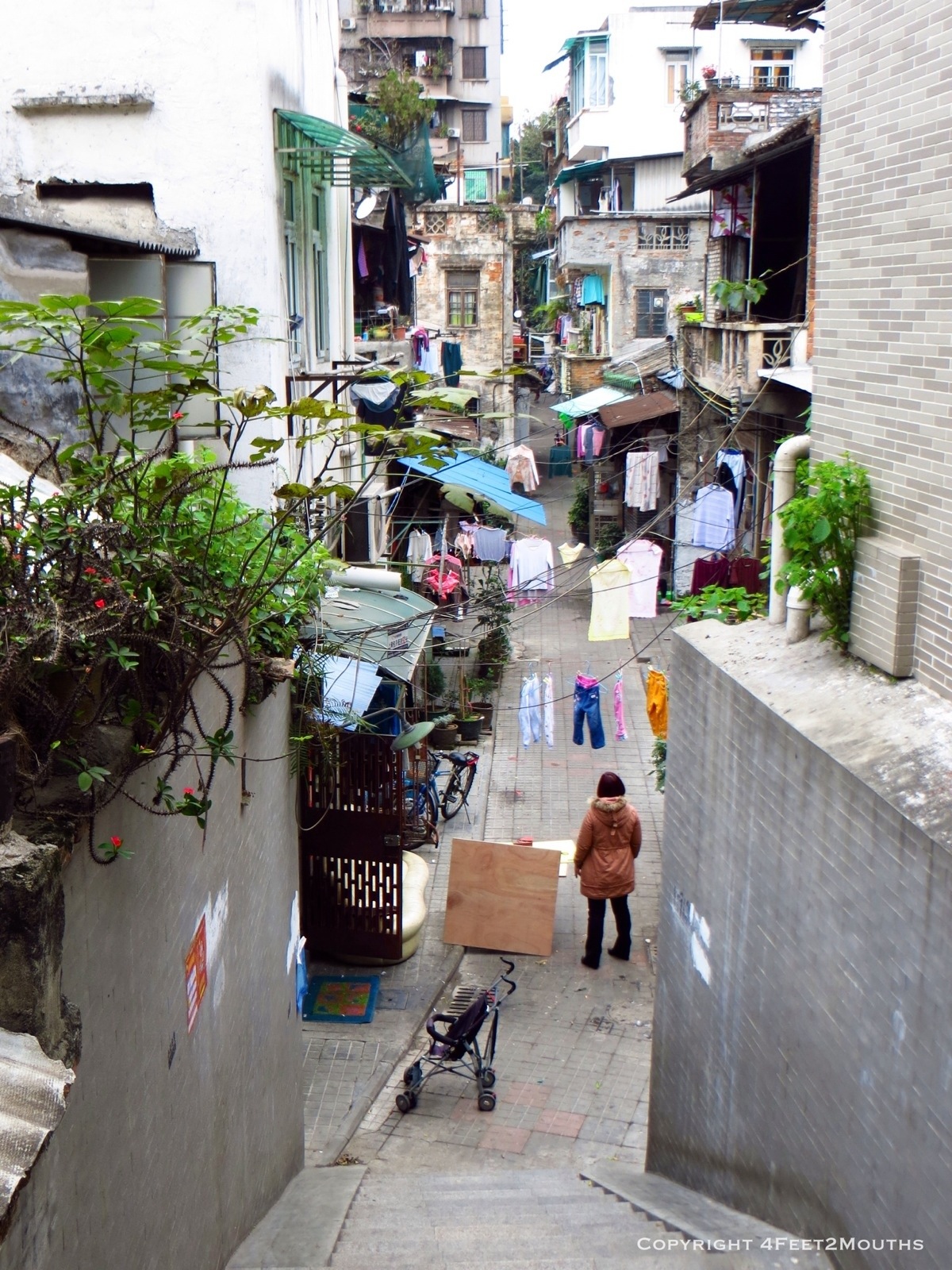
Guangzhou alleyway

Guangzhou alleyway

Alligator at the market

Alligator at the market

We walked a bit around the shopping district again peeking into the narrow alleyways.  We passed one food market buzzing with customers and couldn’t resist perusing ourselves.  The Cantonese are known for eating everything and anything and this is definitely the first time I saw alligator at the market. But before long it was nap time again.  Nathan had unfortunately come down with a tough illness that required a lot of rest.

Naan at Nur Bostan

Naan at Nur Bostan

Spiced rice and dumplings

Spiced rice and dumplings

Gate of one of the world's oldest mosques

Gate of one of the world’s oldest mosques

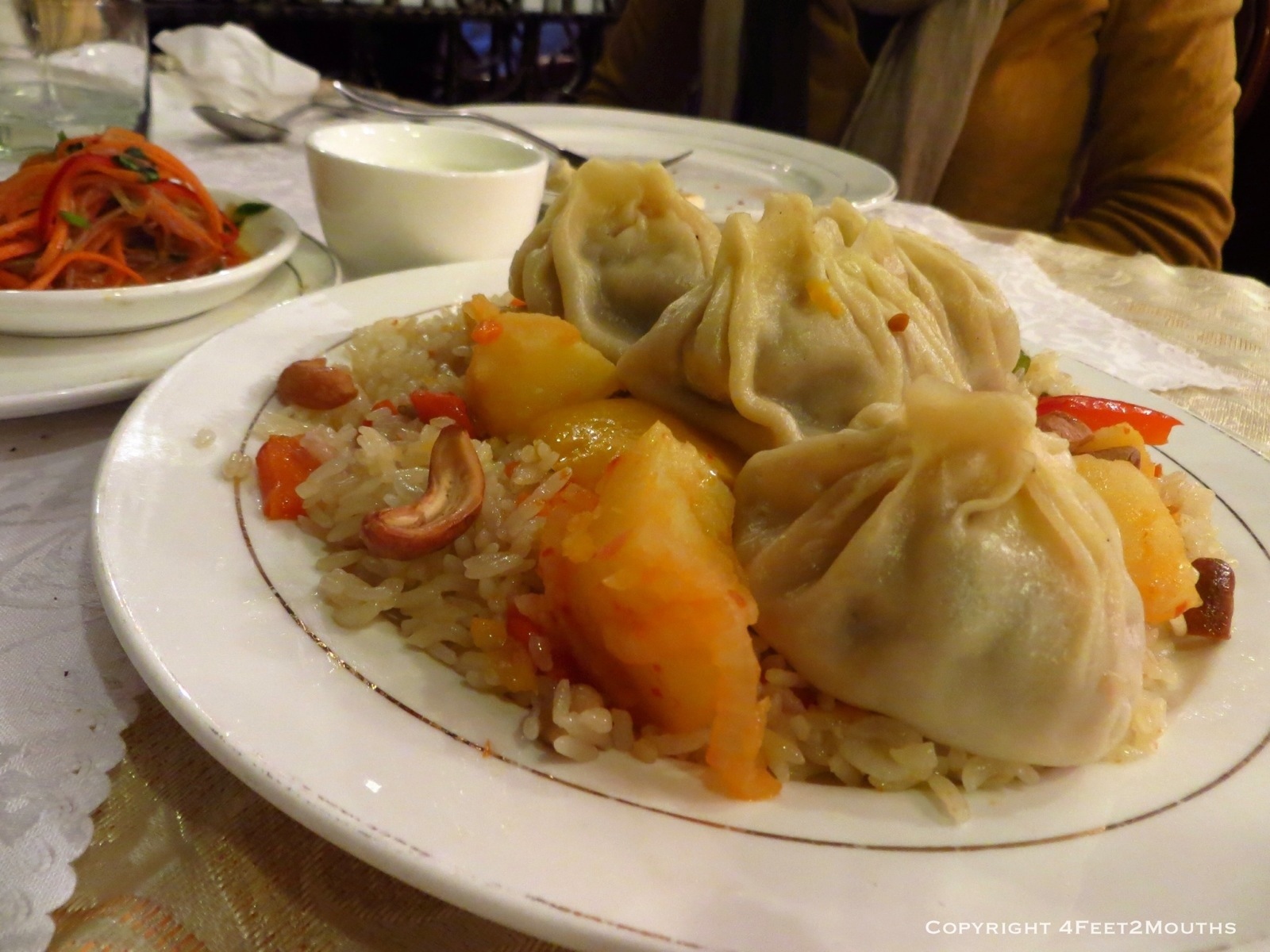
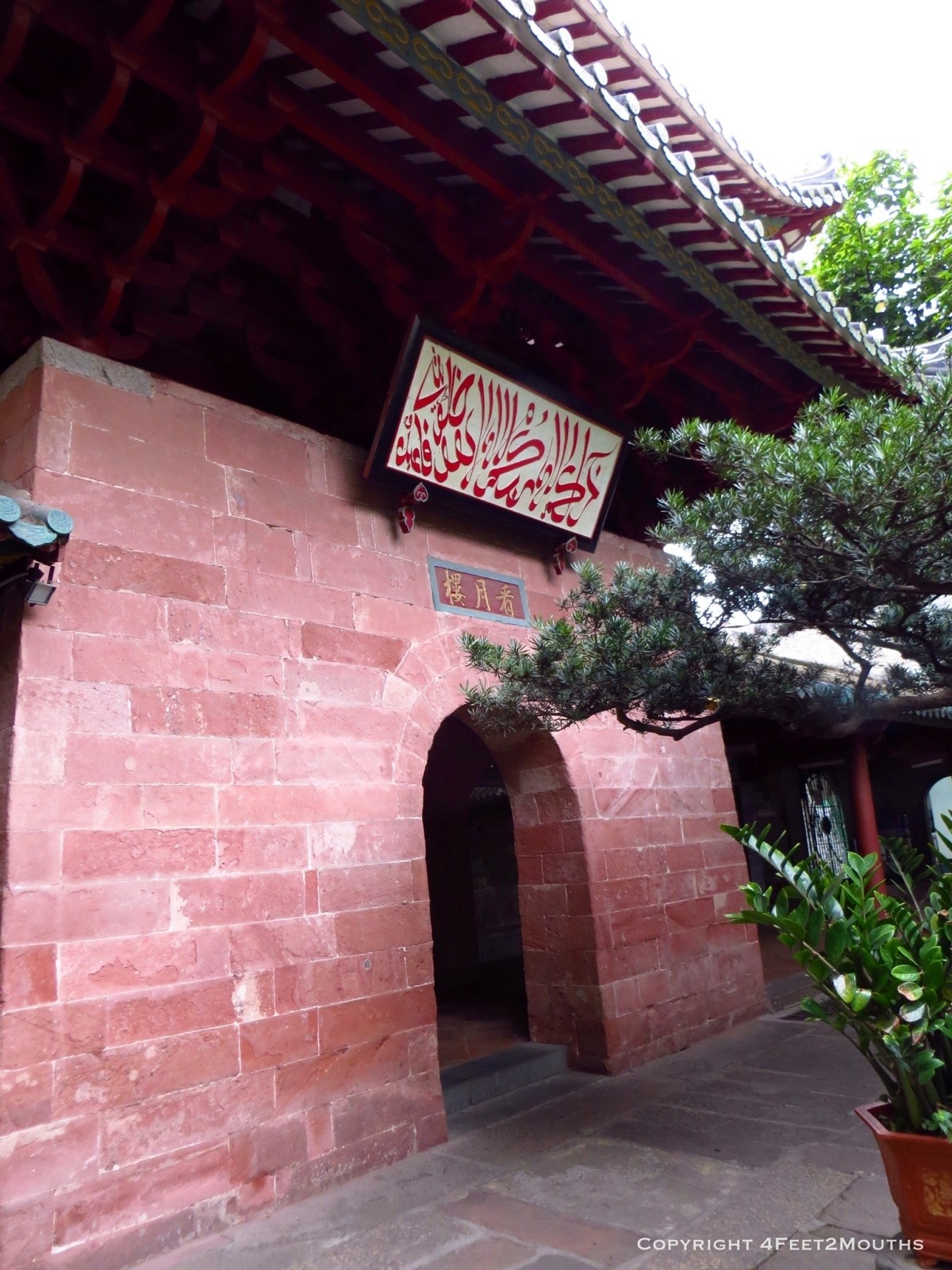
But it was our one year travel anniversary!  So Nathan mustered the energy to go to a special restaurant.  Nur Bostan serves Uyghur cuisine from the far western regions of China.  The culture and food there are more closely linked to Central Asia than mainstream Chinese.  One of the biggest differences is their Muslim religion, meaning they don’t eat the pork found so ubiquitously in the rest of the country.  There is a longstanding Muslim community in Guangzhou that I found fascinating.  The people themselves, in their dress and face, looked like a mix of east and west.  We even went to visit the city’s mosque, one of the oldest in the world being founded in the 600s, shortly after Islam was founded.  As for the food, we enjoyed some fluffy naan, hummus, juicy lamb kababs and spiced rice.  An excellent way to celebrate our travel-veresary!

Wuzhanji

Wuzhanji

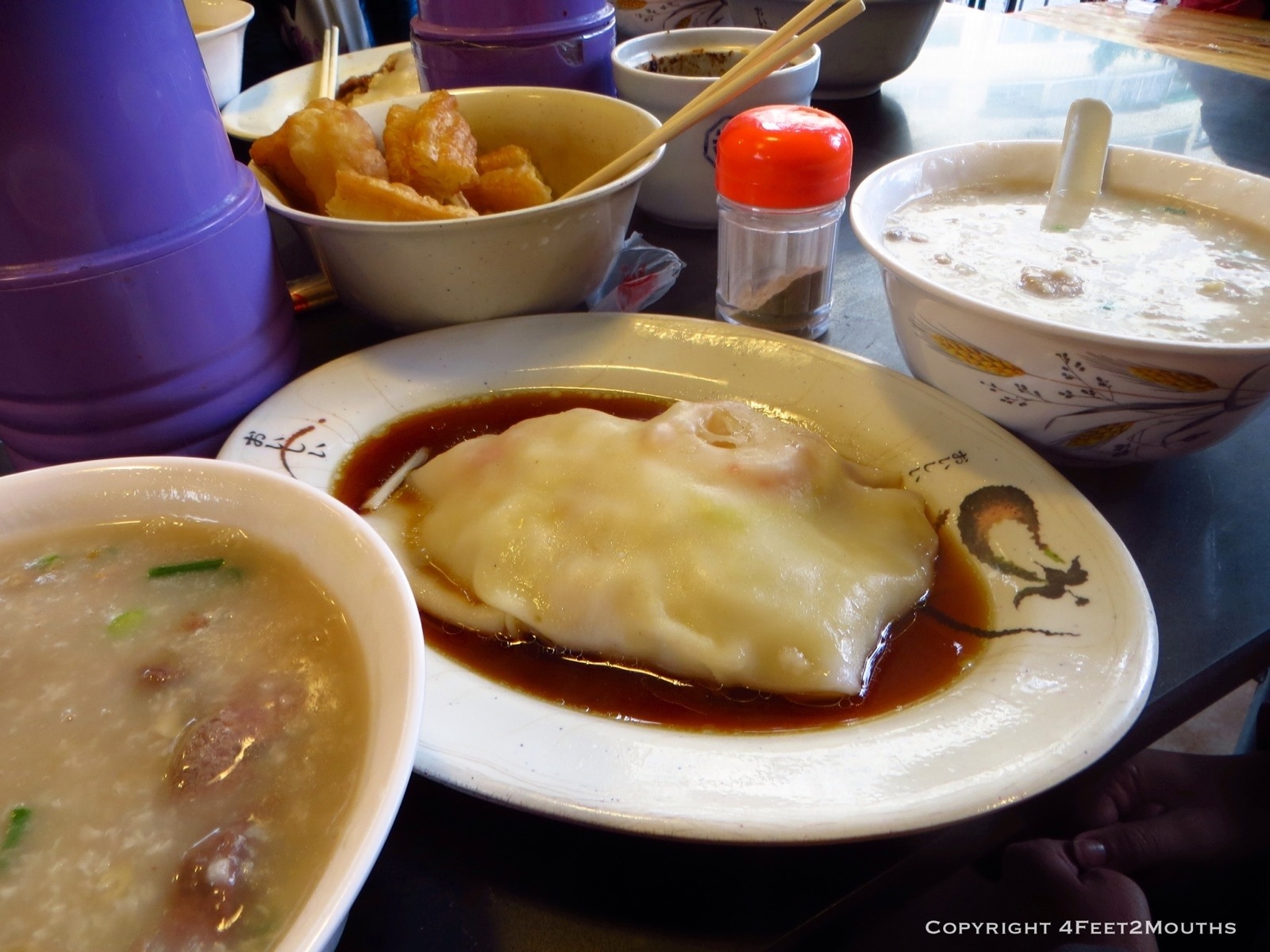
In the morning we fought for a table at Wuzhanji, recommended for its cheung fan (steamed rice noodle rolls) and congee.  The woman taking orders didn’t even want to deal with us but we persisted and were rewarded with some springy noodles.  We also got some congee with offal.  I think this was her version of revenge but little did she know we actually like offal.  So there.

Chen Clan Association Hall

Chen Clan Association Hall

Unbelievable carving on a minuscule piece of ivory

Unbelievable carving on a minuscule piece of ivory

Now I wasn’t expecting much more from the Chen Clan Association Hall than an atmospheric old building.  But lucky for us it now houses a recently completed folk art museum.  My favorite piece was in the ivory carving room.  There was a piece of ivory no bigger than a grain of rice with Chinese characters carved in red.  Seriously, these characters were too small for the eye to see.  You had to look through a magnifying glass.  What unbelievable skill on the part of the carvers!!  I will never look the same way at those fairground stands that advertise writing your name on a grain of rice.  They don’t even know what they’re up against.

Canton Tower

Canton Tower

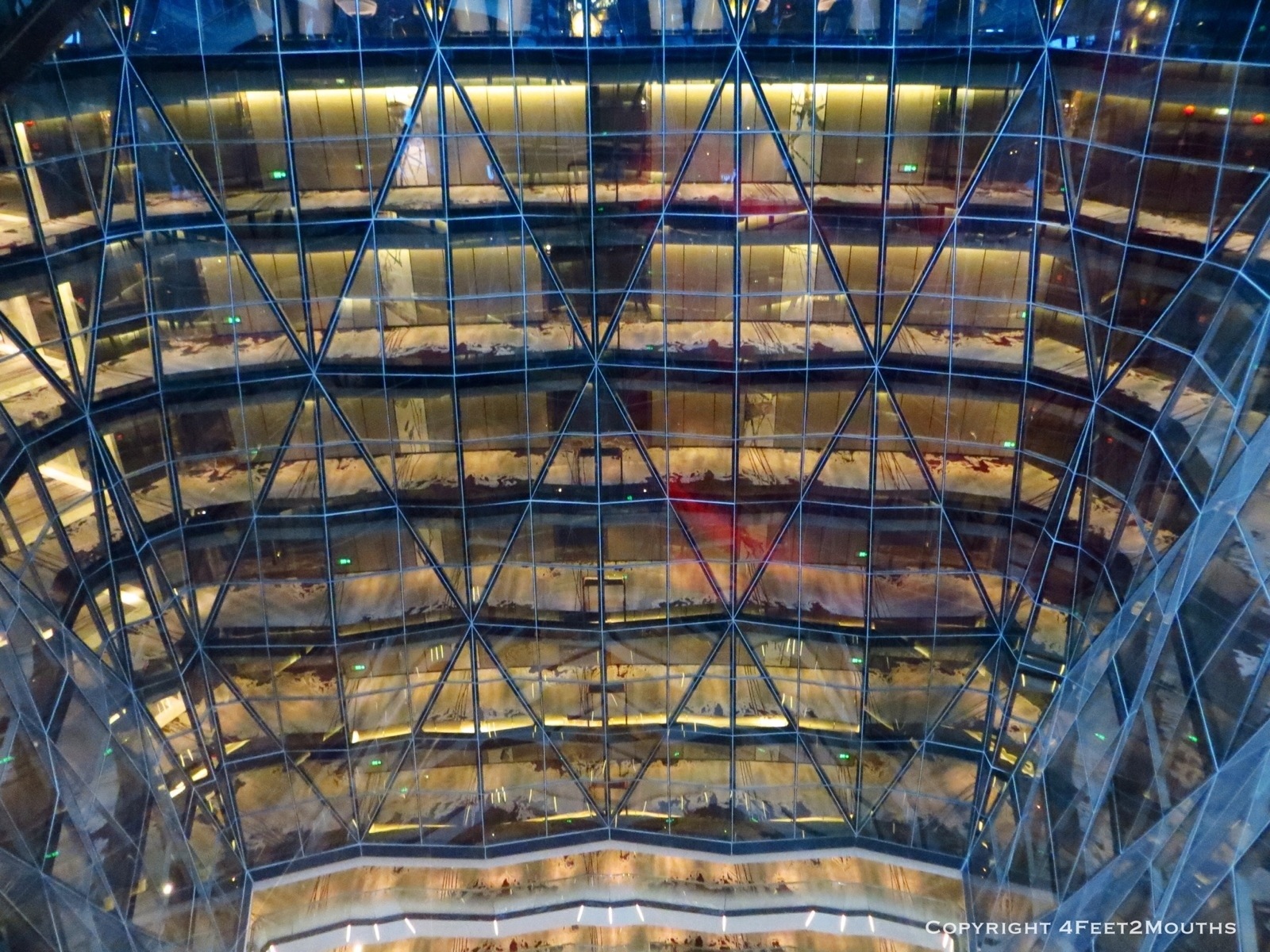
Four Seasons Hotel atrium at the IFC Tower

Four Seasons Hotel atrium at the IFC Tower

From the old to the very new, we rode the subway to Guangzhou’s version of Canary Wharf.  Skyscrapers are under construction at every turn but we were here to see two in particular.  The first was the IFC Tower, the tenth tallest building in the world.  It was just finished last fall and feels brand spanking new.  We made our way to the glamorous Four Seasons Hotel lobby on the 70th floor for views over the city.  Too bad it was cloudy!  From the IFC Tower we could see the Canton Tower twisting into the sky.  Pretty spectacular stuff.

Night market crowds

Night market crowds

At night we braved some crowds at a pedestrian shopping street hosting a flower market for the new year.  We then hopped on the subway to our hotel.  At the stroke of midnight we were treated to a cacauphony of fireworks set off by local families (the city did not put on a show).  These were bigger than some of the shows we’ve seen in SF!  We had a great vantage point from our hotel room on the 7th floor of an apartment building.  Our new year’s day (the third in our trip so far after Mumbai and Hanoi!) was spent eating dim sum, reading and sharing a simple noodle dinner with the young hotel manager.  It was a good way to gear up for our next destination, one of the best cities in the world, Hong Kong.

A Long Train Ride to Guanxi (by Carmen)

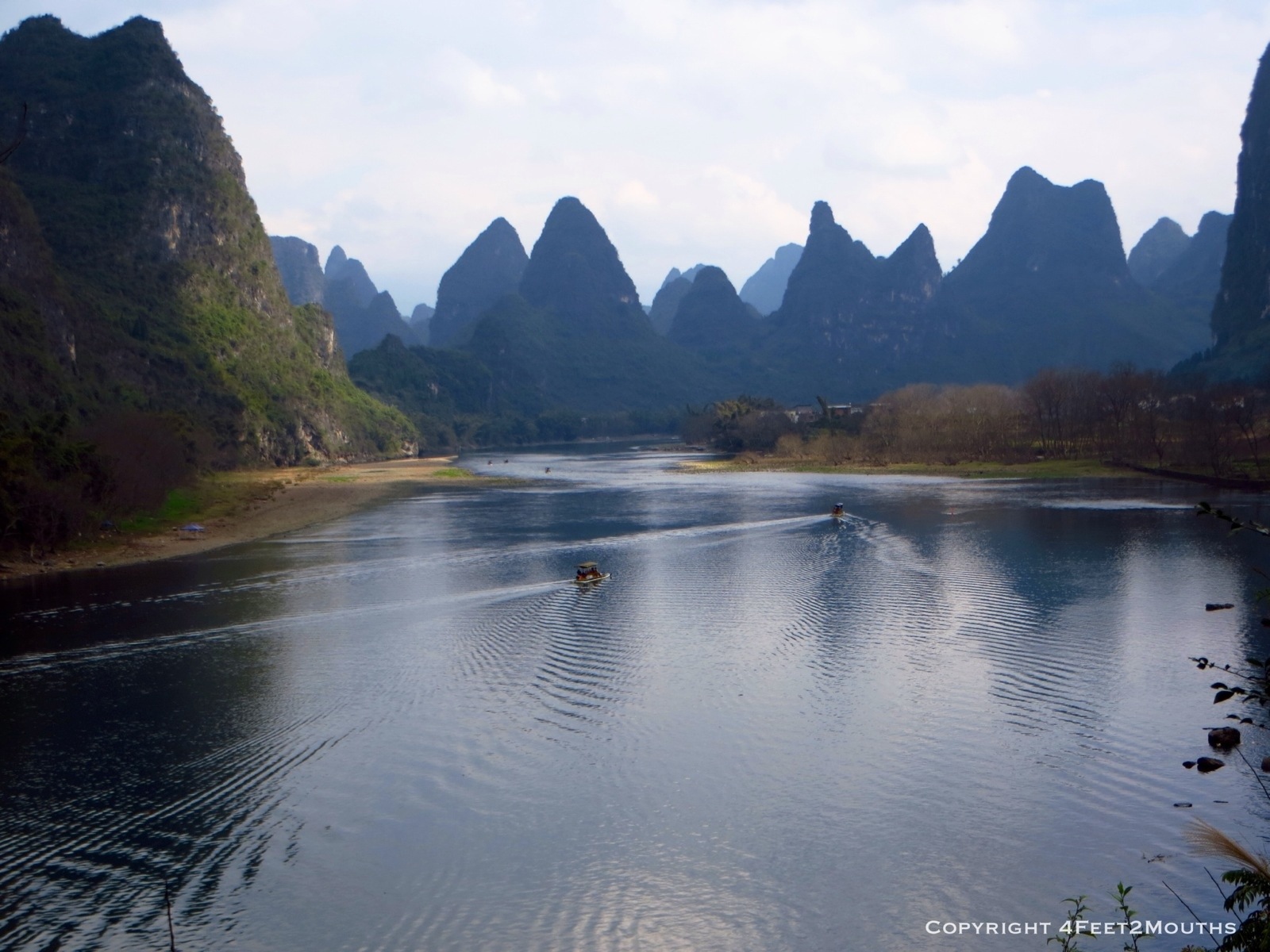
The karsts Guanxi is know for

The karsts Guanxi is know for

A lot can happen in 24 hours. But sometimes, very little does. This was the case on our very long train journey from Kunming to Guanxi province. Why on earth would we take such a long train ride? Well, we had already survived a 27 hour bus journey between Hanoi and Luang Prabang, so we figured that this had to be better. Also, we much prefer train travel over flying. It’s fun to be able to look out the window and see the countryside. And the fact that you can’t do a whole lot forces you to relax. In our case that meant a lot of time to read and work on writing for the blog.

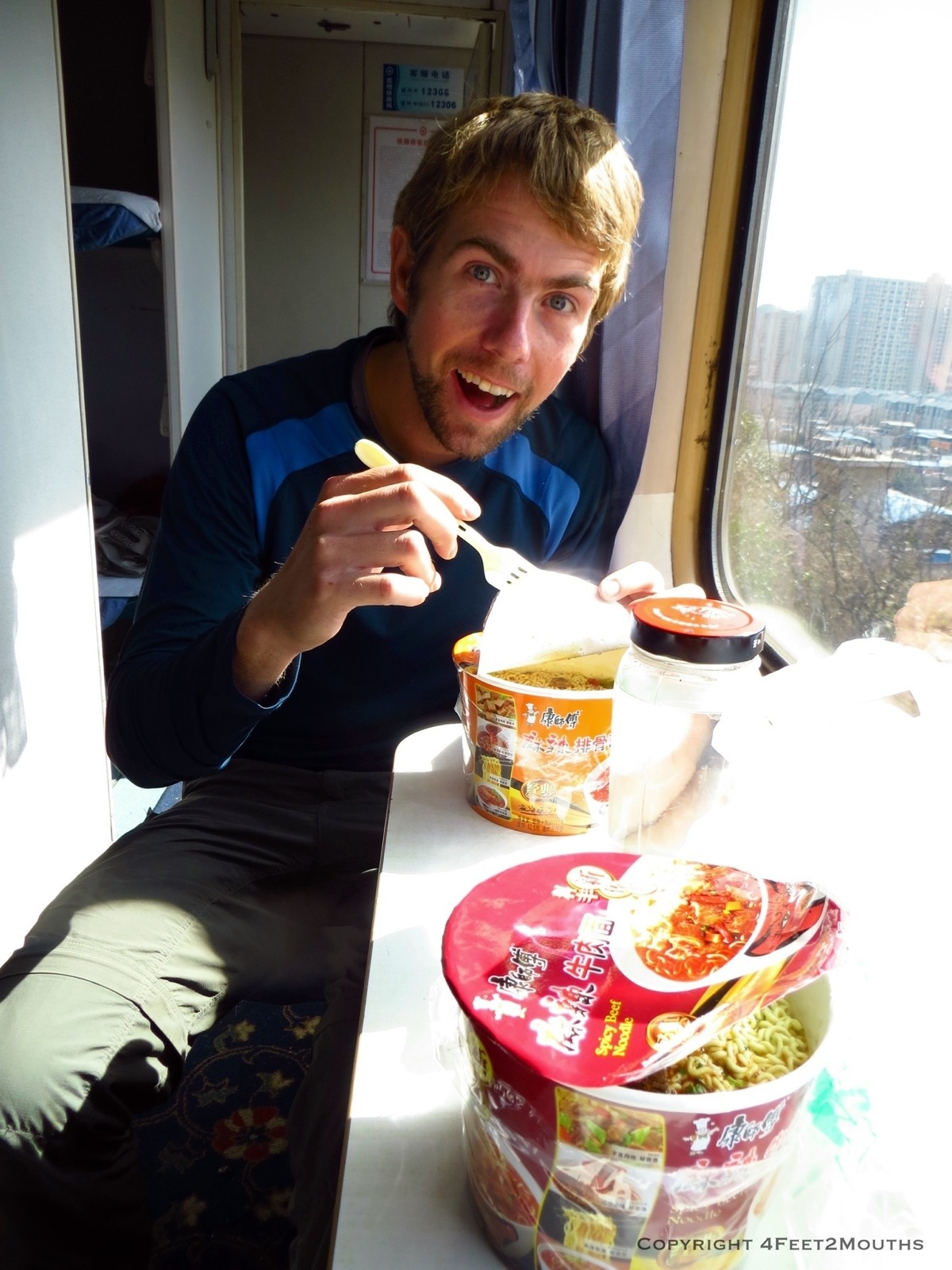
Nathan and his instant noodles

Nathan and his instant noodles

We left bright and early on a Sunday morning. As we boarded the train, we realized that we were seriously low on snack supplies relative to our train mates. Everyone else had large shopping bags full of cookies, fruit and many bowls of instant noodles. We had two bowls ourselves, a few apples and oranges and some sunflower seeds to act as breakfast, lunch and dinner. But hey, we weren’t going to be moving much. How much did we really need to eat? Nathan was pretty excited for his instant noodle bowl. Everyone, and I mean everyone, on the train had brought some for their lunch and dinner. It was definitely richer and tastier than the ubiquitous Cup-o-Noodle in the States. But I still felt a sodium overload as I slurped from my bowl.

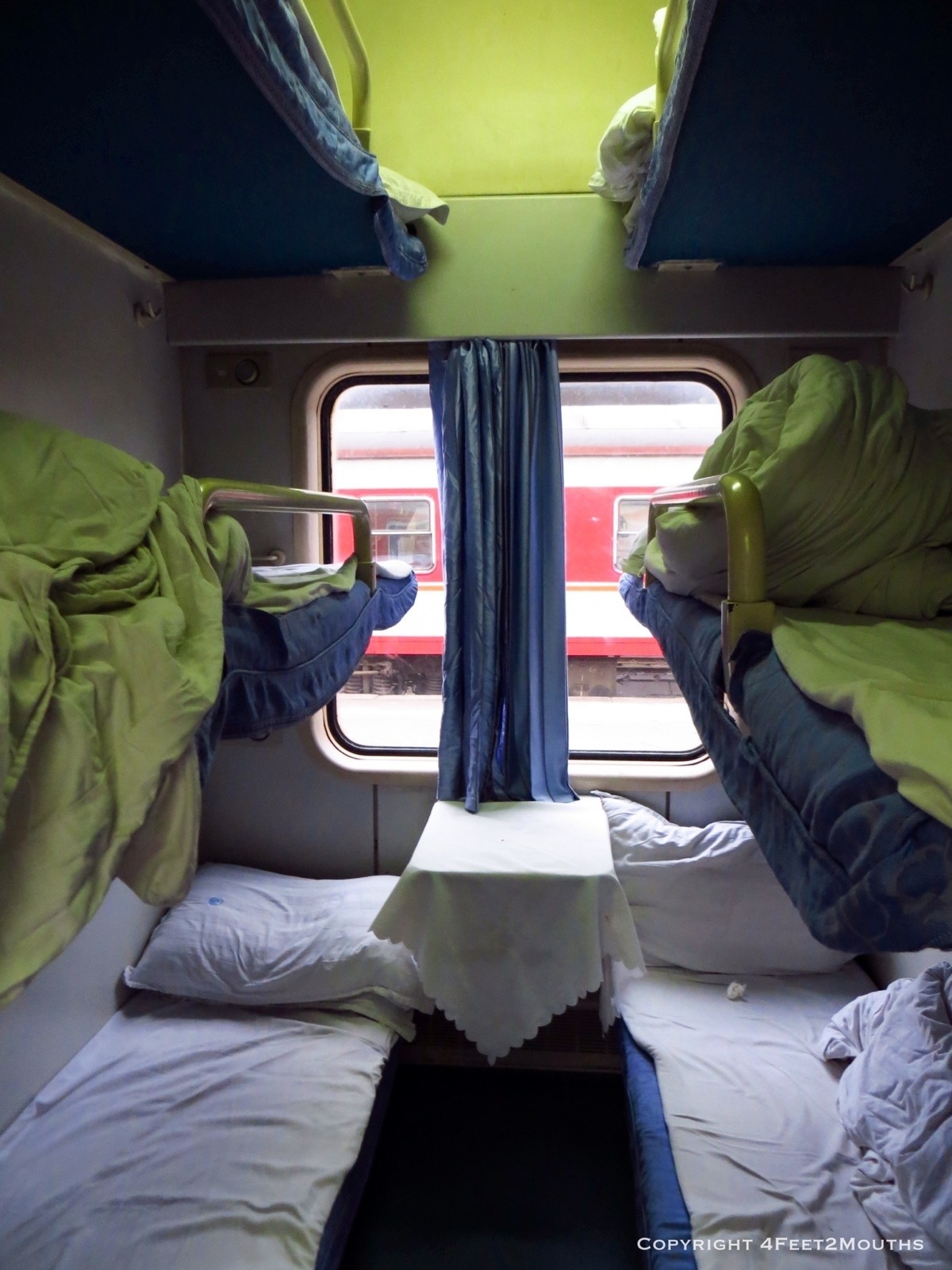
Bunks on the train

Bunks on the train

In the end, the ride was over pretty quickly. It was by no means a luxury ride. We slept on the top bunk of a hard sleeper, there was one squattie pottie for our train car and no dining area (only hot water for all those noodles). Our bunkmates were pretty quiet, which we weren’t expecting. The Chinese have a penchant for having loud conversations even when people are sleeping feet away. But overall our experience was pretty good. We rolled into Guilin a little restless but rested enough.

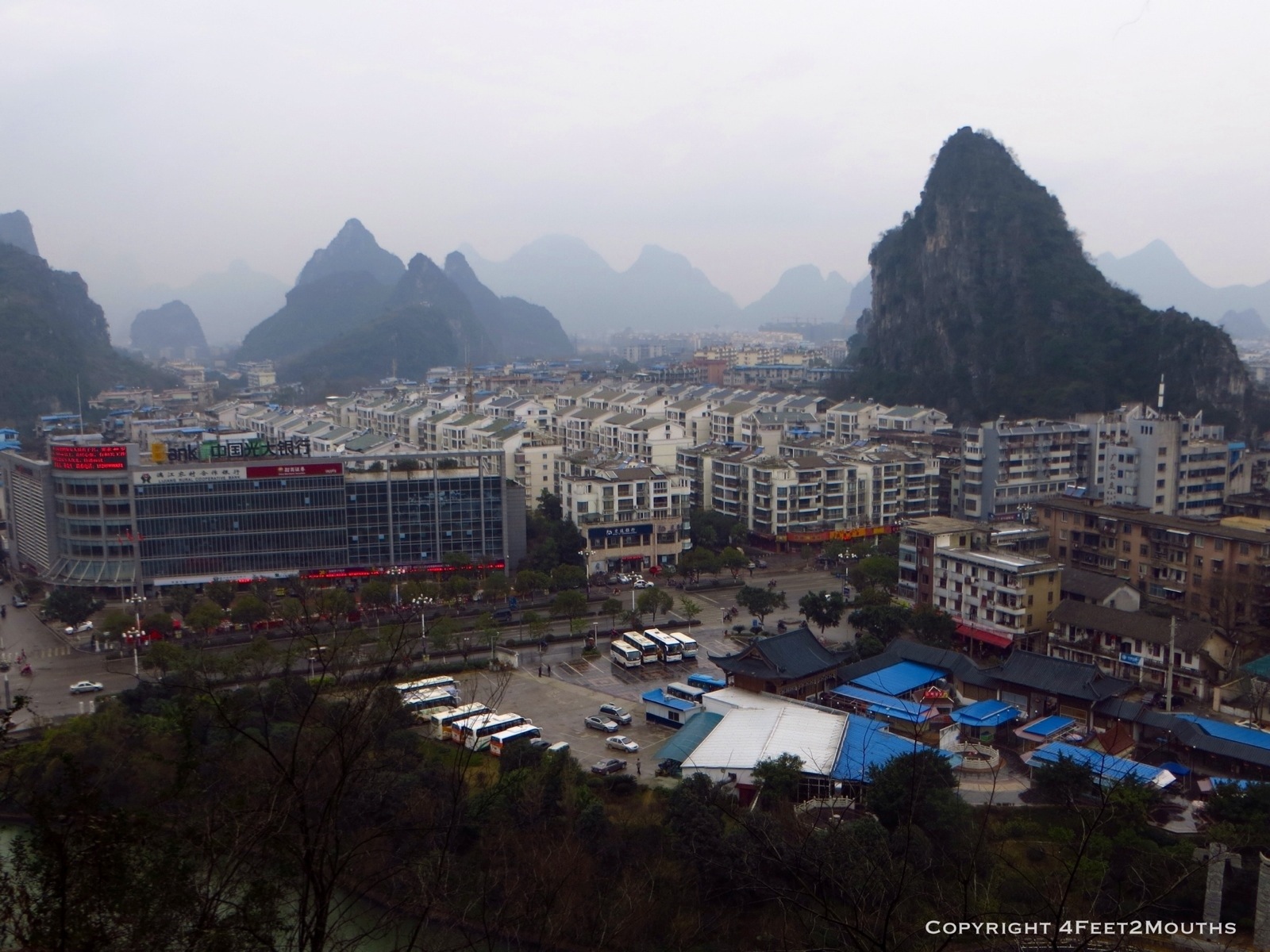
City and nature together in Guilin

City and nature together in Guilin

Red decoration on the top of a karst

Red decoration on the top of a karst

Guilin is the capital of the Guanxi province and provided our first taste of the limestone cliffs the region is known for. This was now our third time seeing these geological formations, having admired them on Koh Phi Phi and Halong Bay. But here in China, they were a little different. For one, the karsts were denser (of course). Also, it was awesome to see the cliffs in an urban setting. Guilin looks like many other Chinese cities but when you round the corner and see a huge wall of rock jutting out of the earth, it just makes you smile. We climbed to the top of one of these cliffs to get a view of the city through the wintery mists. Since it was close to the lunar new year it was festively decorated in red.

20 Yuan Point in Xingping

20 Yuan Point in Xingping

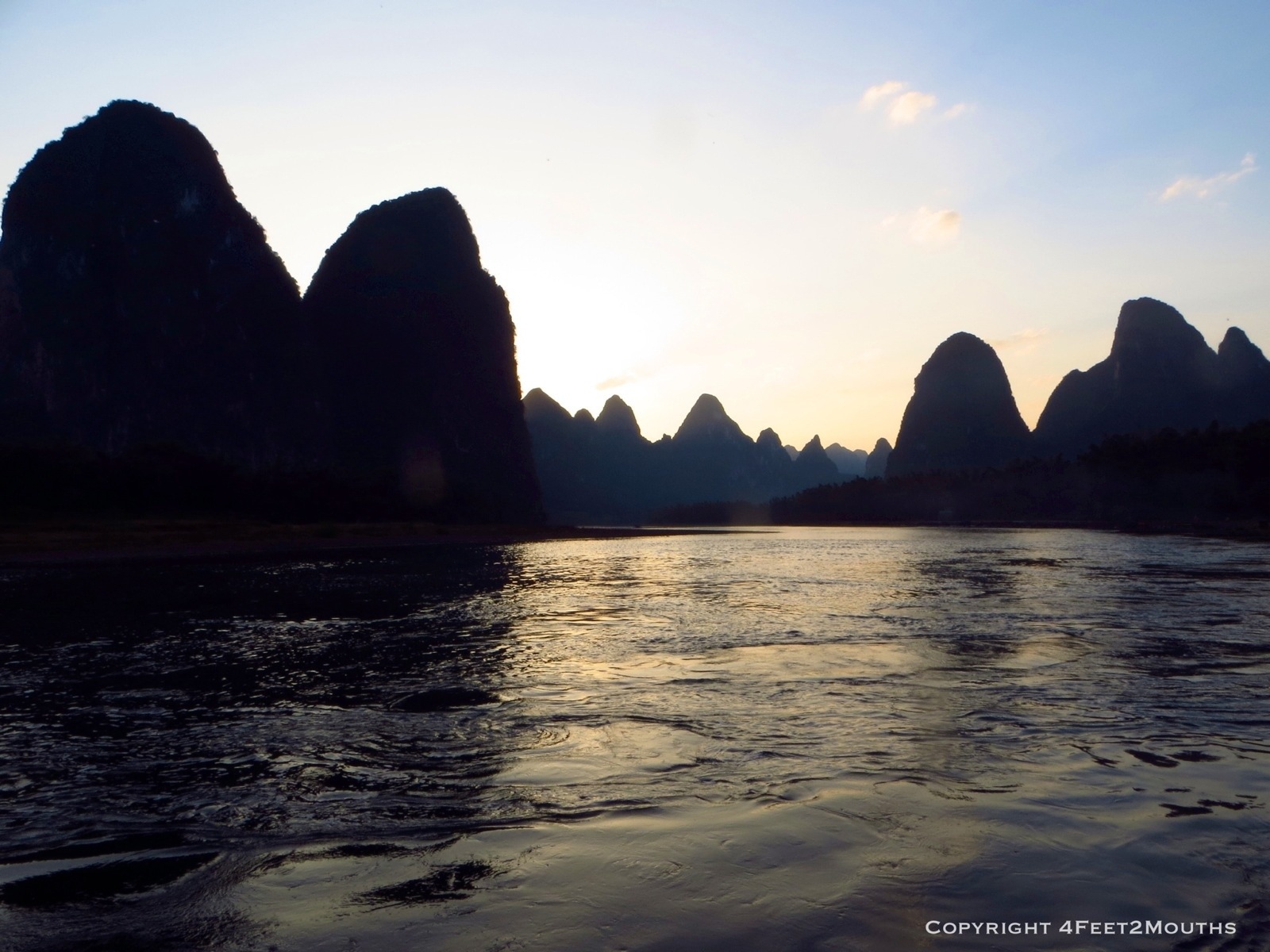
Our true destination in Guanxi was not Guilin, it was the smaller town of Xingping. This is where some of the most beautiful scenery was to be found. So beautiful, in fact, that the area was depicted on the 20 yuan bill! After the viewpoint we walked on along the river, through tiny villages and past karst after karst.

Farm with karst backdrop

Farm with karst backdrop

Grassy meadow along the river

Grassy meadow along the river

The walk was peaceful for the most part except for a handful of experiences. Like so many other parts of China, tourism has made a mark. For example, as we left for the hike we considered taking a bamboo raft to our destination and walking back to Xingping from there. However, we didn’t like the price of the raft so we said no. But the tout followed us for a good half hour trying to negotiate (but never coming close to our counter-offer). It was tiring! Also, we passed a few restaurants on the path geared towards rafts that stop there for lunch. They, too, aggressively tried to get us to eat there. Then one woman followed us for 15 minutes after we passed her restaurant in order to make sure we would take a raft with her friend at the next river crossing. I didn’t like these pushy vendors and the whole situation felt like we were just two big dollar signs. This happens a lot in tourist regions of China and I’m sure we could handle it better if we knew more of the language. But in the end we just gave up with the second raft woman and walked back 2 hours to Xingping. We were tired out anyway and ready to call it a day.

The wide Yulong River

The wide Yulong River

Orange groves

Orange groves

Following the road

Following the road

But not everyone is so rude. We had another river crossing in which the price was set and reasonable. The ferry driver was friendly and said “good bye!” to us. These are the people I like to focus on. They allow us to relax a bit more and just enjoy the natural surroundings we came to see!

20 Yuan Point at sunset

20 Yuan Point at sunset

We approached Xingping just before sunset. Nathan decided to watch it from 20 Yuan Point while I decided to relax on on hostel’s rooftop. They were both good choices – it’s hard to find a bad view in Xingping.

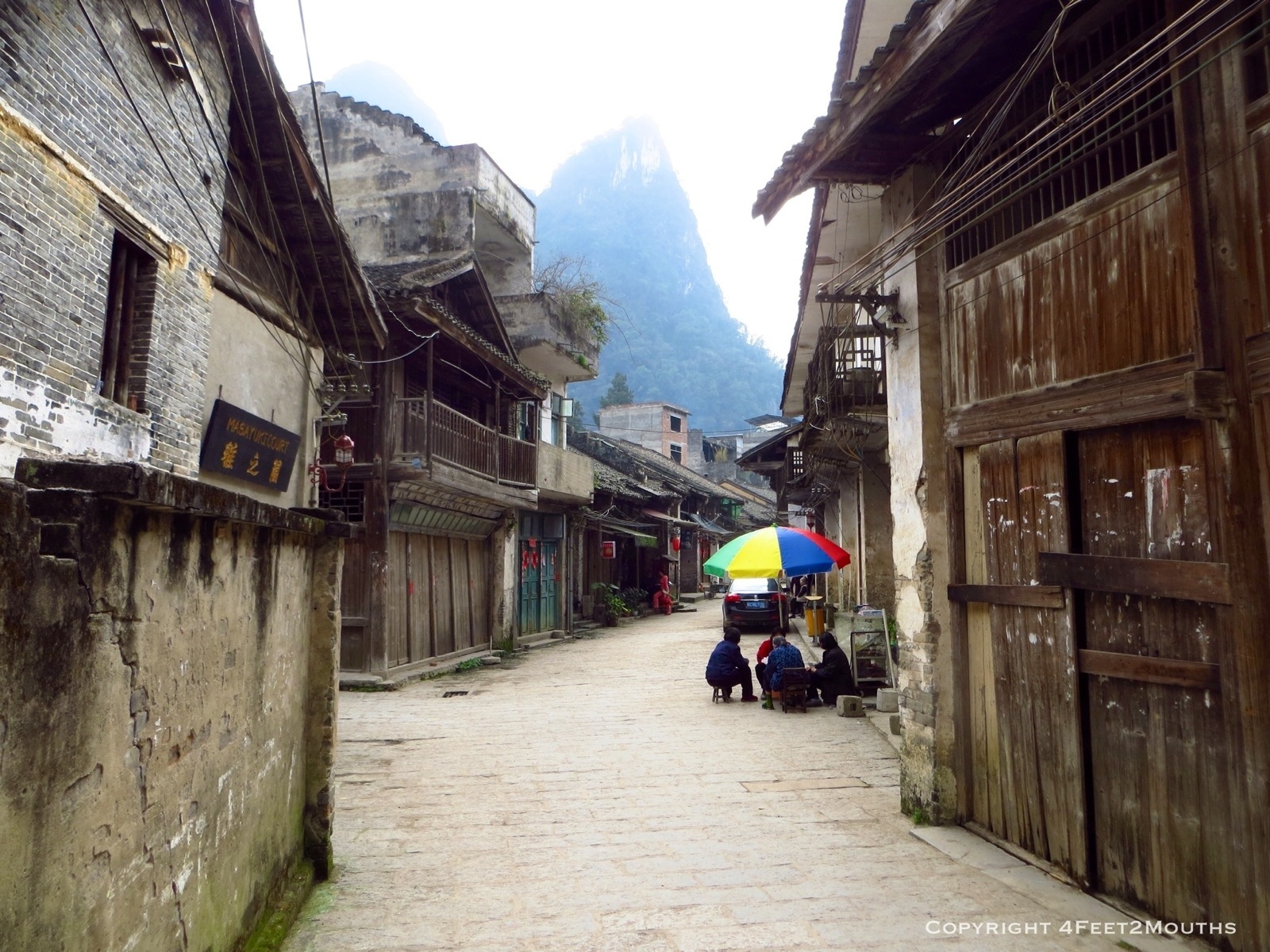
Old street in Xingping

Old street in Xingping

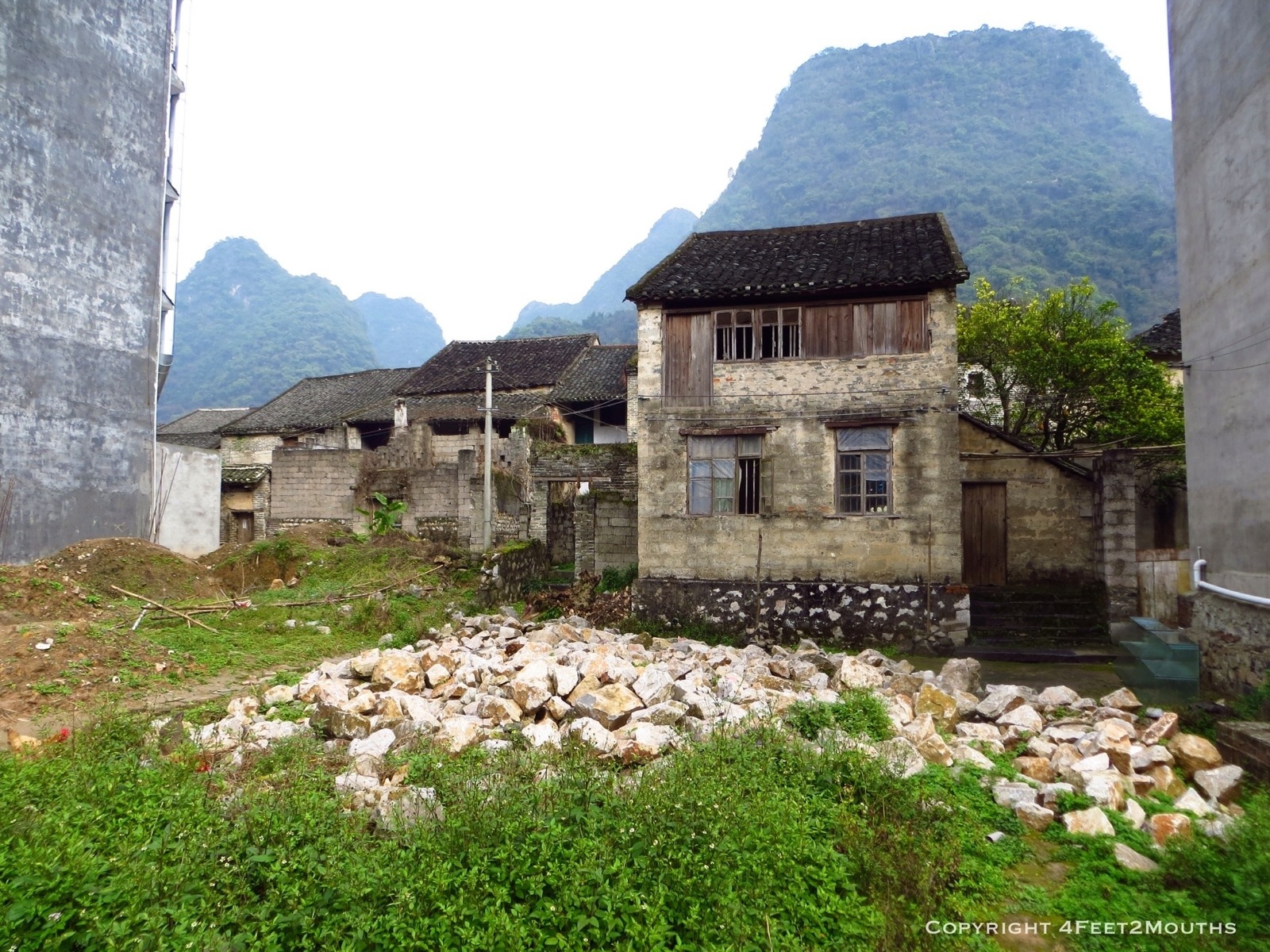
Rustic part of Xingping

Rustic part of Xingping

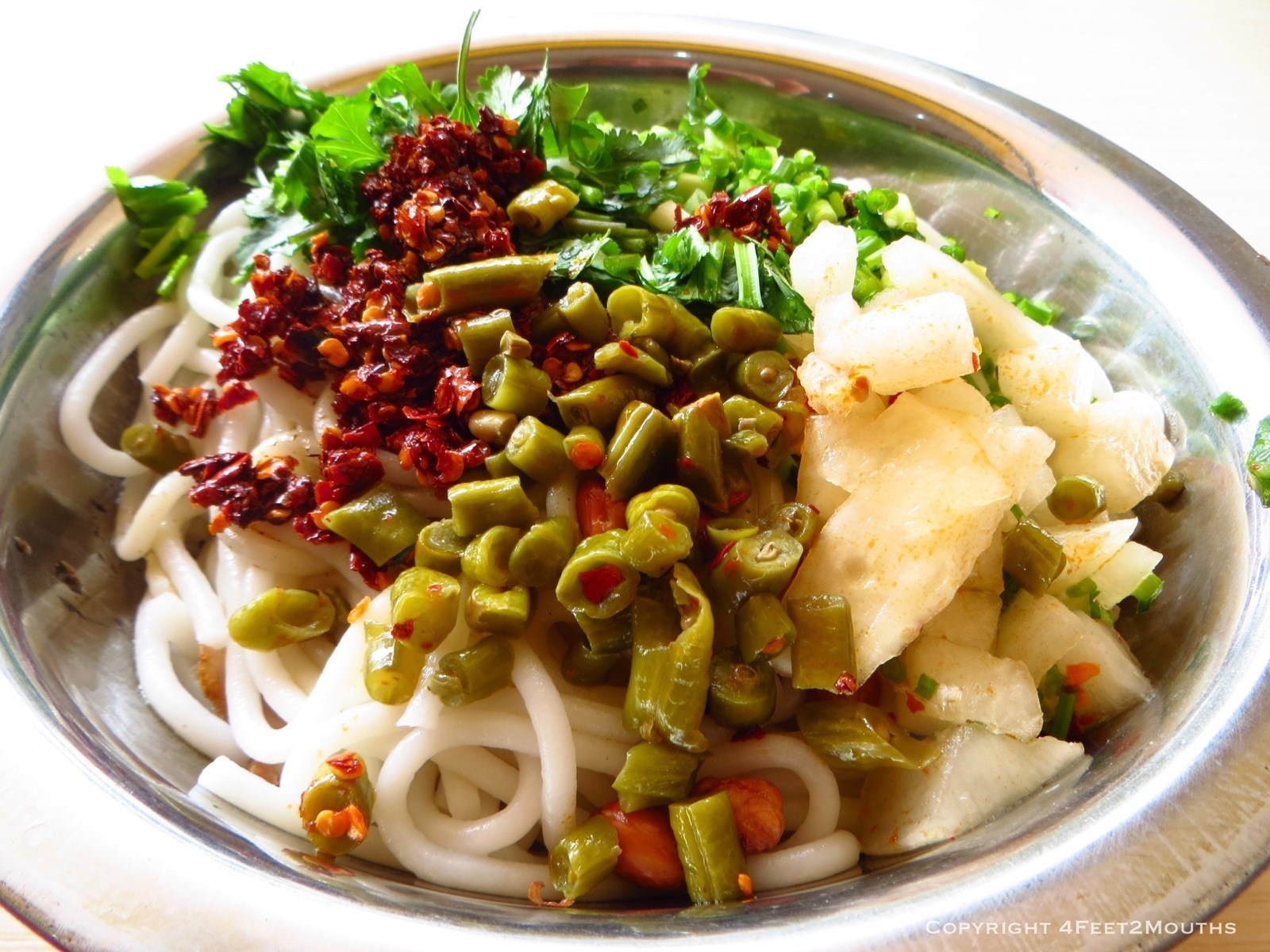
Guilin noodles

Guilin noodles

We needed something restorative after our long hiking day. On top of that, we were both feeling a little under the weather. In China, comfort is found in a big bowl of noodles. We stopped for some Guilin noodles in the morning. These thick rice noodles were topped with a few bits of meat, a splash of broth, chives, chili and some pickled green beans. All for only $1. A great way to wake up in the morning.

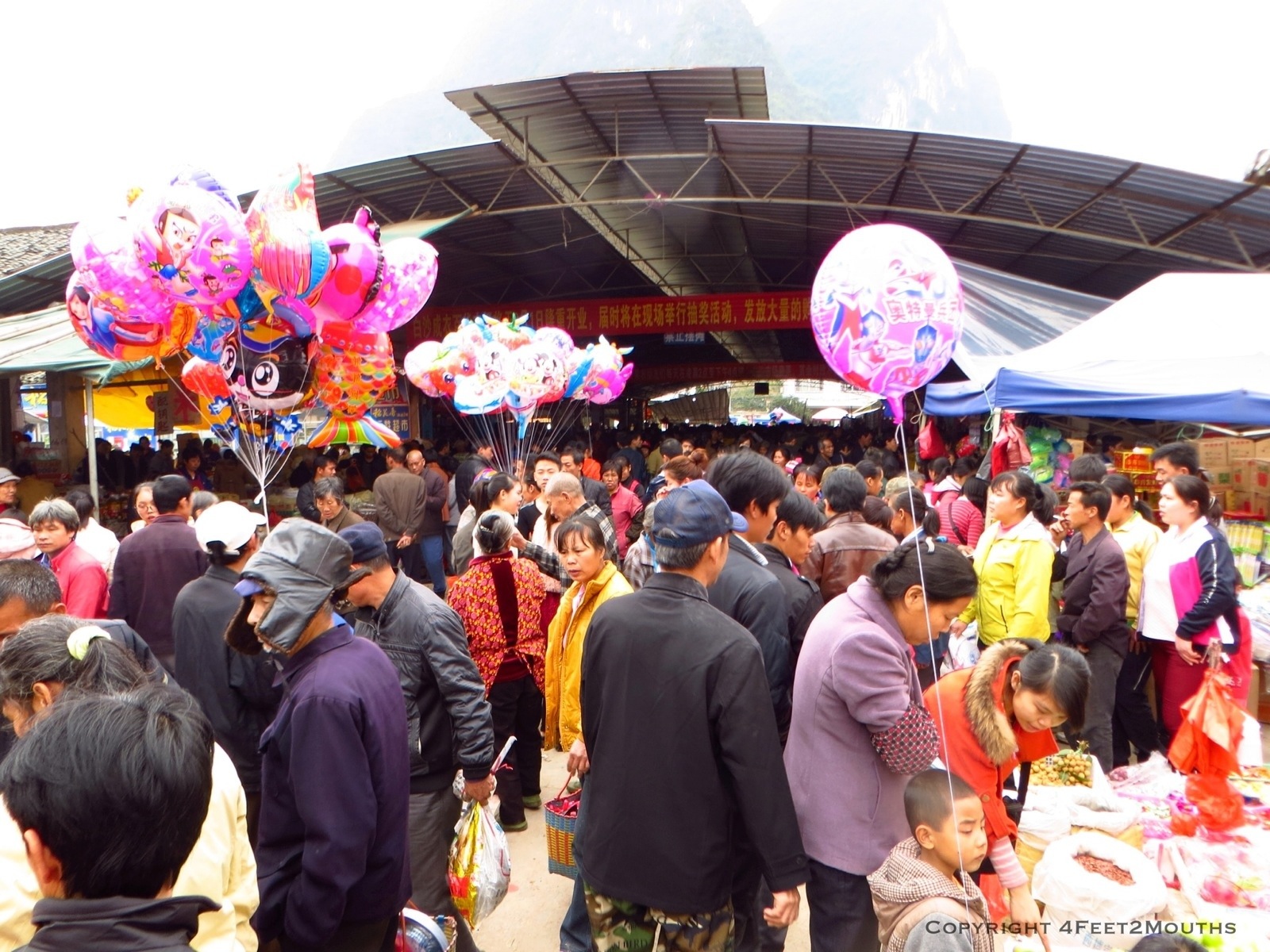
Market frenzy

Market frenzy

Calligraphy

Calligraphy

After our noodles we meandered around the market. There were so many people for such a seemingly small town! On top of that people were gearing up for the new year. The calligraphy stand seemed particularly popular for this reason.

Naan in Yangshuo

Naan in Yangshuo

Next we were on our way back to Guilin to catch the train to Guangzhou. We passed through the tourist town of Yangshuo but didn’t stay long. After our adventures in Yunnan, we knew it would just be full of the same old shops. Instead we picked up some naan bread from a Muslim Chinese stall and kept on moving.

George Washington Immortalized in China (by Nathan)

George Washington keeping an eye on China

George Washington keeping an eye on China

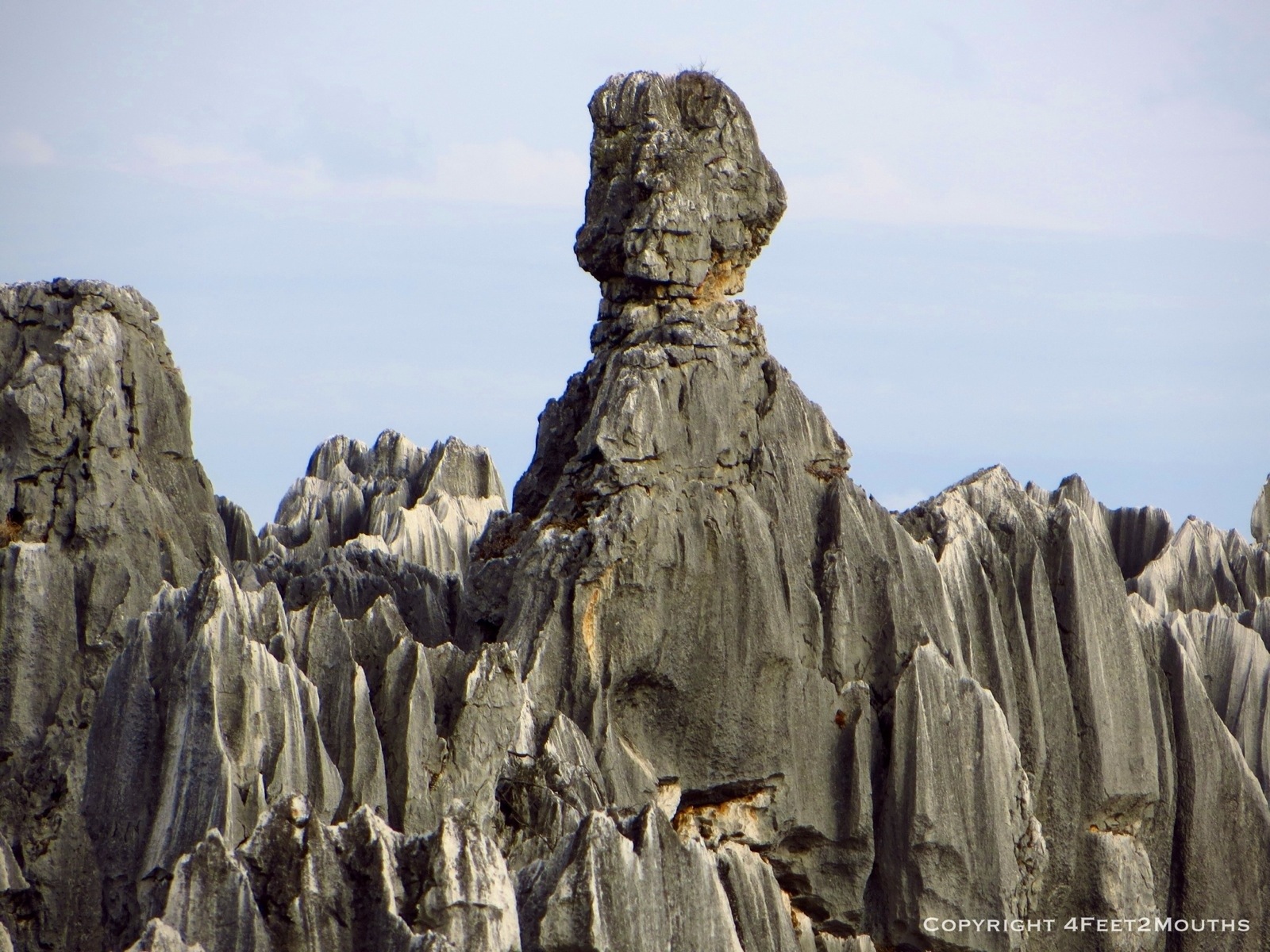
We sat in the stone forest admiring the towering rock pillars. Then our Irish friend pointed out George Washington staring down at us from above. I never expected to see this familiar face in China, but somehow I was not surprised that this curly wig and angular face found its natural way here. The strangest and most drastic natural rock formations have found there way to twist and grow out of China.  I was surprised that we did not have to pay extra to take this photo ;)

Overlooking the stone forest

Overlooking the stone forest

Nathan, Michael and Albert climbing to the top

Nathan, Michael and Albert climbing to the top

We had buffered a layover day in Kunming before traveling farther east in China. We had been enjoying hanging out with our new friends Albert and Michael so the four of us decided to travel to the Stone Forest. We found a unique landscape crowded with interesting rocks and hoards of Chinese tourists. To our benefit 95% of the people remained in 5% of the park, so it was easy to find paths for us to explore on our own.

Carmen and I in the forest

Carmen and I in the forest

Small pond

Small pond

The site of our beer break

The site of our beer break

We meandered around the park for several hours.  We roamed through miniature cantons and through passageways. The Chinese had actually spent a good effort paving and maintaining paths throughout the park. We found a nice perch to enjoy the scenery with a few beers.

Pig faces at the market

Pig faces at the market

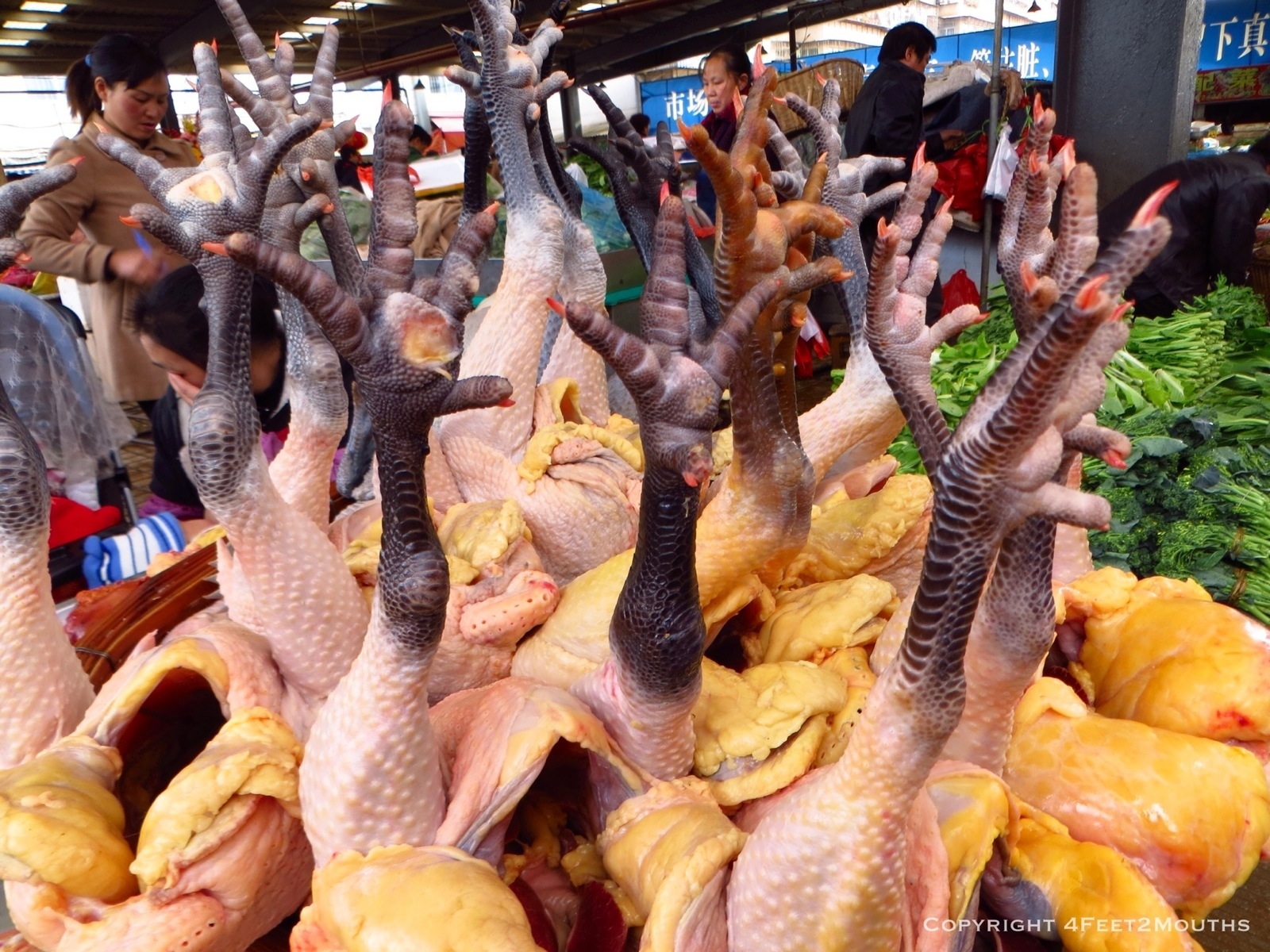
Black footed chicken is popular

Black footed chicken is popular

During our layover in Kunming there was an essential visit for Carmen and me. We had to return Zhuanxin market for tofu noodles and mushroom buns. We roamed the market enjoying all the variety and freshness that only a Chinese market could offer. There were pig faces smoked and ready to take home as well as black footed chickens.

Kunming is a great city, at the heart of Yunnan.  We were well connected to some beautiful natural and historic sights. But after over three weeks of traveling solely in the Yunnan we packed our bags to explore the karst topography of Xingping in Guanxi province.

Spicy rice noodle tofu

Does Yuanyang Actually Exist? (By Nathan)

Rice terrace reflections

Rice terrace reflections

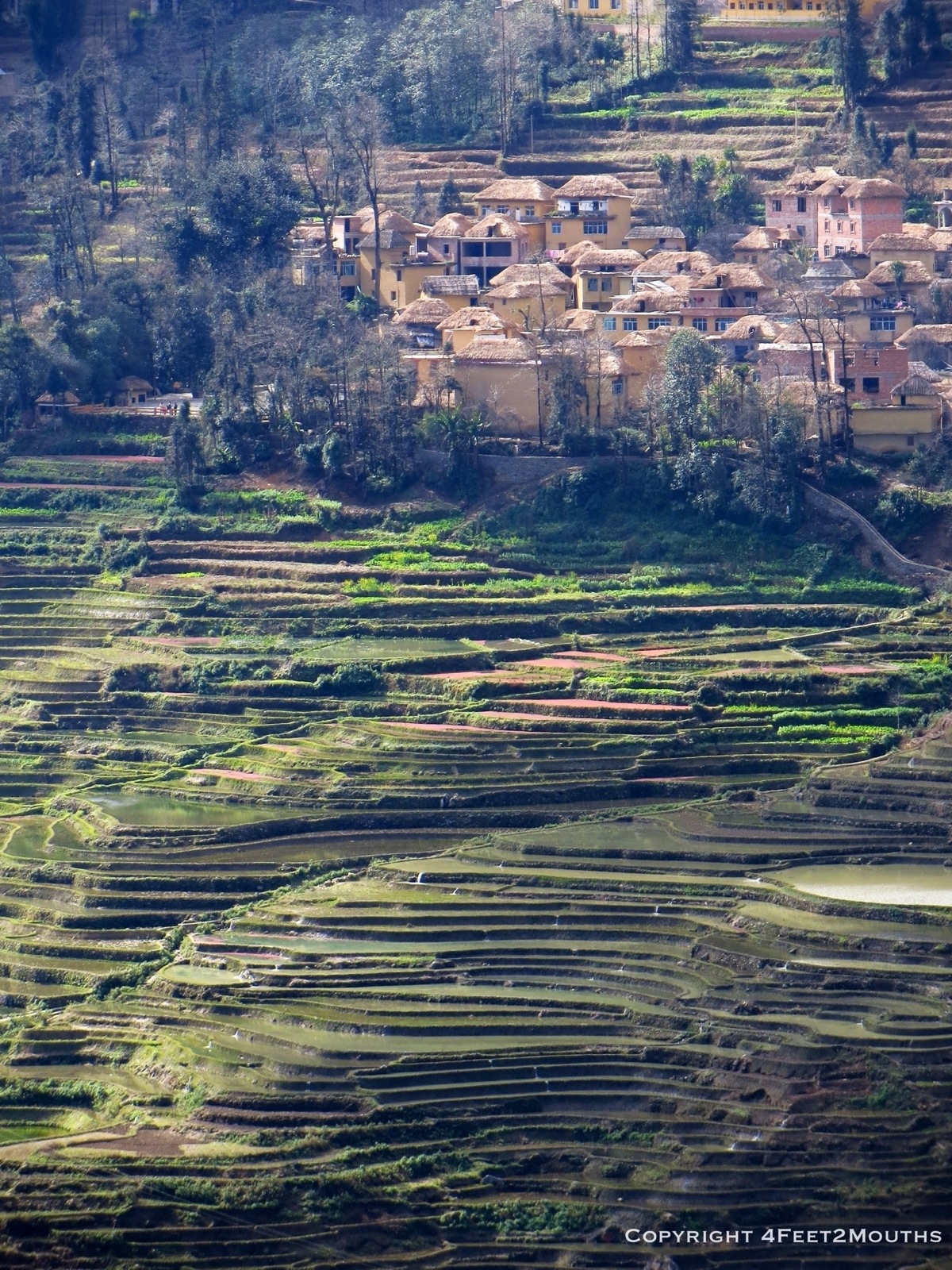
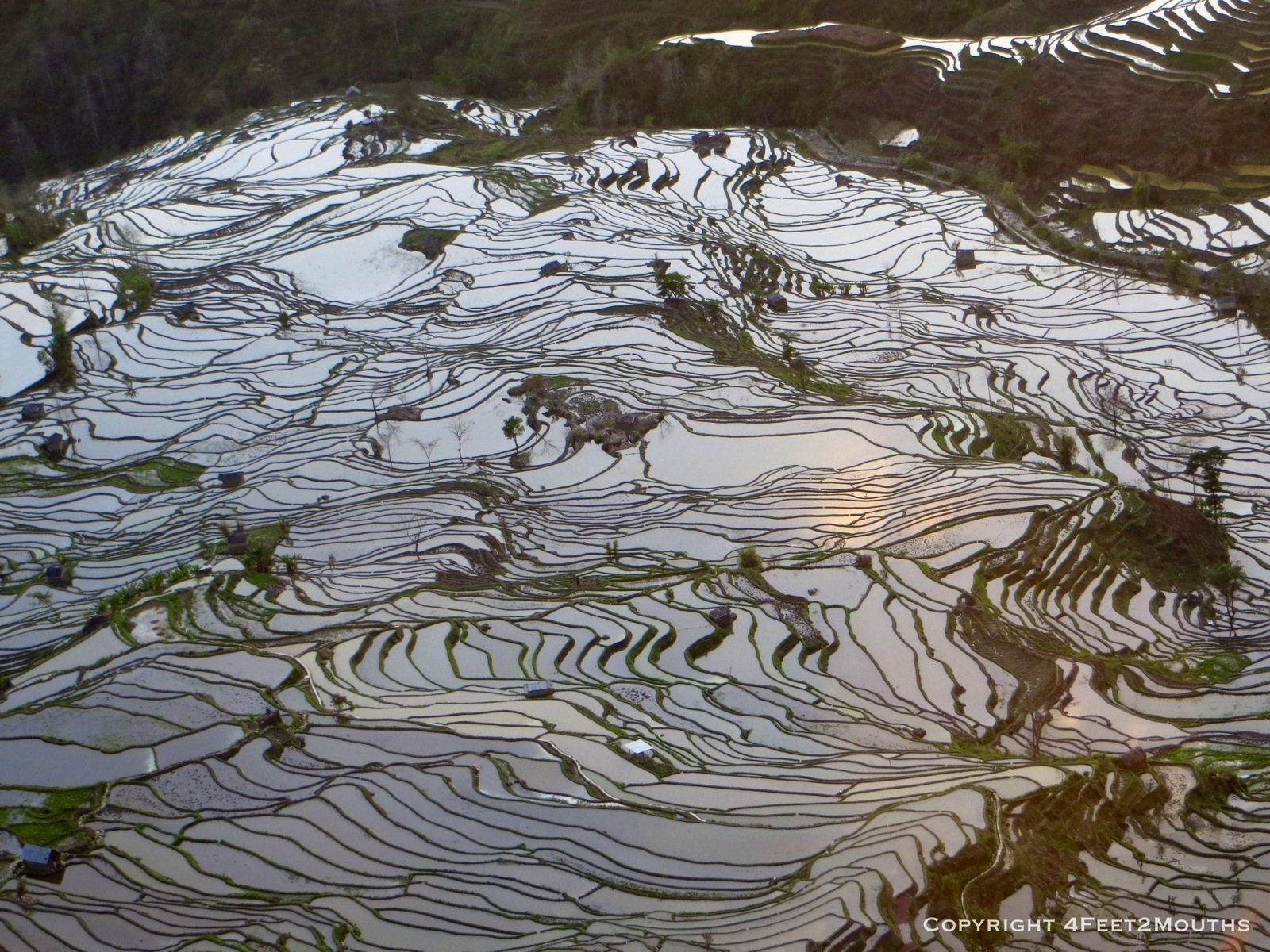
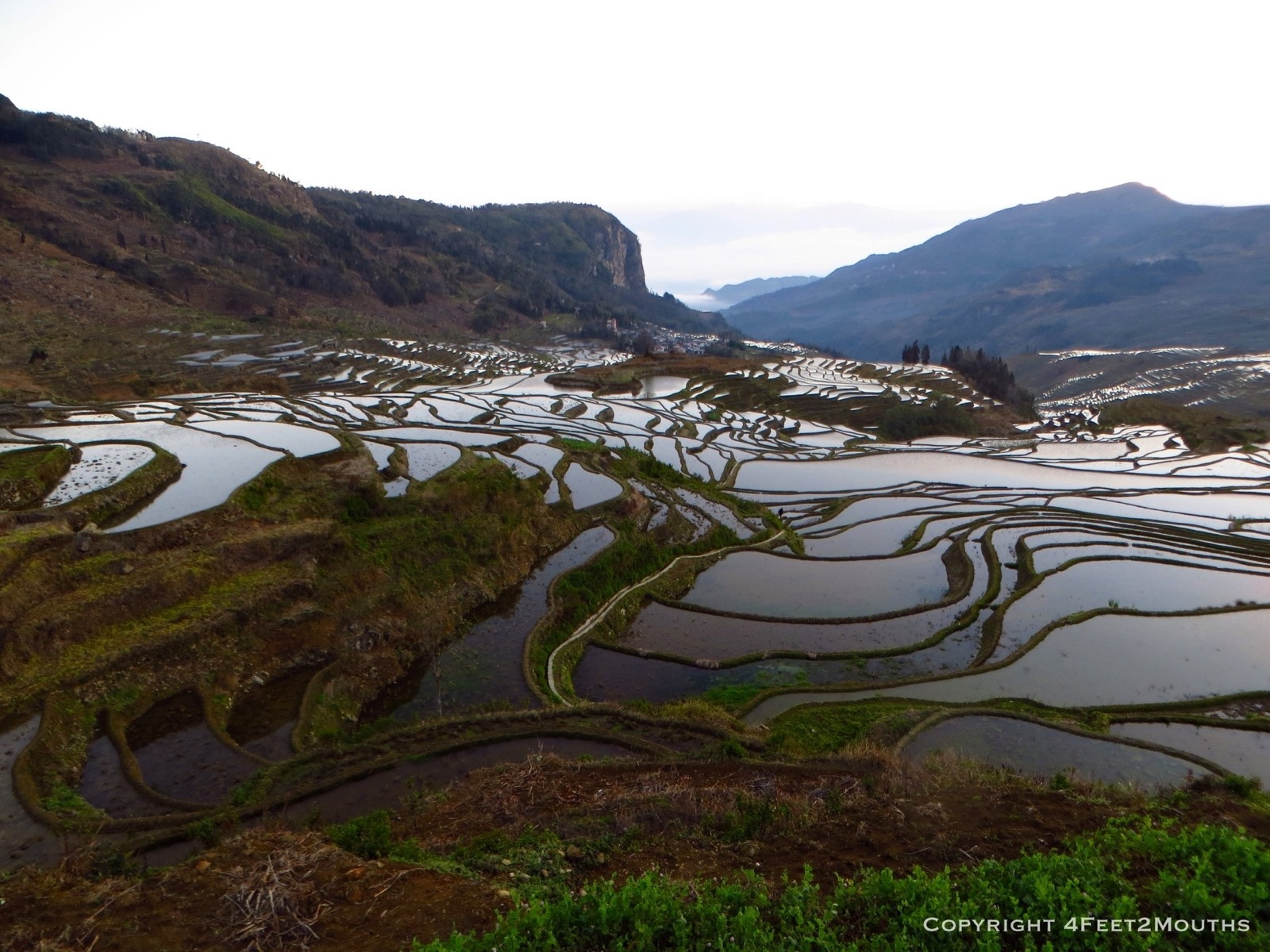
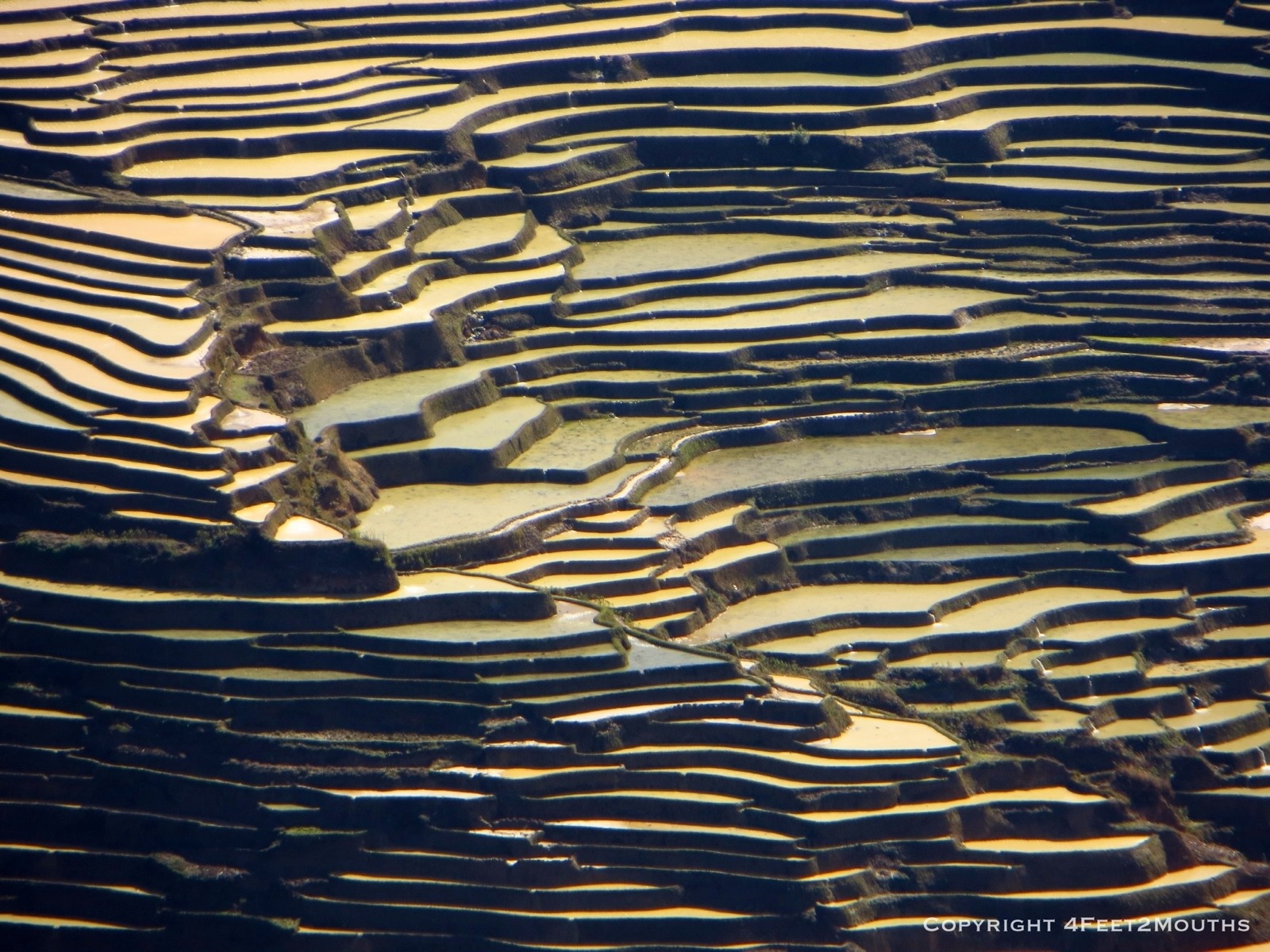
The first time I saw photos like this, I was convinced they were fake. No way could an entire mountain be transformed into stepped platforms and then subsequently flooded. It did not physically seem possible, in no way was it real. Well, having been to the Yanyang rice terraces I can say that they are real and more magnificent than any photo can justify. The magic of the terraces is that their shapes are very organic matching the flow and contours of the mountains, but the squareness of the stepped walls and the immense retention of water is a reminder that humans are actively contributing to this landscape.

Woman farmer walking the terrace edge

Woman farmer walking the terrace edge

Cascading topography of Duoyishu

Cascading topography of Duoyishu

The vividness of the terraces was obscured by the fact that we arrived at night. For some frustrating reason the busses from Kunming are sleeper busses that travel during the day and arrive late at night. We loaded into a tiny minivan and bounced along the road for over forty-five minutes to arrive at the little town of Guanyinshan in the heart of the Duoyishu terraces. After pounding on the door for a few minutes, we finally got the hostel to open up and let us in. We woke to a cloud-filled valley that provided further mystique to the land formations. As the sun rose higher into the sky the mist dissipated revealing the splendor of Yuanyang rice terraces.
Duoyishu rice terraces

Duoyishu rice terraces

Close-up of Duoyishu rice terraces

Close-up of Duoyishu rice terraces

I am still grasping it, but the entire mountain has been excavated into millions of tiny rice fields. The steepness of the hillsides has been transformed into topographic layers. Each step of 4-6 feet curves and flows with what was the original natural mountain. The uniqueness of Yuanyang, compared with other terraces, is that the terraces are constantly filled with water. The people have engineered thousands of canals to flow in and around all of the terraces to create these beautiful reflection pools. Every piece of land has been manipulated and optimized to produce rice.

Hiking with new friends through Duoyishu terraces

Hiking with new friends through Duoyishu terraces

Colorful terraces

Colorful terraces

We went over to Jacky’s Guesthouse for breakfast and a view from their rooftop. This is one of the best views in Duoyishu and Jacky is an imperative resource for visiting the terraces. Most of the tourists have to pay a fee to visit these platforms throughout the region. We felt that this was overpriced and the money did not get to the locals. Jacky helped us determine some hiking routes around terraces and rustic villages to explore. We also had the good fortune of meeting some like-minded friends who were eager to roam around the mountainside.

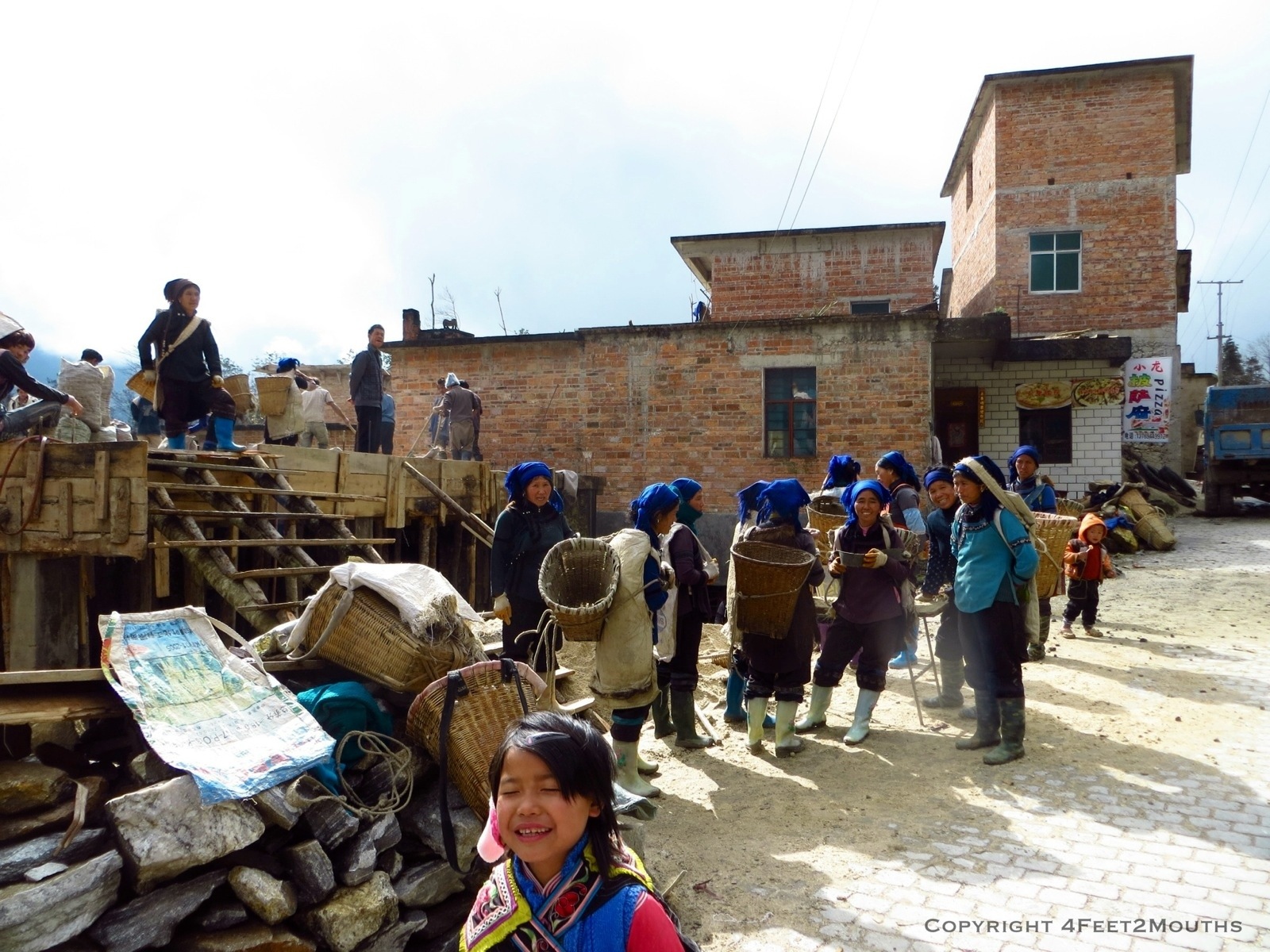
Hani women building a new home

Hani women building a new home

Men smoking a tobacco water pipe in Shang Village.

Men smoking a tobacco water pipe in Shang Village.

The women in these areas work extremely hard. We saw them carrying bundles of harvested vegetables, wood, rocks, and wet concrete everywhere we went. The women were constantly working these manual labor jobs. During our walk through one village the women were working together to pour a concrete floor on a new home. We saw few men working these jobs, maybe they were out earning money somewhere else. The men we did find were thoroughly enjoying some tobacco from a water pipe.

Traditional Chinese mountain village

Traditional Chinese mountain village

We traversed down rocky paths into roadless villages. The water-filled terraces wrapped all around us and we continued our walk on whatever trail we could find. We scrambled up jungle cliffs, trudged in muddy creeks and balanced on the clay retaining walls. Our exploration gave little feeling of actually conquering or completing anything, but constantly reminded us how small we were in this enormous farmed mountain. Everything was terraces, and every terrace was irrigated with water. Tiny untouched villages scattered the hillsides, but everywhere was a terrace indistinguishable from one another.

Admiring the view of the Lao Huzui terraces

Admiring the view of the Lao Huzui terraces

Water-filled dreamscape

Water-filled dreamscape

Walking in the depths of the terraces is a humbling activity. It is also an easy way to get lost. We found ourselves two towns over and down the valley. We arrived back at Jacky’s, but the sun was quickly going down and sunset was fast approaching. We hired a minivan for the group of us to go and see another famous set of terraces- Lao Huzui

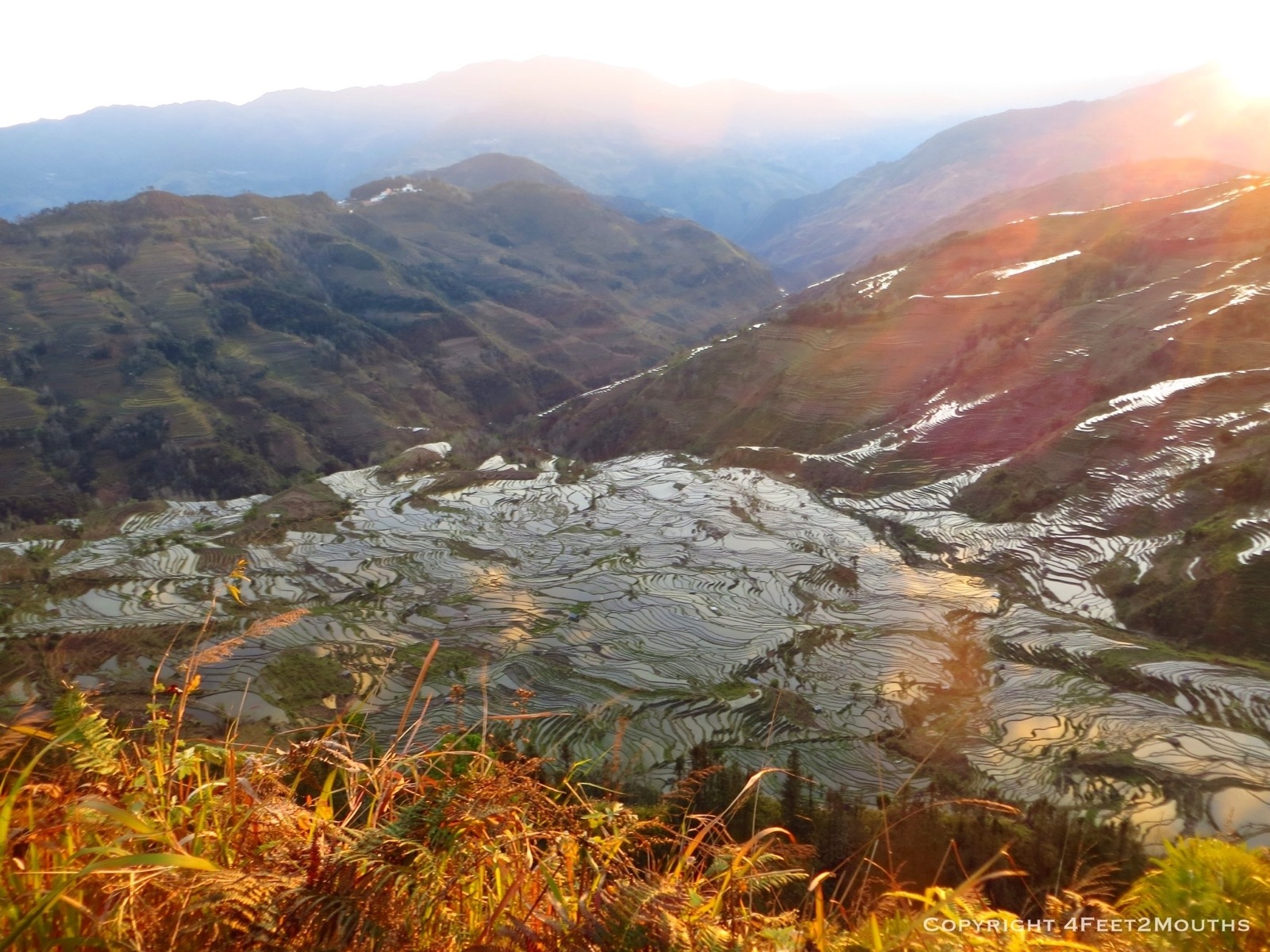
Sunset on the rice terraces Lao Huzui

Sunset on the rice terraces Lao Huzui

Sunset reflection pools

Sunset reflection pools

Another forty-five minutes away on another valley are the Lao Huzui terraces. The viewing spots are high on the cliff 500m above the rice fields. The valley faces the west making it perfect to watch the sun disappear on the horizon. The pools reflect the orange and pink light forming what appears to be an enormous lake that is like a fabric wraps around the mountains. The six of us had a good time sharing experiences of travel and China but most of all we sat awestruck with the beautiful view.

Terrace hopping in the dawn light

Terrace hopping in the dawn light

Sunrise Duoyishu

Sunrise Duoyishu

The next morning we were able to get a nice sunrise at Duoyishu. I hopped around from terrace to terrace. I balanced on the clay walls and traversed the steep hillside. The sun slowly peeked over the mountains and the terrace pools reflected the blue sky.

Trash-filled creek

Trash-filled creek

Despite the magnificent beauty of this landscape it was difficult to not be frustrated with how the environment is treated. I still do not understand how trash and crap can be thrown into the same water source that feeds the people of this area. The Chinese can build some of the grandest most beautiful things, but forget to recognize the public health flaws right in front of them.

Reflection pools and tree

Reflection pools and tree

I really liked this one tree that appeared to have survived all the human alterations to the land and found a way to cling onto the hillside.

Bada rice terraces

Bada rice terraces

I wanted to do some more hiking, Carmen had some computer work to do. I joined in with our new friends Michael and Albert for a walk to explore more terraces. We came across the Bada scenic viewing area. It was part of the tourist ticket that neither of us had. After being turned down by the women at the entrance we continued our walk down the road. It was amusing to us to find a dirt trail that wrapped around the ticket booth, we crouched down and creeped in…woo hoo free entry.

Home-cooked meal in Quanfuzhuang village

Home-cooked meal in Quanfuzhuang village

Home-cooked meal in Quanfuzhuang village

Home-cooked meal in Quanfuzhuang village

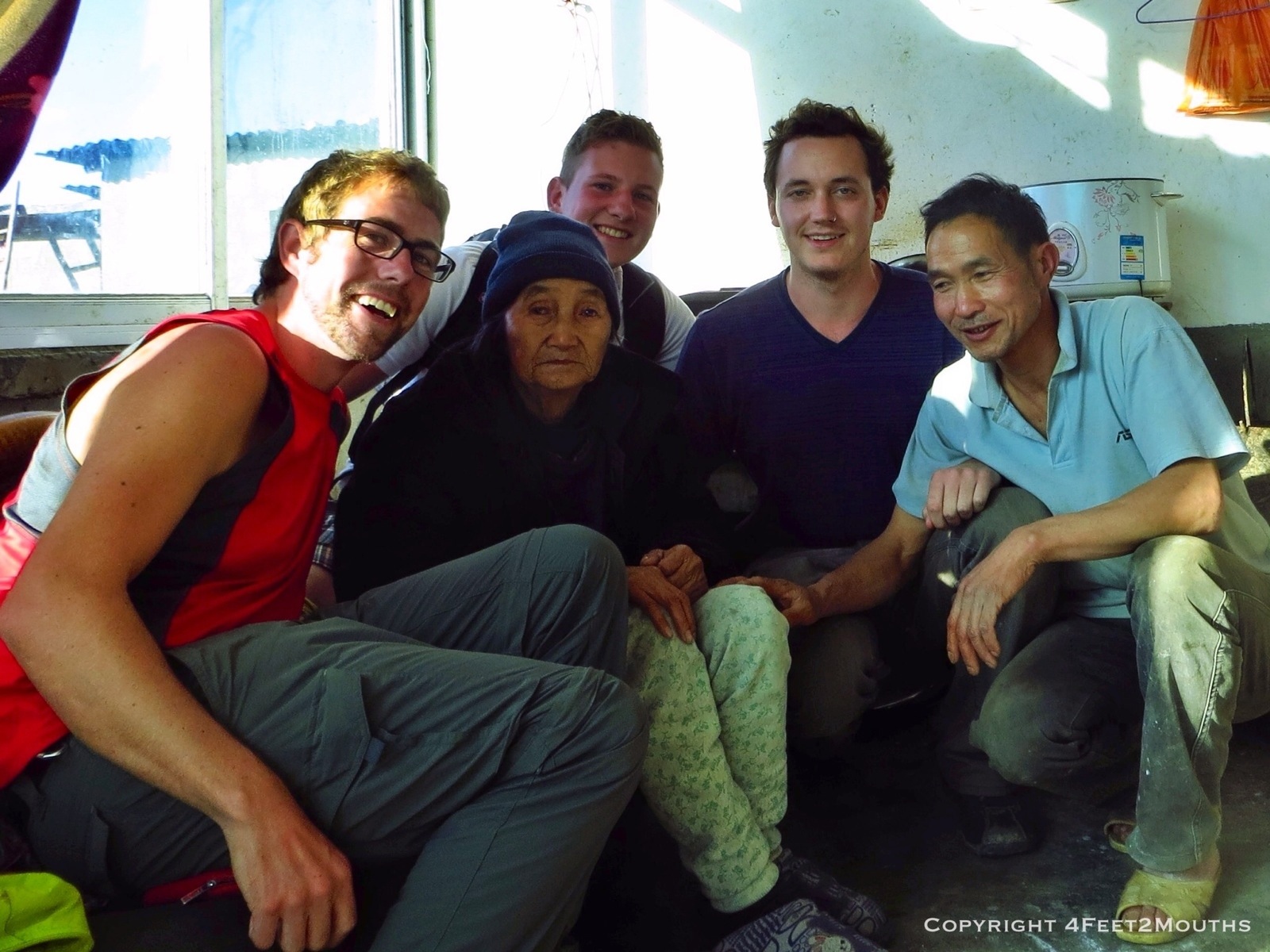
The presence of these friends was immensely useful when looking for food. They both have been studying mandarin abroad and we asked a local man where we could eat something. In a matter of seconds this random man escorted us into his living room and sat us down at a miniature table while he got to work in the kitchen. He cooked us roasted duck, stewed fish, pork and rice cake then joined us at the table with a jug of moonshine rice liquor. We feasted, they had a small conversation and I drank when i was told to. It was a wonderful meal and our sincere host made us feel very welcome. It was difficult to leave, but we grabbed a quick photo when we said goodbye.

Whispy blue sky

Whispy blue sky

Then we had to say goodbye to Yuanyang. We bought another bus ticket tried to find comfort on the cramped bed. The gorgeous beauty of the mountain terraces became another memory, another fantastic experience of our travels and one of those unbelievable photos that I can say “that is real, I was there.”

Finding Peace and Cold in Zhongdian (by Carmen)

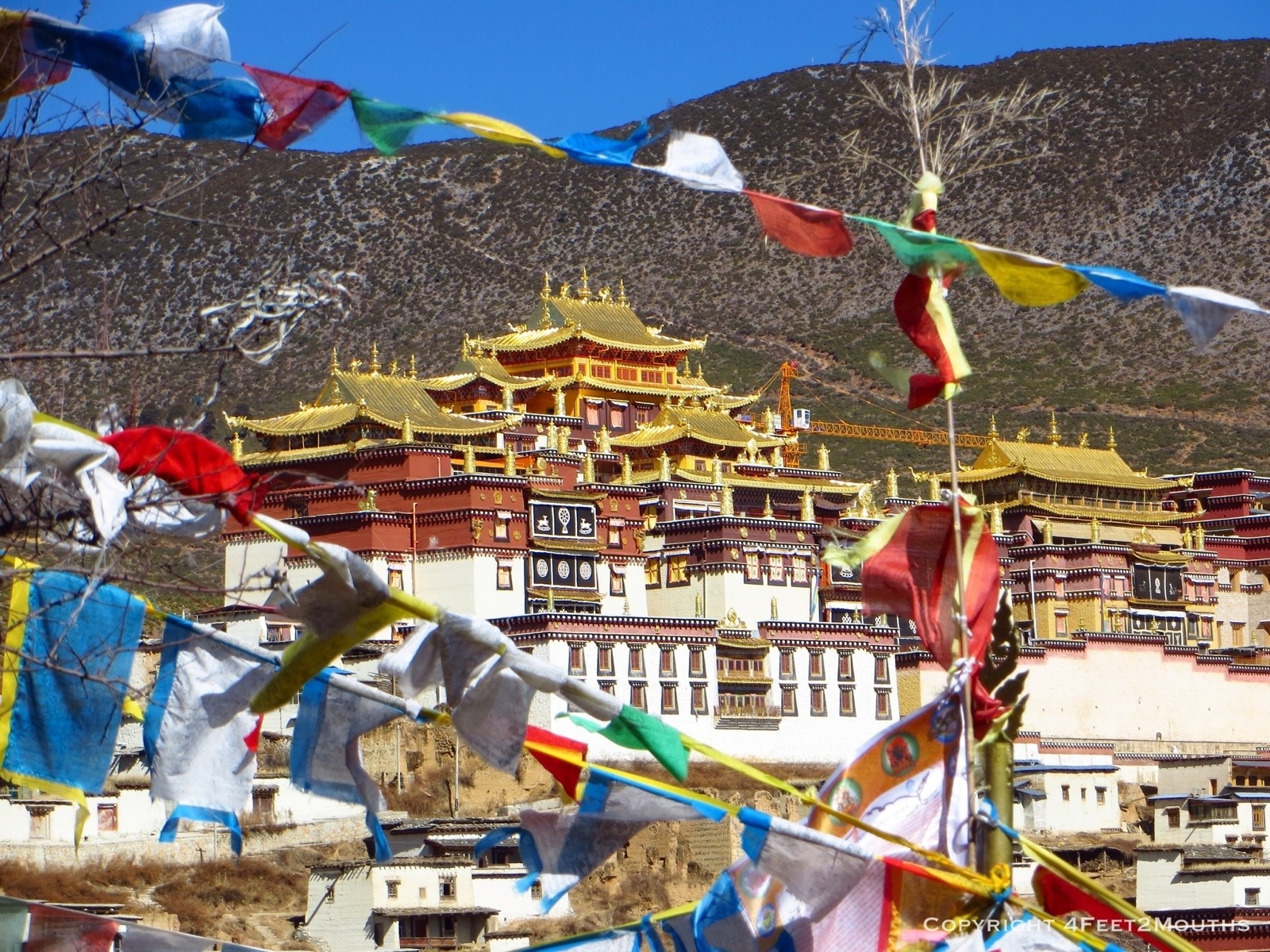
Monastery through the prayer flags

Monastery through the prayer flags

“Brrr, it’s cold up there.” This was everyone’s reaction when we mentioned we were going to Zhongdian. The town, in the northern reaches of Yunnan, is pretty much as close to Tibet as it gets without going there. It was just so tantalizingly close to Tiger Leaping Gorge that we couldn’t resist. So we hopped on a minibus headed north.

Street in "old town"

Street in “old town”

Roof tops of "old town"

Roof tops of “old town”

We got dropped off in “old town”, which I have to use quotes for. The old town is actually completely new, built by the government to attract some of the tourists away from old town in Lijiang. It is cute and old feeling for the most part, with crooked streets and wooden Tibetan style buildings. It was rather dead in the winter but I could imagine a lively place in the summer.

However, the government didn’t stop there. The tourism agency has gone on to say that Zhongdian is the legendary site of Shangrila, the magical utopia of James Hilton’s novels. Hilton used pictures of southwest China for inspiration of his work but really, it was a metaphorical place. The government officially changed the name to Shangrila anyway. I don’t know, I just like Zhongdian better.

Amazing dumpling meal

Amazing dumpling meal

Market vendors with cheese and prayer flags

Market vendors with cheese and prayer flags

We ventured out of old town for lunch the next day, determined to find something a bit more local. When I saw the sign for the dumpling restaurant I became excited and we entered through the steamy door.  I thought, “We are in southwest china, why are we eating northwestern cuisine?” But it turned out to be the best choice ever. We got a plate of fried dumplings and a plate of boiled ones. A side dish of slivered pig ears and some spicy cucumber chunks and we were set. Oh was it good. Perfect pork filling, wonderful sour, salty, spicy dipping sauce. Yum. We had stumbled on a treasure that the whole town seemed to know about. As the lunch hour progressed, customers from all walks of life streamed in. Even people in traditional outfits. The desire for good food was our common bond.

After our lunch we walked along the main boulevard of town which was lined with vendors. Two popular items were prayer flags and yak’s milk cheese, both at a fraction of the prices they charge in “old town.”

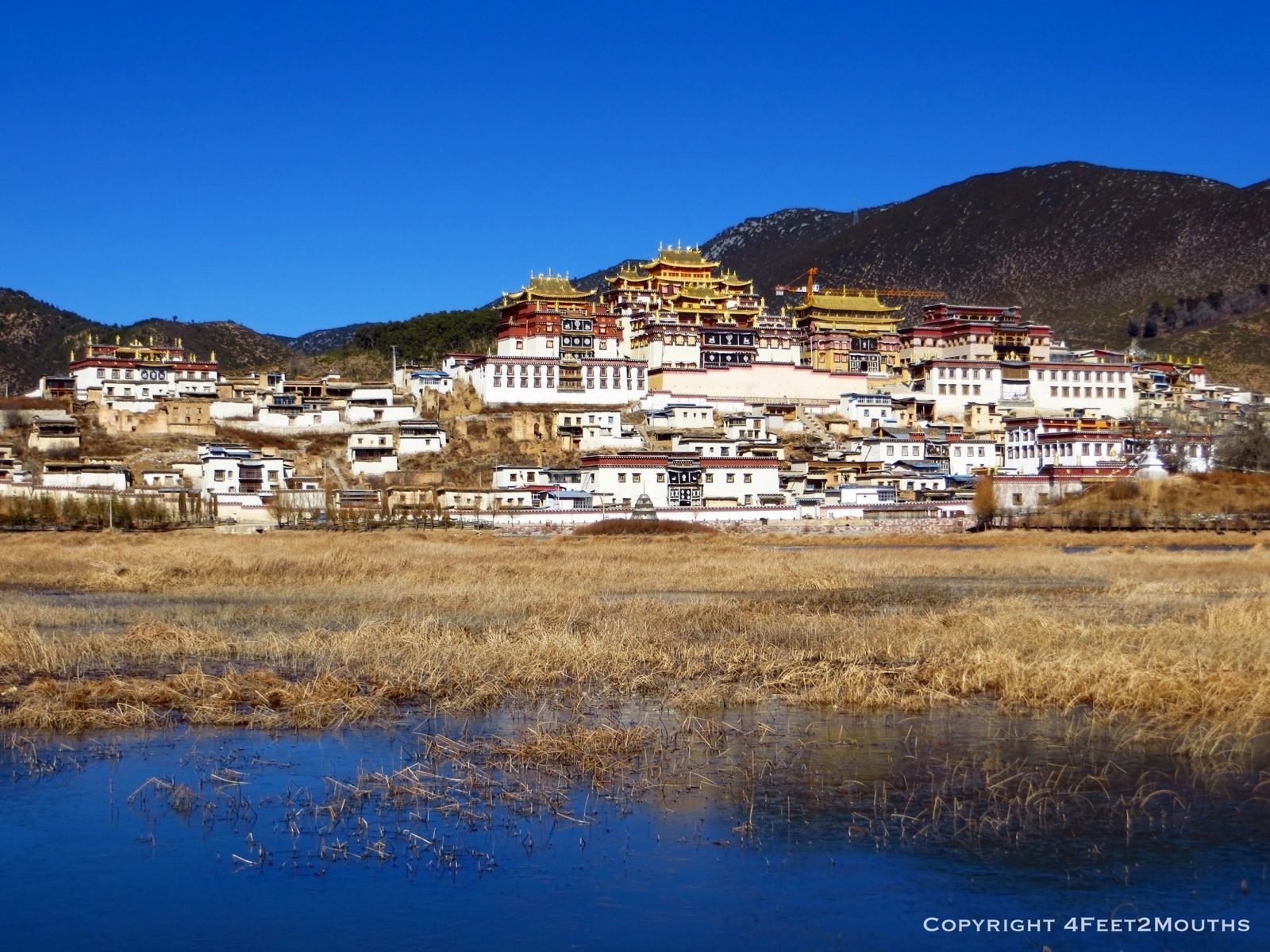
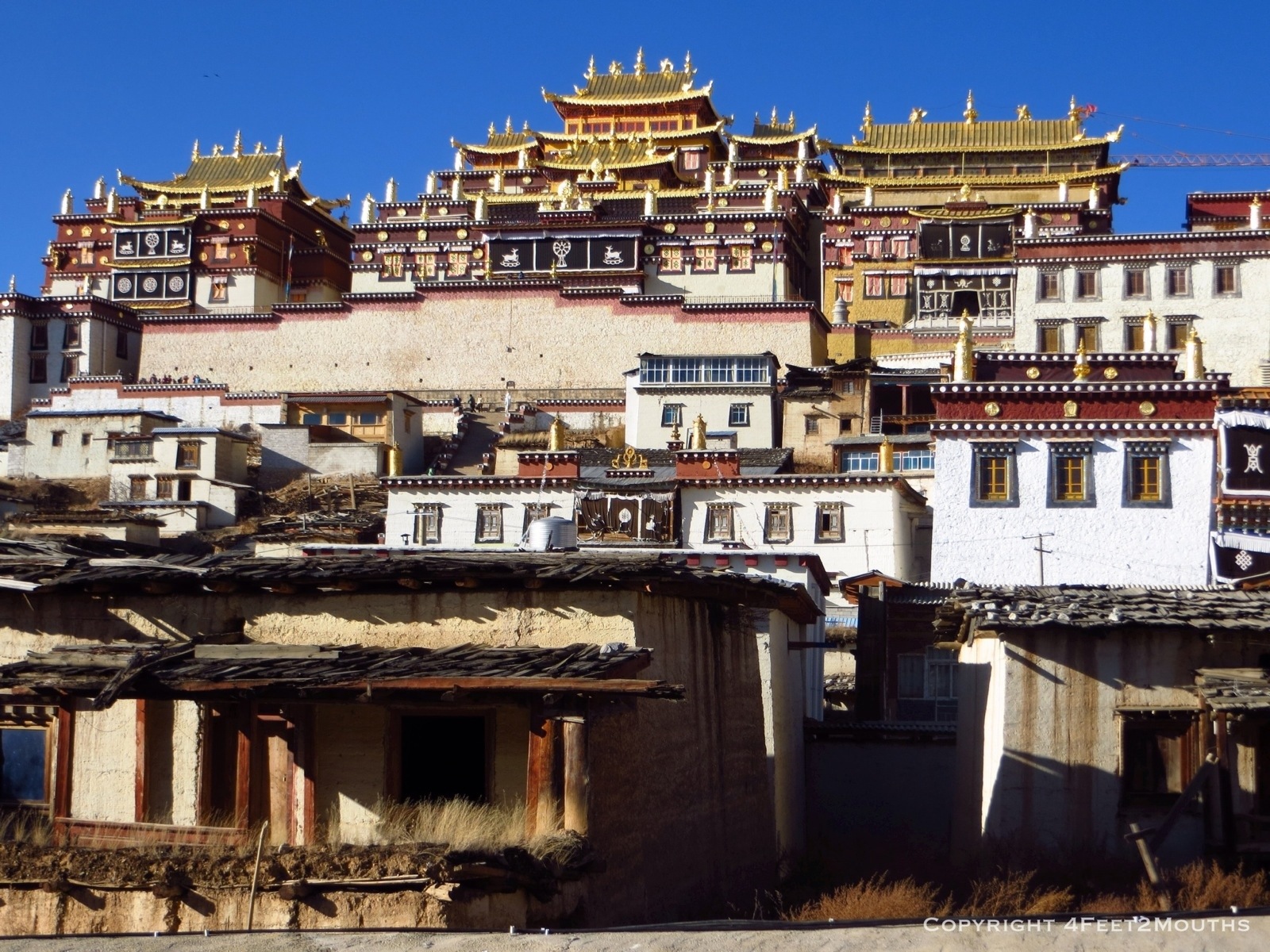
Monastery from afar

Monastery from afar

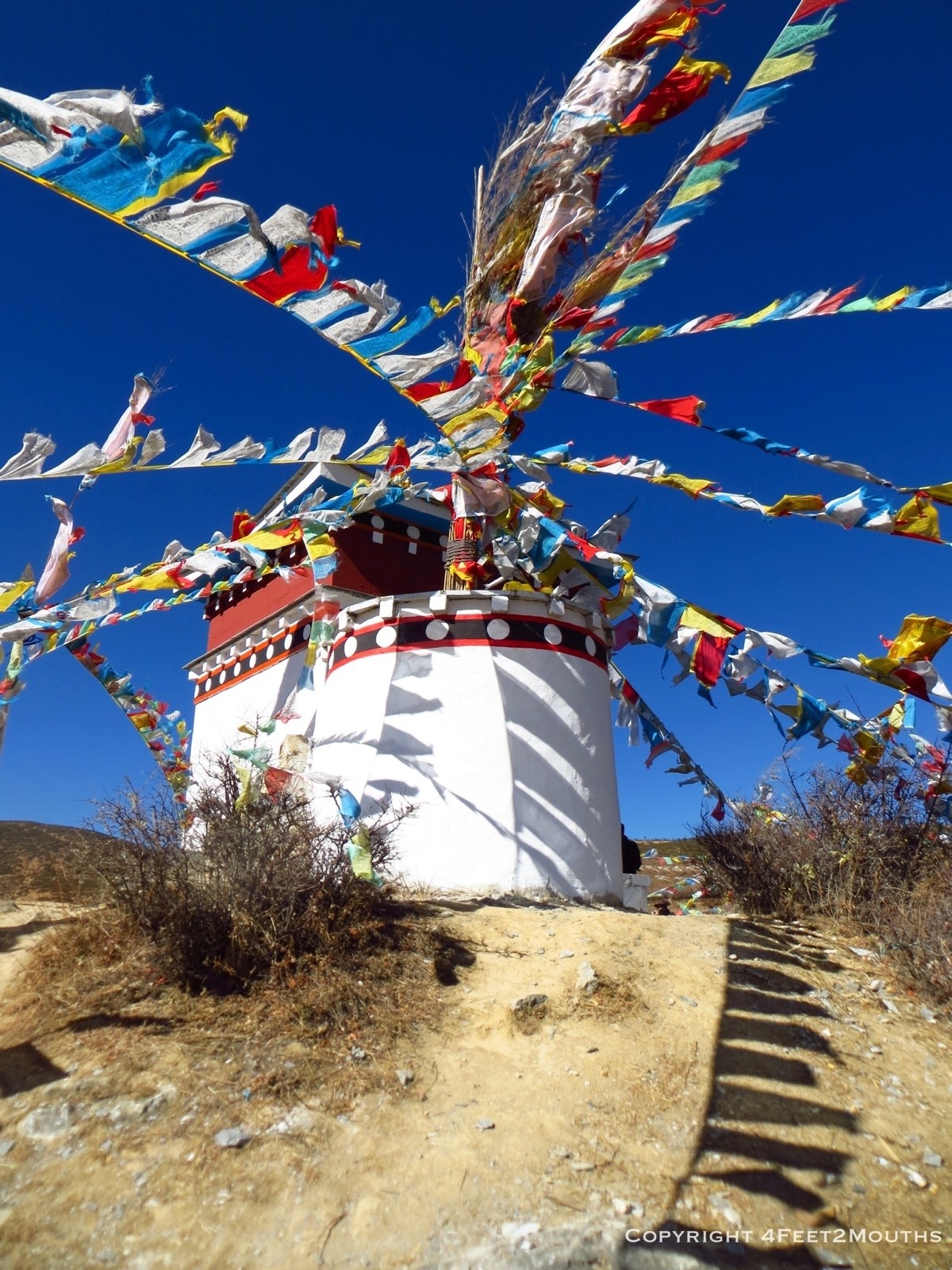
Stupa with prayer flags

Stupa with prayer flags

The main attraction of Zhongdian is a few kilometers north of the center. The Ganden Sumtseling Gompa is a 300 year old Tibetan Buddhist monastery set in a beautiful windswept valley. We almost didn’t go. The ticket price was almost double what we expected and after all the high price tickets in the other towns we had visited we had had enough. It is hard to see where the money for these tickets is going. But we paid up and our first views of the monastery instantly made us feel better. We approached by walking clockwise around a lake, past a stupa with many prayer flags fluttering in the wind. Moving clockwise was an important requirement for the monastery, within the compound as well as in individual rooms, as this is the direction one would spin a prayer wheel.

Ceiling painting on the main gate

Ceiling painting on the main gate

Front of one of the temples

Front of one of the temples

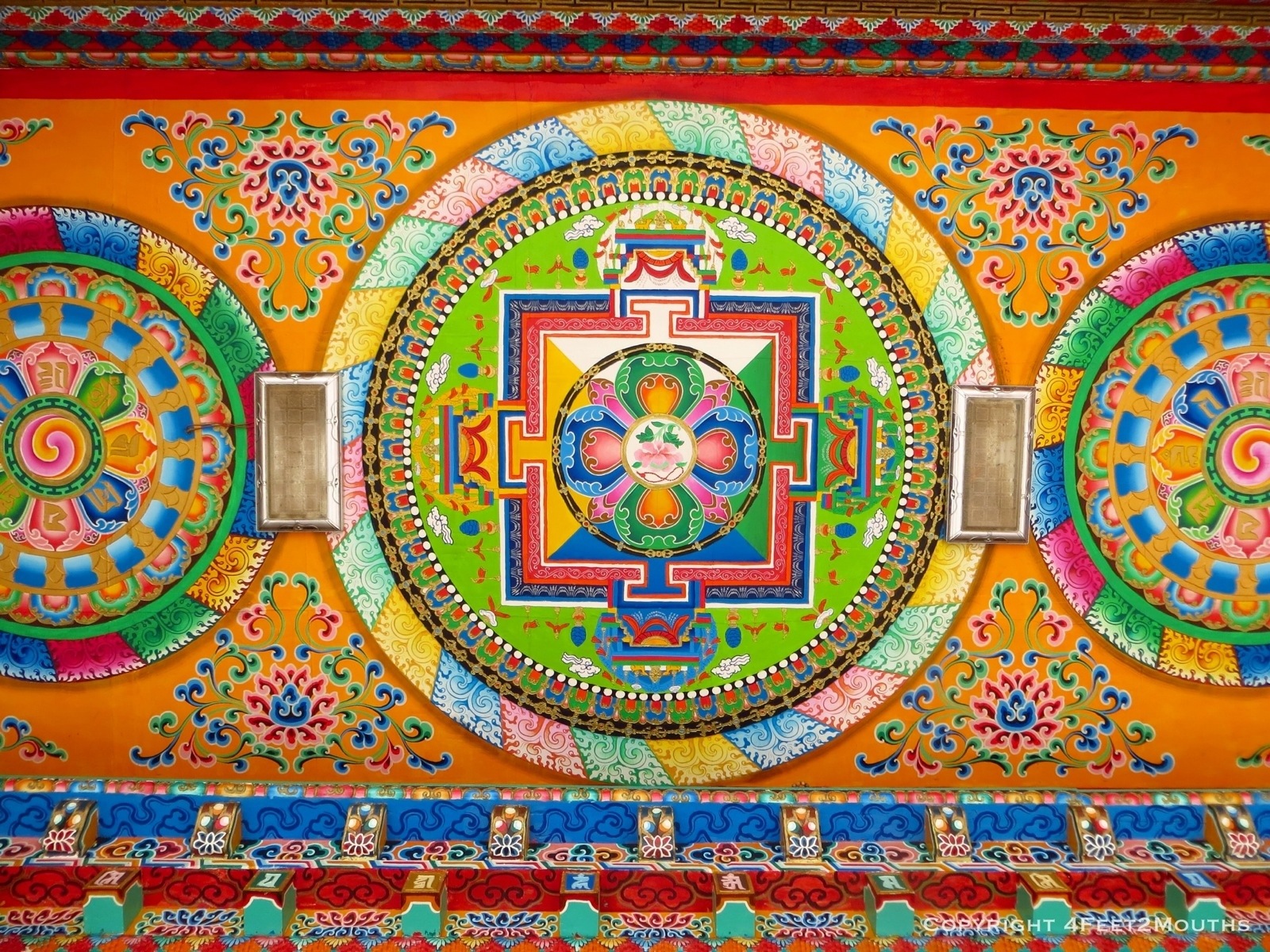
The entrance gate gave us a taste of what we would find inside. The layers of color and patterns was so intricate yet harmonious. Each of the various buildings we visited was painted in a similar fashion which contrasted with the rather stark mud colored exteriors.

Wonderfully painted interior

Wonderfully painted interior

Examples of the paintings of morals and religious stories

Examples of the paintings of morals and religious stories

Inside the paintings would pop with vibrancy. Many of the temples depicted the same themes. For example the stages of enlightenment metaphorically represented by a black elephant becoming white. Or the bird on top of the rabbit on top of the monkey on top of the elephant. All these have background stories I’m sure but they seemed mysterious to me. While many themes were repeated there was one shrine in particular that was unique from the others. The walls were black with neon sketches of skeletons and animals. Sadly no pictures allowed.

View from the roof

View from the roof

Gilded roof

Gilded roof

In our temple to temple meanderings we eventually found a little spot to get out onto the roof from where we could look out past the gilding and onto the city and the lake.

One more of the monastery

One more of the monastery

We did see a few monks in the temples arranging offerings, meditating or greeting people. They looked a little cold in their simple robes. Overall the cold winter weather (highs were in the low forties and of course nowhere, not even our hotel room, had true heaters) gave the monastery a feeling of austerity.

Local villager women

Local villager women

A yak!

A yak!

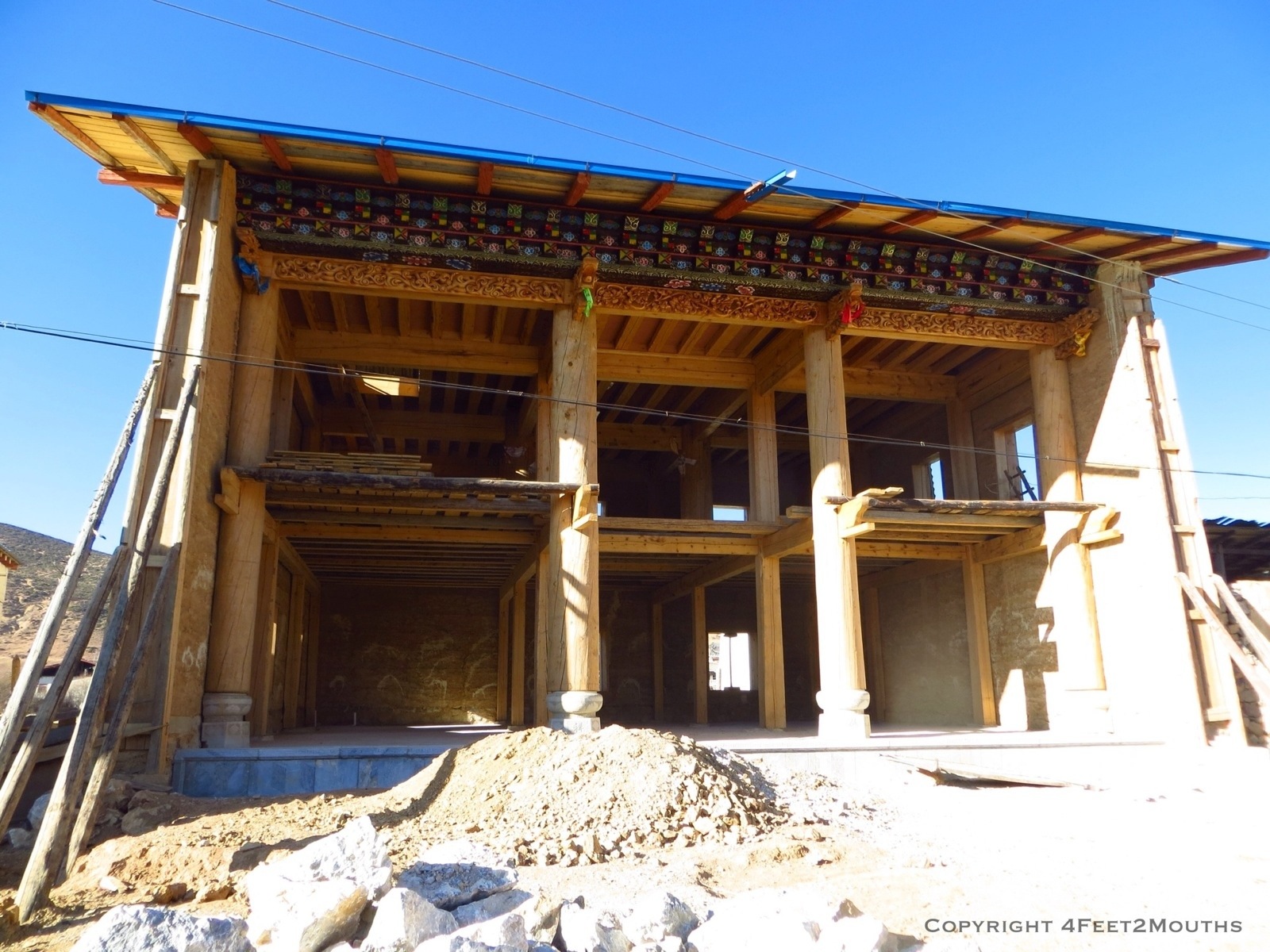
Tibetan style construction

Tibetan style construction

Outside the monastery walls a village had formed. We walked around, admired the heavy Tibetan style architecture, pet the yaks. It did feel a bit strange though, like I was intruding. I wonder how much money the villagers get from the high priced ticket.

Nathan with 20 layers of clothing

Nathan with 20 layers of clothing

Sleeper bus

Sleeper bus

We could only handle so much cold. Nathan was wearing almost everything he had! Zhongdian was a brief but worthy interlude on our Yunnan tour. We made our way south on a long journey to warmer weather and magical rice terraces.

Post Navigation