4 feet 2 mouths

walking and eating our way around the world

Negotiating The Head Waggle In Delhi (by Nathan)

Delhi traffic jam

I had been trying to figure out the best way to describe India for weeks.  Delhi was our final city in an attempt to “see” India.  The country is enormous, the cultures varied and at best we simply “tasted” the pleasures that India has to offer.  I rolled over in bed after a thirteen hour nap and I asked Carmen “What is the opposite of tranquil?”. Urban India is intense, smothering and exhausting, but equally liberating, flavorful and exciting.

Non-stop people, cars, rickshaws, and buses

We were proud. Few Indian delights crossed our eyes without entering our mouths.  But finally we found the one-day gremlin that lurches in the tastiest of of banana-leafed bowls of street food.  The exhaustion of travel caught up with us and a mild case of “Delhi belly” sent us to bed (thankfully not the bathroom).  It was impossible to visit India on our terms; in no way could we control the bohemoth and not one day had worked out as planned.  Thus we submitted and embraced (again) seeing India’s India.  Being a tourist here has a steep learning curve; and we are fast learners.  During our last days we stuck with what we know best: the food, the history and the markets.
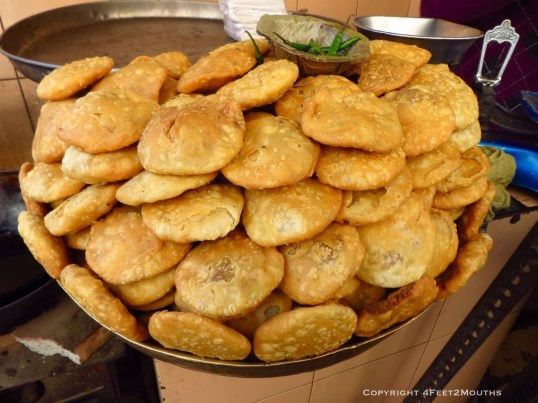
Fried dough breakfast

Fried dough with potato curry

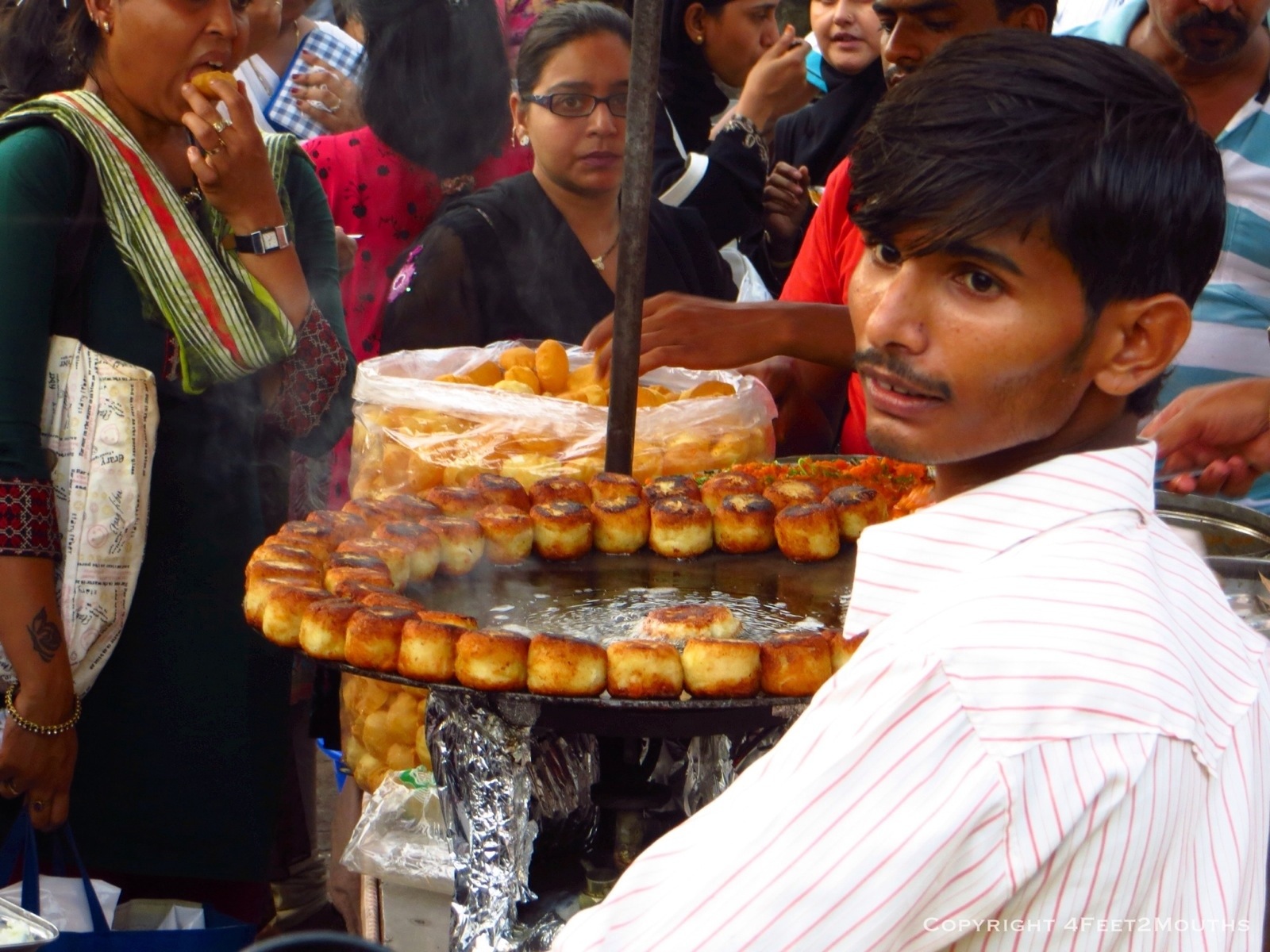
Our success with food works on two principals: we are open-minded to eat what locals eat and stubbornly insistent to eat where there are locals eating.  Our morning stroll of dry spot and trash-free hopscotch was not interrupted by hacking, but by the slurping crunching sound of serious food enjoyment. We peered over some shoulders (not difficult because everyone is 3-4 inches shorter in India) and freshly fried four inch disks were moved from a mound to a bowl and topped with a thick potato mixture and mint chutney.  We used the disk to scoop up the potatoes as we ate standing up adjacent to the busy street.  We walked away happy with plans to return.
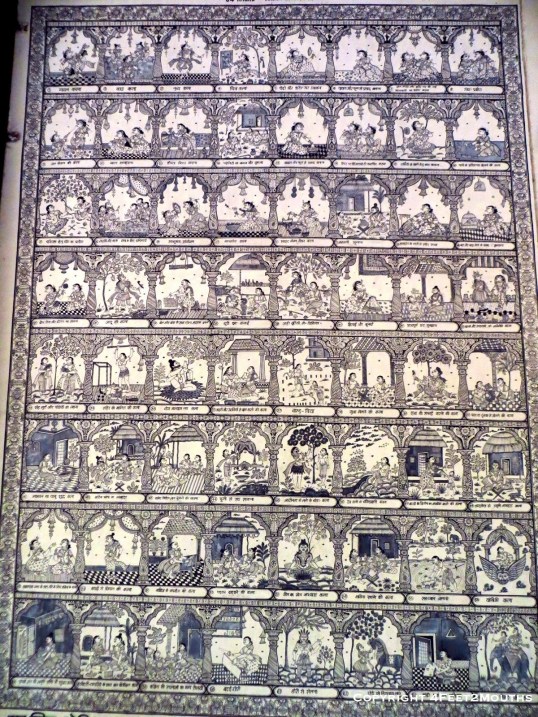
Drawing on a wall at the crafts museum
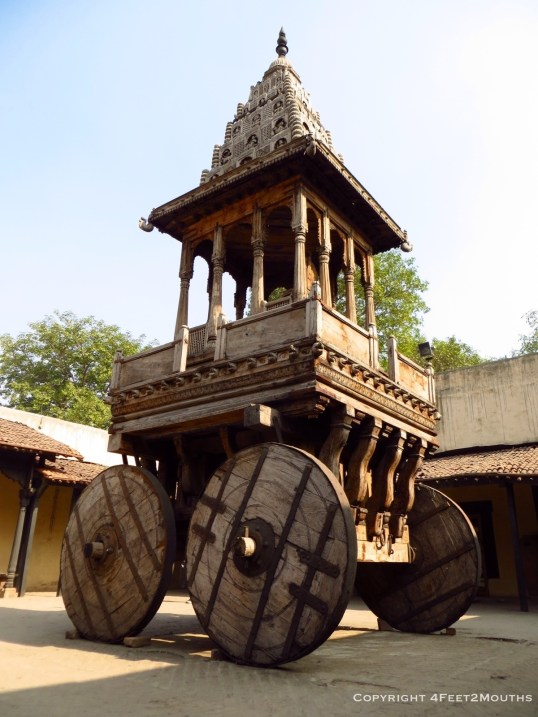
Chariot at the crafts museum

The craft museum was a welcome sight to view and learn about many of the various cultures across India.  We saw storyboards depicting the lives of gods, elaborate and delicately woven textiles and a huge wooden chariot.

Humayun’s Tomb

Me at Humayun’s Tomb

Baha’i Lotus Temple

The timeless architecture of India exists in two forms: imperial and religious.  Every sultan built a palace, or ten, and a tomb, and only one.  Across several millennia there have been several sultans, but the most grand of Delhi’s sights is Humayun’s Tomb.  This red sandstone and marble structure is surround by grass and palm trees south of the heart of Delhi.  The modern Baha’i Temple is an impressive concrete lotus flower and a welcome and cost-free sight.
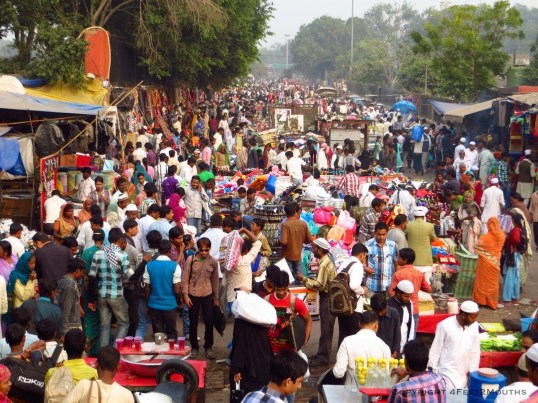
Market street

Dried noodle vendor

It is the markets of India where Carmen and I embrace the craziness of India. Bumping shoulders and rubbernecking at the green beans, sarees or ugly sweaters is a perfect afternoon of entertainment.  Seriously, at the next ugly sweater party I only wish I had the outfit I saw on the subway- bleach-faded jeans, green striped dress shirt and a red, shag sweater vest that had an iridescent quality to it that could only be called glitter.  Everything is sold in markets, there are no big stores, only tiny road-side shacks, push-carts and tiny urban cubby storefronts.

Jalebi

Fried street treats

Aloo paratha on the griddle

Food is everywhere in India. And Delhi has one of the most elaborate and wonderful street-food scenes on the planet. We can’t walk anywhere without catching a scent of some delectable spice or cooking happening. We discovered these decadent fried fritters called jalebi as well as an array of almost tempura battered vegetables with a chickpea curry on the street near our hotel in Paharganj. For breakfast we frequented an aloo paratha stand serving potato filled wheat pancakes and daal (lentils).
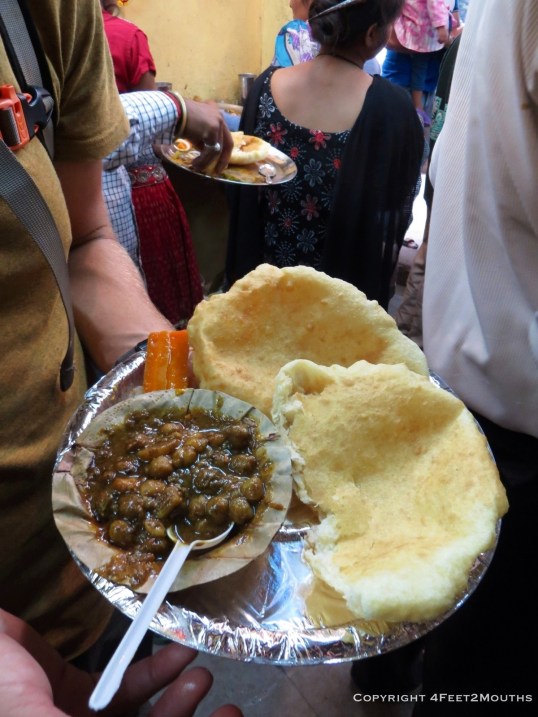
Delicious fried puffs with chickpea curry
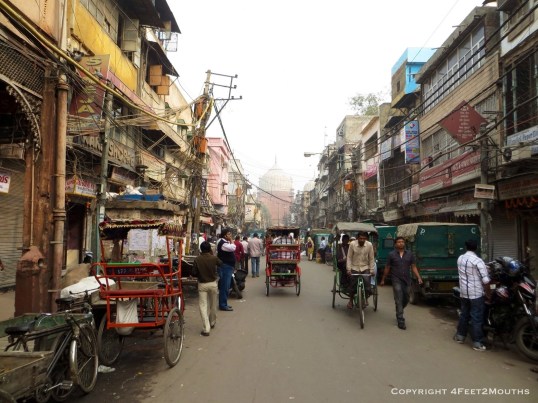
Calm moment in the crazy street scene of Delhi

One of our days was spent wondering through the streets as we walked from New Delhi to some of the major sights in Old Delhi. We found ourselves deep in a Muslim neighborhood that saw few visitors, but everyone was kind. The trek was all worth it when we saw twenty people crammed in this tiny room eating one of our favorite Indian dishes. Chana bhatura is a large puffy dough ball that is peeled apart and eaten with spicy chickpeas. With a couple gulab jumun (honey-soaked dough-nuts) we walked out of the place having spent $1.20. There is something magical about restaurants that focus on one specific dish, cooking it to perfection everyday for many years. This was one of these special places that everyone knew about and where the best was expected. Now full, we clamored our way through the streets towards the mosque.

Jama Masjid

View from the minaret

Giggling girls getting camera shy at the Jama Masjid

The gem of Old Delhi is the Jama Masjid Mosque.  This enormous complex can support 25,000 worshippers and was built over 350 years ago.  We explored the prayer halls, the plaza and even climbed the south minaret for a smoggy, but enjoyable view of the city.  On several occasions we took photos alongside families, or with a small child in my arms or with a group of teenage girls.  The locals must like my blond hair. In the photo above, the girls appear to be mad-dogging me, but just minutes earlier they were giggling to take my photo.

The favorite pastime, cricket

India has created a mix of emotions within me. I love it and I hate it, there are so many wonderful things about it and others that disgust me. Because I am an engineer, here are the numbers:
22 days total (too little to experience or really “know” India).
16 make-shift cricket matches encountered on plazas, alleys and dirt courts.
30 auto rickshaws taken.
400 times we were asked to take a Rickshaw
4 times Nathan stepped in shit, with sandals.
5-1/2 hours waiting in line for a single train ticket in New Delhi (5 attempts).
70 people insisted on taking photos with us.
15 of those were successfully convinced to take a jumping photo.
200 times asked “which country? What is your name? How are you?”
20 wonderfully complete and various thali meals eaten.
60 chapatis, tandoori roti and naan eaten.
22 miniature bananas eaten.
Countless super nice, helpful and friendly Indian people.
45 tourists seen wearing funny parachute pants.
50 successful negotiations (10 losses)

I have walked away with a greater appreciation of India. The vast amount of people and the complexities of spices used in so many foods is amazing. We have had no trouble learning how to eat here, but it is the nuances of the culture that have intrigued and challenged us. We have become masters of negotiation. Everything is negotiable in India, and by the end of our trip I was haggling with hotel owners,Rickshaw drivers, fruit vendors and tailors. If someone wanted to sell me something we were going to bargain dance. The follow-up to any agreement would be the proper head waggle. There is a subtle motion that Indians make with there head that is not quite side-to-side, or up-and-down, but more a bobble head motion describing that we have an undstanding. With great yearning we asked our Indian-American friends to teach us this skill. They refused! Deep in the trenches of restaurant and market communication Carmen and I waggled our way to understanding. For those that are interested in this art,the most elegant and direct head waggle is achieved by drawing an six inch horizontal figure eight with your chin two to four times. Repeat as necessary.

The Stunning Taj Mahal (by Carmen)

The famous Taj Mahal view

How could we come to India and not see the Taj Mahal?  I mean, it’s THE symbol of India. One of the most beautiful structures ever. A wonder of the world. A must see…isn’t it?” These were the thoughts running through my head as we struggled to get train tickets to Agra, the city that holds the famous sight.  Long lines, crowded ticket counters, sold out trains all conspired against our visit and my determination to see the Taj began to waiver.  It took some effort but we finally made it.  And then…wow.

Taj from the mosque

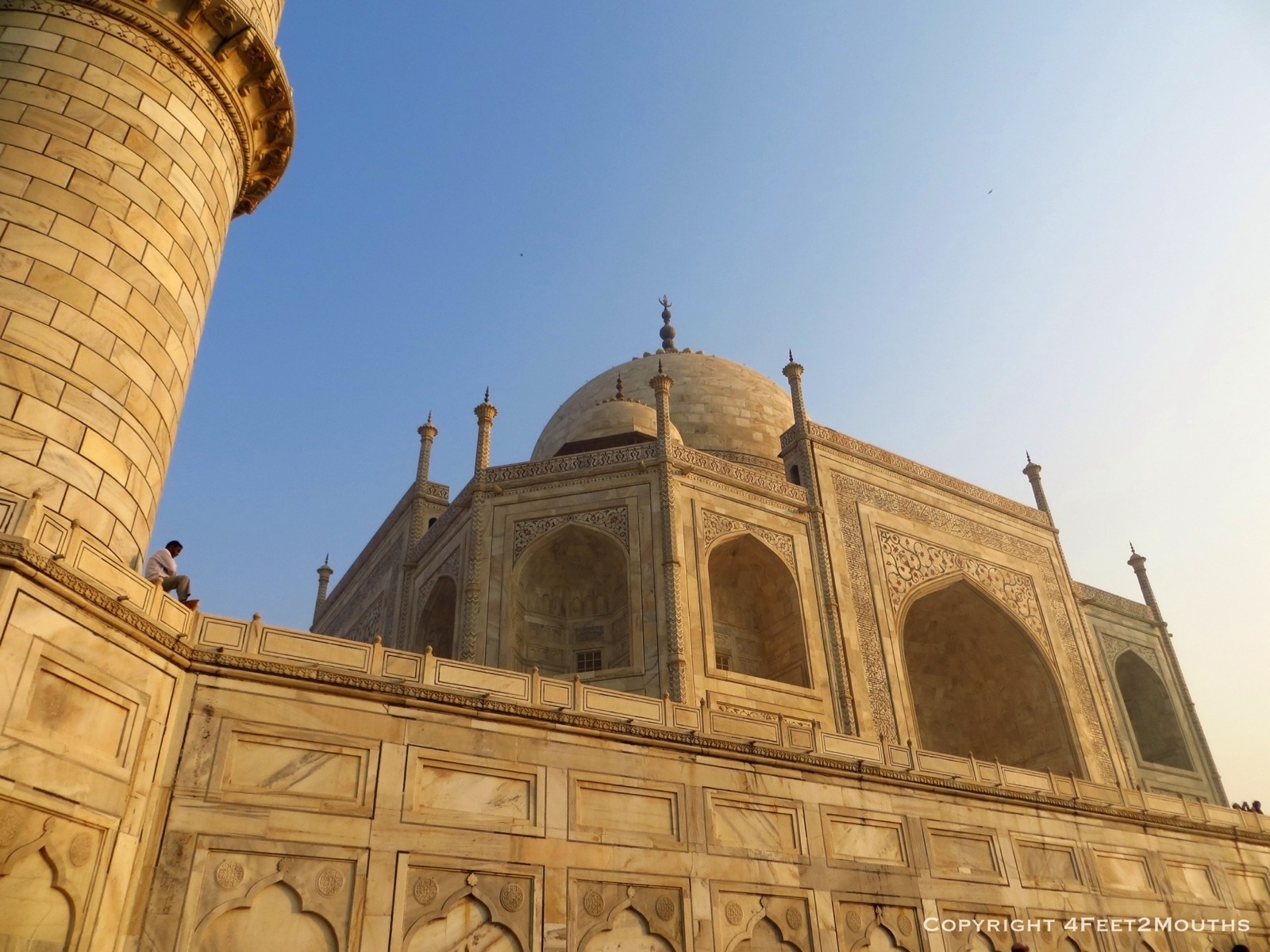
The crowds were already queuing up at dawn and we joined their ranks.  I think Shiva and Vishnu (or possibly both) decided to reward our perseverance in getting to Agra by coinciding our visit with World Heritage Day.  This meant that our entrance to the Taj Mahal was absolutely free!  We entered the grounds and walked through the main gate to behold the famous and stunning view of the Taj.

It was wonderful. Nathan and I perched ourselves on a bench to the side of the main aisle to peacefully observe the scene.  And we were promptly asked to move so that a French tour group could take photos at the bench.  That’s the downside of these beautiful sights – they attract huge volumes of people and the jostling to get that perfect picture can get ugly.  

Up close and personal

Grand archway

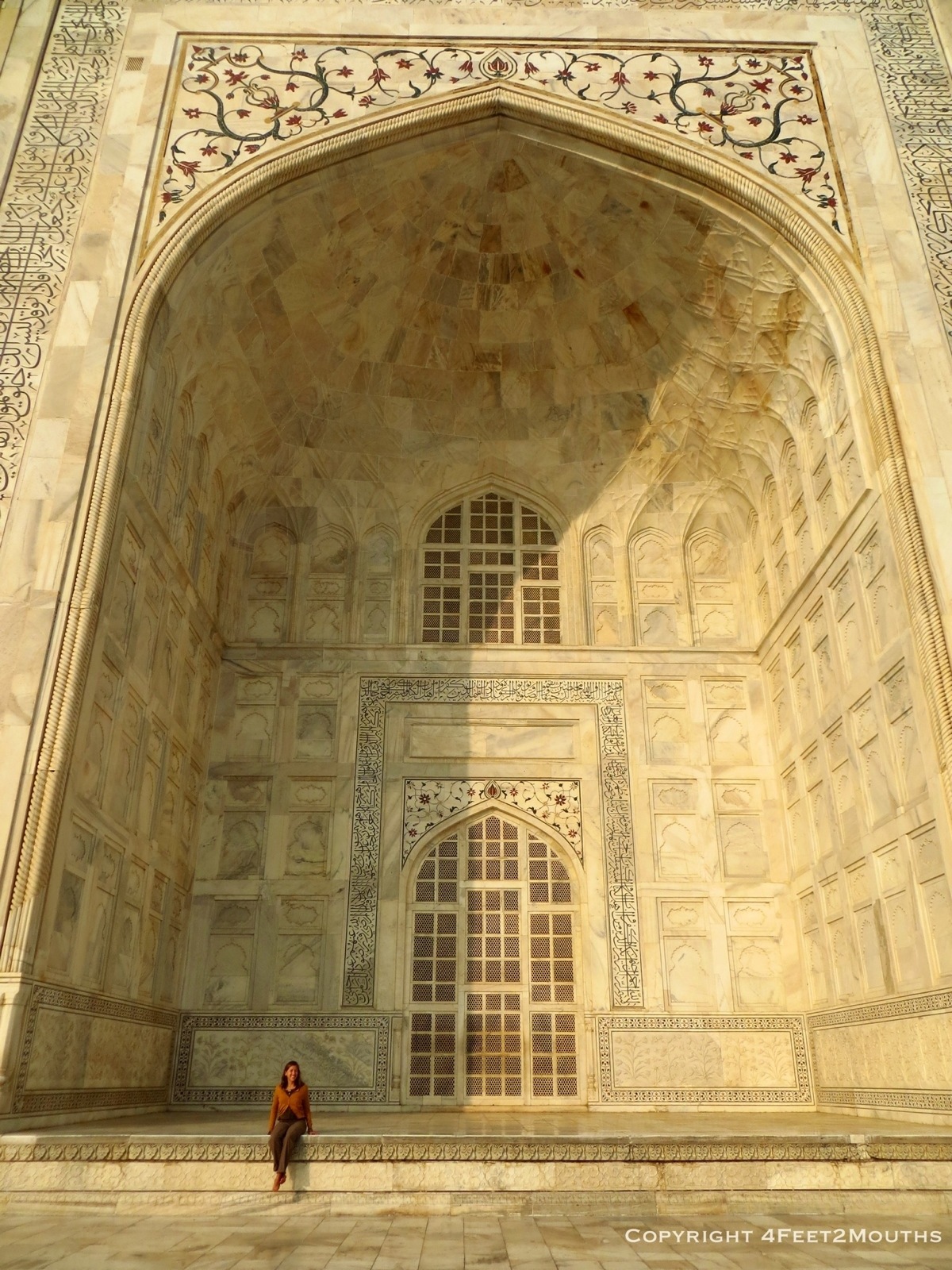
We took our time getting up close to the main building, the mausoleum emperor Shah Jahan built for his deceased wife.  The building itself actually has a rather small footprint.  The pedestal it stands on and the setting makes it seem much more grand.  But as you get closer what you lose in grandeur you gain in great attention to details.  The carved marble was inlaid with flower patterns and script or carved into fine, intricate lattices.

A practice in symmetry

Us and the Taj

For me, the Taj really did live up to the hype.  It has a timelessness that belies its 400 years of age.  I believe this is a result its perfect proportions.  The dome and the carved niches all have soft curves that provide an elegant beauty.  In the end, it was well worth the trip.

Touristy camel ride

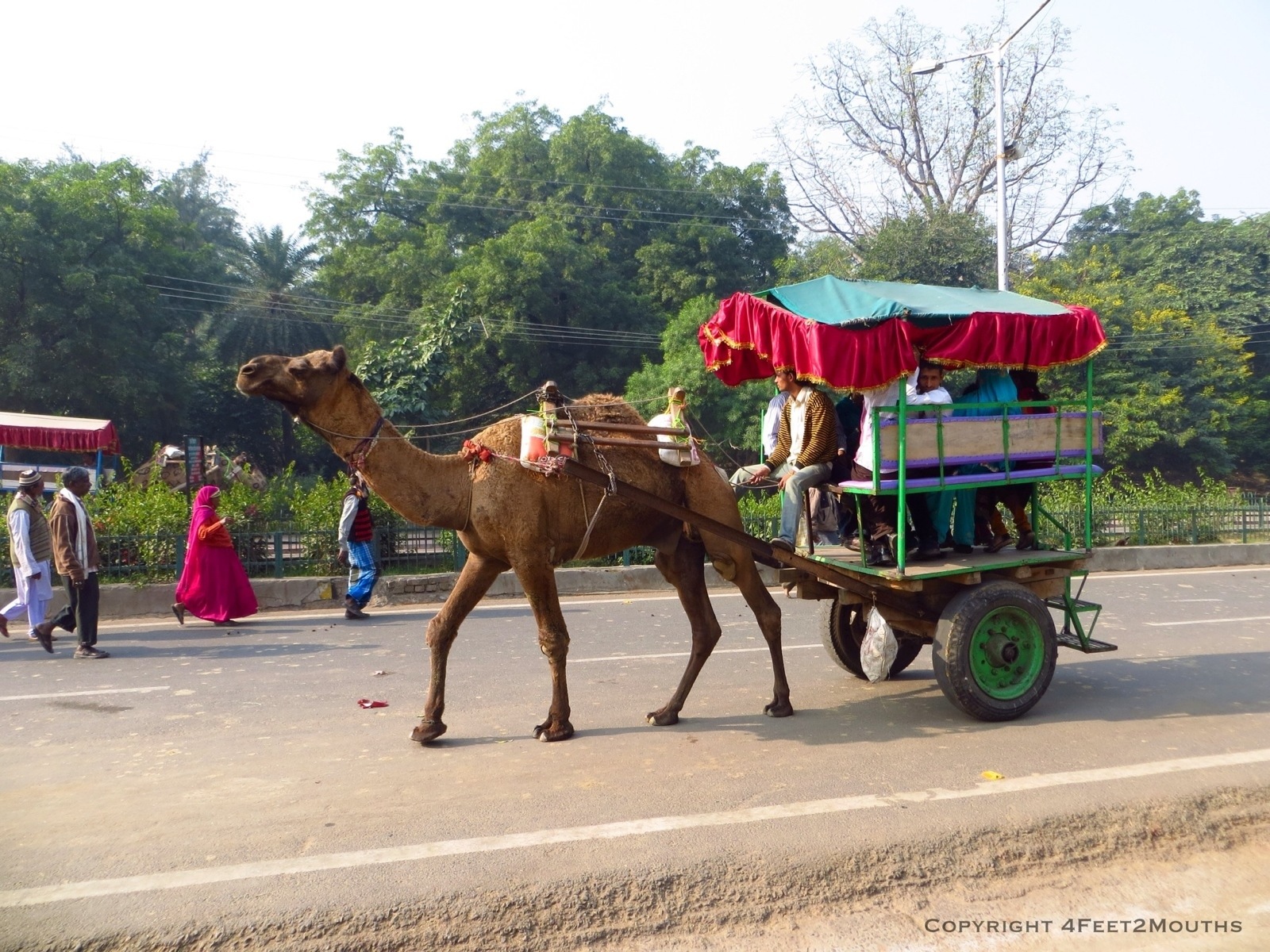
Agra holds not one but two world heritage sights.  A mere 2km away from the Taj is the Agra Fort, a defense complex turned palace.  We admired the extremely tall camels pulling tourists to and from the Taj but decided to walk along the river to the fort.

Textures of the Agra Fort

Beautiful arches of the Hall of Public Audiences

The Agra Fort has its own, crumbling elegance to it.  My favorite area was the scalloped archways of the Hall of Public Audiences where the emperor would conduct business. Emperor Shah Jahan actually was imprisoned here for the last eight years of his life where he could see his creation, the Taj, in the distance.

Thali time

Maybe it’s India’s ancient religious history. Or perhaps it’s all the trash in the streets. But there’s something about India that makes you want to cleanse.  (There’s also something about India that makes many tourists want to wear enormous parachute pants that I don’t see on any locals, but I digress.)  Our cleansing centers around food and drink. While in India we have been vegetarian and sober, a sort of detoxing for our indulgences in Europe.  We stuck to these ideals in Agra, where the food is mostly geared towards the touring hoards.  While we enjoyed a decent thali at a restaurant our favorite meals were on the streets.

Local Agra living

Fried potato chaat

Our first and last meal of Agra took place in a little corner where three chow mein stands setup shop each night.  For a snack, we enjoyed samosas or a fried potato chaat with chickpeas, tamarind, onions and mint chutney.  For the most part, we found these in or around the market streets in Agra.  These extended south of the Taj within a winding labyrinth of lanes with few other tourists.

Taj Mahal from the south riverbank

Just before our train to Delhi, we walked past the the east gate to the Taj, straight to the riverbank.  A Hindu temple occupies this site, but they don’t mind you sticking around the admire the rear Taj views.  Surprisingly we were the only tourists there to watch the sunset light up the magnificent building. It was a peaceful way to say goodbye to an understandably crowded treasure of the world.

Finding Our Mumbai (by Carmen)

Street vendor in Crawford Market

A Mumbai train station

Though I had never stepped foot in Mumbai, I had already been there.  I had been transported the city by the excellent book, Shantaram by Gregory Roberts.  It is the story of an escaped Aussie convict who eventually gets involved in Mumbai’s underworld.  Along the way he contemplates life, love and how we relate to others.  One of the key themes of the book is Roberts’ complete and utter love for Mumbai. He can make you feel the sights, sounds and even smells of all the corners of the city he discovers.  Nathan and I are big Shantaram fans so it was with great anticipation that we arrived to Mumbai’s central train station.

Taj Mahal Hotel

Leopold’s Cafe

From the train station we worked our way south to another neighborhood described in the book, Colaba.  It is dotted with fine architecture such as the Taj Mahal hotel and the India Gate, providing evidence of the colonial influence.  We walked further along the tree lined streets, passing the World Trade Center, which also plays a role in the story.  The construction of the center spurred the creation of an adjacent slum that directly contrasts with the wealth of the area.  Roberts actually lived there during his time in Mumbai and seeing it helped bring the story to life.  One more important stop in Colaba was Leopold’s Cafe. Many friendships and conversations take place in this ex-pat cafe which was bustling when we stopped in for a drink.  It was fun to finally be there in person but it wasn’t quite what I had imagined.  It was far too bright, airy and even commercial to contain the dubious characters from Shantaram.

Banganga Tank

Butterfly in the Hanging Gardens

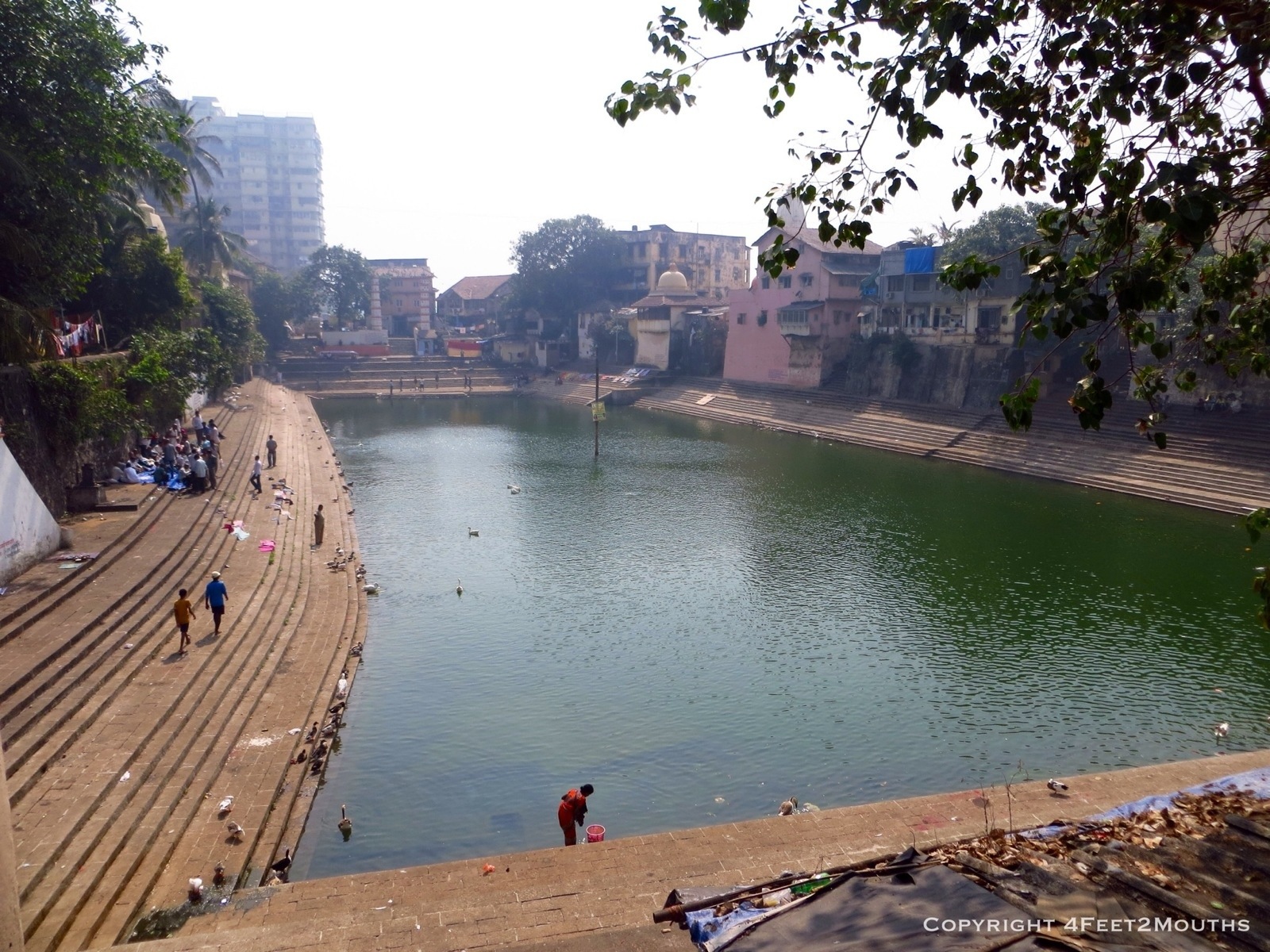
Another day, we made our way north, where Roberts would head to chill out.  Compared to more central areas of Mumbai, Chowpatty Beach and the surrounding neighborhoods are quite tranquil areas.  At Banganga Tank we observed ritual bathing at this sacred spot, which was created when Lord Rama pierced the ground with his arrow.  We then made our way to the hanging gardens which were flush with butterflies enjoying the budding flowers.  

Gandhi supporting sustainable transportation ; )

In his visits to Mumbai, Gandhi would stay in the Chowpatty area.  We stopped by a small museum dedicated to his life and ideals.  It is hard to imagine someone with more inner strength and charisma.  At the museum we read glowing recommendations from contemporaries such as Einstein.  A small portrait of Gandhi on a bicycle caught my eye.  He was obviously showing his support of non-motorized transportation modes! (Hey, a transport planner can dream, can’t she?)

Chowpatty Beach at sunset

Behl puri

Towards sunset, the beach comes alive with families and teenagers enjoying the bit of open space.  It is a festive atmosphere amid the piles of trash.  The vendors at the beach are known to specialize in behl puri, a snack in which crisp rice puffs are covered with potatoes, onions, chutney, and sev (crispy noodles).

Dobi Ghat

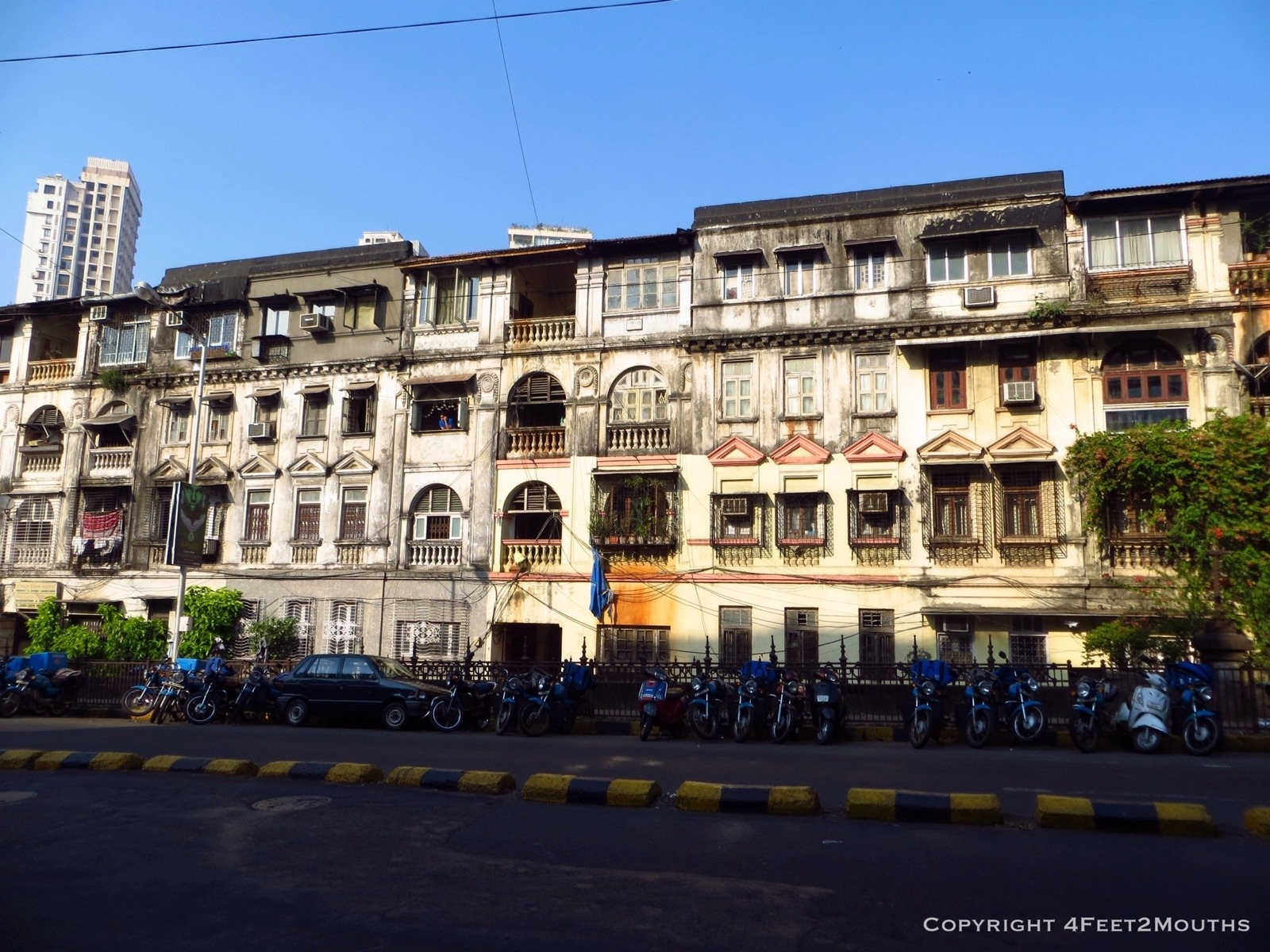
Streets of Mumbai

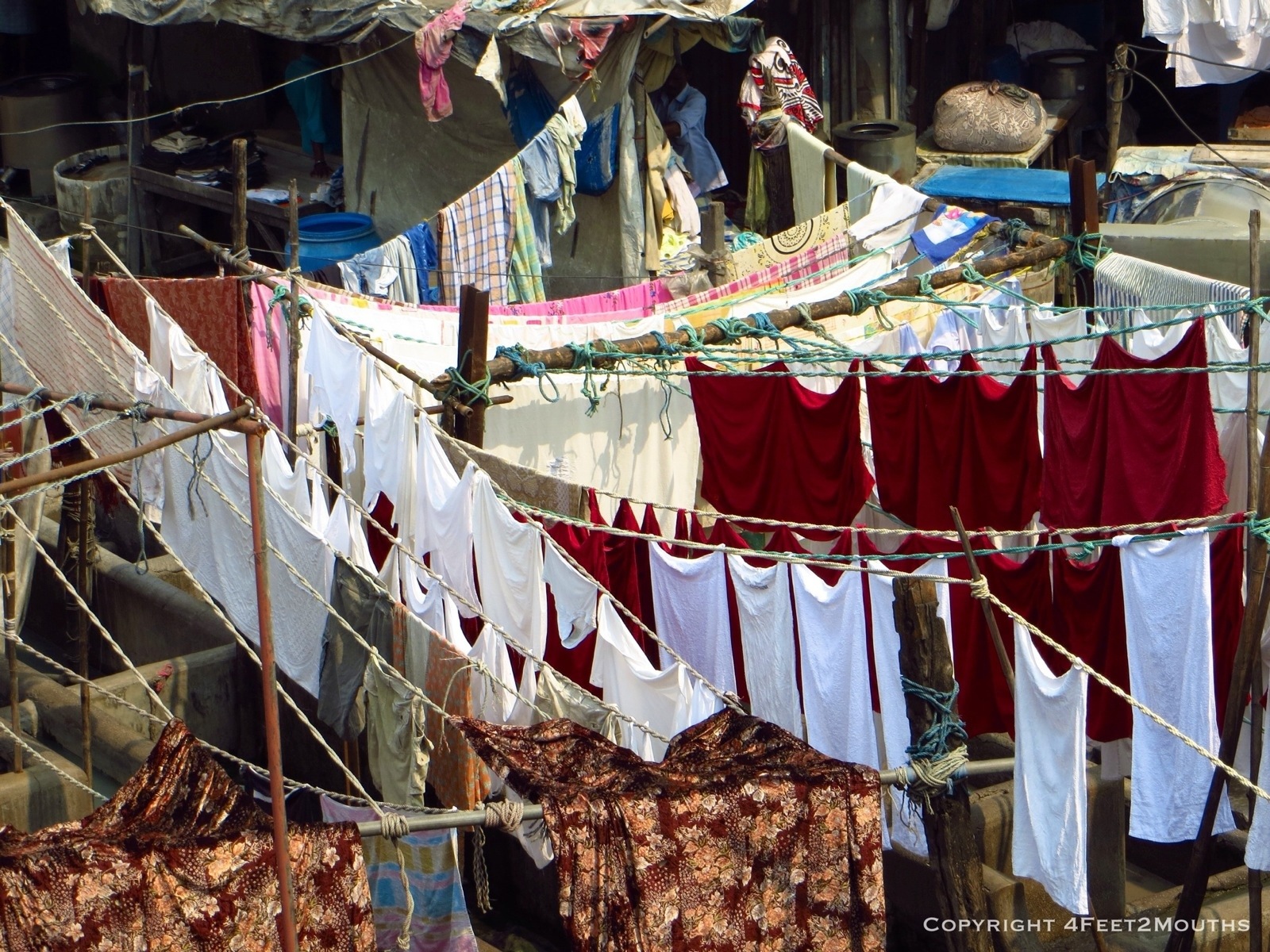
Visiting the city created in Shantaram was exciting, but it was time for our own Mumbai.  With this in mind we took a train north to the working class areas of Mahalaxmi.  Just outside the train station you will find Dobi Ghat, the laundry machine of Mumbai where workers wash sheets and clothes by hand in concrete basins.  Standing from a lookout on the bridge an endless sea of clothing sways in the hazy sunlight.  We walked around the markets surrounding the ghat and observed the typical streets of urban India – dirty, trashy, and crumbling by western standards but ultimately millions of people living on and using them each day. And from what I saw they are still better off than many of those living in the slums.

Diwali laterns

At night, the dirt of the city was hidden by shadows and colorful lanterns filled the air.  The reason for the lanterns was Diwali, Indian new year.  It was a time of great joy and, of course, deafening fire works.

Goa Portuguesa

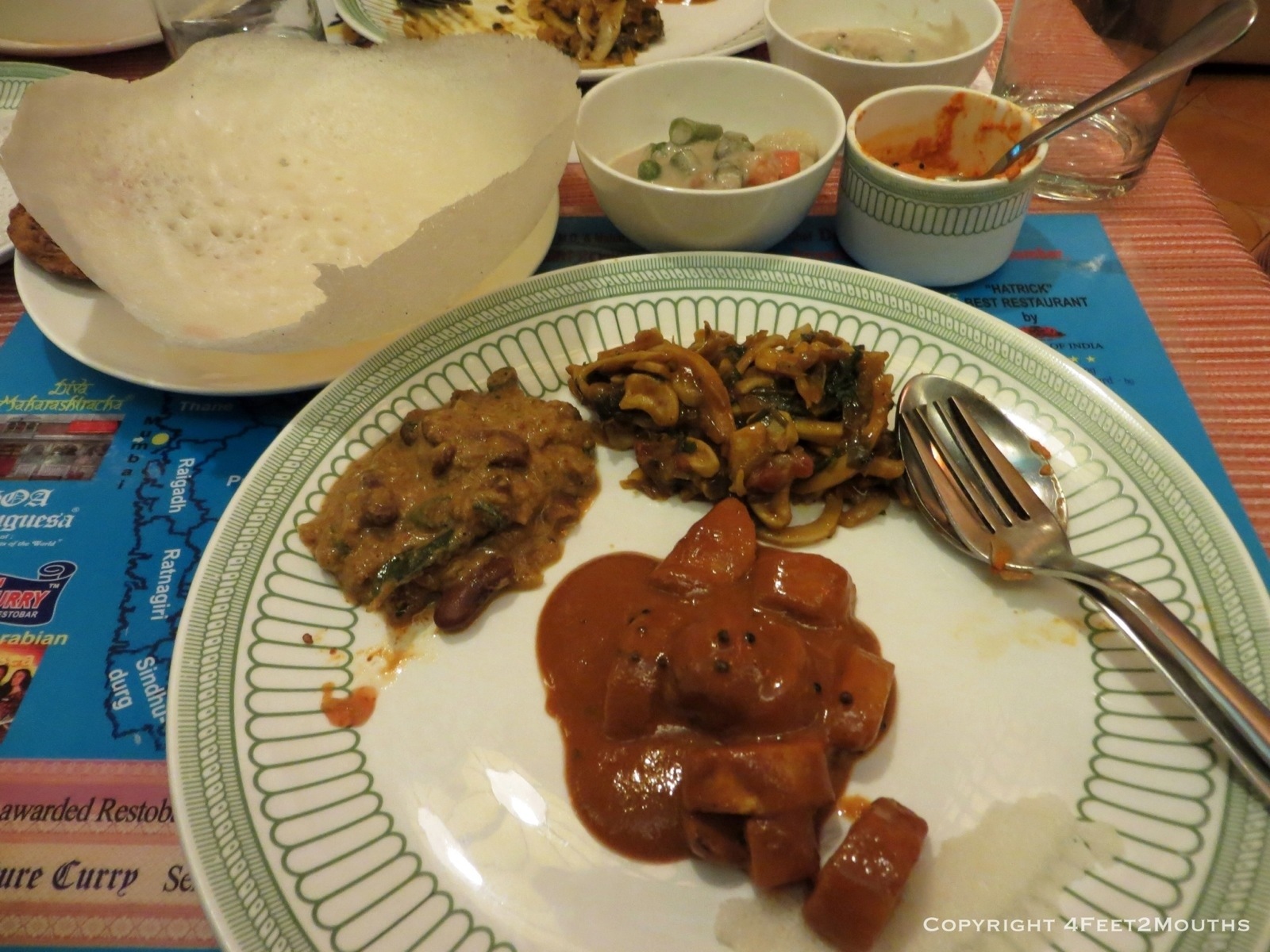
It also meant crazy traffic so with great difficulty Nathan, our friend Anu and I made our way to Goa Portuguesa.  This somewhat kooky restaurant actually had character and ambiance, which isn’t always easy to find on the Indian restaurant scene.  The chef had scouted dozens of recipes from Kerala in India’s deep south so the food was all new to me.  Banana curry, tender coconut fry up, and a beans in curry dish were coconutty delights.  I really liked the crispy, bowl shaped appam to scoop it up with.

Colored powder to create Diwali sand art

Market nibbles

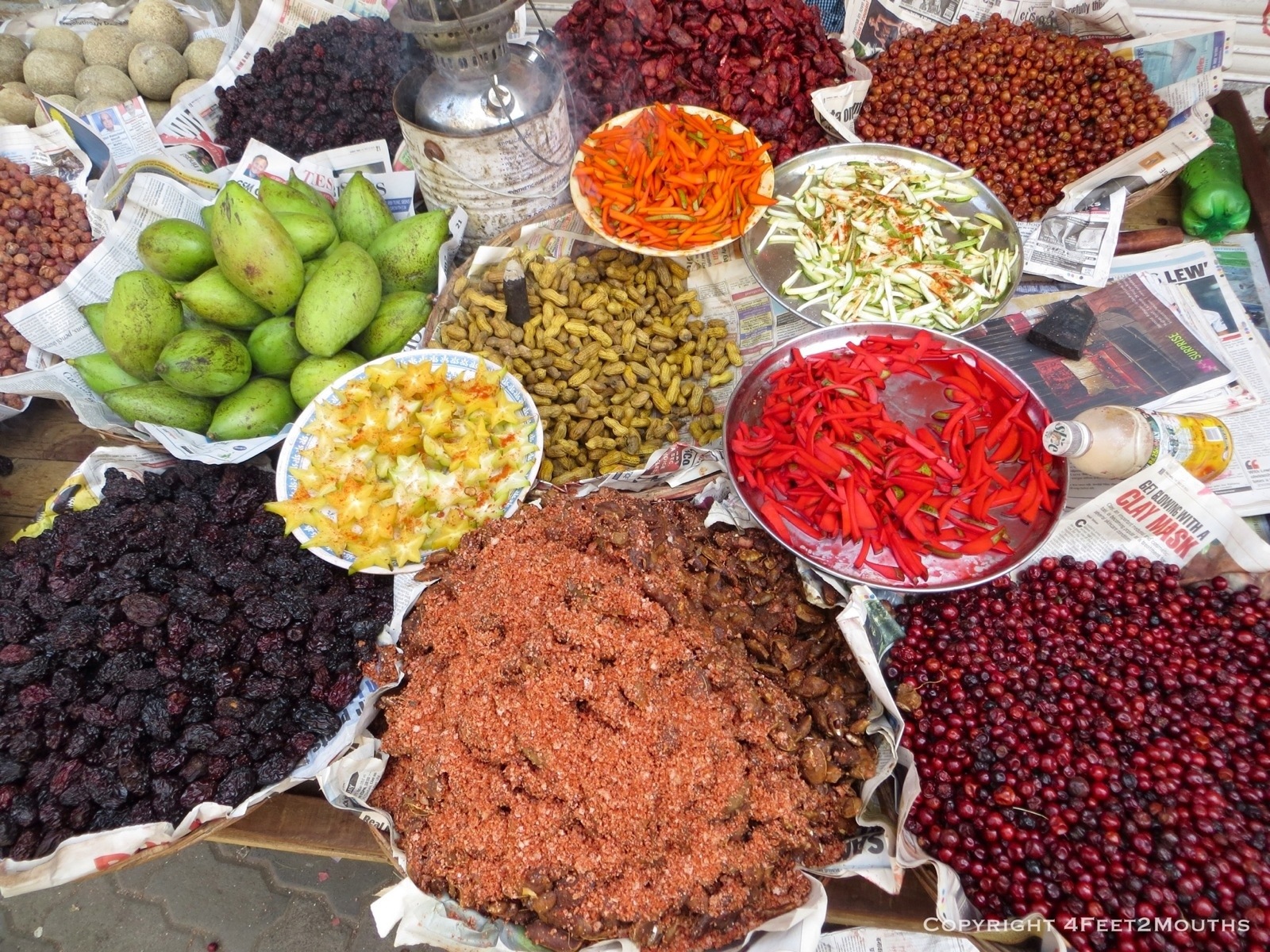
Besides the crazy traffic, markets were also hectic because Diwali is a time of gifts. kind of like Christmas.  But wait, hectic isn’t the word. India is hectic year round.  Try pandemonium.  So many vendors, stalls, foods, clothes, knickknacks, and of course the odd cow in the mix.  

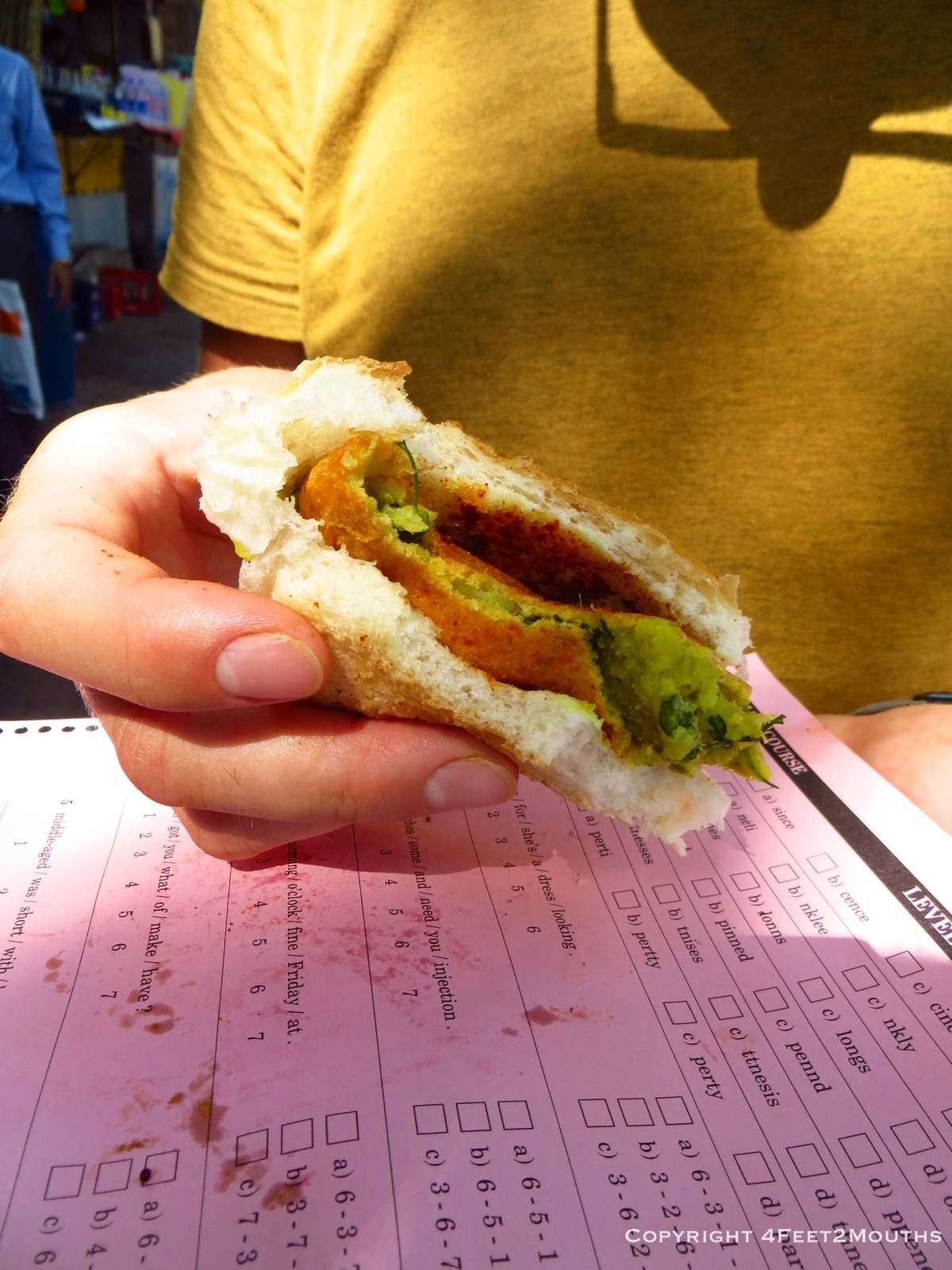
Vada pav

You need a snack to survive the market. After shuffling our way through millions of people we had a Mumbai specialty, vada pav.  This is a carb lovers dream – spiced potatoes floured and fried stuffed in bread with chopped onions and chili powder. Yum.  Another time we jumped between neighboring food stands for dahi papdi chaat (chips with potatoes, chickpeas, yogurt and chutney), pani puri (fried puffs stuffed with potatoes, chickpeas, and tamarind chutney all dipped in mint water), and a Bombay sandwich (tomato, cucumber and cheese toasted).

Paper dosa – did we order too much?

We mixed up the street food with a few restaurants.  For breakfast we were making our way through the myriad of dosa choices at the south Indian eateries near our hotel.  Set dosa, rava dosa, masala dosa…what’s this paper dosa? We ordered it and as it came to the table we suddenly remembered. Yeah, it’s the giant thin crepe we had at Udupi Palace in Berkeley that one time.  An unintentionally big but delicious breakfast.

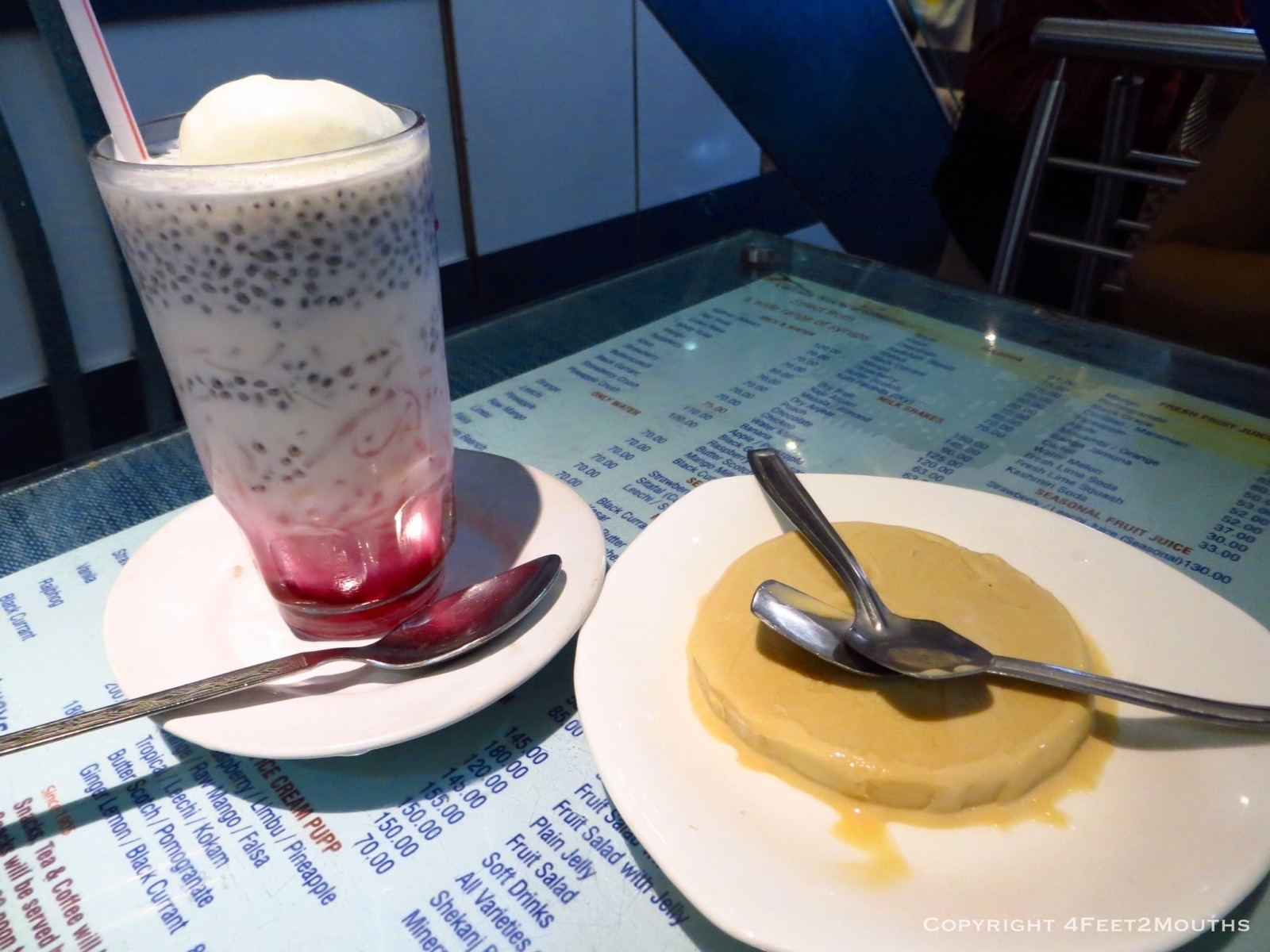
Badshah falooda and kulfi

New Kulfi Centre falooda

Have room for dessert? We did so we created a falooda face off.  Falooda is a sweet creamy dessert filled with jelly noodles and rose water.  It is rich, cool and refreshing. We sampled some at Badshah which also had excellent kulfi (a denser, creamier Indian style ice cream).  This competed with the falooda of New Kulfi Centre near Chowpatty Beach.  My verdict – I liked the stronger flavors of Badshah, but when eating falooda everyone is a winner.

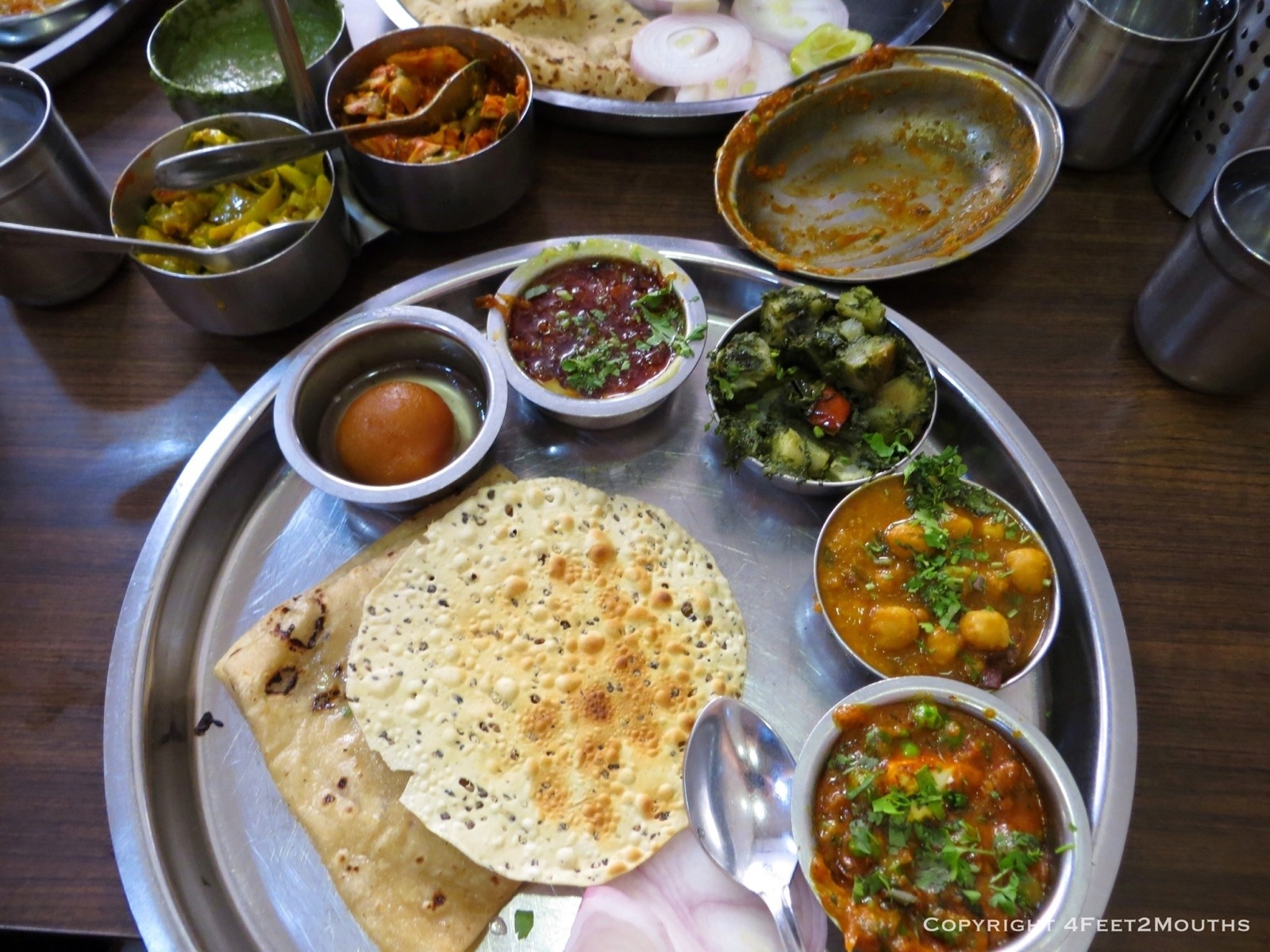
Thali

Mirchi kachori

Mumbai is a delicious mix of people and foods.  We loved the markets; the chaat (snacks) such as mirchi kachori (fried lentil balls covered in chili yogurt sauce);  the choice in thalis (mix plates); the better infrastructure (sidewalks!).  But most of all, we loved finding our Mumbai.

Finding Peace In The Past In Hampi (by Nathan)

Enormous oxen pulling a sugarcane cart

Our progression through India has moved from big city Bangalore , to the smaller Hubli and now the village of Hampi. We came to this area to view the numerous delicately carved buildings and experience the more peaceful side of India. The city was once the capital of the Hindu empire. At its height the city contained over 500,000 people. The city has been reduced significantly and the few residents that stay survive on tourists and agriculture. Away from the hustle and craziness, we were surrounded by banana groves, sugarcane and five hundred year old ruins of the past empire.

Cow silhouette in the Virupaksha Temple

Virupaksha temple at dusk

Three monkeys sitting in a building

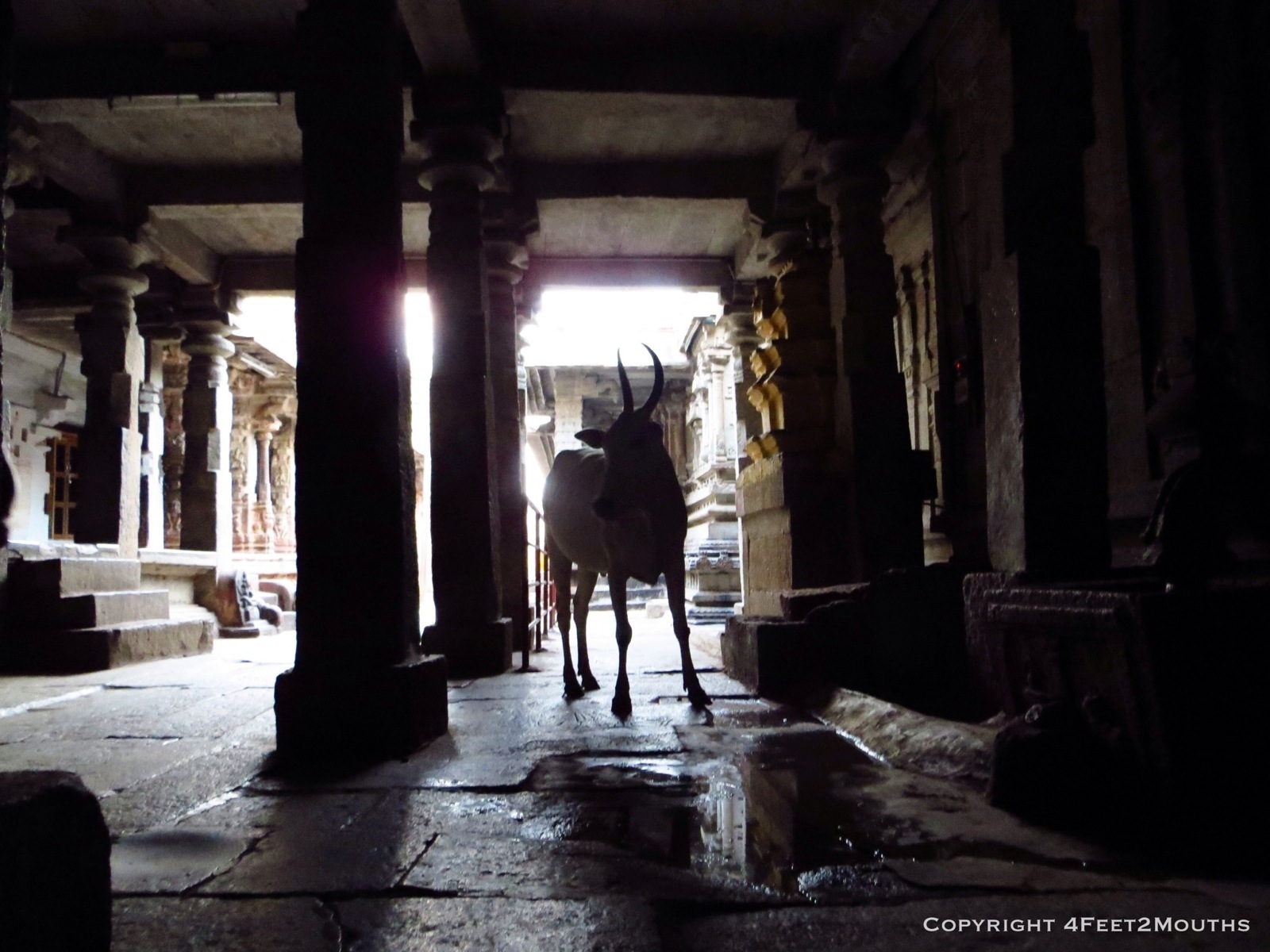
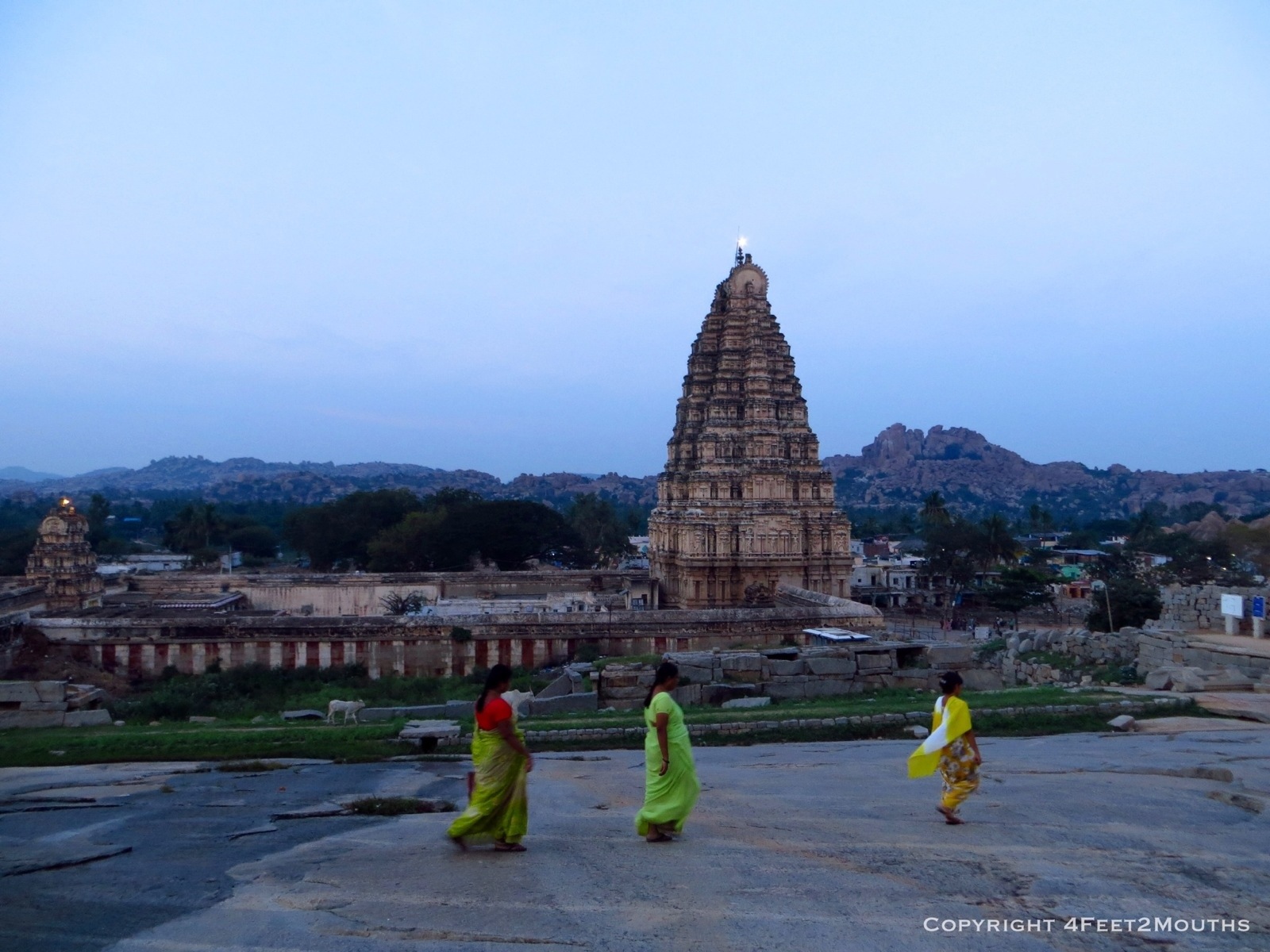
The most prominent of the ruins is the enormous 50m Virupaksha Temple from 1442 that protrudes from the edge of the city. Exploring the temple we were startled by a horned bull that roamed freely in the complex. He posed for a silhouette. Outside the temple we walked up the rock hillside to see the temple and town at night. Every surface of the temple is coverd with ornamentations and figurines of gods and animals. There were real monkeys too! They climbed up and down the the tower, relaxed and watched over everyone in the bazaar.

Delicious idli and gunta ponganalu breakfast

Delicious idli and gunta ponganalu breakfast

Colorful Hampi Bazaar ruins

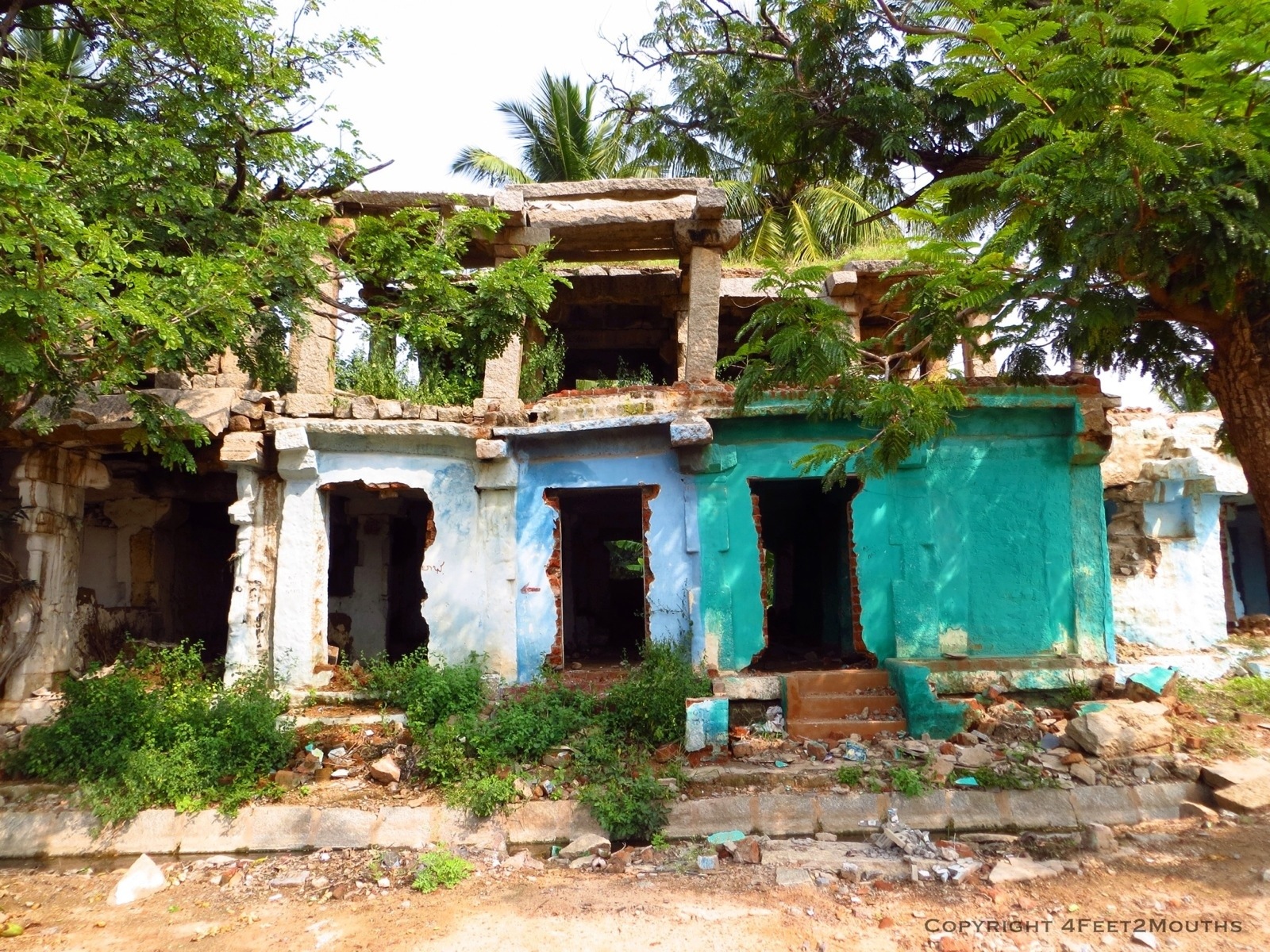
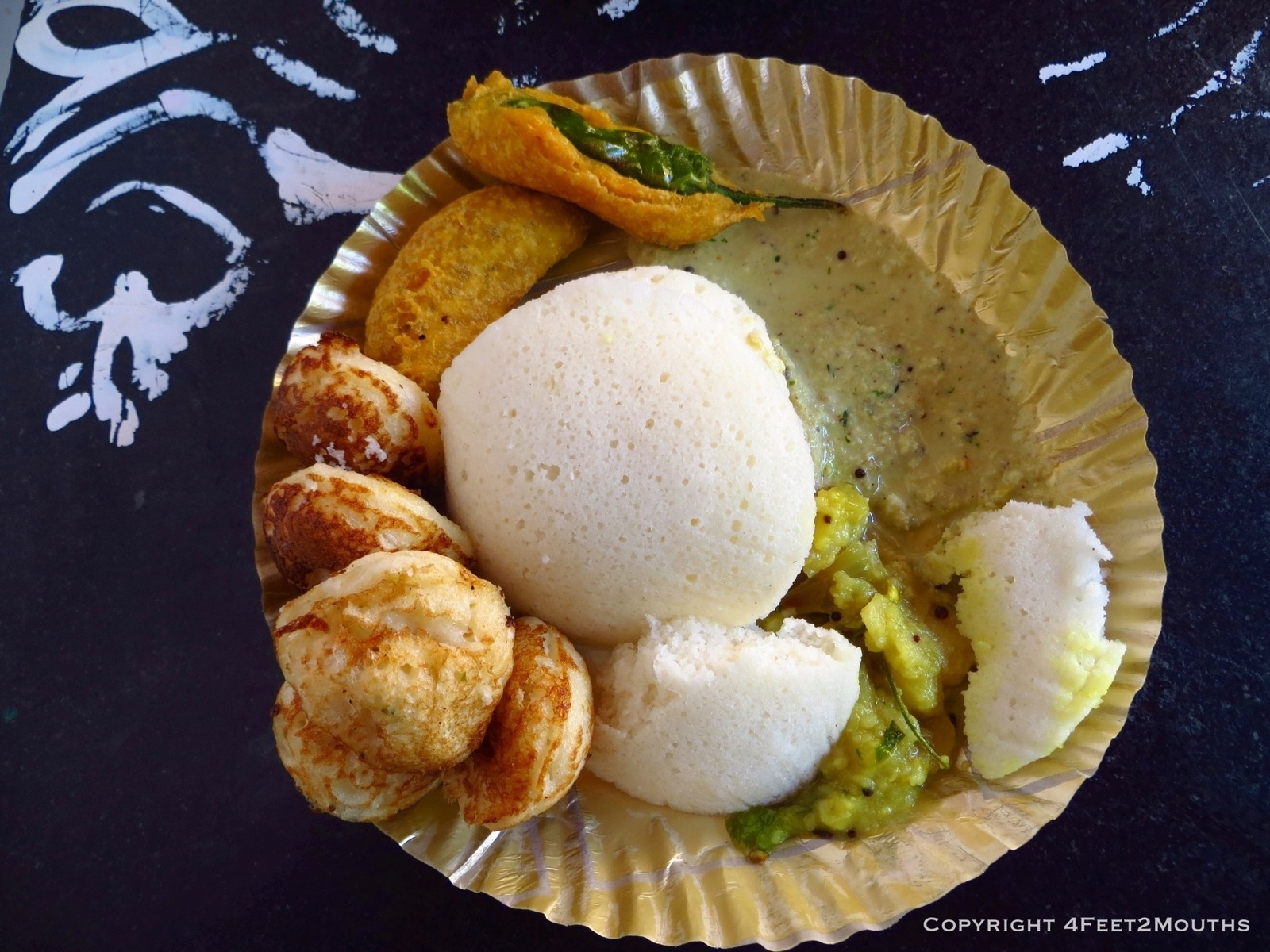
In the morning we ate some of the best food so far in India. We ordered two plates filled with idli (rice flour cakes), fried green chiles and gundpangala (rice porridge ebleskivers) served with coconut chutney and sambar. The dumplings we firm and moist with perfect little pores to soak up the rich sauces. We stepped away from the cozy outdoor shack; we washed our hands from the adjacent spigot and began our trek along the old Hampi bazaar. These buildings are centuries old, but through use as a modern bazaar it became a bit dilapidated. The colors were vibrant on either side of the road providing a rainbow-like entry to the temples.

Carmen and Achyutaraya Temple ruins

Sule Bazaar with goats

Various ruined hallways of Hampi bazaars

Our first sacred sight was enormous monolithic bull (Nandi) carved from the hillside. We clambered up some rocky steps to another small temple. We leaned towards the gate to view the statute inside when a small bony woman jumped out and dotted our heads with a bright pink fingerprint. We gave her some rupees that immediately caused a scowl to her face (we don’t know the going rate for these things). We hurried off trying to dodge the bad karma insults. The Achyutaraya Temple sits in a small valley that was nearly tourist free. We explored the temple, several gates and auxiliary buildings that led to a vast grass filled plaza. We weave our way through the herd of goats that had taken over the Sule Bazaar. Both sides of the plaza were lined with simple stone buildings that once served as a great shopping center.

Reflection pool near Sule Bazaar

Vittala Temple

Stone chariot of Vittala Temple

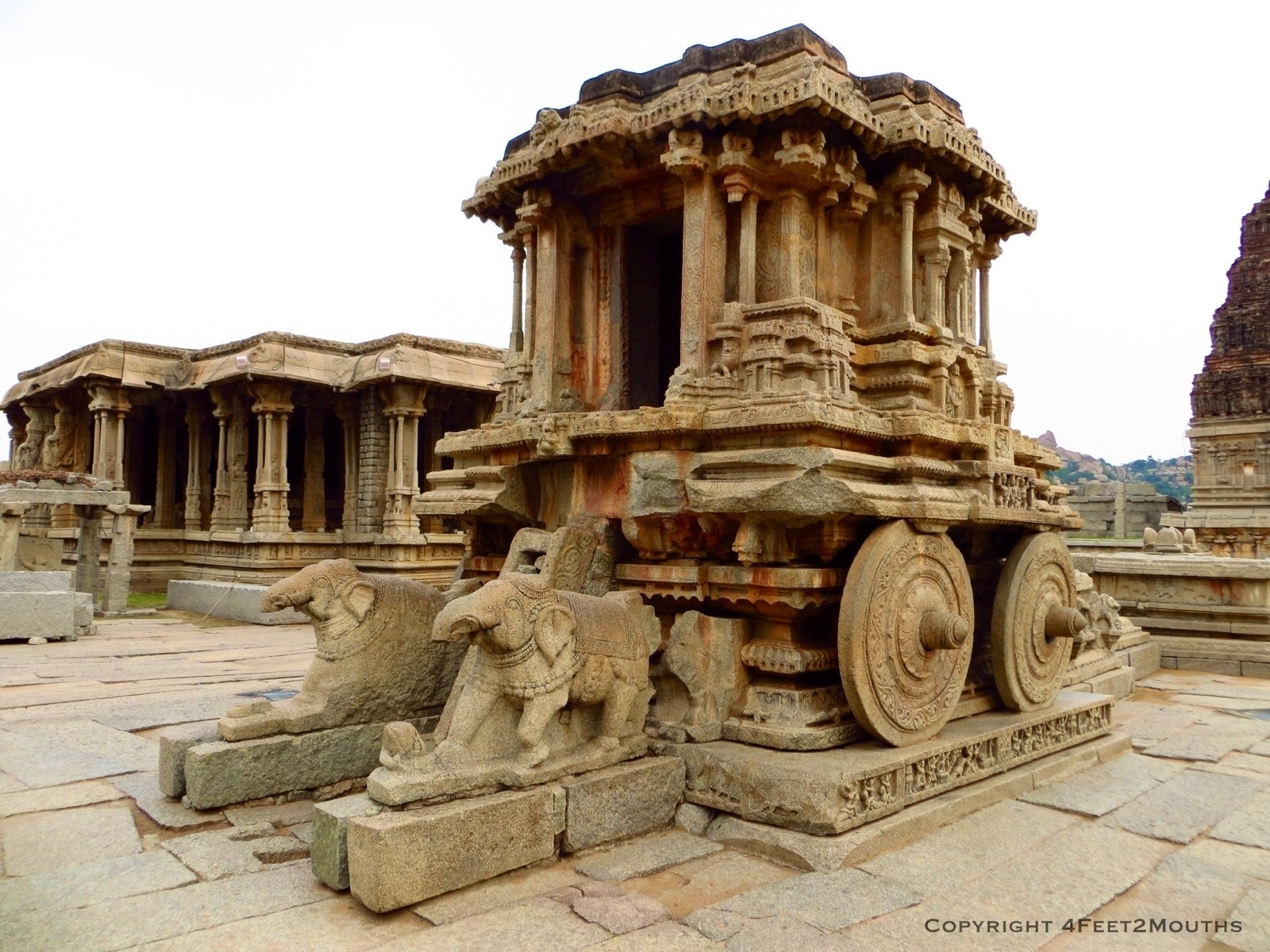
Next to the bazaar was a beautiful reservoir that provided great reflections of the ruins. The heat was excruciating, but the water looked a little to slimy even for me to swim. Sweating in the midday heat we arrived at the Vittala temple. This temple is about 3km from Hampi with amazing carvings and engravings nestled into every surface. The building columns were beautiful single pieces of marble that elegantly tapered and separated into four filigree posts. Outside the temple is a stone chariot that supposedly was operational at one time. We walked along the river and found some boys operating a sugarcane press, a perfect spot for a refreshing drink.

Elephant carving on side of temple

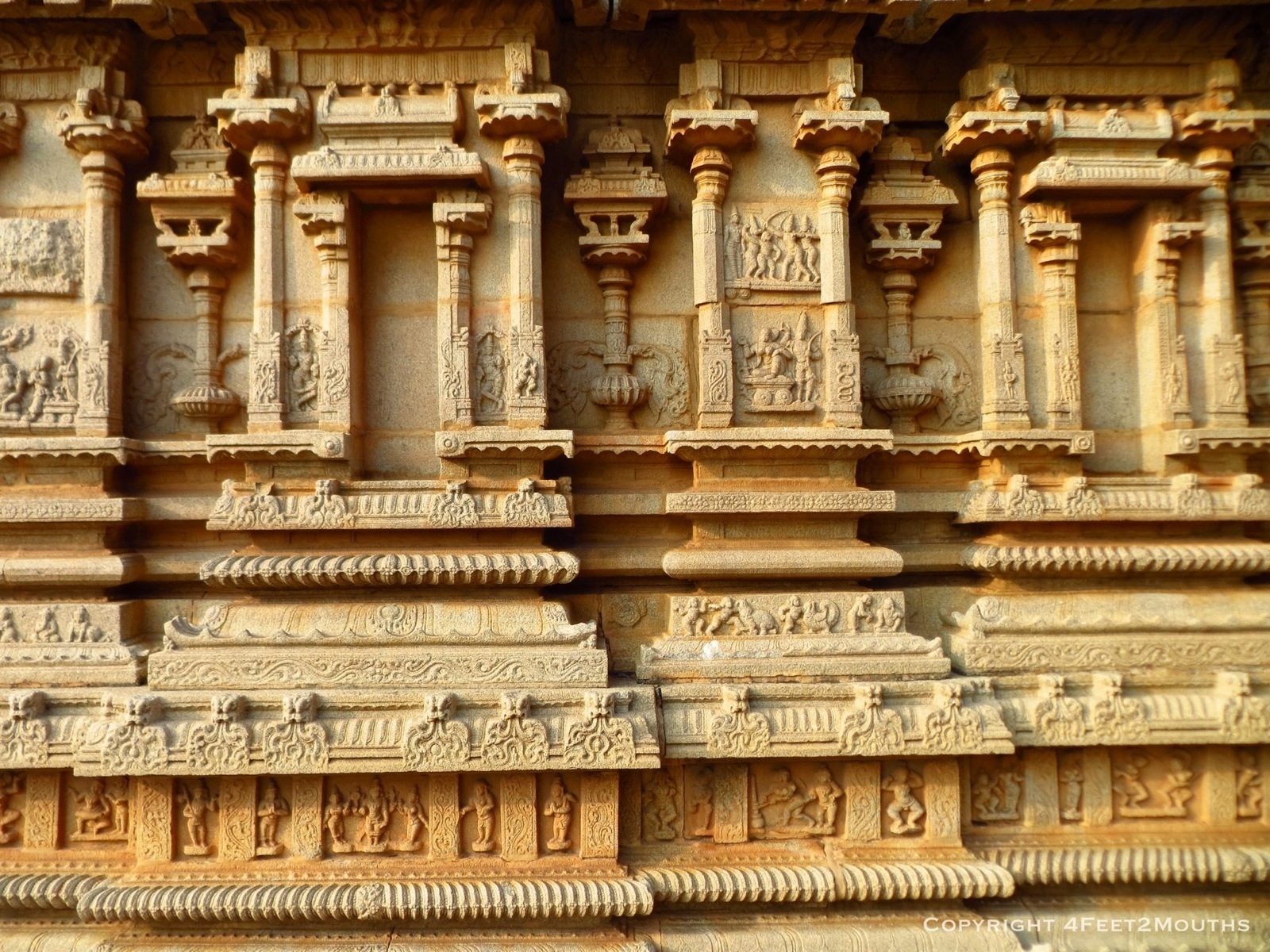
Ornate wall of Hazararama Temple

Park map of Hampi Ruins

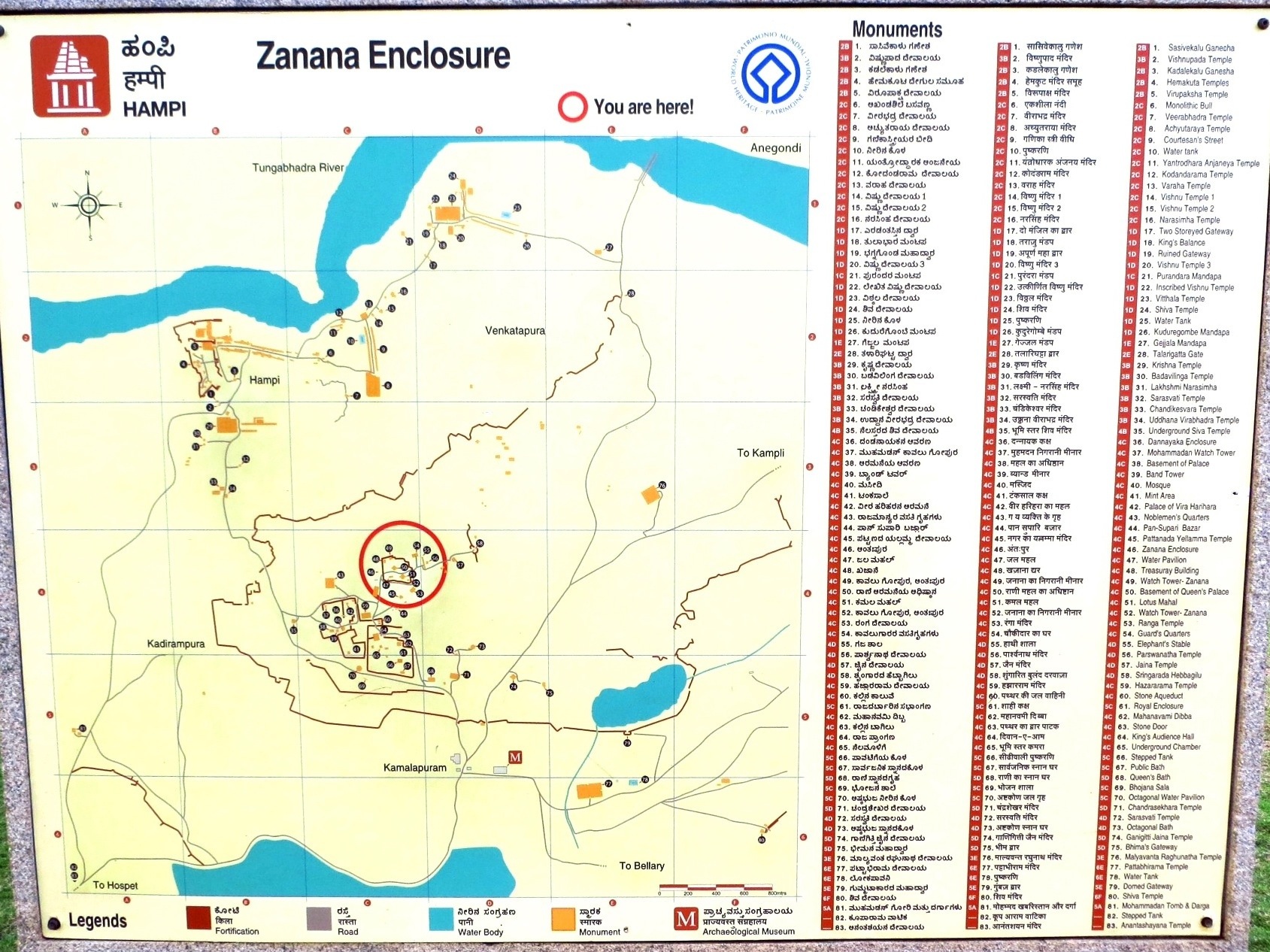
We continued to be awestruck by the glamorous carvings throughout each set of ruins. There were elephants, monkey gods (who supposedly originated in Hampi) and thousands of stories to document their religious history. The ruins in Hampi are exquisite, but they are spread throughout a large area. We walked most of it, but if you are going to Hampi print this map because it will be the best guide you will have.

The Queen’s Bath

Colorful cow

Hazararama Temple

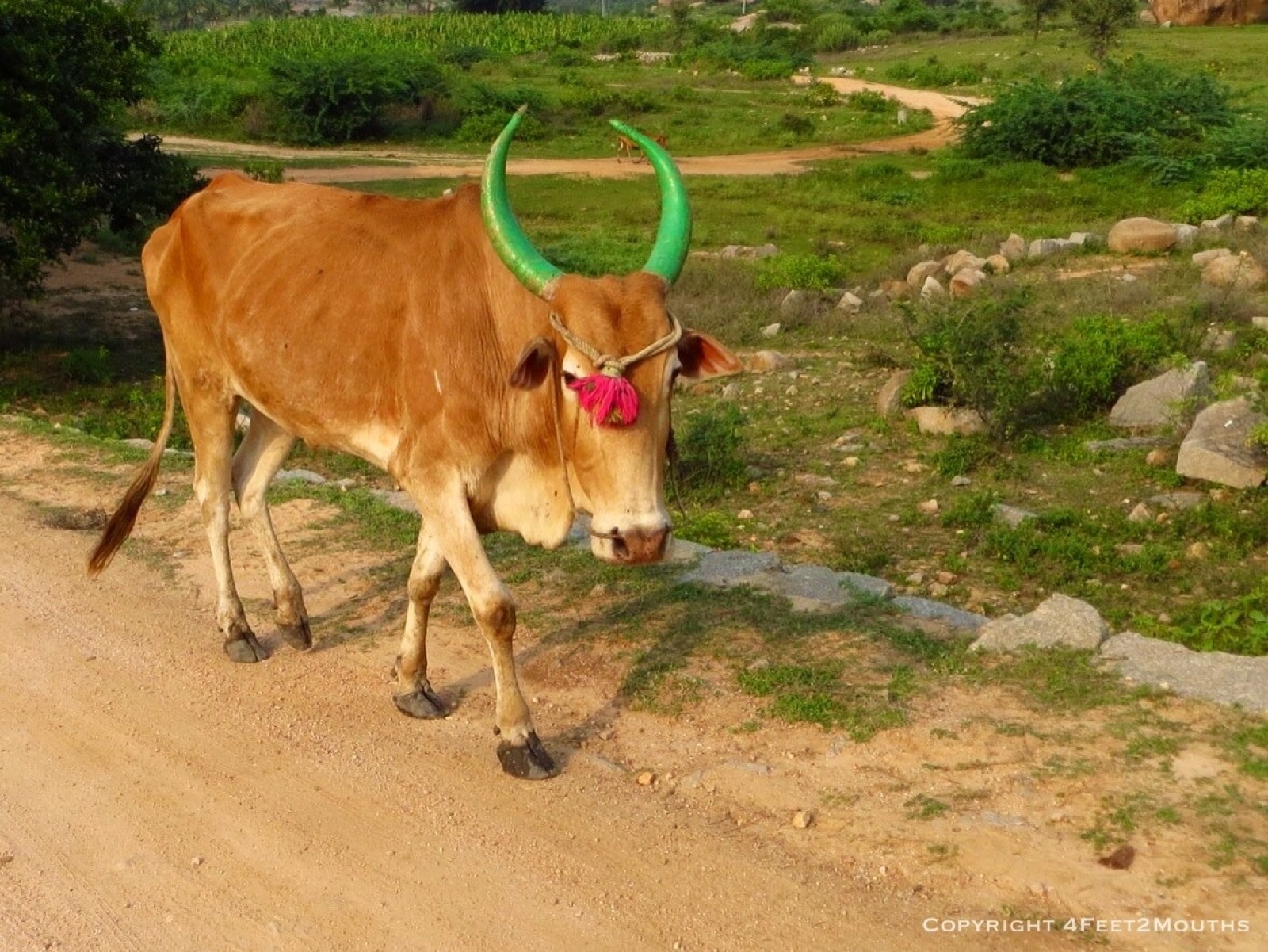
The walk to the historic Royal Center turned out to be longer than expected. We expected to find a trail to the south of Achyutaraya temple. We walked through the mud and grass until the dead silence of the banana plantation informed us that we probably should not be there. We backtracked, and spotted a temple in the distance. Carmen jumped on my back and together we made it through a bog, then a carefully laid out steps of rocks to hop and in no time we found the Krishna Temple. With a landmark we could then make our way on the road to our real destination. The Royal Center was basically the Forbidden City or (Topkapi Palace) of Hampi – an enormous complex of buildings, servants and concubines for the emperor. We first visited the Queen’s Bath with elaborate lattice marches. Walking through the walled city we passed cows that were colorfully decorated from a recent festival. Further on we explored the Hazararama Temple then continued north to the jewels of the Hampi Ruins.

Lotus Mahal in Royal City

Lotus Mahal hall

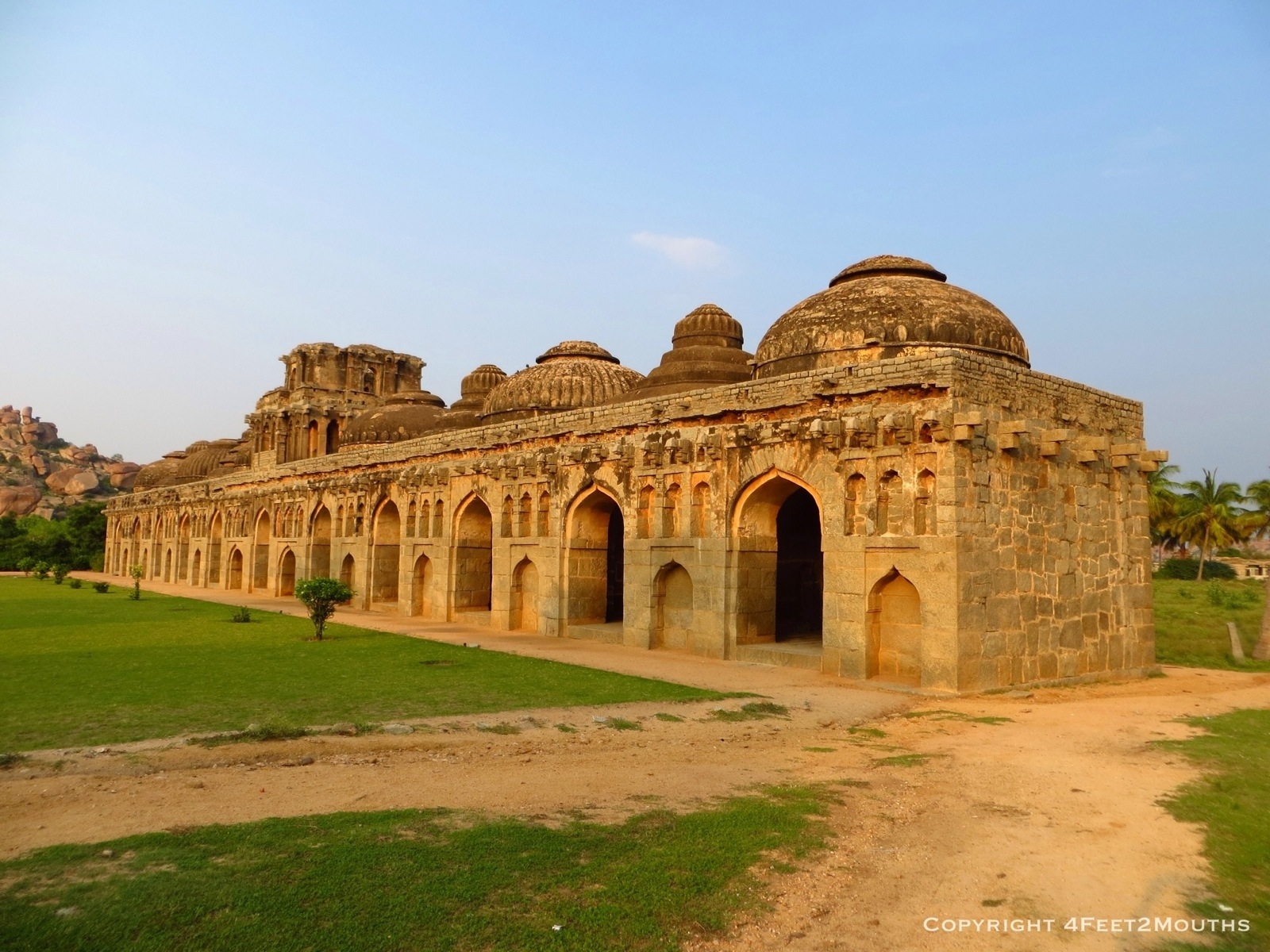
Elephant Stables of the Royal City

The Lotus Mahal is one of the more spectacular and fundamentally beautiful buildings that I have seen in a long time. It feels very natural and simple like the flower it mimics. The building glows with an elegance that would be valued in any modern building today, but this one is five centuries old. The Elephant Stables nearby are also grand with many repeating arches and domes. The empire that ruled in Hampi was grand, an now these buildings quietly bake away in the sun. It was very calming to wonder through the Royal Center imagining the city that once lived and the people that one walked and seeing these exact buildings.

Carmen and “an elephant pose”

We had a wonderful time in Hampi. It was an exhilarating and exhausting two night hop from Hubli. We were transferred into a whole other world of curved stone architecture, grand abandoned bazaars, and a small village. The people were nice, the animals cooperative even though a bit invasive, but the magic of the place and the scenery will remain with us forever. And those gundpangala…I will be dreaming about those for some time.

“Hampi is my house” water tank

The First Tourists of Hubli (by Carmen)

Women skillfully carrying their goods

Hubli is not a tourist destination by any standard.  But we found ourselves there because of our dear friend Anu, who lives and works in this million person city.  In truth, we are (probably) not the first tourists Hubli has ever seen.  Many travelers actually pass through since it is a major hub on India’s all important railway system.  However, it definitely has an authentic, untouched vibe to it.  Just as in American small cities, Hubli was slower, cleaner and more easygoing than its big city brethren.

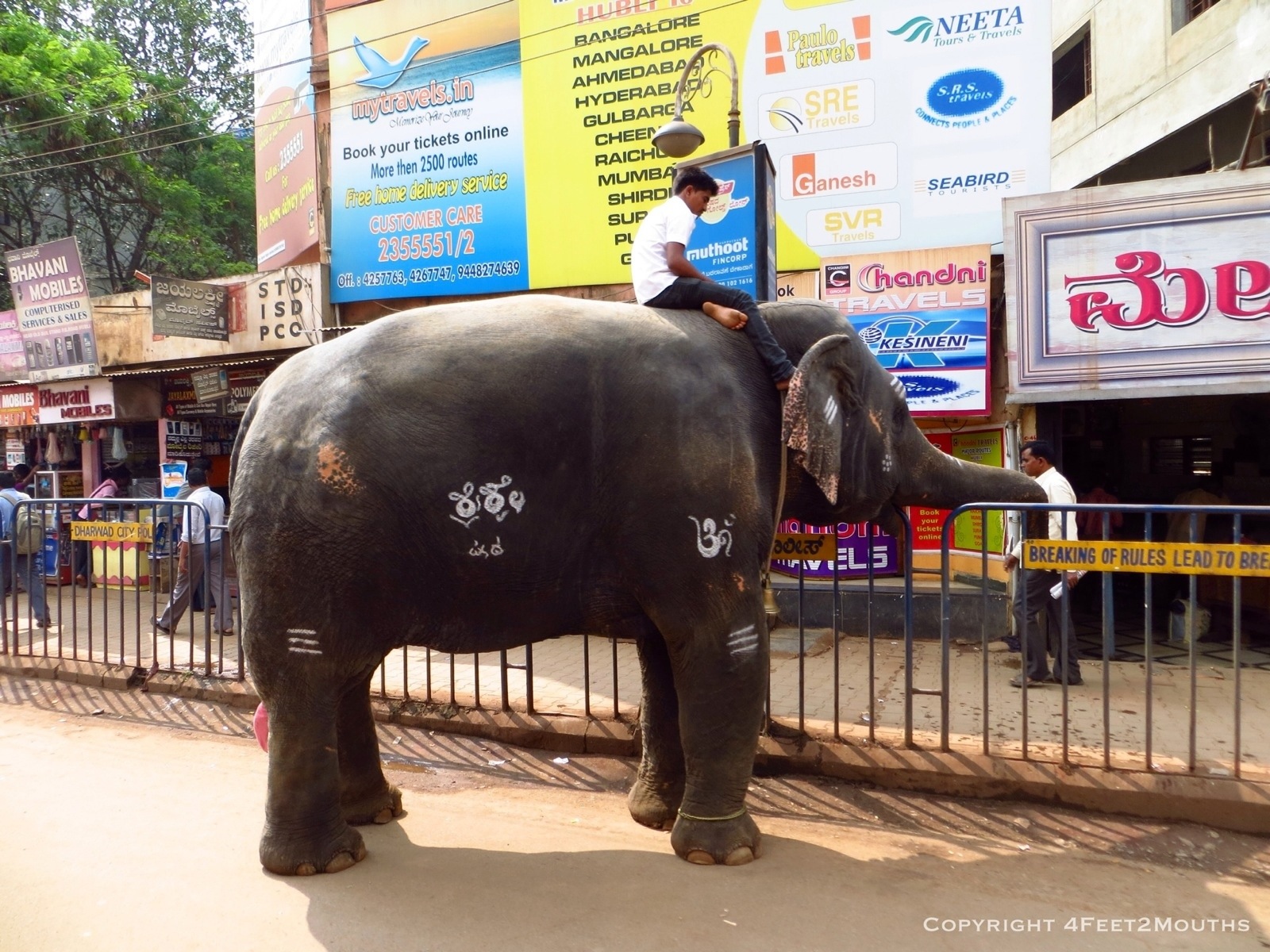
Elephant blessings on offer 

But this is still India, so nothing is ever truly easygoing.  On our first day Anu took us to a delicious all you can eat restaurant in downtown. This involved haggling with a rickshaw, taking a fast paced ride, ducking through a hole in the fence separating the sidewalk from the street, admiring the elephant that will bless you (i.e. touch the top of your head with its trunk) if you pay it, going up some stairs past a few street kids, and being gawked at as we eat our meal with our hands, even the rice.  Not exactly a walk in the park but these are the types of things I’m sure you get used to after a month or two in India.

Main market in Hubli

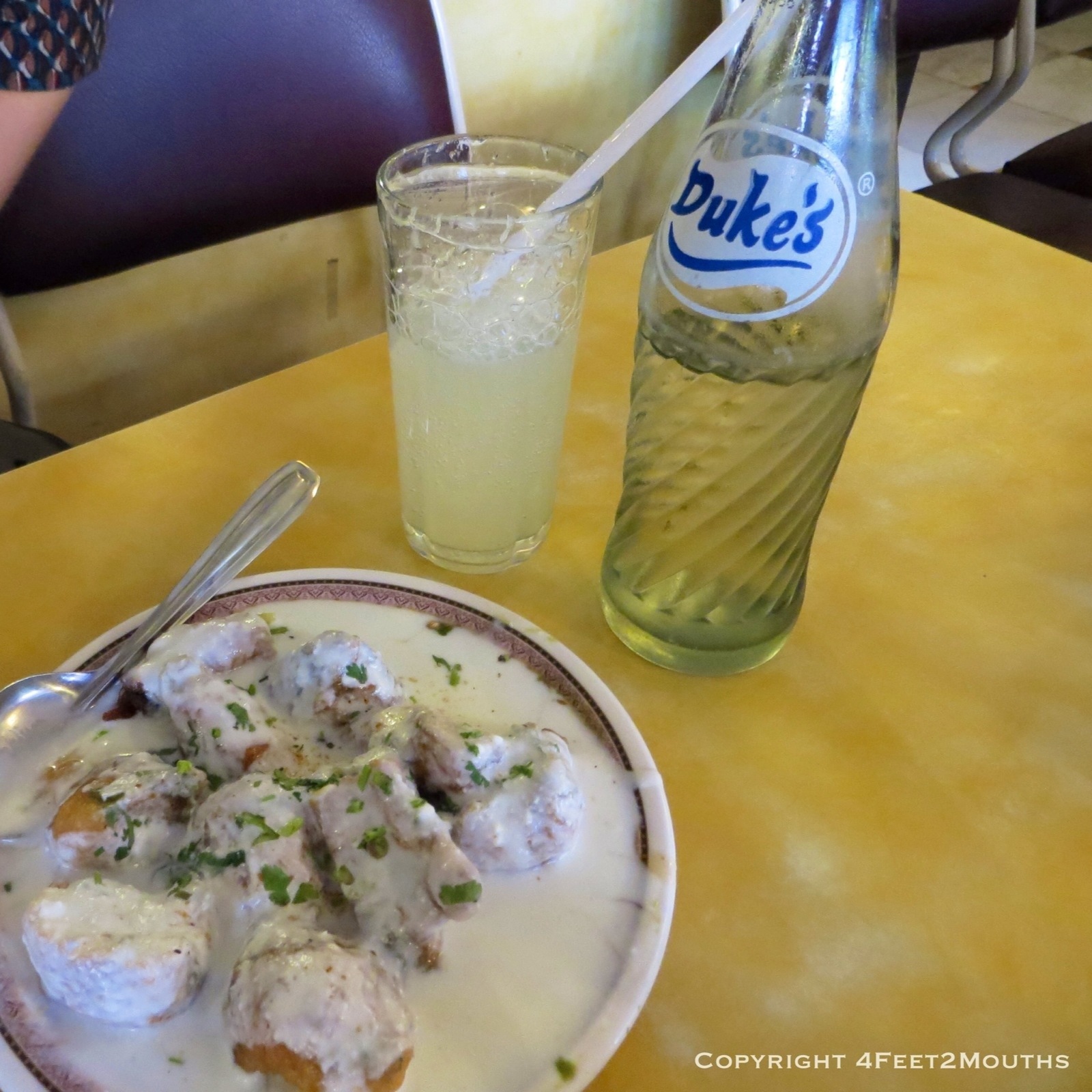
We walked off our large lunch in the local market.  Betel leaves, garlic, and watermelon snacks are piled high next to bangles, scarves and books.  When the heat got to us we stopped at a cold drink stand for some lime soda.  This ubiquitous drink is a simple mix of lime juice, soda water and either sugar or salt.  I’m liking the salty flavor which I find wonderfully refreshing.

Farmers market

Breakfast mix

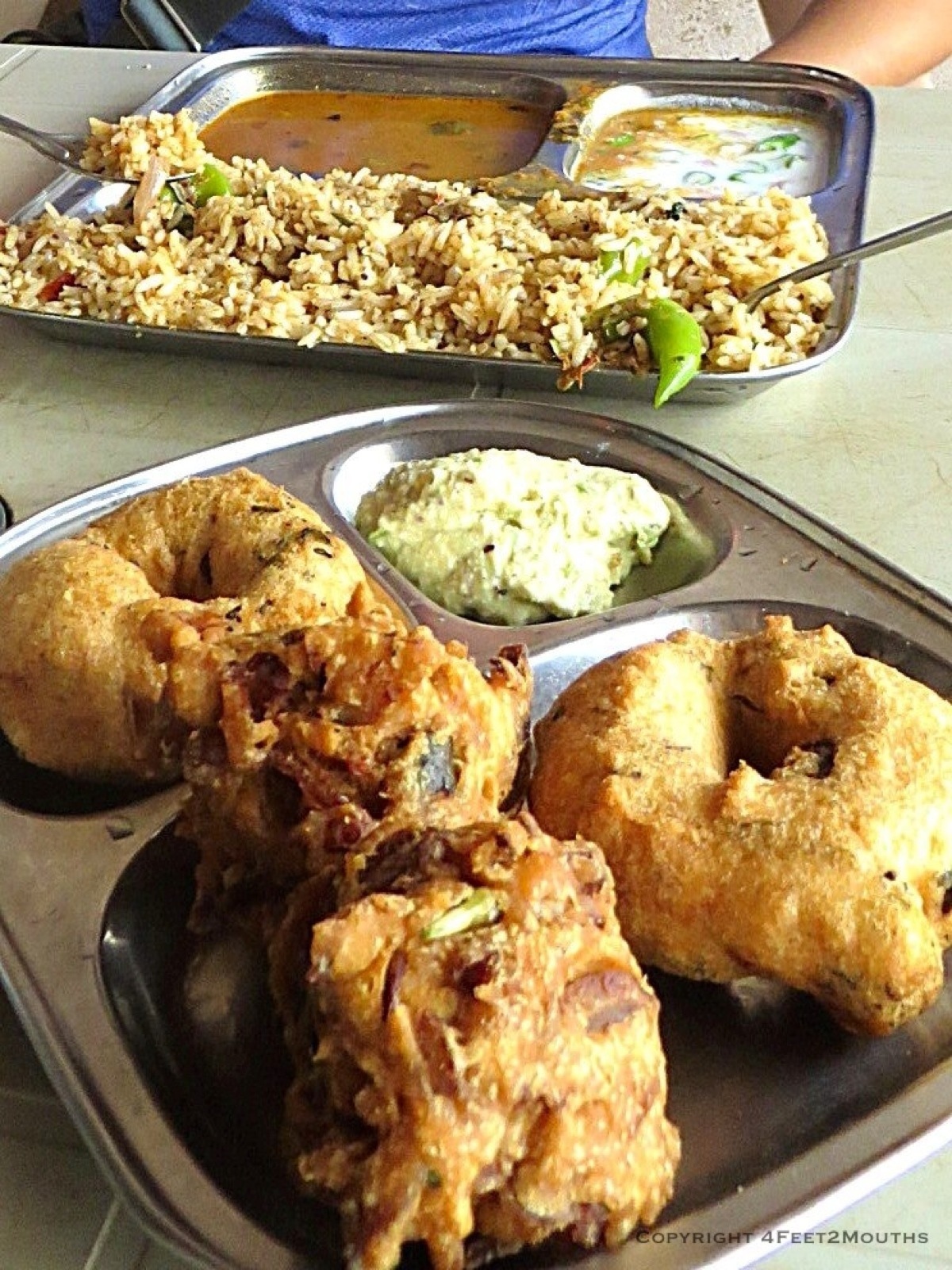
We stayed in a suburb of Hubli and happened to be there for the farmers market.  Again more luscious produce – green beans, cucumber, eggplant and more. It inspired us to cook but that is a difficult choice when all the restaurants are also so enticing. For example, we had to stop by a small hole in the wall for some breakfast rice and onion pakora (fried batter mixed with onion).

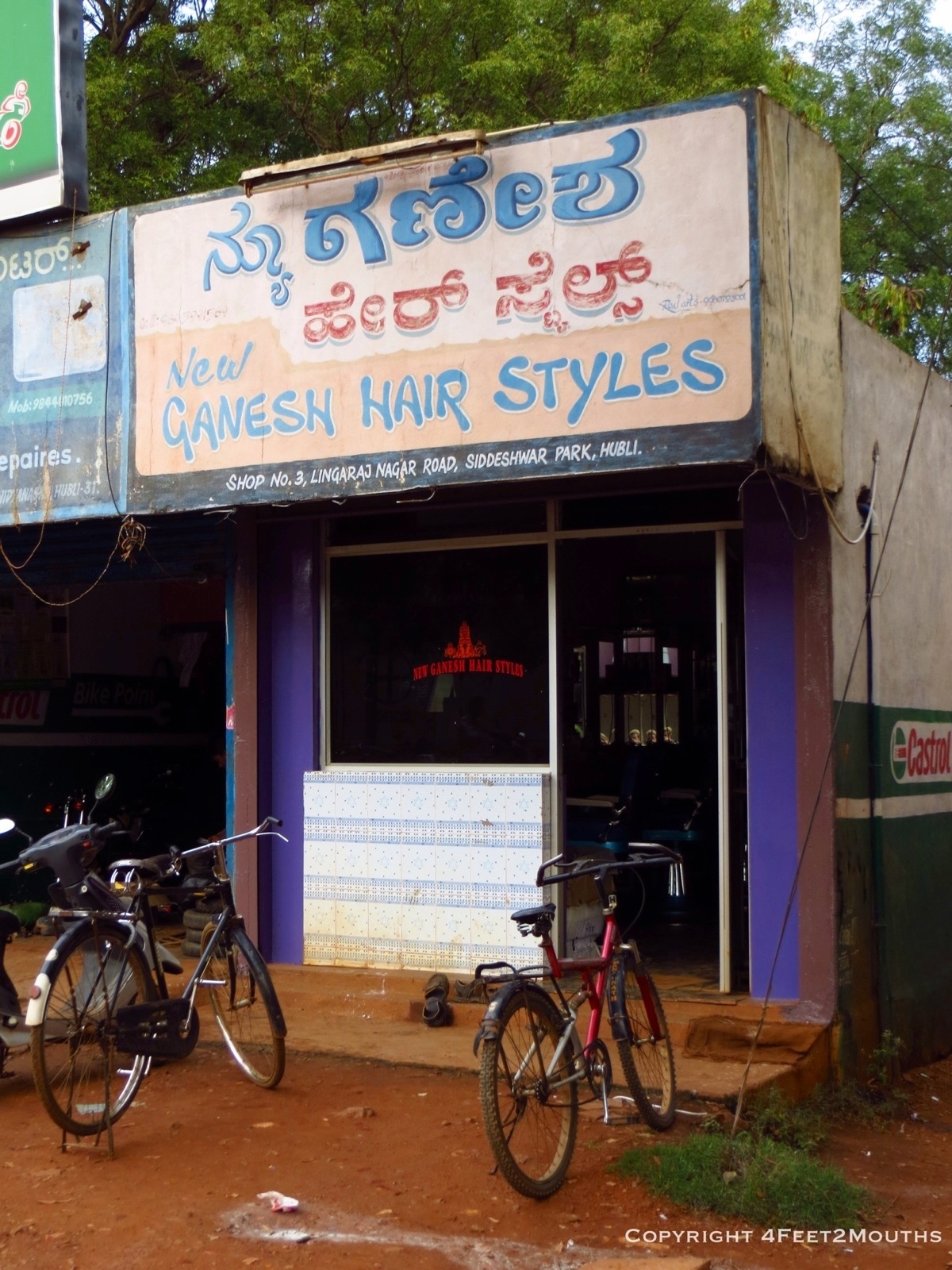
Nathan’s stylist 

In a place where there is not much to do it is a good idea to catch up on errands. Like haircuts, which are always exciting in foreign countries.  Nathan braved Ganesh Hair Styles to get a much needed crop and shave. Fortunately, a lot of hand gestures were successful in getting Nathan the right cut.

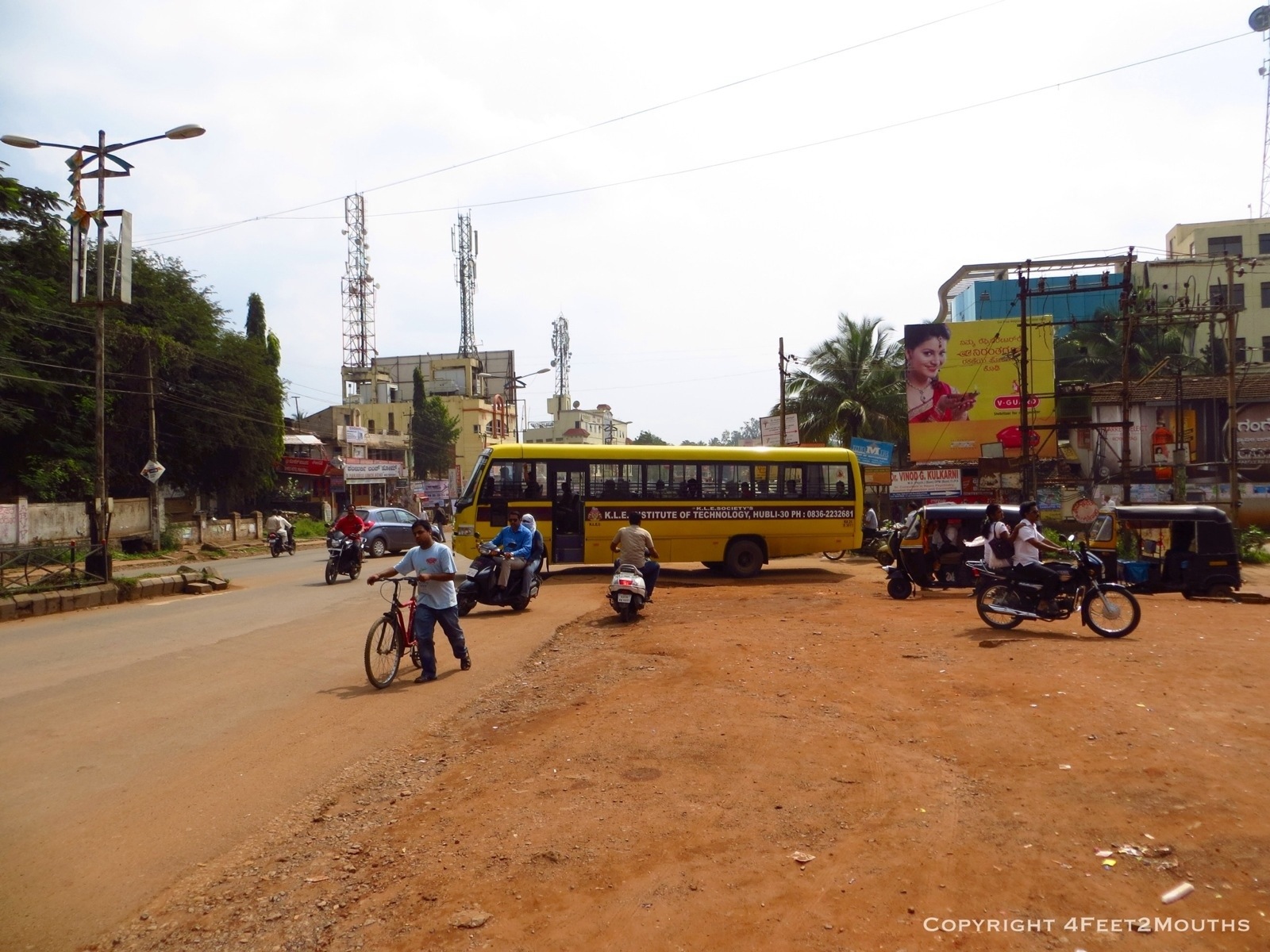
Typical Hubli street

Overall this little corner of Hubli was a typical Indian neighborhood –  some paved roads, some dirt roads, modern buildings as well as lean to shacks, electricity out every night at 7:30, uncertainty on when and for how long the water supply will last.  These infrastructure deficiencies highlight what many westerners take for granted.  It is the last point, water, that most interests our friend Anu. Her company, NextDrop, works with water supply companies to determine when the water will arrive in a certain area.  Then the affected residents are texted about the water’s arrival.  It is a simple idea that takes the guesswork out of water supply schedules.  Not that we are biased or anything but Anu is an awesome CEO and is greatly improving the lives of thousands of residents of Hubli!

Kashmiri naan

Hotel restaurant with awesome paneer tikka

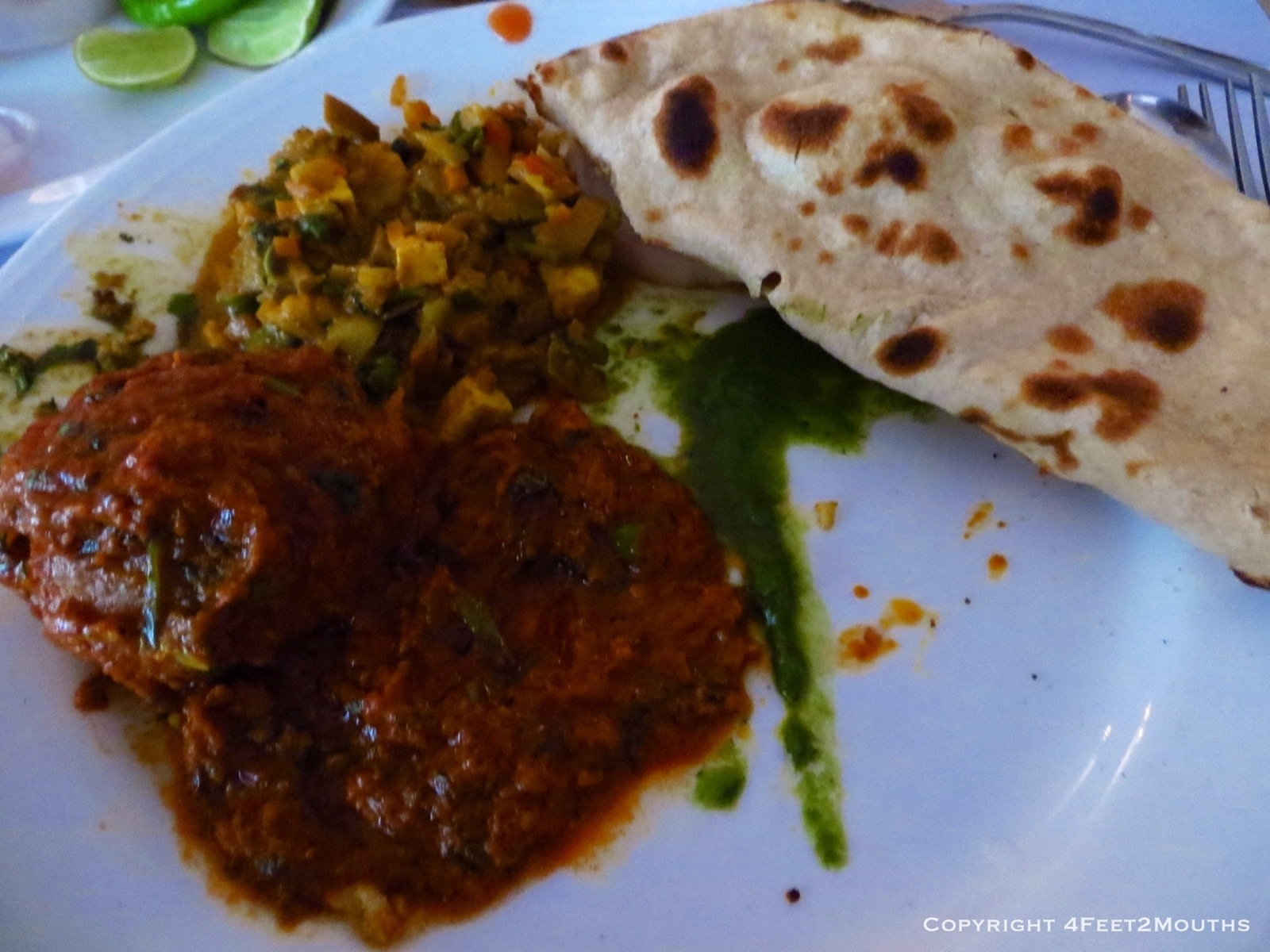
Anu is passionate about water issues but she is also passionate about her friends.  Therefore, she made time to ensure that Nathan and I were well fed.  For example we sampled spectacular paneer tikka, a type of spiced roasted cheese, at the hotel restaurant near her office.  We also gushed over sweet and savory Kashmiri naan at the north Indian restaurant, Al Medina.  This consisted of bread stuffed with raisins and coconut but also herbs and sesame seeds. The simple student eatery with a bunch of plastic chairs squeezed into a big room for all you can eat for $0.60 was also cool. In short, Hubli was Hubli-cious.

Mishra Pedha

Before we left, Nathan and I also had to try pedha, a local sweet that is reminiscent of cookie dough but with Indian flavors such as cardamom. We picked some up at Mishra Pedha which is literally on every corner in central Hubli!

Train ride to Hampi

More train ride to Hampi 

Hubli was a perfectly enjoyable city to spend time in.  It was made even better by 7 Beans, the hip cafe with free wifi.  But Nathan and I couldn’t resist the temptation of a side trip to a very historic and magical place.  We got out of Anu’s hair for a few days and hopped the eastbound train for Hampi.

Rickshaw Roller Coaster In Bangalore (by Nathan)

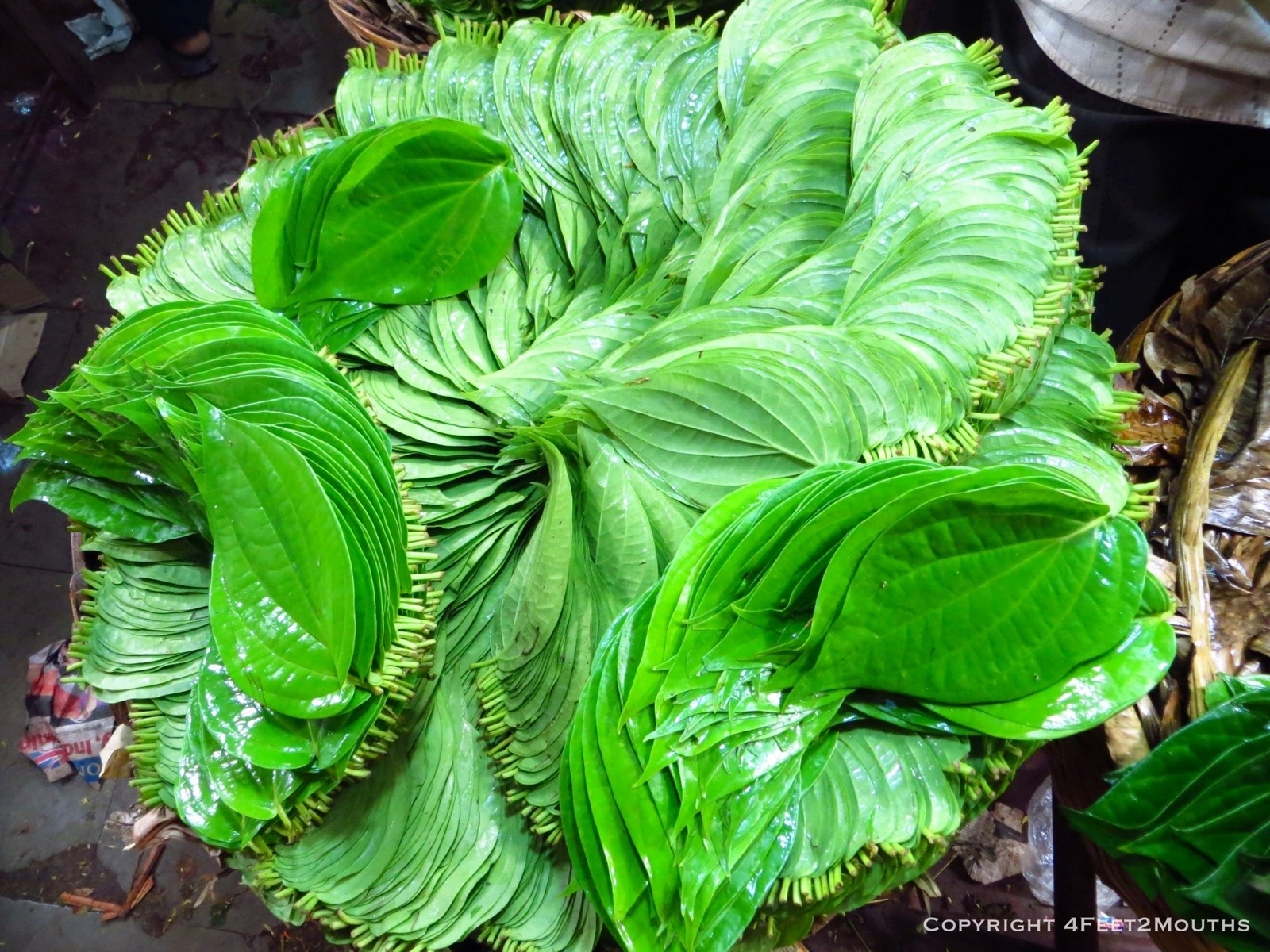
Betel leaves in spiral at the city market

Visiting India for the first time is a thrilling experience. It is also a little nerve racking. For the first time this year, Carmen and I were both anxious and maybe a little scared at what we might find in this part of the trip. We were out of our comfort zone, but it felt good. There are all the horror stories of poverty, filth and food poisoning, but also the positive moments of spiritual discovery, extravagant palaces and fantastic food. Experiencing the spices alone are enough to draw us to India. We arrived at 4am from a red-eye flight. We both felt a little comatose and we agreed to pick up a few hours sleep in the airport before heading out into the craziness.

Carmen and the sidewalk cow obstacle

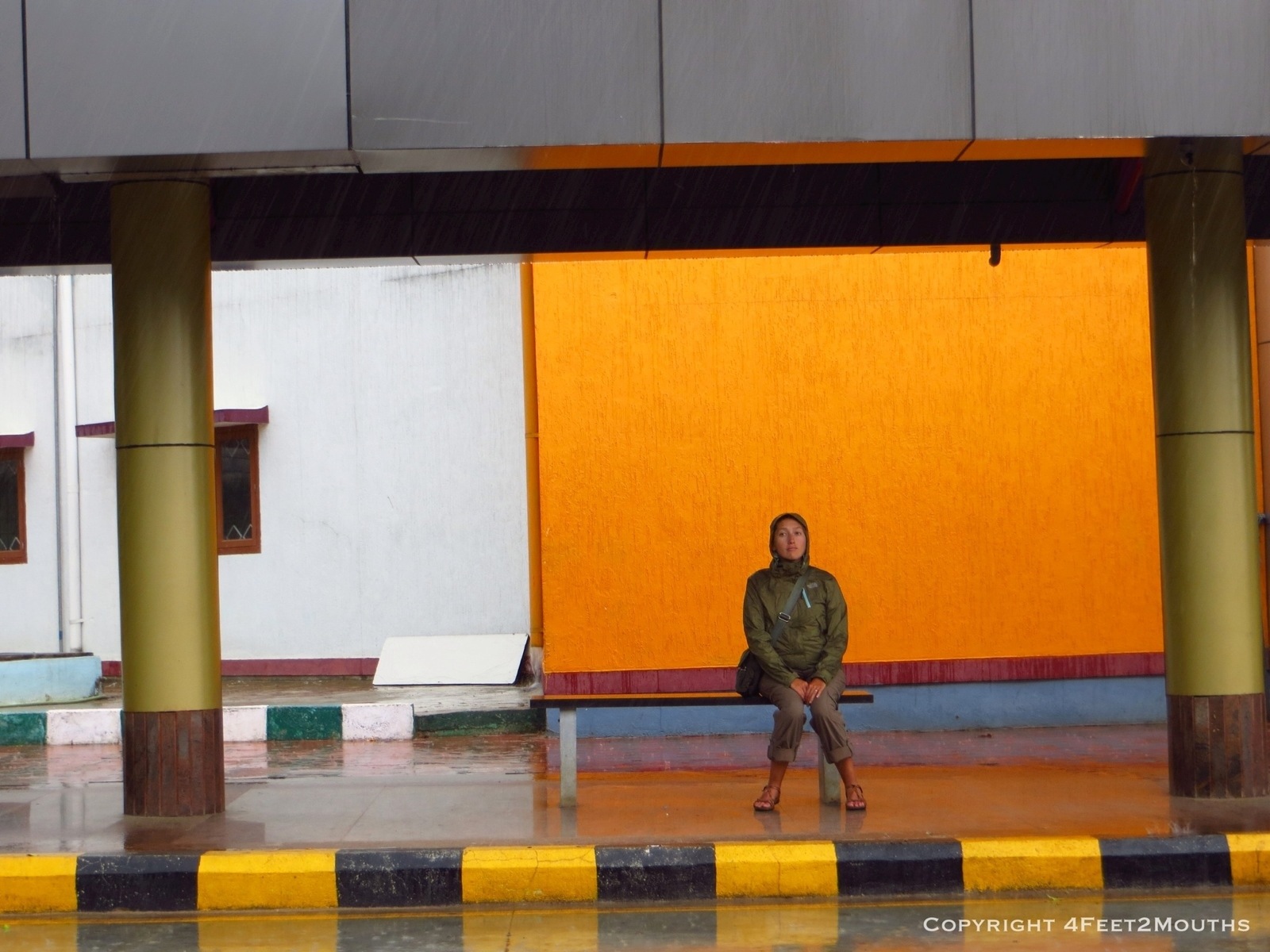
We learned very quickly in Bangalore that we needed to slow down and ease into the environment. A typical day in our travels is pretty exhausting; we tackle museums, parks and monuments while also attempting to eat at the best budget restaurants in a city. This usually involves many hours (8-10mi) of walking and public bus rides all around town. In Bangalore our standard mode of transport, our feet, became out-of-service. Even the most cosmopolitan of streets, MG Road or Church Street, do not have a consistent paved surface for more than 15 feet. Walking involves constant focus and diligence to ensure that a foot does not fall into an enormous hole or sludge puddle. The occasional cow, heard of cattle or pie mine is a constant reminder that we share the road with more than just people and motors. Crossing the street, we resemble two little squirrels inching our way into the road then running across with arms flailing about in panic “I’m about to die” mode.

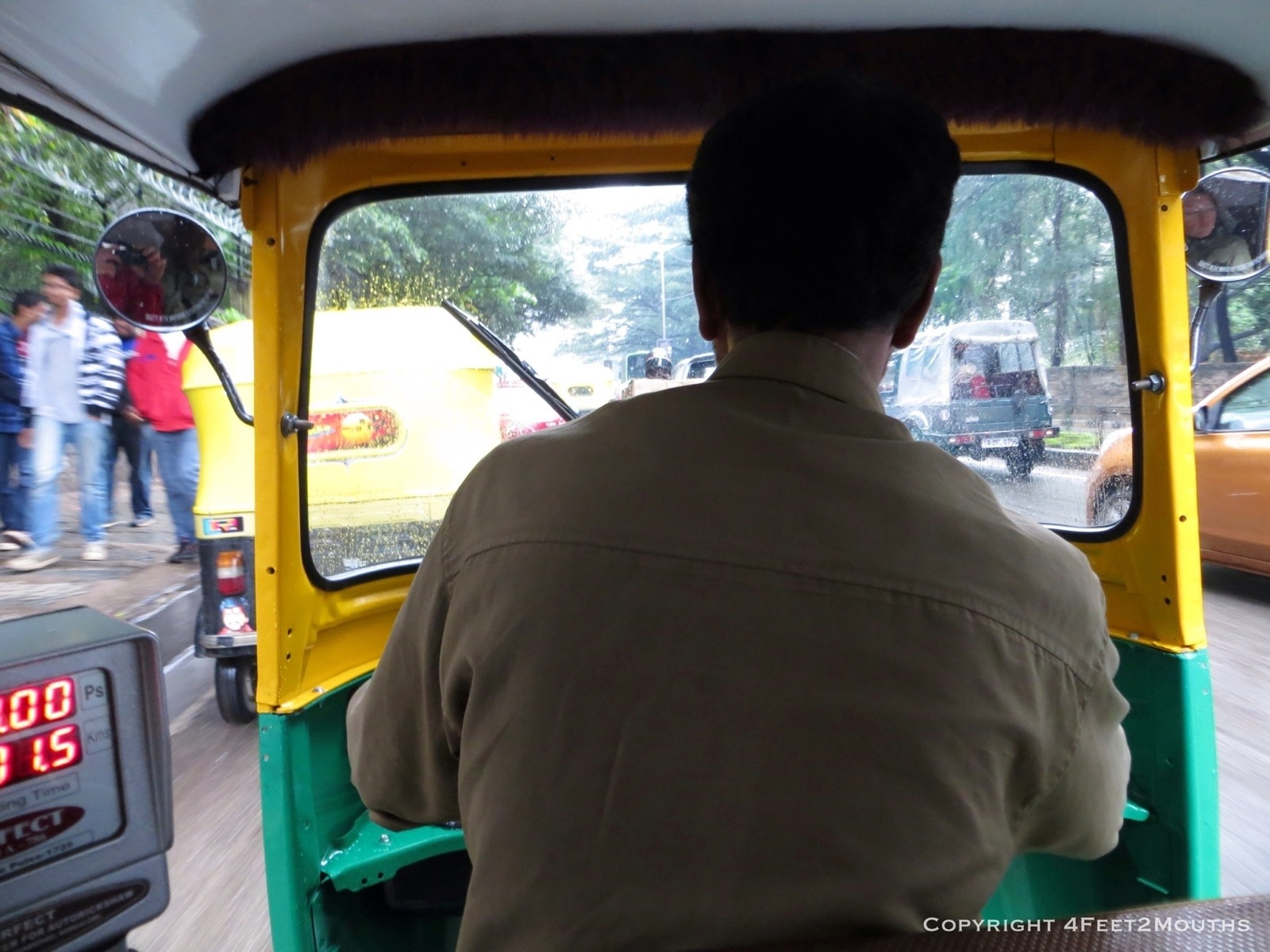
Rajesh and the Rickshaw Roller coaster

Thus, we have decided to join the masses and we frequently hop on the Rickshaw Roller Coaster. The three-wheeled carts are a cross between a motorcycle and a golf cart, painted green, yellow and black. During our first ride, I learned that the is no need to visit a theme park again, 80 cents delivers a 20 minute ride including all the death-defying events without a need to wait in line. If on-coming traffic is your thrill, this ride has it. Bangalore’s many speed bumps provide an opportunity for jumps, poor drainage and rain make splash mountain look puny. Any Rickshaw delivers several G-forces as the driver maneuvers the vehicle around busses, tractors and scooters. Then we screech to a stop. Hold on because there are no seat belts. Dizzying heights? Try all of the above on an overpass! To our benefit we did find a nice driver, Rajesh, that did not mind our screams and did not hit anyone while we were riding. He skillfully squeaked his tuktuk into the 4ft crevices between busses at 30mph.

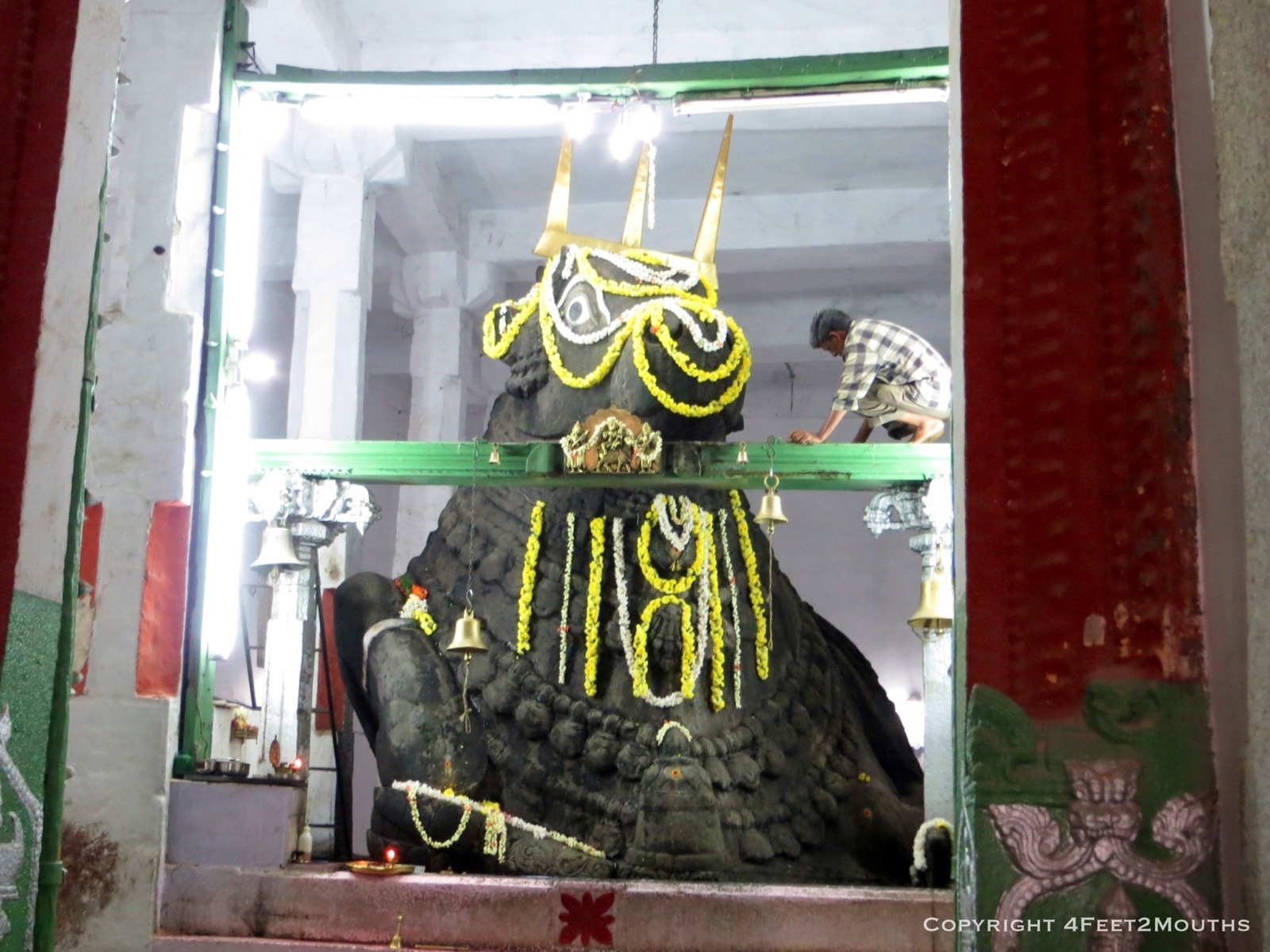
Bull Temple

Glass building at the botanical garden

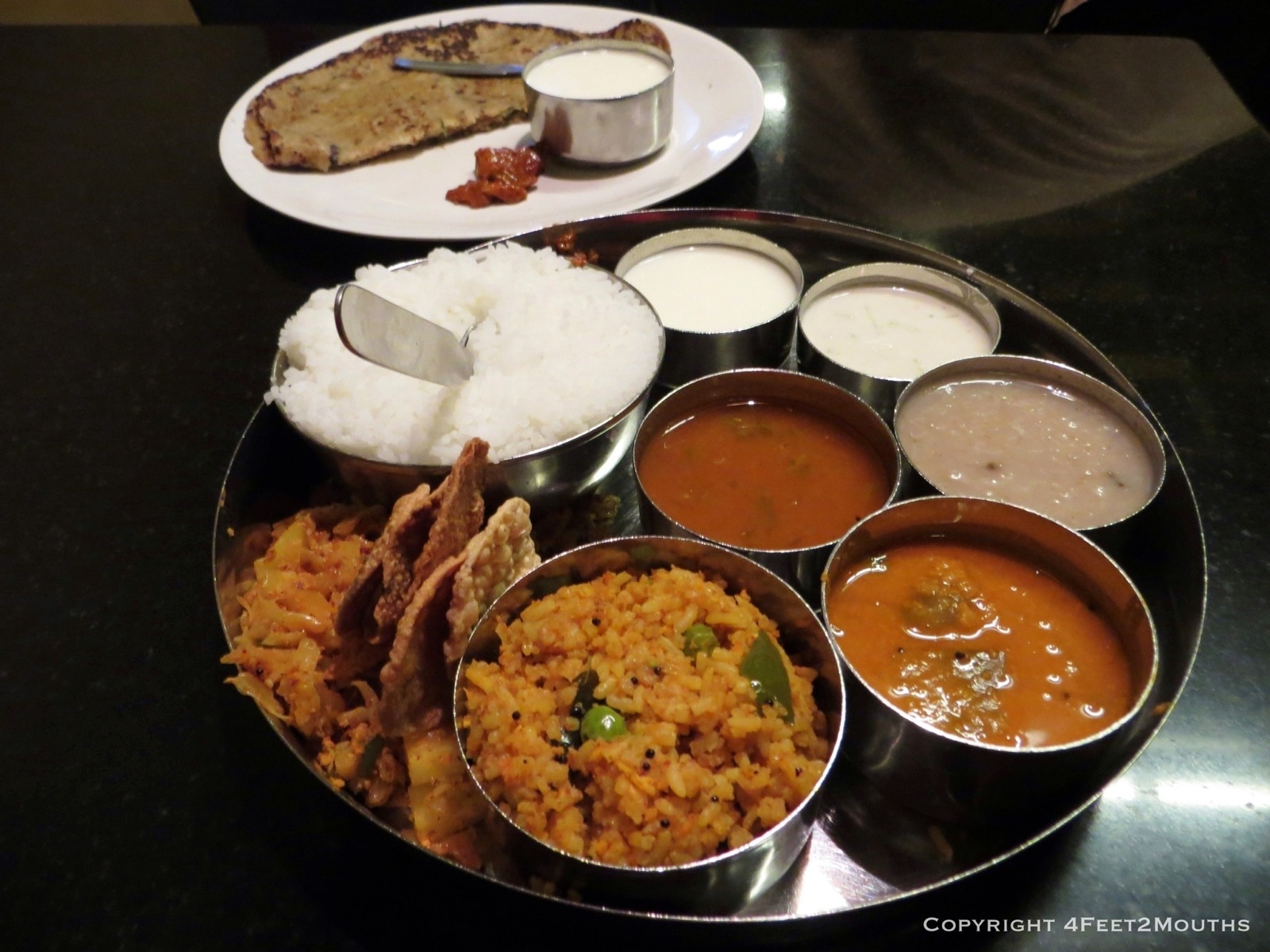
Mini meal at MTR

One of our most accomplished days was visiting the Hindu Bull Temple. This enormous carved bull is decorated with flowers and candles and symbolizes Shiva’s mount Nandi. A “mini meal” at Marvalli Tiffin Room (MTR) excited our taste buds and was no small affair – it was actually quite a bit of food. We walked west to explore the Lal Bagh Botanical Garden. There were bonsai gardens ponds and an enormous glass house built to honor Britain in the 1800’s.

Chole Bhatura dinner

Breakfast of idli, poori and various rice pooridges

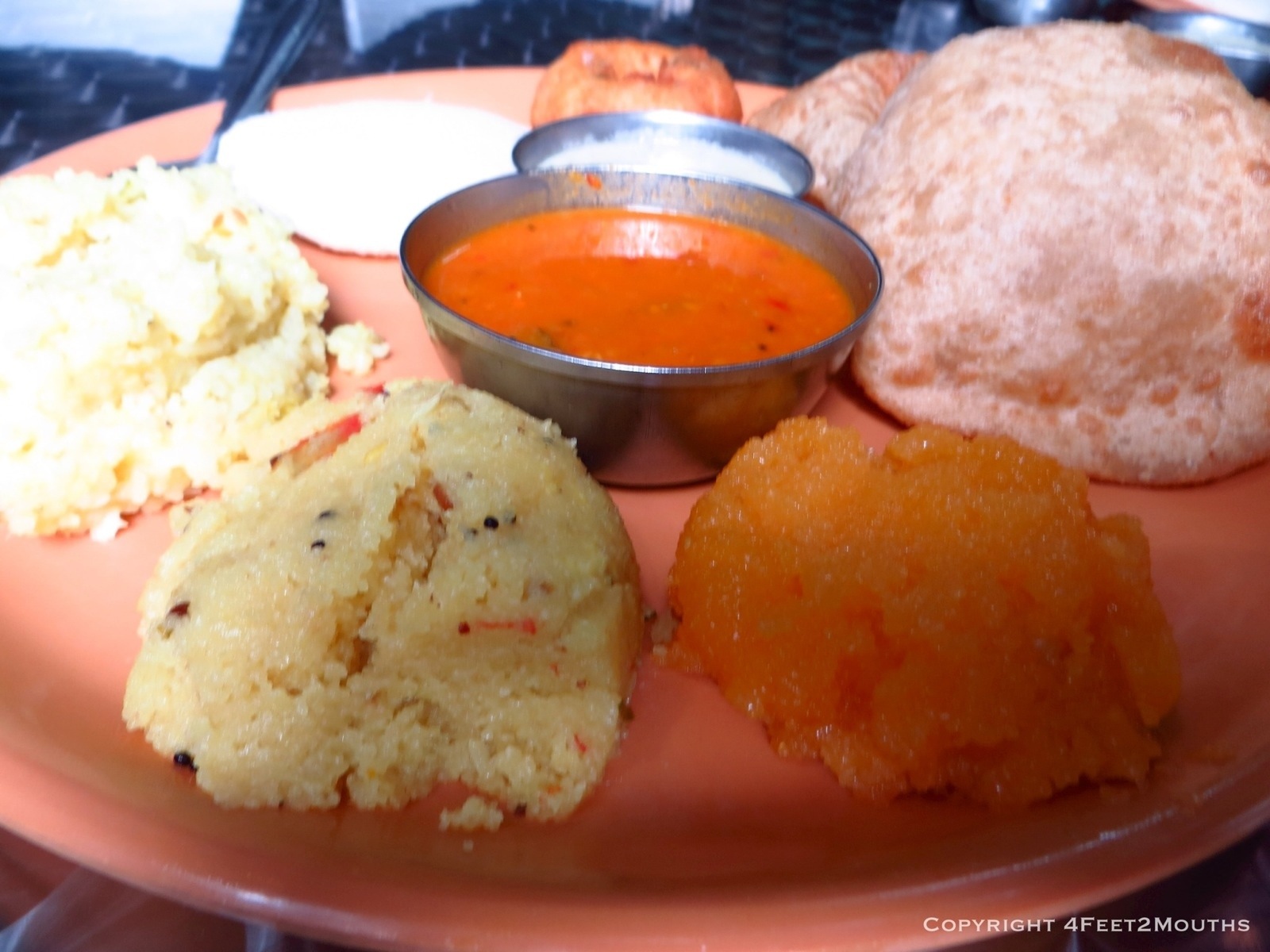
We could not resist ordering chole bhatura at a standing-only dive down the street from our hotel. The enormous puff ball was everything I remember from Vik’s in Berkeley, slightly doughy and crispy with a huge scoop of spicy chickpeas in a rich sauce. Eating in India is undoubtedly my favorite part so far. The flavors are intense and the chutneys, dal, and sauces seem to pair randomly with the foods, but I know there is some consistency. For breakfast we eat fluffy white idlies or dosas (Indian pancakes/crepes) that are paper thin and filled with potatoes, or thick and moist with diced onions or tomatoes and a delicious coconut chutney.

Colors and craziness of Bangalore’s city market

Temple carvings

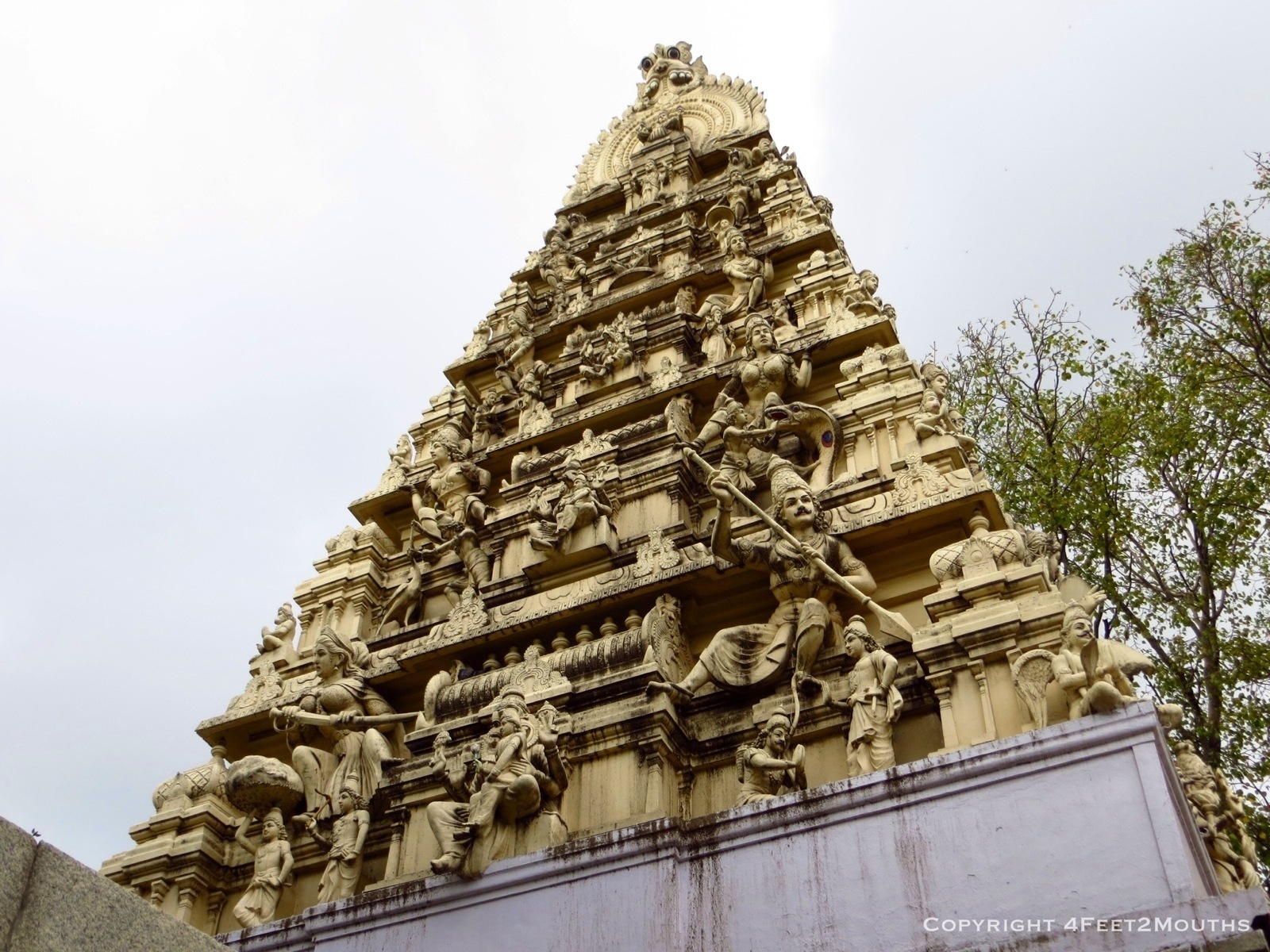
Exploring the foods of India is first explored with our appetites. Then we seek to see the source of the food, the markets that fuel the city. In Bangalore, we found ourselves in The City Market, an enormous collection of streetside vendors selling everything from tiny eggplants, pomegranates, betel leaves and nuts. There was even a building dedicated to the flower sellers that string together elaborate leis and signs for weddings and holidays. We traverse through the mud and work through the obstacles of the crowded market. Occasionally we’ll pass a simple temple and often we are entertained with an ornate and elaborate designed temple roof with thousands of carefully carved figurines.

Bengal tiger, croc, cobra and monkey at wild animal park

Young elephant

We bussed an hour outside of town to visit the wild animal park. Most of the animals are rescues, but the huge forests provide a way to protect and rehabilitate animals that were abused or without a natural habitat. Most impressive were the Bengal tigers, white tigers and Indian bears. Our safari ride bounced along the rocky road, and everyone screamed and jumped out of their seats when the 8ft long tiger noticed us and came at us for a closer look. There were cobras that effortlessly hung and slithered along the trees, crocodiles eyeing us from the ponds below and wild monkeys mischievously bouncing through the park. There were even adult and baby elephants that blessed tourists for a coin by tapping their trunk on the person’s head. The zoo was surprisingly a positive experience as the animals, for the most part, all seemed taken care of and happy. On our trip back, there was one thing on our mind…food.

Deliciousness at Kornak

Funny shaped gulab jumun

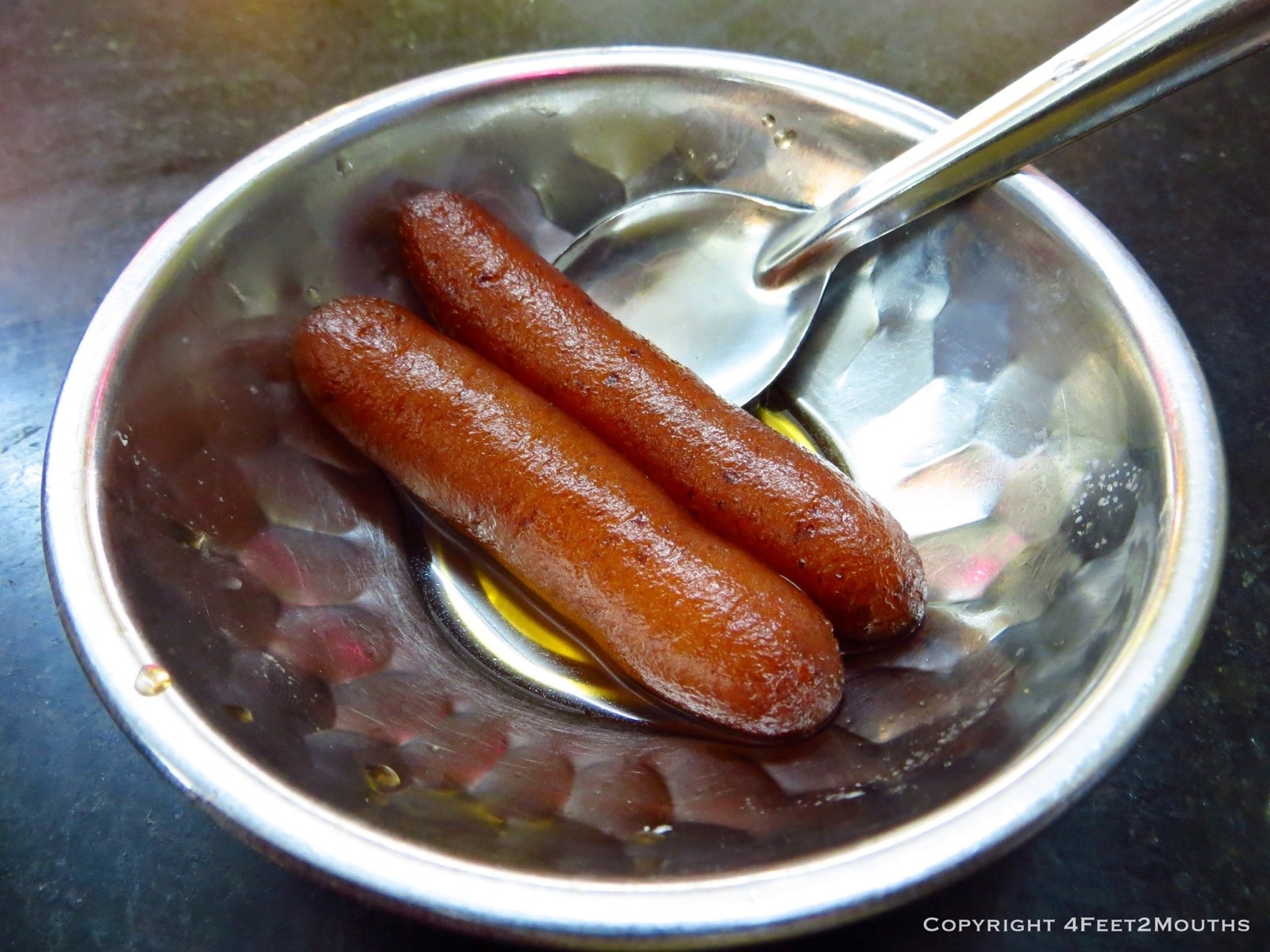
There are undoubtedly some good food places in Bangalore. We ate North Indian fare at Kornak and Queens. South Indian at street-side stands and cafes. Gulab Jamun is typically a donut ball that is soaked in a honey syrup, at Bhagatram & Sons. Their wiener shaped gulab jumun somehow made it better. We even had wonderful ice cream at Naturals. The mango and coconut ice cream is so good that our good friend and fellow blogger, Anu, might marry one of the servers. Which one? We could not decide.

Carmen waiting in the rain for the bus

Anu and I in Cubbon Park

The slower pace has worked well for us in Bangalore. We see less sights, but experience more of our surroundings. We pack our bags again, we say goodbye to Bangalore and board an overnight train to Hubli. Few tourists travel to Hubli, but our reasons were not sights, but more to visit a typical town in India, see more of our friend Anu and learn more about the incredible headway of her social water project NextDrop. With the click clack of steel wheel to rail and the rocking back and forth we crawled onto our three-tiered bunks and sunk into a light slumber. Only exciting adventures and spicy delights await us in India.

Eurasian Istanbul (by Carmen)

View from Galata Bridge

My first view of Istanbul was at dawn through the bleary eyes. We had just taken an overnight bus from central Turkey. Sometimes buses are overheated, sometimes they are freezing cold. This one happened to be both, with the heater on full blast at the feet and the air conditioning blowing from above. All night I wished I could perform some advanced yoga moves to help me find the perfect temperature balance. I imagine this would involve one foot sticking straight up while the other is crossed behind my head. I tried but alas I’m not that flexible.

İstiklal street with tram

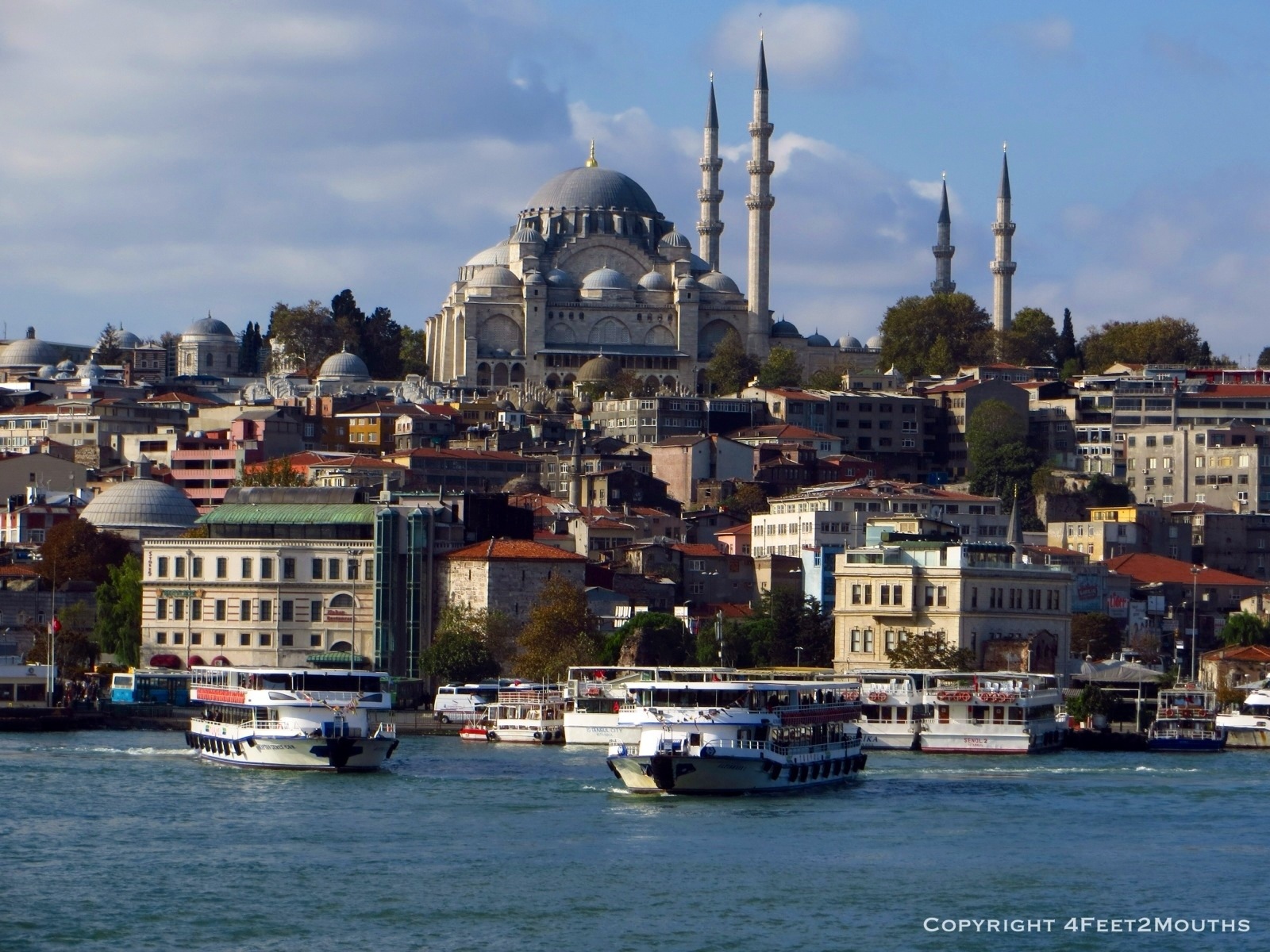
Upon arrival, the sights and sounds of the city were enough to give me a pick me up on the way to the hostel. I had been looking forward to Istanbul for a while so we wasted no time in getting to the old town. First stop: Hagia Sophia.

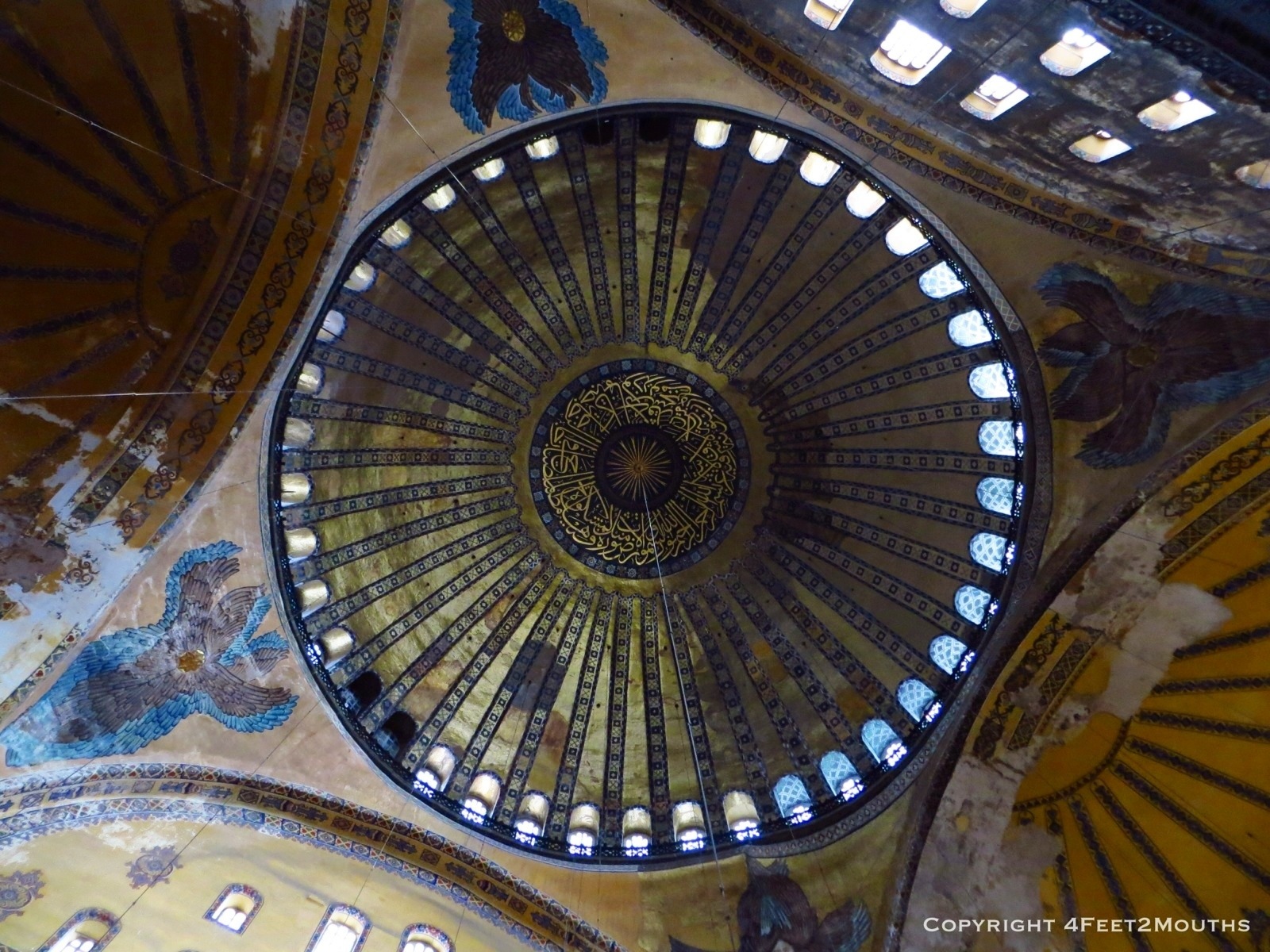
Hagia Sophia’s grand interior

The gold mosaic dome

View of Hagia Sophia from the side nave

The Hagia Sophia was one of the most magnificent buildings I have ever seen in my life. Stunning. Jaw dropping. And it was built in the 500s(!!!) by the Roman emperor Justinian. I am so happy that this incredible piece of architecture survived the past 1500 years intact. In order to do so it had to change with the times. For its first 1000 years it was a Christian church. But when the Ottomans came they brought Islam with them. The building was converted to a mosque. The most notable additions were large chandeliers hanging from the ceilings, huge disks with Arabic calligraphy and a mihrab showing the direction of Mecca.

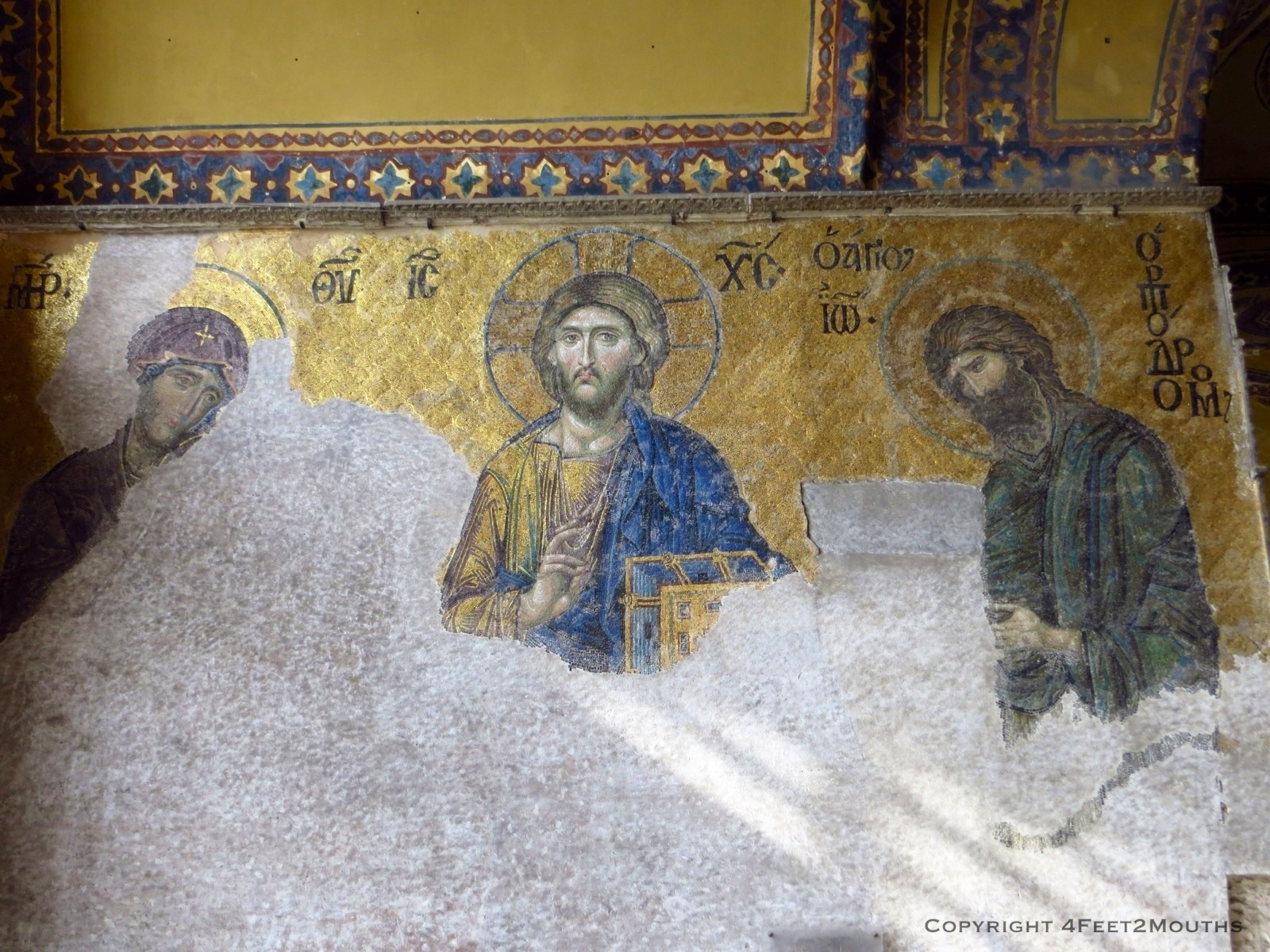
Mosaic of Jesus

Original carved marble capital

Fortunately, the conversion to a mosque did not demolish the Christian art already in place. Gold mosaics of Jesus, Mary and saints are still present. Other original details such as the marble column capitals engraved with Justinian’s crest are also there. In the early 20th century the Hagia Sophia was converted into a museum to earn money for preservation efforts.

Blue Mosque from the courtyard

Inside the Blue Mosque

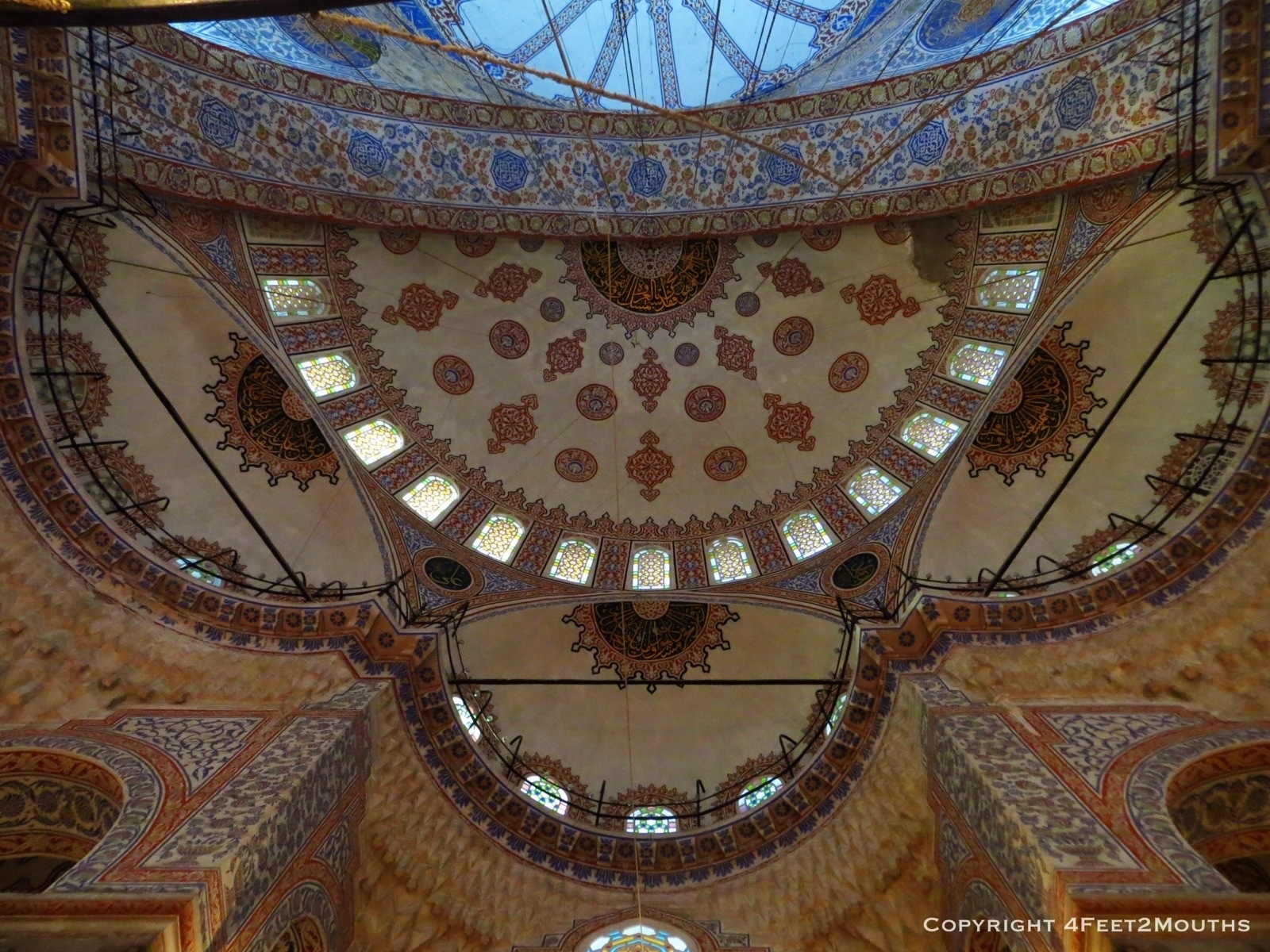
Supposedly, Sultan Ahmet I wanted to outdo the Hagia Sophia. Thus, the Blue Mosque was created very close to it. Overall, he succeeded with the exterior which has a harmonious symmetry. The inside is also grand but not quite as impressive as its much older neighbor.

Roman Cistern

Repurposed Greek Medusa head becomes a column base

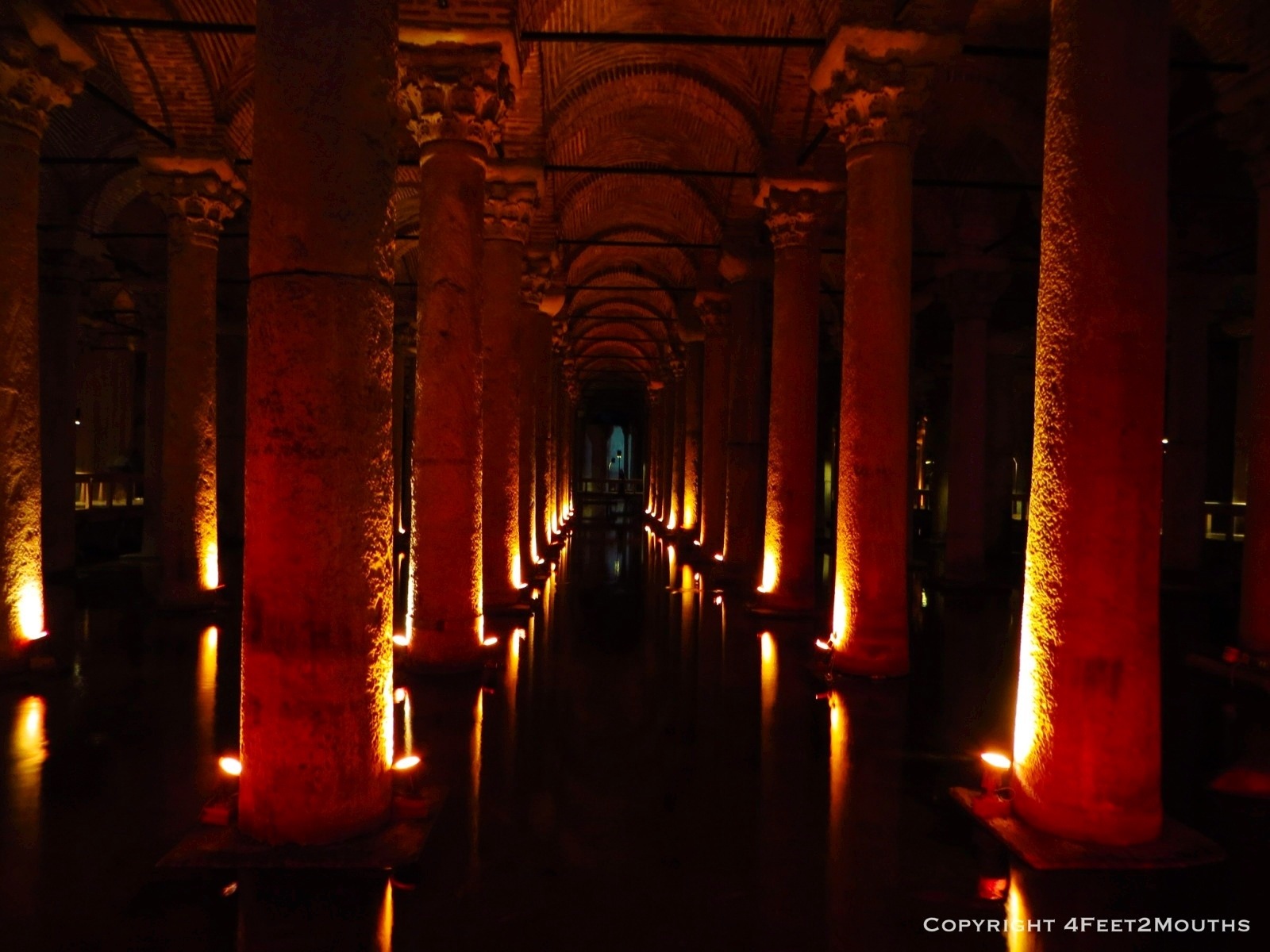
Just across the street was a special surprise, the roman cistern. At first I thought, “what is going to be so special about a big water storage basin?” But as I descended the stairs to go below street level I realized it was much more. Columns taken from other already ruined temples were used for this utilitarian space meant simply to hold water. That’s how a giant Medusa head ended up as a simple column base. But they put her upside down just to make sure she couldn’t cast her deadly stare.

Turkish flag outside the Grand Bazaar

Another highlight of Istanbul is the Grand Bazaar. It is a 600 year old labyrinth of food and market stalls selling carpets, trinkets, jewelry, clothes, textiles, pottery and pretty much everything you could want. Nathan and I were extremely excited to explore every last nook and cranny. But we didn’t get to see any of it. We had been told that the October 25 was an important Muslim holiday. It is the day that Abraham was to demonstrate his devotion to God by sacrificing his own son. However, God allowed him to sacrifice a goat. However, no one mentioned that everyone would also be off the for the four days following the holiday. Therefore, many of the shops, eateries and the entire Grand Bazaar were closed for basically our entire stay. Now we have a reason to return.

Baklava from Hafız Mustafa Şekerlemeleri

Best baklava ever at Karaköy Güllüoğlu

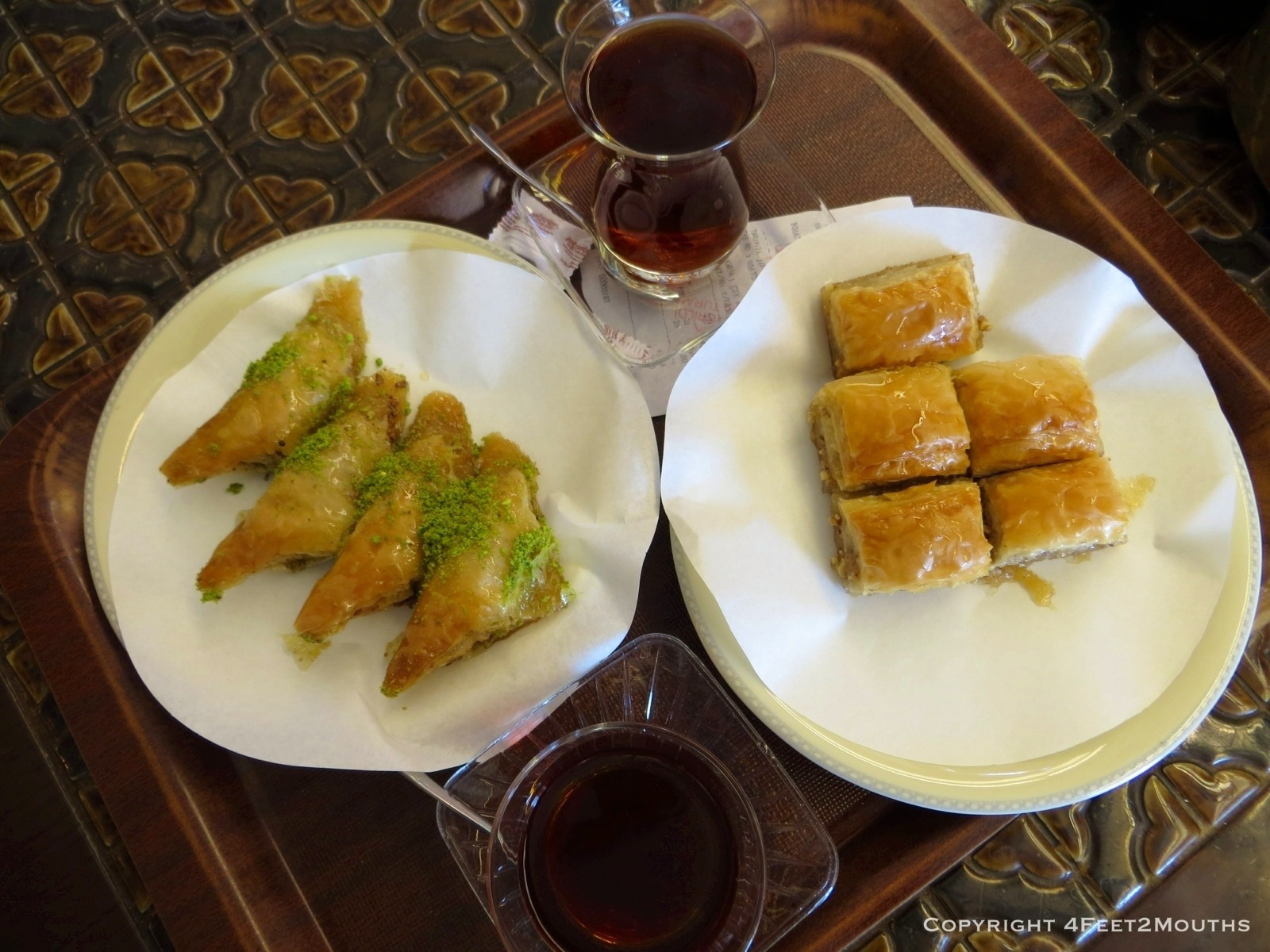
So how does one drown their sorrows in a city that has high alcohol tax to discourage drinking? Eat more baklava. We sampled from several baklava shops. The first was Hafız Mustafa Şekerlemeleri in the old city. We couldn’t resist the trays of baklava variations backed up by mounds of Turkish delight. I happily bought a box to go for a midnight snack at our hotel. It was delicious, but not quite as delicious as Karaköy Güllüoğlu. This place, across the river in the Beyoğlu neighborhood makes magic. The walnuts and pistachios were freshly roasted and dripping in a persimmon simple syrup.

Spice Bazaar

İstiklal filled with people

The baklava made me feel better. And truth be told not everything was closed. For example, we still made it to the spice bazaar. Yes, it’s touristy but the piles of spices, teas and sweets housed in a 400 year old market building are still fun. However, the real action was on İstiklal, a major shopping thoroughfare that is largely pedestrianized. Thousands of people could be found strolling up and down from midday to late night.

River activities – fish and ferries

Fortunately the ferry cruises were still running so we caught one to take a ride up the Bosporus. We followed up with a balık ekmek (fish sandwich) near the dock. Crispy fish is fried up on small boats, stuffed in some bread with onions and handed over for 5 Turkish lira, about $2.50. It’s up to you to douse it with as much lemon sauce as you want. We bought some cucumbers pickled in turnip juice to accompany our quayside meal.

The famous wet burger

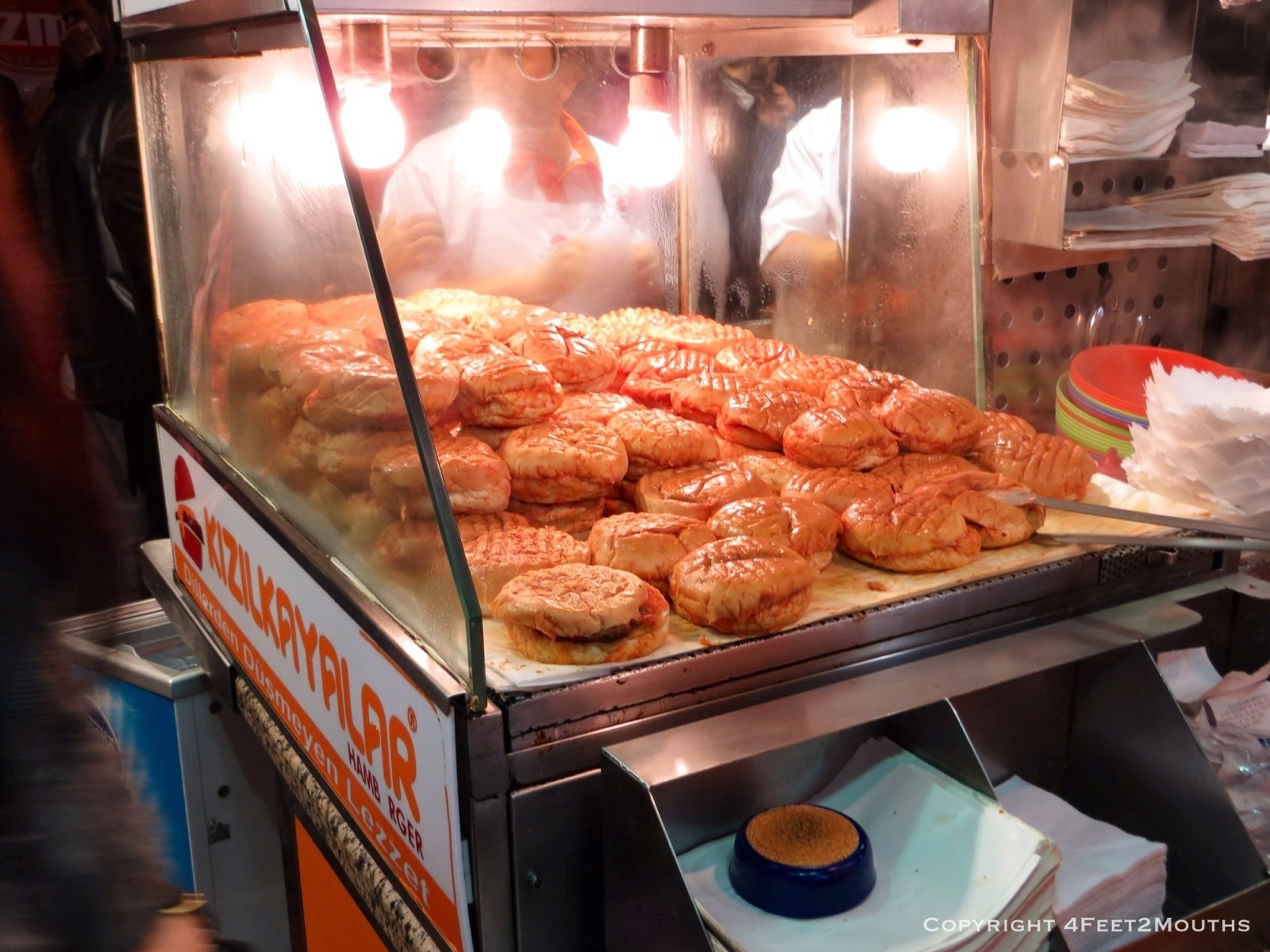
The fish sandwich whet our appetite for more street food. For ideas we turned to Anthony Bourdain. His trip to Istanbul included a late night snack at Kizilkayalar to eat their famous wet burger. We followed suit and found a crowd huddled around the “burger hammam”. Hammams are the Ottoman era public baths/spas. The name burger hammam makes me smile thinking of burgers wrapped in white towels lounging in a sauna. Perhaps they didn’t have towels but they were definitely steaming in their street side case. The burgers were warm and fluffy with a tomato based sauce. Seriously worth the 2 lira.

Crispy, crunchy simit

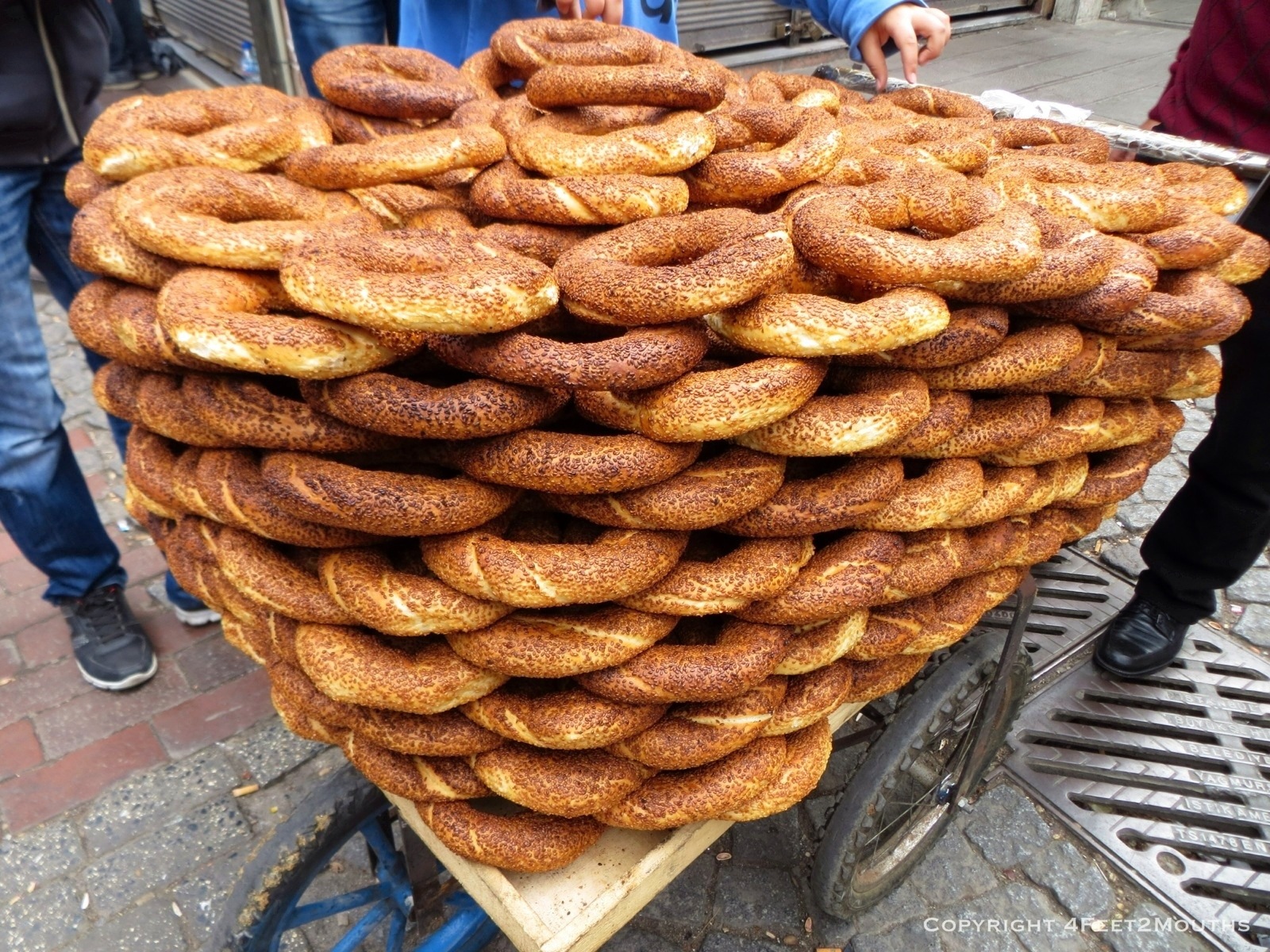
Other popular street food snacks were roasted chestnuts, corn, steamed mussels and popcorn. But when we wanted something to nibble we most often reached for simit, a toasted, sesame crusted bread ring. Dürüm, a simple Turkish wrap of barbecued meats filled our late night cravings. Especially the fine example at Dürümzade.

Süleymaniye mosque near the university

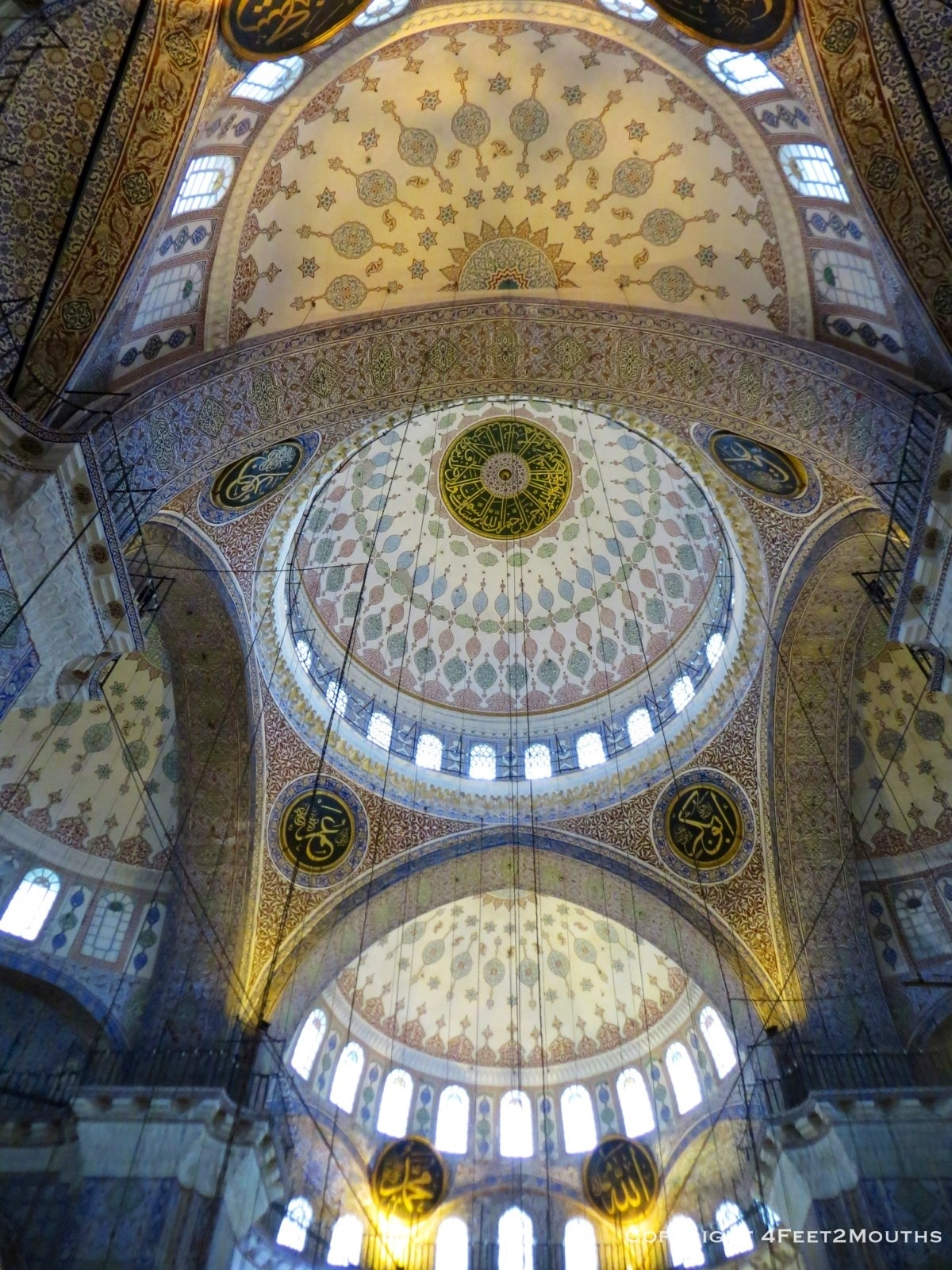
Inside Süleymaniye

Despite the holidays, the mosques were still open to visitors. High up on a hill we explored the Süleymaniye mosque. A little younger than the Blue Mosque, it was just as grand and elegant.

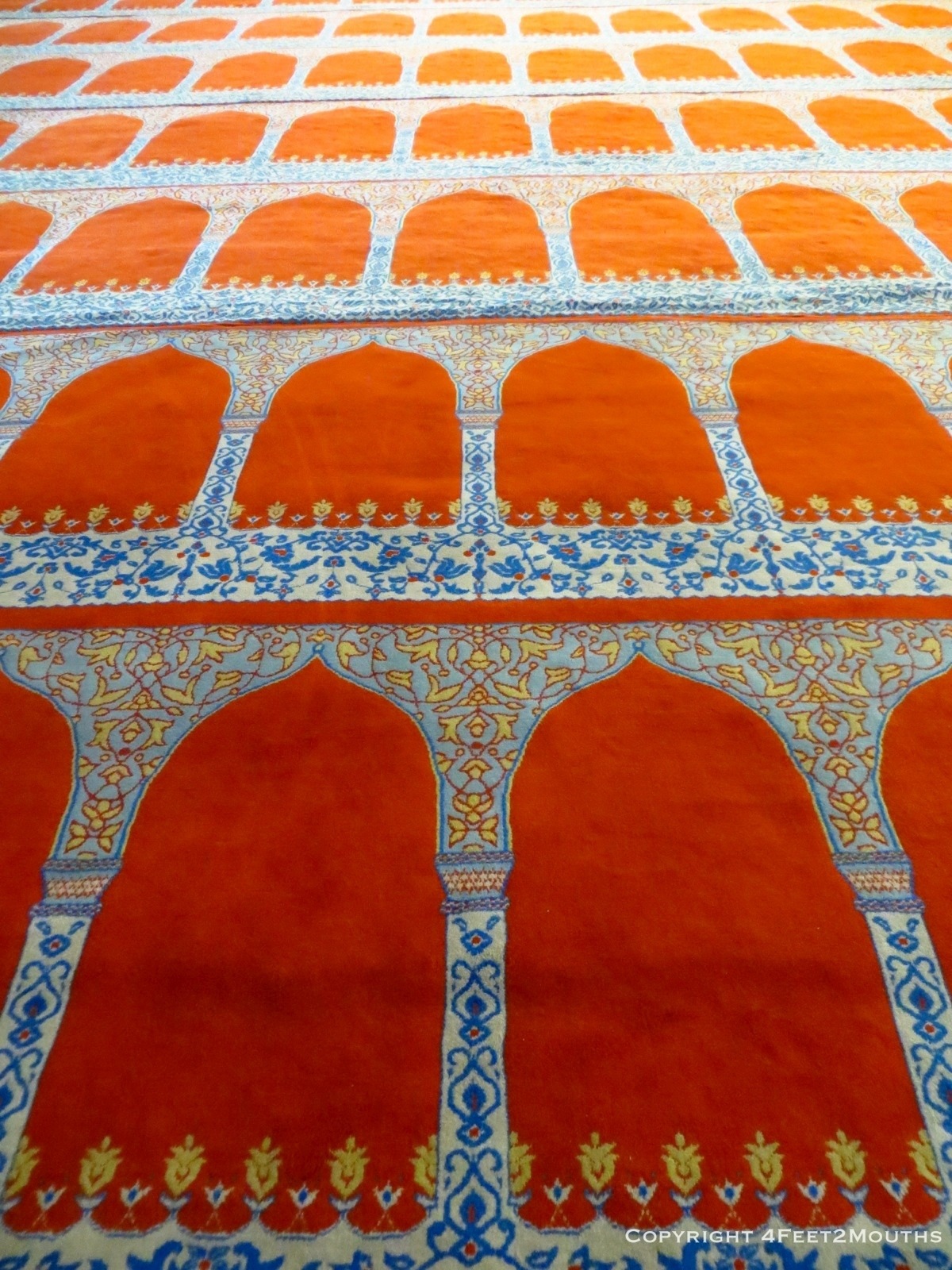
Carpet within the mosque with prayer spaces

Blue İznik tiles

Inside the mosque, the carpet clearly delineates where people should kneel to pray. The same is true at nearby Rüstem Paşa Mosque which was much smaller but adorned with intricate tile work.

Nathan at the lavish Topkapı Palace

Incredible jeweled dagger

More İznik tiles

There was one more major sight on our list, Topkapı Palace. This huge complex is the Ottoman version of the Forbidden City. Access to the lavish courtyards was once confined to the royal family and their closest advisers. Now, tourists explore the grounds oohing and ahhing at the spectacular tile work and gold leafing. The greatest crowd reaction is probably in the treasure room where you can find enormous and dazzling emeralds, rubies and diamonds encrusting everything from cups to daggers.

Datli Maya, a true find

During our stay in Istanbul Nathan and I celebrated a very special holiday of our own, our anniversary. We hoped to find a romantic but laid back place that served delicious food. Fortunately we succeeded on all fronts after scrolling through recommendations on the excellent food blog, Istanbul Eats. Our dinner at Datli Maya featured an incredibly moist kebab baked in a clay dish. We ordered a side of roasted eggplant dip and a couple of lahmacun (crispy, thin flatbreads with toppings). Most of our meal had been baked in the large wood fired oven that dominates the ground floor. It was comfort cooking taken a step further by a chef that knows how to add a special touch. We enjoyed our meal so much we decided to have breakfast there as well. A buffet of crunchy cucumbers, fresh tomatoes, three types of cheese, jams, butter, sesame sauce and fruit salad was spread out in front of us. Of course, this was accompanied by a mix of freshly baked sweet and savory breads.

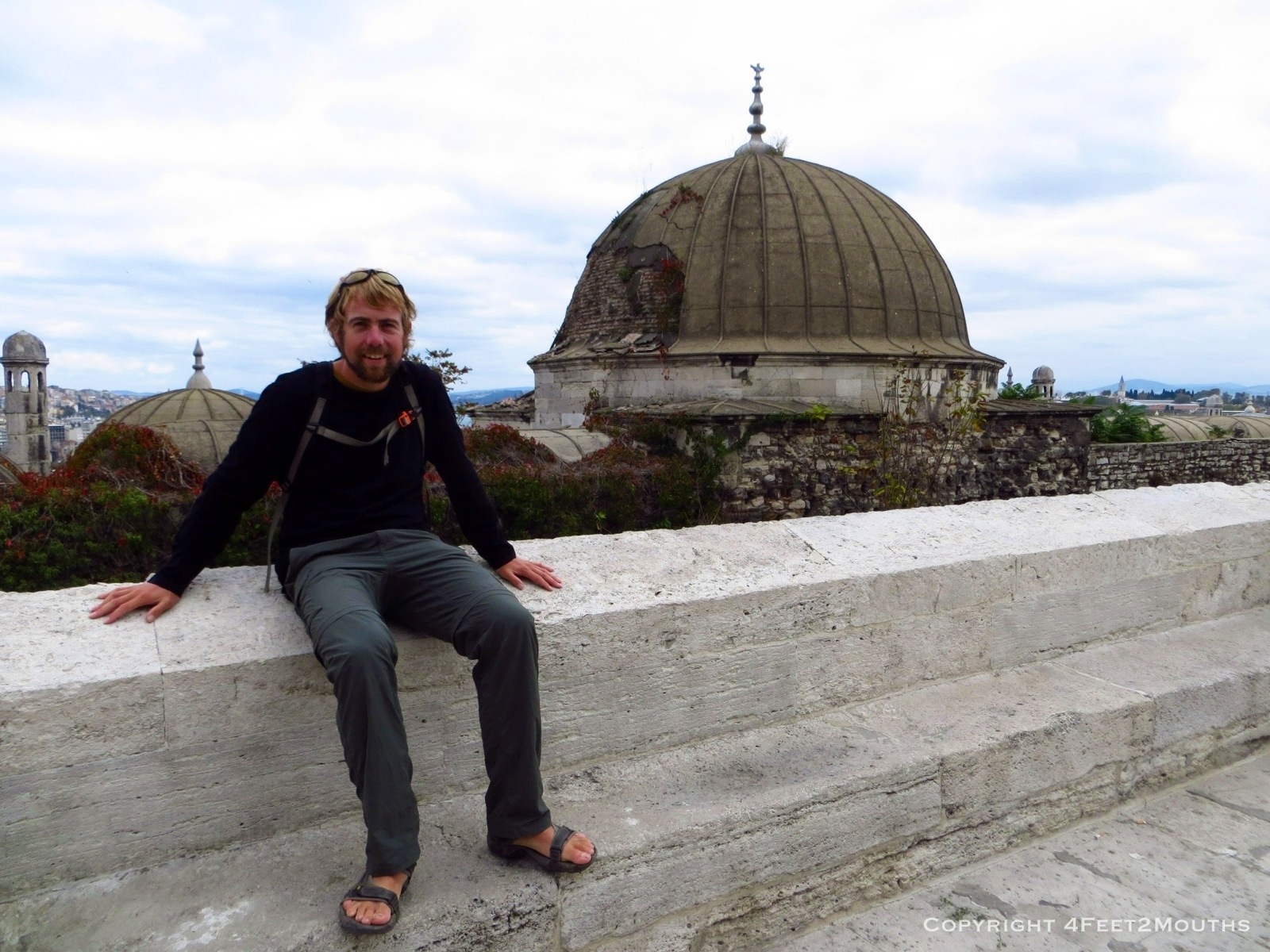
Nathan overlooking Istanbul

I had a feeling I’d like Istanbul. But as it turned out, I loved it. The city commands your senses – your eyes are drawn to beautiful domes, your nose fills with the aroma of spices, and your taste buds can’t get enough sweets. The architecture, food and culture are a beautiful mix of European and Asian influences. Indeed, Istanbul is a true Turkish delight.

The Unbelievable Cappadocia (by Nathan)

Sunrise hot air balloons in Cappadocia

Want to see a place that is magical, astonishing and entirely unbelievable? Visit Cappadocia in central Turkey for one out-of-this-world experience.  Spectacular land formations converge with exemplary culture for an experience of a lifetime.

Colorful Turkish carpets

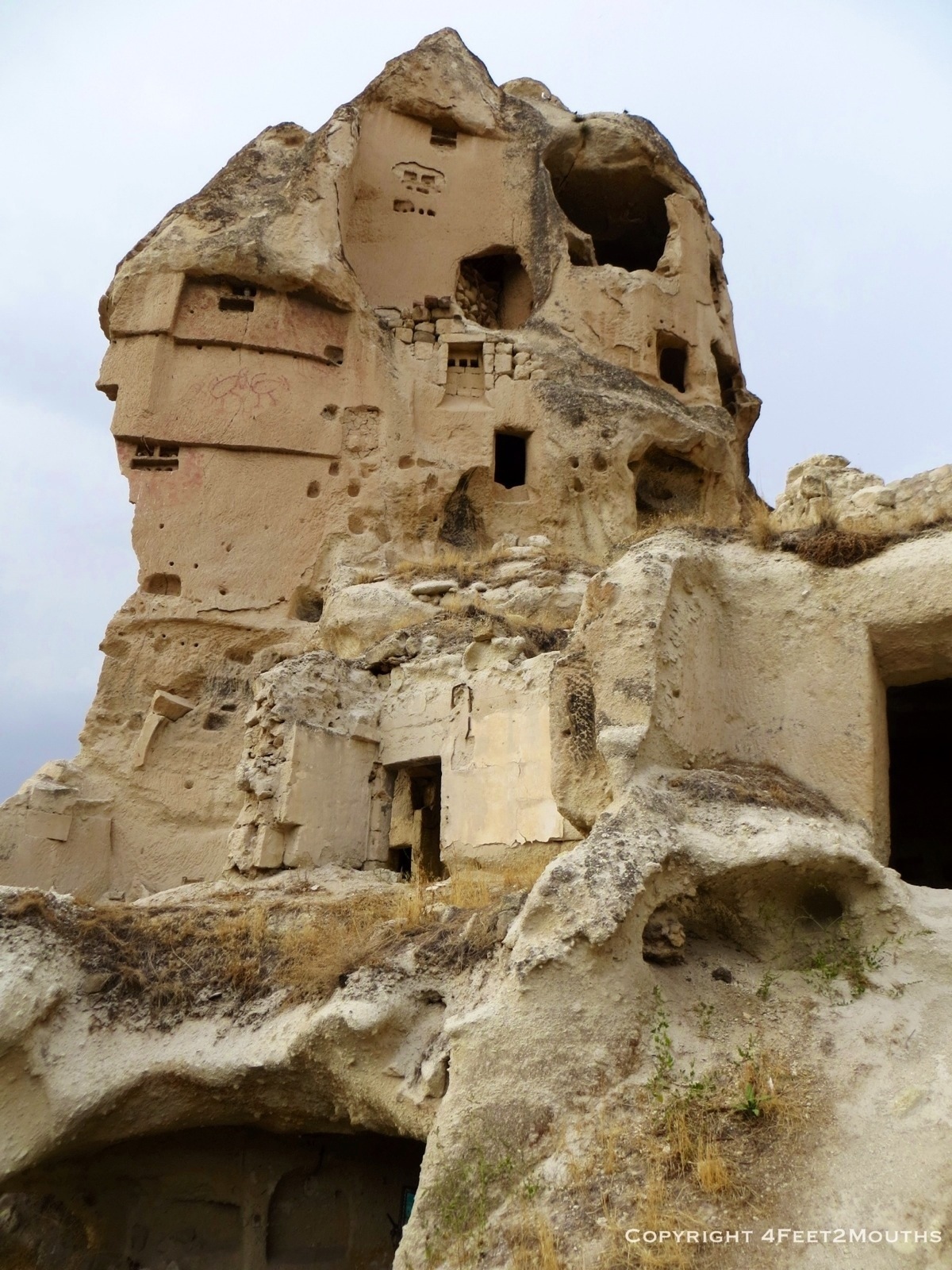
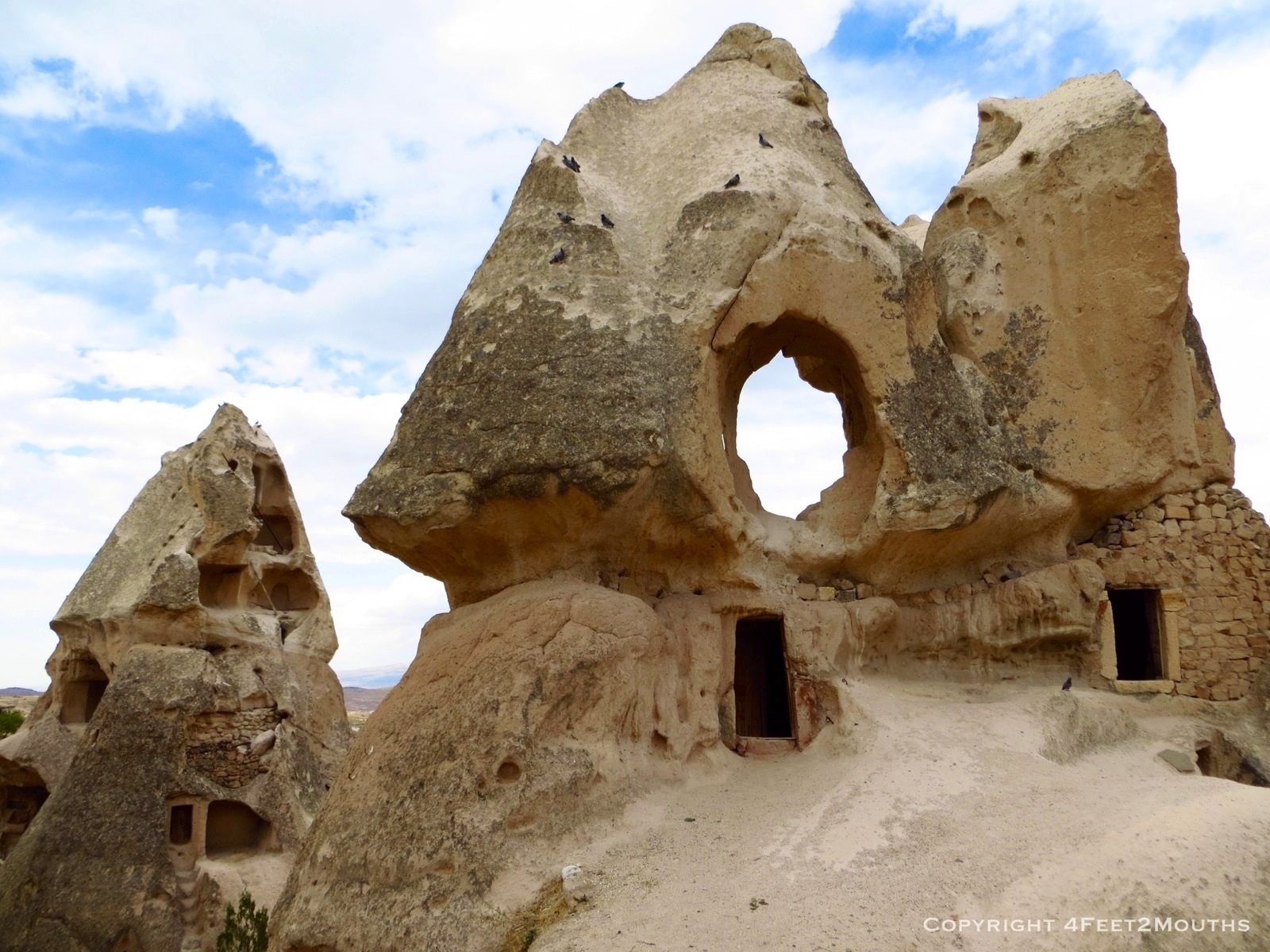
Göreme rock tower and former home

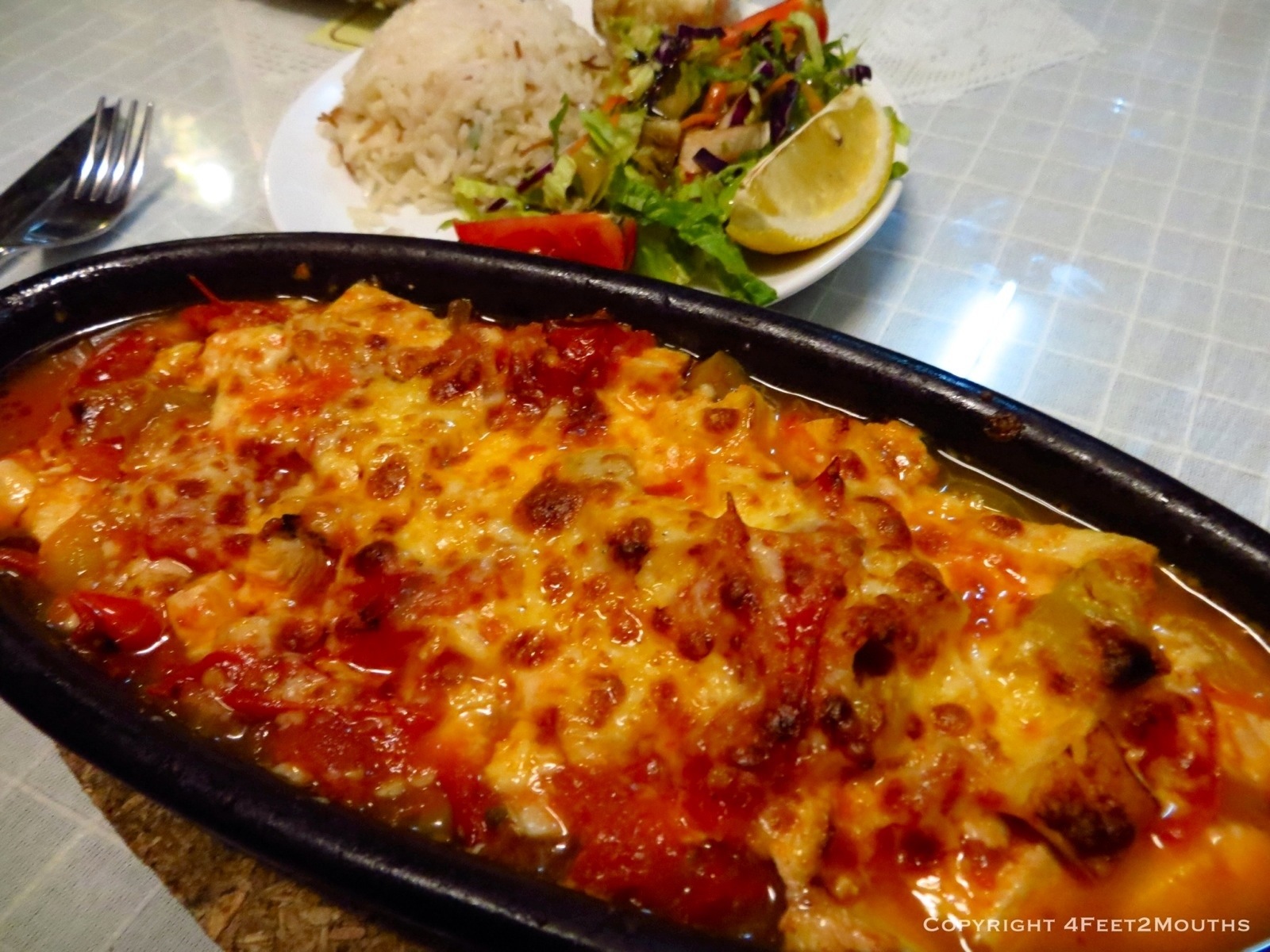
Sizzling clay pot chicken

We landed in the city of Göreme from Selçuk on one super long bus ride that passed through Ankara.  It is difficult to know all major holidays while traveling, but our time in Turkey coincided with one of the largest Muslim holidays of the year, Eid al-Adha.  Thus busses were booked and we added an extra four hours of travel time just to get to Cappadocia.  When we finally did arrive, we staggered out of the mini bus completely in awe.  Enormous cones of rock scattered the landscape. Each miniature mountain had been hollowed out with windows, rooms, and elaborate entrances.  Everywhere we looked was a cave home or cave hotel towering over the city.  We explored the city for a short while, but our afternoon ended quickly as the clouds closed in overhead and our daylight disappeared.  For dinner found a cozy restaurant with some pide (Turkish style pizza) and clay pot roast.

Sunrise balloon silhouettes

Checkered hot air balloon drifting through Cappadocia

We awoke in the dark.  Despite our desire to sleep in, we were eager to climb to the Göreme lookout point.  We ascended to the ridge to discover eighty hot air balloons preparing for take off.  There was a silence in the air that was broken by scattered rough coughs of enormous torches heating the gigantic balloons.  In the faint light the balloons slowly rose from the canyon.  They drifted into the air and above the horizon.  The colors and designs of each balloon varied- there were stripes, checkerboards, rings, flags and advertisements decorating the orange sky.  The sun peaked over the mountain ridge in the distance and the balloons rose higher and higher.  After an hour of flight the balloons steer themselves to an opposite canyon and land effortlessly on trailers waiting for them.  The balloon travelers viewed the drastic landscape from the sky, but we wanted to explore the canyons on foot.

Shadowed eroded contours

Our hiking companion Spotty

Colorful contours of the Red Valley

We began our hike at the top of the Red Valley, looped into the Rose Valley and returned to Göreme.  In our first hour of hiking we immediately found a new friend, Spotty, a friendly stray dog that loved to walk and show us around the canyon.  There were some sections where we needed to climb a ladder into narrow tunnels.  Spotty would pout, we would say goodbye, then five minutes later he would return to us jumping up and down excited that he found another way to the trail.  He reminded me of the sweet dogs that hiked with us in South America.

Frescoes of a Red Valley church

Carved cave cathedral in the Red Valley

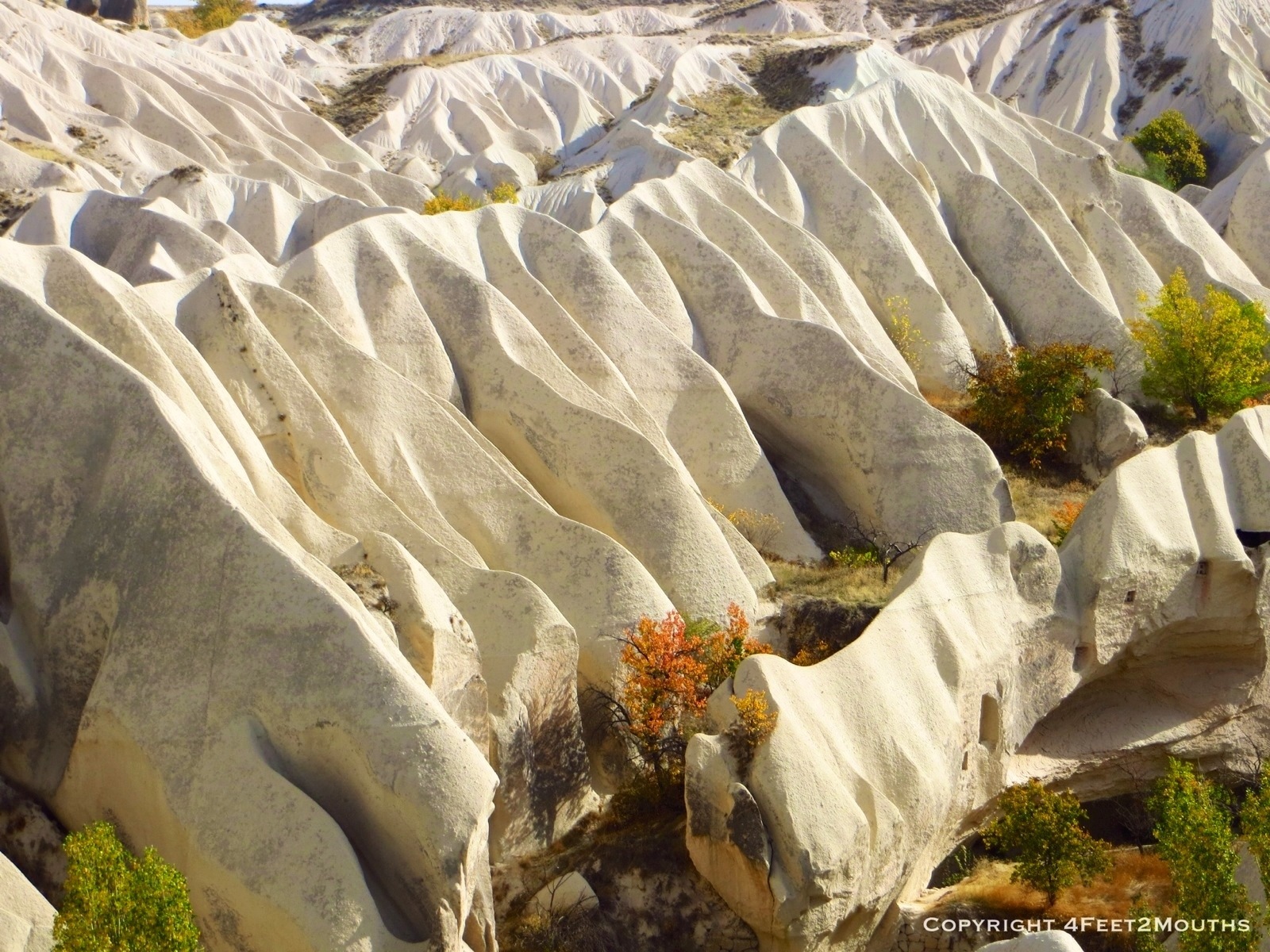
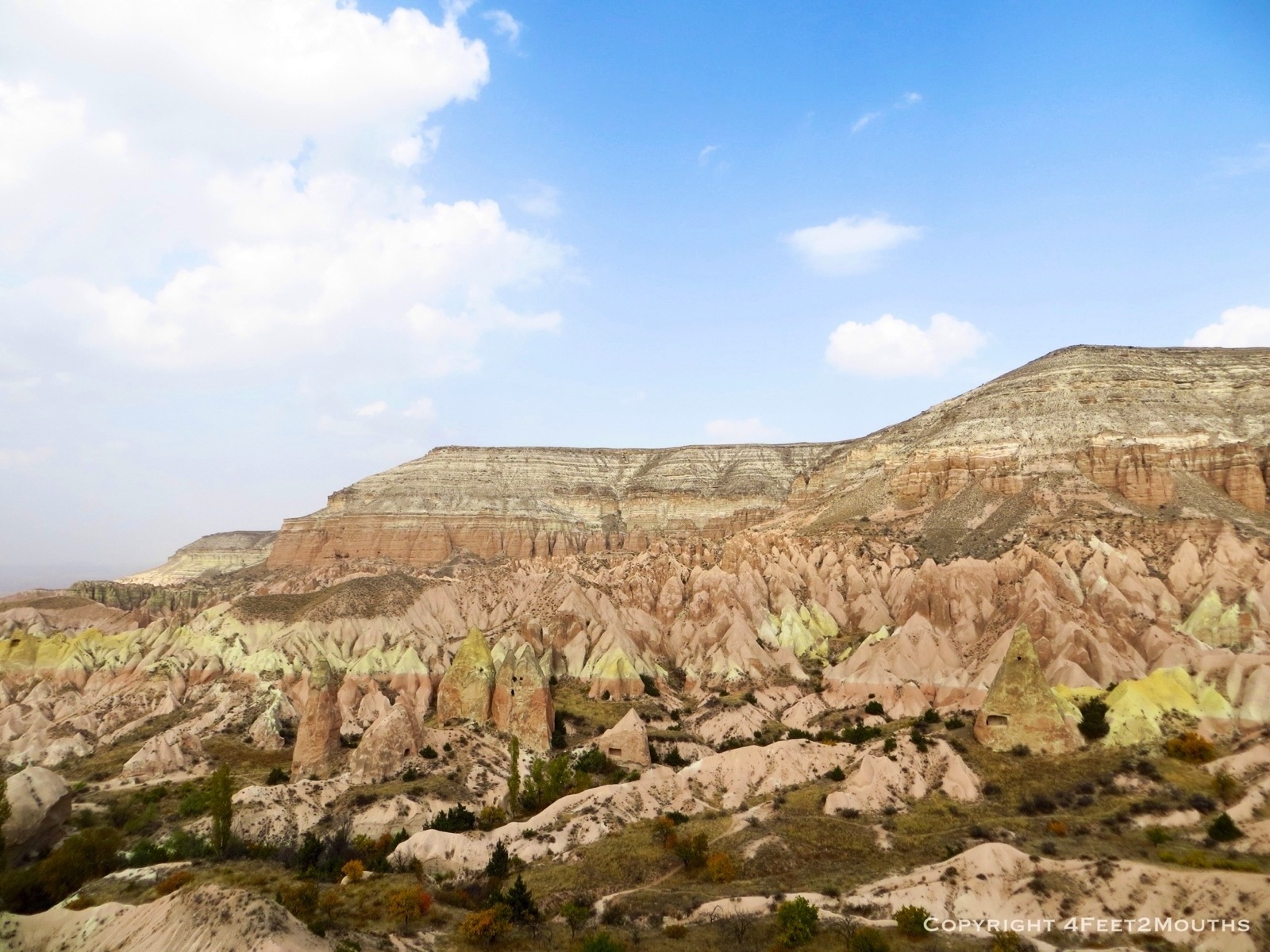
The cliffs in these valleys are amazing.  Huge ridge lines of rock overshadowed our trail.  Looking into the rock face we would see a carved window.  We approached one former habitation to find a beautiful church, full of colorful plastered and painted frescos.  We were mesmerized by another church down the trail; an enormous cathedral, a man-made cavern carved out of the rock.  Columns and beams were cut from the original rock as one continuous formation.  The church was beautiful, welcoming and peaceful.  After a few pictures, we continued our walk through the canyon.  The colors of rock were fantastic with subtle pinks and oranges contrasted with bright whites and drastic wave-like erosion grooves.

Beautiful Cappadocia landscape

Fairy chimneys of Love Valley

Delightful Turkish trail mix

The next day we explored the valleys to the west, the White Valley and Love Valley. We descended from Uçhisar and into the deep canyon.  Within a half hour our perspective was cutoff and hiked deeper into the canyon.  Two hours into our walk and we realized that, although beautiful, we had been hiking the wrong canyon and we were lost.  We refueled with some Turkish delights. We crossed a few ridges and found our way to the Love Valley.  Sixty foot fairy chimneys stood as prominent, and slightly phallic columns in the valley. We continued our hike to the adjacent city of Çavuşin, picked up a local bus and returned to Göreme exhausted.

Lamb döner sandwich

Chicken döner plate

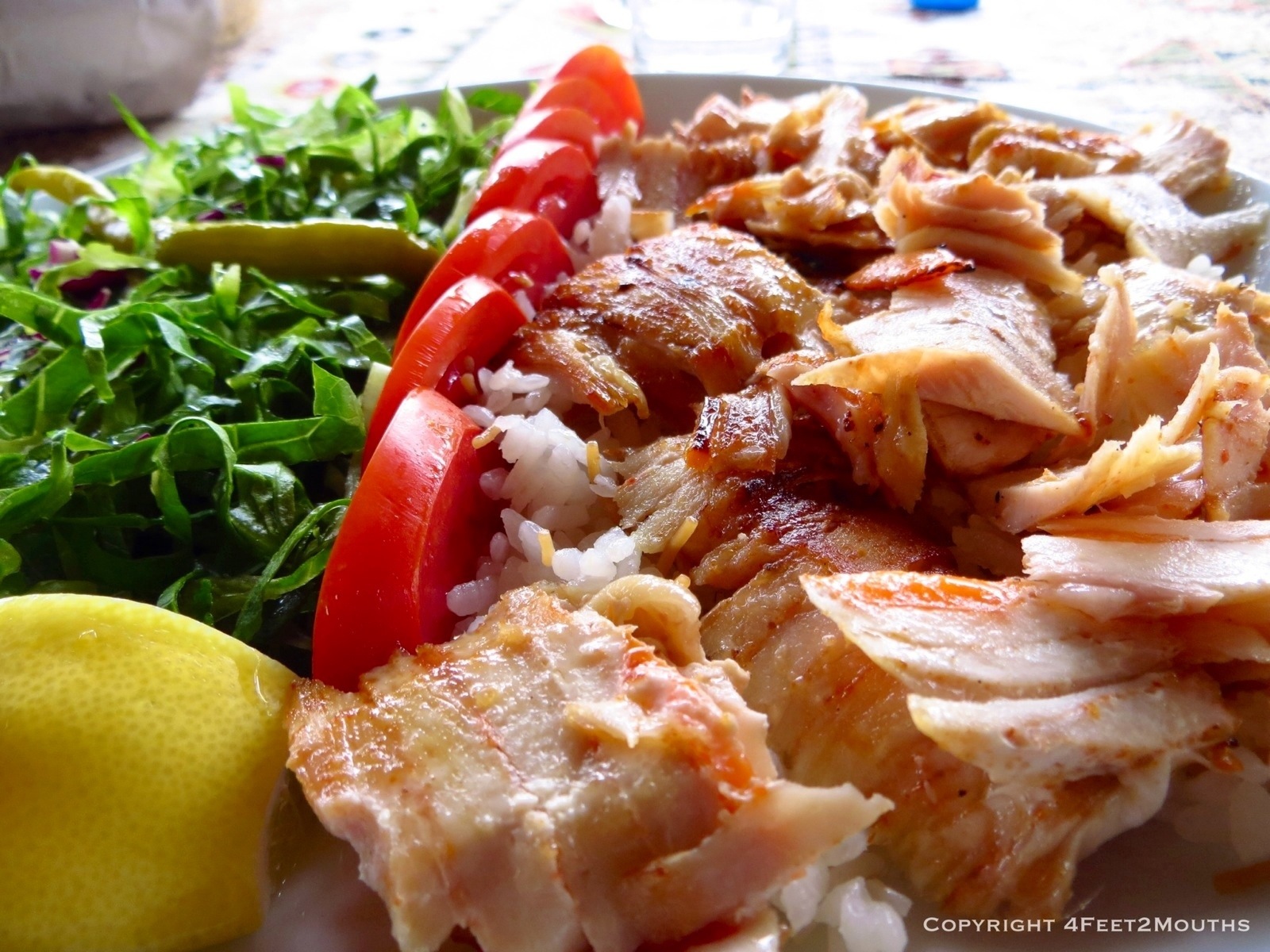
With all this hiking our lunch times have been sporadic and our hunger voracious.  It seems to be a common occurrence for us to push hard to see sights all day and when we finally stop for a break we are eating lunch at 4 o’clock.  The go-to place for a quick and delicious bite are the many döner kebab stands throughout every Turkish city. Chicken or lamb is layered onto a spike and rotated slowly over a flame until the meat becomes juicy and delicious.

Backside of Uçhisar castle

Amazing 800 year old cave home

The cave buildings are everywhere.  One enormous one is Uçhisar castle.  This gigantic rock has been carved with at least ten stories of rooms and chapels.  The look-out point can be accessed around the side of the castle and offers excellent views of the nearby cities and valleys.

Göreme open air museum

The dark church frescoes

The best preserved churches in the area are in the Göreme open air museum.  This collection of eight or so fairy chimneys and cliffs house beautiful chapels decorated exquisitely with colorful frescoes.  One frustrating part of Turkey has been the constant demand for entrance fees from tourists.  I am happy to be a tourist, but frustrated when I am considered a cash-cow.  The last time I felt like this was in Cuzco.  Of course we payed extra to get into the dark church.  Hiding behind one of the columns, I befuddled the security guard and took this photo of the ceiling.  Breaking the law for the blog!

Kaymakli underground city

Deeper into the earth we explored.  A short bus ride from Nevşehir and we were descending a set of stairs into a underground city of Kaymakli.  Eighteen hundred years ago, christianity was just picking up momentum.  In order to protect themselves the people dug out elaborate tunnels, ventilation shafts and locking doors deep into the earth.  We climbed down a stairwell, through a dimly lit hallway and room after room showed a history of food storage, wine making and cooking.  There was even a place for livestock to be kept safe.  The entrance fee covers a lit path the descends one hundred feet (30m) down through six levels of the eleven that exist.  I counted at least six sections of the city that were not lit; I strapped my headlamp on and I climbed into the darkness.  I crawled on my hands and knees and eventually the tiny hallway opened up into a room, another hallway and I found a bigger room.  Sections of rock were carved out to hold a round door used to block the passage way.  Deep and alone and feeling like I was in an Indiana Jones movie, I turned around and returned to Carmen.

Cave buildings in Rose Valley

Cappadocia continued to take our breath away.  The natural formations of rock alone are spectacular.  Combined with colorful balloons, cavernous underground city’s and cave churches makes the region a magical and unbelievable place.  This is one of the best places we have ever been, go here!

Visiting Ancient Rome In Selçuk (by Carmen)

Welcome to Turkey!

Nathan in the lounge at Pension Homeros

The sun was setting over rolling hills.  I had a wine glass in one hand.  The calls to prayer began emanating from minarets throughout the town.  It was a perfect moment at our sweet guesthouse in Selçuk.  This was our first stop in Turkey and we had received a warm welcome of wine on the hotel’s terrace.  I was immediately enchanted with the Turkish decor of thick carpets, a mix of patterned fabrics and comfy pillows.

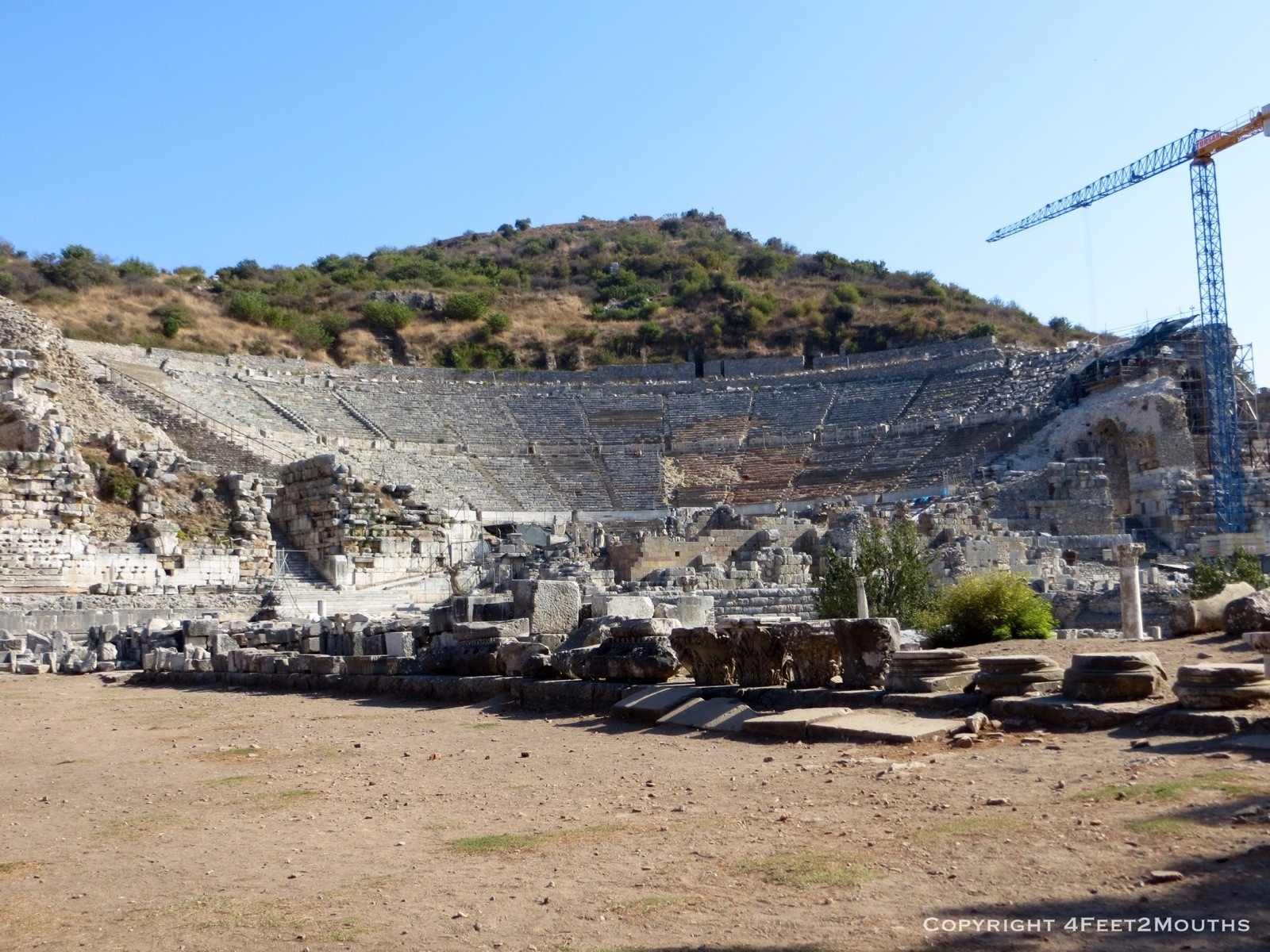
Walking up to the Roman theater at Ephesus

Inside the theater

Selçuk is best known for one magnificent, very special sight – the ruins of the ancient Roman city of Ephesus which peaked in the 2nd century AD.  This archeological site is up there with the likes of Pompeii in terms of intactness.  As we walked in I was immediately blown away by the huge theater built into the hillside.  It could hold an astonishing 25,000 spectators.  This generous capacity hints at the city’s large size, which is estimated at a quarter of a million people.

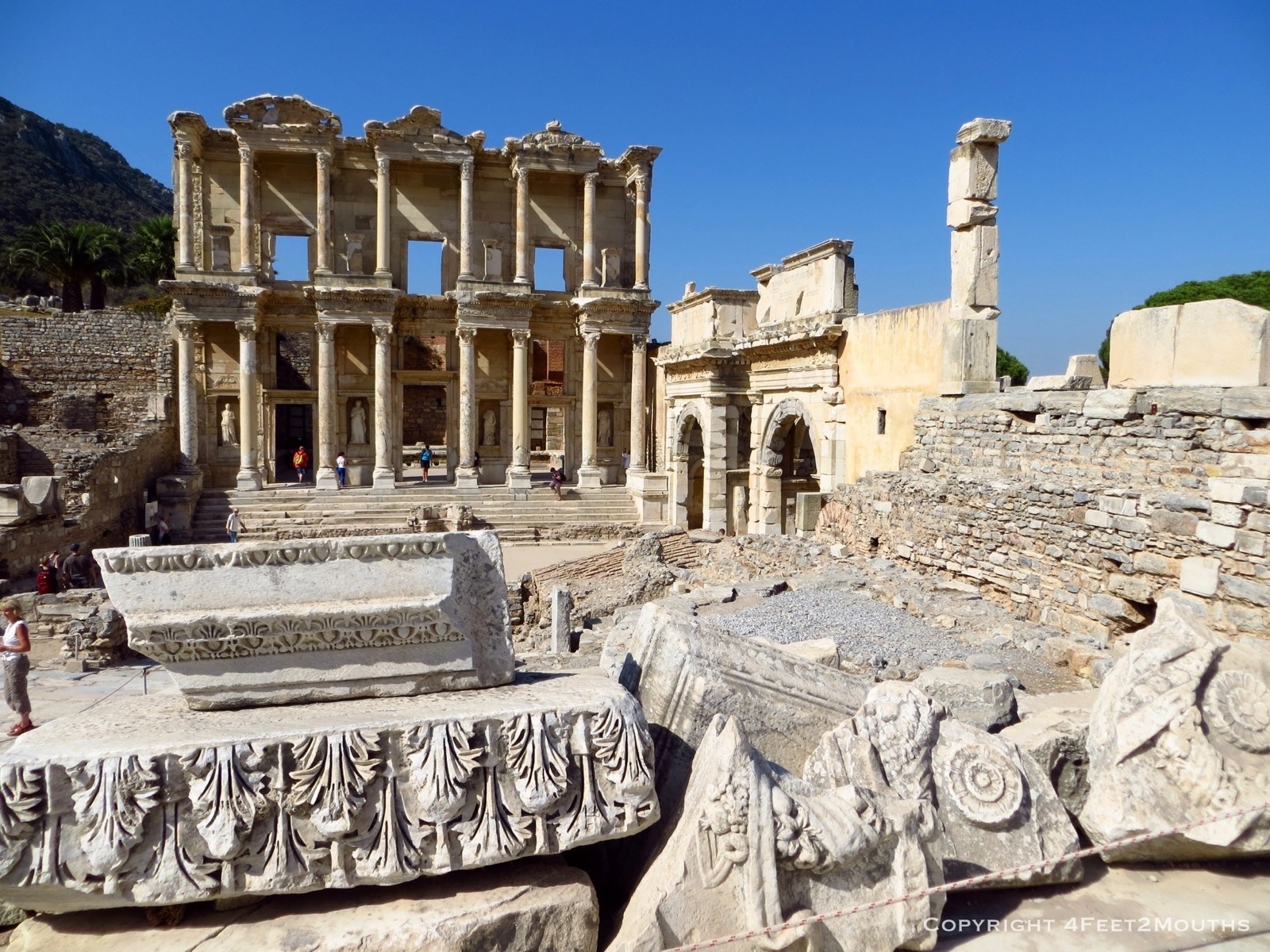
Library of Celsus

One amazing porch

Beautiful carving on the library exterior

The true star of Ephesus lies just beyond the theater.  Up a marble path, past the old agora (market) is the Library of Celsus.  Based on the intricately carved exterior, I can l  only imagine how grand and elegant this three story structure must have been.

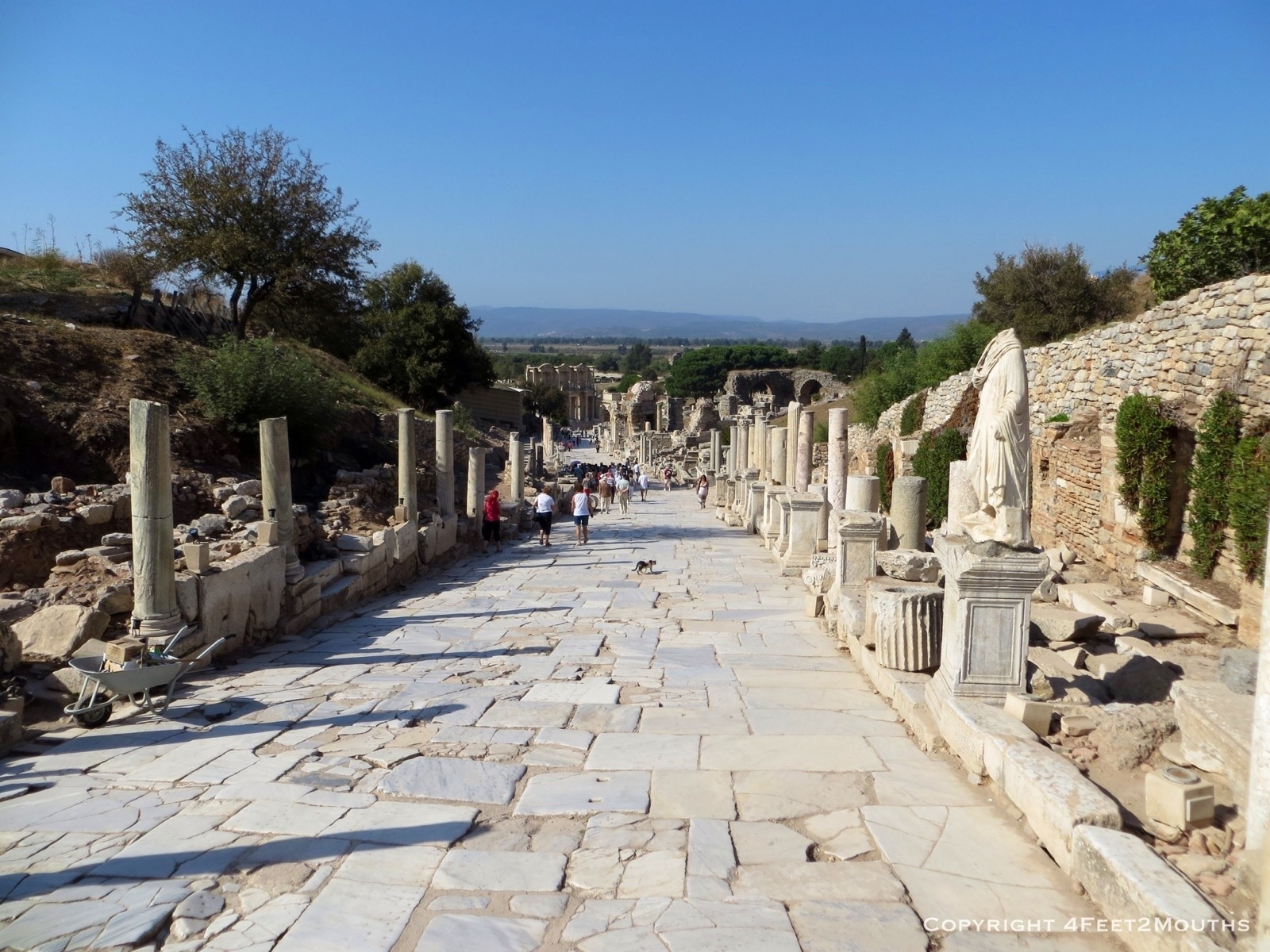
Main Street Ephesus

Yes that would be the communal latrine

From the library the main street leads up hill revealing more and more incredible buildings with each step.  We even found evidence of more mundane spaces, such as the latrine.  Advanced plumbing meant waste was swept away quickly. The Romans understood cleanliness thousands of years ago. It amazes me how far down Europe sank in the dark ages after the fall of Rome, when hygiene was practically nonexistent.

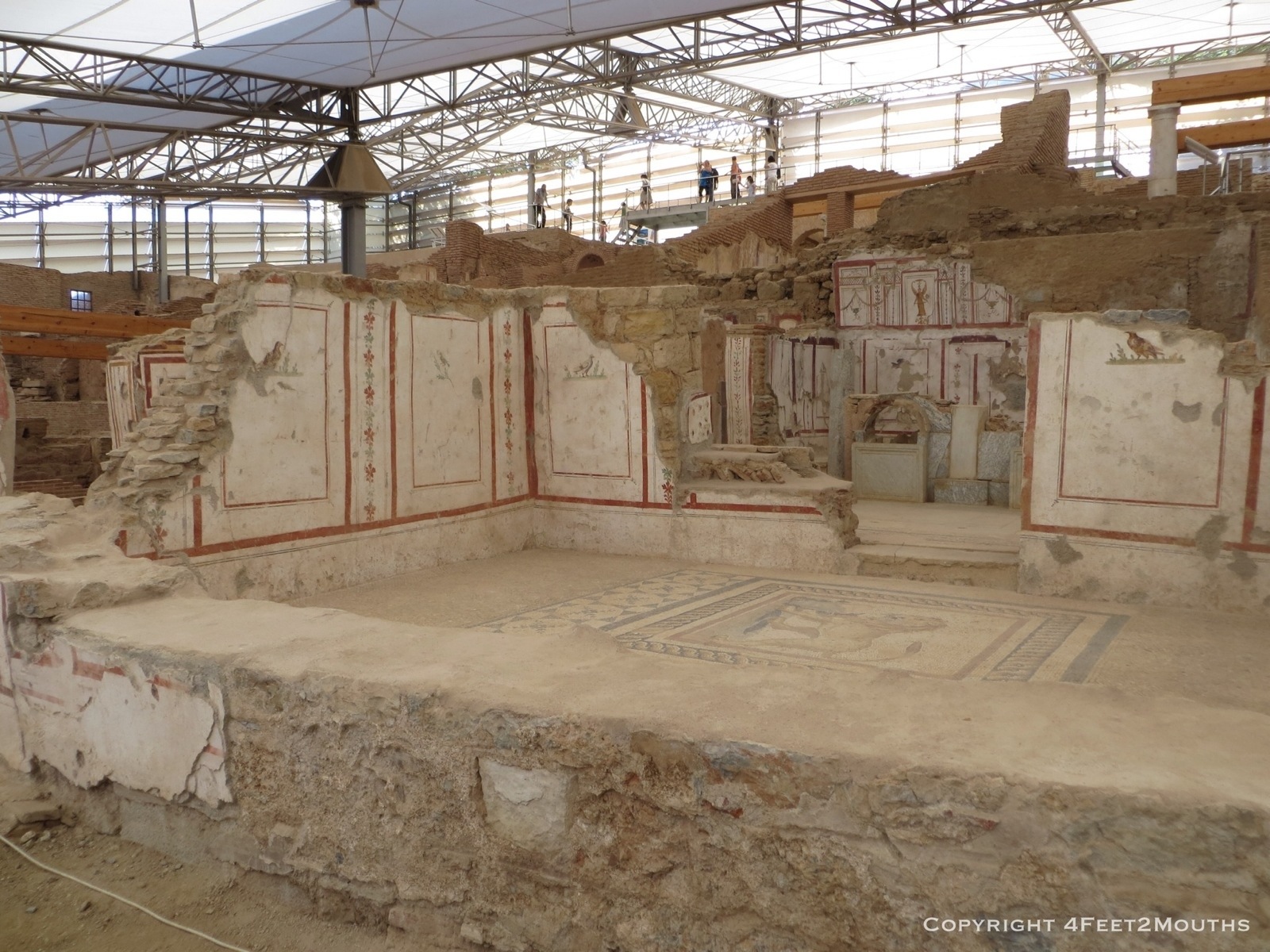
Roman mansions

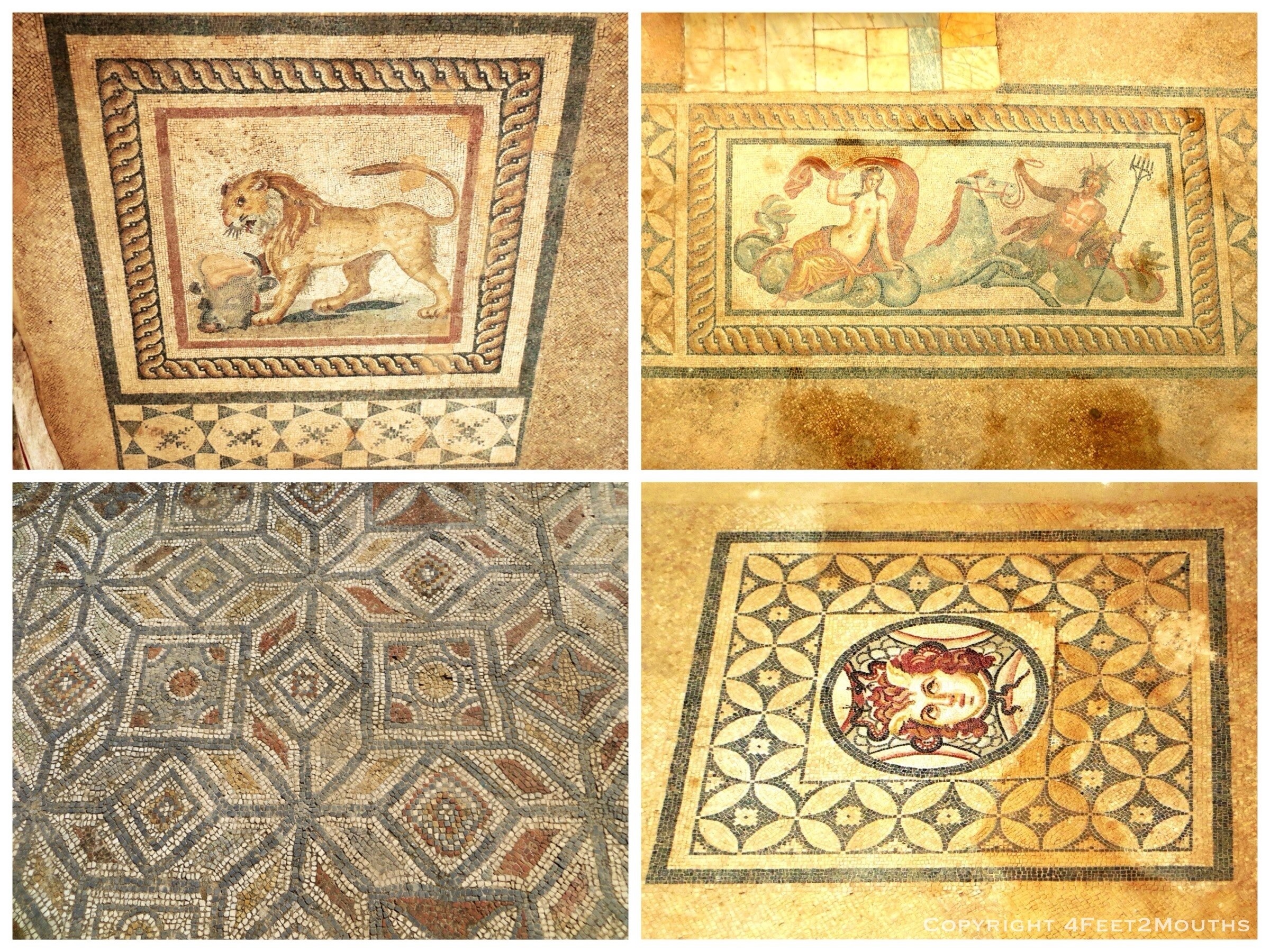
Intact Roman mosaics

Also on the main street is a collection of lavish homes of the rich.  They were large complexes with every inch of wall space frescoed or covered in marble.  And the mosaics were spectacular, depicting animals or mythical characters such as Medusa or Poseidon.  

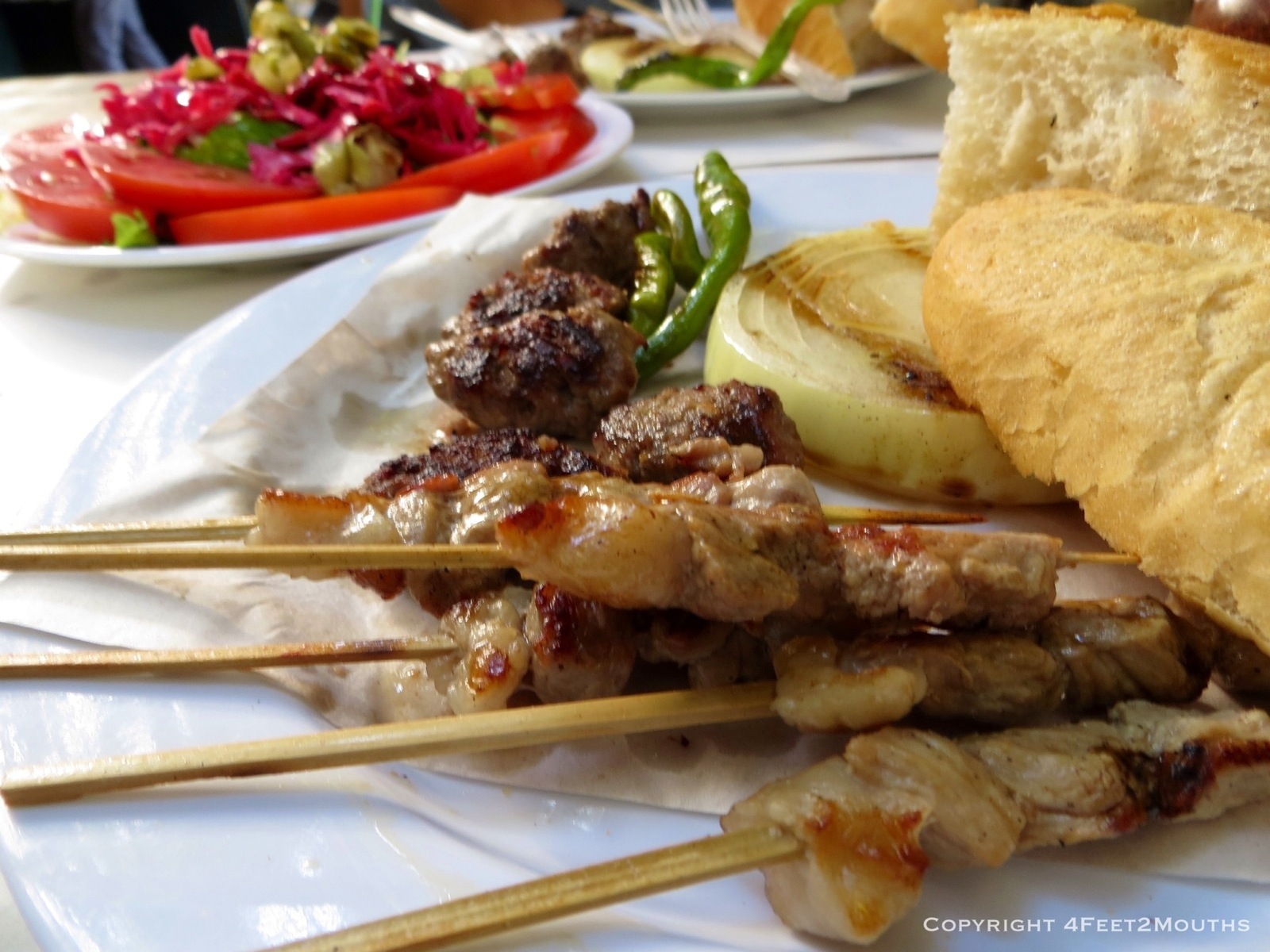
Chicken shish and köfte

Turkish salad mix plate

All that scrambling over ruins got us hungry, so our first stop back in town a plate of chicken shish and juicy köfte (meatballs).  After relaxing at the hotel, we headed out for a simple dinner of Turkish salads.  These included stuffed peppers, sautéed eggplant, tangy thin green veggies, tomatoes with green beans and yogurt. With each new Turkish dish I tried, I was hungry for more.

Delicious cacık

Saturday market in Selçuk

Yogurt is a staple of Turkish cuisine and I love the traditional way to serve it.  Cacık is a thinned yogurt mixed with cucumber, garlic, dill and lemon. Used to dip thick, spongy bread it makes for a delicious snack.  We enjoyed some as we made our way through the lively Saturday market.

The god Artemis

For the rest of the day we headed back to antiquity.  First we visited the one remaining column of the Temple of Artemis.  Once one of the seven wonders of the ancient world, the temple once had 127 columns. Inside, the giant statue of Artemis a symbol of fertility towered over worshipers.  The temple eventually fell into disrepair and the marble harvested for other uses.  But the footprint of the structure is still visible and impressive.

Virgin Mary’s house

We rented a scooter to visit one more historical site.  Virgin Mary’s believed final residence is outside Selçuk in a pretty mountain valley.  We had expected a spiritual place but it turned out to be a rather simple chapel with one wooden, handless statue of Mary.    The government charged to get into the park and it just felt like people went in, lit a quick candle, and left.  Definitely not our favorite visit in Selçuk.
Crescent moon rises over Turkey

Another sunset on the terrace made up for it.  We were welcomed with another glass of wine and the hotel owners even fixed up Nathan’s shoe that had broken that day.  We relaxed, watched the moon rise and got ready for our bus to Cappadocia.

Crossroads Rhodes (by Ναθεν)

Essential theme to life

He leaned over the table for what felt like the thirtieth time that night to fill my wine glass; he looks at me straight in the eye and says “Se kalo.” Then he downs his entire glass of wine. Then I choose someone, “Se kalo” and again my glass is empty. We are at a Cretan tavern in Rhodes. Our table is a battleground of Greek and Cretan specialties: dakas, feta, fritters and fries have been landing endlessly on our table all night. The jug of wine always seems full and the traditional music from Crete can be subtly heard over the constant clinking of glasses and loud conversation in the room. This was the conclusion to our time in Rhodes, a celebration of Greece and new friends. We were at crossroads of Europe and Asia and tomorrow we would be going to Turkey. At 2am we stagger walk with dignity through old town to grab a few hours rest.

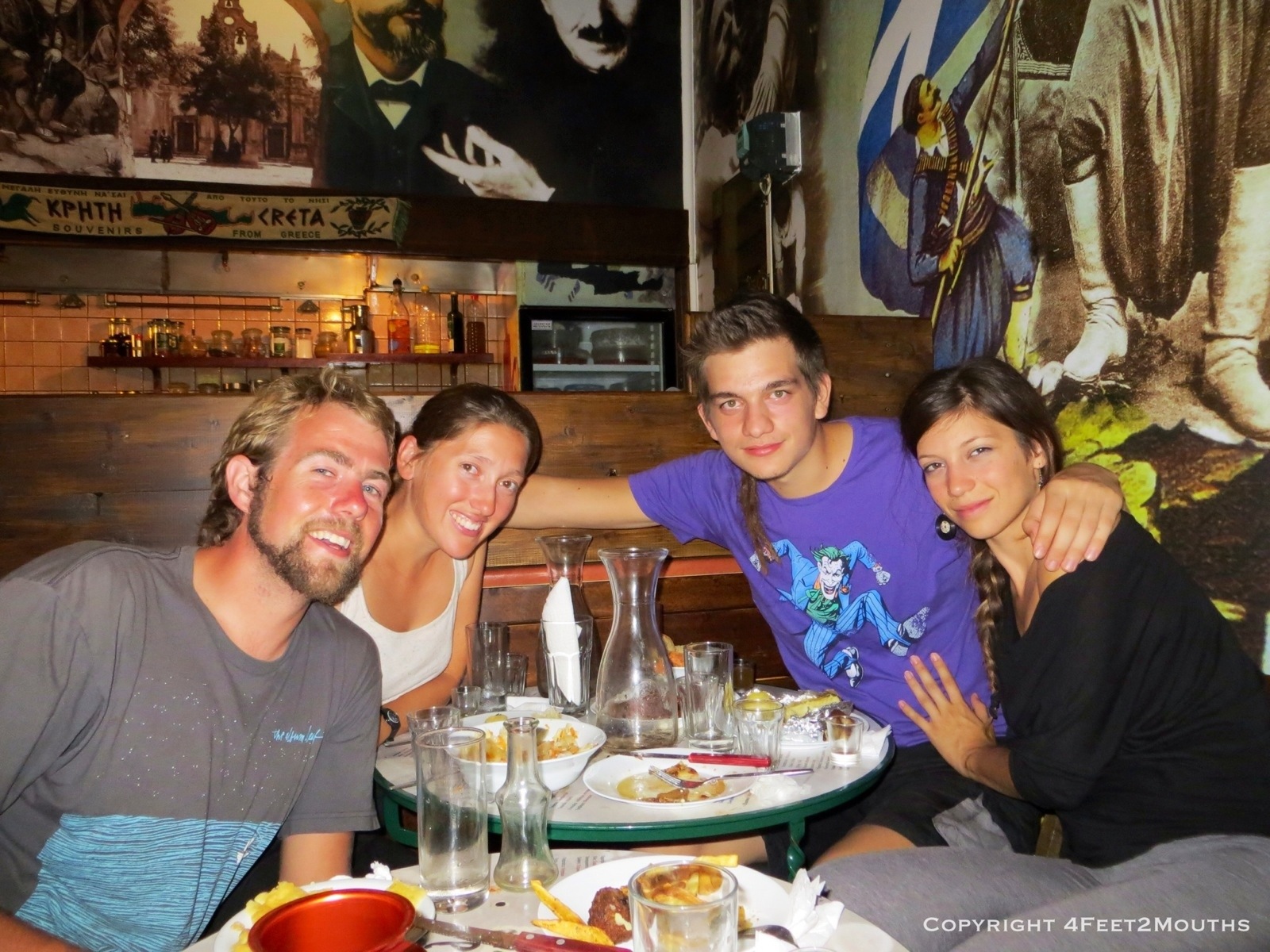
Our new friends in Rhodes

Meet my friend Mike, who is actually from Crete, and his lovely girlfriend Alexandra. We met them in Rhodes and our three days have been filled with nonstop adventures and good food. They are university students here in Rhodes, studying to become teachers. I am always impressed by the seemingly instant friendship that is possible with people. There is a little bit of circumstance, some willingness and a whole bunch of letting down guards, but we quickly became friends.

Local eatery with stewed meats, veggies and village salad

I should have recognized how the weekend was going to turn out. In our first hours of arriving to Rhodes, Mike pulled out a 5L jug of clear liquid from the back room. “Want to try Cretan Tsikoudi.” Mike’s dad distills his own moonshine in Crete and sends it with his son to keep him company while at school. It only takes a few minutes before we are all talking about hunger. They take us to lunch at this local restaurant around the corner. The waiter ushers us to the glass case in the back; we are shown an array of stews and specialties of the day. Everything looked and smelled fantastic. It only takes a few minutes before steaming plates occupy every free space on the table.

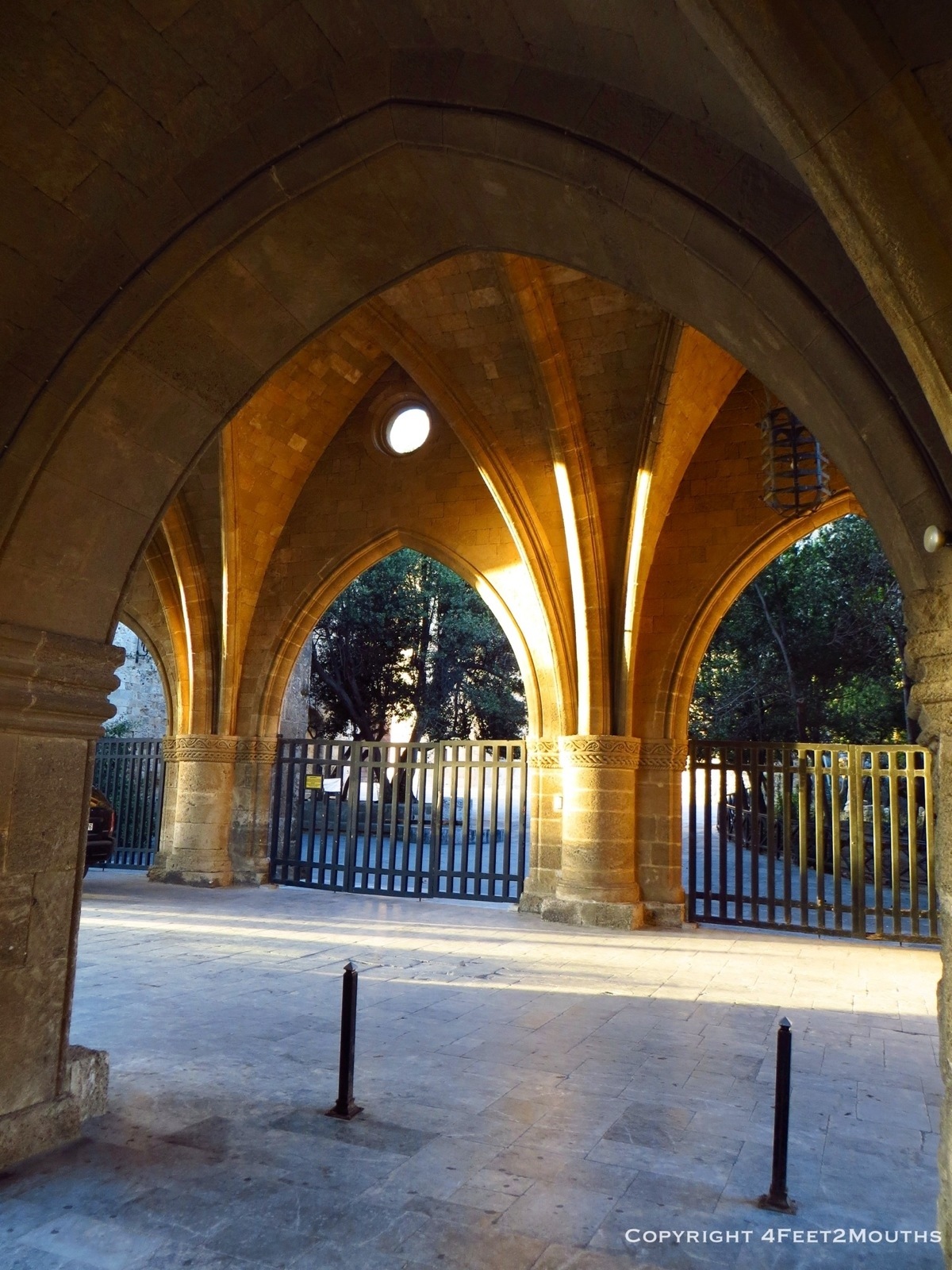
Cosmopolitan buildings for the Knights Hospitaller from the crusades

Sunlit arches

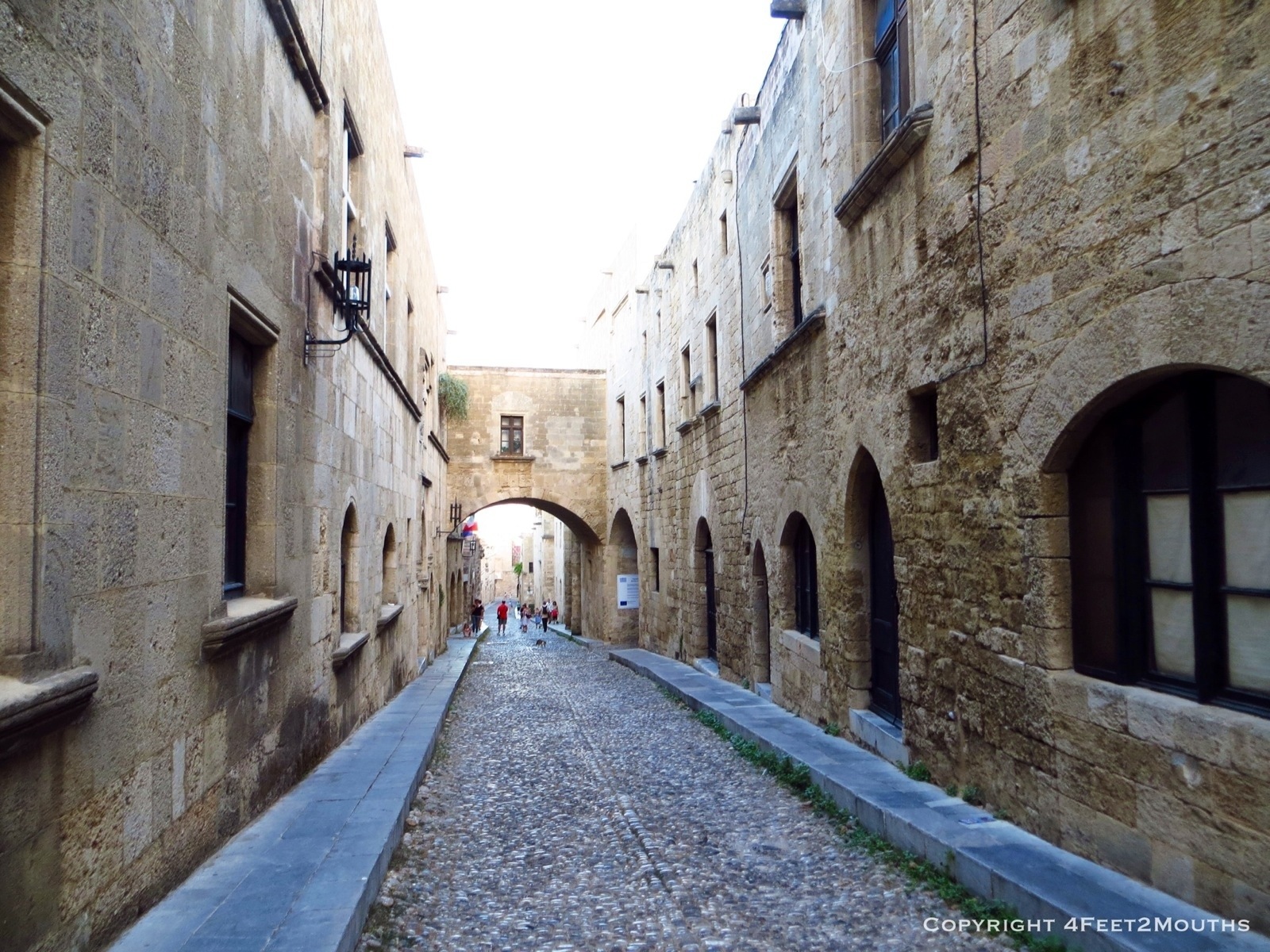
There is substantial history in Rhodes. It has been inhabited for millennia, but the most prominent occupation was during the first crusades. The Knights of St. John established a fortress in the fight for Christianity. The most impressive part of old town is the street that the knights lived, the hospitalier. Each nation had their own building for meetings, organization, dining and lodging. Walking along the cobblestones we saw the Spanish, English and German headquarters for the crusades, each over a thousand years old.

The Colossus of Rhodes (Credit: WikiCommons)

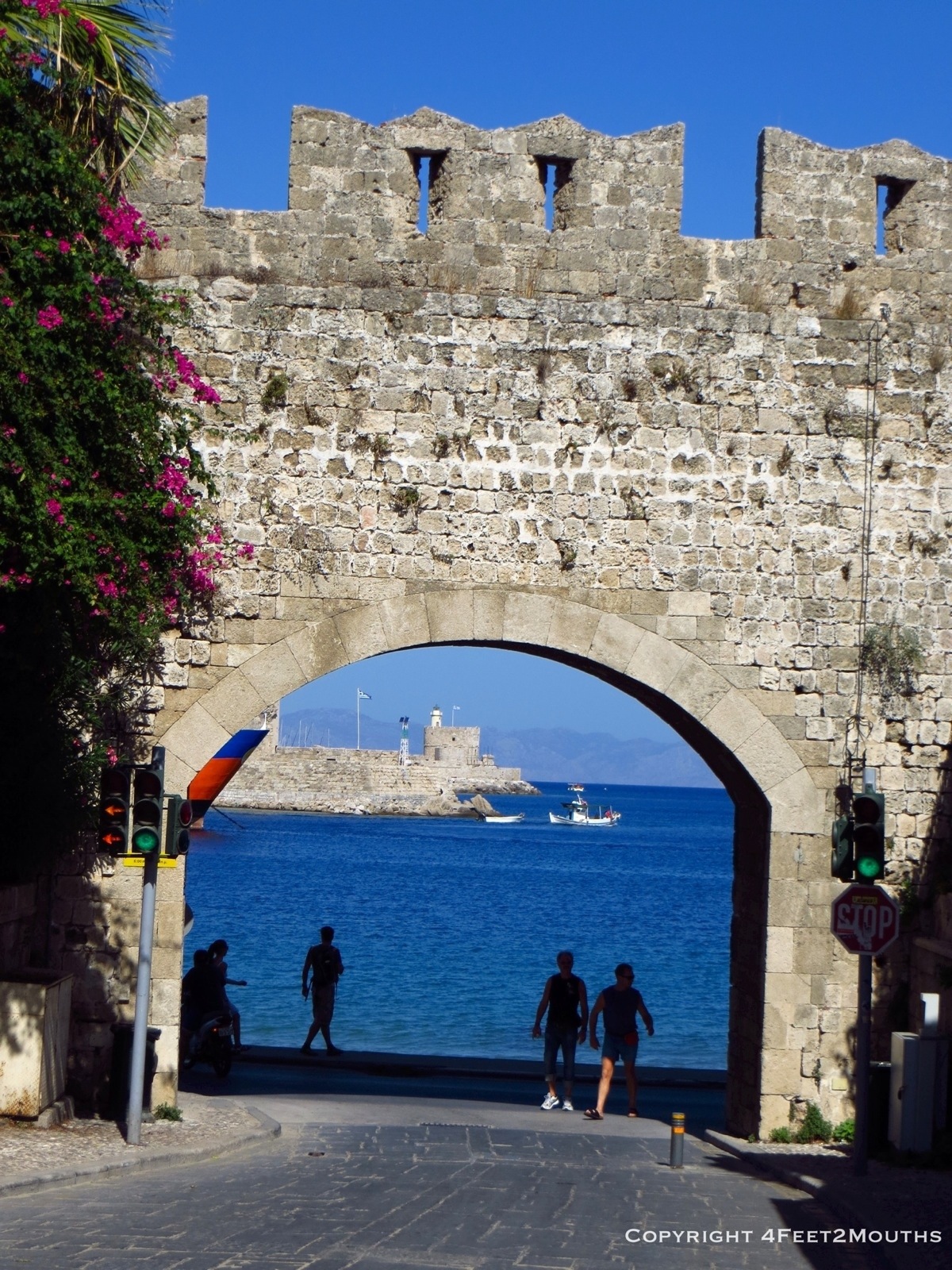
For centuries Rhodes was a stronghold. After defending themselves against Cyprus, they built an enormous statue, The Colossus of Rhodes, to symbolize their victory. This 107ft (32m) wonder of the ancient world no longer exists, but the entrance to the harbor where he once stood is still there.
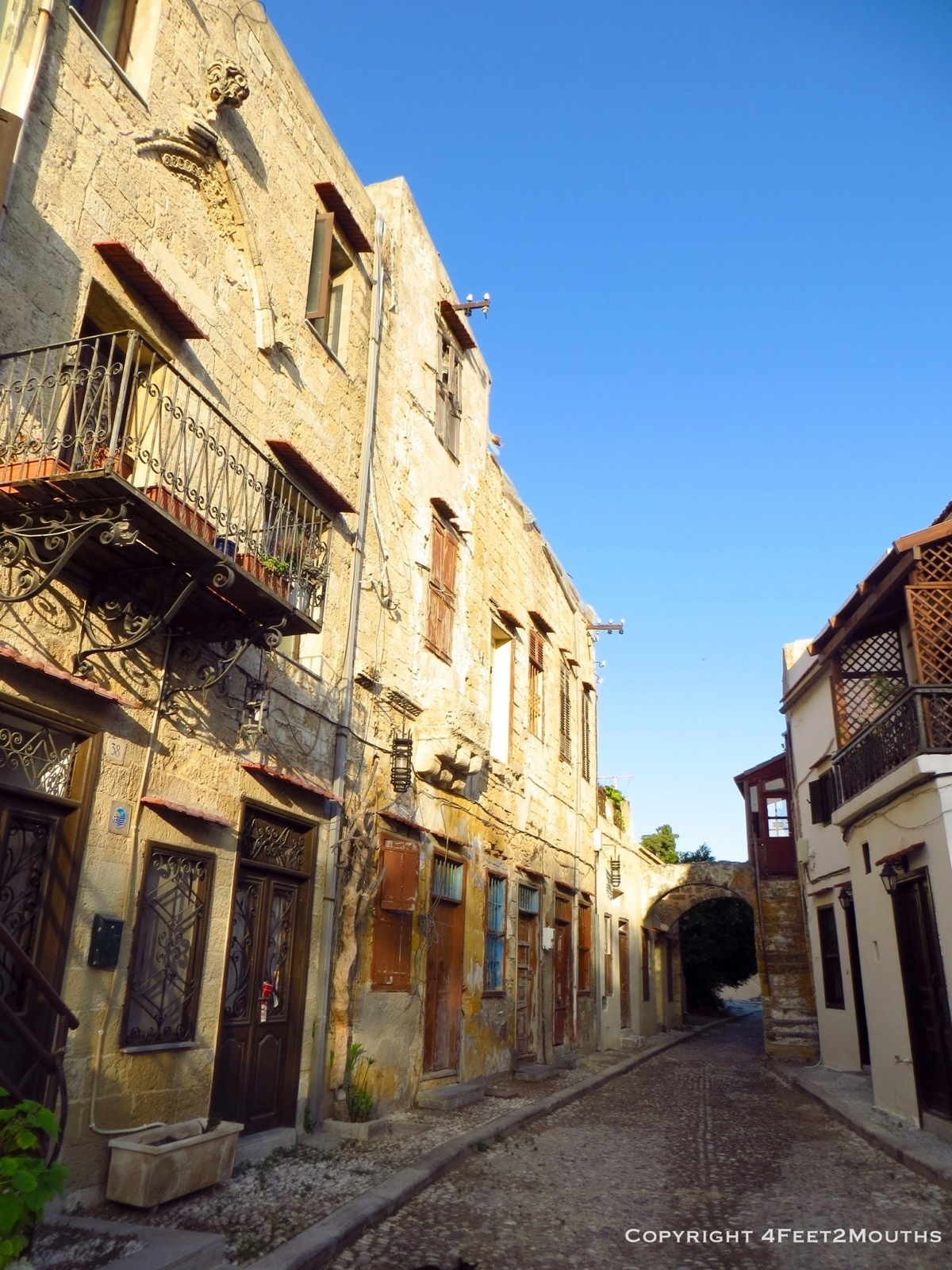
Old town Rhodes typical street

Walking through old town in Rhodes is wonderful. The stone buildings and cobblestones reflect a time hundreds of years ago, but most everything is still in use. Carmen and I walked ancient alleyways and underneath buttresses bracing buildings. It is easy to get lost meandering around Rhodes, but that is the fun of exploring these cities. Eventually we would run into the enormous wall that surrounds the city. Beyond it is a moat that is great for walks and runs.
Medieval town wall of the Knights Hospitaller

Our time in Rhodes was filled with new friendship and the history of an old city. We soaked up the atmosphere, snorkeled one last time in the Mediterranean and wondered through the stone streets. Rhodes is a crossroads between the old and new, but also between Greece and Turkey. We were excited to head east, to a place we’ve never been before. We boarded onto our last ferry boat and said goodbye to Greece.
Post Navigation