4 feet 2 mouths

walking and eating our way around the world

Archive for the tag “Small Cities”

The Sweet Life in Sucre (by Carmen)

Main plaza of Sucre

Sucre, which means sugar in French, is an easy place to like.  Its laid back charm and colonial architecture make it a picturesque city.  Think white-washed buildings, slender stone arches and a tree-lined main square. It also has an international flair with European style cafes and more than a few Italian restaurants.

Picture perfect arches

While Potosí grew out of the silver mines, Sucre was the location of an important law school.  This school became the breeding grounds for the revolutionaries who declared independence from Spain.  Although it took 50 years of war, they Bolivians finally signed their constitution in Sucre.  The economic and political center of the country has since moved to La Paz but Sucre takes pride in the fact that it still is the official capital of Bolivia.

La Dolce Vita Hotel

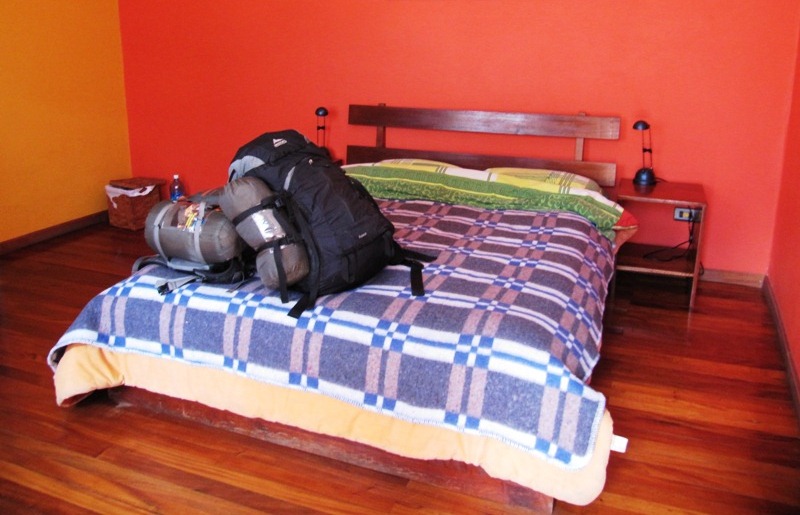
But we didn’t come to Sucre for the history.  We wanted to enjoy the easy pace of life.  First stop was to check in to our comfortable hotel named, of course, La Dolce Vita.  It was the most spacious placed we have stayed.  The friendly French owners directed us to our first restaurant, an Italian place that overlooked the whole city.

Mirador (overlook) arches

As we enjoyed our yummy nut and her pasta we ran into two of our favorite travelers – Matteo and Gosia!

The official best pizza in Bolivia – they got the award to prove it!

We had a bit of an Italian theme going on as later in our stay we joined our friends for pizza.  It was surprisingly tasty, prepared by a Bolivian guy who had lived in both Italy and Washington DC.  Pizza, wine, excellent company – what more can you ask for?

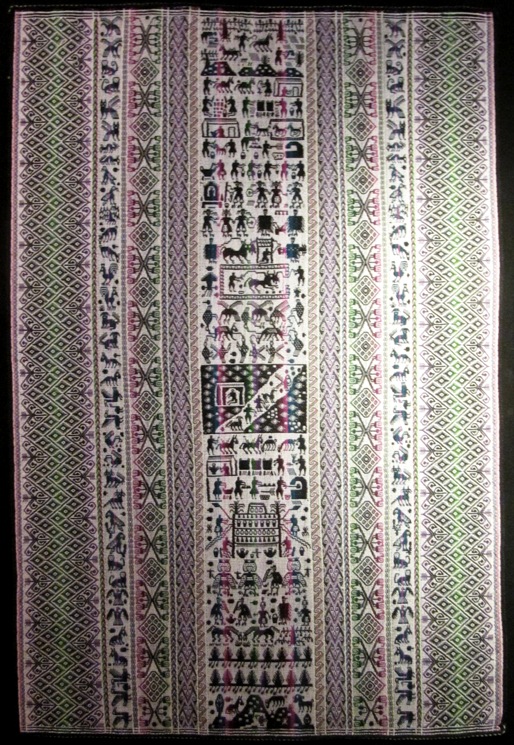
Bolivian textile with the Milky Way in the center

While in Sucre we got a little culture by going to a textile museum.  We learned how the colorful fabrics often worn by the women in traditional dress have meanings embroidered into them.  This one was particularly cool because it depicted an abstract version of the Milky Way, an important celestial body for indigenous cultures.

Sucre street

Us on the rooftop

As sunset approached we ran over to a church off the main square known for its rooftop views.

The bountiful market

Delicious fruit juice

In the mornings we made a point to head to the market, which had a bountiful display of veggies, fruits, sweets, cakes and sundries.  But our favorite part was the juice stands.  Fresh fruit blended right in front of you all for about 70 us cents.  All the juice ladies call out to entice you, offering 2 for one prices.  It was deliciously refreshing and we visited 1 to 2 times a day!

Lunch at the market

On our last day we enjoyed a market meal consisting of stewed meats, noodles, potatoes and a fermented fruit juice.  Afterwards, a final visit to a chocolate shop was a sweet goodbye to Sucre.  That is, until the chocolate melted all over the inside of my bag. Oops.

Sucre at sunset

Finding Enlightenment And Darkness in Potosí (by Nathan)

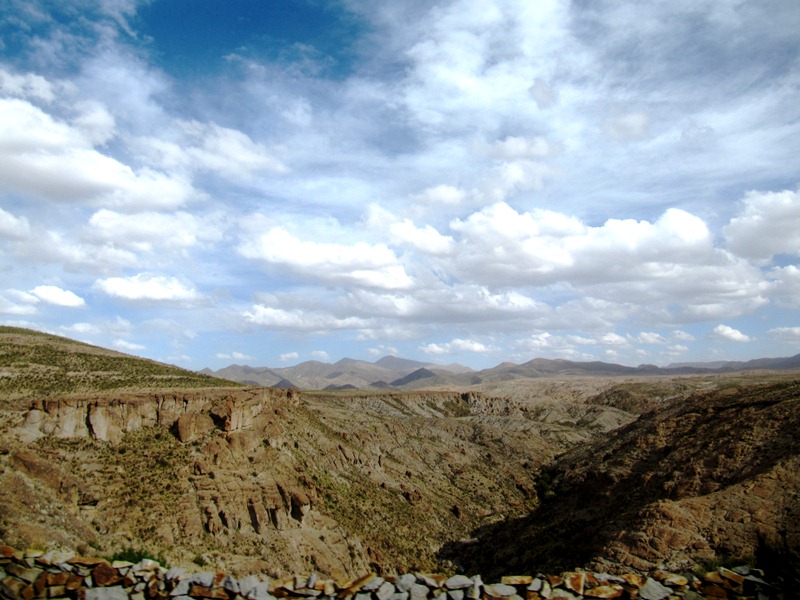
Scenic drive to Potosí

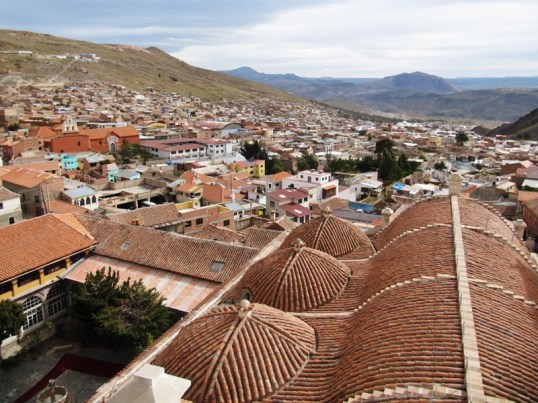
Potosí is a city of contradictions.  The contrasts of both riches and defeat are deeply rooted into the high mountains; the history of the city is glorified in majestic architecture and the poverty weathered into the faces of the people.  At first we knew little about the city other than there was a silver mine and it had an altitude unmatched by any other city of the world.  We discovered a place exploding in culture and experiences that we will never forget.
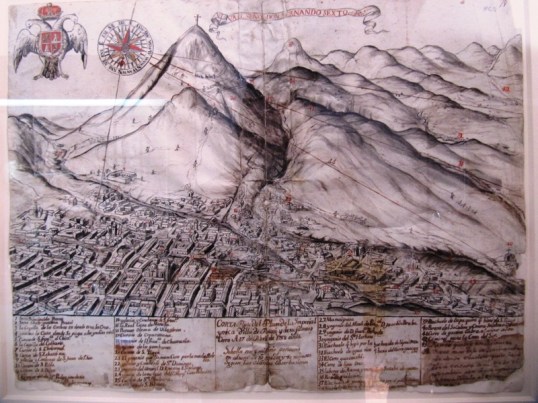
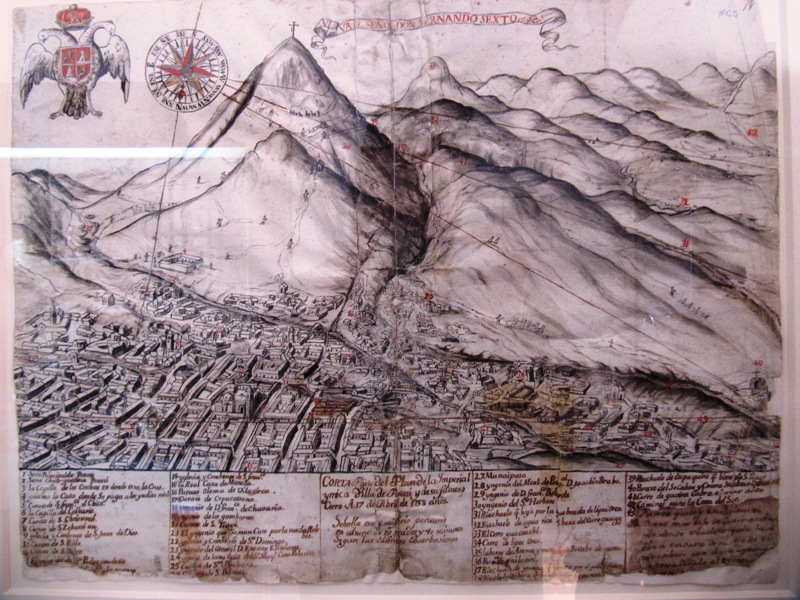
Historic map of Potosí

The city is breathtakingly high in the mountains. We avoided the taxi stand and trudged up the hillside with our backpacks on.  After a six hour bus ride a thirty minute walk at 13,500ft (4100m) seemed doable.  We are a little crazy sometimes.  At each block we sucked in deep breaths of oxygenless air and held onto our chests as our throbbing hearts tried to escape.  A little light-headed and we arrived at our hostel ready to explore the city.
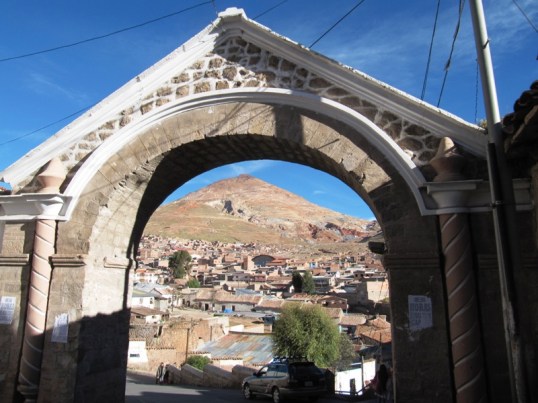
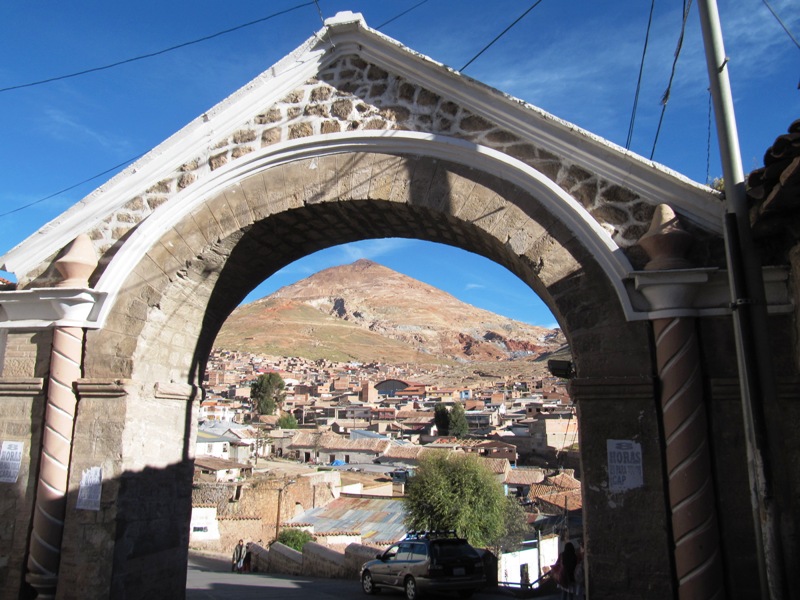
El Cerro Rico through colonial arch

Potosí has a history entwined with Spanish colonial dominance and the production of silver.  Mid-sixteenth century a meandering llama shepherd on the mountainside discovered silver flowing from beneath his campfire.  Within decades the Spanish had colonized and created the city of Potosí beneath the cerro rico (rich hill).
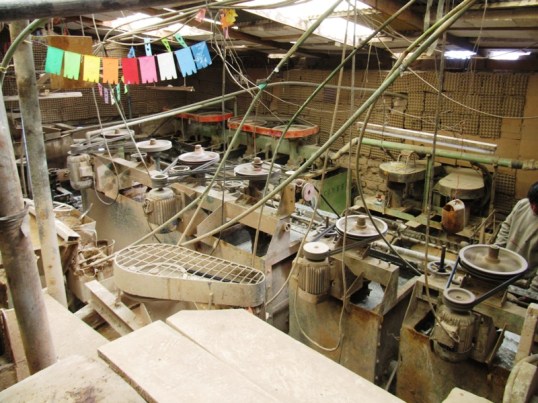
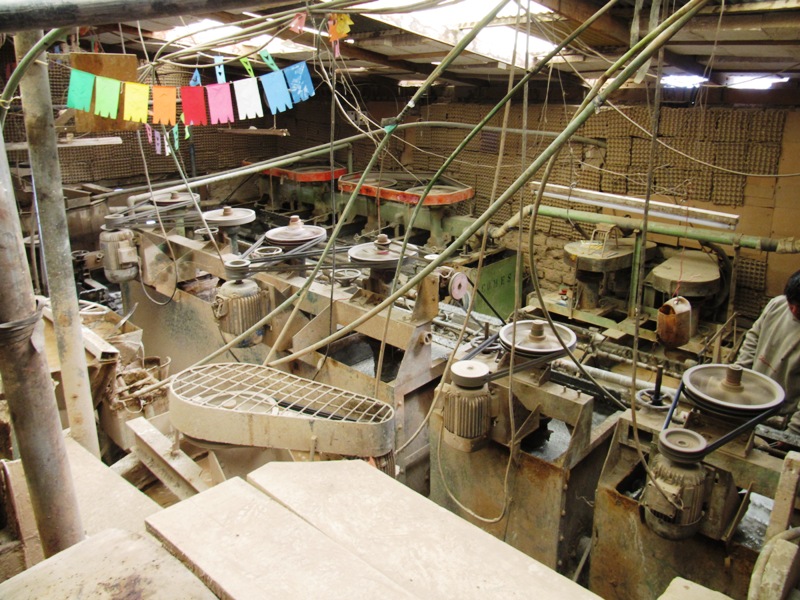
Silver extraction factory

The Spanish forced indigenous and African slaves to work the mines months at a time without seeing light.  The population of Potosí grew so much in the 17th century that over 15,000 men worked in the mines at one time and the city’s population exceeded that of Paris.  Potosí quickly became the richest and most populous city in South America.
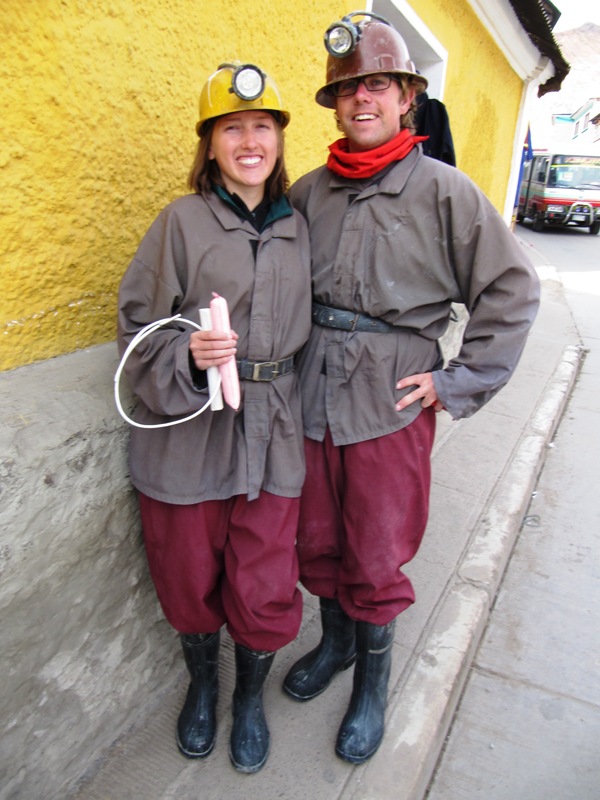
4feet2mouths Miners

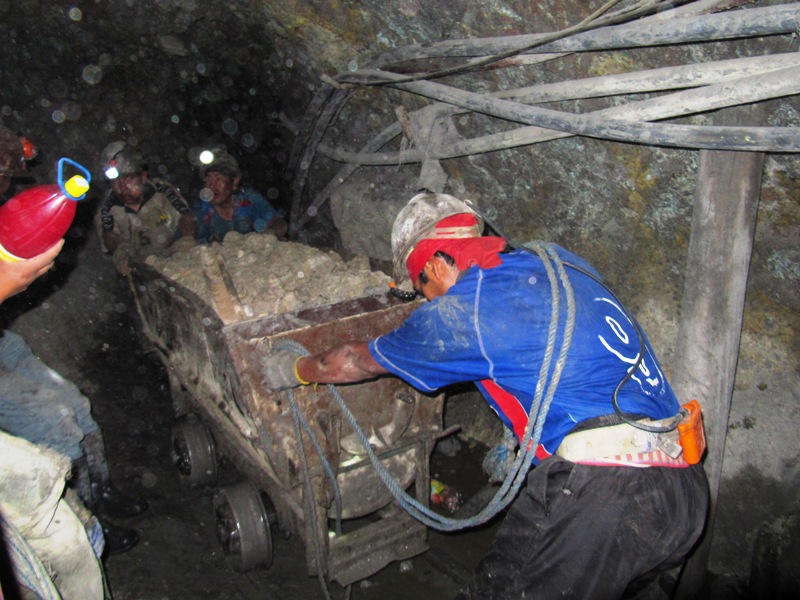
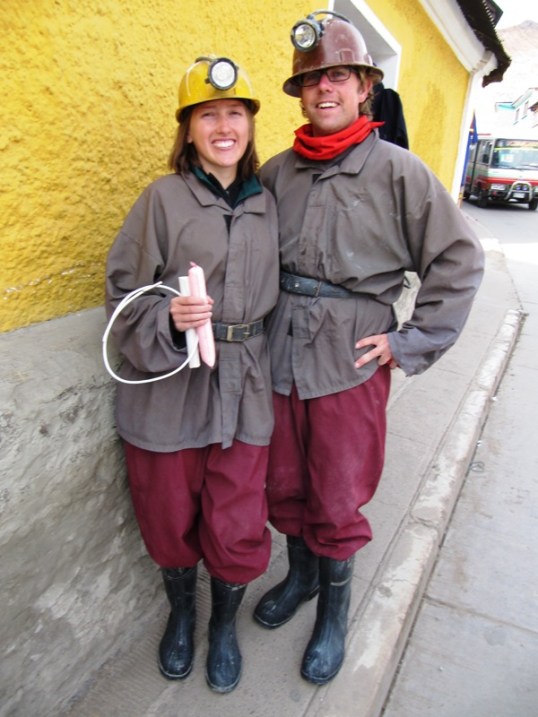
The mines are still a central part of Potosí.  They are less productive than they once were, but nevertheless over 1,500 men continue to work in over 500 mines that have swiss-cheesed through the mountain.  Carmen and I decided to see the mines for ourselves.  The unique part of visiting the mines is that tourists are supposed to bring gifts for the miners within.  With our coveralls, rubber boots and headlamps we tromped our way to the miners’ market.  We purchased a stick of dynamite, a detonator and nitroglycerine as an explosive gift (only $3!) and a couple liters of soda for the other miners.
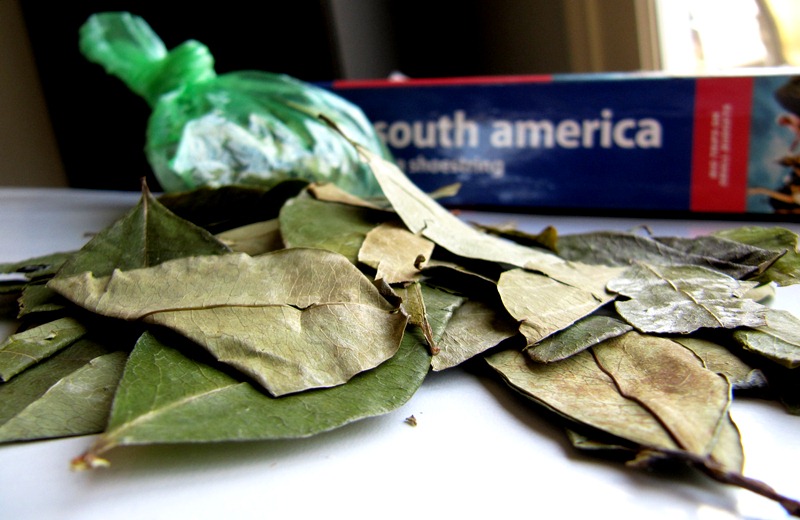
Coca leaves

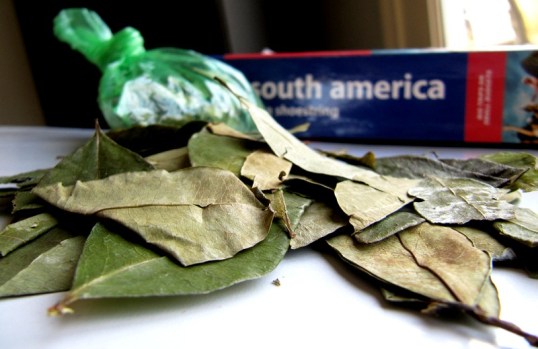
Another purchase was a bulbous bag of coca leaves.  Coca has been used in these mountains for thousands of years and it is drastically different from the connotations associated with cocaine.  The miners chew and macerate 50-200 stemless leaves and they keep the wad in a huge ball in the side of their mouths.  Throughout long hours of work the coca leaves provide energy, alertness and they suppress the need to eat.  An added benefit is that they help ease the effects of altitude sickness.  It takes 1kg of coca leaves to make 1g of cocaine along with many nasty chemicals, so chastising coca is similar to relating a cup of coffee to methamphetamines.
Enormous crystal of bolivianita

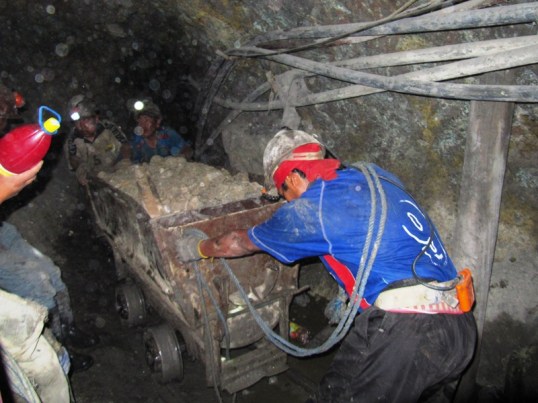
The mines were hot, 95°F (35°C) and wet and dusty.  We started in the candeleria mine and we worked our way 1000ft (300m) horizontally into the mountain.  The caverns were created 300-400 years ago and unfortunately I am taller than the smaller natives that dug the mines.  I hunched and squat-walked through the water and muck.  Then there was only a seemingly solid section of rock and an obscured cavity just larger enough to crawl on our stomachs.  The air was thick and the walls wet and the rock dark with an occasional sparkle of silver or pyrite or a stripe of yellow sulfur.
Los Mineros

“Vamos, vamos vamos!” Our guide yelled at us.  We rushed along the tunnel to an opening and he pushed us against the wall.  The slow rumble of the mine became louder; suddenly a two ton cart full of rocks rushes passed us with one miner clinging onto the back.  Our guide stuffs a bottle of Fanta in the cart and a drawn out “graciaaaas” reaches us from the depths of the darkness.

We climbed to the inner depths of the mine.  We would poke our heads down a little hovel then scale the dark cliffs within.  At first we were all cautious of the 300 year old pieces of wood that braced the openings, but when looking into the abyss all of us scratched and clung onto every foothold and support we could find.  Finally we reached the bottom, level four and 275 ft (80m) down.  We found a thirty-two year old miner that looked over fifty that spent all day hammering two holes for dynamite.  At the end of each day he would set off the charges and carry out the rocks in a backpack.
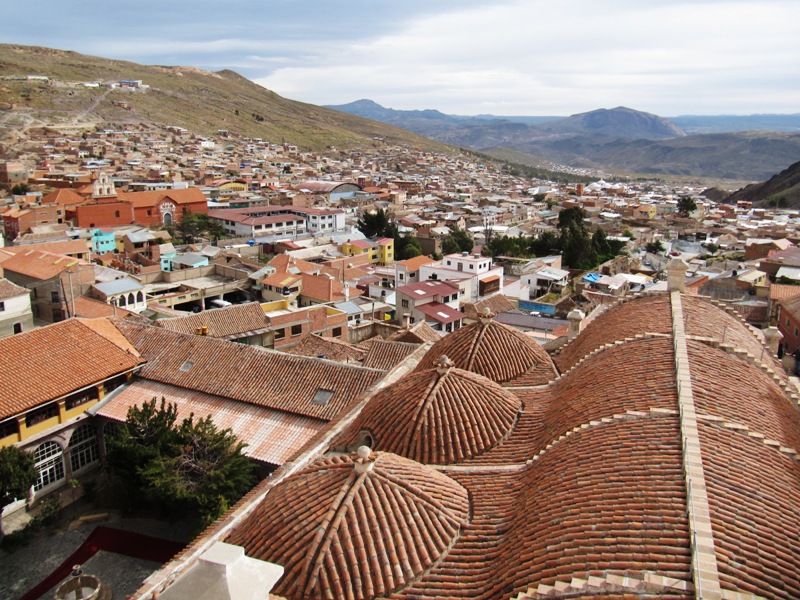
The city of Potosí

The lives of the men are hard in the mines.  The expected lifespan of a miner rarely exceeds fifty years and most die from silicosis, falling rocks or misplaced explosives.  Children also work in the mines; boys as young as ten years work to support their families.  One thing is for certain, they can earn four times more in the mines than in the city of Potosí.  So the men work extremely hard for a few ounces of silver and their lives remain difficult.
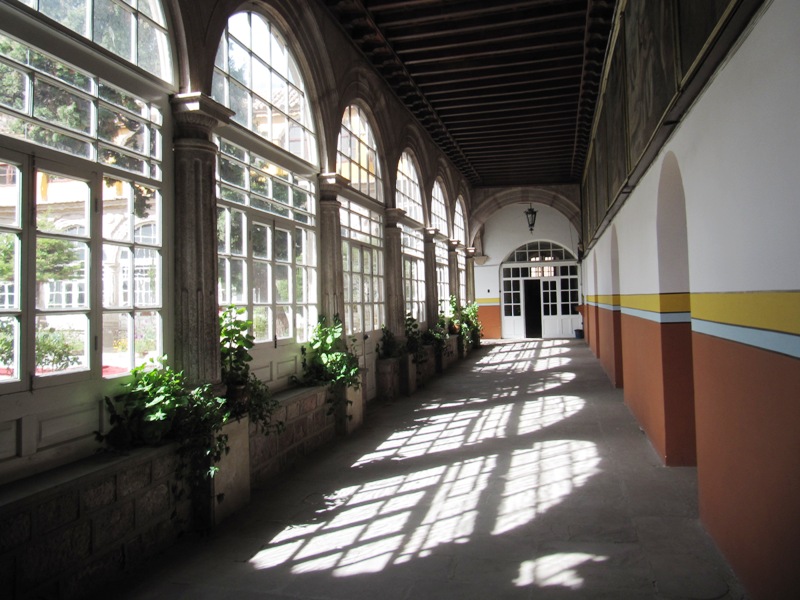
Inside the 450 year old Convento San Francisco

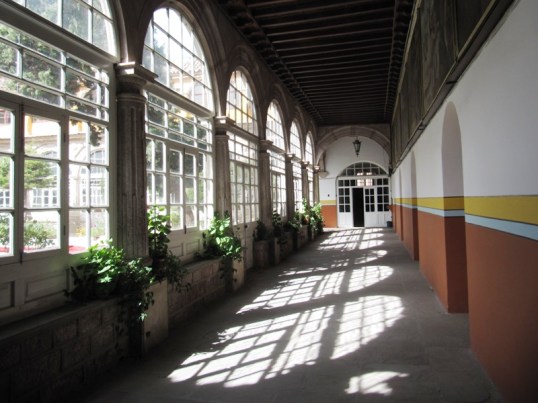
The dichotomy of life in Potosí extends to religion as well.  Outside in the light is a community passionate about the Catholic Church. Potosí has several beautiful colonial churches and the San Francisco was constructed in 1547 as a slightly smaller version of St. Peter’s Basilica.  In the darkness of the mines the people pray to a different god, “Tio,” the devil of the mountain.  Their daily offerings of 96% moonshine-like alcohol and coca leaves to clay statues in the caves are a way of satisfying the mountain so that they remain protected and the veins of silver remain plentiful.  The miners live these two lives: hours of darkness and heat in the mountain and a life of family and church in the city.  After four hours of clambering around in the mines the light at the end of the tunnel was thrilling. Squinting and sweating I finally straightened out and looked into the city of Potosí.
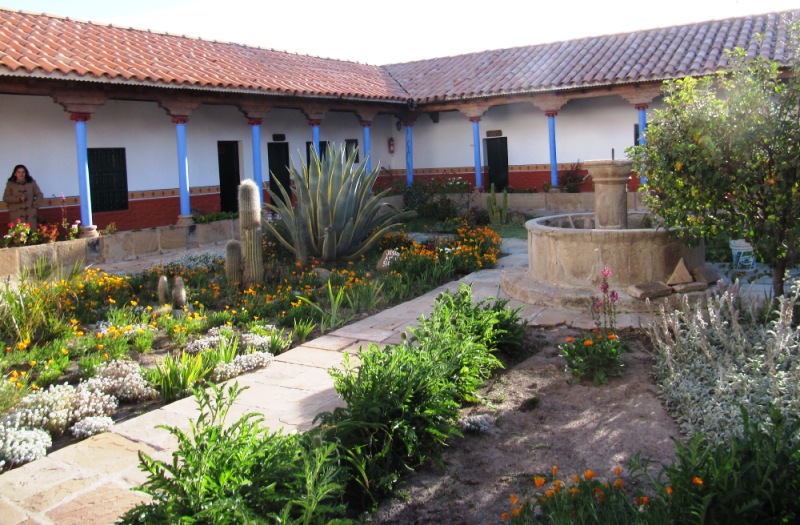
Courtyard in Convento Santa Teresa

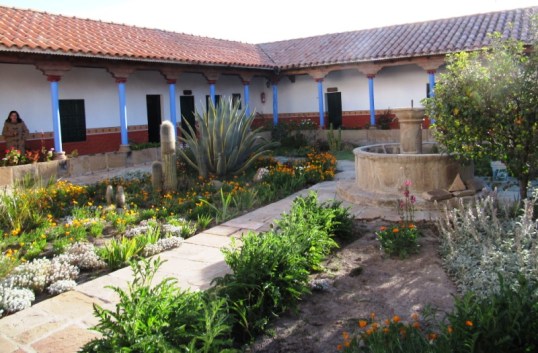
Potosí was also home to one of the strictest nunneries.  The upper-class Spanish followed a regiment with the lives of their children.  The first born married wealthy into the colonial upper class, the third born served the military and took care of the parents in old age. The second child was dedicated to the church.  In the case of Potosí families paid an equivalent of $100,000 as a dowry for their daughter to become a Carmelite nun at St. Teresa’s.  The rules of the nunnery were so strict that the nuns could only speak one hour per day and there was no communication to the outside world.  Families could visit one hour per month and they were not allowed to see or touch their daughter.
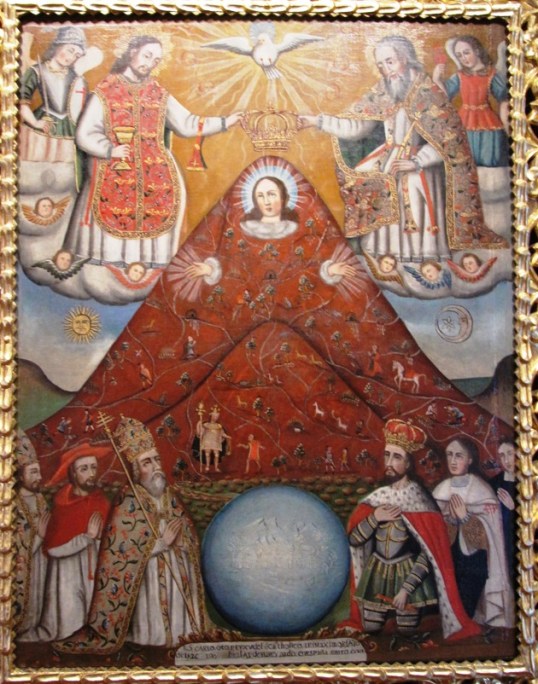
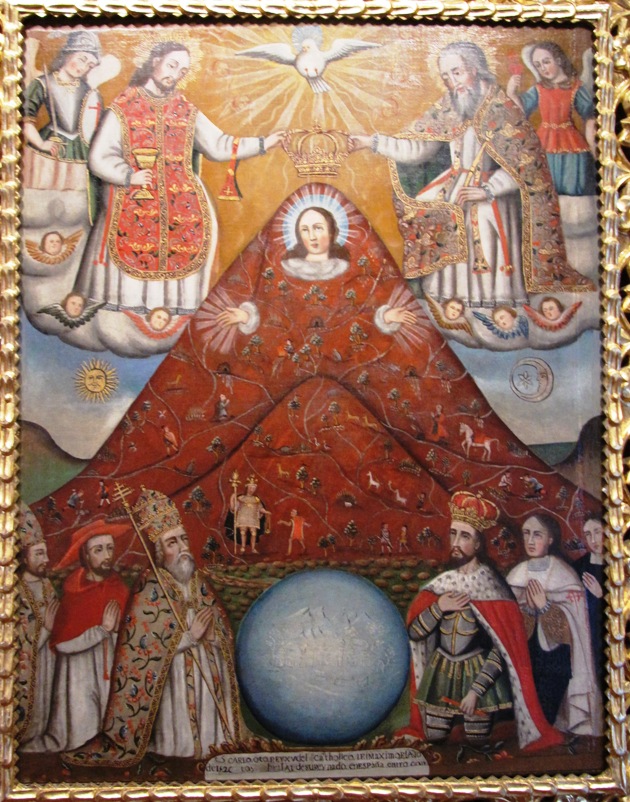
La Virgen De Cerro Rico

We observed a trend in many of the religious paintings.  The virgin Mary appears in many places as would be expected in a catholic country, but the shapeless mound that is typically meant to be non-seductive had been adapted in Potosí to be la sagrada virgin de cerro rico.  During pre-colonial times  each mountain was a god, with colonialism the traditions of the indigenous people merged with the icons of the catholic church. 

Other paintings and figures show a bloody version of Jesus on the cross.  This graphic imagery comes from the indigenous painters intertwining their own pain and suffering from the Spanish colonial rule into their faith in a new religion.
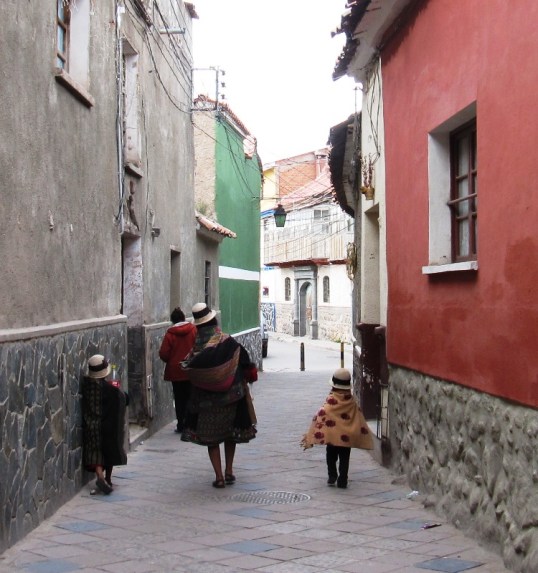
Traditional outfits on colonial streets
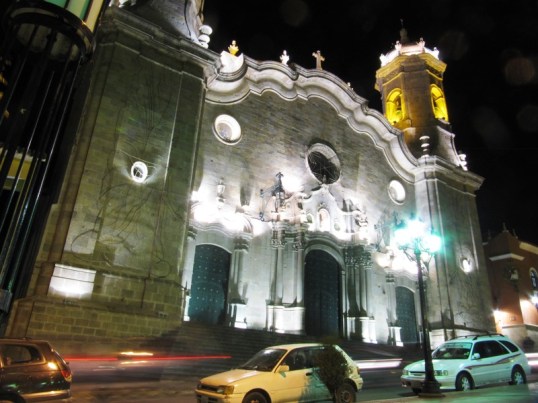
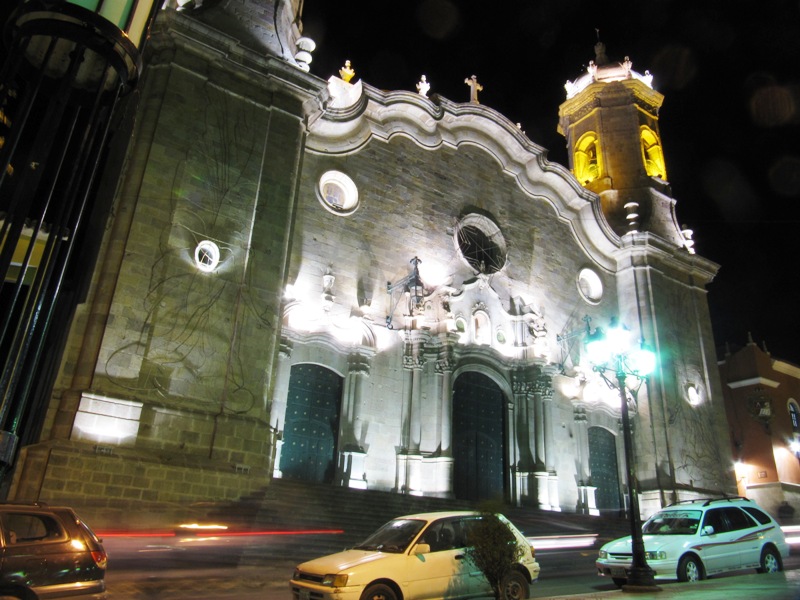
Cathedral by night

Walking the streets of Potosí we were constantly welcomed with a splash of history and tradition.  A 400 year old church and a cobble-stoned path were all common sites.  On one occasion we crossed a mother and children each wearing a traditional bowler hats.  In the evening the brightly lit cathedral was a beacon of the city.
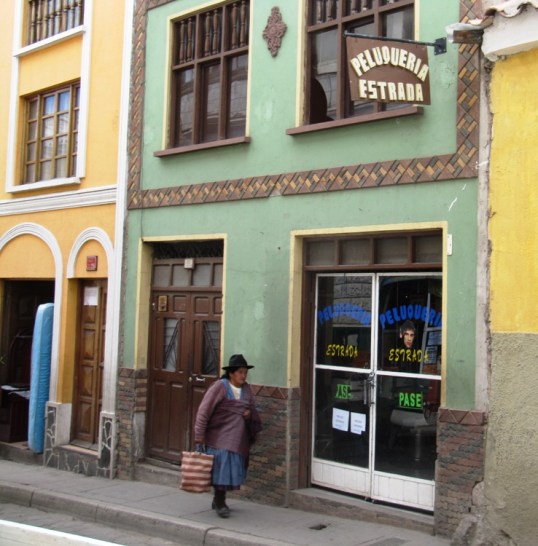
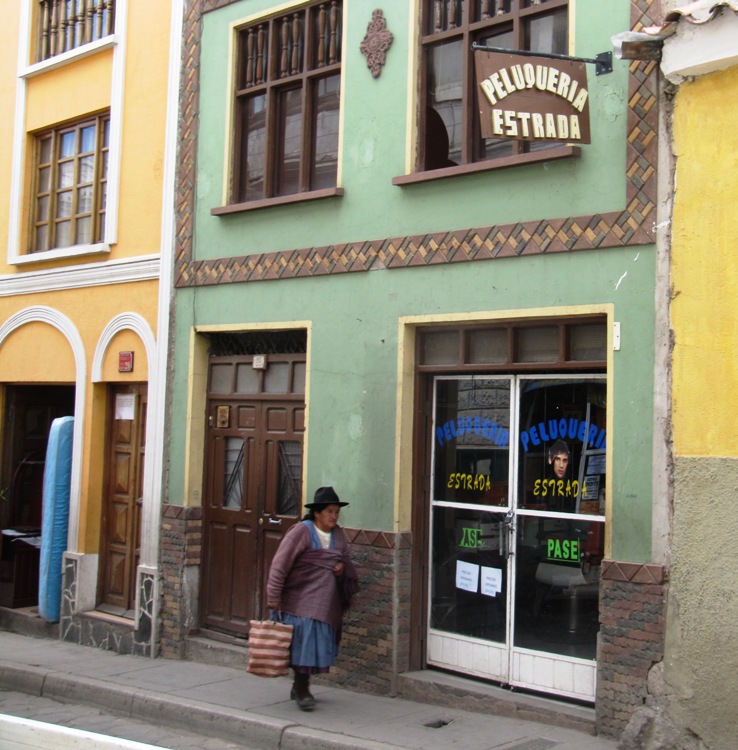
Barbershop in Potosí

I too needed enlightenment and getting a haircut seemed to be the easiest way to lighten the weight on my shoulders.  I had been scared to get a haircut for many months because Argentine men have notoriously horrible hair styles.  Throughout our travels we saw multiple rat-tails, lobster-tails and mullets and I refused to pay for something so wrong.  In Potosí I found a nice shop, but I still shook my head vehemently when the barber pointed at a poster of boys with mohawks, fauxhawks and bowl cuts.
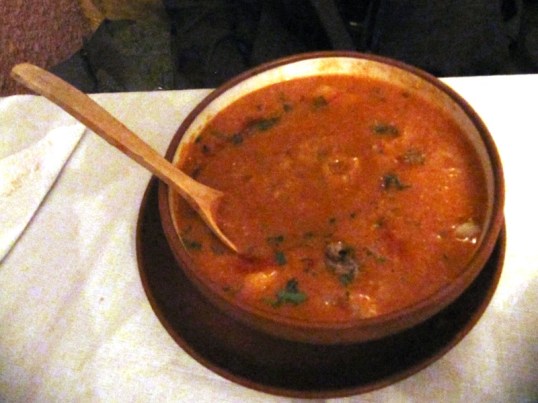
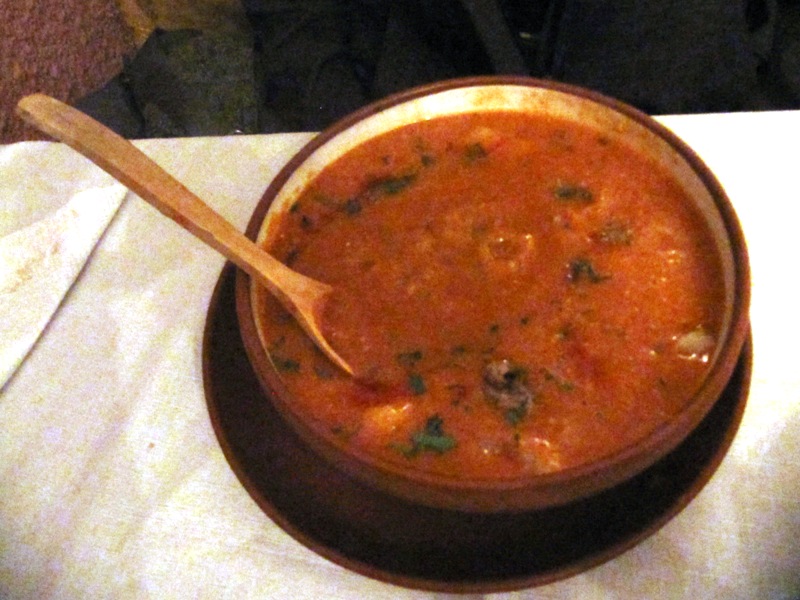
Kala purca at Puka Wasi restaurant

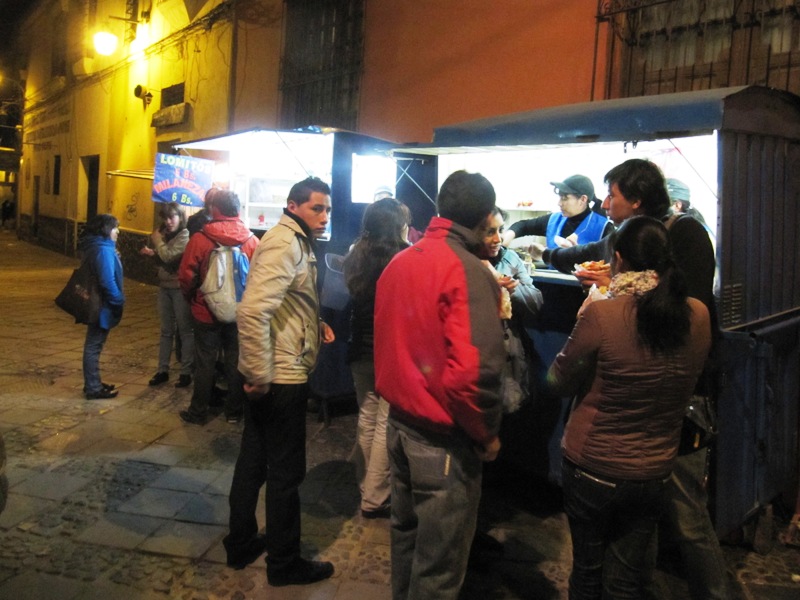
With my ears lowered we were in search of some food.  We found a great little restaurant with some local quechua favorites.  Kala purca is a local stew of meat and potatoes that arrives with a scalding volcanic rock bubbling and gurgling in the bowl.  Another night we found a street side snack of lomito and milanesa sandwiches cooked out of tiny stalls.  Each sandwich was doused with an array of sauces, topped with fries and spicy salsa.
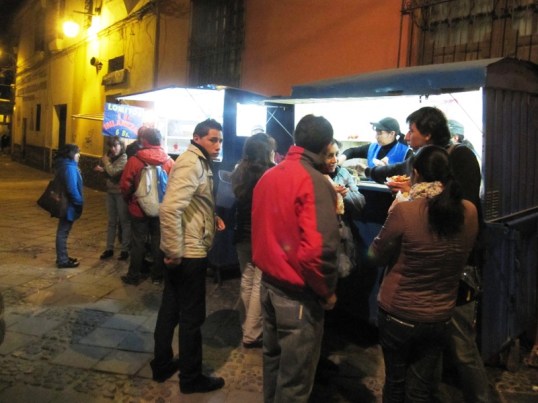
Street food in Potosí

Potosí is a charming colonial city.  Carmen and I loved the historic architecture and the rich culture throughout the city.  From this one city, we were gaining an understanding of how Bolivia’s history affects its present.
Hop, Skip and a Jump through Salta and Humahuaca (by Carmen)

Historic Cabildo building

We had two more towns scheduled for Argentina before arriving in Bolivia.  First we hopped to Salta. I’ll admit I had high expectations for Salta and for this I blame House Hunters International.  This is one of my favorite TV shows though I only catch it occasionally on my parents’ cable. The basic formula is this: a person/couple/family is moving abroad, they walk through 3 homes each with advantages with disadvantages, and then there is the suspense of guessing which one they choose!  I just love seeing how people live in other countries. Before the trip I caught an episode on Salta. The family moving there had been traveling for a year looking for a new place to call home and this is where they moved.

Colorful Church

I stepped off the bus expecting to be charmed.  Instead, on our walk to the hostel we encountered stagnant rain puddles and constant cars shoving their way through intersections without signals or stop signs. Overall, we were not too impressed. We eventually found the pleasant bits: a café lined central square, ornate churches, a bustling market where we drank beer while watching a futbol game.   The city started to grown on me but nothing enticed us to stay too long so we skipped on to Humahuaca.

Street in Humahuaca

Humahuaca is a tiny town in a huge canyon of the same name.  The town is cute but a little tourist ready so we spent our afternoon there exploring the surrounding nature.

Striped Humuhuaca hillside

Just 30 minutes from town and we were on a cliff overlook observing the striations of red and white.

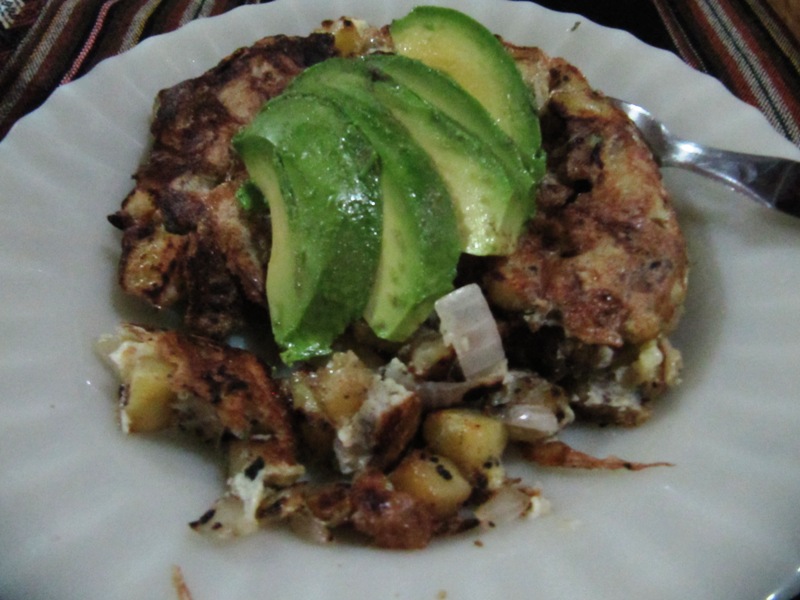
Tortilla española de C&N

Back at the hostel we cooked up an easy traveler’s dish – tortilla española.  Basically, this is an omelet with thinly sliced fried potatoes and onions. We topped it with avocado, paired it with wine and were good to go!  While cooking our meal it was fun to rub elbows (literally) with other travelers in the tiny kitchen.  We swapped stories of where we’ve been and where we plan to go.

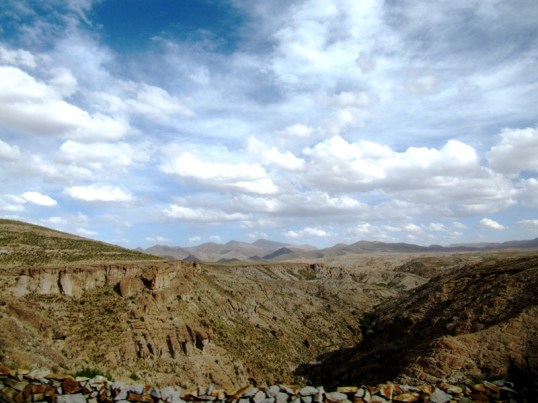
Landscape of Humahuaca Canyon from bus

The next morning we crawled out of our warm beds to catch an early bus to the Bolivian border.  Salta and Humahuaca proved to be enjoyable pit stops before we jumped out of Argentina.

Checking Out the Hype in Curitiba (by Carmen)

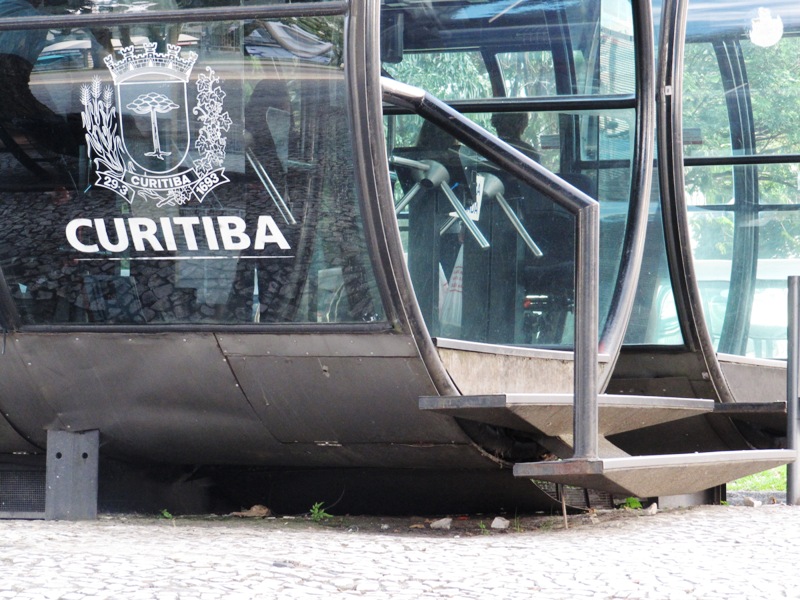
Curitiba seal on bus tube

Curitiba seal on bus tube

Anyone who knows me knows that I love transit.  Buses, trains, streetcars, subways…they all hold a special place in my heart. I had drafted a long paragraph on all the reasons I feel this way; how transit is an important part of environmental sustainability, social equity, economic efficiency and public health.  But Nathan said it was a bit of a snooze for people who aren’t as passionate about this topic.  So I’ll spare you the details.  But I will say this:  Everyone deserves a balanced transportation system (including transit, walking, biking and driving) that gives people choices on how to travel depending on when, why and where they are going.

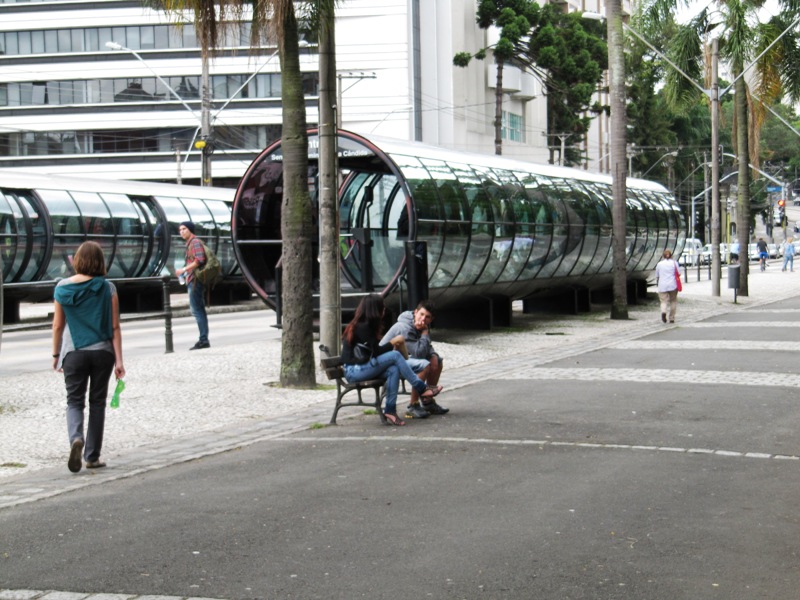
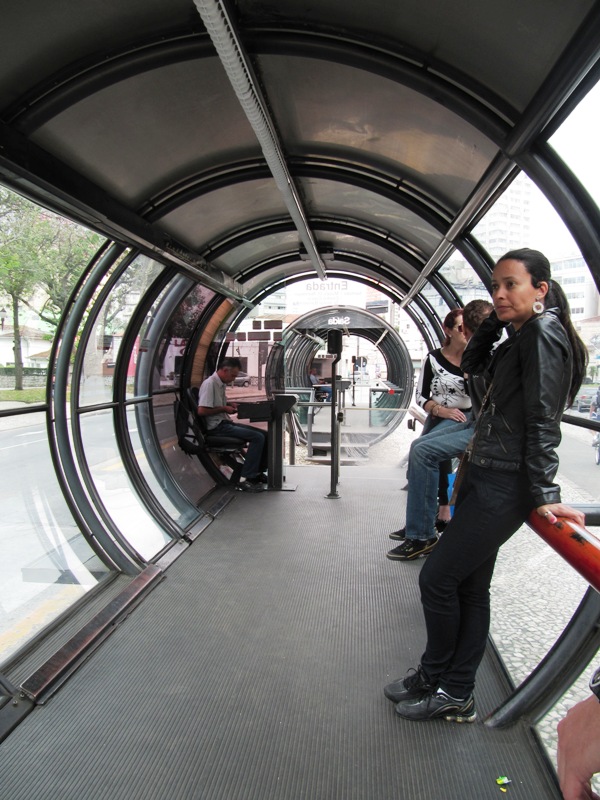
Bus rapid transit stop

Bus rapid transit stop

All this transit talk is a preface to my post on Curitiba.  This city in Brazil is known throughout the world for its investment in bus rapid transit (BRT).  The BRT system is essentially an above ground subway with buses instead of train cars.  As they built the BRT in the 1970s, the government encouraged tall buildings along the routes so that more people could benefit from the system.  What more could a transit lover ask for?

Waiting for the bus

Waiting for the bus

I’ve heard a lot about Curitiba over the years and I’ve often wondered if it would live up to the transit hype.  Also, would there be anything worth seeing besides the BRT?  And of course, the bottom line for us –  how is the food? The answer to these questions are yes and good!

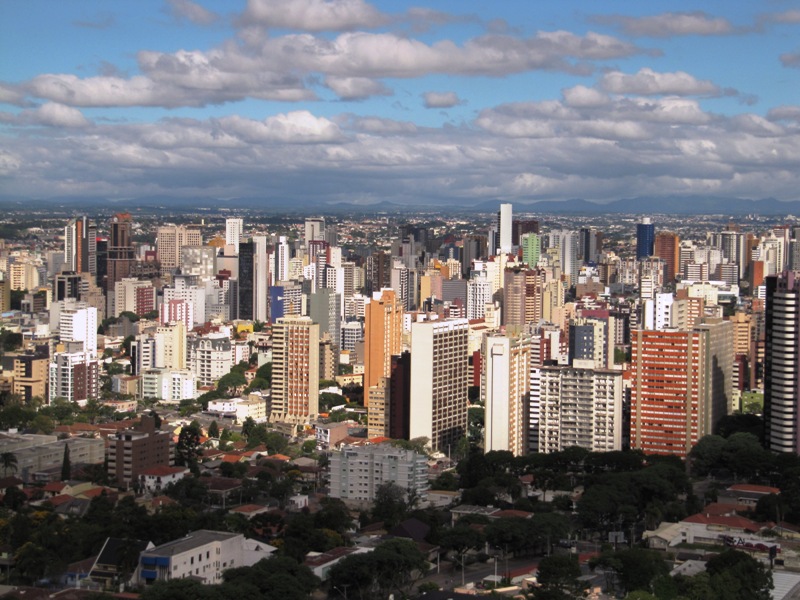
Curitiba Skyline

Curitiba Skyline

Curitiba Skyline 2

Curitiba Skyline 2

The success of these bus lines is evidenced by the dense land uses lining the routes.  These development patterns are no accident.  The city planners encouraged tall buildings in these areas to enable more people to take advantage of the transit.  My only complaint is that they did not always do enough for pedestrians.  Once people left the safety of the bus tubes, there are areas with no crosswalks or lights for people to safely cross busy streets.  But in the end, I was impressed and happy to finally see this transit system we (ok, more specifically transit fanatics) so often put on a pedestal.

Colonial plaza

Colonial plaza

There was more to the city than good transit.  It also had a cute colonial center which on Sundays turns into a huge market.  We found everything from bus key chains to pierogies!  Pierogies (Polish dumplings) are a strange thing to find in Brazil but this area actually had a lot of German and Polish immigrants in times past.

Brazil meets Germany at Schwarzwald´s

Brazil meets Germany at Schwarzwald´s

Which is why they had Schwarzwald´s, a German restaurant modeled after a medieval Bavarian beer hall.  I couldn´t get enough of their submarinos or mini-steins with pictures of Curitiba on them.  They would stick these in your glass of beer for no other reason than as a set of trophies to how many drinks you have had.

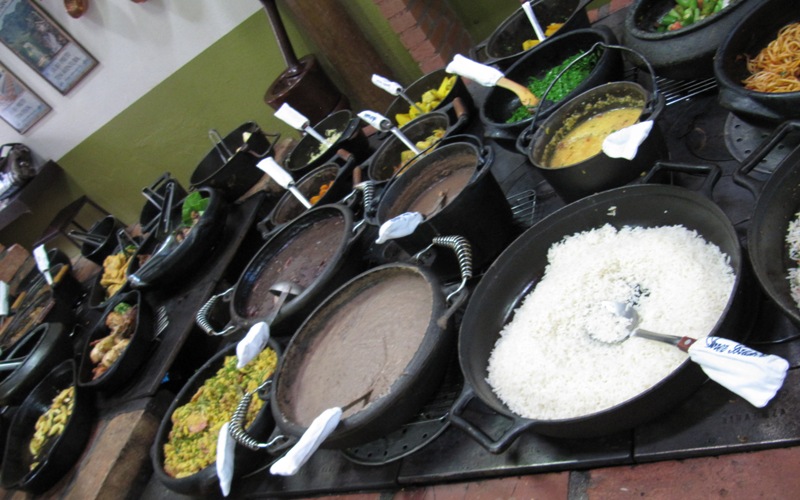
Tempero Brazilian buffet

Tempero Brazilian buffet

0.65 Kg of deliciousness

The next day we filled up our bellies with the best buffet we found in Brazil.  Tempero de Minas is a per-kilo restaurant, meaning they charge by the weight of your food.  The stews and veggies looked so good we had no trouble filling our plates to the brim.  Fortunately, it tasted as good as it looked.  Savory, slow-cooked goodness.

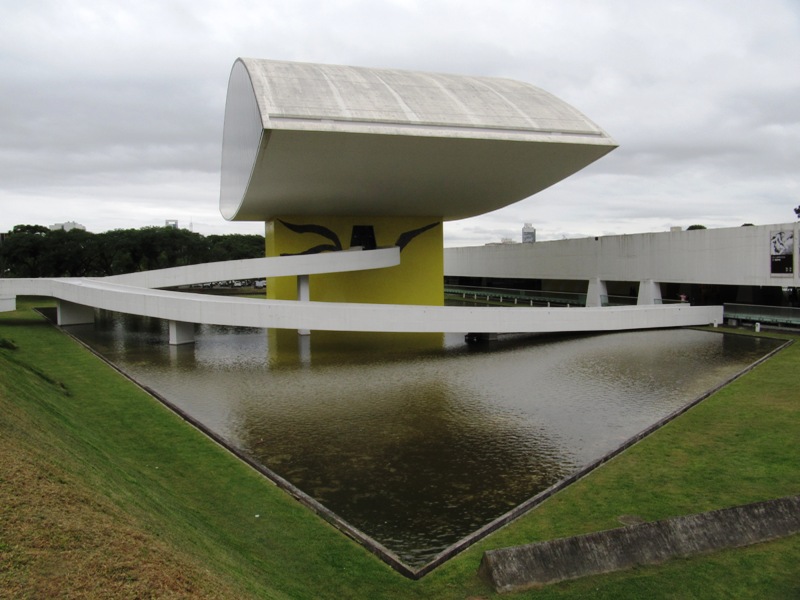
Oscar Niemeyer Museum

Oscar Niemeyer Museum

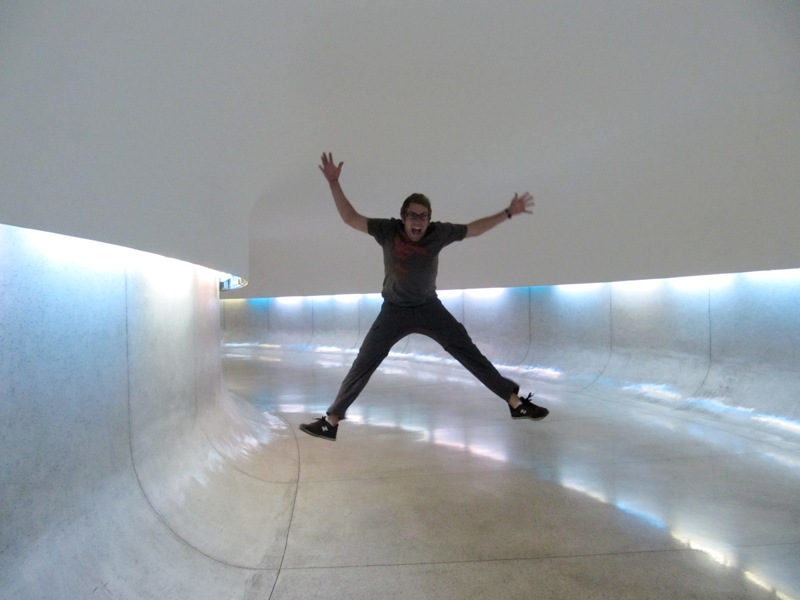
Leaping Nathan

Besides transit, a major attraction of Curitiba is the Oscar Niemeyer Museum.  It mostly consists of modern art in a basic square building with this funky “eye” shaped bit in front.  We enjoyed ambling through the ultra modern architecture although the eye was under renovations.
Opera House

Opera House

Another much advertized sight was the opera house.  It is a bare steel structure that seems to float above a lagoon.

Samba rehersal in a bar

Samba rehersal in a bar

After the sights we still had some energy to go out on the town.  I had heard about a cool samba club and since our time in Brazil was coming to an end, I couldn´t pass it up.  Of course the club was completely empty until 12am so we waited in a bar across the street.  Fortunately, this was where the band was warming up so we got a very personal concert.
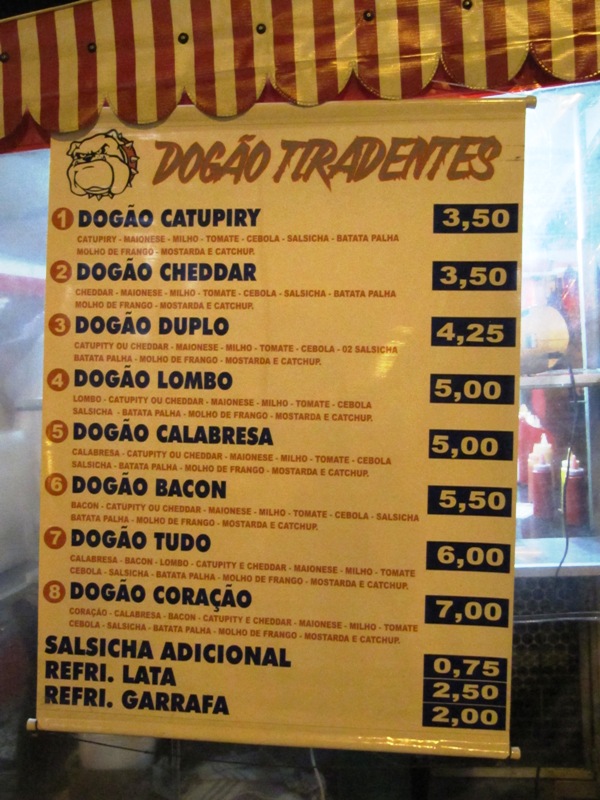
Fun hot dog stand

Fun hot dog stand

One more food adventure: hot dogão.  Everything in Portuguese ends with “ão”, pronounced “ow”, so why would hot dogs be any different?  We found them at a little stand on Plaza Tridentes that was hopping with people.  The strange toppings convinced us to try one.  Truth be told it wasn´t the greatest dog but the novelty factor was worth it.

4 feet on Portuguese style sidewalk

4 feet on Portuguese style sidewalk

Overall, I´m so happy to have made it to Curitiba. It deserves its reputation as an inspiration for bus transit systems.  Also, special thanks to Nathan for supporting my transit geek out excursion : )

Me headed to the bus rapid transit boarding stations

Me headed to the bus rapid transit boarding stations

Post Navigation