4 feet 2 mouths

walking and eating our way around the world

Archive for the tag “Towns”

Hop, Skip and a Jump through Salta and Humahuaca (by Carmen)

Historic Cabildo building

We had two more towns scheduled for Argentina before arriving in Bolivia.  First we hopped to Salta. I’ll admit I had high expectations for Salta and for this I blame House Hunters International.  This is one of my favorite TV shows though I only catch it occasionally on my parents’ cable. The basic formula is this: a person/couple/family is moving abroad, they walk through 3 homes each with advantages with disadvantages, and then there is the suspense of guessing which one they choose!  I just love seeing how people live in other countries. Before the trip I caught an episode on Salta. The family moving there had been traveling for a year looking for a new place to call home and this is where they moved.

Colorful Church

I stepped off the bus expecting to be charmed.  Instead, on our walk to the hostel we encountered stagnant rain puddles and constant cars shoving their way through intersections without signals or stop signs. Overall, we were not too impressed. We eventually found the pleasant bits: a café lined central square, ornate churches, a bustling market where we drank beer while watching a futbol game.   The city started to grown on me but nothing enticed us to stay too long so we skipped on to Humahuaca.

Street in Humahuaca

Humahuaca is a tiny town in a huge canyon of the same name.  The town is cute but a little tourist ready so we spent our afternoon there exploring the surrounding nature.

Striped Humuhuaca hillside

Just 30 minutes from town and we were on a cliff overlook observing the striations of red and white.
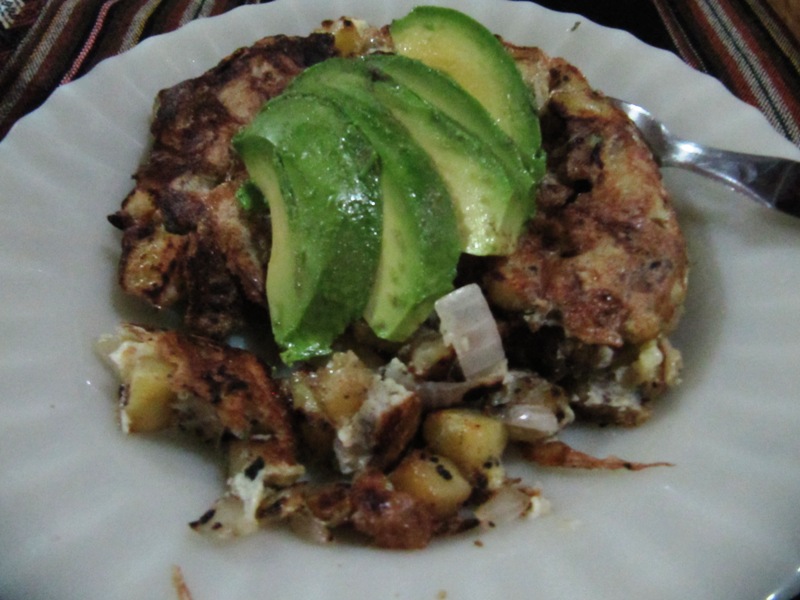
Tortilla española de C&N

Back at the hostel we cooked up an easy traveler’s dish – tortilla española.  Basically, this is an omelet with thinly sliced fried potatoes and onions. We topped it with avocado, paired it with wine and were good to go!  While cooking our meal it was fun to rub elbows (literally) with other travelers in the tiny kitchen.  We swapped stories of where we’ve been and where we plan to go.

Landscape of Humahuaca Canyon from bus

The next morning we crawled out of our warm beds to catch an early bus to the Bolivian border.  Salta and Humahuaca proved to be enjoyable pit stops before we jumped out of Argentina.

Cozy Cafayate (by Carmen)

Cafayate enamored us from the beginning. Even on the bus ride into town we were admiring the neat streets and cozy feel of the place.  Like many Argentine towns Cafayate is organized in colonial Spanish grid system with a central square.

Alfajores factory by night

Just off the square was a sweet alfajores factory with traditional flavors such as coconut and chocolate dipped, as well as some unusual ones like lime.

A dozen delicious empanadas

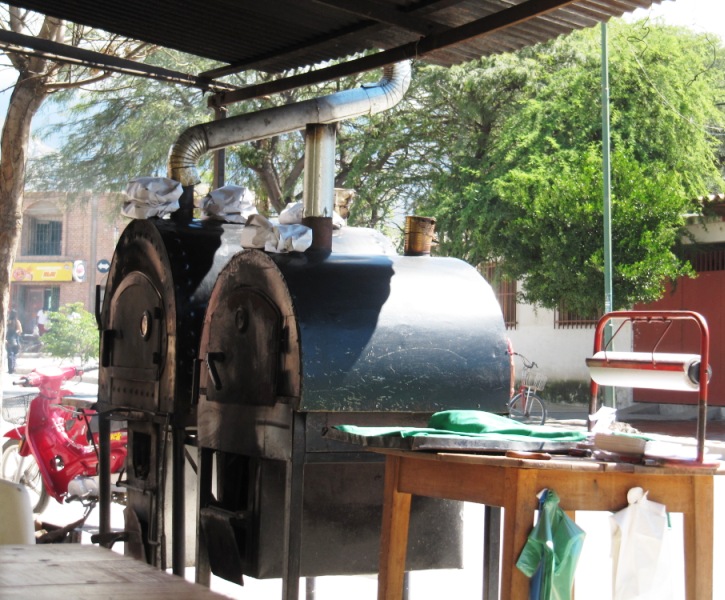
Wood-fired empanada oven

But we could not survive on sweets alone. Across the street from our hostel we were enticed by iron wood-burning ovens puffing smoke.  Inside were trays upon trays of salteñas (empanadas filled with meat, onions, olives and hard-boiled eggs).  We ordered a dozen along with wine and soda water to make a spritzer (very popular in these parts).

Red cliffs and cactus

The next day was Sunday, which in small town Argentina means everything shuts down.  So we decided to go on a hike.  Based on the guidebook and information from the hostel we chose a 4 hour trek to a waterfall deep in a canyon.  We were expecting a moderately difficult but fairly straightforward hike. Of course, it didn’t quite work out that way.

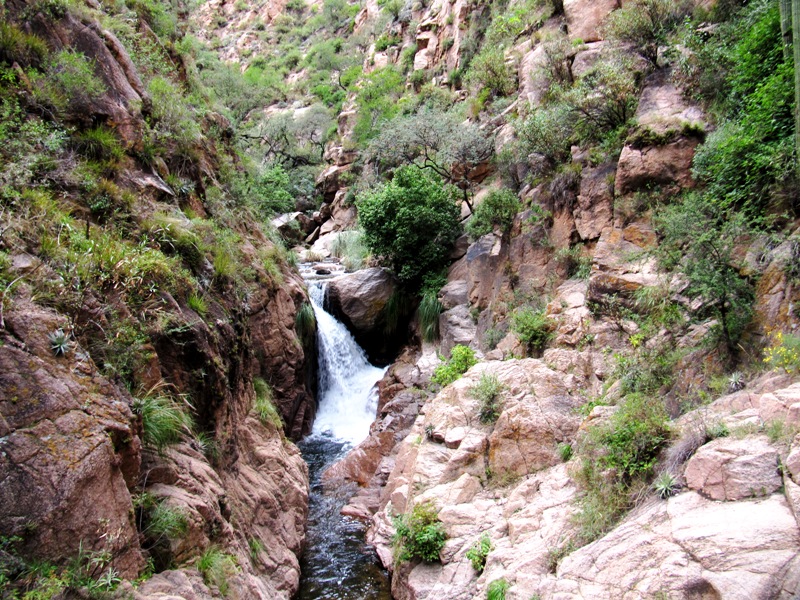
Canyon and creek

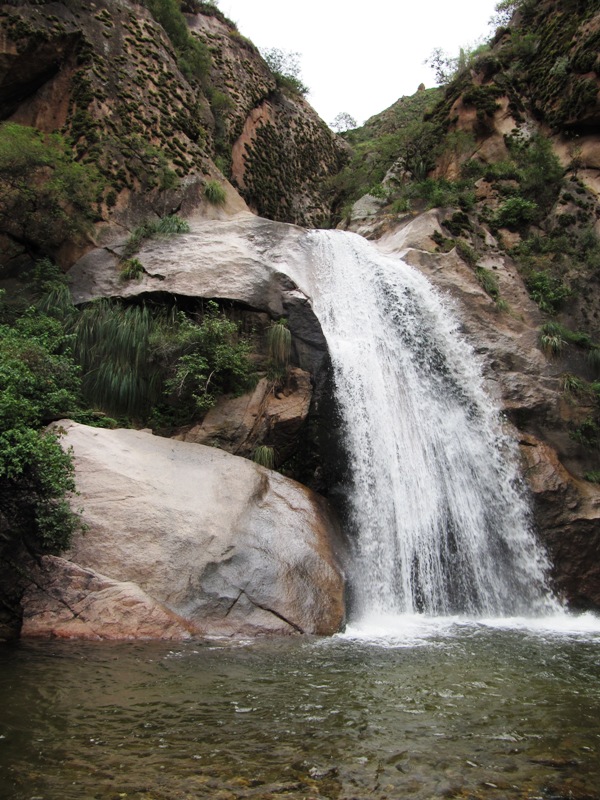
Cafayate waterfall

The “trail” was often difficult to find and involved a lot of scrambling up cliffs. The path kept disappearing into the river that carved the canyon.  These were no simple crossings but some of the most difficult I’ve ever encountered.  They stressed me out but Nathan happily skipped from boulder to rock like a pro. (Though he was less happy when I accidently knocked him into the water as he tried to help me cross.  Twice!)  The invisible path, the river crossings, and the lack of any other hikers started to get to me. But with tired muscles and soggy boots we survived the hike, happy to have enjoyed the spectacular scenery.  The waterfall was beautiful, gushing 10 meters into the red rocks below.

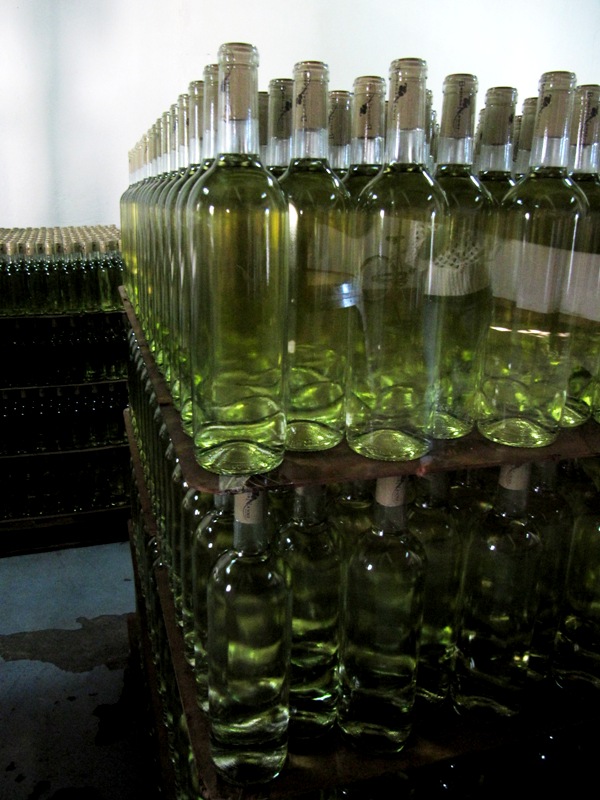
Recently bottled torrontés wine

Ok, time for the real reason we went to Cafayate – wine!  We learned in Mendoza that the white torrontés wine was from here.  But all the northern wineries also produced malbecs and cabernet sauvignons that were more tannic than those in the south. Our favorite winery of Cafayate, Nanni, is actually in the town itself.  It produced crisp torrontés that straddled the balance between sweet and dry.

Bodega de Esteco

Another great bodega was Esteco.  Beautiful setting, delicious wine, wide selection.  But they lost points for offering wines by the glass instead of a tasting.

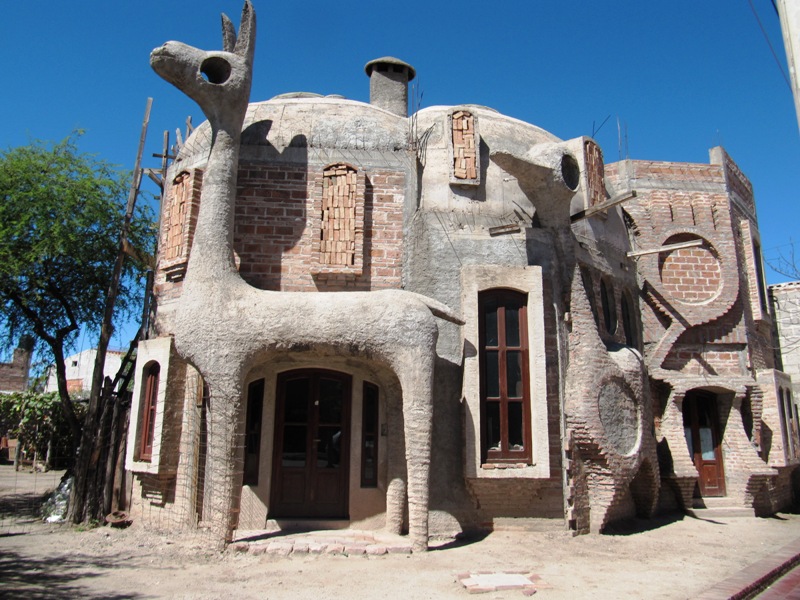
Crazy llama building

There were many more: Finca Las Nubes for its excellent torrontés, El Transito for its rich cab, Domingo Hermanos for its goat cheese.

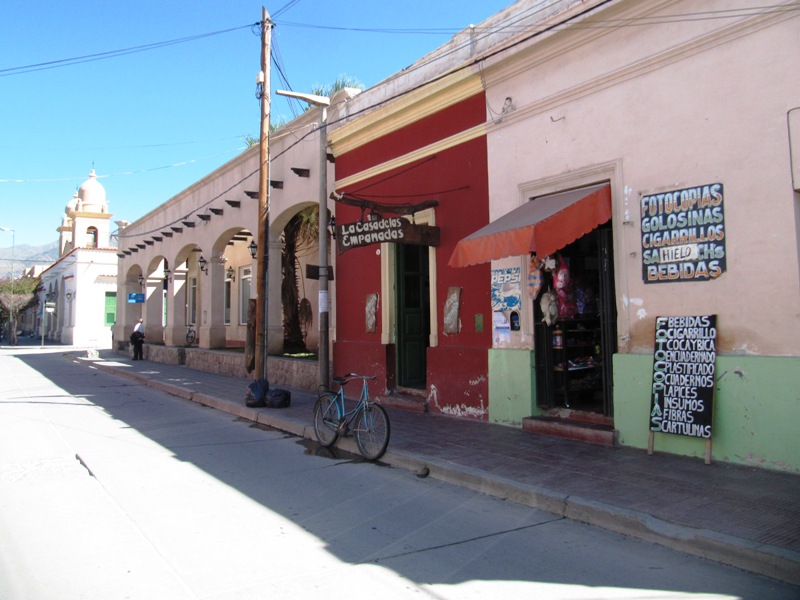
Cafayate typical street

Although we came here primarily to check out the wine scene, we ended up making many new friends.  An Aussie couple we met at a winery, a Swedish pair at an empanada lunch, and an English couple we shared wine and dinner with at the hostel.  Cafayate is just that kind of place.

Tafí del Valle (by Carmen)

Mountains with clouds and shadows

Lonely Planet is both a blessing and a burden.  Their South America on a Shoestring guide is basically the travel bible for the continent.  It is packed with information you need from bus times and costs to great places to pick up empanadas.  Some people don’t “do” Lonely Planet to make themselves feel like more original travelers.  Nathan and I still find it valuable to check out their recommendations but keep our eyes open for serendipitous discoveries as well. At the same time, depending on a single text means that you end up where all the other gringos go.

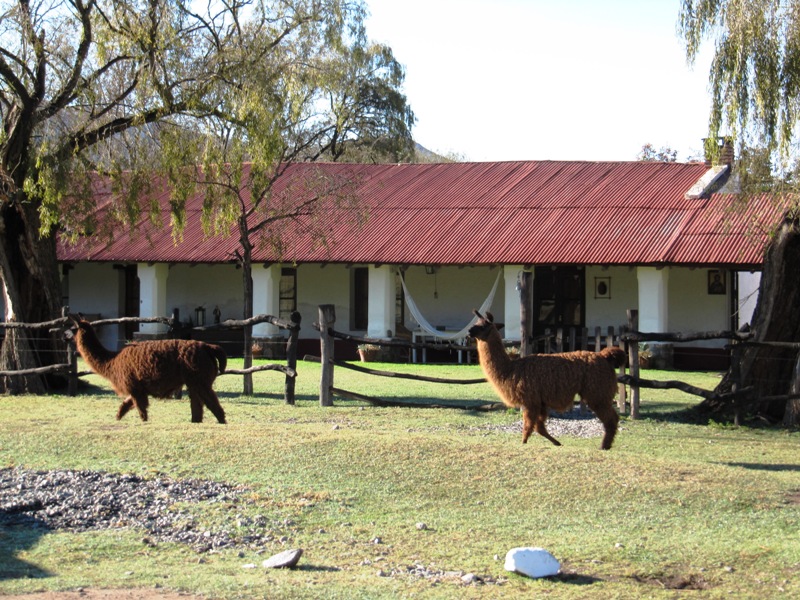
Estancia Los Cuartos

But just when you think you are going to chuck the heavy book from your backpack, along comes an “our pick.”  These are supposed to signify an extra special find. Not all cities have such an accolade; they are actually few and far between.  So I took note when the small mountain town of Tafí del Valle had an “our pick” hotel called Estancia Los Cuartos.

Our historic suite

It was wonderful. The estancia was an old ranch house from the 1700’s.  Our room came with thick walls, a stone floor, dark wood book cases, a thatched roof and warm blankets.  I love history and it felt like I had stepped back in time a bit.  There were a few key modern amenities, such as a heater.  A nice touch since it rained heavily for part of our stay.

Breakfast with Tafí cheese

Another highlight of the estancia was breakfast.  The dining room overlooked the beautiful mountain scenery.  We enjoyed the typical courses of coffee, bread and jam but the best part was the homemade cheeses.  Tafí is known for its cheeses, which are modeled after a Spanish-style manchego (one of my favorites!).  Each year, the town hosts the national cheese festival.  We missed the festival but did indulge in a large block of cheese, which we enjoyed with a rosé we brought from Mendoza.

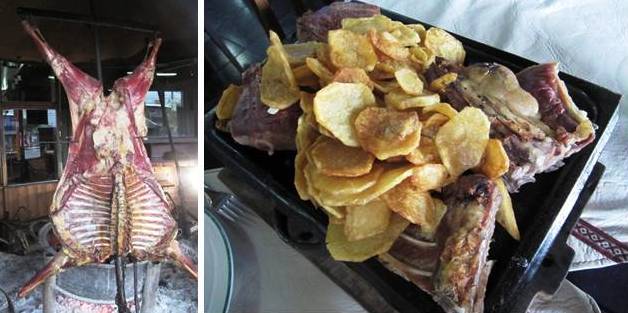
Barbecued goat and potatoes

In addition to good cheese, the main strip of Tafí has a few good parrillas.  We stopped into one that had a nice fire built in the front with meat roasting above it.  Their specialty was chivito (goat).   We ordered a grill plate for two which came heaped with chunks of juicy meat and delicious, crispy slices of potato.  Truly some of the best potatoes I’ve ever had.

Wild horses on mountain

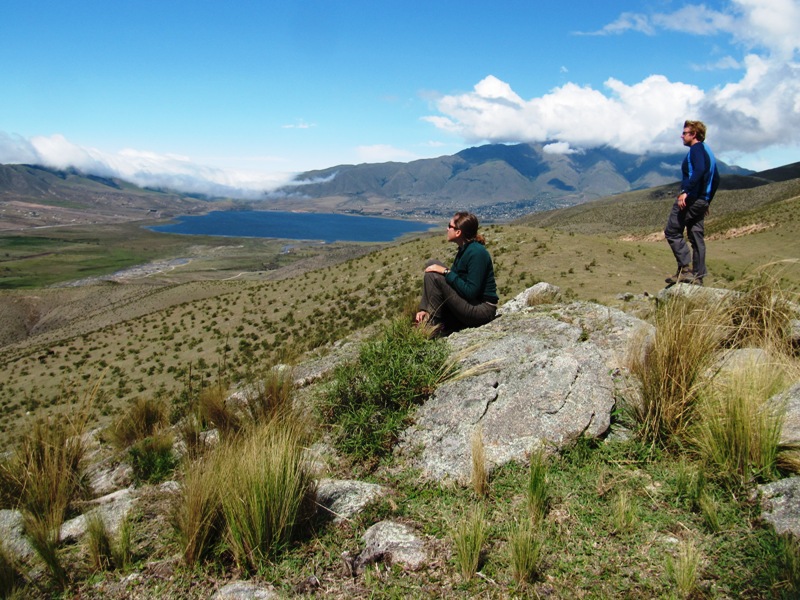
We needed to work off all these heavy meals so we did a nice hike to the cerro de la cruz (peak of the cross).  From here we could look over the town and the nearby lake.  Herds of free roaming horses grazed nearby.  Seriously, how much more idyllic can you get? At least for me, it was a blissful weekend.

On the overlook

Culture Clash Argentina – Villa General Belgrano & Cumbrecita (by Nathan)

Argentina is a big country and getting out of it means a long bus ride.  Lucky for us we were able to hop over to little Germany with a recommendation from our friend Jenny.

Trees at Veilchental campground

Trees at Veilchental campground

We had this great idea to volunteer at an organic farm working every day for our food and lodging.  When we arrived we found a campground, no farm, no food and a freezing cold night.  The only work was chopping wood; I did not want to spend the week recreating the piles of wood from my childhood so we moved our packs to the nearby town of Villa General Belgrano (VGB).

View of Villa General Belgrano from Cerro de la Virgen

View of Villa General Belgrano from Cerro de la Virgen

VGB was settled in the forested mountains about two hours south-west of Córdoba.  Germans fled from Europe after WWII and there was no better place than the sierras of Argentina that so closely resembled their homeland.

Hiking Carmen

Hiking Carmen

There is a steep and rewarding hike to overlook the city.  From our perch in the sky we looked down on the cute log buildings, gentle crystal blue creek and the hundreds of Argentinean tourists that also wanted to be here on the semana santa (Easter week).

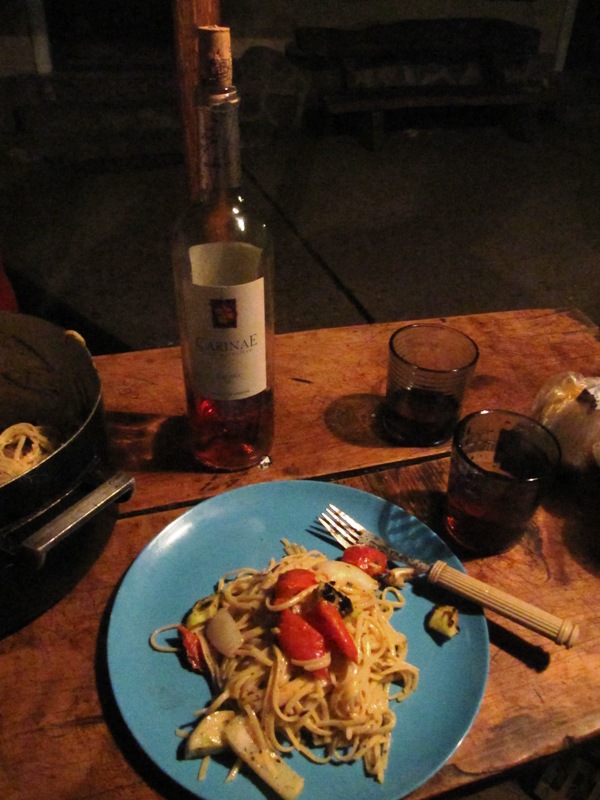
Pasta and rosé

Pasta and rosé

At night we cooked some awesome meals out of the outdoor hostel kitchen.  We grilled eggplants, peppers, onions, and garlic and tossed it with pasta, yogurt and lemon for a flavorful meal.

Cumbrecita German buildings

Cumbrecita German buildings

Forty-five minutes on a small bus from VGB is another adorable town: Cumbrecita.  The main street is lined with curios shops and stone and wood clad buildings, but the main reason we came was for the hikes.  In town we meandered around cobblestone streets that led to rocky trails to waterfalls and ponds tucked away in tree-lined cliffs.

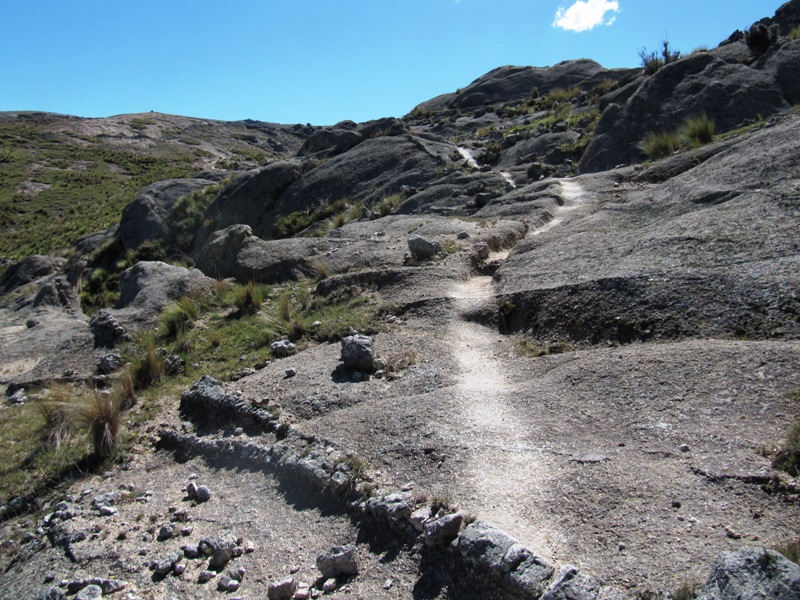
Horse worn trail on rocky hillside

Horse worn trail on rocky hillside

We found another rigorous hike to the summit overlooking the town.  Over an hour of switchbacks and we reached the summit and a view of expansive rolling hills that were forested as far as we could see.  In the other direction a canyon of boulders and a warn pathway from the gauchos on horseback that also trek this region.

Forested mountains

Forested mountains

Visiting these German villages was a delightful treat for our travels.  Better beer, bockwurst and sauerkraut and we even had apfelstreudel for breakfast.  Tucked into the mountains we could hike in the trees and just for a few days feel like we were in Europe, not South America.

The Tiny Island of Ihla Do Mel (by Nathan)

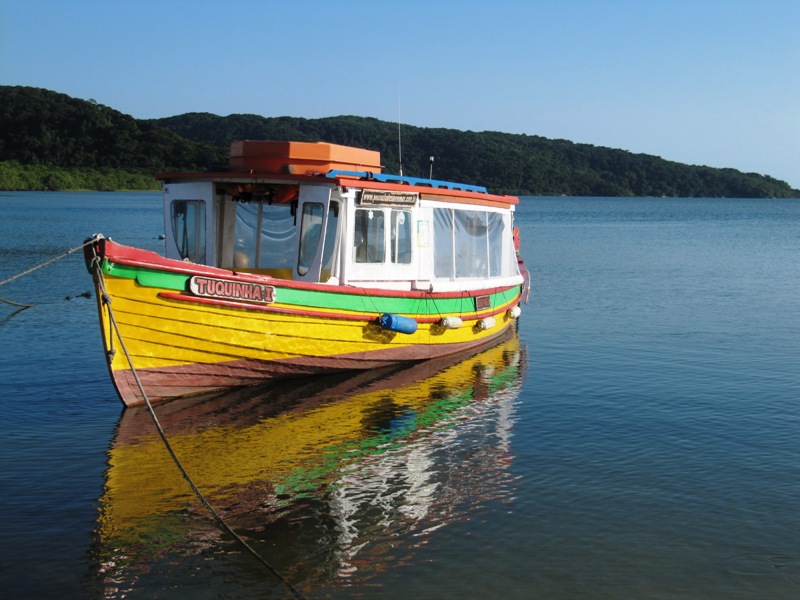
Colorful fishing boat

Colorful fishing boat

Time for a vacation from this vacation.  Traveling is hard work. Every few days we pack our rucksacks and transport ourselves to a new destination.  Each place is an adventure and every city requires planning for places to eat, sights to see and activities to entertain.  To us, this is the fun of traveling, an adventure wherever we go.

We try to spend an afternoon here and there reading or napping, but then we get to the point where we need a few days to really relax. We grabbed our swim suits and headed to the tiny Ilha do Mel (Honey Island).

Docks of Parana

Docks of Paraguaná

Originally it was a colonial fort, but now it has less than 1000 residents, no cars, no roads, just sandy paths, lush forests and pristine beaches.  I’m relaxing just writing about it!

Buffet in Paraná

Buffet in Paraguaná

The only way to get to the island is by ferry from Paraguaná or Ponta do Sol.  Before departing we grabbed lunch at a per kilo restaurant. The variety and quality of food at these places is wonderful.  We filled our plates with feijão (black beans) and salads and then waddled our way onto the boat.   Then we chugged along through the calm blue waters to the island.

Water sunset

Water sunset

There are two villages on the island.  We stayed on the southern edge in Encantadas.  Our hostel was adorable with its own wooden balcony and two hammocks overlooking the beach.  A five minute walk and we were in the water watching the sun disappear behind the mountains.

Dinner in the sand

Dinner in the sand

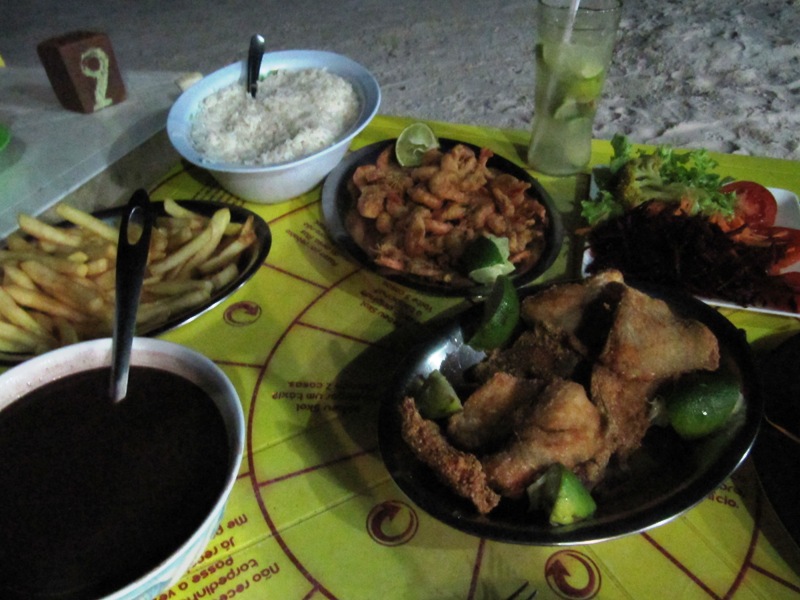
We had several options for dinner that night.  We walked along the beach with our sandals in our hands until we found a place that offered everything we wanted.  The owner suckered us in first complimenting our Portuguese then questioning us if we were Argentinean.  We gorged on fish shrimp, fries, salad, rice and feijão.  With our feet in the sand we quenched our thirst with a caipirinha or two.

Playa Grande

Playa Grande

Travel around the island is by foot along winding sandy trails through the forest that emerge on picturesque beaches.  We traveled here mid-week and the island was empty.  Supposedly the island is packed with thousands of people in January, but we were only aware of fifteen or so tourists during our stay.

Grilled fish with capers at Mar e Sol

Grilled fish with capers at Mar e Sol

We would swim at a beach, bathing in the sun for a few hours, then grab our day pack and hike to another part of the island.  The other village is called Nova Brasilia and there is about an hour and a half walk between there and Encantadas.  There is also a ferry that is about twenty minutes that runs every 1-2 hours.  For lunch we plopped our sandy bodies down on the bench seats of Mar e Sol.  They grilled us a delicious fish, heaped high with capers the size of small grapes, bursting with salty brine in every bite.

Ihla do Mel fort

Ihla do Mel fort

A few hours more in the sun, and miles of beaches later, we arrived at the northern tip.  Here we found the remains of the historic fort with thick ornate white-washed walls and canons to protect the island from the Spanish.

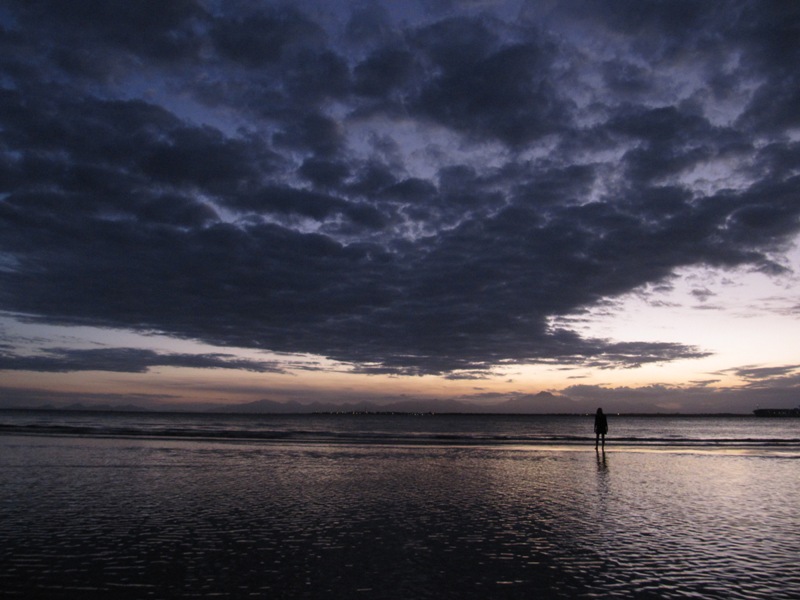
Carmen on a sandbar in the sunset

Carmen on a sandbar in the sunset

Our little beach in Encantadas has this special sand bar.  The tide would recede in the evenings abandoning the fishing boats in the sand.  It was a challenge to become fully submerged.  We walked 300-400 feet from the shore and the water was still knee deep!

In the morning the water would return and wipe away the foot traffic of the previous day.  The revived boats bobbed happily in the water.

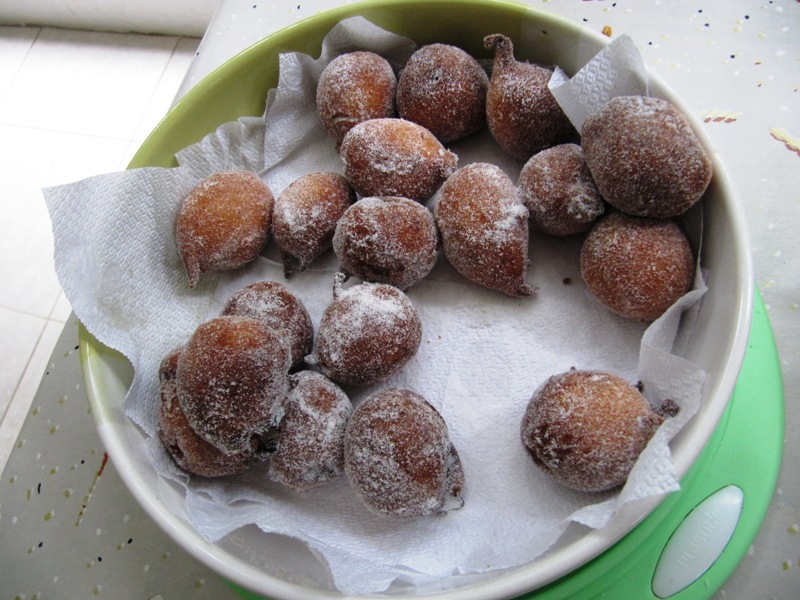
Banana fritters

Banana fritters

Our hostel served us a particularly wonderful breakfast of fresh papaya, mango, watermelon, bananas, bread and jam.  On the last morning  the quiet young woman that ran the hostel made us these delicious banana fritters (if you know the name please comment).  Crispy and sweet on the outside and gooey oozing banana on the inside.  Perfect dumplings of joy from the perfect and beautiful little Isla do Mel.

Post Navigation