4 feet 2 mouths

walking and eating our way around the world

Old Friends in Cusco (by Carmen)
20120627-193812.jpg

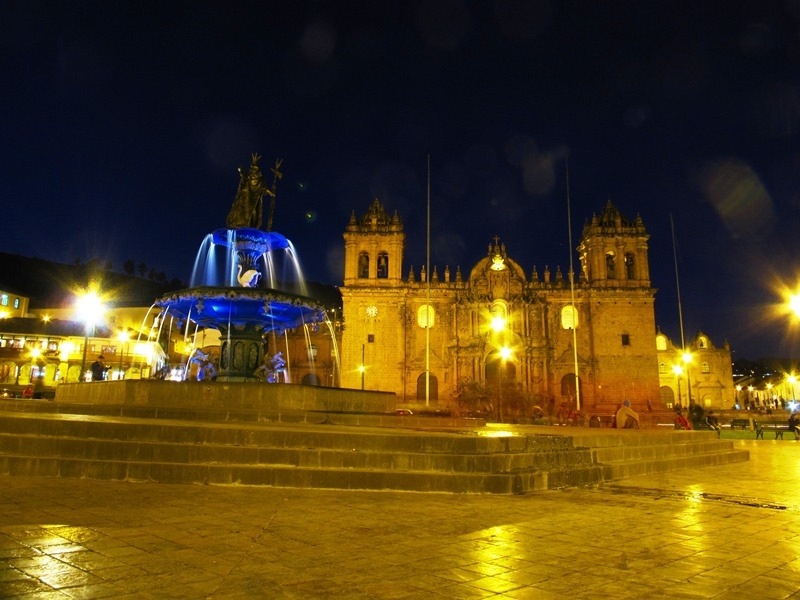
Cathedral at night

Nathan and I arrived in Cusco at about 6 in the morning. The streets were empty as we walked the uphill journey from the bus station to our hostel. We dropped off our stuff and headed out to walk again and explore the city. The streets had started to fill up but it wasn’t with locals. Everyone seemed to be from somewhere else.After traveling for so long in places with relatively few foreigners, it was jarring to be in a city practically overrun with tourists. This was both good and bad.

View of the Plaza Mayor from above

The good thing was that they were ready for the tourist hoards with a variety of restaurants, cozy cafes, gift shops, bars, info centers, etc. The bad thing was that they used the opportunity to charge inflated prices for some of the city sights. The cathedral, for example, would have cost $10. The ticket to see local ruins costs $70! These are very high prices compared to the cost of
living in Peru. Someone is making a lot of money but it doesn’t seem to be reinvested in the sights nor in the town outside of the central tourist zone. Seeing how things are in South America, it probably ends up in a few government officials’ pockets, unfortunately.
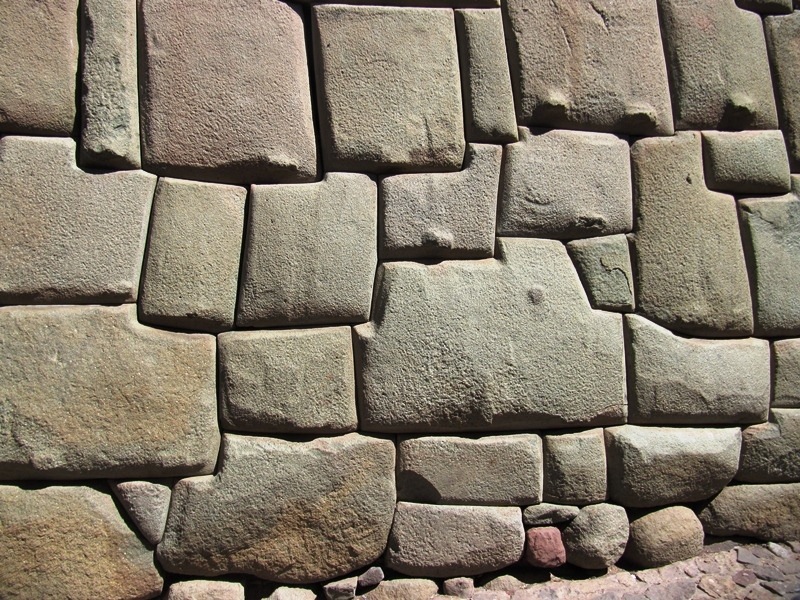
Stone wall made without mortar or metal tools

But some sights were worth shelling out some money. In the 15th century, Cusco was the capital of the Incan empire. It was here that they built their finest temples and palaces using their best stone masons. Of course, the Spanish destroyed everything and rebuilt all the temple sites as churches. But there are still traces of the original grandeur. For example, a beautiful wall is just off the main plaza. It shows how magnificently the giant stones were placed together with no mortar or metal tools.

Another example of this fine stone work was at Qorikancha, the golden temple that celebrated the sun. The work was so precise and detailed. It would have been amazing to see it before the Spanish looted the gold that covered the entire walls.

Jumping for joy in the Sacred Valley

The true highlight of our time in Cusco, however, was seeing our Bay Area friends. Back in January we decided to do an epic 6 day hike to Machu Picchu. To acclimatized to the high altitudes we all spent a few days in Cusco. It was awesome to do this exploration with them. First we met up with Dan and Randy and got caught up over pancakes and paninis at Jack’s Cafe. Together we took a tour of the Sacred Valley, the farming region outside of Cusco that holds a few sacred ruins.

Terraces in Pisac
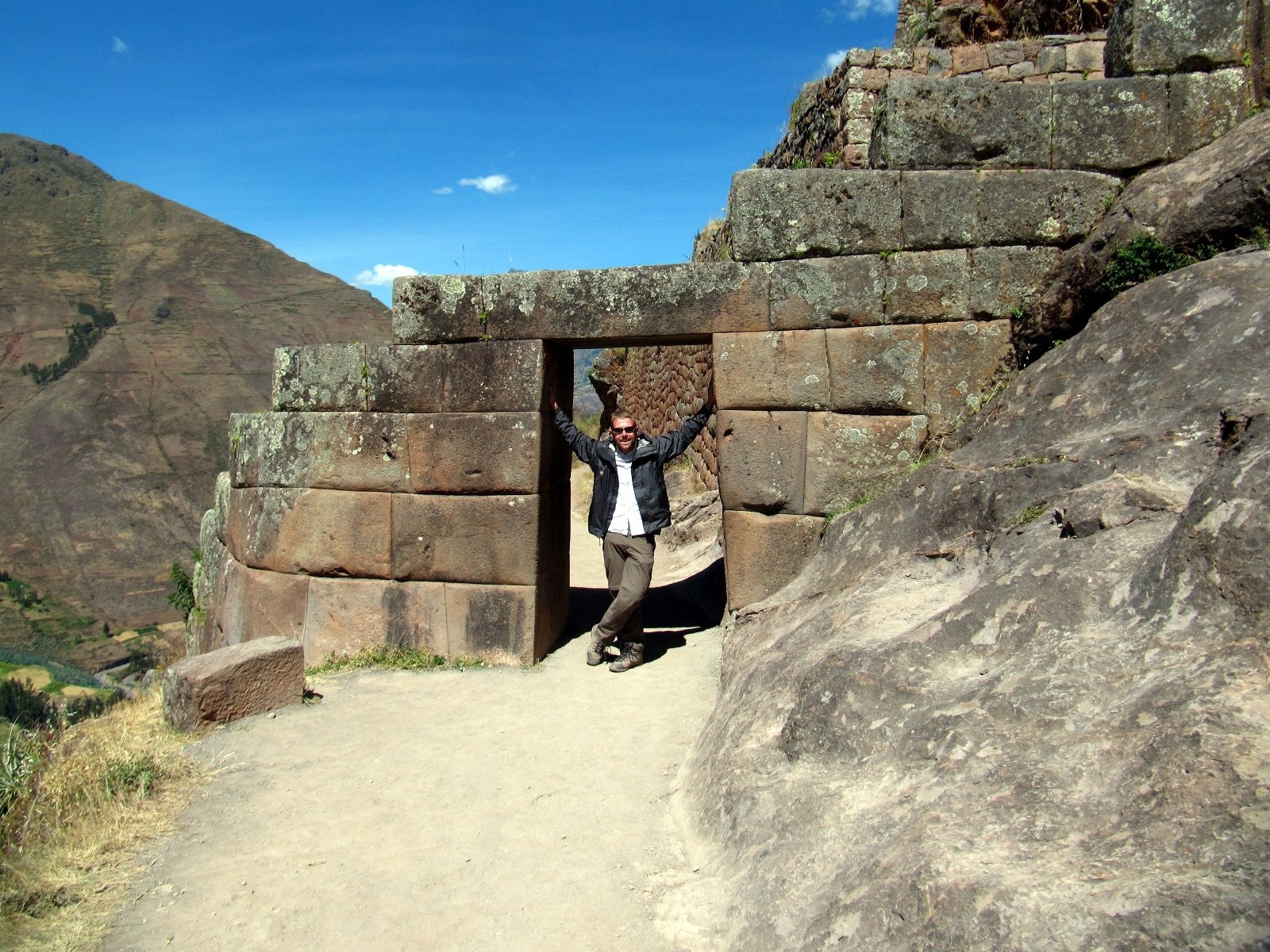
Nathan in an Incan trapizoidal doorway

The first set of ruins were the terraces and homes of Pisac. Built high into the hillsides these settlements were both closer to the apus, or mountain gods, as well as protected from invasion.
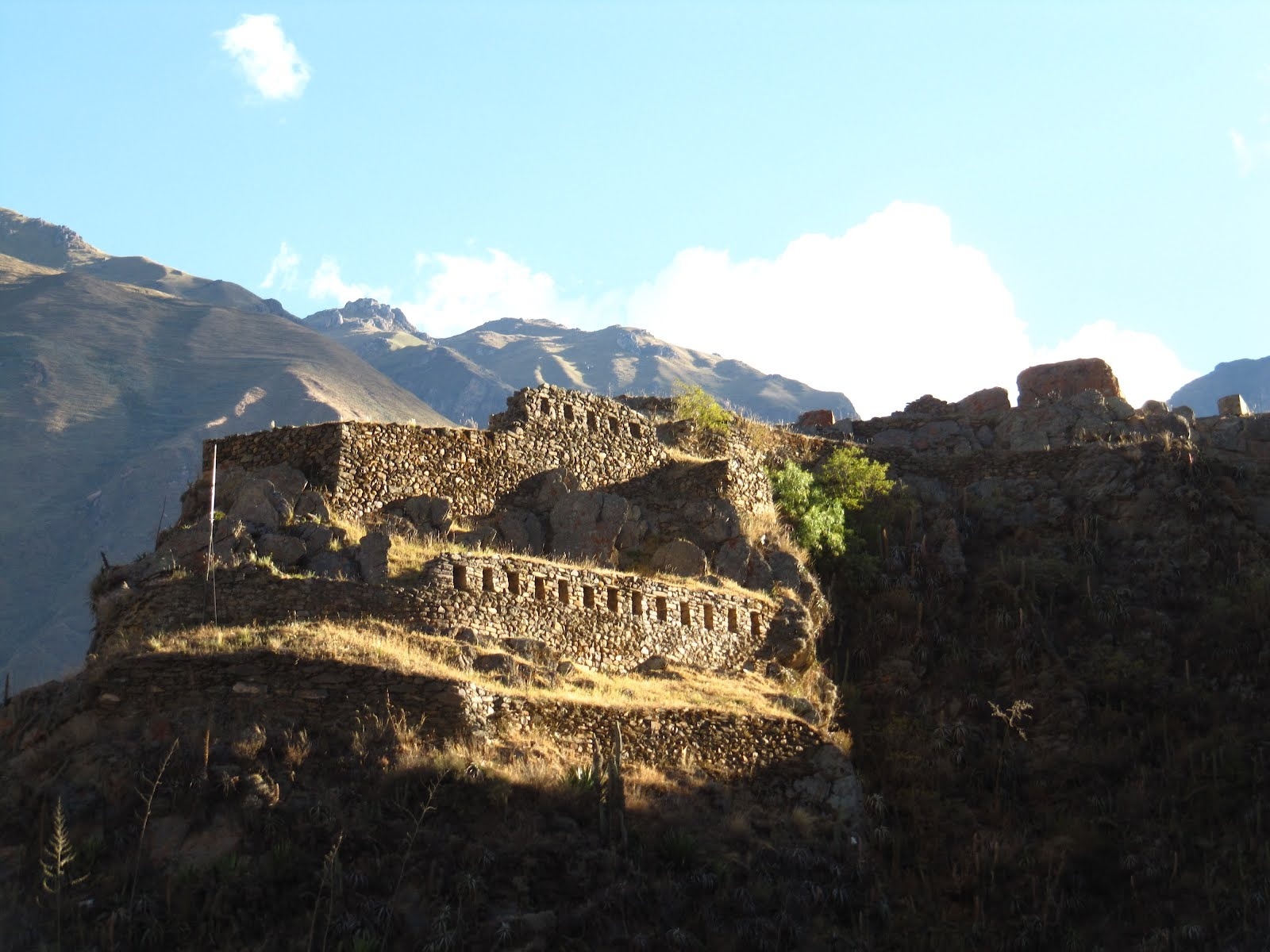
Temple at Ollantaytambo

Next we hit the town of Ollantaytambo which was strategically placed at the intersection of three valleys. It had intact terraces and fountains that still operate today.

Women demonstrating the dying of fabrics

As part of the tour we stopped at a textile factory where women spend a few months dying and weaving textiles, make some money, then head back home. The demonstration of how the alpaca wool is spun using a dradel looking thing, dyed with natural plants and weaved on a loom was a sort of a sales pitch but interesting nonetheless.
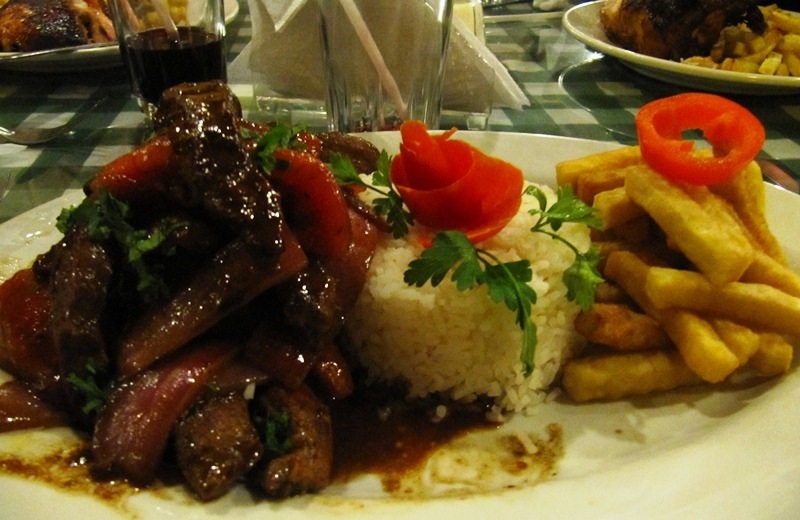
Lomo Saltado

That night we met up with two more dear friends, Brenda and Drew! We all went out for some roasted chicken but Nathan was a rebel and ordered lomo saltado, or beef stir fried with potatoes, onions, and tomatoes in a tangy sauce. This is one of my favorite Peruvian dishes. The combination of flavors and cooking styles reflects the Chinese influence on Peruvian cuisine.

Group at Sacsayhuaman
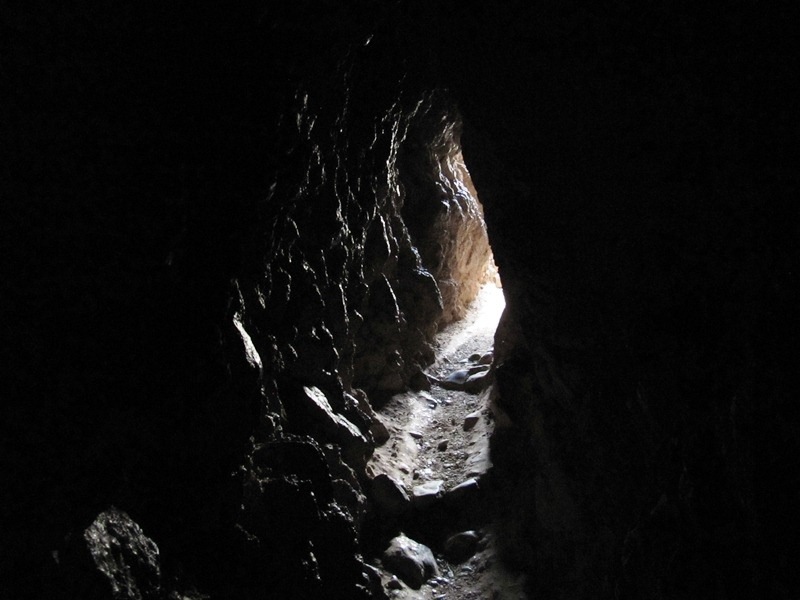
Tunnel

The next day we all took a bus 8km outside of Cusco. Together we walked the road back, exploring the various ruins along the way and ending at the famous and spectacular Sacsayhuaman. We hired a guide for this last site and within minutes we found ourselves in a pitch black tunnel dug out of the rocky hillside. As we emerged into the sun once more we found a circular area partially line with stones. The guide explained that a pool of water may have been there once to reflect the stars. I sat on the throne overlooking this pool area, trying to recreate it in my mind. It became very apparent how thoroughly the Spanish destructed these sacred sites and structures.

Me on the throne
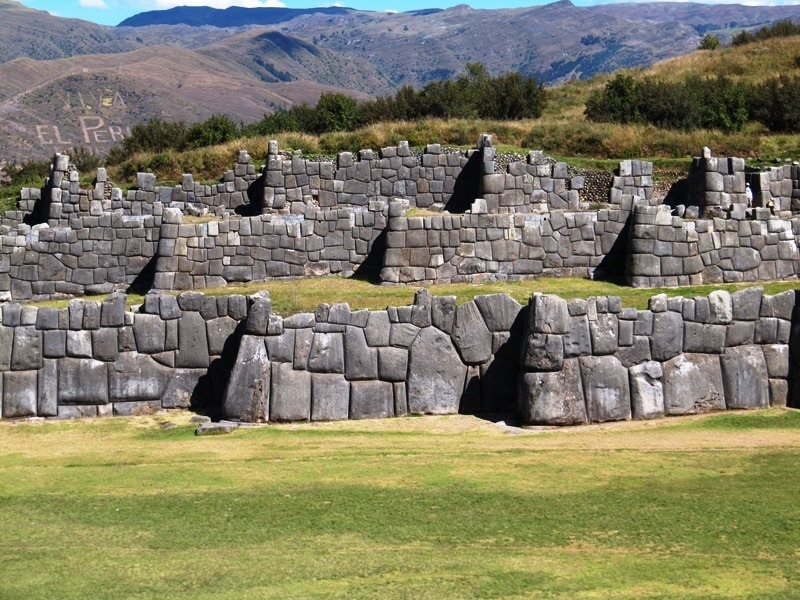
The three tiers of Sacsayhuaman

What is left a Sacsayhuaman is whatever the Spanish couldn’t destroy. That includes three large terraces that formed the foundation of three important Incan temples. The temples are long gone but the enormous stones that formed the terraces would have required great effort to move. It’s hard to tell from the picture, but each wall is about 15 feet tall! The field in front of the terraces is the last battleground of the Inca against the Spanish, with the latter barely gaining their victory.

Chicharron

We finished off our ruins tour with a lunch at a chicharron restaurant. A few slabs of fried pork, onions, mint and some pink speckled potatoes hit the spot.
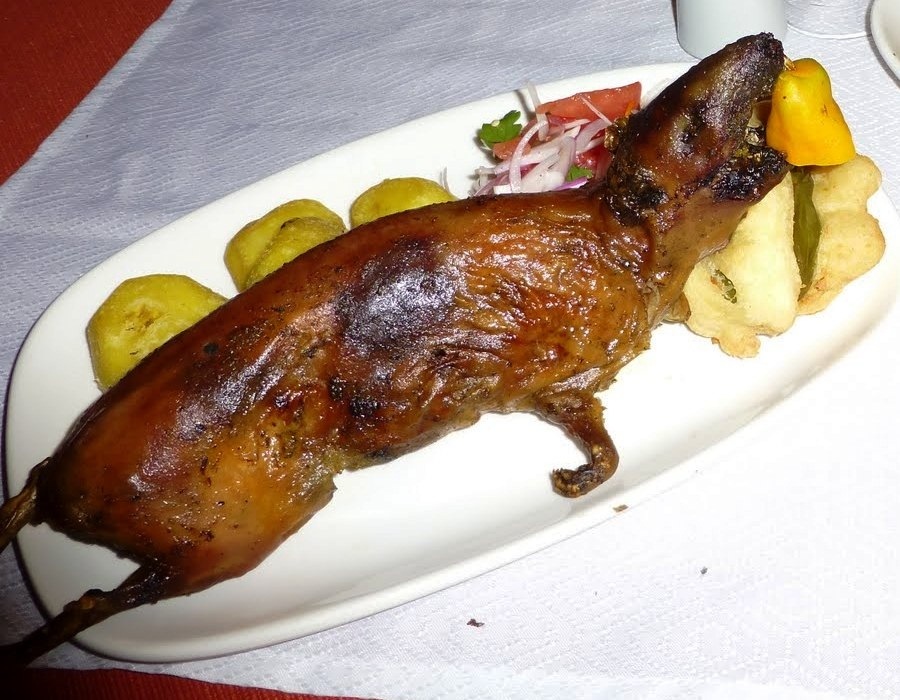
Cuy times

But there was one more dish to try before we all left for our hike to Machu Picchu: cuy (guinea pig). For anyone hesitant about trying this unique delicacy, I think the picture confirms your worst nightmares. Fortunately, none of the members of our group were intimdated. We dug in and found that cuy offered a dark, gamey taste. It was fun to try but not anything I’ll be craving soon.

I enjoyed how history came alive in Cusco. But it was time to pack our bags and start the hike of a lifetime.
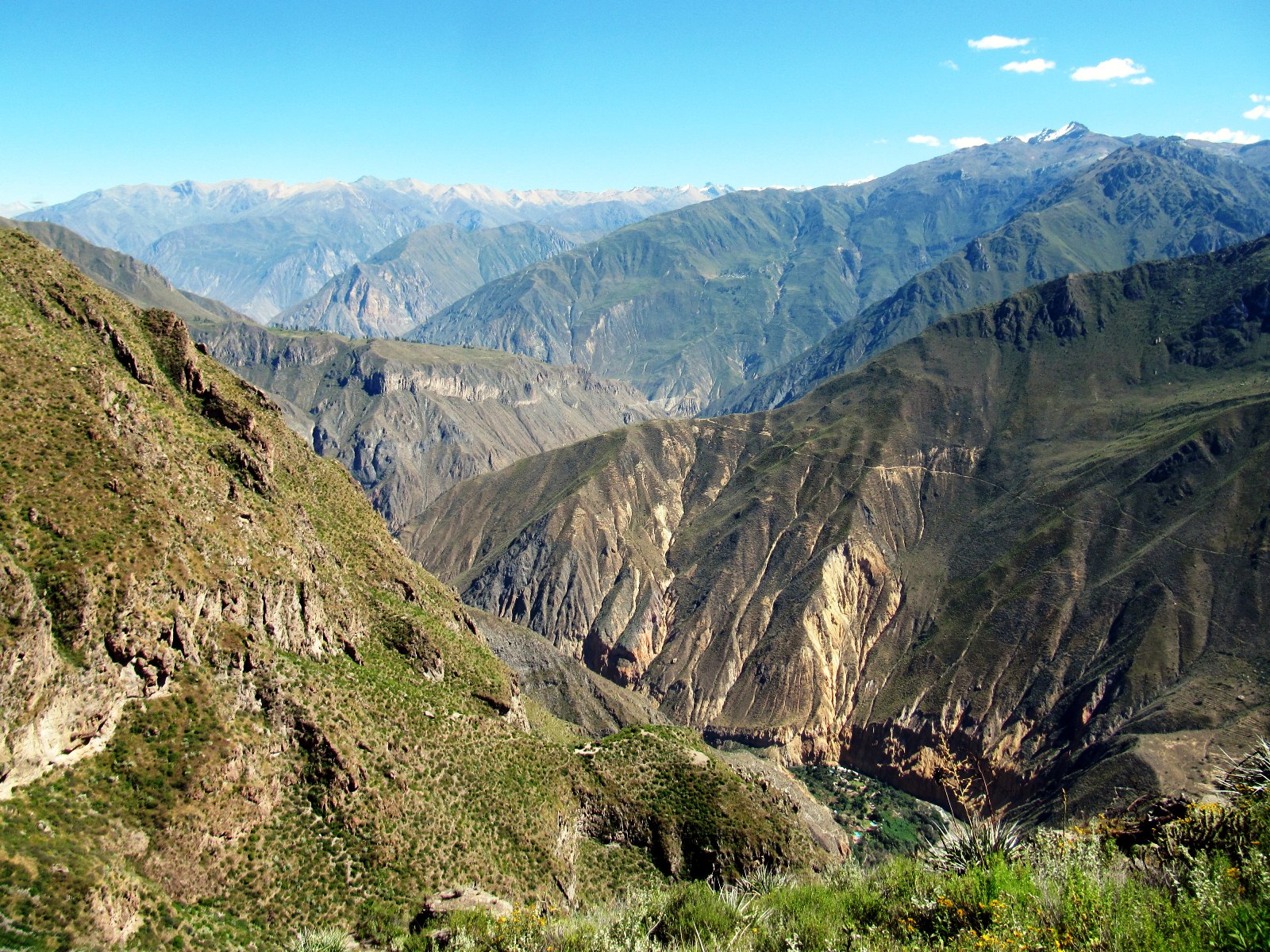
Climbing In and Out of Colca Canyon (by Nathan)

Colca Canyon

Waking up at 3am is never easy, when traveling it is sometimes a necessity.  But when the plan is to hike in and out of the deepest canyon in the world we were excited.  A van picked us up at the hostel in Arequipa and we cruised through the darkness of the night and into the mountains.  By sunrise we had crossed the high mountain pass at 5,000m (16,500ft) and we descended to the cliff’s edge.  Our destination: the Colca Canyon with winding cliff trails, historic villages and expansive, gorgeous sights.

Andean condors flying through the canyon

The andean condor had already mesmerized Carmen and me on that exhausting day in Argentina, but along the Colca Canyon the condors have survived and flourished for thousands of years.  At the Cruz de los Condores we watched five giant birds soar majestically through the air.  With minimal effort they utilized the wind and the rising heat to pull themselves thousands of feet above our heads.

Carmen and I hiking in Colca Canyon

Our hike began mid-morning and nearly two-thirds down into the canyon.  The canyon is huge, but much less drastic than the Grand Canyon in Arizona.  The Rio Colcahas cut through a volcanic mountain range with summits at 5,500m (18,000 ft) and the river below rests at around 2,000m (6,600ft).  Our descent was rocky, loose and steep.  Our knees and feet ached after dropping 900m (3,000ft) in the first two hours.  A quick jump in the river and I was refreshed and ready to continue.

Colca Rock Face

Rio Colca

The villages in these mountains have a remarkable history.  Tribes of people have lived here for thousands of years. They farmed the steep hillsides by notching terraces, called andenes, into the slopes.  Each terrace was irrigated by local springs and the vegetables were optimized for the microclimates.  Thousands of potato varieties exist in Peru as well as primary crops of corn and quinoa; each crop was planted and harvested to the heat, moisture and soil that varies from terrace to terrace.  The people here survived before Inca times.  They flourished with Inca civilization and now the communities hang on to difficult lives that are locked high into the mountainside.

Corn cobs drying in the sun

The villages house several families and many of the towns take over two days to walk to.  There is one poorly kept clinic that provides meager guidance and healthcare to the people.  This was probably the most upsetting part of the hike because we spoke with and observed people that were brutally poor, yet we paid an entry into the park of $26.  This money did not go into roads, which were dirt, or signage, that did not exist, or residents, who did not even know that tourists pay over $100,000 per day to the region.  In this way, the hike was a cultural experience in addition to a natural one.

Terraced hillsides of Colca Canyon

Our lunch spot was San Juan de Cucho, which was 1,000ft of ascent from the river.  Our guide cooked us some lomo saltado and we enjoyed a conversation with our new friends.  While the rest of my group napped I hiked up the steep mountainside. I followed a narrow path that tightly cut through the brush and grass and I switched back and forth up the mountain.  I peered through the bushes to find another village, or at least the remnants of a village.  Beautiful stone walls peeked out of tall grass and trees grew from the foundations of former buildings.  I returned to our lunch spot and the group was assembled and ready to go.

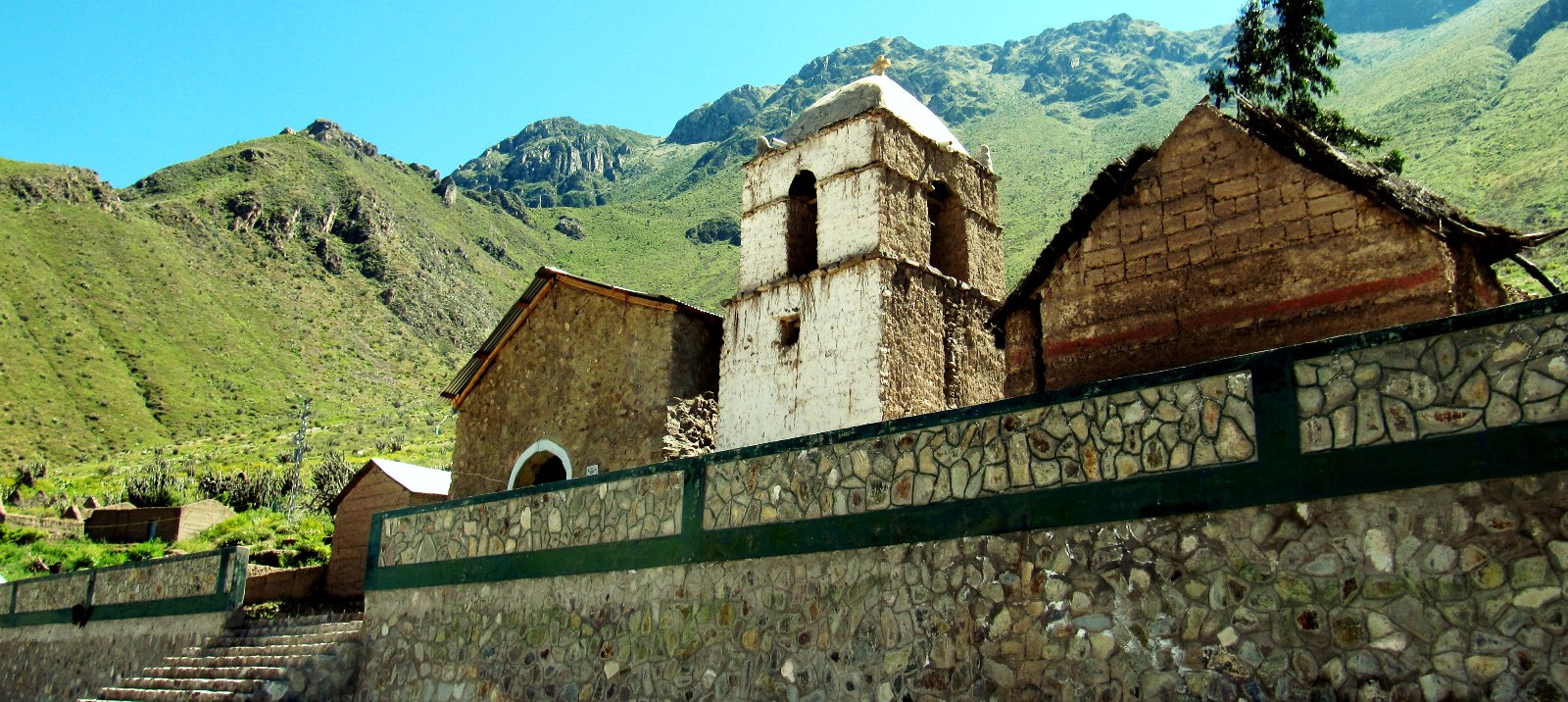
Church in village of Malata

Our dinner and lodging for the night was in a town a few hours hike along the mountainside.  In Cosñirhua we were welcomed into a small dwelling ran by two women and a five year old boy.  The boy kicked a soccer ball with us and then laughed at my Spanish in our conversation about his front yard garden.  In the kitchen a small pen housed fifteen guinea pigs, but we would not get the chance to try this Peruvian delicacy until Cusco.  We slept in a room that crudely resembled a hostel but the room was warm, the bed clean and there was running water so not much more was necessary.

Sangalle el Oasis below and switch-backs to Cabanaconde

The next day was an easy hike with little change of elevation.  It went quickly because we were all excited to jump in the pools at the oasis.  Sangalle El Oasis is a cluster of buildings and huts that were built for the many tourists.  Each group of buildings includes a beautiful turquoise pool.  We jumped in the cool water and baked in the sun.  The mountains rose in all directions and quickly blocked out the sun and invited cold winds to howl through the canyon.

Group photos above Colca Canyon

Our third day was challenging.  We needed to climb out of the canyon.  We started walking at 5am and pushed ourselves up the steep trail.  Each of us walked at our own pace and in 1.75 hours I was at the top after climbing 1,100m (3,600ft).  Forty-five minutes later, Carmen arrives claiming that she did not even break a sweat.

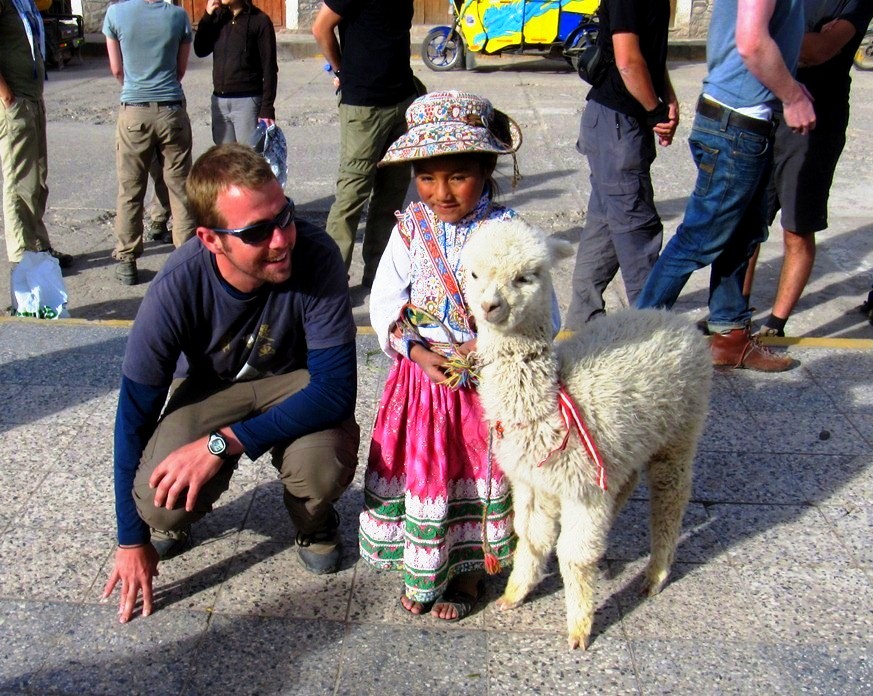
Nathan, a little girl and a baby alpaca

We hiked with an international group of people from the Netherlands, Germany, Poland and France.  Each arrival of one of our new friends was a celebration.  Both out of breath from the hike and from the beautiful views we congratulated each other on the three wonderful days of hiking.  We picked up breakfast in Cabanaconde and lunch in Chivay that included a welcomed sight of a baby alpaca and young girl dressed in the traditional fabrics and hat of the region.

Alpacas grazing along the side of the road

It was an exhausting couple of days, but for Carmen and I this was only practice for the six days of hiking that we had planned to Machu Picchu.  First we needed to get to Cuzco…

Delicious Eats in Arequipa (by Carmen)

We finally made it to the last country on our South America itinerary – Peru!  We have been looking forward to this moment for a long time.  The reason, simply, is the food.   I have always loved Peruvian food.  A childhood friend’s Peruvian mother exposed me to the cuisine early on.  And I couldn’t get enough of the roasted chicken at a Peruvian restaurant my family would frequent when I was young.  But now I was at the source, ready to to make new culinary discoveries as well as seek out some of my favorite dishes.

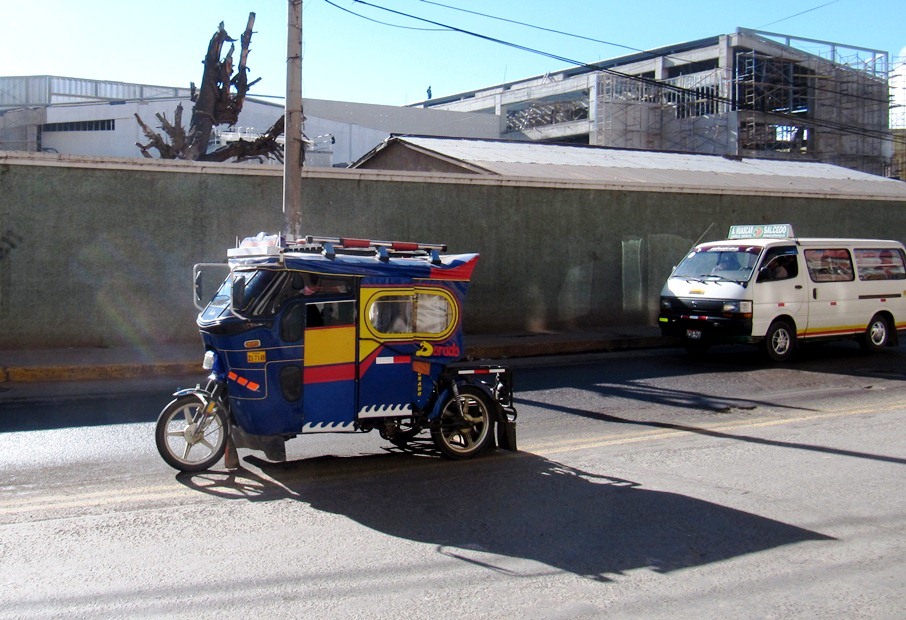
Mototaxi!

Mototaxi!

We were on our way to Arequipa, Peru’s second largest city.  But to get there we first had to spend a night in Puno, a small city near the Bolivian border.  Not a whole lot going on there but we did get to ride the cute little mototaxi between the hostel and the bus station.  I loved it!  I’m sure we’ll be seeing tons more once we get to Asia.

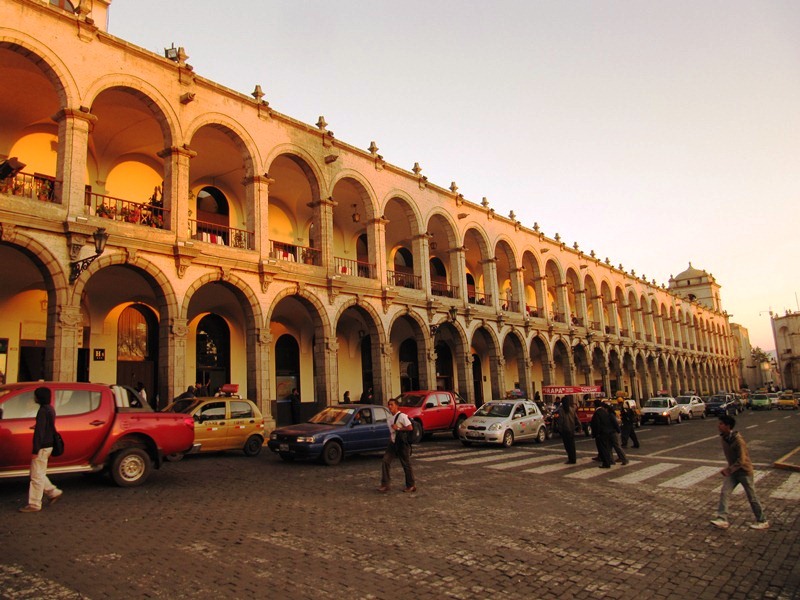
Sunset in the Plaza Mayor

Sunset in the Plaza Mayor

Me and the Cathedral

Me and the Cathedral

Once in Arequipa, we found a lovely city with pretty architecture, a bustling center, and dramatic mountains surrounding it.  The city was living up to its reputation of being a great place to stroll around but we wanted to check out its other claim to fame: gastronomic excellence. We wasted no time in getting to Zig Zag, a cozy upscale restaurant in the old part of town.
Trio of meats with creamed quinoa at Zig Zag

Trio of meats with creamed quinoa at Zig Zag

Zig Zag was fun, if a bit over the top (we were served a cocktail for two out of an ostrich egg cup).  We indulged in their specialty, which involves your choice of meats that come out of the kitchen still sizzling on a lava rock.  We opted for pork, alpaca and lamb, which came with little triangle flags announcing each one.  The perfectly cooked meats were paired with creamed quinoa and a few dipping salsas.  For our next meal, we decided we were ready for Peru’s famous seafood dishes.
Leche de Tigre

Leche de Tigre

Ceviche at El Cebillano

Ceviche at El Cebillano

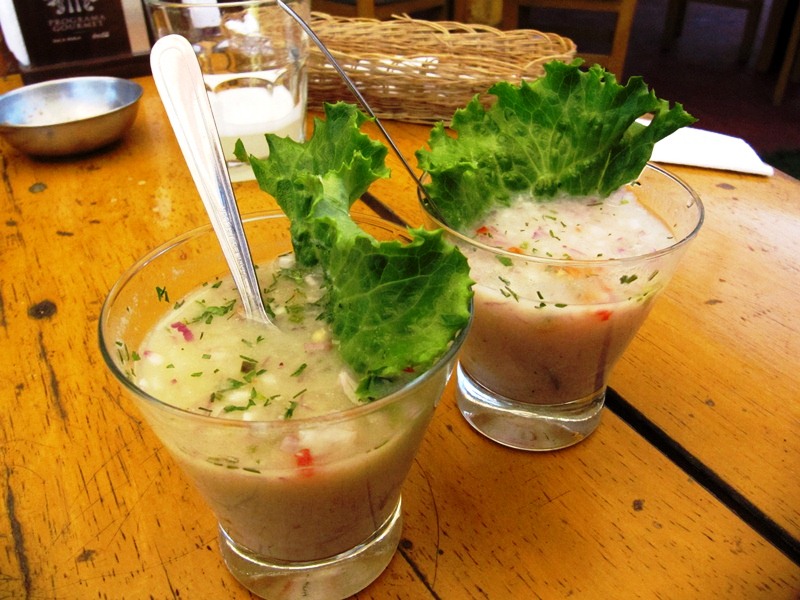
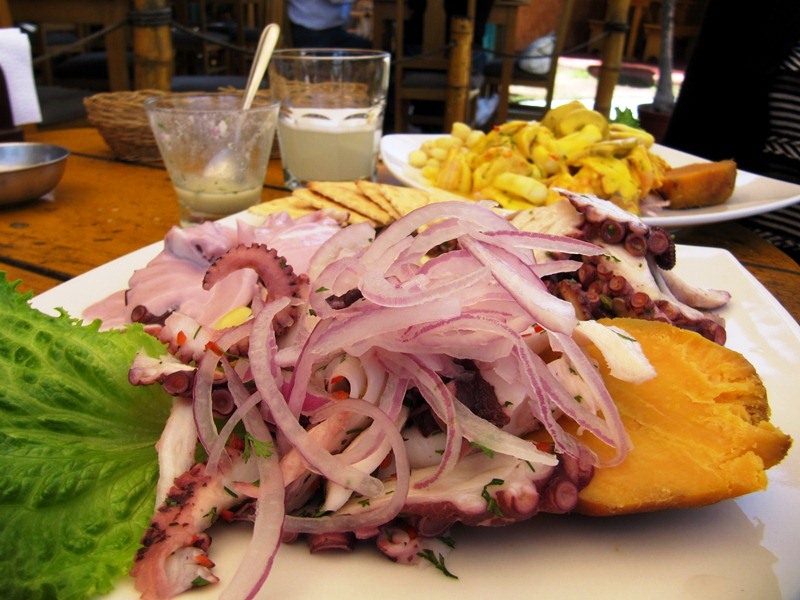
So we asked our hostel owner where the best ceviche in town could be found.  She directed us to El Cebillano which turned out to be excellent advice.  We started off with some delicious leche de tigre (tiger’s milk), which is a small glass of the acidic juice they soak the seafood in.  Nathan asked for his to be picante, and I think it was the spiciest thing I ever tasted.  It was like pure chile juice!  Next up we got ceviche de pulpo (octopus ceviche) served three different ways.  In the states, we are more familiar with the ceviche that is soaked in lemon juice.  In South America, we’ve also encountered creamy ceviches.  These are tasty but I still prefer the sourness of the lemon.

Chupa de Camarón

Chupa de Camarón

Rocoto Relleno with potatoes

Rocoto Relleno with potatoes

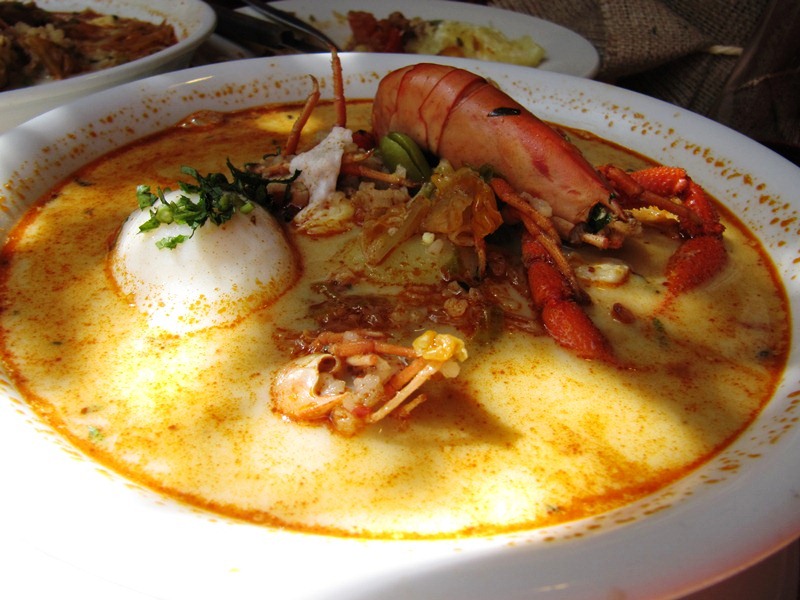
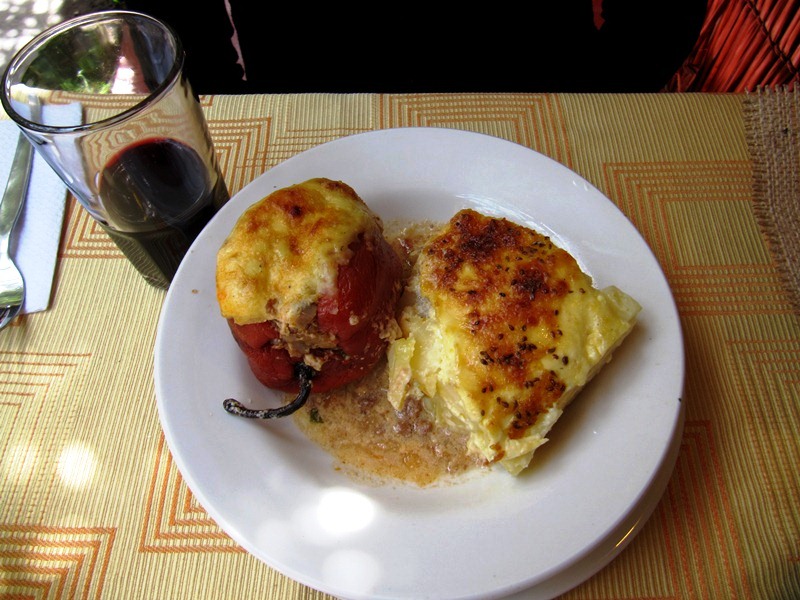
Another recommendation from the hostel took us to El Nuevo Palomino.  Here we opted for an Arequipean specialty, chupa de camarón.  It is basically a seafood stew with a wonderful, creamy broth.  Hints of saffron and paprika made the flavors reminiscent of spanish paella. And the dish was enormous.  This picture is of just one of our bowls after we asked them if we could split it.  We really didn’t need the side dish of rocoto relleno (a pepper stuffed with veggies, cheese and ground meat) but we couldn’t resist.  Rocoto relleno turned out to be one of our favorite Peruvian finds.

Central market in Arequipa

Central market in Arequipa

We had satisfied our fine dining fix while in Arequipa and it was time to hit our favorite part of any town, the market.  This one didn’t disappoint, with lots of people and a balcony to watch all the action below.

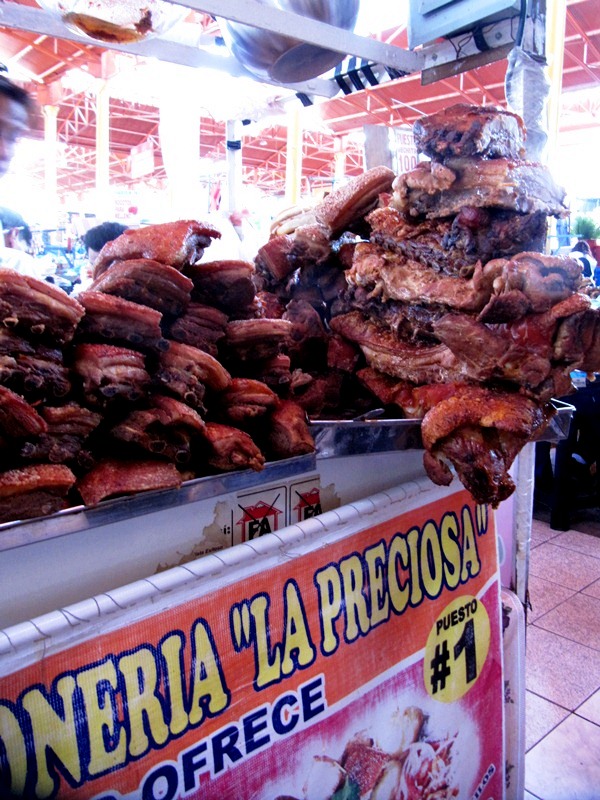
Chicharron stand

Chicharron stand

It was in the market that we found one of my favorite snacks in Peru, the chicharron (fried pork) sandwhich.  They sliced up a big slab of chicharron, slapped it on a bun, slathered it with salsa and onions and handed over all for about $1. Just perfect.  As you can tell by now, Peruvian cuisine isn’t very vegetarian friendly.  We were still missing our veggies but at least the flavor range and been seriously improved in Peru.

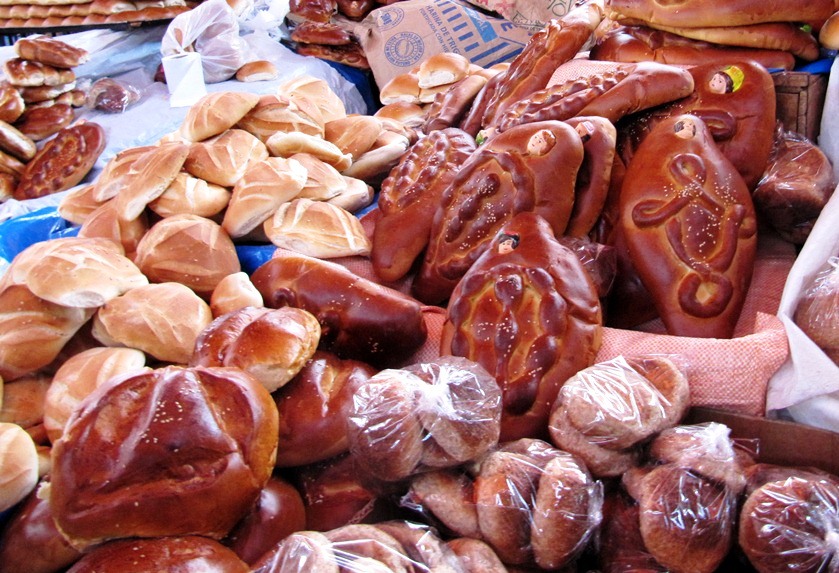
Bakery stand at the market

Bakery stand at the market

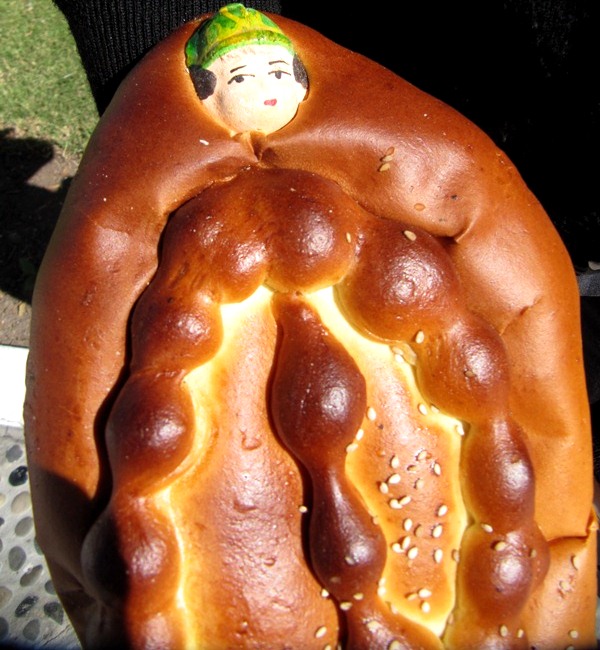
Our beloved guagua

Our beloved guagua

There was one more find at the market, our guagua de pan (bread baby).  We happened to be there on Mother’s Day and the tradition is to buy these little bread loaves in the shape of bundled infants.  They have these tiny ceramic faces baked into them – I found them irresistibly cute. And the sweet bread was surprisingly tasty!

Our stopover in Arequipa was a great (re)introduction to Peruvian food and I was looking forward to more in Cuzco and Lima.

Dancing and Hiking in Copacabana and Isla Del Sol Bolivia (by Nathan)

Copacabana Bolivia

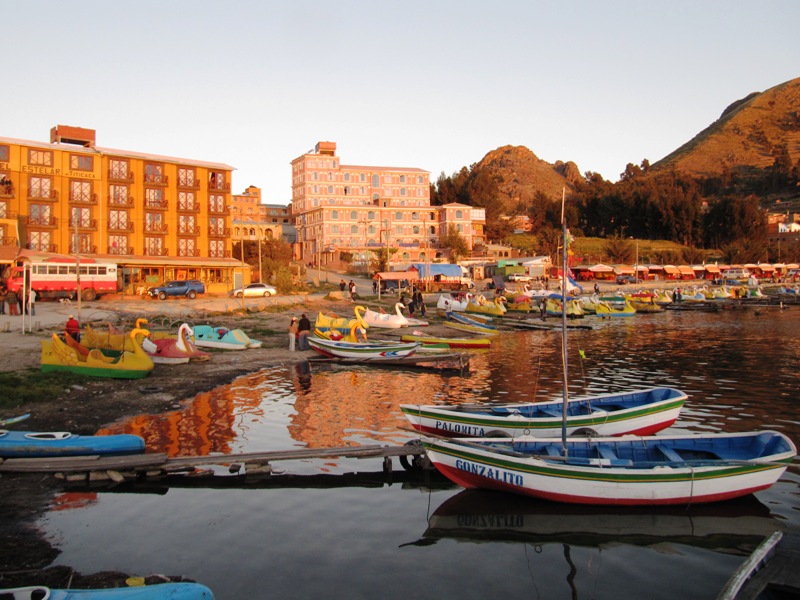
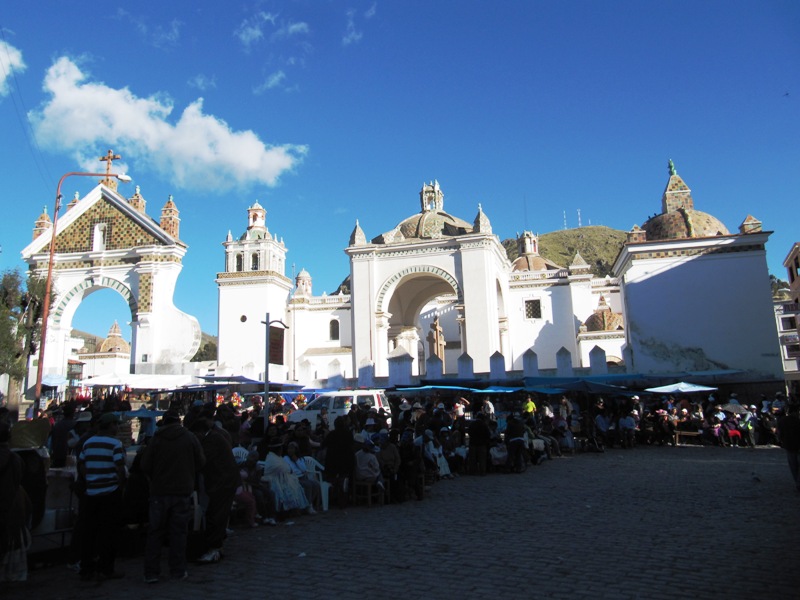
A trip through Bolivia would never be complete without seeing Copacabana and Lake Titicaca.  Carmen insisted that we stop here and we discovered a small cultural center tucked into a beautiful lake bay.

Two plates of trout

Sunset on Copacabana harbor

The most delicious thing about a town positioned on a lake is that there is access to fresh fish.  For weeks we had been chanting “trucha!” as a way to bring up spirits and remember the funny feijoada experience in Rio.  Now, in Copacabana, there were restaurants everywhere serving trout twenty different ways. And they are all really good.  We found a lakeside kiosk and ordered up one fish “de la diabla” (spicy red sauce) and another “a la plancha con aji” (grilled with garlic).  The fish was tender and juicy and by far the best trout I have ever had!

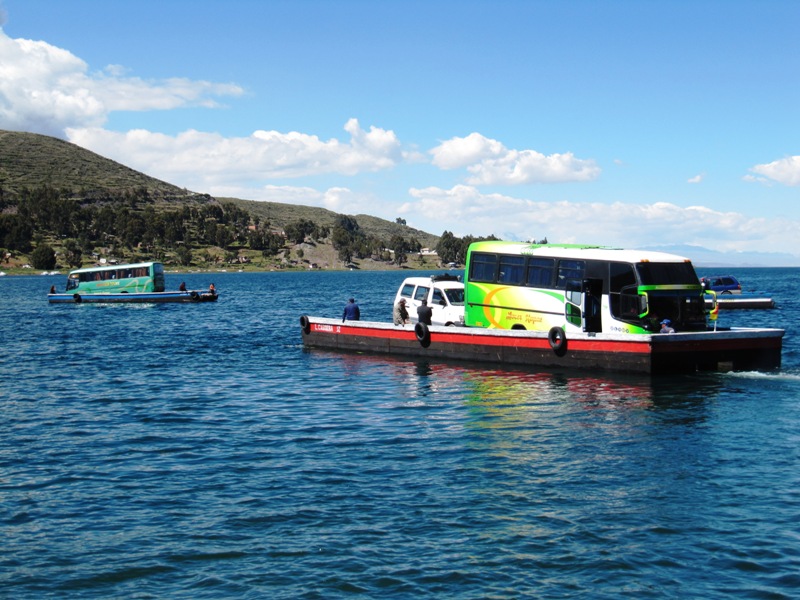
Our bus on a barge

But I’m getting a little ahead of myself.  We arrived to Copacabana from La Paz on a bus.  The bus saves some time from driving around the large peninsula and we all had to ride a short ferry ride across the bay.  Even the bus was loaded onto a barge and carried across.  Then the bus weaved its way in and out of the fingers of the lake and eventually dropped into the cute little town.  We expected a calm, tranquil town, but instead found thousands of people and a raging party.

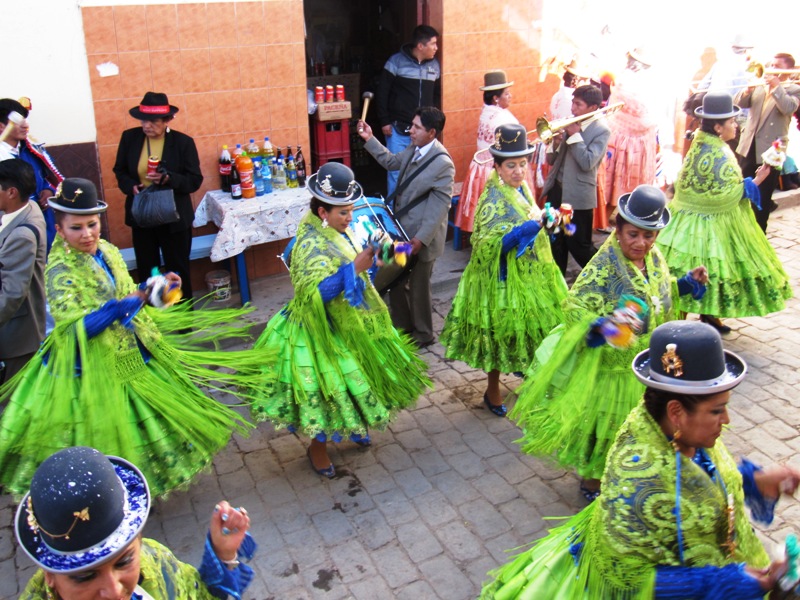
Parade dancing

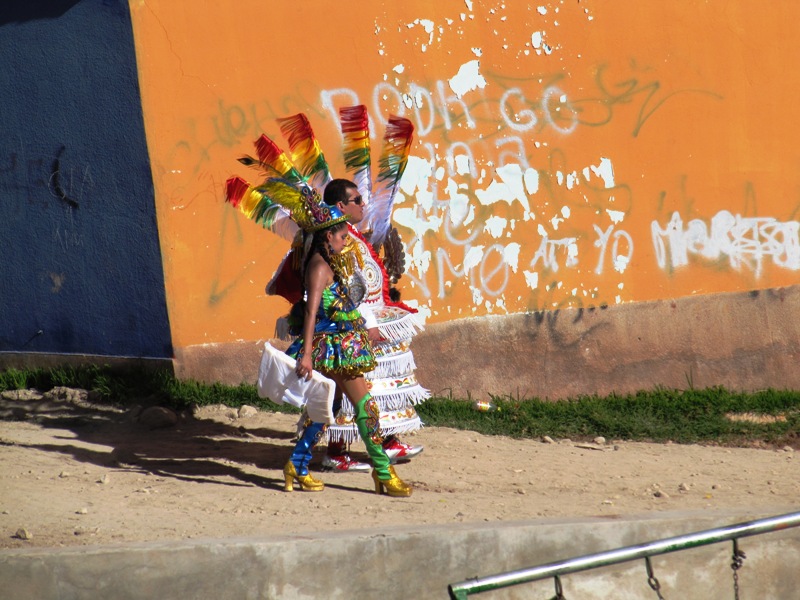
Lantern costumes

Lantern costumes

Our arrival in Copacabana coincided with one of the biggest holidays in Bolivia, La Fiesta de la Cruz.  It begins around May 3 and lasts for four non-stop days.  Everybody participates and everyone was part of a color coordinated group.  The women wore brightly ornate dresses with bulbous flowing skirts and of course a bowler hat.  The men performed in marching bands or wore lantern-like costumes.  Each group of 100 to 200 people would parade up and down the streets and eventually arrive at the Iglesia de la Sagrada Cruz.

Couple on there way to dance in the plaza

Dancing on the plaza

The party did not stop there.  These groups would converge onto two main plazas.  The marching bands would stand on concrete bleachers swaying to the music, blowing their horns and slamming their drums.  Everyone was dancing in a sway and twirl back and forth.  The dance actually mimics a fighting style as this festival used to be a way for men of different tribes to compete for land.  Supposedly these fights still happen, but we did not see any.

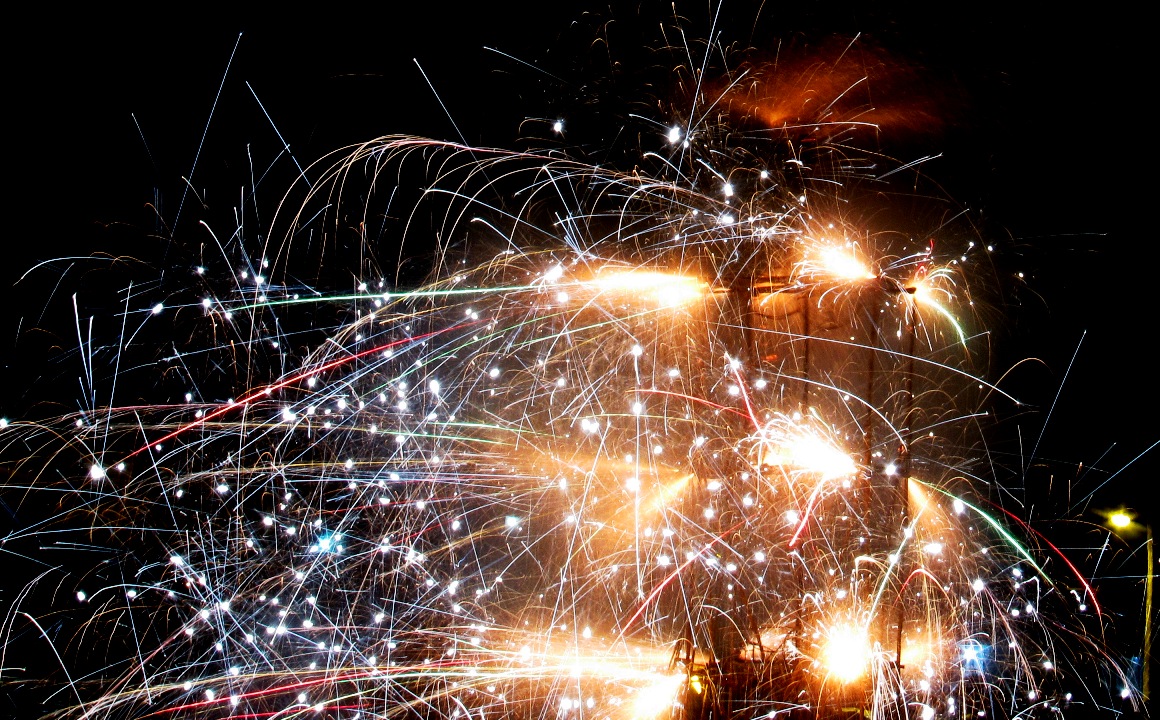
Crazy firework apparatus

Throughout the day the song of the bands was only broken by the sharp crack and pop of fireworks.  At night the pyros had a feast of lights, sparks, flames and kabooms to entertain the crowd.  Carmen and I sat watching as what seemed one in ten rockets failing to explode in the sky came crashing into the plazas below.  At one point they brought out this crazy PVC pipe apparatus thirty feet tall.  Upon lighting it the pyro’s shoulder catches fire from the twirling sparks.  He pats it out and runs for cover as the sparks and flames fly out in all directions.  The colors and light illuminate the people that continue to dance next to this thing.  I looked over at Carmen and there is a mixed expression of fear and intrigued excitement .  The structure ends with sparks spewing out of a cross with high-pitched whistles then the whole thing catches fire.

View from our hotel room

Lofted bed and hammocks

Outside of the partying, Carmen and I found the nicest hotel we have ever stayed.  It was called Las Olas.  Our dining table overlooked the beautiful Copacabana bay.  Our room included indoor and outdoor hammocks, comfortable beds and a kitchenette all for $42 a night which was a splurge for Bolivia.

Sunset on Copacabana

The festivities were a ten minute walk from our scenic overlook.  At sunset our hammocks seemingly rocked to the rhythms of the trumpets.  Throughout the night the horns entered our dreams and at sunrise hundreds of people were still drinking and dancing.

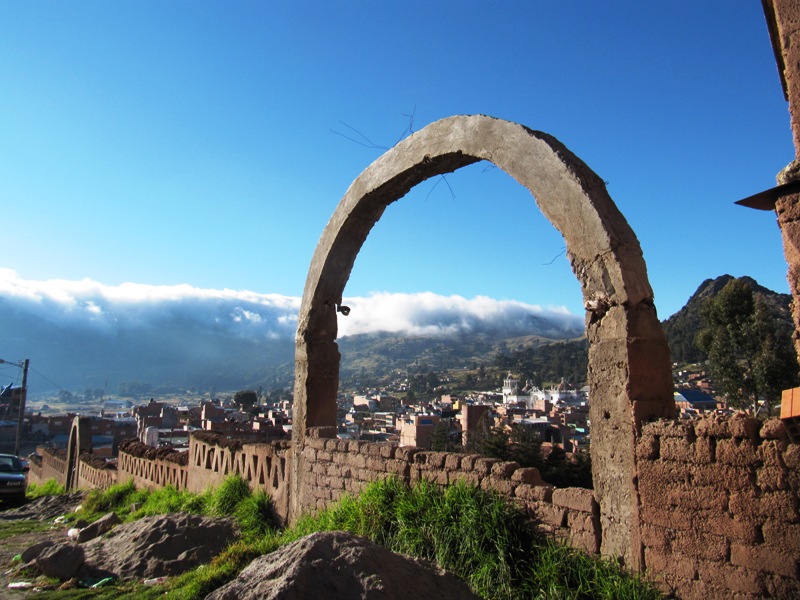
Arch of abandoned building

Copacabana cathedral

The city itself is very picturesque.  The nearby hills provide wonderful overlooks and the bright cathedral is magnificent.  Carmen and I wandered the streets maneuvering around the parade and tasting everything the street vendors had to offer.

Bowl of trout ceviche

One dish I could not walk away from was a woman serving heaping bowls of ceviche from her plaza tent. People crowded around so the turnover looked good.  The end result was sour, spicy and crunchy with crisp roasted corn kernels.

Isla del Sol

Copacabana was just one reason for this destination.  The other was to experience and see more of Lake Titicaca.  This lake is enormous.  The size of the lake is roughly four times that of San Francisco Bay and 0ne hundred times deeper.  The lake is one of the highest in the world at 13,000 feet.

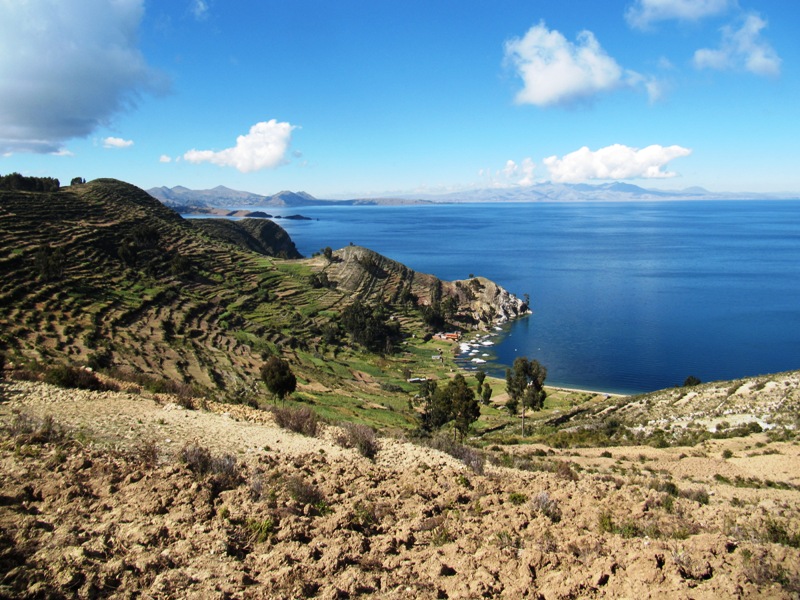
Terraced hillsides of Isla del Sol

We hopped on a ferry and travelled for two hours to Isla del Sol (the Island of the Sun).  The island was sacred to the Inca who believed it was the birthplace of humans.  Our plan was to spend the night and hike the ruins and across the whole island.

Sunrise from Isla del Sol

That evening we met some new friends Chris and Megan from Brisbane.  Sitting in the sand and watching the sun set we swapped travel stories of their camping in Africa and ours of eating through Asia.  We shared some bottles of Bolivian red wine and ate several aromatic plates of trucha.  It was an unexpectedly fun night in a village of less than fifty people.

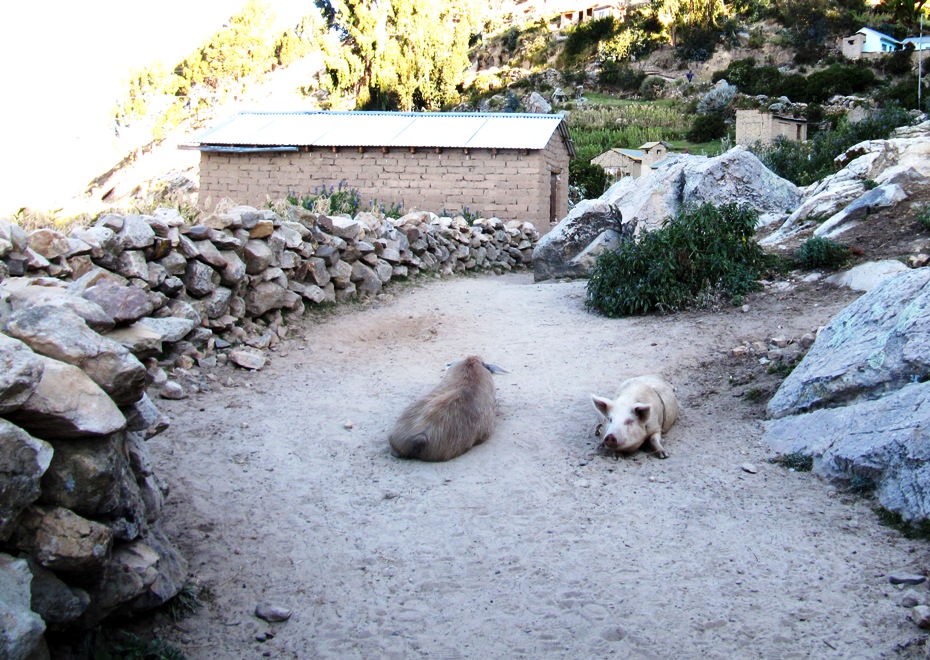
Pigs napping on the path

The alarm went off when it was still dark.  We wanted to see sunrise on Isla del Sol.  In the faint light of dawn, pigs blocked our path, and then we met a puppy that wanted to hike with us.  These were our first Inca ruins and we were excited.  The ruins included a village of stone buildings and a sacrificial table that were five hundred years old.  And we were disappointed! Bolivia does not protect or care about its cultural treasures.  Our sunrise hike discovered a group of vagrant backpackers that had cooked dinner on the sacrificial table leaving their trash to scatter the site while they slept on the ruins.  A wrong turn in the stone structures and we found where they used the restroom.  How disrespectful can these people be?

Inca ruins on Isla del Sol

Inca ridge path

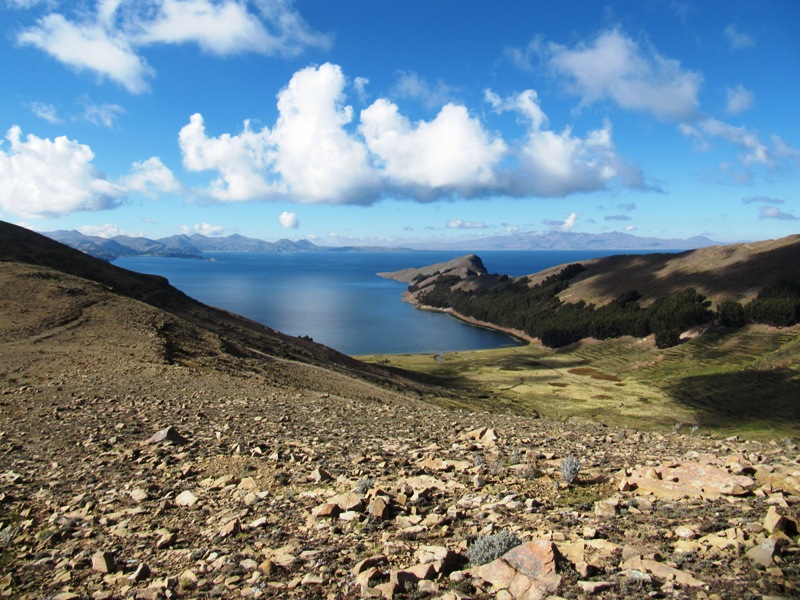
The buildings themselves were small and not the high quality masonry we would see in Peru.  The best part about Isla del Sol was not the ruins, but the walk itself.  The sacred Inca trail followed the ridgeline of the island and allowed for endless views of Lake Titicaca.  The water was deep blue that met the terraced hillsides that were cultivated five hundred years ago.  We climbed and dipped along the islands spine arriving to the south side for the island.  Another ferry and we bobbed our way to Copacabana.  We immediately grabbed a bus and we were on our way to Peru.  Copacabana and Isla del Sol already a memory of culture, a lake and trout.

Carmen on Inca path

Biking the World’s Most Dangerous Road (by Carmen)

I am not an adrenaline junkie.  So when I first read about biking the “death road” I wrote it off as a sight I would definitely be skipping.  But…in Potosí and Sucre everyone we met was talking about it.  I started to be persuaded that it wasn’t such a bad idea after all.

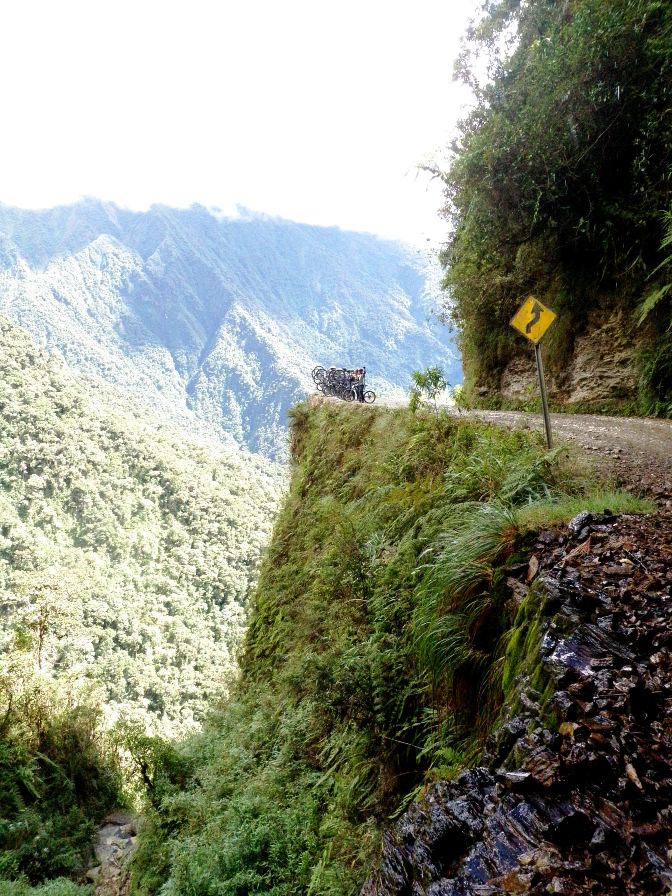
View from the top

The reason it is called the death road is because of the statistics.  In previous years an average of 26 vehicles a year fell off the 10 ft wide dirt road down the practically vertical cliff below.  The traffic was two-way and cars passing each other would have to do so in the slightly wider than 10 ft sections.  A more modern freeway was recently completed making the road obsolete, except for tourists on bikes and the occasional fool hardy vehicle.

Start of death road

The first part starts out relatively easy.  It is an 8 km downhill stretch of the modern roadway.  It was good practice going fast.  But then it was time for the tough part (or for Nathan, the fun part) to begin.  It was all downhill form here (literally, not figuratively).

Nathan in his gear

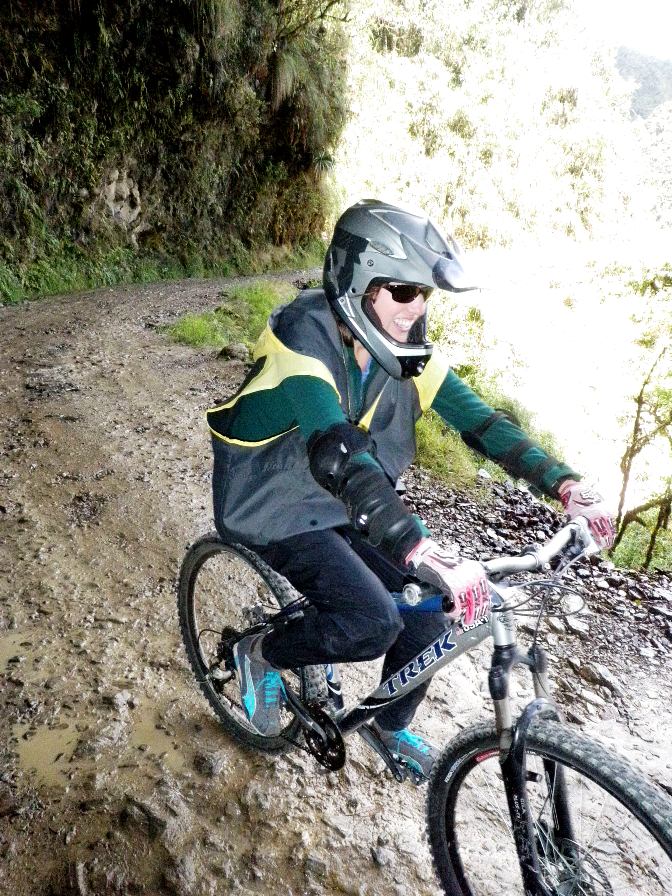
Nathan is an excellent mountain biker, having actually grown up in the mountains.  My childhood experiences of pedaling up and down my flat suburban street didn’t help me much here.  As I made my way down the bumpy road I cursed my decision to only get front suspension instead of rear as well.

The road

At least I felt in control enough that I wasn’t scared of the sheer drop I was riding next to.  Even when we passed waterfalls that flow directly on the road.  But I was definitely slower than the rest of the group.

Group on the edge

Riding through the waterfall

Overall, it was a great experience.  But after 3 1/2 hours, I had had enough.  I hopped in the support van after the guide announced that the last bit was going to be more “technical”.  I knew my butt couldn’t handle it.

Nearing the bottom of the valley

We had started at 4650 m (15,260 ft) and ended the day at 1525 m (5,000 ft).  Our sore muscles were rewarded with a dip in a pool and a buffet lunch.  The jungle setting at the end of the trip felt a world away from La Paz, though it was only a 3 hour ride back (on the modern road, thankfully).  So that’s how we survived the world’s most dangerous road!

Taking a break on a rare flat section

The Return of Street Food in the City of La Paz (by Nathan)

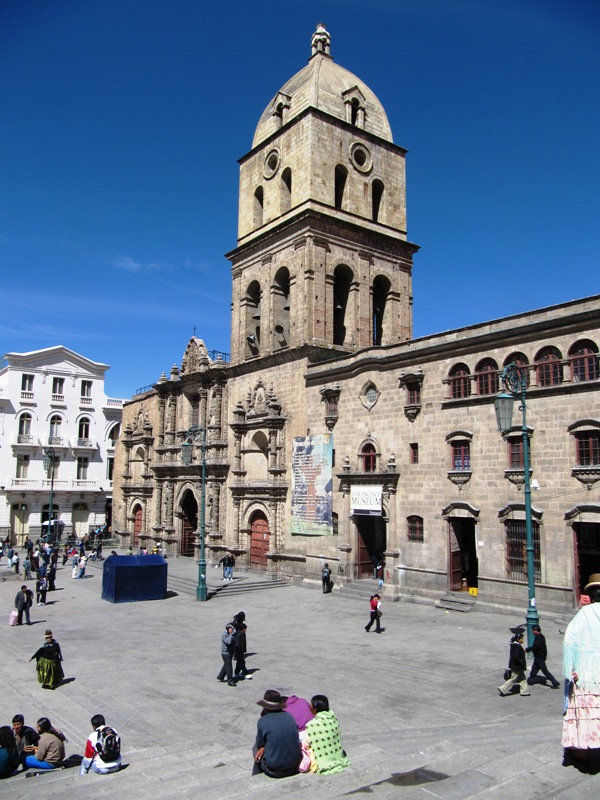
Streetside commotion and Iglesia San Francisco

One thing that is common among all my favorite cities is good street food.  I love experiencing a city that is vibrant with life on the streets.  I love the excitement of the people and the craziness of community that buys and sells everything on the roadside.  In some special places in the world some of the best meals were served from a vendor on a flimsy plastic plate or napkin wrapped delight. 

Street markets in La Paz

In La Paz we experienced a return of street markets.  The street vendors were endless; little stalls stuffed with produce, meat, blankets and DVD’s filling up the hillside with everything imaginable to buy.  Thousands of people scrambled from vendor to vendor weaving in and out of the sidewalk and street and carrying bags filled with the day’s purchases.

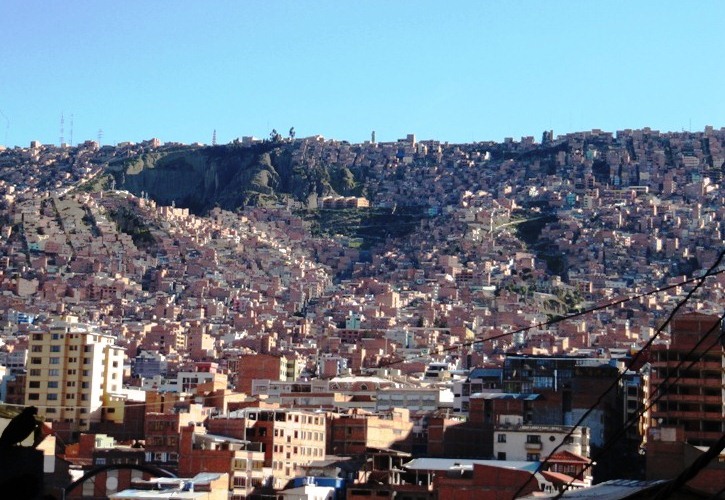
La Paz hillside homes

I could spend days and days wondering markets like these.  I do not even buy anything.  I enjoy meandering from stall to stall listening to one vendor describe the perfect mango, or another flaunt a superior winter coat and the buyers negotiating for a better price.  There is so much culture fit into these streets and I like to roam and soak it in deep into my lungs.  And my stomach too!

Sidewalk bowl of lentils

Quite often in these markets we find men and women selling local street side fresh food.  There are doughnut-like things with a molasses syrup, roasted turkeys or pork loins to be made into sandwiches and an abundant array of herbal and thick drinks served out of buckets.  Occasionally we are stopped by an intense aroma that causes us to swirl our head around looking for the source and occasionally this smell is linked to a vendor with a hoard of people huddled around grabbing for some of the delicious eats.  This is how we found lunch one day.  Two women had joined forces to cook up several pots of food and carry them to their sidewalk restaurant.  We had a heaping bowl of soup, pasta with lentils, potatoes and a salsa that made our mouths tingle.  And it cost $1.15 for the two of us!  We sat on a step and slurped down our lunch watching the people flock to this sidewalk deliciousness.

Iglesia San Francisco & plaza

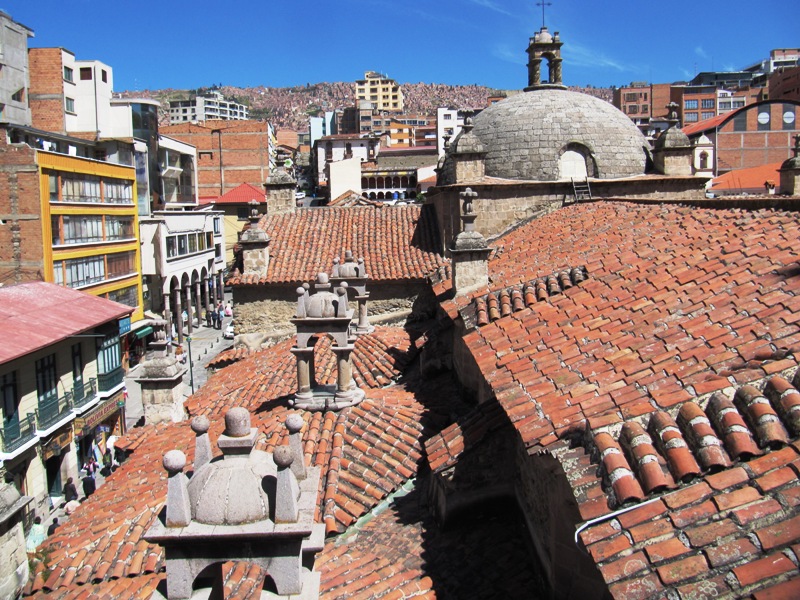
Rooftop of Iglesia San Francisco

Further on we explored the Iglesia San Francisco that was originally built in 1548.  There was a beautiful gold altar and a rooftop terrace that offered views of the city.  The plaza below the church is a central meeting point with a constant stream of people enjoying the sun and people watching.

La Paz protest

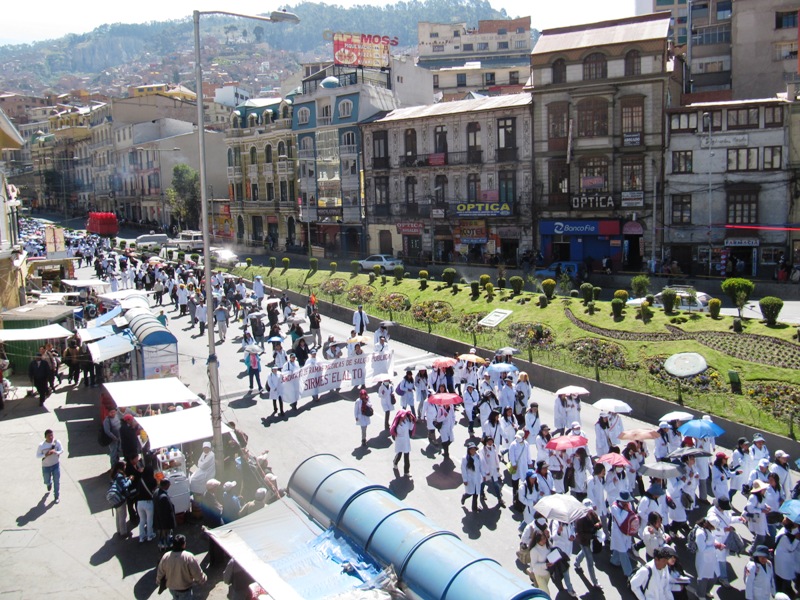
Anyone who has been in Bolivia probably has been affected by or in some way has a story about a protest.  The Bolivians seemingly protest constantly.  Carmen and I were very fortunate to not have any of our regional bus trips impeded, but we did meet countless travelers that were delayed.  The protests involve road blocks and fireworks.  We watched from a nearby bridge in La Paz as hundreds of students marched along the main corridor.  There was a steady booming of explosions as the students stuffed rockets into makeshift bamboo tubes held high in the air.

Presidential palace and Wihala flag

Protests are common to all social groups.  Bolivia has one of the most complex populations in South America with the heritage and culture of the people originating from hundreds of different indigenous tribes.  There is even a flag composed of a quilt pattern of vibrant colors to demonstrate the multitude and coming together of these people to create a nation.

Collectivo micro vans

City planning zebra

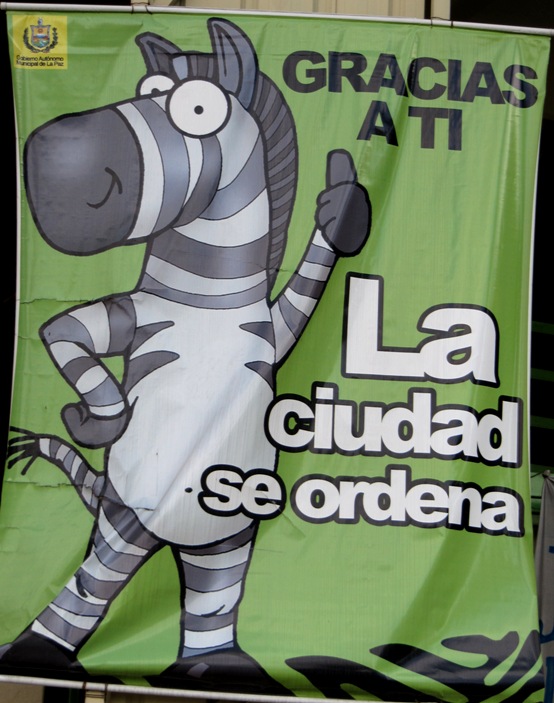
Just as there is a patchwork of cultural traditions in Bolivia, there is also a patchwork of informal transit.  No formal bus line exists.  Instead private collective vans, called micros, roam the streets calling out their destinations from the window.  Carmen and I crammed into several of these vans to maneuver our way around the city.  The competition for passengers makes for some aggressive driving.  Therefore there is a planning mascot (a happy little zebra) that attempts to restore order to the streets by designating specific passenger drop-off locations.

San Pedro prison entrance

We could not visit La Paz without seeing San Pedro prison for ourselves.  We read a great book called Marching Powder that described the life and experiences of one inmate named Thomas McFadden.  Thomas lived in the prison following an arrest for drug trafficking.  The prison is unique because it is in the center of La Paz and nothing is provided to the inmates by the government, not even a cell.  Inmates rely on their families, friends and personal bank accounts to buy a cell and buy food in the prison.  There are restaurants, stores and mini apartments all housed within the prison walls.  Every prisoner gets a job in the prison, cooking, passing messages or even giving tours.  Thomas started the tours of the prison, but they have since increased dramatically in price.  The most amazing thing is that prisoners are allowed to bring their families into the prison.  The wives and children are allowed to come and go freely throughout the day.  Carmen and I showed up at the prison to watch the door and see the families and people living inside.  Most of what we could see was this enormous trash truck parked tight against the doorway and prisoners carrying suspicious heavy sacks “trash” then covering them with loose debris.  I would not doubt that they still make cocaine there.

Colorful hanging textiles

Colorful street

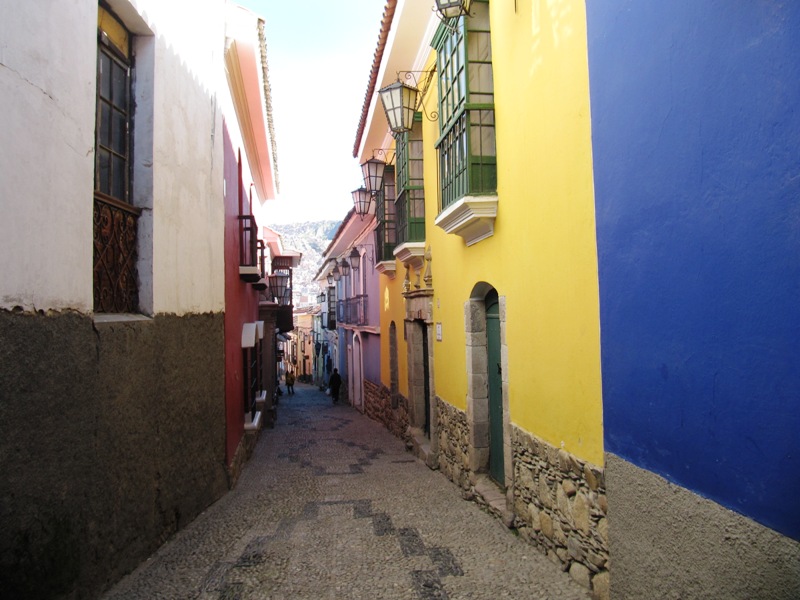
La Paz streets are intense with colors.  Brightly colored llama and alpaca wool fabrics hang from shop windows in the area that has been nicknamed gringo ghetto.  I bought myself a soft alpaca sweater knowing how warm and life-saving they can be in the cold.  Other streets contained buildings boldly painted in with blues, yellows and reds.

La Paz dowtown

La Paz is unlike any city that we have visited.   The biggest city in Bolivia is unlike lacks modern western influence; there is a rustic and rawness to the streets that is captivated and a history that is exciting.  Thousands of white-washed buildings with clay roves sit perched on the mountains that overlook the city.  The city is, in a way, shaped like a huge bowl and the culture and delights inside are just ready to be gobbled up.

The Sweet Life in Sucre (by Carmen)

Main plaza of Sucre

Sucre, which means sugar in French, is an easy place to like.  Its laid back charm and colonial architecture make it a picturesque city.  Think white-washed buildings, slender stone arches and a tree-lined main square. It also has an international flair with European style cafes and more than a few Italian restaurants.

Picture perfect arches

While Potosí grew out of the silver mines, Sucre was the location of an important law school.  This school became the breeding grounds for the revolutionaries who declared independence from Spain.  Although it took 50 years of war, they Bolivians finally signed their constitution in Sucre.  The economic and political center of the country has since moved to La Paz but Sucre takes pride in the fact that it still is the official capital of Bolivia.

La Dolce Vita Hotel

But we didn’t come to Sucre for the history.  We wanted to enjoy the easy pace of life.  First stop was to check in to our comfortable hotel named, of course, La Dolce Vita.  It was the most spacious placed we have stayed.  The friendly French owners directed us to our first restaurant, an Italian place that overlooked the whole city.

Mirador (overlook) arches

As we enjoyed our yummy nut and her pasta we ran into two of our favorite travelers – Matteo and Gosia!

The official best pizza in Bolivia – they got the award to prove it!

We had a bit of an Italian theme going on as later in our stay we joined our friends for pizza.  It was surprisingly tasty, prepared by a Bolivian guy who had lived in both Italy and Washington DC.  Pizza, wine, excellent company – what more can you ask for?

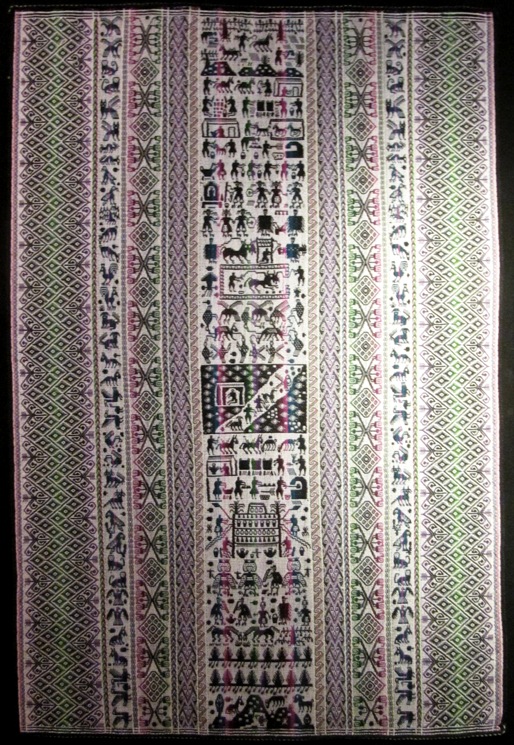
Bolivian textile with the Milky Way in the center

While in Sucre we got a little culture by going to a textile museum.  We learned how the colorful fabrics often worn by the women in traditional dress have meanings embroidered into them.  This one was particularly cool because it depicted an abstract version of the Milky Way, an important celestial body for indigenous cultures.

Sucre street

Us on the rooftop

As sunset approached we ran over to a church off the main square known for its rooftop views.

The bountiful market

Delicious fruit juice

In the mornings we made a point to head to the market, which had a bountiful display of veggies, fruits, sweets, cakes and sundries.  But our favorite part was the juice stands.  Fresh fruit blended right in front of you all for about 70 us cents.  All the juice ladies call out to entice you, offering 2 for one prices.  It was deliciously refreshing and we visited 1 to 2 times a day!

Lunch at the market

On our last day we enjoyed a market meal consisting of stewed meats, noodles, potatoes and a fermented fruit juice.  Afterwards, a final visit to a chocolate shop was a sweet goodbye to Sucre.  That is, until the chocolate melted all over the inside of my bag. Oops.

Sucre at sunset

Finding Enlightenment And Darkness in Potosí (by Nathan)

Scenic drive to Potosí

Potosí is a city of contradictions.  The contrasts of both riches and defeat are deeply rooted into the high mountains; the history of the city is glorified in majestic architecture and the poverty weathered into the faces of the people.  At first we knew little about the city other than there was a silver mine and it had an altitude unmatched by any other city of the world.  We discovered a place exploding in culture and experiences that we will never forget.

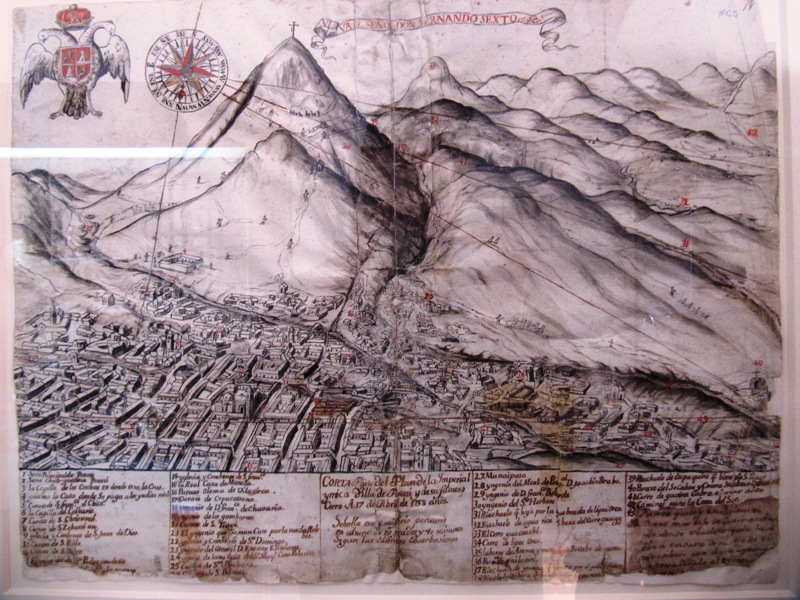
Historic map of Potosí

The city is breathtakingly high in the mountains. We avoided the taxi stand and trudged up the hillside with our backpacks on.  After a six hour bus ride a thirty minute walk at 13,500ft (4100m) seemed doable.  We are a little crazy sometimes.  At each block we sucked in deep breaths of oxygenless air and held onto our chests as our throbbing hearts tried to escape.  A little light-headed and we arrived at our hostel ready to explore the city.

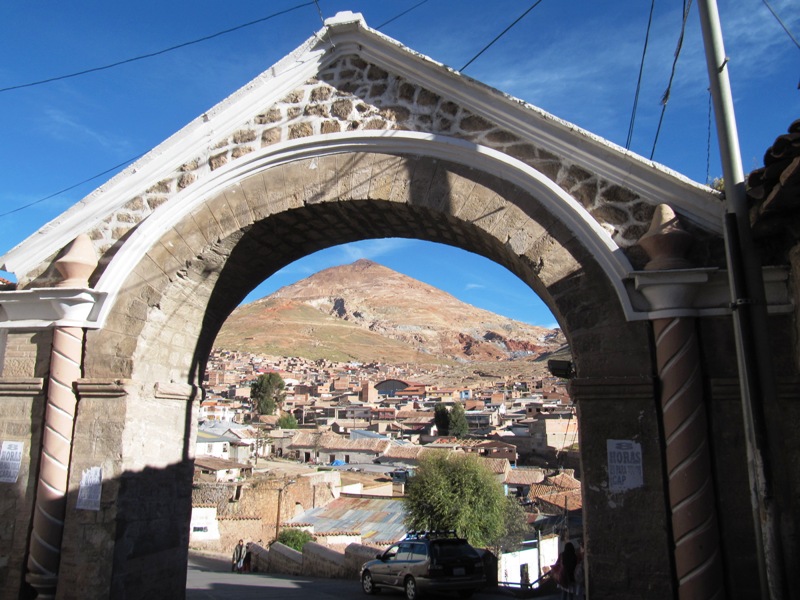
El Cerro Rico through colonial arch

Potosí has a history entwined with Spanish colonial dominance and the production of silver.  Mid-sixteenth century a meandering llama shepherd on the mountainside discovered silver flowing from beneath his campfire.  Within decades the Spanish had colonized and created the city of Potosí beneath the cerro rico (rich hill).

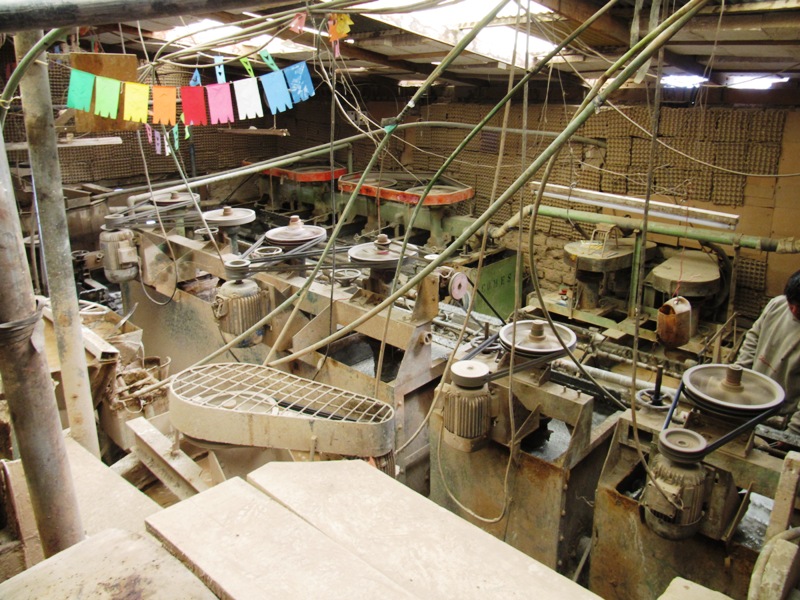
Silver extraction factory

The Spanish forced indigenous and African slaves to work the mines months at a time without seeing light.  The population of Potosí grew so much in the 17th century that over 15,000 men worked in the mines at one time and the city’s population exceeded that of Paris.  Potosí quickly became the richest and most populous city in South America.

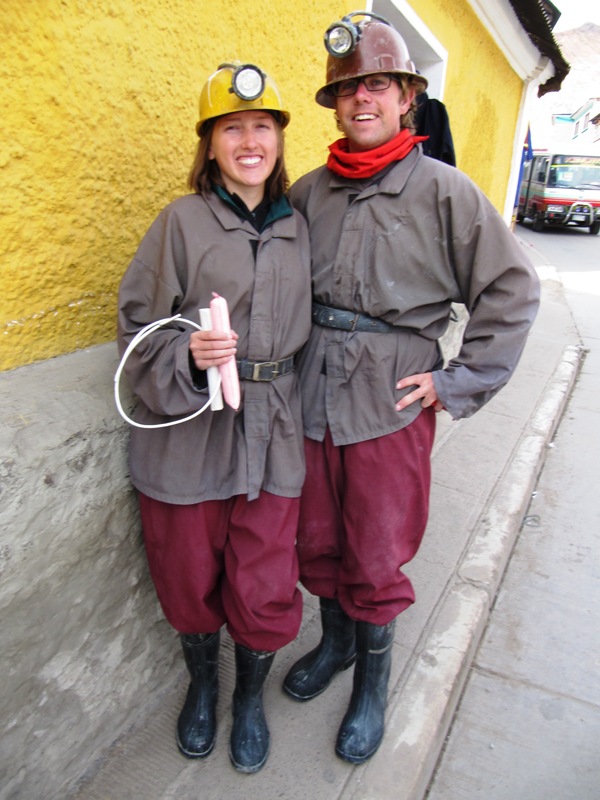
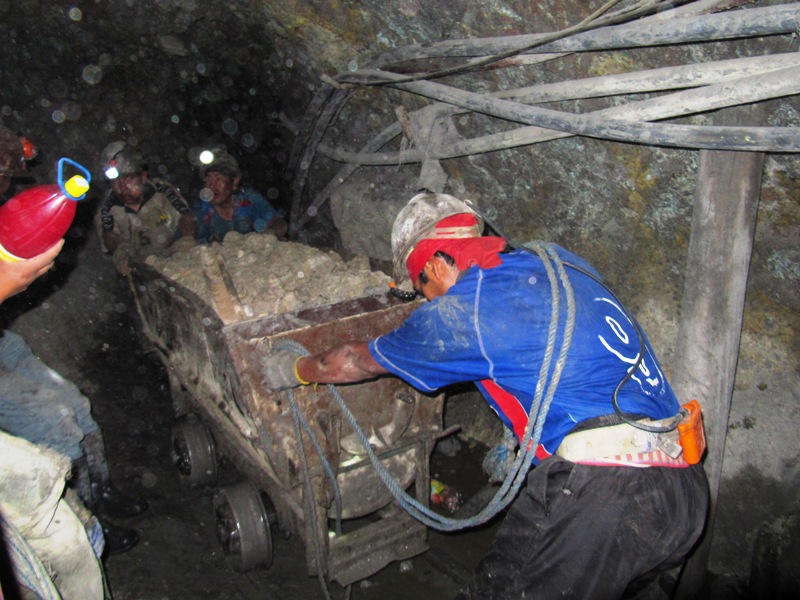
4feet2mouths Miners

The mines are still a central part of Potosí.  They are less productive than they once were, but nevertheless over 1,500 men continue to work in over 500 mines that have swiss-cheesed through the mountain.  Carmen and I decided to see the mines for ourselves.  The unique part of visiting the mines is that tourists are supposed to bring gifts for the miners within.  With our coveralls, rubber boots and headlamps we tromped our way to the miners’ market.  We purchased a stick of dynamite, a detonator and nitroglycerine as an explosive gift (only $3!) and a couple liters of soda for the other miners.

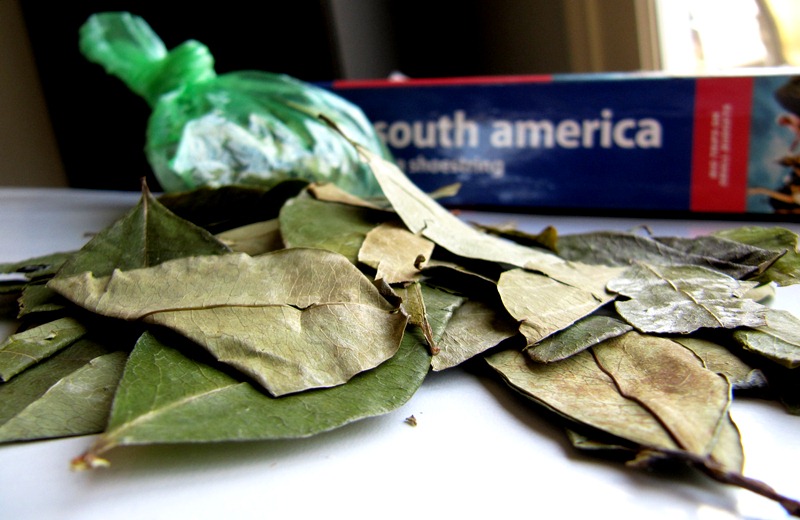
Coca leaves

Another purchase was a bulbous bag of coca leaves.  Coca has been used in these mountains for thousands of years and it is drastically different from the connotations associated with cocaine.  The miners chew and macerate 50-200 stemless leaves and they keep the wad in a huge ball in the side of their mouths.  Throughout long hours of work the coca leaves provide energy, alertness and they suppress the need to eat.  An added benefit is that they help ease the effects of altitude sickness.  It takes 1kg of coca leaves to make 1g of cocaine along with many nasty chemicals, so chastising coca is similar to relating a cup of coffee to methamphetamines.

Enormous crystal of bolivianita

The mines were hot, 95°F (35°C) and wet and dusty.  We started in the candeleria mine and we worked our way 1000ft (300m) horizontally into the mountain.  The caverns were created 300-400 years ago and unfortunately I am taller than the smaller natives that dug the mines.  I hunched and squat-walked through the water and muck.  Then there was only a seemingly solid section of rock and an obscured cavity just larger enough to crawl on our stomachs.  The air was thick and the walls wet and the rock dark with an occasional sparkle of silver or pyrite or a stripe of yellow sulfur.

Los Mineros

“Vamos, vamos vamos!” Our guide yelled at us.  We rushed along the tunnel to an opening and he pushed us against the wall.  The slow rumble of the mine became louder; suddenly a two ton cart full of rocks rushes passed us with one miner clinging onto the back.  Our guide stuffs a bottle of Fanta in the cart and a drawn out “graciaaaas” reaches us from the depths of the darkness.

We climbed to the inner depths of the mine.  We would poke our heads down a little hovel then scale the dark cliffs within.  At first we were all cautious of the 300 year old pieces of wood that braced the openings, but when looking into the abyss all of us scratched and clung onto every foothold and support we could find.  Finally we reached the bottom, level four and 275 ft (80m) down.  We found a thirty-two year old miner that looked over fifty that spent all day hammering two holes for dynamite.  At the end of each day he would set off the charges and carry out the rocks in a backpack.

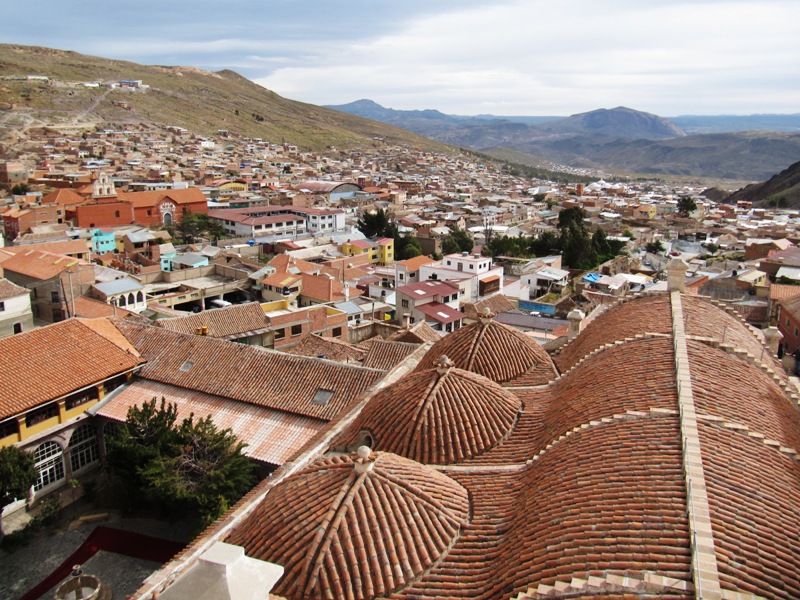
The city of Potosí

The lives of the men are hard in the mines.  The expected lifespan of a miner rarely exceeds fifty years and most die from silicosis, falling rocks or misplaced explosives.  Children also work in the mines; boys as young as ten years work to support their families.  One thing is for certain, they can earn four times more in the mines than in the city of Potosí.  So the men work extremely hard for a few ounces of silver and their lives remain difficult.

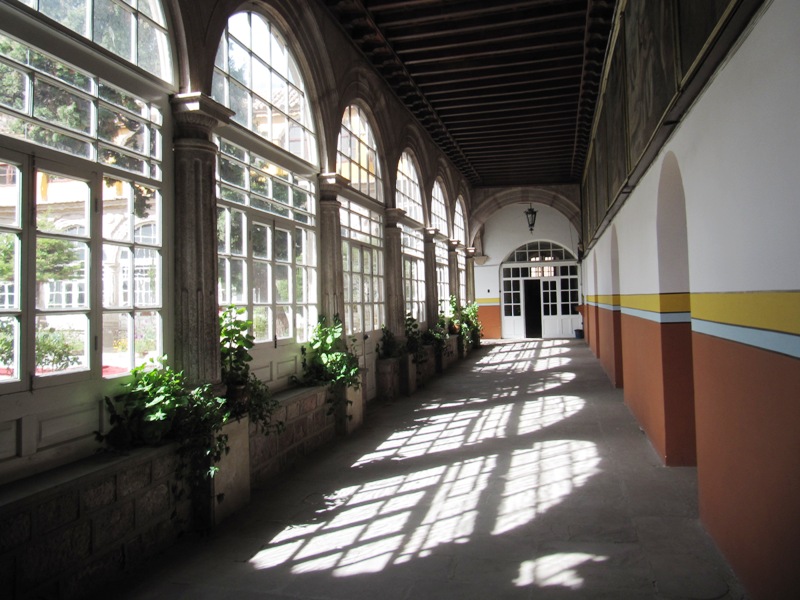
Inside the 450 year old Convento San Francisco

The dichotomy of life in Potosí extends to religion as well.  Outside in the light is a community passionate about the Catholic Church. Potosí has several beautiful colonial churches and the San Francisco was constructed in 1547 as a slightly smaller version of St. Peter’s Basilica.  In the darkness of the mines the people pray to a different god, “Tio,” the devil of the mountain.  Their daily offerings of 96% moonshine-like alcohol and coca leaves to clay statues in the caves are a way of satisfying the mountain so that they remain protected and the veins of silver remain plentiful.  The miners live these two lives: hours of darkness and heat in the mountain and a life of family and church in the city.  After four hours of clambering around in the mines the light at the end of the tunnel was thrilling. Squinting and sweating I finally straightened out and looked into the city of Potosí.

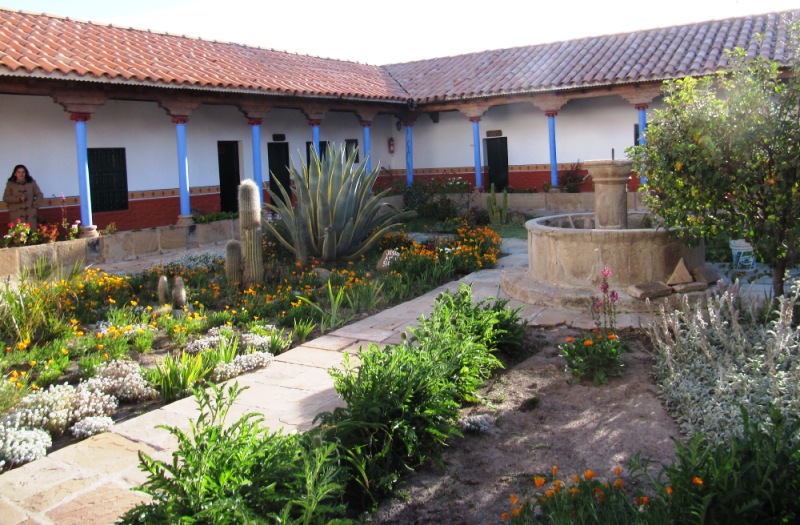
Courtyard in Convento Santa Teresa

Potosí was also home to one of the strictest nunneries.  The upper-class Spanish followed a regiment with the lives of their children.  The first born married wealthy into the colonial upper class, the third born served the military and took care of the parents in old age. The second child was dedicated to the church.  In the case of Potosí families paid an equivalent of $100,000 as a dowry for their daughter to become a Carmelite nun at St. Teresa’s.  The rules of the nunnery were so strict that the nuns could only speak one hour per day and there was no communication to the outside world.  Families could visit one hour per month and they were not allowed to see or touch their daughter.

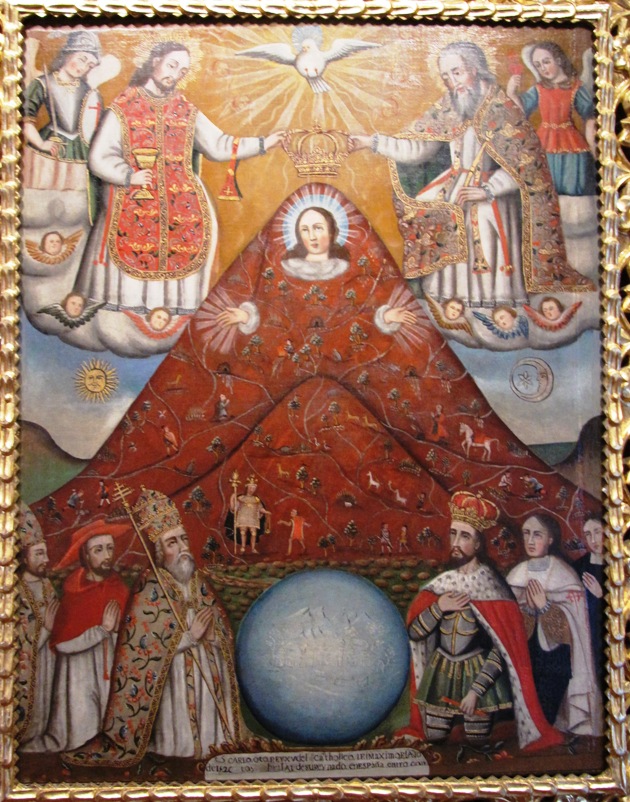
La Virgen De Cerro Rico

We observed a trend in many of the religious paintings.  The virgin Mary appears in many places as would be expected in a catholic country, but the shapeless mound that is typically meant to be non-seductive had been adapted in Potosí to be la sagrada virgin de cerro rico.  During pre-colonial times  each mountain was a god, with colonialism the traditions of the indigenous people merged with the icons of the catholic church. 

Other paintings and figures show a bloody version of Jesus on the cross.  This graphic imagery comes from the indigenous painters intertwining their own pain and suffering from the Spanish colonial rule into their faith in a new religion.

Traditional outfits on colonial streets

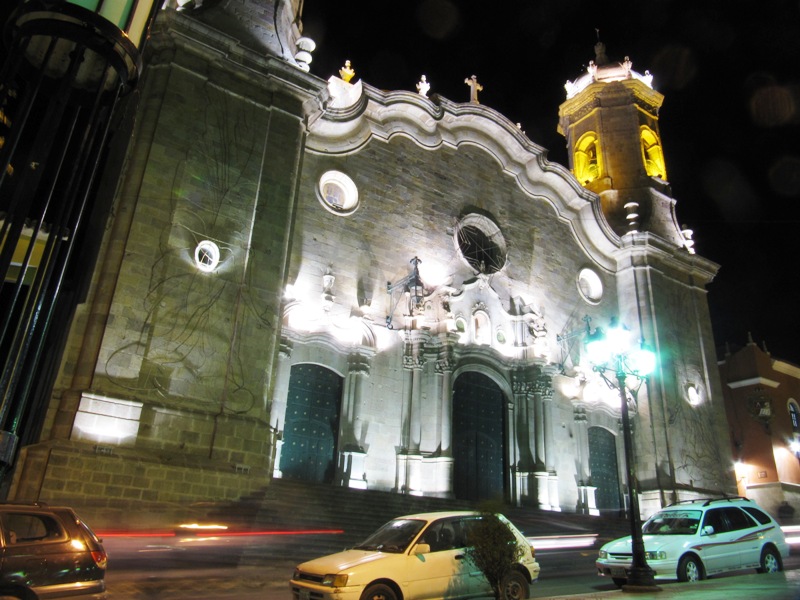
Cathedral by night

Walking the streets of Potosí we were constantly welcomed with a splash of history and tradition.  A 400 year old church and a cobble-stoned path were all common sites.  On one occasion we crossed a mother and children each wearing a traditional bowler hats.  In the evening the brightly lit cathedral was a beacon of the city.

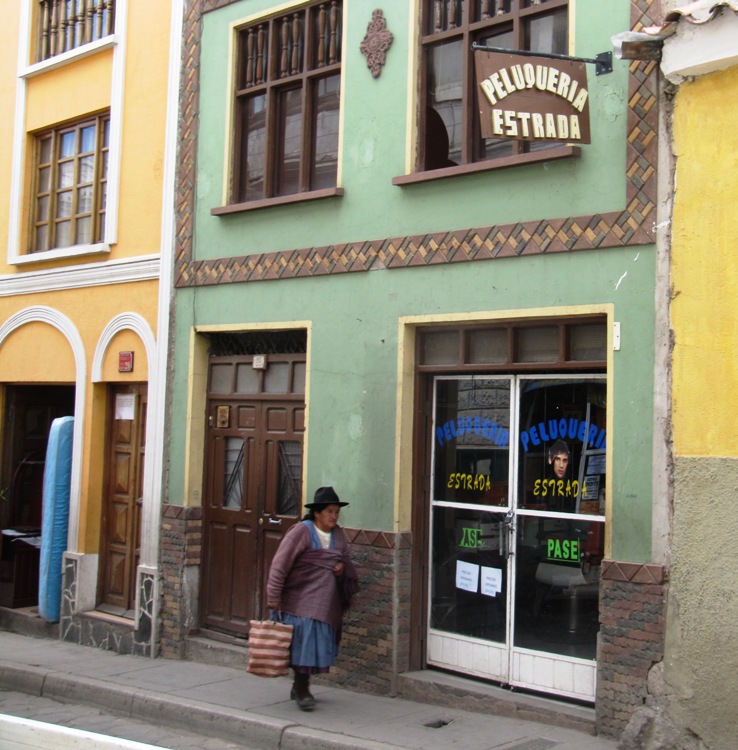
Barbershop in Potosí

I too needed enlightenment and getting a haircut seemed to be the easiest way to lighten the weight on my shoulders.  I had been scared to get a haircut for many months because Argentine men have notoriously horrible hair styles.  Throughout our travels we saw multiple rat-tails, lobster-tails and mullets and I refused to pay for something so wrong.  In Potosí I found a nice shop, but I still shook my head vehemently when the barber pointed at a poster of boys with mohawks, fauxhawks and bowl cuts.

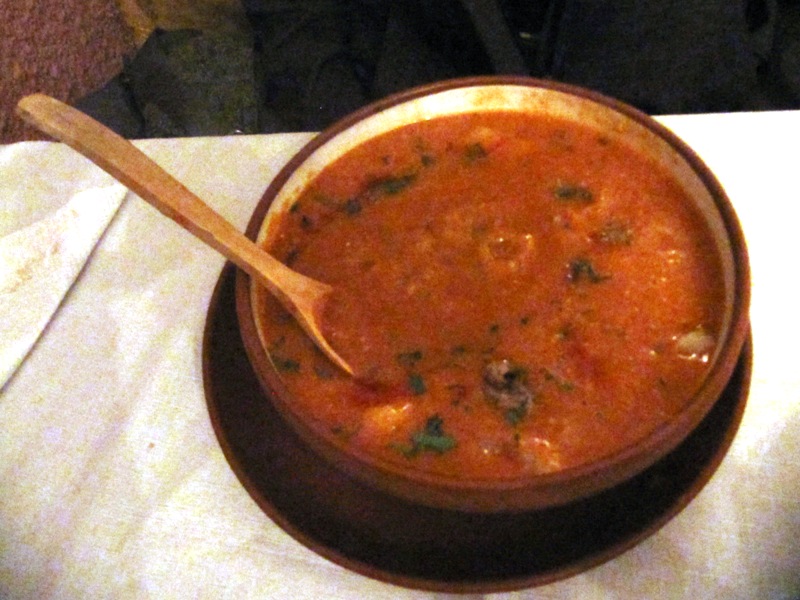
Kala purca at Puka Wasi restaurant

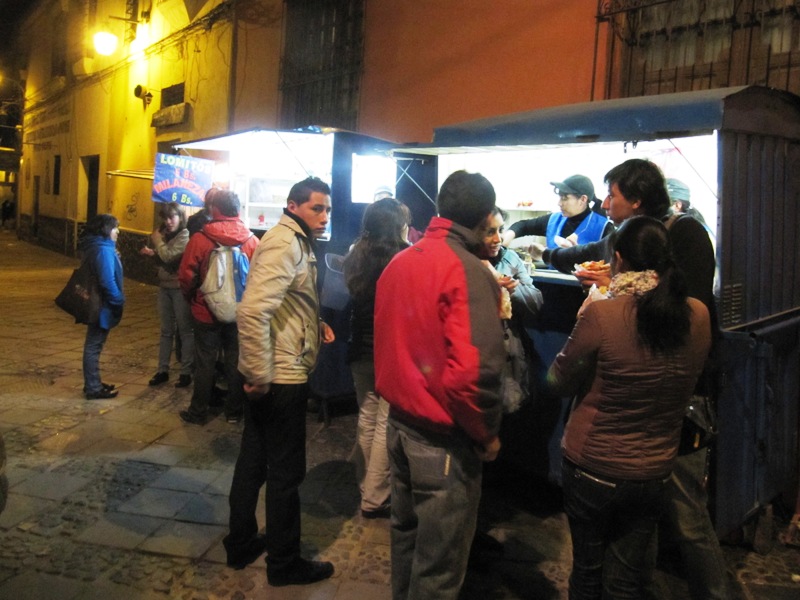
With my ears lowered we were in search of some food.  We found a great little restaurant with some local quechua favorites.  Kala purca is a local stew of meat and potatoes that arrives with a scalding volcanic rock bubbling and gurgling in the bowl.  Another night we found a street side snack of lomito and milanesa sandwiches cooked out of tiny stalls.  Each sandwich was doused with an array of sauces, topped with fries and spicy salsa.

Street food in Potosí

Potosí is a charming colonial city.  Carmen and I loved the historic architecture and the rich culture throughout the city.  From this one city, we were gaining an understanding of how Bolivia’s history affects its present.

Salar + me + u = Jumping Photos – Day 4 (by Nathan)

4am – BEEP BEEP BEEP

We rush to get our stuff together, we grab our jackets, the tripod and the camera...today we are going to the salt flat.  Bolivia has the biggest dried salt lake in the world – the Salar de Uyuni.  The salt lake is so big that it contains more than 60% of the worlds lithium and covers about 4100 sq.mi. (the equivalent of 10 NYC’s).  Our jeep drives right onto the salt flat and in no time we are speeding along in the darkness with a destination that none of us can see.

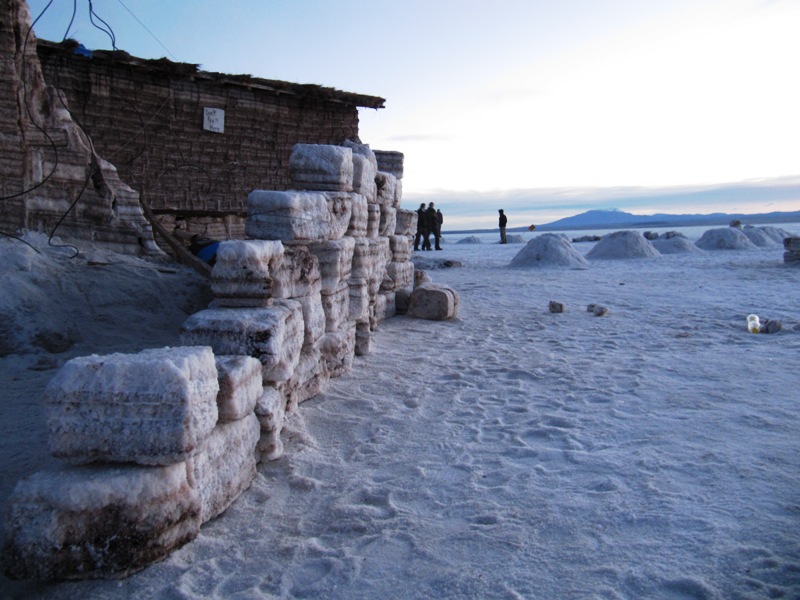
Salt hotel made from salt blocks

We arrive at a hotel de sal which is a salt made building in the middle of the flat.  We had breakfast of bread jam and mate de coca while sitting on salt-carved tables and stools.

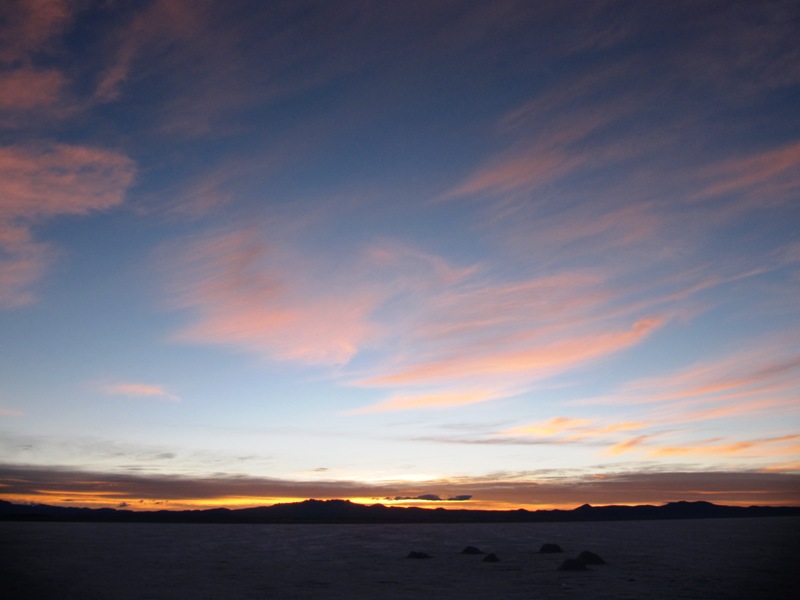
Sunrise over the salt flat

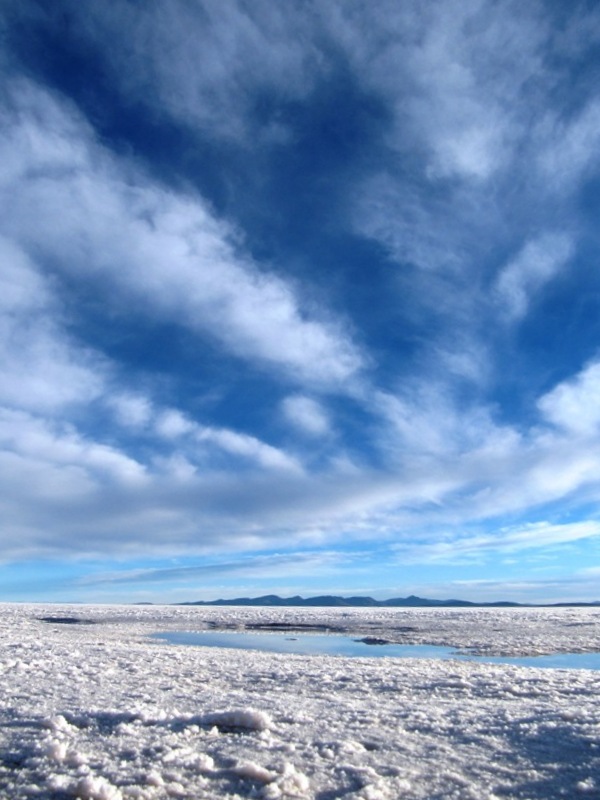
The sun slowly crept to the horizon and filled the sky with bright pinks and orange. Gradually the golden light crept to our feet revealing a flat expanse of solid white.  We had to convince our minds that it was in fact salt because the coldness and bleakness of the salar tricks the mind that it is snow.

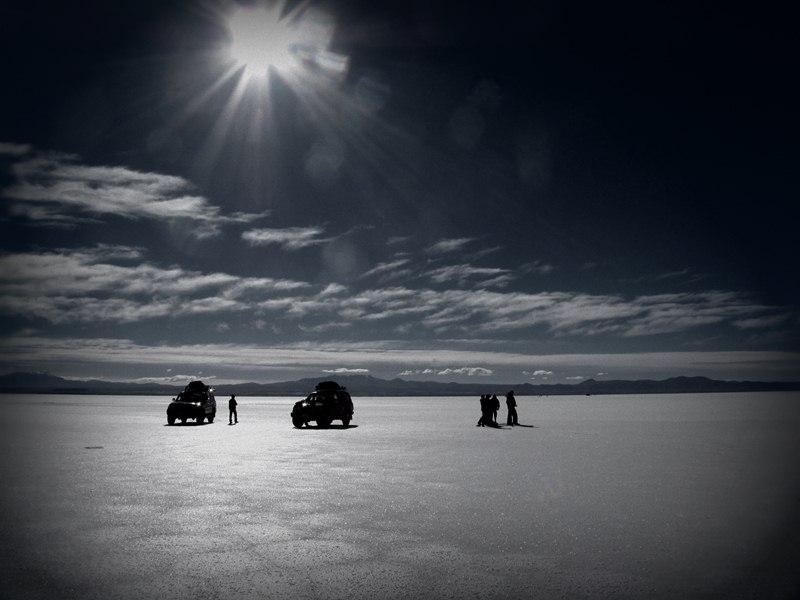
Jeep silhouettes

Carmen and I practising our jump kicks

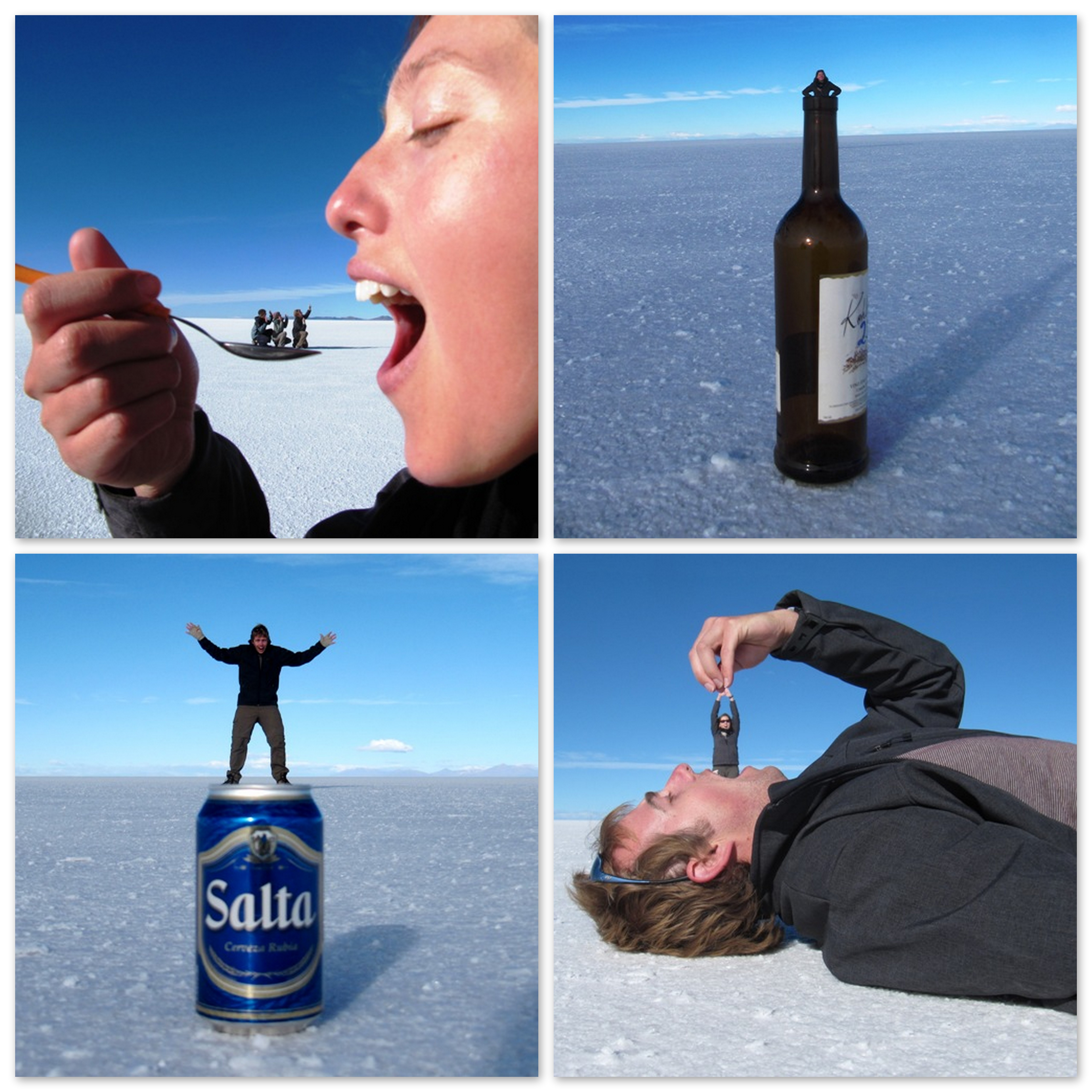
And then the jumping photos began… The reason for this?  When else will we be in an environment surrounded by flat white with the visual effects of high-flying kicks?

Fun with food

We also had quite a bit of fun playing with some beer cans and bottles.  We did our best to remember the Honey I Shrunk The Kids movie infused with a little imagination of our own.

It came down to a showdown between the couples: Carmen and I won!

One, two three! Ready, squat jump! were words repeated over and over again and with each leap a medley of laughter as each of us tried to time the best karate kick and jump into the air. Finally it came down to a competition between the couples.  Mark, Sally, Silvio and Mila had impressive jumps, Matteo and Gosia had the height, but could not synchronize after fifty or so jumps, but in the end it was Carmen and I that had the best leap (note: if any of you disagree, send me the photo and we’ll have a vote.)!

Jeep tour friends

Group jump shot

And there were group shots, many many group shots, leaving us all out of breath and our jumping legs throbbing.

Walking from a wine bottle

We attempted to walk out of wine bottles, or being blown from hair dryers, or even squished by a shoe.  All in all it was a morning filled with laughs and fun with our friends.

Salt cones in preparation for harvesting

Exhausted, we made our way from the salt flat.  On the outer edges the people harvest the salt into large cones for drying then refining.

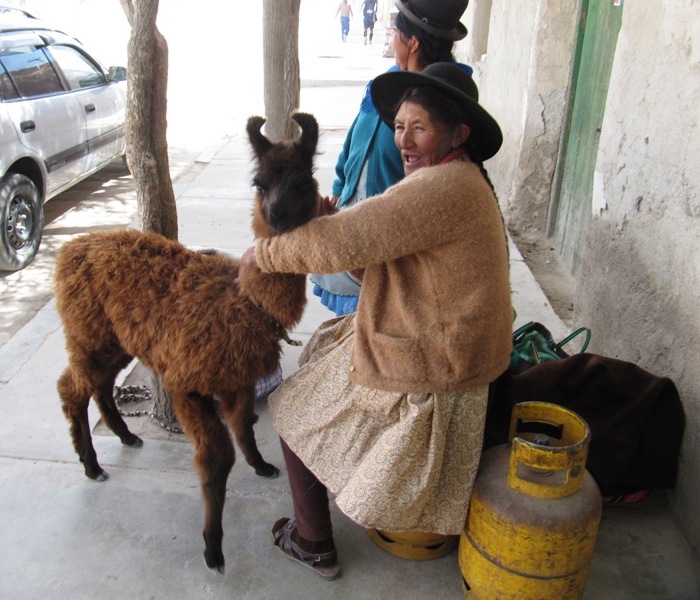
Traditional woman and baby llama in Uyuni

In Uyuni we scheduled a bus for Potosí.  We were rushing to get to the bus when we were stopped in our tracks by the cutest baby llama.  The woman attempted to hold it down for me, but it was quite restless.

We clamber onto the bus and shove our packs between our legs.  Our bodies were exhausted form the repetitive jumping, and our minds overloaded and jaded from the amazing views.  The grandeur and magic of the scenery of the last 4 days was sensational.  There were carved surreal landscapes, painted lagoons, expansive canyons and colors, vibrant colors that I did not imagine were possible at a large natural scale.  Looking back on it, I have a hard time fathoming all the wondrous beauty that we saw.  A Salar de Uyuni trek should be on everyone’s South American itinerary!

Brilliant blue skies

Our bus bounced along the roadway, jiggling and rattling its way up the mountain dirt roads.  Only the main streets are paved.  The vibrations are quite soothing, but the bus continues to acquire more and more people.  Within the first hour our the entire aisle has also filled with people scrambling to hold on as the driver twists and turns the bus at each corner.  A woman next to us held a plump baby with a shawl wrapped around her back.  On her front, several other bags hung from her shoulders; her one free hand clawed at doorjamb for stability.  After a couple hours the baby became restless.  I offered for her to lean the baby on my backpack that was on my lap, instead she passed me the chubby baby. We giggled and made faces at each other for the next hour.  I attempting to entertain it with the few items that I had accessible, but my red water bottle did not have much success for long.  She was a cute little thing and I escaped with minor droolage.

I was asleep seconds after passing the baby back, my head swayed from side to side as we climbed into even higher mountains.  When awoken at my new destination, it was me that had been drooling.

4 Wheelin’ El Parque – Day 3 (by Nathan)

Laguna Colorada

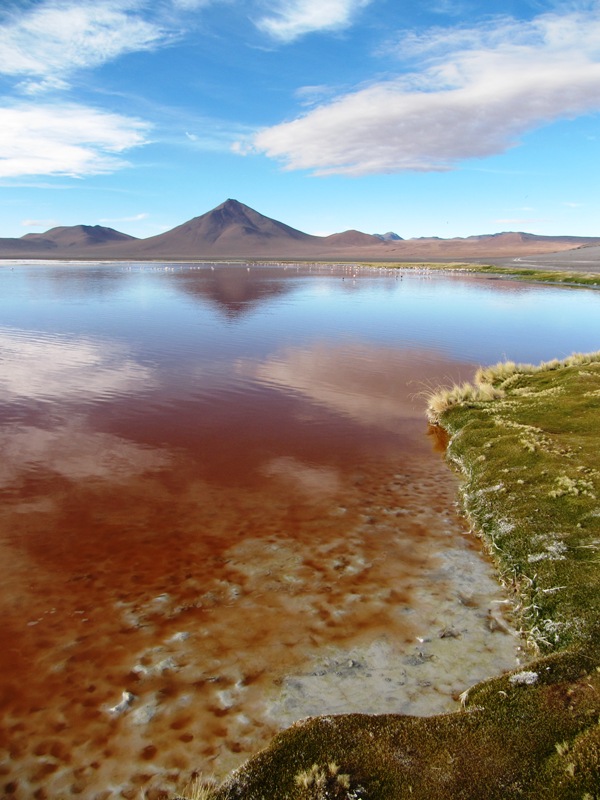
The next morning was cold…real cold, but it was expected when sleeping at 4500m (14,800ft).  We bundled into the jeep at sunrise and we were off to a whole new set of destinations and jaw-dropping sights.  The name of the park that we have been exploring for the last few days is called Eduardo Avaroa Andean Fauna National Reserve.  The park is one of the most visited sights in Bolivia and it contains some of the most beautiful, color-rich and grand natural earth formations on the planet.  The laguna colorada was one of the most impressive thus far.  This small lake contains all sorts of minerals, mostly borax, but it is the red algae that really flourishes here.  The water was still and the air cold allowing for a hazy reflection of triangular mountains beyond.

Arbol de piedra

Carmen and I climbing on the rocks

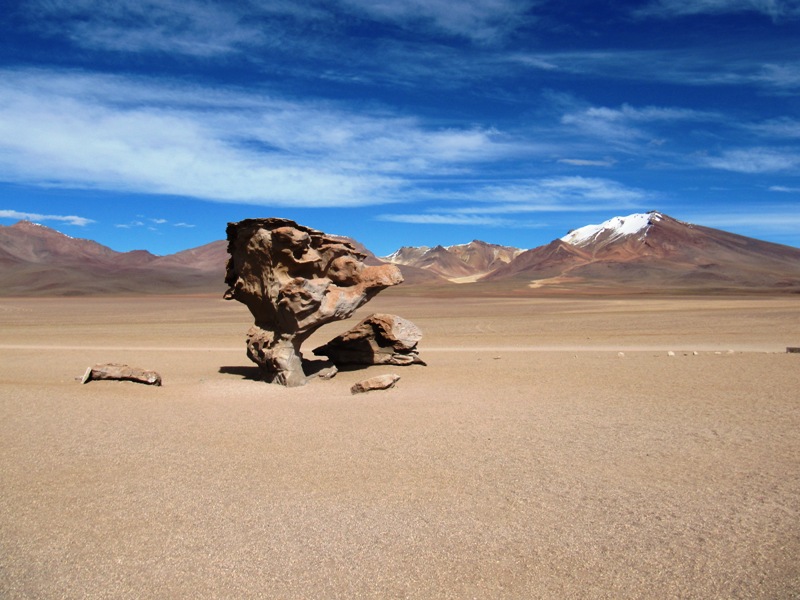
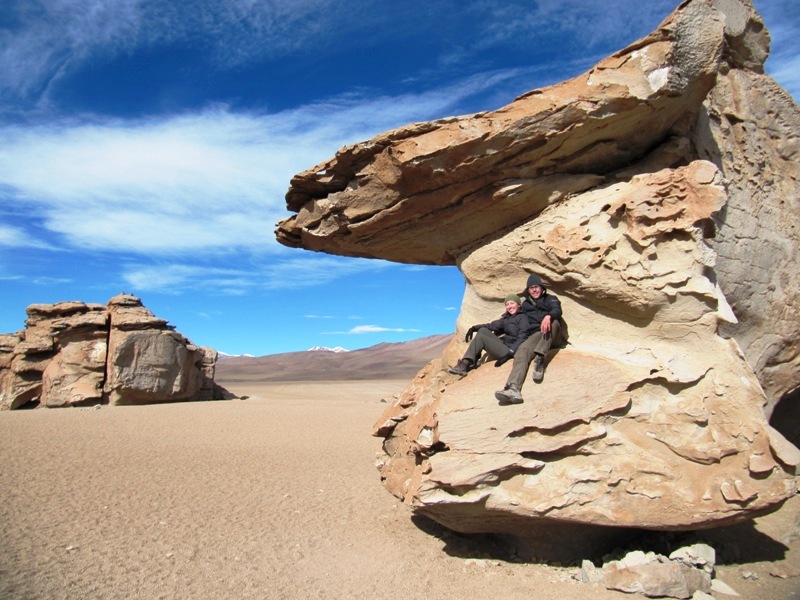
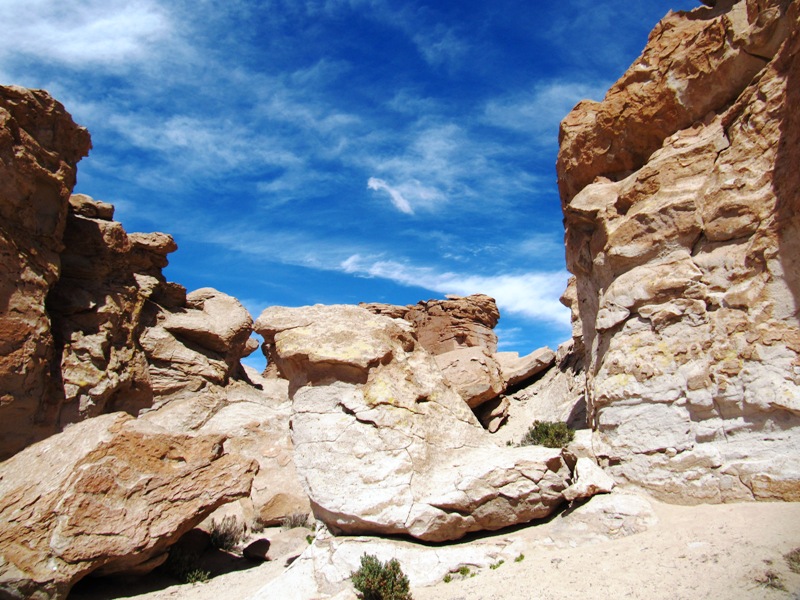
Further along the drastic landscape was a bleak desert surrounded by colorful volcanic mountains.  We stopped at a rock forest with hundreds of angular and twisted formations that are remnants from the last eruption many thousands of years ago.  The most famous is the arbol de piedra, but we had great fun just climbing around all the enormous rocks.

Laguna Honda

Flamingos at Laguna Hedionda

We romped through the mountains climbing an occasional mountain and blazing our way through the highland deserts.  The next stop was a series of five lagoons that the flamingos use a breeding sancuary.  I never realized that these birds enjoyed high altitudes.

Landcruser crossing a river

There were times that the terrain became pretty rough and it was nice to have a guide that had been driving these roads and trails for 15 years.

Montaña de siete colores

The landscape throughout the day was mesmerizing.  Everywhere we looked was an beautiful snow-capped volcano, a colorful mountain, bright blue skies, multiple lagoons and thousands of llamas.

Valle de rocas

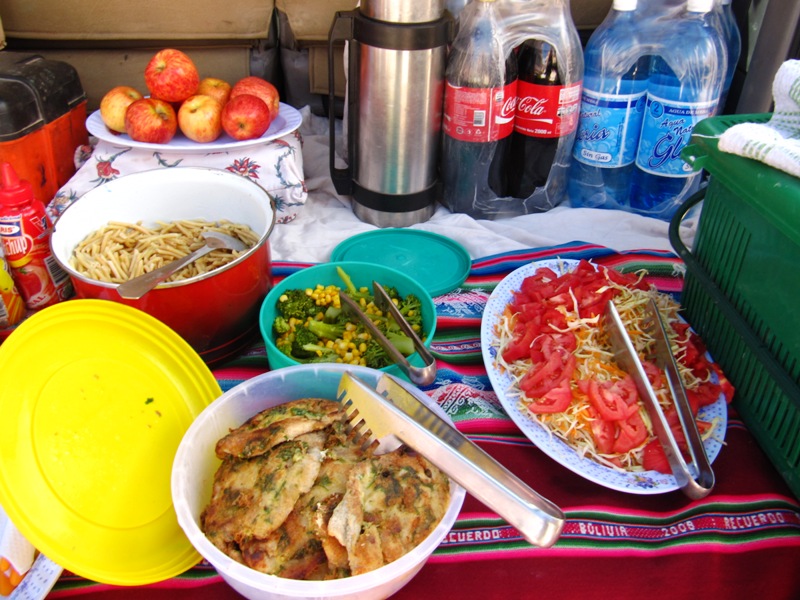
Tailgate lunch at valle de rocas

Our jeep caravan included an amazing Bolivian woman that cooked for us.  While we played around at the valle de rocas she whipped together an delicious meal of chicken milanesa, noodles and salad.  Of course it was served with the only drink that South Americans seem to know: coca cola.

Friends at the cemetario de trenes

Evening approached quickly, but we did have time to explore the cemetario de trenes just outside of Uyuni.  There used to be reliable and functional train traffic in Bolivia.  In the 1940′ hundreds of train cars and engines were abandoned due to rapidly depleting mining resources.  Now it is just a heap of rusted metal, surrounded by fields of endless trash, nevertheless it made for a good photo opportunity with friends.

That night we prepped ourselves for what was going to be the saltiest day of our lives.

Post Navigation