4 feet 2 mouths

walking and eating our way around the world

Finding Heart and Soul in the Favela (by Nathan)

Reading a guidebook about Rio can make you think that you need an armored tank to move around the city.  “Do not go to the beaches at night”,  “take taxis at night” and “watch your belongings” were statements that echoed in our ears over and over.

What we found was quite different- a city that was full of community and great people wherever we met.  That does not mean that we ignored these suggestions, but we recognized that, like any city in the world, tourists are easy targets for theft.  With our heads down and hands tight on our bags 8 feet 4 mouths (ie. us & Carmen´s parents) had a memorable trip to this great city.

Rocinha favela from above

Rocinha favela from above

Part of the reason Rio is recognized for its crime is because multiple favelas are perched next to the main sights and the city.  A favela is basically a squatter community that houses thousands of people that need to work in the city, but cannot afford the city.  So in Rio when rural populations rushed the city for jobs, they built their homes on the cliffs surrounding the city.  Now, the squatter communities have expanded and grown to form huge networks of buildings and businesses.

I was so intrigued about this intertwined network of buildings, people and  resources.  I wanted to see it for myself.  I wanted to walk through the randomness of it, I wanted to get lost in the alleys and experience the favelas in some way more than just squinting from afar.  But wondering through a favela is pretty unsafe.  And on a tour I did not want to be the spectator that exploited the poverty of the people.  It was a torn decision, but I ended up walking with a small group and guide through one of the favelas.  The end experience was rewarding in ways that I could never have anticipated.
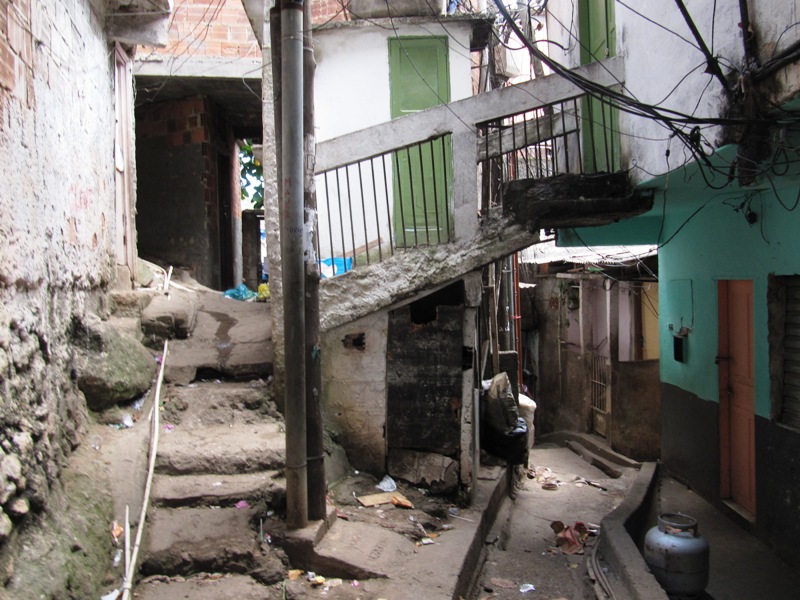
Favela doorway

Favela doorway

My day started with a minivan picking me at the hostel and taking me to the base of the biggest favela in Brazil, Rocinha.  There are only 4 roads in this favela and only one gets to the top.  All the buildings are connected with tight paths and staircases.  Although busses attempt to navigate these roads, I hopped on the back of a scooter, the favela taxi.  Imagine Lombard St. in San Francisco, a little wider, a little straighter and just as steep.  Now add a bus coming downhill, road construction taking up a third of the road and fifty or so motorcyclists with passengers racing eachother to be the first to the top.  The German tourist I made friends with in the minivan wore a pink helmet and I could not help but laugh and give him a thumbs up as my driver revved and pried his way between the front of the bus and his scooter.

We made it to the top without incident.  The main street in the favela was nothing that you would expect.  This was not some lean-to hodge-podge of a settlement, this was a mini city.  And the four main roads were the downtown of this mini city.  There was everything here: markets, appliance stores, restaurants and even pet stores all lined up on this winding street that snaked up the mountain through the favela.
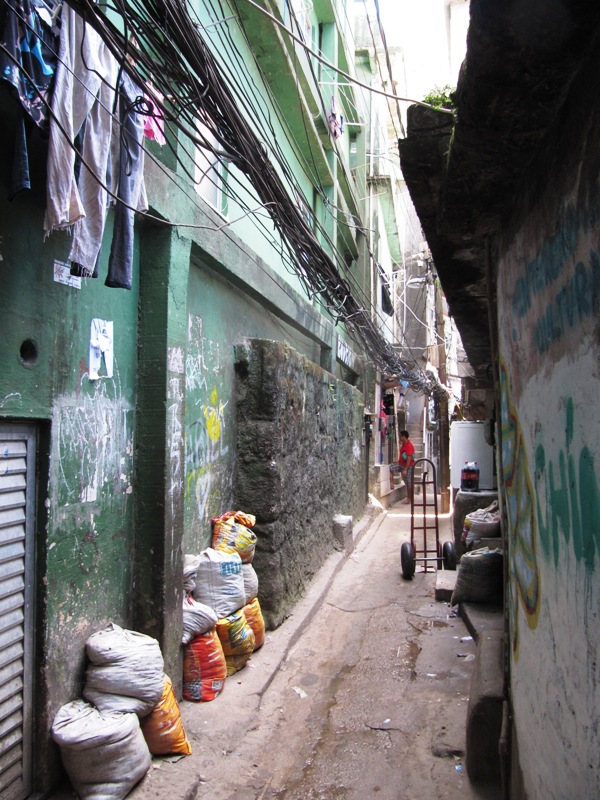
Favela Walkway

Favela Walkway

Stepping off of the paved road was an immediate change of climate to a network of tight alleyways and staircases that weaved there way through the community.  And again buildings were not what I had anticipated, this was not a shanty town, not a slum, but a streetless city of real buildings, a favela.

There is major construction happening here, two and three story masonry buildings with concrete columns.  And what an effort because everything has to be carried or wheel-barrowed through the winding paths.  Every building appeared to be part of some bigger plan, with a little more money another room could be added, or maybe next month the plaster could be complete.  The people and community worked day-to-day and month-to-month to build shelter for their families.   The construction was not the greatest but in most cases it looked straight and they even had some rebar in it.
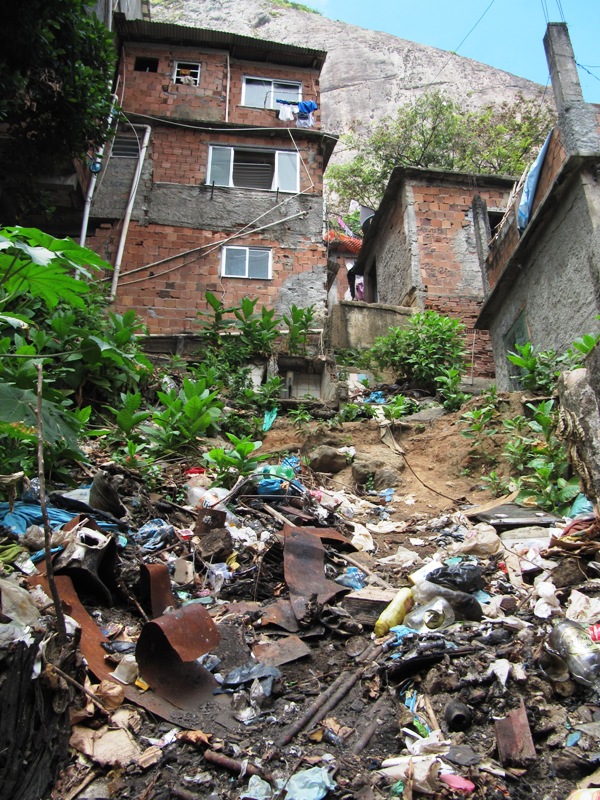
Trash and rubble from mudslide

Trash and rubble from mudslide

The positioning of buildings is chaotic with very little order.  The pathways follow the way of least resistance zig-zagging through the hillside.  As we approached the steepest parts of the hillside we started seeing the effects of the storms of the previous rainy season.  Whole homes crumbled from mudslides and toppled over one another until eventually it was contained.  The pathways were cleared and the rubble remained.  I guess it stays until the next family forgets about the incident and decides to build their home there.
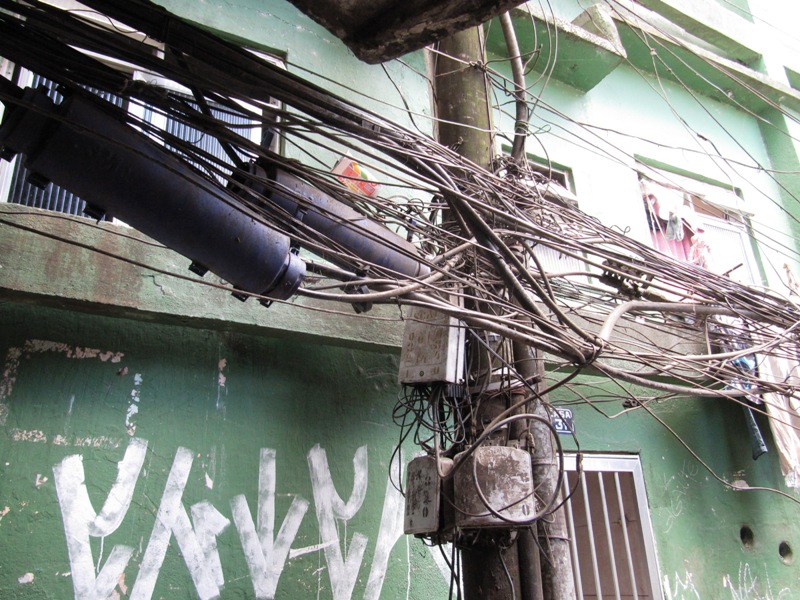
Electricity Nest

Electricity Nest

The squatter aspects of the favela are most apparent when looking up along the sides of the buildings.  Electricity connections merge into nests of spliced and re-spliced wires and cables.  Water is supplied by the city, but the pipes run along the alleyways and are similarly spliced and split.  Sewage was not so “organized,”  sometimes it ran in pipes, othertimes in trenches and well othertimes, the greywater just overflowed onto the tight alleyway.  The biggest issue was for the downhill residents when it rained, because everything flowed towards them.

We continued our walk through the favela, meandering down through the alley ways, slipping around corners and discovering more of the labyrinth of buildings.  Amazingly, there is an estimated 200,000 people that live in this one favela that is one square kilometer in area.

Favela colors

Favela colors

We stopped at multiple locations in the city for the guide to talk about the favela, teach us about the schools inside the community as well as welcome us into the local businesses.  It was here that I realized that we were not just spectators of the impoverished favelas, but as tourists we were part of something bigger that supported and contributed to the community.  We bought art, crafts, drinks and food which brought money into their economy.  We listened the drum style and dance that originated from the favelas.  And we  oohed and awed at all the little children napping in the preschool.

Our walk through the favela was completely safe.  Residents said “hello” to us to practice their english and we replied with our few known words of portuguese.  I enjoyed seeing how happy people were.  All the residents appeared to know my guide and they gave him high-fives and compliments wherever went.
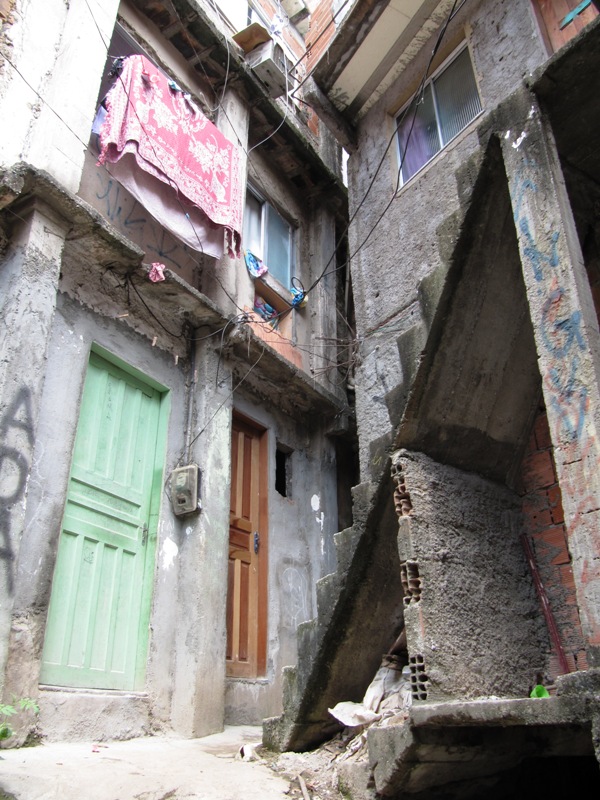
Favela stairs

Favela stairs

The scramble to the bottom took a couple hours.  It is extremely impressive to imagine climbing these walkways on a daily basis.  Thousands of people do it, in fact there are over a million people living in favelas in Brazil.  We walked along and stepped to the side from time to time as a group of men carried a refrigerator up the steep steps or a group of school girls passed talking on their mobile phones.  Yes, many of these residences had all sorts of appliances.  An hour walk from the main road and we could peek into a home and see a family cooking a delicious feast, and others watching TV from their sattelite dish and more just enjoying the sun on the patio.  How is this different from anywhere else?

I think what I like most about the Rocinha was the whole collaborative community aspect of living in the favela.  Despite that everyone was thrown into this random maze of buildings, the people found the time to help each other, to laugh and to work together for their community.  The colors of the buildings and the bright smiles of the people are to be remembered forever.
Eating too much and staying up late in Rio (by Carmen)

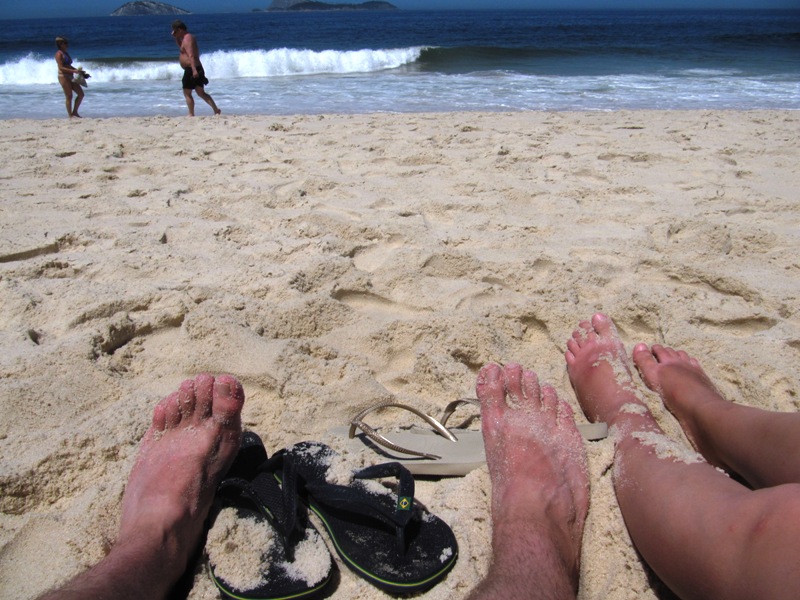
4 feet in the sand

4 feet in the sand

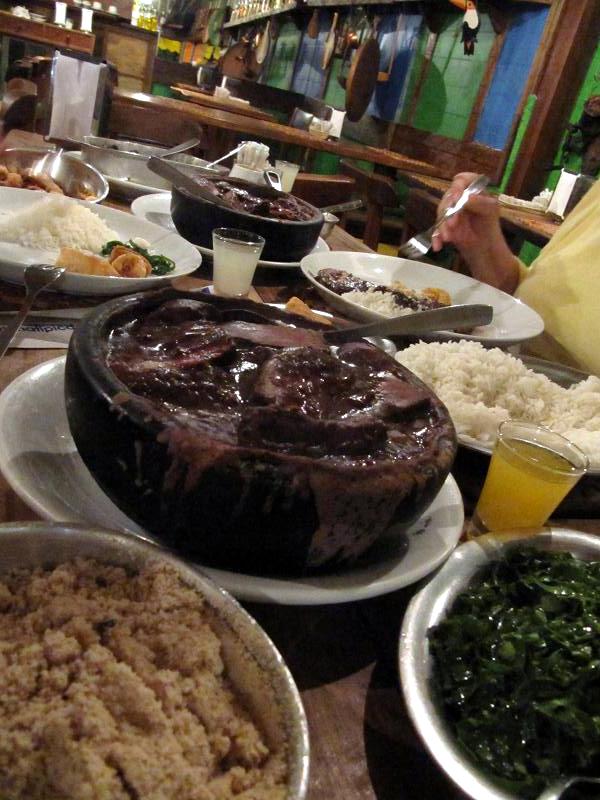
So we didn’t spend all day at the beach!  Although it was tempting.  We mixed it up with some good sights, food and nightlife too.  Our entire time in Rio was spent with my parents.  Four mouths to feed usually means that we got to try even more dishes when eating out.  But on our first night in Rio, all four wanted the same thing: feijoada.

Feijoada

Feijoada

Feijoada is the national dish of Brazil.  It consists of black beans stewed with meat, served over rice and other side fixings.  We chose a place that specializes in feijoada and were pretty excited to fill up on some homey comfort food.  All four of us ordered the feijoada but the waiter kept shaking his head and saying that was too much food.  He kept suggesting that we mix it up with something, such as la truta (trout).  It didn’t seem like he was getting money out of us – it was more of a cultural misunderstanding. Nonetheless, we insisted on getting feijoada and 4 huge bowls of it landed on our table.  We could’t even make a dent as it was a feast for ten people.  But it was good. And now, whenever a misunderstanding occurs (which is often) Nathan and I shrug our shoulders and say ¨la truta!¨(you have to say it very emphatically with a long drawn out “ah” : )

Bossa nova nightlife

After the feijoada we were in food coma mode.  But we charged on to the bossa nova club.  It was awesome!  The singer performed a mix of old standards and a few less familiar songs too.  My dad would play bossa nova while I was growing up and I’ve loved the genre ever since.  This was a special treat.

Shrimp wrapped with fried noodles at Manekineko

Shrimp wrapped with fried noodles at Manekineko

Brazil has a lot of Japanese immigrants so we were excited to find Manekineko, a japanese brazilian fusion place.  Fusion in this case means mostly japanese food with the chefs adding cheese and frying things when they found the opportunity.  Nothing amazing but it was fun.

Fresh juices and smoothies at Market

Fresh juices and smoothies at Market

I think the best thing about the Rio food scene (and Brazil for that matter) is the wonderful array of juices.  Everything from pineapple to kiwi to avocado to pears.  Mixed the way you want.  I want a juicer now!

Palm hearts and sashimi at Market

Palm hearts and sashimi at Market

One of our best lunches was in the palm shaded patio at Market.  The organic certification reminded me of California.  As did the quinoa salads and salmon sandwiches.  But after so many heavy dishes, I liked being reminded of home.

Samba club in Lapa

Samba club in Lapa

Our meals fueled us up for a big night out in the Lapa district, which is a hub of Rio nightlife.  We went to the club with the biggest crowd and loudest samba band.  I loved how people of all ages were dancing between the tables.  It was great to put my year of samba lessons to use!  This inspired me to come back for Carnivale…maybe next year…

Copa and Ipanema, the Beaches of Heaven… (by Nathan)

Sidewalk along Ipanema

Sidewalk along Ipanema

Rio is by far one of the most beautiful and exciting cities.  Imagine walking along a beach with incredibly soft sand.  The waves are crashing in front of you.  Behind you there are majestically steep mountains surrounding a city of highrises that come right to the water.  These are the beaches of Rio.  And they are blissful.  The beaches and laid back atmosphere sometimes reminded us of California.   But the setting was much more urban.  Los Angeles can learn a lesson from Rio on how to build a proper beach side city.  LA, you planned it all wrong!

Delirio Salads

Delirio Salads

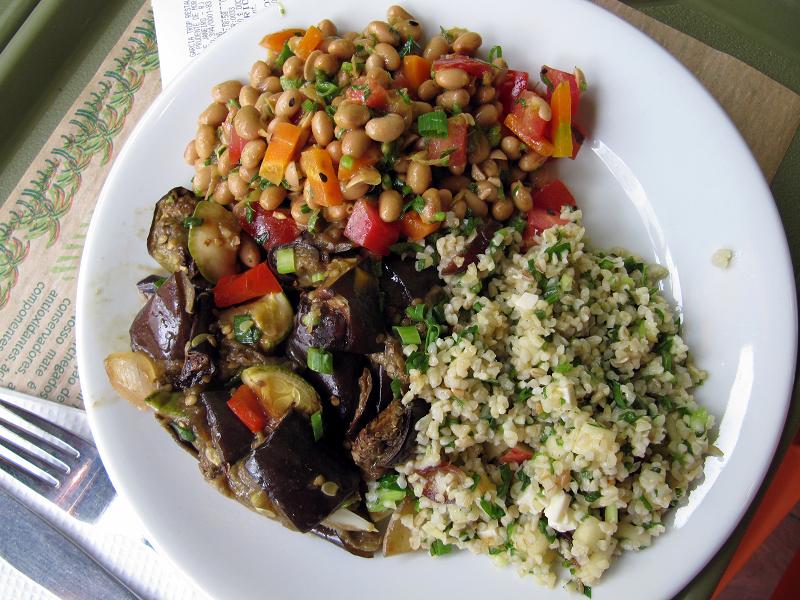
Even the food has a California type feel with an abundance of fresh local salads.  At one of our first restaurants we were hit with the flavors of Brazil and the realization that finally we were in a country that loved their veggies.  The variety of salads is something to awe  at.  Vegetables cooked and raw and delecately infused with new and known spices.  And Brazil cares about variety so we lucked out.  2 blocks from our beashside umbrella on Ipanema was Delirio Salads which was had some 20 options that were all fenomenal.

Girl from Ipanema (i.e. Carmen)

Girl from Ipanema (i.e. Carmen)

First let´s describe the sand.  The magic I think must be in the sand.  The beaches are not exactly white sand, but the texture is soft, real soft.  Slipping your feet into this sand is like having your feet wrapped in warm velvet.  The sand is like like brown sugar and just as sweet for your toes.

Copacabana Beach

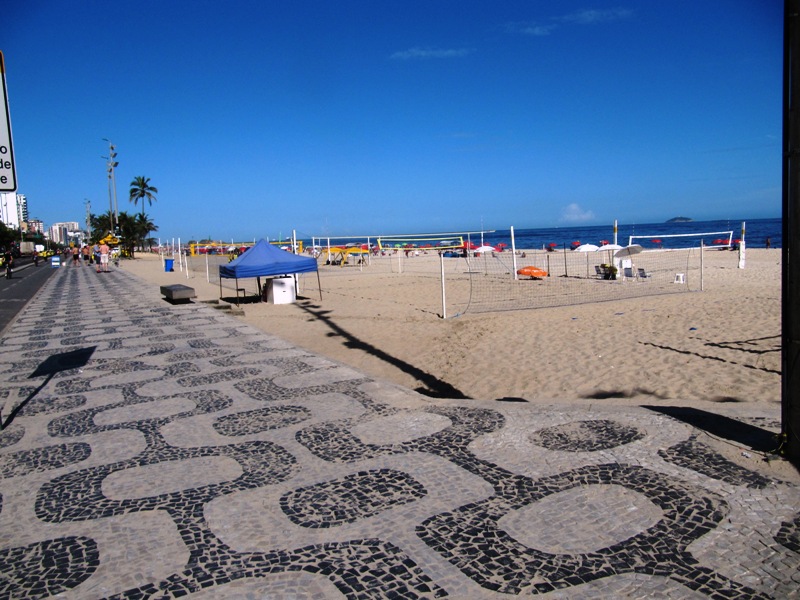
Rio’s beaches are enormous.  The two popular ones, Ipanema and Copacabana make up about 5 miles of bliss.  The waves were big and there was a hefty riptide.  There is also a beautiful sidewalk along the full length of the beach, tiled with Poruguese black and white patterns.

Sunset on Ipanema over ¨Two Brothers¨

Sunset on Ipanema over ¨Two Brothers¨

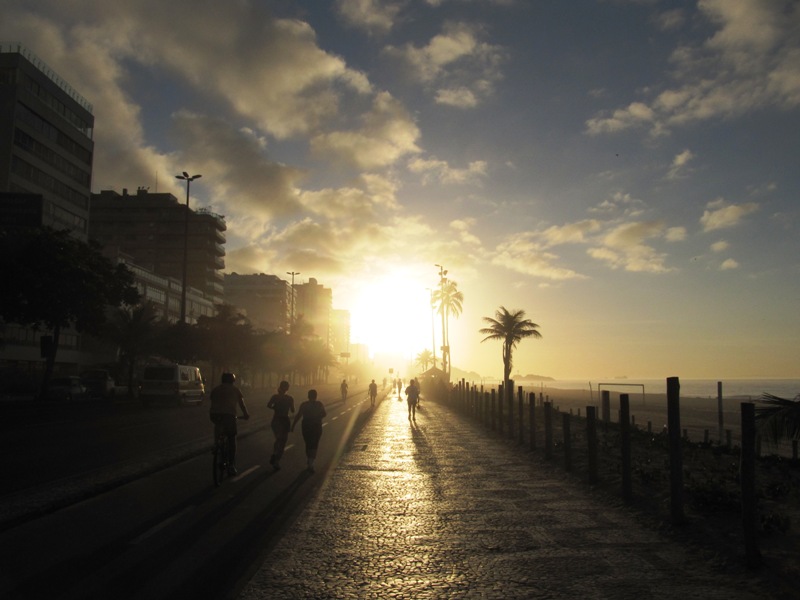
The beaches can be enjoyed at almost all times of the day.  The sunsets there are breathtaking and the sunrises are passionate with color.  The beauty is omnipresent.

Ipanema sunrise

Ipanema sunrise

These beaches are destination worthy sights on their own.  Thrown in the amazing food, the history, the samba nightlife, the mountain-top vistas and crazy high-speed bus rides and Rio has become one of my favorite cities.

¿Why Uruguay? (by Nathan)

Uru-what?  Everyone keeps asking us why we are going to Uruguay. And all that we can say is why not?

I was fascinated by Uruguay.  It is so rarely mentioned as a country, but with a little research I found out that it is considered one of the most stable, advanced countries in South America.  On top of that they were also the first country to provide laptop computers to every grade-school student.  It sounded like more than just a satellite of Buenos Aires, but a modern city.  And I was tired of tripping on the many holes found throughout BsAs sidewalks.

Uruguay is a ferry ride away from Buenos Aires and turned out to be an amazing experience.  Many people seek the historic town of Colonia, but we decided to go directly to the capital city of Montevideo.  What we found was some of the best barbeque, beautiful beaches and a clean progressive city vibrant with life.

Montevideo Fountain

Montevideo Fountain

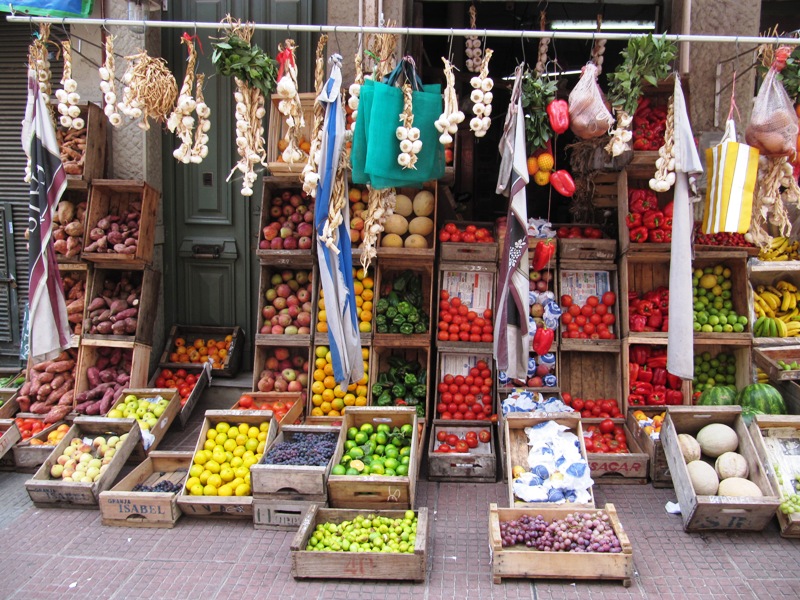
The city is filled with picturesque nooks and crannies.  Peeking around a corner and we were often surprised to find beautiful colonial buildings, fountains and of course markets selling deliciously plump produce.

Montevideo produce market

Montevideo produce market

One great benefit of having friends and family join you on a trip is that the cultural experience of a city seems to increase exponentially.  Interpreting the culture, tasting the food and seeing the sights is a group activity shared with laughs and conversation.  Carmen’s parents joined us for two weeks, making us 8 feet 4 mouths to explore and eat our way through more parts of South America.

Dinner at La Otra

Dinner at La Otra

Our first meal in Montevideo immediately put all the parilla barbeque places in Buenos Aires to shame.  We went to La Otra, it was a sleek dimly lit restaurant with a woodsy theme.  I felt right at home as they decorated all their wall using a wallpaper of stacked and chopped wood. Although I did not miss those hours of my childhood chopping and stacking wood.  The food included an array of excellently grilled meats and vegetables.

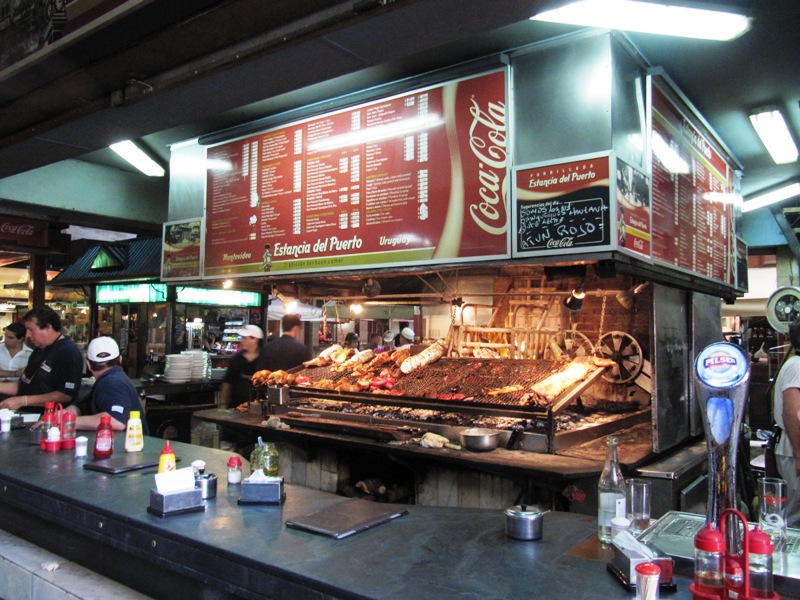
Slanted grill at out lunch restaurant

Slanted grill at Estancia del Puerto

One of the main differences between Argentinian and Uruguayan barbeques is the use of a slanted grill.  A simple advancement, but the Uruguayans have worked out a better way to not overcook their meat.  There is this amazing market (Mercado del Puerto) with twenty or so barbeue restaurants all grilling theit best meat and seafood.

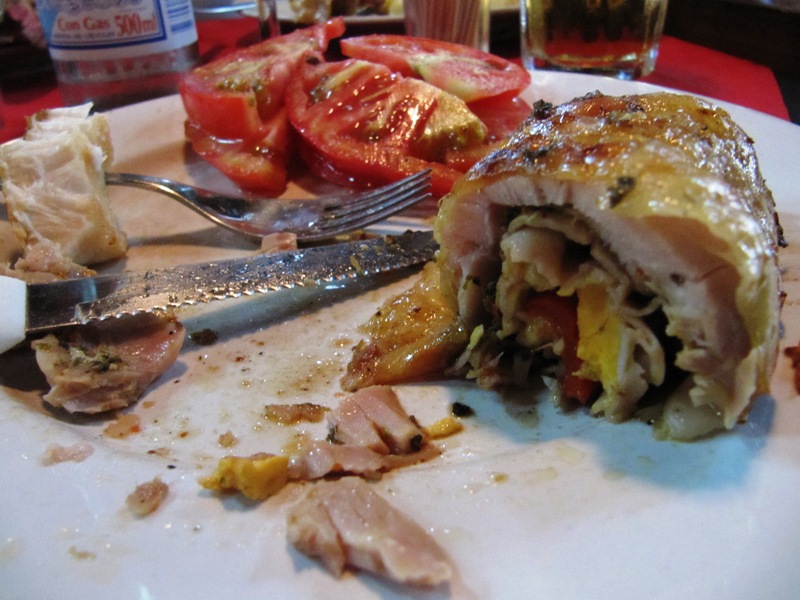
Pomplona de pollo

Pomplona de pollo

They also have their own variations of grilled concoctions.  I ordered a pomplona de pollo which was a piece of chicken that had been flattened and rolled with ham, bacon, cheese and grilled vegetables, then grilled over an open fire. Mmmm.

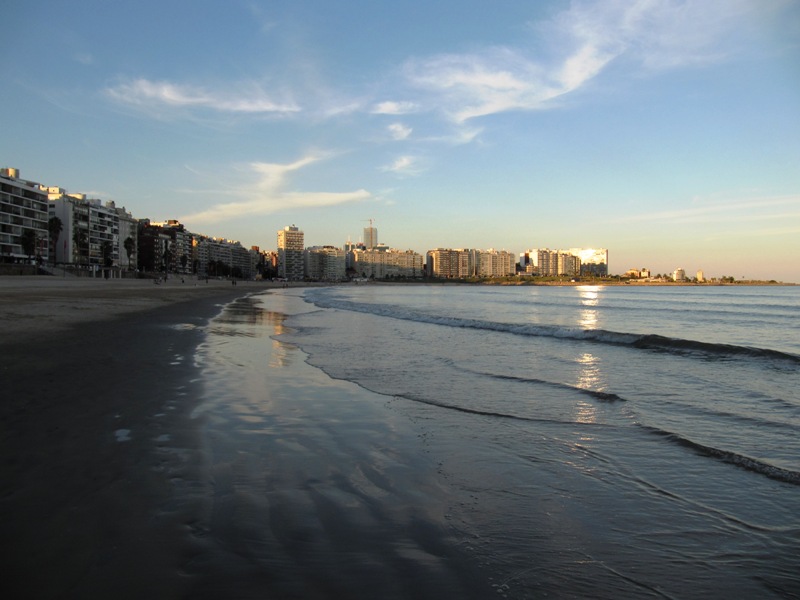
Sunset on Montevideo Beach

Sunset on Montevideo Beach

By this time in our trip we had been wanting water.  The heat in Buenos Aires was sometimes stifling.  To our great relief, Uruguay had an amazingly beautiful beach and a rambla (coastal sidewalk) that stetched for miles.

Montevideo was an amazing experience, delicious food, beautiful buildings and landscapes and the question changed from ¨Why Uruguay?¨ to:

Why not more time in Uruguay?

Moving to Buenos Aires? (By Carmen)

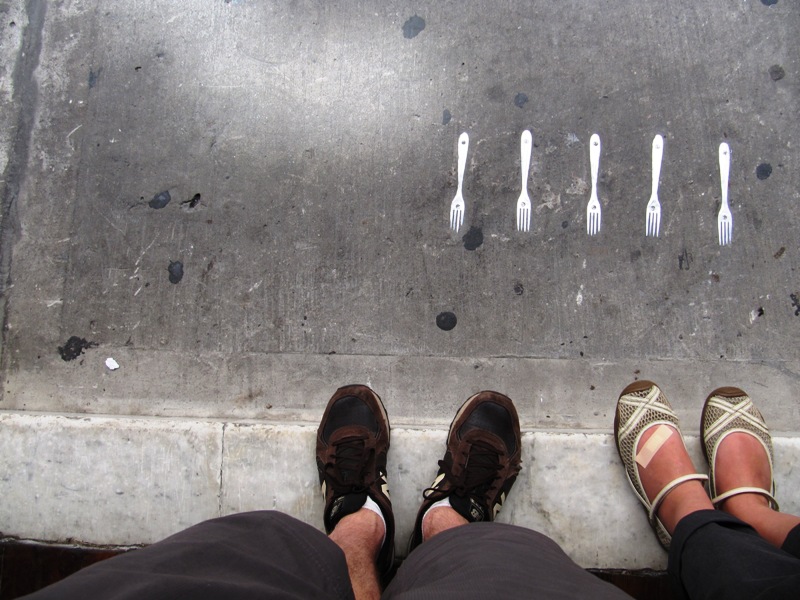
4 feet 5 forks - we found these embedded in the sidewalk. Seemed appropriate :)

The question Nathan and I ask ourselves about every city is, “Could we live here?” BsAs has its pros and cons.  We´ve written about the highlights such as great markets, fanatic fútbol culture, tango, inexpensive transit and good food and wine (particularly pizza).  There are a couple other items we didn´t have time to cover:

Nightlife – A good night out isn´t hard to find in BsAs.  That is, as long as you can stay up late enough.  Things don´t really get started until 2am or so.

Antares Bar on a Friday night

One of our first outings was at Antares, a local microbrewery.  Because we were still jet lagged, the late night was easy! It wasn´t the best beer we´d ever had but the bar was hopping  and had a great atmosphere.

The marble bar at Million

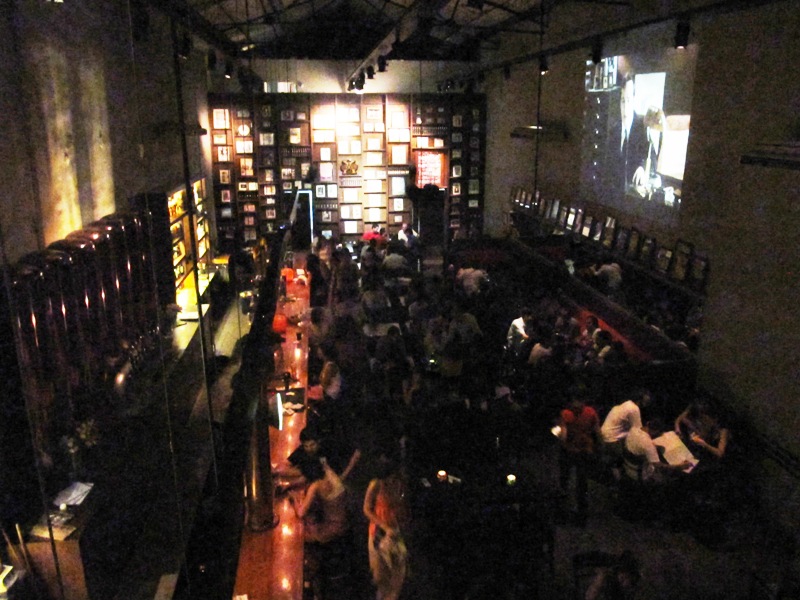
Another night we went to Millon, an upscale bar in a beautiful setting and prices to match the name.  Friendly bar tenders, good cocktails, 2 for 1 happy hour.

La Bomba de Tiempo at the Konex Center

Every Monday there is an awesome drum show called La Bomba de Tiempo at the Konex Center.  This is one of the rare early nights in BsAs since the show is from 8-10pm.  It attracts a young crowd that jumps in rhythm to the 12 or so drums on stage.  You can´t help but want to dance.

La Peña de Colorado

On our final night we checked out the Peña de Colorado.  There we heard more traditional music with guitars, harmoicas and vocals.

Menu from the closed door restaurant

Blurry picture of me on the stage with my raffle winnings

Closed Door Restaurants – One of our favorite nights was at a closed door restaurant in the Almagro neighborhood. A classmate from the spanish school invited us to join in.  She actually lived in the house where the restaurant took place every Friday.  Her roomates were the chefs and the entertainment since their band also performed.  The food was great, the crowd was lively, the tunes were awesome.  I won the raffle too so I got a CD of their music!  After this night, I really started to feel comfortable in BsAs.

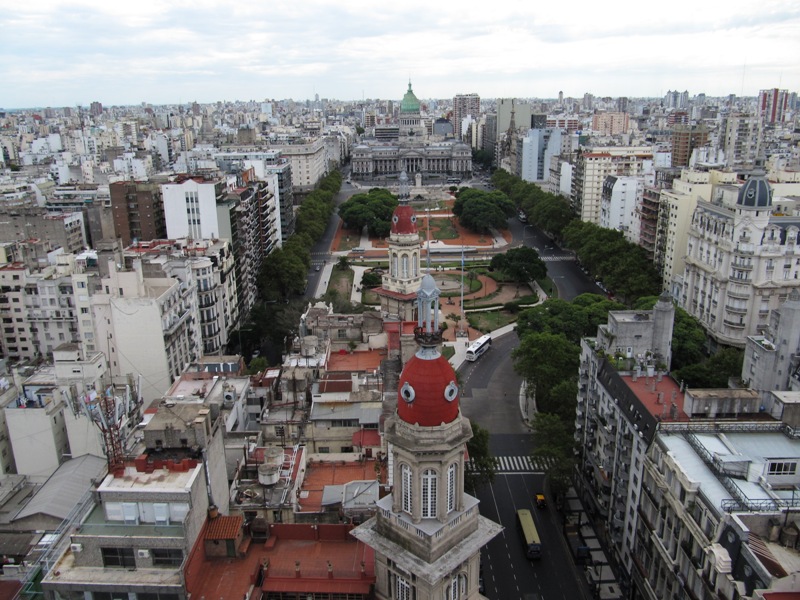
View of Plaza Congreso in Buenos Aires

Calle Florida

Architecture – Another great characteristic of BsAs is its elegant architecture.  This is probably what makes it feel most like Paris, the city it’s always compared to.  Beautiful buildings can be found on almost any street.

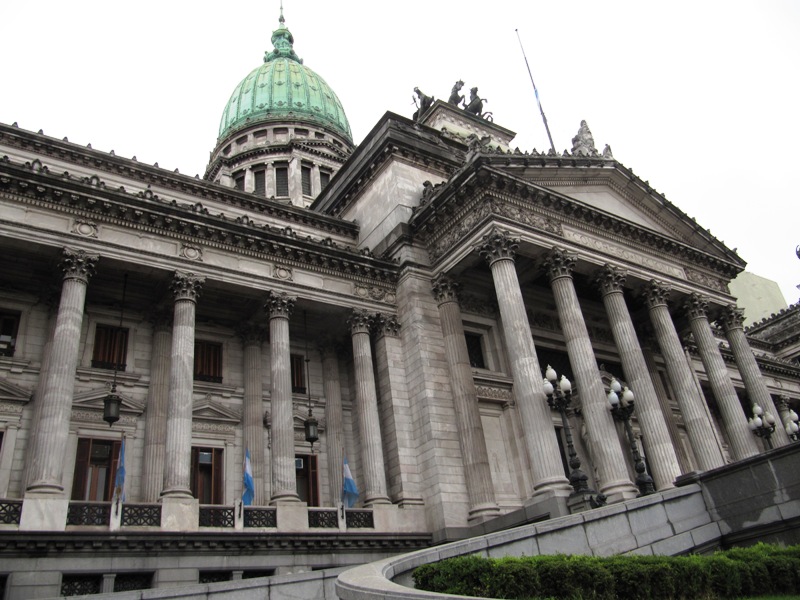
El Congreso

One of the landmark ones is the Congreso, where their national government meetings are held.  I highly recommend the tour of the inside.

Palacio de Aguas Corrientes

Another beauty was the Palacio de Aguas Corrientes (Palace of Running Water).  It was constructed to hold the city´s first water pumps.  Today it still has the pumps as well as a museum about plumbing.  Complete with old toilets.  Awesome.

So the question is, could we live here?  For me the answer is yes.  The city has totally charmed me.  There are definitely drawbacks.  For example, you can´t hurry an Argentinian.  You sit at restaurants for 20 minutes waiting for the bill you already asked for.  But at the same time, this pace of life forces you to relax.  And looking out the window of a cozy cafe in BsAs is a pretty great place to relax.  I’ll miss you BsAs!

Finally, just for the fun of it, here are a few more pics we couldn’t fit in elsewhere:

View from the river in Tigre, a cute town on the edge of BsAs

The Recoleta Cemetary was one of our favorite sights in the city and has one of the best weekend markets outside its gate

The seal of Argentina can be found everywhere

Pierinos again! Delicious ravioli

Eatin’ It Up In Buenos Aires (by Nathan)

Bife de chorizo from El Desnivel

Traditional food in Buenos Aires revolves around meat.  Steaks are all that the guidebooks talk about with mouth-watering descriptions that insist that there is some magic to the Argentinean BBQ found nowhere else in the world.  We tried all sorts of steaks- at nice restaurants, corner shops and street food and I assure you that you have had better steak.  As Carmen mentioned, salt is often the only seasoning used in Buenos Aires.  It is ironic that the entire continent of South America was colonized in the search of pepper, yet pepper is not even used when grilling meat.

Parilla Mista

Parilla Mista

However, the variety of cuts available is great.  The most common is the bife de chorizo which is a sirloin steak.  One way to try several types is to order the parilla mista that includes sausages, short ribs, flank steak, maybe some kidneys and some chicken.  They usually say they serve 2 people, but expect it to serve at least 4.

Sandwich Milanesa

Sandwich Milanesa

A more balanced meal comes in the form of the sandwich milanesa.  We picked this one up at La Española in the Congresso neighborhood.  The easiest way to describe it is a beef schnitzel sandwich stacked full of veggies, cheese and flattened, breaded steak.

Assorted Empanadas

Assorted Empanadas

The empanadas have been a go to lunch food for Carmen and me.  Empanadas are found all around the city.  They are sold in tiny little standing-only shops and also sold from baskets on the street corner.  Every restaurant has empanadas and everywhere there are variations on the same regional specialties.  We preferred the empanada de salteña filled with ground beef, olives, hard-boiled egg and roasted peppers.  There were all sorts of variations that included cheese, chicken, spinach, tuna, sardines and corn.

Candied Apple with Popcorn

Candied apple with popcorn

We already discussed some of our favorite desserts – the dulce de leche ice cream and the alfajores are very good throughout the city.  At street fairs they offer candied apples coated in popped corn.  This gave it fun texture but is a bit challenging to eat.

Artemesia #1 - Veggie Platter

Artemesia #1 - Veggie Platter

Artemesia #2 - Quinoa Fritters

Artemesia #2 - Quinoa Fritters

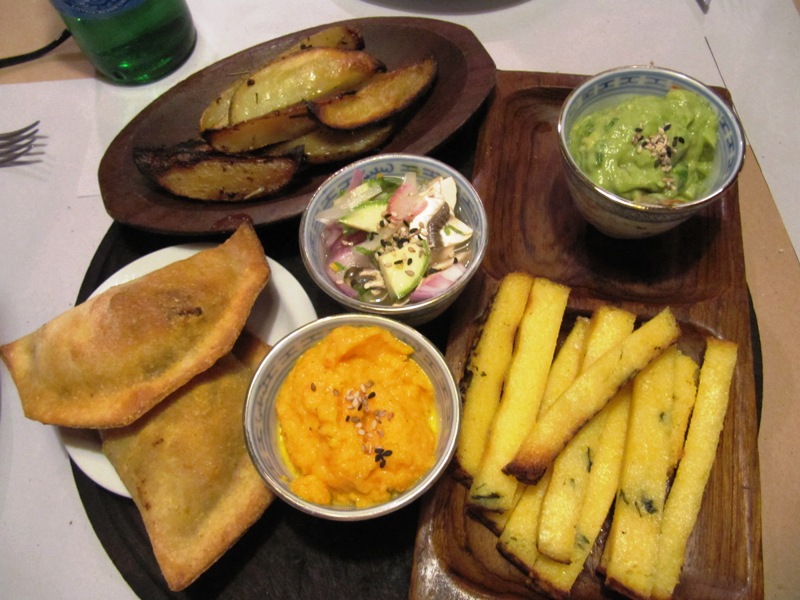
Sometimes the meat heavy meals become too much for us and we need to eat something that digests easily and quickly and of course is stacked high with veggies.  It was so easy to go meatless in San Francisco and finding amazing vegetables here in Buenos Aires has been a real challenge.  A restaurant named Artemesia has been a stand-out as one of the best meals in Buenos Aires.  We ordered some delicious salads, veggie platters and even some quinoa fritters.

Bi Bim Bom from Bi Won

Bi Bim Bom from Bi Won

Traveling to metropolitan cities has its benefits in that food from around the world is available from the many immigrants.  Carmen and I could not pass up on this Korean restaurant named Bi Won.  We ordered Bi Bim Bop and Beef Bulgogi and it came with 30 or so small plates of different picked veggies and kimchi.  I was craving spicy food and finally I found it here.

Pierino #1

Pierino Entrance

Pierino #2

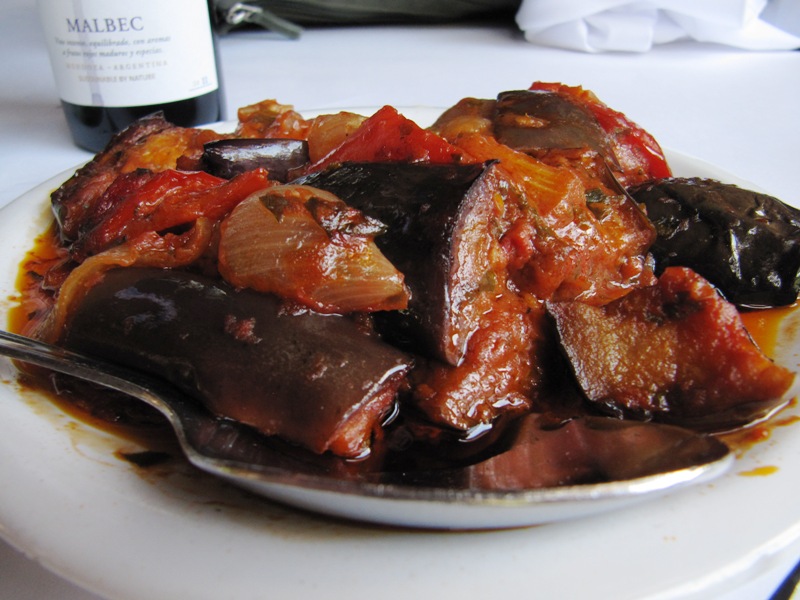
Roasted eggplants in tomato sauce

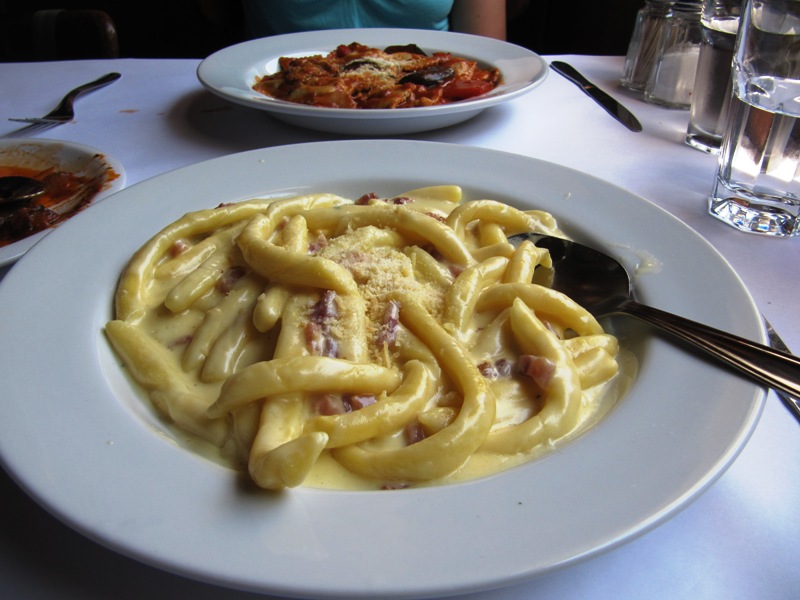
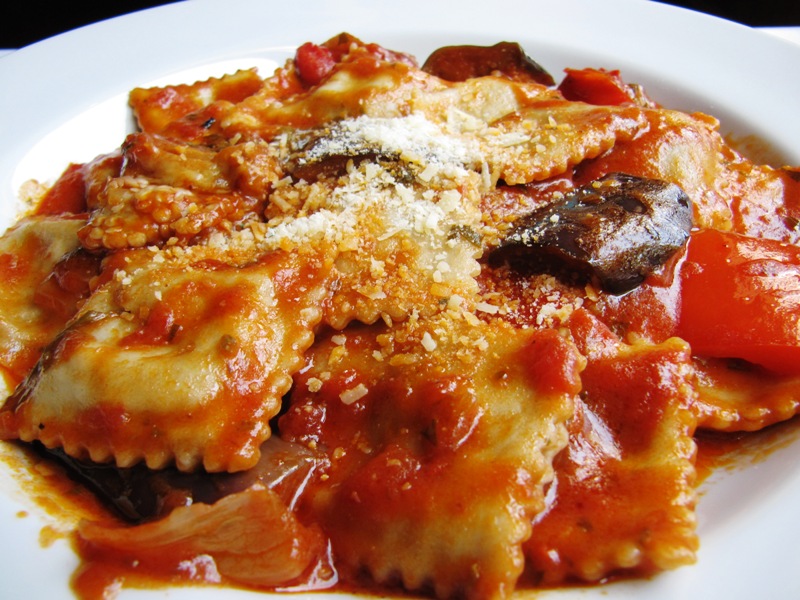
And the best restaurant of Buenos Aires…Pierinos.  Just as Italian immigrants found their way to New York, many also settled in Argentina.  Therefore, the amount and quality of Italian food available in the BsAs is really impressive.  It is easy to find Italian dishes on almost every menu and most neighborhoods have these amazing fresh pasta shops where you can buy your homemade pasta and sauce and bring it home to cook.  Pierinos served hand-made pasta and which you top with your choice of a dozen different sauces that were out of this world.  We mostly stuck to the slow-cooked tomato sauces although the carbonara was yummy too.  It tasted like pure comfort food.

Pierino #3

Fusilli in carbonara sauce

Pierino #4

Raviolis in pomodoro sauce

Overall the food scene in Buenos Aires is good.  There are tons of great restaurants.  But there are also a ton of restaurants serving up dish after dish of bland meals.  Carmen and I definitely found some misses, but it was worth it to find the winners.

Pizza By The Porcion (by Carmen)

Overall, food in Buenos Aires is prepared simply. A grilled steak sprinkled with salt, roasted veggies seasoned with salt, a lettuce and tomato salad dressed with vinegar, oil and salt. The restaurants here are in love with salt but are timid in their application of other spices. At times the blandness is tiresome but there are foods for which simple preparation really works. Pizza is one of them.
Assortment of Pizzas

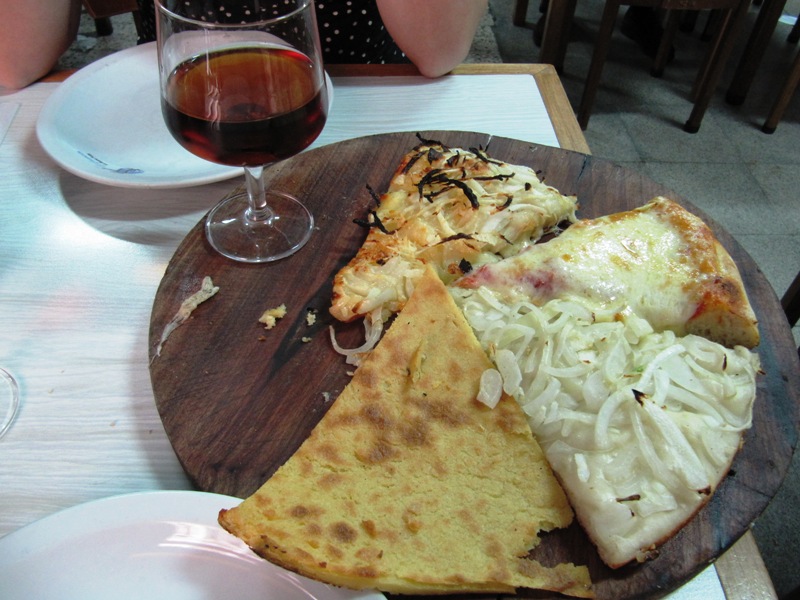
Assortment of pizzas: Fugazza, Muzarella, Fugazetta & Fainá

Pizza in BsAs is absolutely delicious. Imagine a thick doughy crust with a thin layer of sauce and a load of ooey-gooey mozzarella cheese dripping from it.  Ok, I know everyone has their different pizza preferences. Some like it thin (which is also available) and some don’t like so much cheese, but Nathan and I love it just the way it is.
We’ve also enjoyed getting to know BsAs pizza specialties. Any pizzeria will have these available:
  • Muzarella: the classic cheese
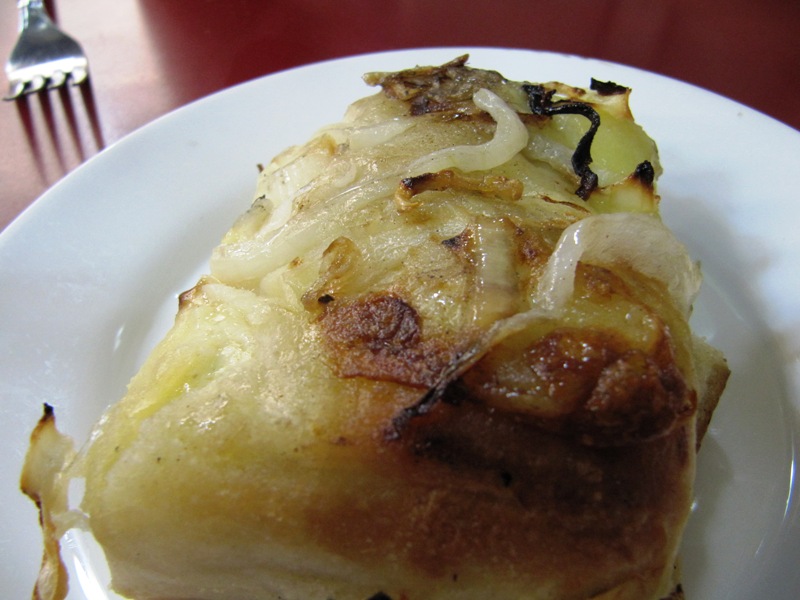
  • Fugazza: a thin layer of creme fraiche-like cheese with lots of sliced onions carmelized on top
  • Fugazetta: same as above with the addition of mozzarella
  • Napolitana: tomato sauce, mozzarella, tomatoes and parsley
  • Fainá: not so much a pizza as a dense, savory cake made from chickpeas

Humita (corn) Pizza

We searched high and low for the best pizza.  The biggest challenge with finding the best pizza is that everyone has their own favorite.  There are hundreds of pizza places in the city, some with standing room sections and some are sit down only.  All have their own charm to them.  At most pizza restaurants you can order both by the porcion (slice) and whole pies.  Here is a quick overview of the best pizza in BsAs (our favorites):

Best Pizza: El Cuartito

Napolitana at Cuartito

El Cuartito

This place has a great combination of delicious food, fun atmosphere and good value. They served me my first, and I think best, fugazza.

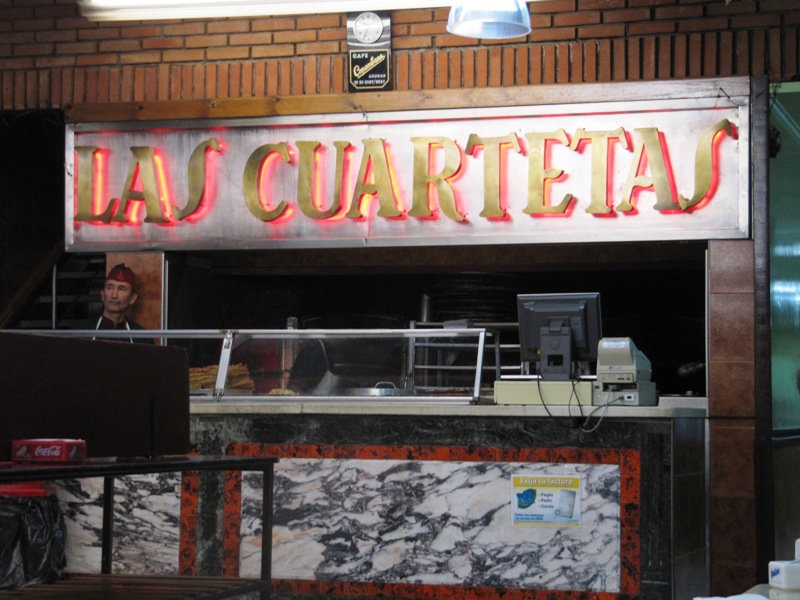
Las Cuartetas kitchen

Las Cuartetas Fugazza

Las Cuartetas

A great recommendation from a friend. This restaurant looks small from the front but hides many large dining areas towards the back. Their muzarella has set a new standard.

La Americana Assortment

La Americana Napolitana

La Americana

This place was 2 blocks from our apartment! Even the empanadas and ricotta cake dessert were tasty.

Another shot of out favorites: Fugazza and Fainá

There were other great places and many more recommendations we didn’t get to try.  But these were the standouts. For more suggestions, Kat at our spanish school has a great entry on pizza. Who wants to do an Argentinian pizza party when we get back?

Two to Tango in Buenos Aires (by Nathan)

It would be impossible to come to Buenos Aires without feeling the presence of Tango.  No, people do not tango dance as they walk down the sidewalks.  Yes, there are many tango street performers and photos on every café wall and wonderful places where people strut there stuff.  We wanted to be a part of it!

Plaza Dorrego Milonga

Our preparations for Buenos Aires began in October 2011 when Carmen and I began taking classes at the YWCA in Berkeley. Genie and Jonus were amazing teachers and they taught us moves that were essential to understand the rhythm of the dance floor. There was so much more than then booty shaking that my brother and I call dance.

The milonga is a place where people dance tango.  There is of course a dance floor and music and a whole etiquette to go with it.  Two tango dancers ask and accept a dance by looking and gesturing without words with what is called a cabeceo.  Those dancers then dance a set of 3-4 songs called a tanda.  Then the dancers separate and either dance with new partners or take a break.  I was not confident enough in my moves to have a cabeceowith anyone but Carmen, but some nice older women stared at me pretty longingly.  One deserves to be mentioned because she had purple parachute pants that had slits along the inside of the leg, high up the inner thigh.  I shifted my eyes quickly to Carmen.

Plaza Dorrego Milonga 2

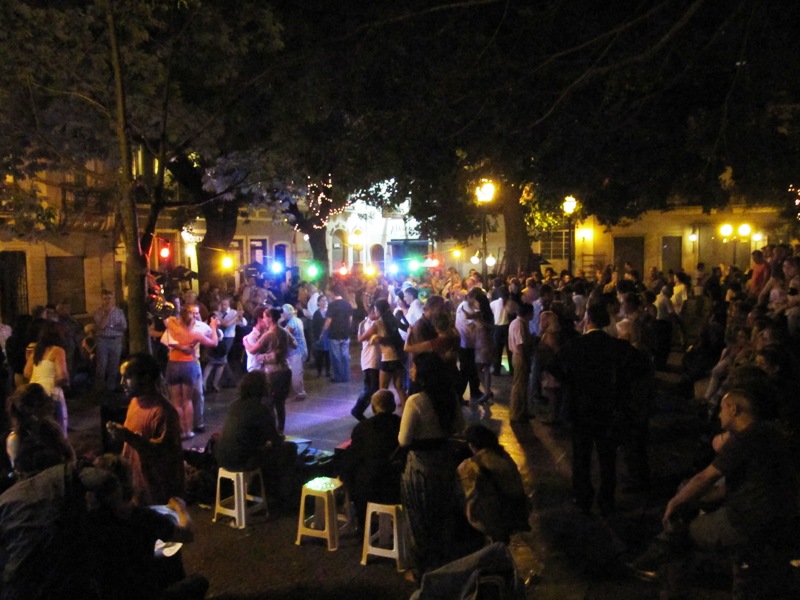
The intimacy of tango is spectacular, the street performers are pretty cheesy, but at the milongas you see complete strangers pressed tightly together, the woman’s forehead gently pressed into the man’s cheek or jaw and their bodies moving in what can only be described as poetry.  And people flock to see this, hundreds of people are spectators to this public display artful passion.

Carmen and I danced at three milongas and we learned that there is so much more to learn about the dance and so much more that we can do to be more comfortable on the dance floor.  The easiest thing about this public dance is that there are people of all skills and speeds.  One couple can be having an intimate moment slowly walking and another can be twisting a kicking all over the place.  Everyone was very courteous and understanding that Carmen and I were beginners and that to dance tango you really have to dance tango.

And so we did: our first public tango was at the Plaza Dorrego on Sunday at the end the San Telmo Feria.  During the day, professional tango dancers perform here and in the evenings they setup a dance floor for locals and tourists to dance.  The whole scene is pretty daunting because there are over one hundred spectators and another 25-30 couples all moving counterclockwise around the dance floor.  With a little sway to the music we took our first steps.  We walked forward, then pause, then side-step and turn…we were tangoing!  Then another move, a forward ocho, then a spin, walk, turn, walk, mollinete.  This was all coming together.  Whew…then we sat out a few songs.  Then we tried it again, this time with a backwards ocho and a sweep, a stumbled success!

Two to Tango

Milonga two was one week after at the same outdoor milonga.  We were comfortable here and this time we had spectators!  Carmen’s parents joined us.  Again we focused on walking and feeling out the dance floor.  It was more crowded this time.  We bumped a few people, but all in all the dancing was wonderful.  We were starting to get the hang of this.  Carmen even told me to stop making her forward ocho.  This has become my most accessible flashy move.  When watching other dancers the women moves 2-3 times in a “ocho” twist then they are immediately transitioned into some other step or embrace.  I proceeded to lead Carmen into a forward ocho that moved back and forth 8-10 times before turning her sideways to do it again.  And damn were we good at that!

I particularly like the move where I slide my right foot in front of hers and she has to stop, step over my leg with some playful caressing of her foot on my calf.  This type of playfulness with the feet takes some finesse and one of the things that I most enjoyed about watching the dancers at the milonga.

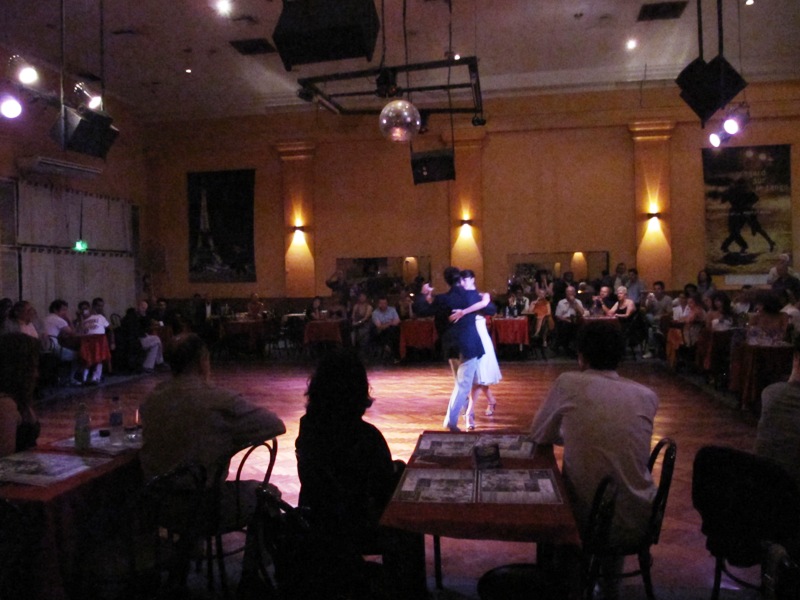
At the third milonga were in the major leagues ready to play tee-ball on the dance floor.  We went to Salon Canning in the Abasto neighborhood.  We arrived at 10:15 and of course it was practically empty with 15 or so people there.  By 11pm the dance floor was busy and the DJ was playing classic tango tunes.  I really wanted a lesson in BsAs, but there was so much to do that we could never fit it in our day’s activities.  My feet were itching to get out there anyway…Carmen and I locked eyes and we were on the floor.  We decided to dance the entire tanta with only walking.  I think this was the best effort so far in understanding Carmen as a partner and communicating to each other on the dance floor.  A few more songs and we were spinning, kicking and dancing tango.

Professional Tango Dancers

There were some amazing dancers there as well.  They were too good to learn from, but there were some couples slightly better than us and we could recognize their moves and give them a try.  At about 1am a professional couple came out.  They moved with such grace, their dance was not rehearsed, but they could move around the floor so effortlessly.  One press on the back and a side stet would trigger a sway and a flirting of the woman’s foot, another step and the spin around, then fast, then slow.  A whole story was told just in their dance.  We watched with our jaws dropped, we gotta tango more.

Carmen's New tango Shoes

Carmen's new tango shoes

Milongas are a place to socialize as much as they are to dance.  The outdoor milonga is very informal with t-shirts and sandals alongside elegant dresses.  The indoor milonga was a little more formal with men wearing pants, but there were some t-shirts.  Most of the women were wearing dresses, but all the women had tango shoes.

Tango shoes are an essential addition to every couple’s assortment of “going out” accessories.  I used the word couple because these shoes are not just for looks: 1) they are comfortable, with additional padding and support your woman can dance all night long and still be able to run after the bus in the morning. 2) Because of item 1, she does not have to walk home barefoot which means no dirty feet.  Carmen found some sexy tango shoes at Tango Leike.  The shoes are purple suade with a darker purple trim, they have a heel, a strap and her toes peep out a little bit.  We tried them out in the apartment and our dance is even better…now we need to find another milonga…

Carmen took some notes to help us remember how to tango, here they are:

Walking

  • Simple walking forward and beackward at normal pace or double speed or ½ speed

Turning in place

  • when you want to stay in place can take a side step then forward step while turning

Cross step

  • leader cross steps to the side with right foot to the left of follower
  • follower cross steps with right foot, then brings left foot on the right side of right foot, then steps back with right

Forward ocho

  • cross step to get into it, then lead pulls left and right
  • follower takes long step, uses upper body to create torque and turn while bring feet together, then step again

Foot block

  • while doing the forward ocho
  • as follower is turning, leader places foot in her path so that she cannot immediately take another step
  • embellishments as follower steps over leg: slide leg up and down, tap leg, etc.
  • follower pauses, then leader leads a step over his leg and turns to face her

Back ocho

  • leader takes two quick side steps
  • follower takes first side step but on the second one steps backwards, then continues like the forward ocho but moving back

Molinete

  • can get into it from forward or back ocho
  • leader keeps heels in place and makes pie slice steps to lead follower in a circle
  • follower steps forward, side, back, side repeatedly

Sweep

  • from the back ocho, after follower has stepped back and is about to bring the other foot in to turn, the leader sticks out the foot nearest the follower
  • leader sweeps the foot forward (from here can sweep it back and then forward again too), then steps over the followers foot with the one not sweeping
  • leader can then repeat the sweeping and stepping over motion as much as he likes while the follower pivots on the standing leg
  • leader then faces the follower and sandwiches the follower’s foot with his feet.  He steps back with his sweeping foot and pulls follower in.
  • embellishments as follower brings weight forward and the former standing leg in: trace a half circle, run foot up leaders leg, etc.
  • leader has follower step over his leg and then they face each other
  • ALTERNATE: leader can sweep foot as follower does a forward step in the molinete

Learn To Speak Spanish in South America (Part 1 by Nathan)

Step 1: Get to South America,  Step 2: Learn some Spanish, Step 3: Speak Spanish…easy right?

We hoped this trip would provide increased language skills that could connect us with the Spanish-speaking world. Carmen and I both studied Spanish in high school.  Carmen even did a year at Cal.  The end result was that I knew a lot of grammar, but could not speak and Carmen was pretty good, but needed some practice.

We decided to start our South American journey in Buenos Aires, which has become a destination for Spanish language schools to setup shop.

Carmen in the Vamos Lounge

We attended this amazing school called Vamos Spanish Academy in the trendy neighborhood of Palermo.  A week before the class started we took an online exam to test our grammar and verb conjugation skills.  On the first day one of the teachers pulled us aside and talked to us in Spanish to really calibrate our level.

What made the school great was the focus on speaking. For 20 hours a week we were in a classroom speaking, reading, listening and most of all learning the language.  The class sizes are small (6 students max) which is essential.  My teacher was really phenomenal- she was encouraging and skillful in tuning my pronunciation and building my vocabulary. We got along well – by the end of my classes I was known as the chupa media (literally sock licker, but translates to teacher’s pet).

Vamos Worksheets After 2 Weeks

Vamos Worksheets After 2 Weeks

In the classroom the teacher works a set curriculum established by a series of worksheets, language exercises, discussions and games.  The amount of written worksheets is a little excessive and I had wished that there was more time just speaking, and more worksheets done as homework.  Nevertheless, the curriculum of worksheets they have created is really amazing and definitely helped me improve my understanding of the nuances of the language.

The classrooms are tucked into a pretty two-story building.  They are small, but well-lit each with whiteboards and a shared large table.  The staff puts on several workshops and events throughout the week.  We attended workshops on spotting fake money and theft scams as well as the lumfardo (slang)that we could listen for, and use, in Buenos

One of the Vamos Classrooms

Aires.

One of the absolute best parts of Vamos is the community of people.  On the first day of class we were instantly immersed into a friendship with Argentine natives and foreign travelers with short-term and permanent plans for Buenos Aires.  Everyone we met was eager to explore South America and we all shared a passion for travel. It was nice to know we weren’t the only ones who left everything behind just to see the world.

The end result of the language school was all positive.  It was a wonderful experience all around.  We learned.  I think most of all it assisted in getting our tongues moving with conversation.  Leaning Spanish is a slow  process.  Carmen and I both dealt with days of intense frustration; a clogging of the mind where it is so difficult to get out what we really want to say.  The effort to talk becomes exhausting, but each time you actually communicate is exhilarating.  There is a burst of adrenaline with every moment where we get our questions answered by a waiter or have a little conversation on the bus or a chat with a new Argentine friend.  Learning to speak a language is hard, and day-by-day we improve.

Hasta la vista!

The Fútbol (Soccer) Fanatics of Buenos Aires (by Nathan)


Calzone at Cumana

Calzone at Cumana

 We knew that the day we planned for a soccer game would be crazy.  We prepared accordingly the night before with what has been the best tasting and the best value sit down restaurant we’ve been to in Buenos Aires (BsAs).  Cumaná is located in the Recoleta neighborhood just north of central BsAs.  We had the tripe stew and a mushroom calzone that was so phenomenal that we are planning our tourist sites in the neighborhood so that we can go again.  The calzone was crispy and soft with all the right mozzarella goo that you expect.  Topped off with a house malbec served in a penguin-shaped carafe and we were happy travelers.  The whole meal cost about $25 USD.

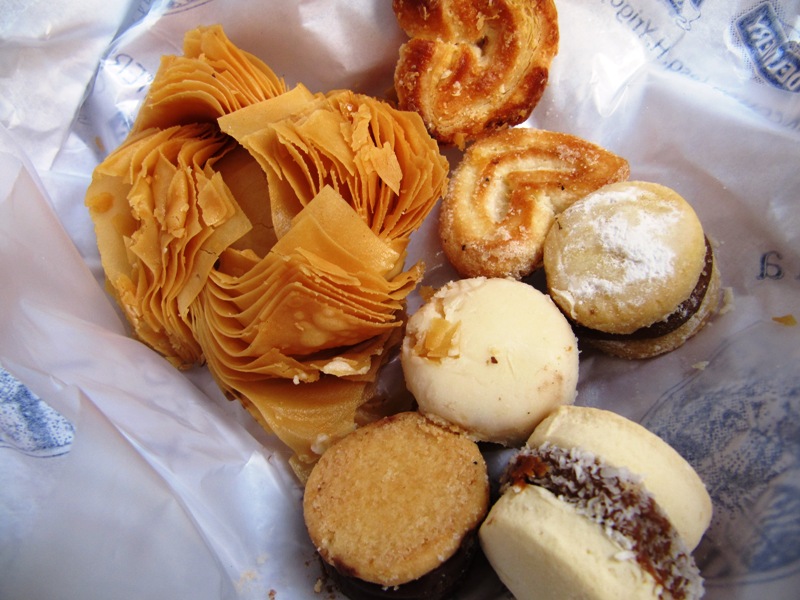
Alfajores and other pastries

Alfajores and other pastries

The next day we grabbed some amazing pastries for the road from a bakery down the block from our apartment.  We bought several types of dulce de leche stuffed alfajores (the cookie sandwiches), pastel de batata (crispy filo with a sweet potato filling) and some orejitas (the heart shaped ones).

Carmen and I really wanted to go to a few soccer games while in South America.  Our ideal was to go to the stadium, buy tickets and return a few days later to our seated section.  This plan quickly proved to be much more difficult than we’d imagined.  Time and time again the locals we have met informed us that not only is there a chance of getting robbed, but at the game we might unwittingly find ourselves in the middle of a fight started by crazed team hooligans.  Instead we decided to go with an organized group that bought the tickets, then chaperoned a group of 40 or so other young world travelers to great seats on the upper mezzanine. The cost of this was about $95 per ticket which included round trip transportation.  On our own we would have spent $70 each with taxis with an extra ½ day to buy the tickets and the risk of being alone.  In the end we were happy with the deal.

River Plate Stadium

When we bought our tickets we were given a small sheet of paper that said “Rodrigo, meet at VAMOS at 4:30″ and his BsAs cell phone number.  We waited and waited until finally a guy starts hollering at us from his black car.  We climb in to find out that he is going to catch the bus that we are supposed to be on.  He drove through the whole city with the phone glued to his ear weaving in and out of traffic.  Between phone calls he tells us about the best team in the world – River Plate (pronounced “Reeber Playt”). There is a huge rivalry between two all-star BsAs teams – River Plate and the Boca Juniors.  This rivalry is similar to, but more vicious than, that of the Cubs and White Sox. River Plate is part of the richer north and Boca is in the working class south. There are constant arguments over who is the best.

River Plate fans have a tough time winning that debate these days.  Six months ago, River placed on the bottom of the bracket for the season and they were demoted to the B level league.  The fans were so upset that they rioted the stadium during the final game and the rioting continued for several days.  They are still pissed and the only way for them to redeem their shame is for their team to win the B level championships allowing them to return to the premier league. Lately the River Plate has some reorganized management and is doing very well.  They placed 2nd place at the mid-year championship.  But to all those fans with CARP (meaning Club Atletico River Plate) tattooed on their bodies winning is everything.

Rodrigo bounced around the city until we met up with who he called the head River Plate hooligan.  His mom gave him a stack of tickets and cash wrapped in a rubber band and waved eagerly to us as we drove away.

River Plate Lines

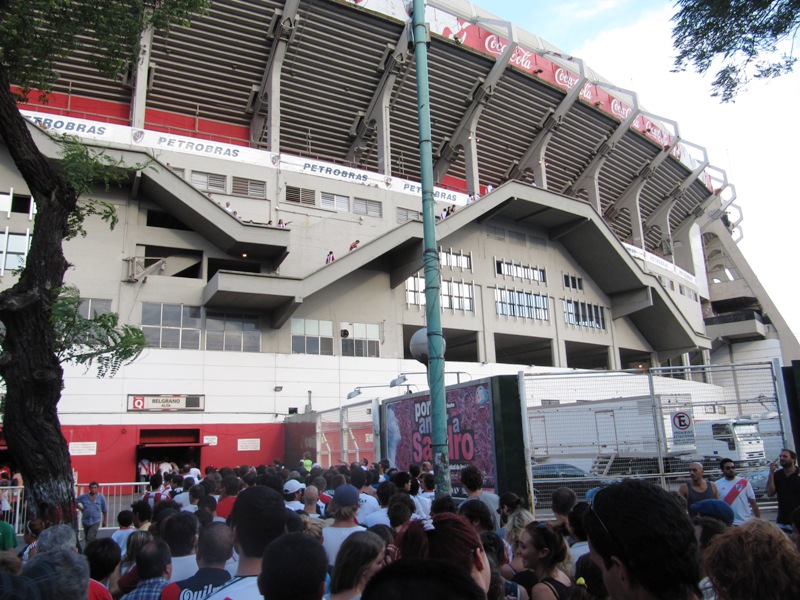
At the stadium we found the bus group that included a broad collection of people from around the world, all of them booked with Rodrigo through their hostels.  It felt like there we were 40 tourists and 40,000 jersey wearing fans set to go see a soccer game.  Argentina continues to increase the safety in the stadiums.  Laws have become so strict that alcohol is not sold in the stadium and no drinks are allowed to be brought inside.  At the first security gate the men and women were separated and we worked our way through the security check.  After the first checkpoint we lined up again for ticket checks and another round of security pat-downs.  These were not single-file lines, but hordes of people pushing and prying to get into the stadium.

River Plate - Standing Room Only Fanatic Section

It was here that I was happy to have a guide.  Our tickets showed no sign of where our seats were.  Although we entered in gate “Q” there was no reference on the ticket or the stadium of where gate “Q” went.  Of course my ticket machine broke right as I came to it.  After some jostling and pushing I too was climbing the stairs to the upper deck.  We found out that the seating was more or less open seating (reason why it’s not on the ticket). Our seats were phenomenal, mid-field with clear views of everything n the pitch.

River Plate Stadium - Oppoing Team's fans in distance

To the left of our seats was the standing room only section that included a raucous band, fifty or so banners, flags that were too many to count and a tumultuous crown of red and white.  To the right was a small section dedicated to the opposing team, the Mendoza Independiente.  This section was surrounded by heavy duty fences topped with barbed wire and an 8ft gap to prevent any interaction between the two teams.  This gap was further patrolled by ten riot-geared police officers just in case.  I was really hoping that the River Plate team won this game.

The game started out with some friendly banter and cheering by the Independiente fans then the fierce roar of River Plate fans echoed through the stadiumwith numerous other chants and song.  The game played with some drama in the air, moments of silence, then a song, then deep gasps when the River team missed a shot.

River Plate Game

It was when a goal was made that things got really crazy.  Upon scoring fans hugged everyone.  A hug to each friend, then a neighbor, then a group hug.  In a game where often only one point is scored it is very important to get on the board.  The course of the game was pretty tame overall, there were few bad calls and the stadium only broke out once in a chant of “hijo de puta” at the ref that gave one of the River players a yellow card.  The end result: River Plate – 3 and Independiente – 0.

Fires set by Independiente fans

This of course put the Mendoza players in a foul mood.  They started 10 or so fires in their section.  To prevent any violent interaction between the fans, the opposing team gets some what of a head start to leave the stadium.  We waited 30 minutes after the game ended for the Independiente fans to clear the stadium.

Leaving the stadium, we jumped in a private bus to return to the city.  The public colectivo busses were crammed solid with cheering and singing fans.  This looked fun, but what about when River looses?

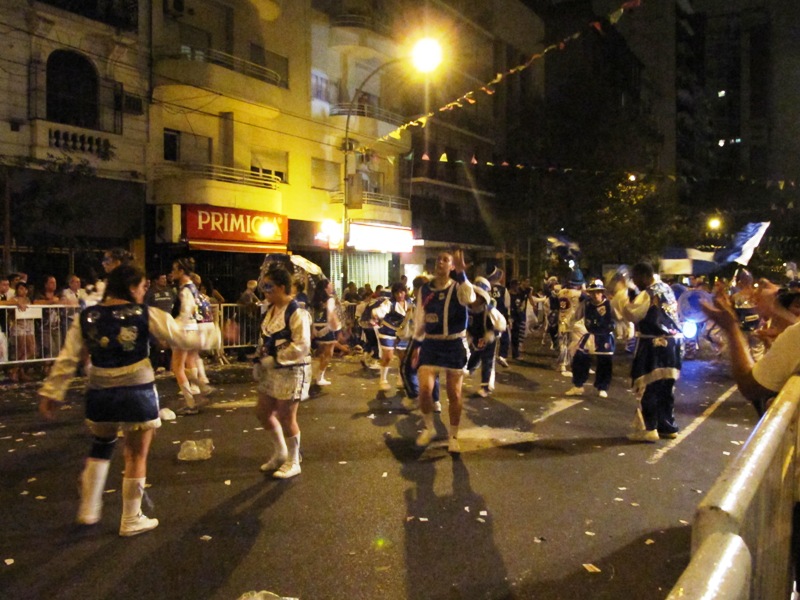
Murga on Avenida de Corrientes

With a drop off in central we grabbed some food at an historic but unremarkable German beer hall without any German beers!  Then we walked over to the local murga, a carnaval street parade with lots of music, dancing and crazy foam that the children and teens spray onto each other and everyone around.  All in all, this was one busy day.

Post Navigation