4 feet 2 mouths

walking and eating our way around the world

Archive for the tag “Travel”

The First Tourists of Hubli (by Carmen)

Women skillfully carrying their goods

Hubli is not a tourist destination by any standard.  But we found ourselves there because of our dear friend Anu, who lives and works in this million person city.  In truth, we are (probably) not the first tourists Hubli has ever seen.  Many travelers actually pass through since it is a major hub on India’s all important railway system.  However, it definitely has an authentic, untouched vibe to it.  Just as in American small cities, Hubli was slower, cleaner and more easygoing than its big city brethren.
Elephant blessings on offer 

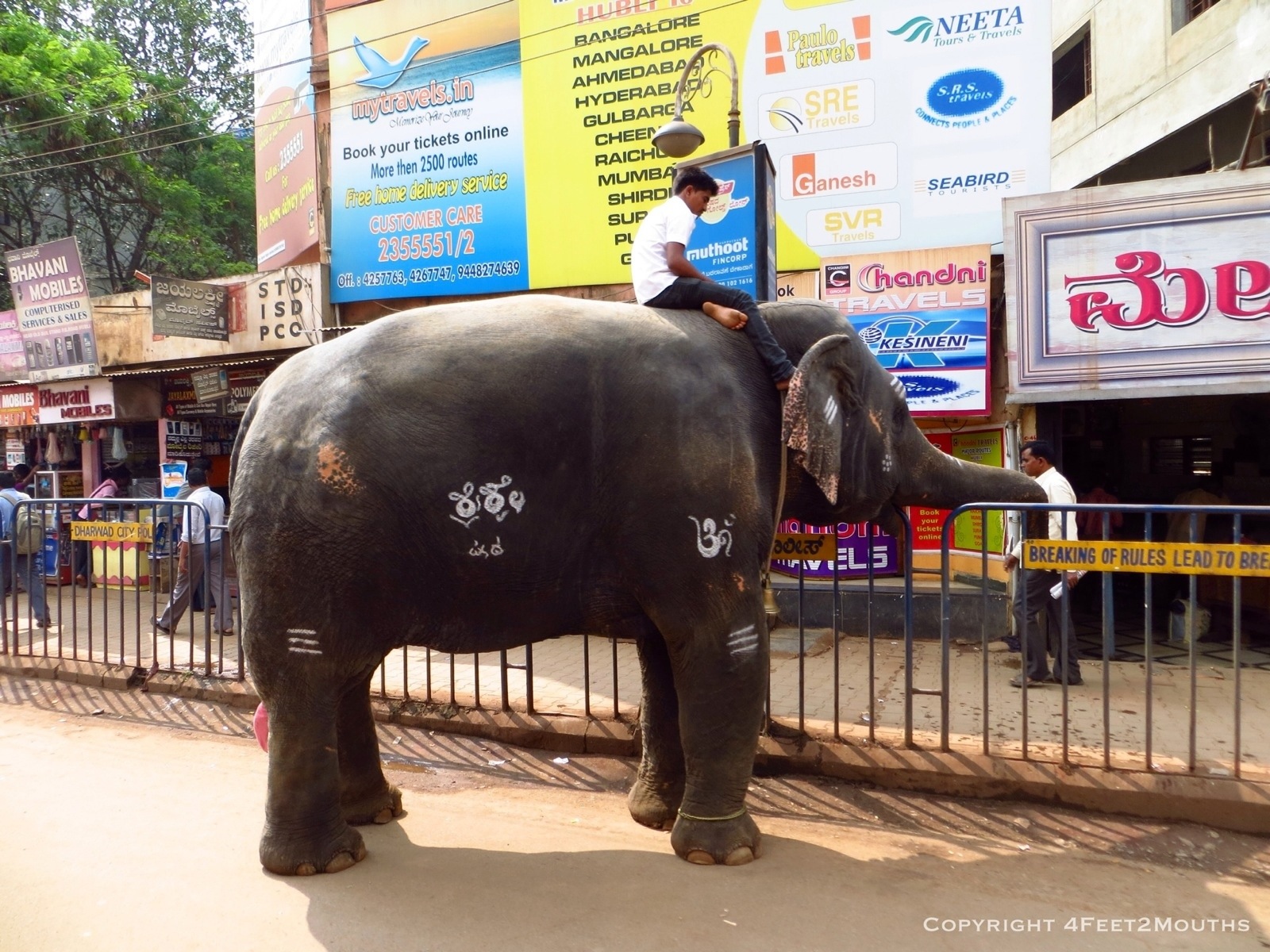
But this is still India, so nothing is ever truly easygoing.  On our first day Anu took us to a delicious all you can eat restaurant in downtown. This involved haggling with a rickshaw, taking a fast paced ride, ducking through a hole in the fence separating the sidewalk from the street, admiring the elephant that will bless you (i.e. touch the top of your head with its trunk) if you pay it, going up some stairs past a few street kids, and being gawked at as we eat our meal with our hands, even the rice.  Not exactly a walk in the park but these are the types of things I’m sure you get used to after a month or two in India.

Main market in Hubli

We walked off our large lunch in the local market.  Betel leaves, garlic, and watermelon snacks are piled high next to bangles, scarves and books.  When the heat got to us we stopped at a cold drink stand for some lime soda.  This ubiquitous drink is a simple mix of lime juice, soda water and either sugar or salt.  I’m liking the salty flavor which I find wonderfully refreshing.

Farmers market
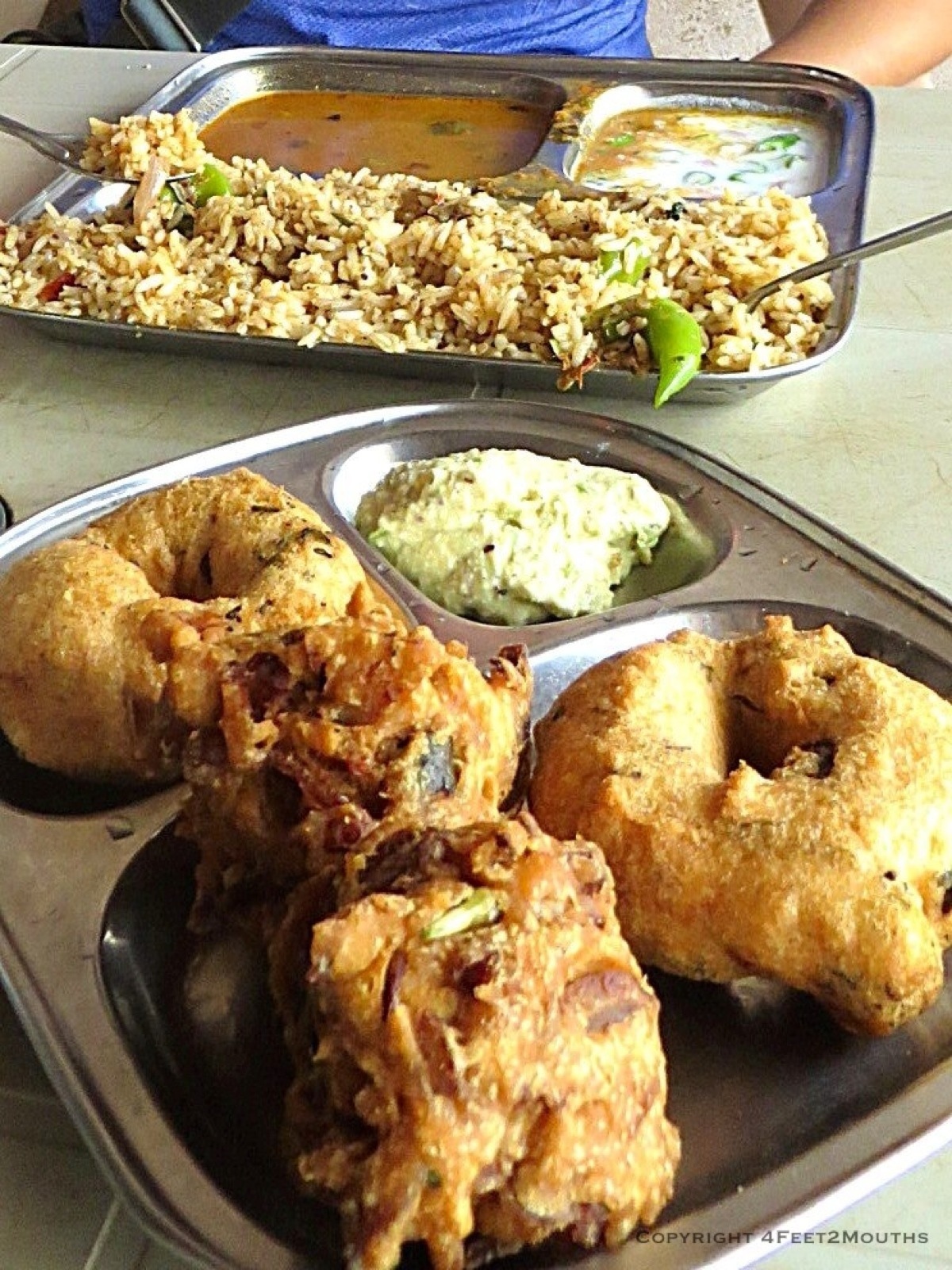
Breakfast mix

We stayed in a suburb of Hubli and happened to be there for the farmers market.  Again more luscious produce – green beans, cucumber, eggplant and more. It inspired us to cook but that is a difficult choice when all the restaurants are also so enticing. For example, we had to stop by a small hole in the wall for some breakfast rice and onion pakora (fried batter mixed with onion).
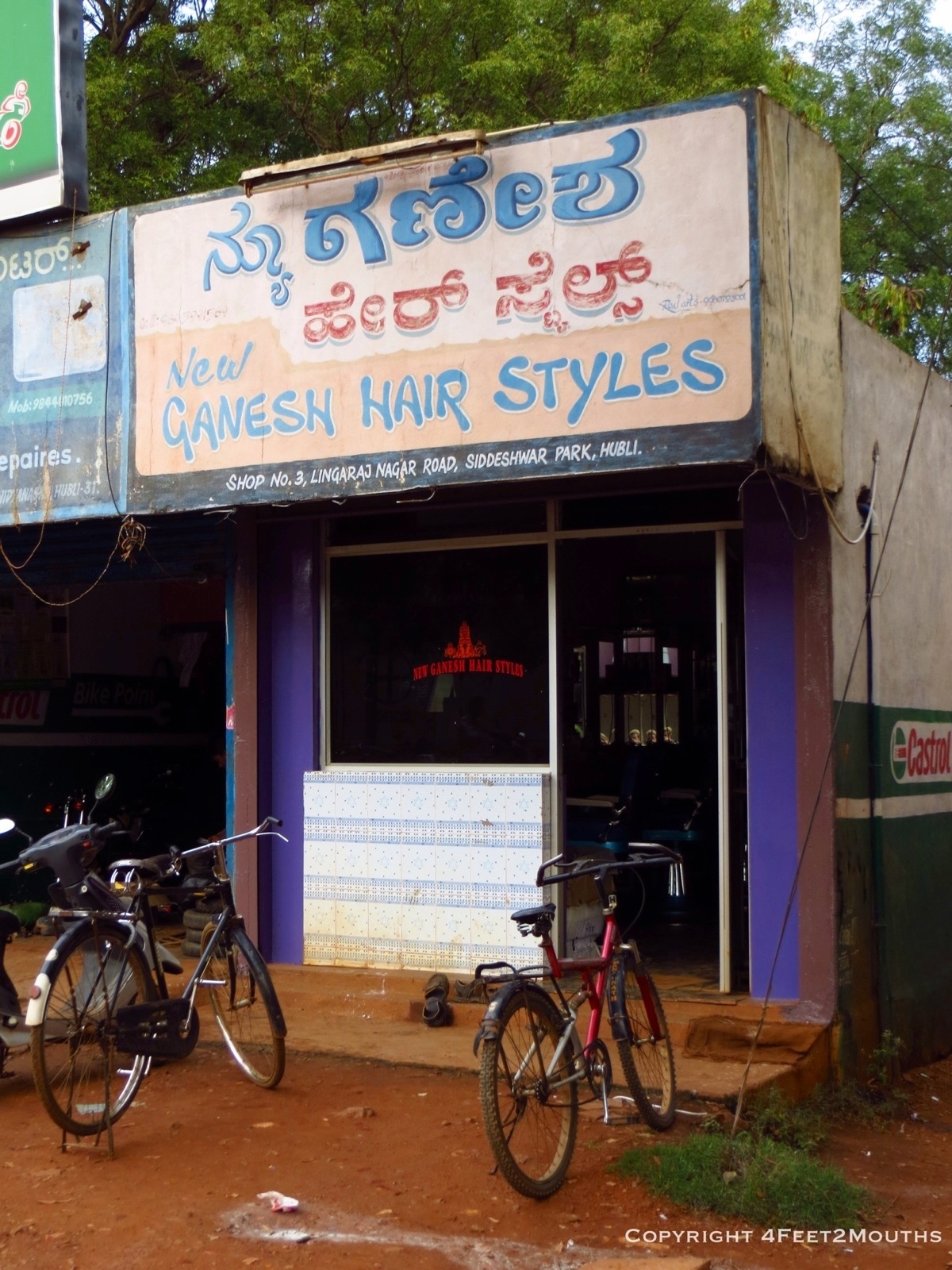
Nathan’s stylist 

In a place where there is not much to do it is a good idea to catch up on errands. Like haircuts, which are always exciting in foreign countries.  Nathan braved Ganesh Hair Styles to get a much needed crop and shave. Fortunately, a lot of hand gestures were successful in getting Nathan the right cut.
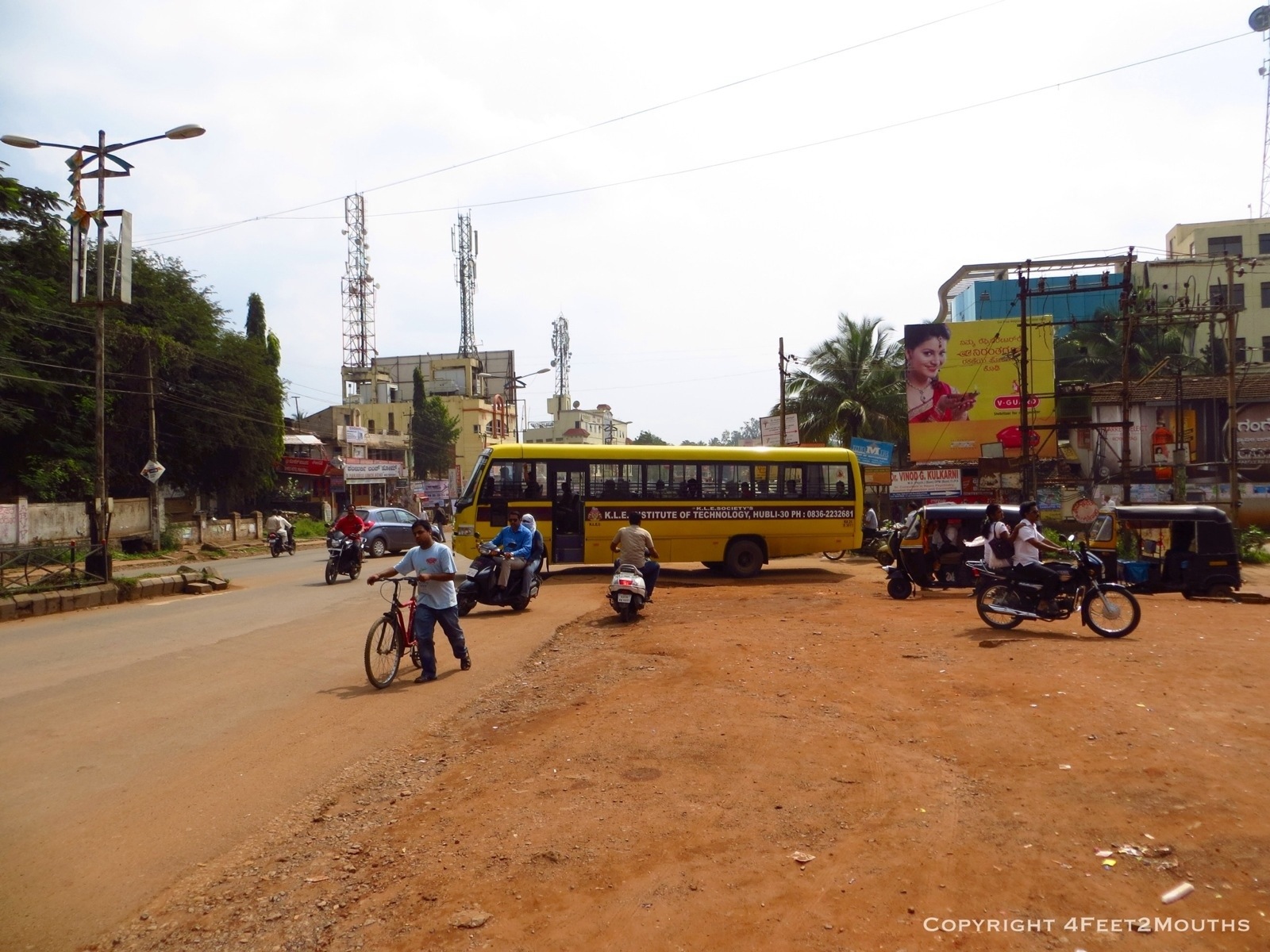
Typical Hubli street

Overall this little corner of Hubli was a typical Indian neighborhood –  some paved roads, some dirt roads, modern buildings as well as lean to shacks, electricity out every night at 7:30, uncertainty on when and for how long the water supply will last.  These infrastructure deficiencies highlight what many westerners take for granted.  It is the last point, water, that most interests our friend Anu. Her company, NextDrop, works with water supply companies to determine when the water will arrive in a certain area.  Then the affected residents are texted about the water’s arrival.  It is a simple idea that takes the guesswork out of water supply schedules.  Not that we are biased or anything but Anu is an awesome CEO and is greatly improving the lives of thousands of residents of Hubli!

Kashmiri naan
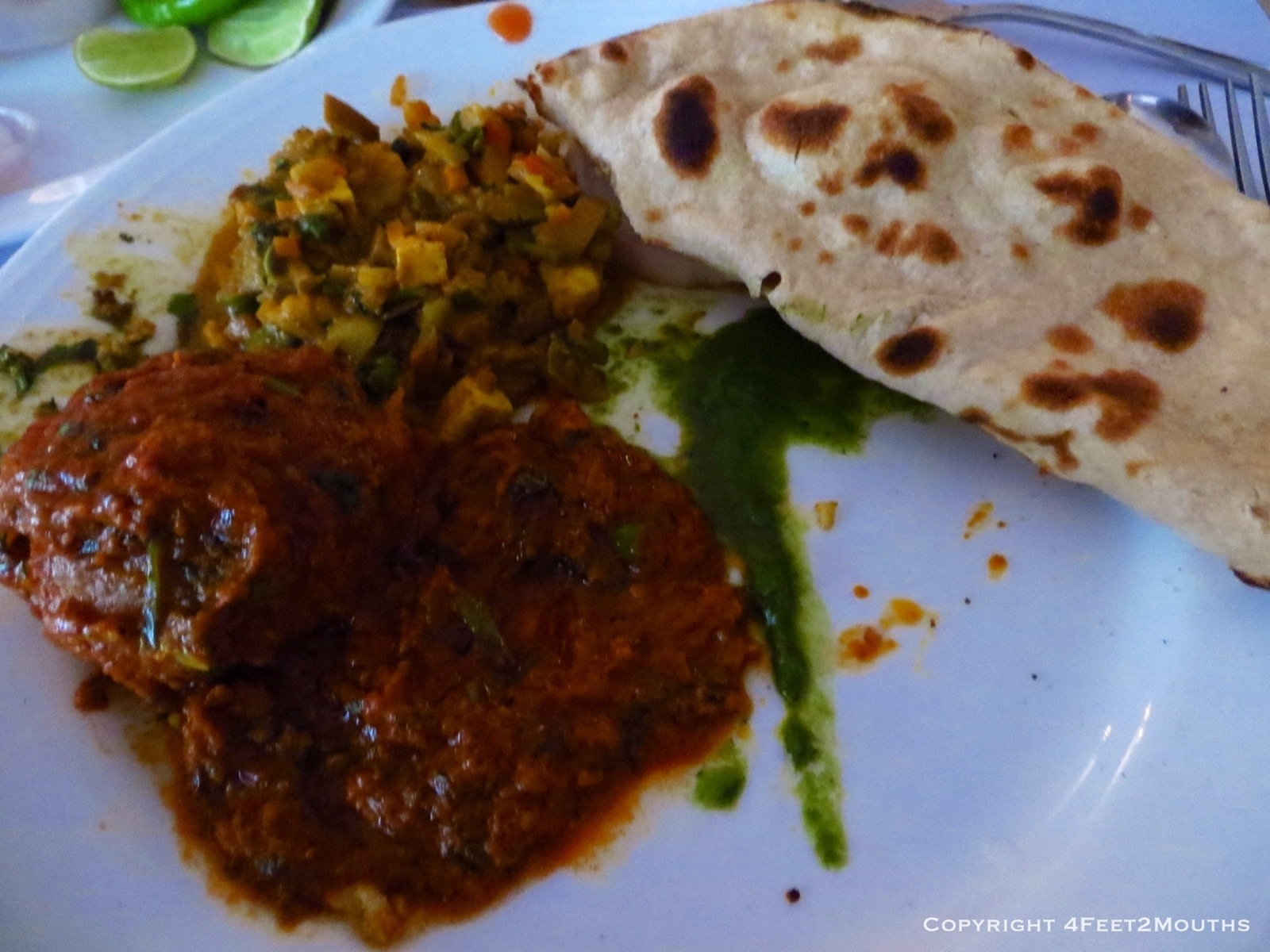
Hotel restaurant with awesome paneer tikka

Anu is passionate about water issues but she is also passionate about her friends.  Therefore, she made time to ensure that Nathan and I were well fed.  For example we sampled spectacular paneer tikka, a type of spiced roasted cheese, at the hotel restaurant near her office.  We also gushed over sweet and savory Kashmiri naan at the north Indian restaurant, Al Medina.  This consisted of bread stuffed with raisins and coconut but also herbs and sesame seeds. The simple student eatery with a bunch of plastic chairs squeezed into a big room for all you can eat for $0.60 was also cool. In short, Hubli was Hubli-cious.

Mishra Pedha

Before we left, Nathan and I also had to try pedha, a local sweet that is reminiscent of cookie dough but with Indian flavors such as cardamom. We picked some up at Mishra Pedha which is literally on every corner in central Hubli!

Train ride to Hampi

More train ride to Hampi 

Hubli was a perfectly enjoyable city to spend time in.  It was made even better by 7 Beans, the hip cafe with free wifi.  But Nathan and I couldn’t resist the temptation of a side trip to a very historic and magical place.  We got out of Anu’s hair for a few days and hopped the eastbound train for Hampi.
Rickshaw Roller Coaster In Bangalore (by Nathan)

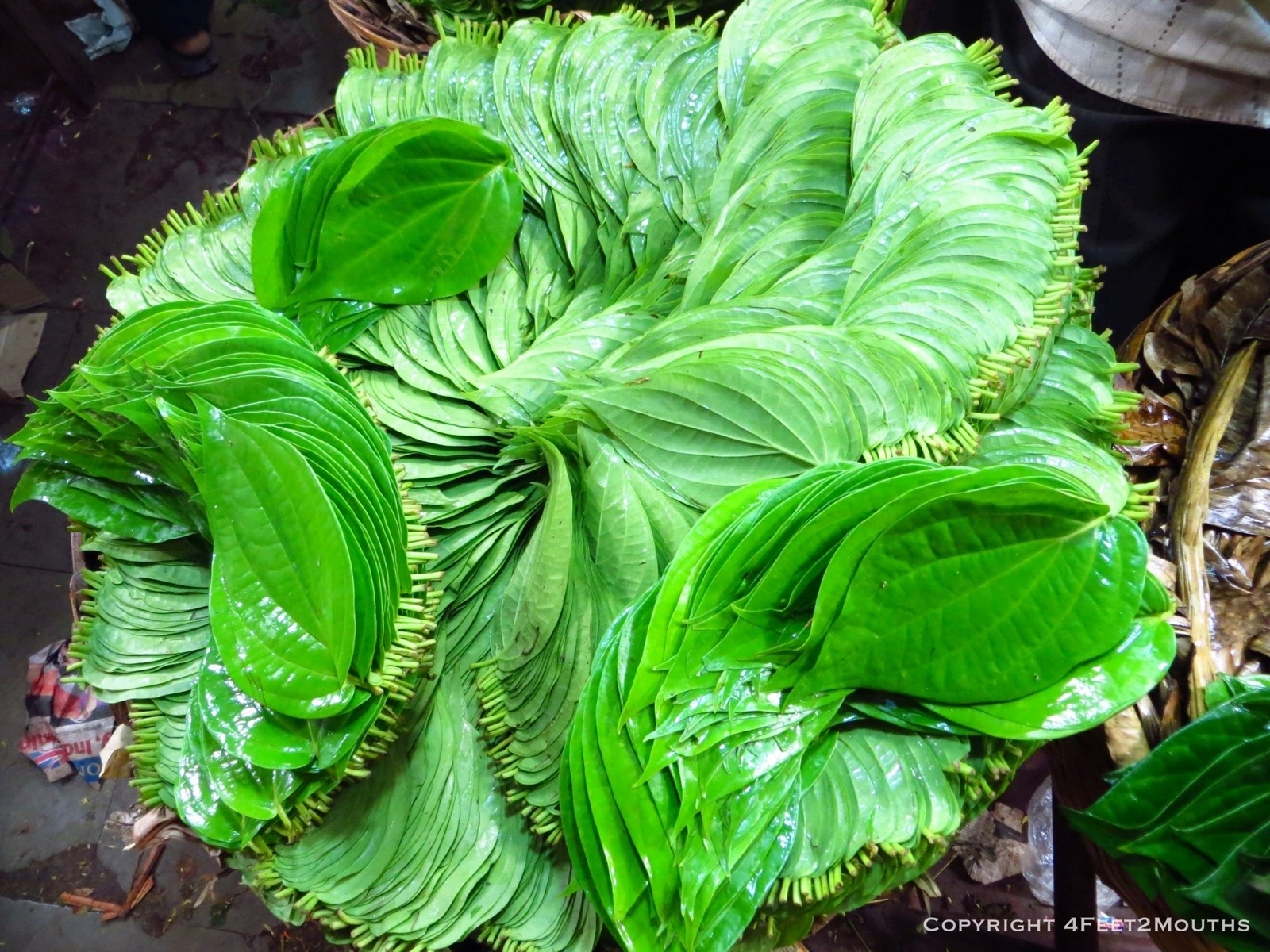
Betel leaves in spiral at the city market

Visiting India for the first time is a thrilling experience. It is also a little nerve racking. For the first time this year, Carmen and I were both anxious and maybe a little scared at what we might find in this part of the trip. We were out of our comfort zone, but it felt good. There are all the horror stories of poverty, filth and food poisoning, but also the positive moments of spiritual discovery, extravagant palaces and fantastic food. Experiencing the spices alone are enough to draw us to India. We arrived at 4am from a red-eye flight. We both felt a little comatose and we agreed to pick up a few hours sleep in the airport before heading out into the craziness.

Carmen and the sidewalk cow obstacle

We learned very quickly in Bangalore that we needed to slow down and ease into the environment. A typical day in our travels is pretty exhausting; we tackle museums, parks and monuments while also attempting to eat at the best budget restaurants in a city. This usually involves many hours (8-10mi) of walking and public bus rides all around town. In Bangalore our standard mode of transport, our feet, became out-of-service. Even the most cosmopolitan of streets, MG Road or Church Street, do not have a consistent paved surface for more than 15 feet. Walking involves constant focus and diligence to ensure that a foot does not fall into an enormous hole or sludge puddle. The occasional cow, heard of cattle or pie mine is a constant reminder that we share the road with more than just people and motors. Crossing the street, we resemble two little squirrels inching our way into the road then running across with arms flailing about in panic “I’m about to die” mode.

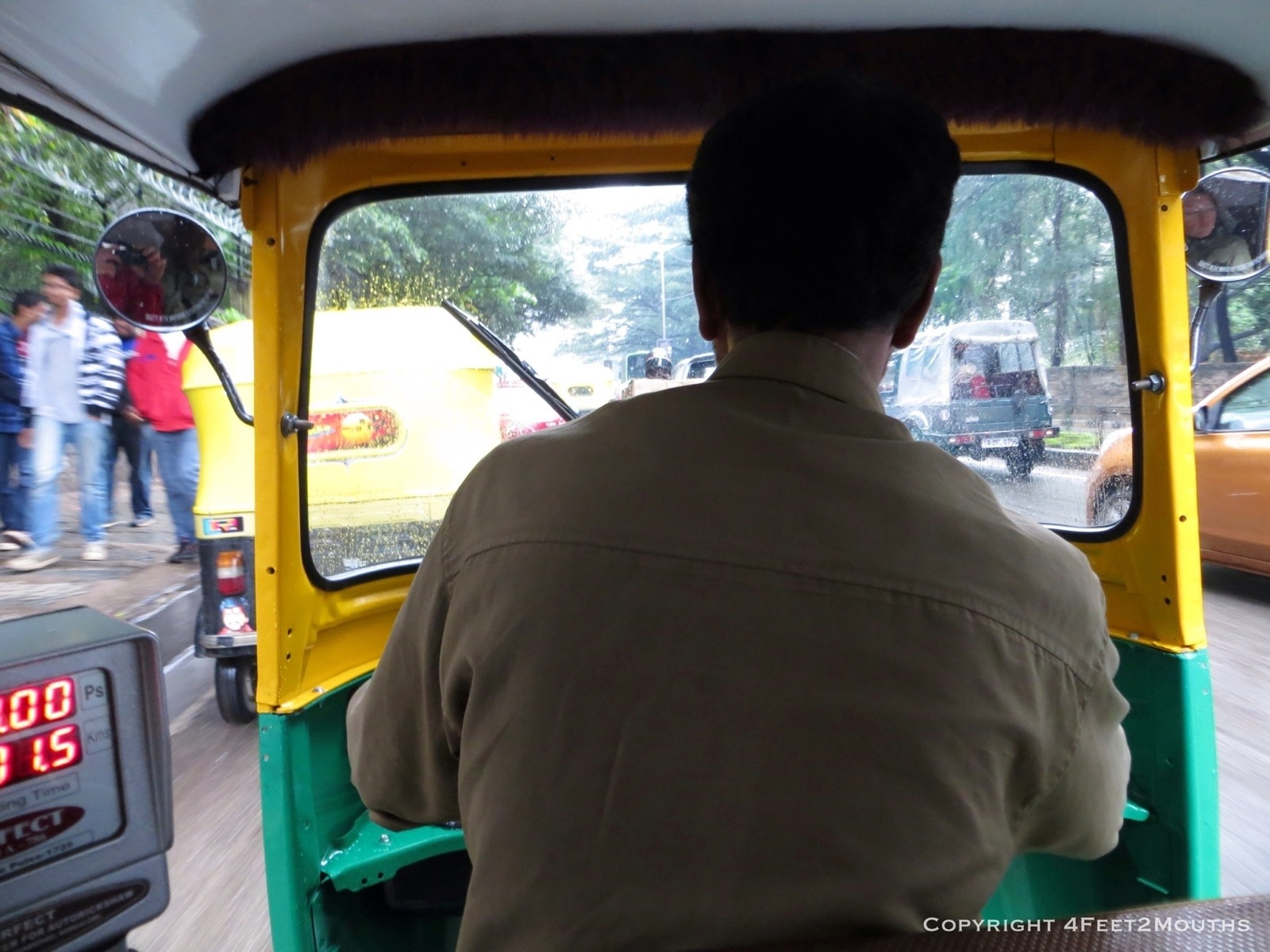
Rajesh and the Rickshaw Roller coaster

Thus, we have decided to join the masses and we frequently hop on the Rickshaw Roller Coaster. The three-wheeled carts are a cross between a motorcycle and a golf cart, painted green, yellow and black. During our first ride, I learned that the is no need to visit a theme park again, 80 cents delivers a 20 minute ride including all the death-defying events without a need to wait in line. If on-coming traffic is your thrill, this ride has it. Bangalore’s many speed bumps provide an opportunity for jumps, poor drainage and rain make splash mountain look puny. Any Rickshaw delivers several G-forces as the driver maneuvers the vehicle around busses, tractors and scooters. Then we screech to a stop. Hold on because there are no seat belts. Dizzying heights? Try all of the above on an overpass! To our benefit we did find a nice driver, Rajesh, that did not mind our screams and did not hit anyone while we were riding. He skillfully squeaked his tuktuk into the 4ft crevices between busses at 30mph.

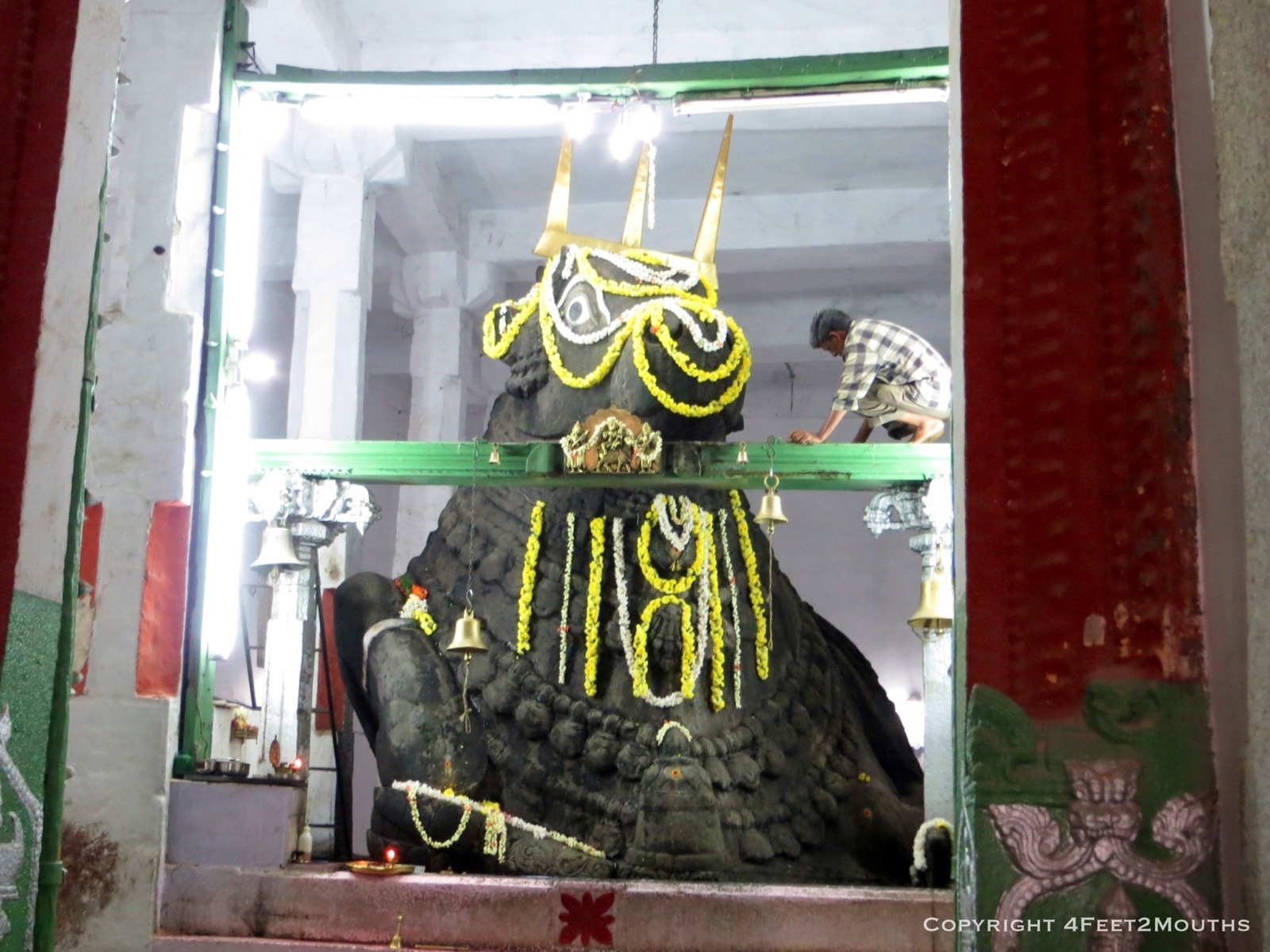
Bull Temple

Glass building at the botanical garden

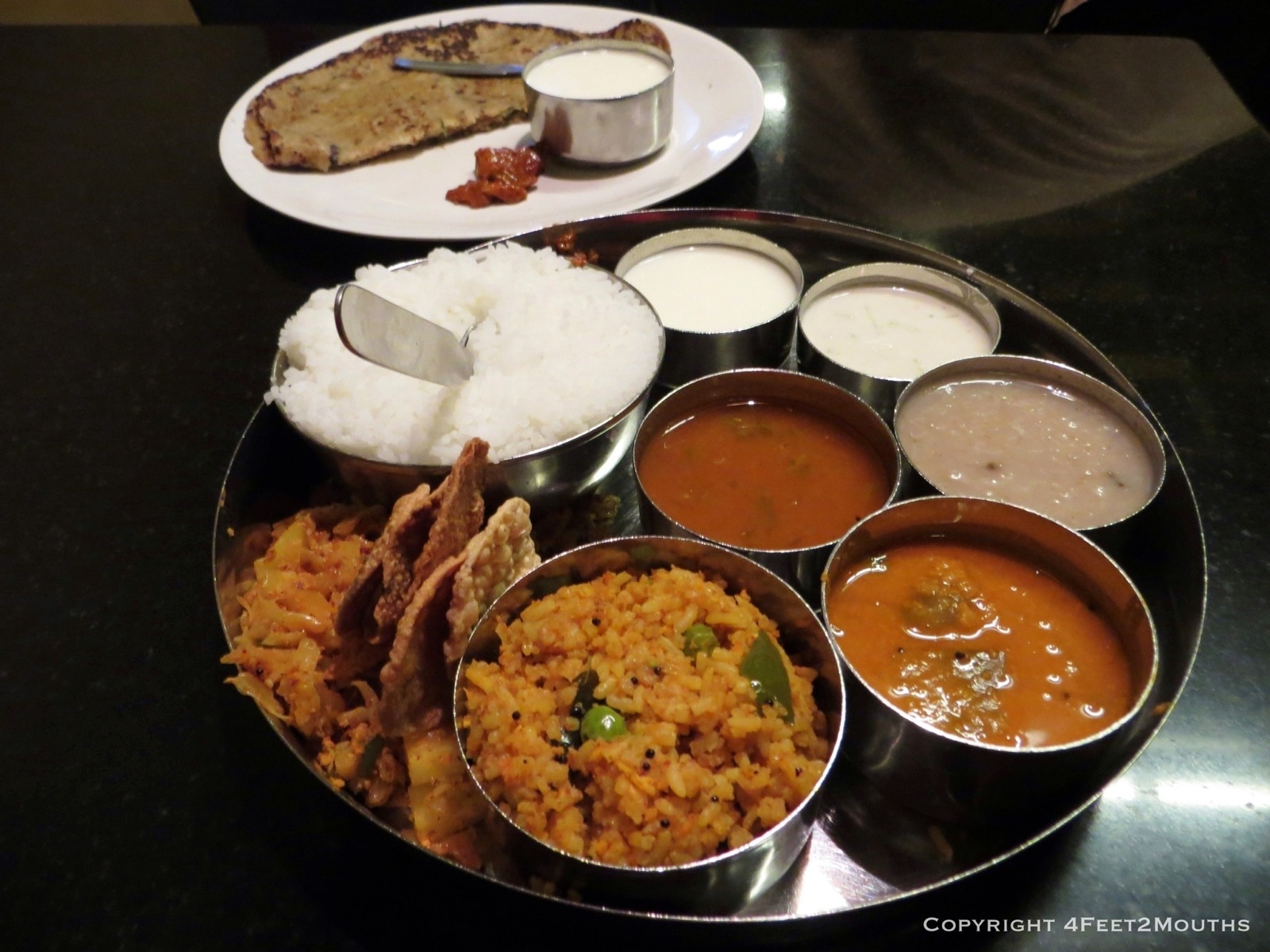
Mini meal at MTR

One of our most accomplished days was visiting the Hindu Bull Temple. This enormous carved bull is decorated with flowers and candles and symbolizes Shiva’s mount Nandi. A “mini meal” at Marvalli Tiffin Room (MTR) excited our taste buds and was no small affair – it was actually quite a bit of food. We walked west to explore the Lal Bagh Botanical Garden. There were bonsai gardens ponds and an enormous glass house built to honor Britain in the 1800’s.
Chole Bhatura dinner

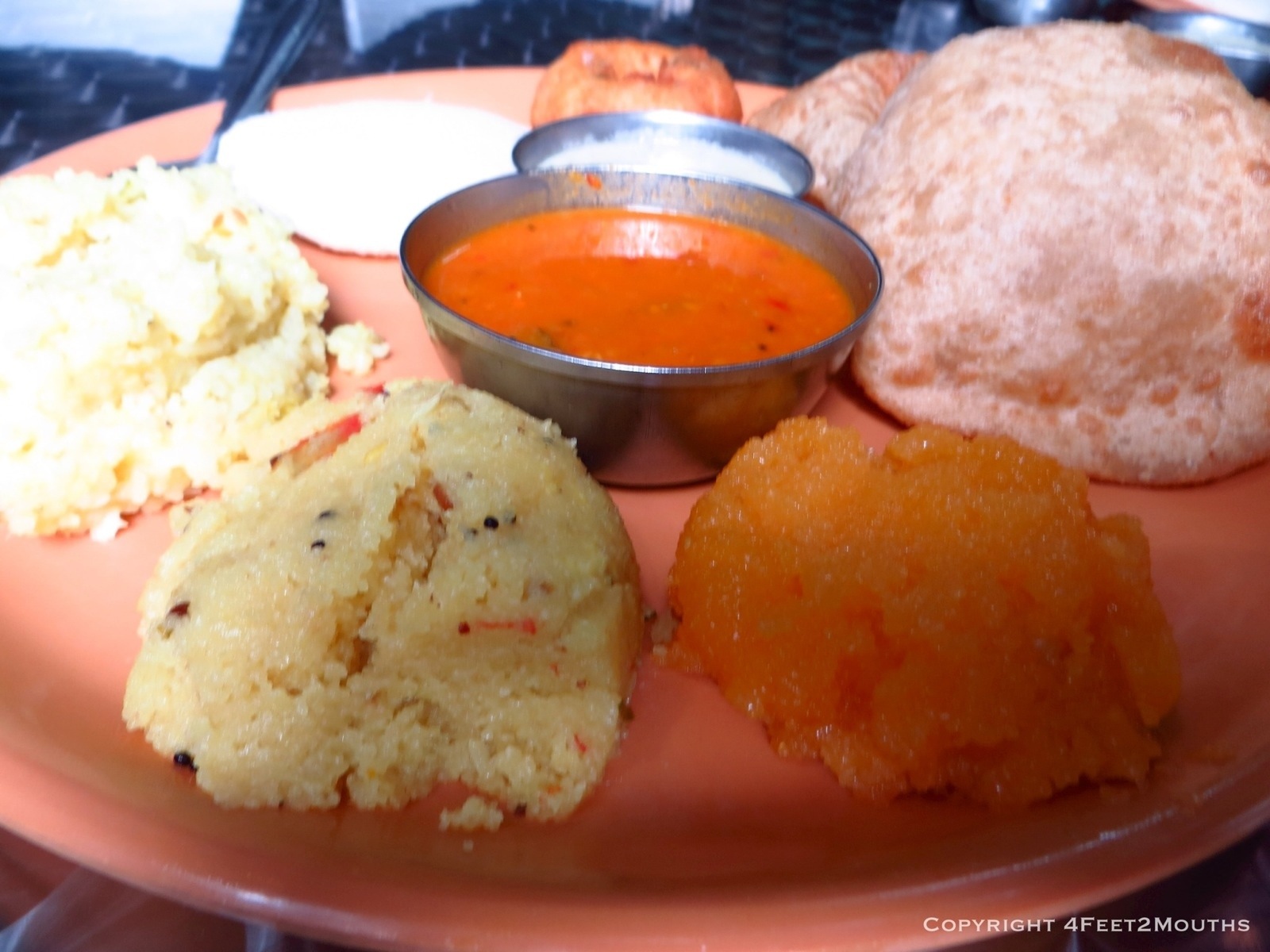
Breakfast of idli, poori and various rice pooridges

We could not resist ordering chole bhatura at a standing-only dive down the street from our hotel. The enormous puff ball was everything I remember from Vik’s in Berkeley, slightly doughy and crispy with a huge scoop of spicy chickpeas in a rich sauce. Eating in India is undoubtedly my favorite part so far. The flavors are intense and the chutneys, dal, and sauces seem to pair randomly with the foods, but I know there is some consistency. For breakfast we eat fluffy white idlies or dosas (Indian pancakes/crepes) that are paper thin and filled with potatoes, or thick and moist with diced onions or tomatoes and a delicious coconut chutney.

Colors and craziness of Bangalore’s city market

Temple carvings

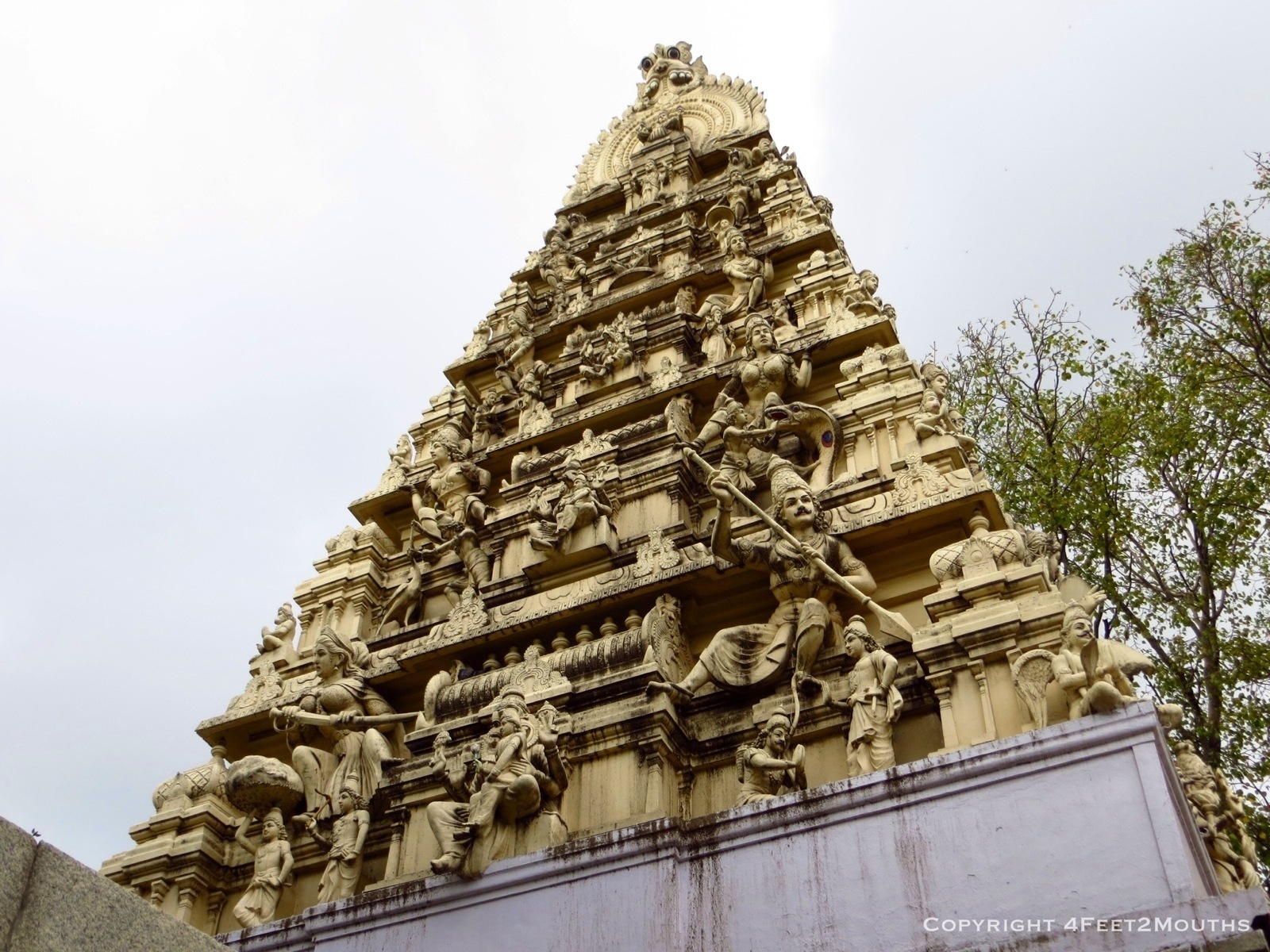
Exploring the foods of India is first explored with our appetites. Then we seek to see the source of the food, the markets that fuel the city. In Bangalore, we found ourselves in The City Market, an enormous collection of streetside vendors selling everything from tiny eggplants, pomegranates, betel leaves and nuts. There was even a building dedicated to the flower sellers that string together elaborate leis and signs for weddings and holidays. We traverse through the mud and work through the obstacles of the crowded market. Occasionally we’ll pass a simple temple and often we are entertained with an ornate and elaborate designed temple roof with thousands of carefully carved figurines.

Bengal tiger, croc, cobra and monkey at wild animal park

Young elephant

We bussed an hour outside of town to visit the wild animal park. Most of the animals are rescues, but the huge forests provide a way to protect and rehabilitate animals that were abused or without a natural habitat. Most impressive were the Bengal tigers, white tigers and Indian bears. Our safari ride bounced along the rocky road, and everyone screamed and jumped out of their seats when the 8ft long tiger noticed us and came at us for a closer look. There were cobras that effortlessly hung and slithered along the trees, crocodiles eyeing us from the ponds below and wild monkeys mischievously bouncing through the park. There were even adult and baby elephants that blessed tourists for a coin by tapping their trunk on the person’s head. The zoo was surprisingly a positive experience as the animals, for the most part, all seemed taken care of and happy. On our trip back, there was one thing on our mind…food.

Deliciousness at Kornak

Funny shaped gulab jumun

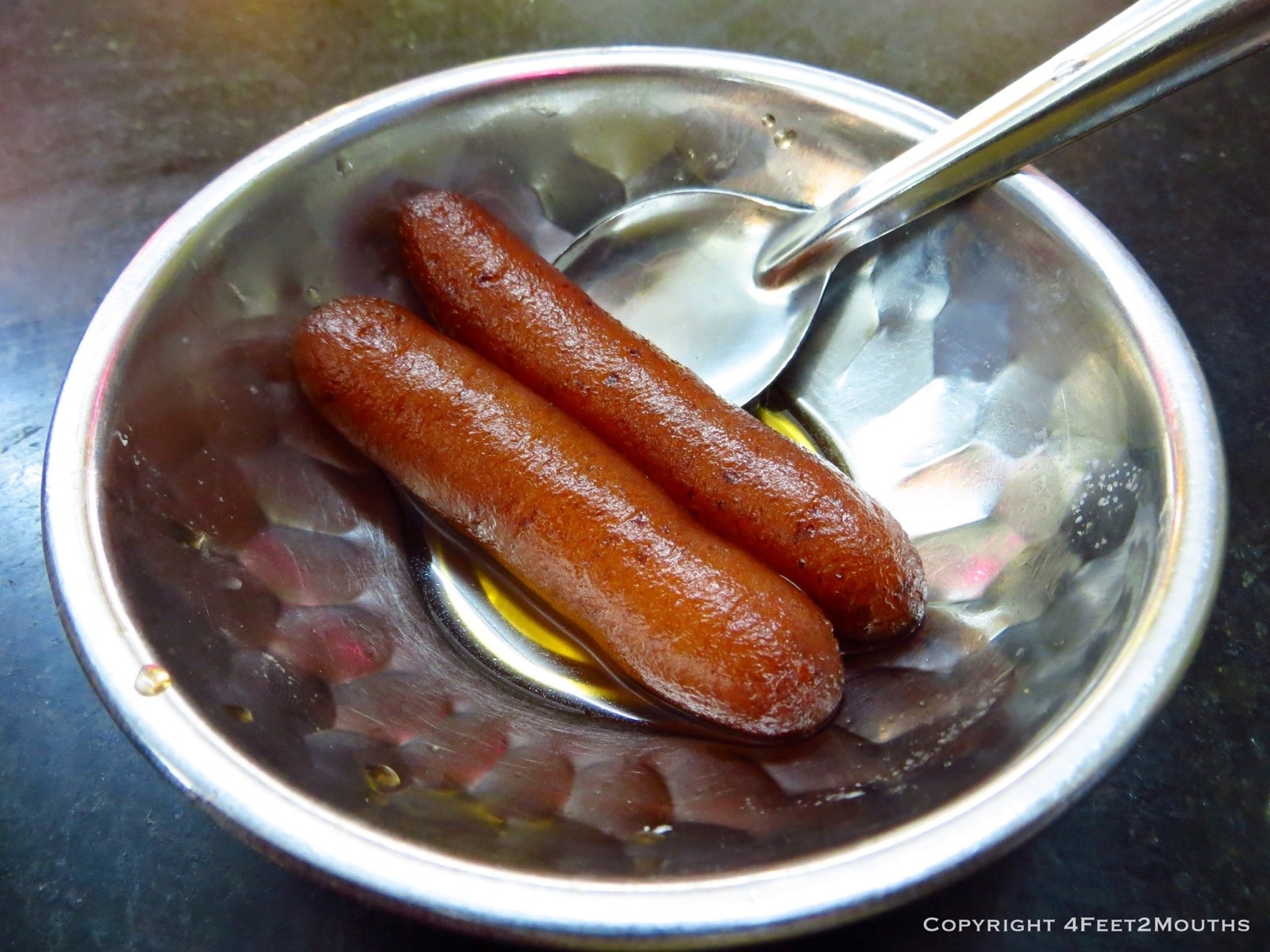
There are undoubtedly some good food places in Bangalore. We ate North Indian fare at Kornak and Queens. South Indian at street-side stands and cafes. Gulab Jamun is typically a donut ball that is soaked in a honey syrup, at Bhagatram & Sons. Their wiener shaped gulab jumun somehow made it better. We even had wonderful ice cream at Naturals. The mango and coconut ice cream is so good that our good friend and fellow blogger, Anu, might marry one of the servers. Which one? We could not decide.

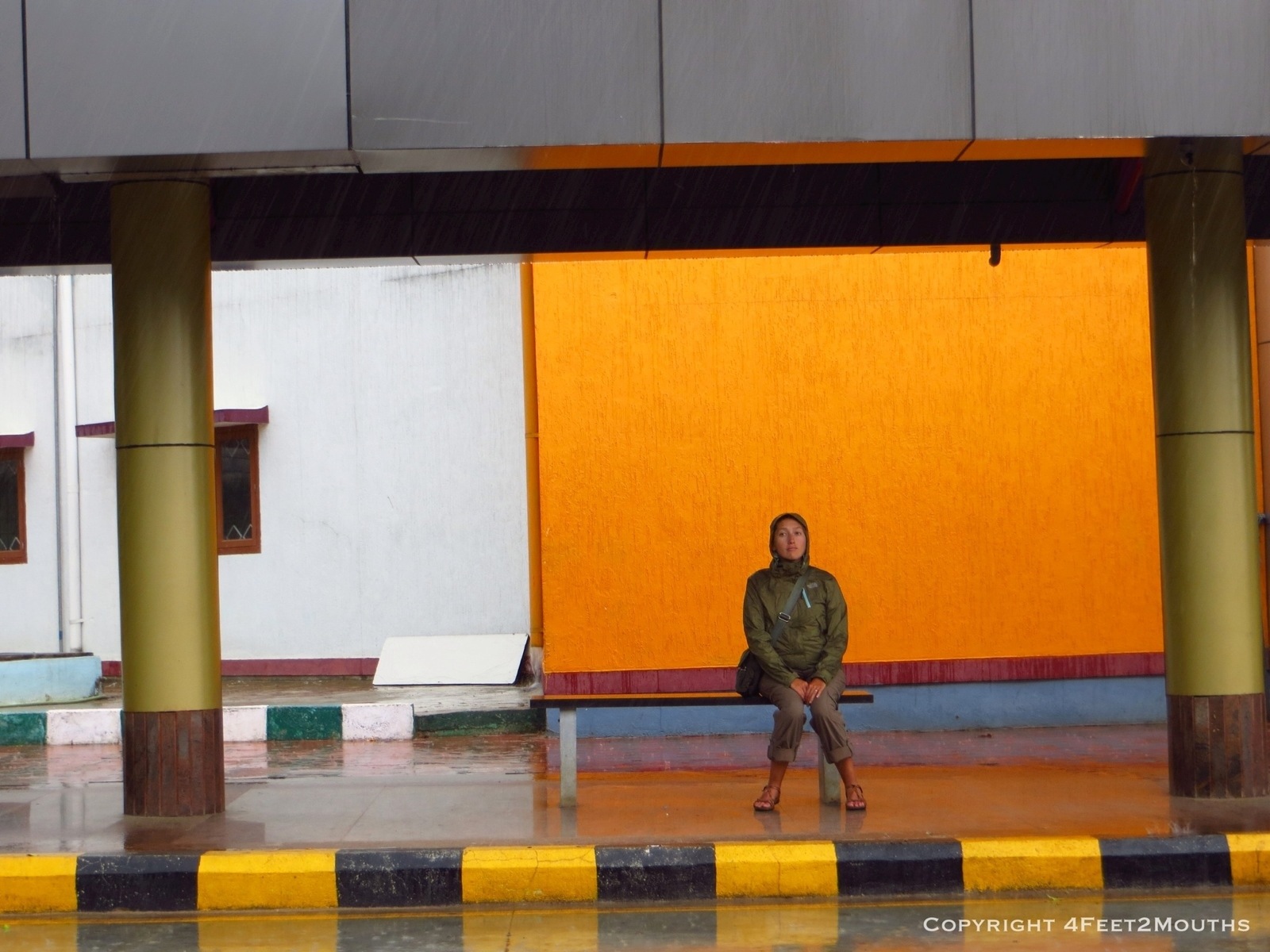
Carmen waiting in the rain for the bus

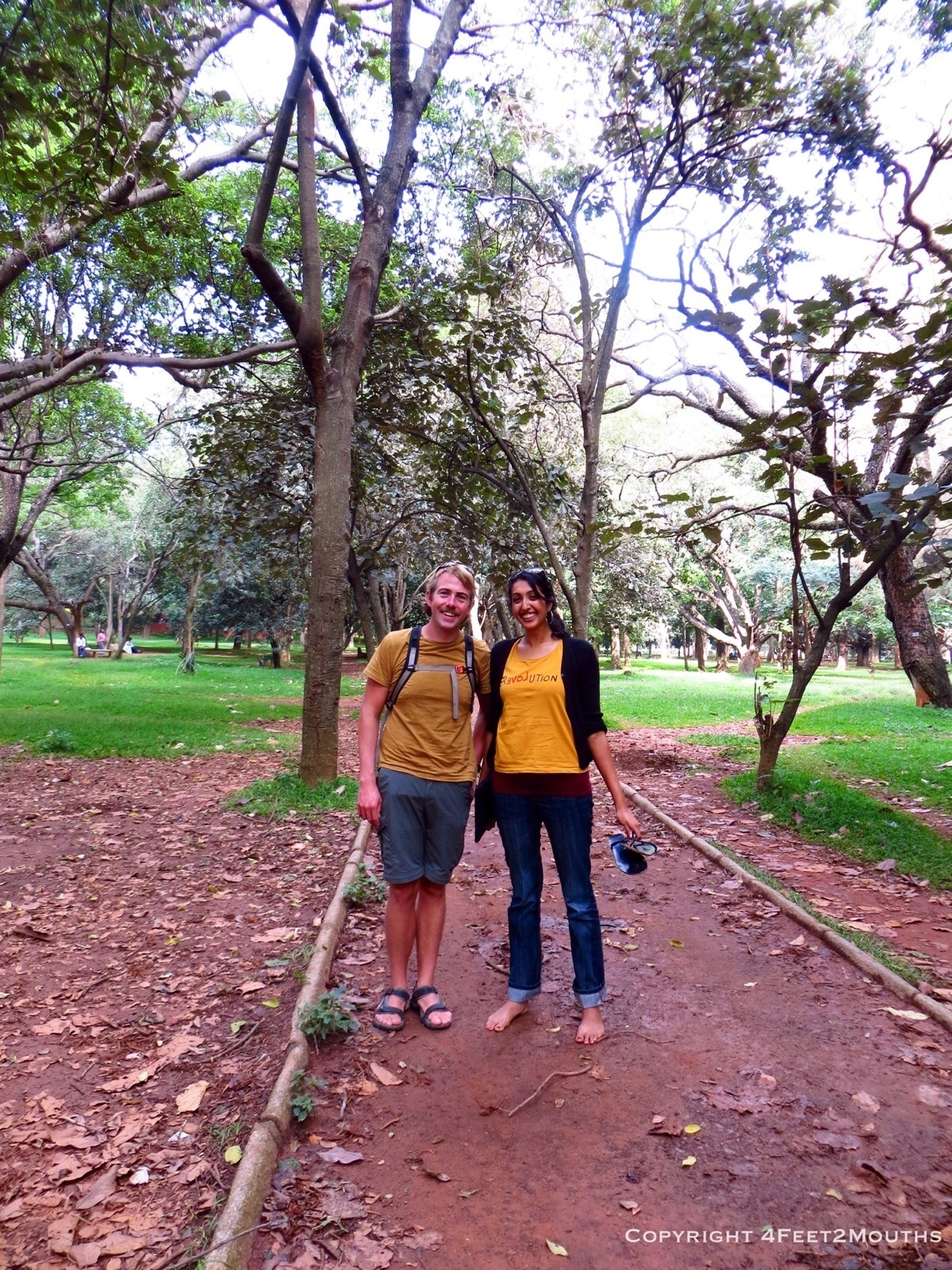
Anu and I in Cubbon Park

The slower pace has worked well for us in Bangalore. We see less sights, but experience more of our surroundings. We pack our bags again, we say goodbye to Bangalore and board an overnight train to Hubli. Few tourists travel to Hubli, but our reasons were not sights, but more to visit a typical town in India, see more of our friend Anu and learn more about the incredible headway of her social water project NextDrop. With the click clack of steel wheel to rail and the rocking back and forth we crawled onto our three-tiered bunks and sunk into a light slumber. Only exciting adventures and spicy delights await us in India.
Eurasian Istanbul (by Carmen)

View from Galata Bridge

My first view of Istanbul was at dawn through the bleary eyes. We had just taken an overnight bus from central Turkey. Sometimes buses are overheated, sometimes they are freezing cold. This one happened to be both, with the heater on full blast at the feet and the air conditioning blowing from above. All night I wished I could perform some advanced yoga moves to help me find the perfect temperature balance. I imagine this would involve one foot sticking straight up while the other is crossed behind my head. I tried but alas I’m not that flexible.

İstiklal street with tram

Upon arrival, the sights and sounds of the city were enough to give me a pick me up on the way to the hostel. I had been looking forward to Istanbul for a while so we wasted no time in getting to the old town. First stop: Hagia Sophia.

Hagia Sophia’s grand interior

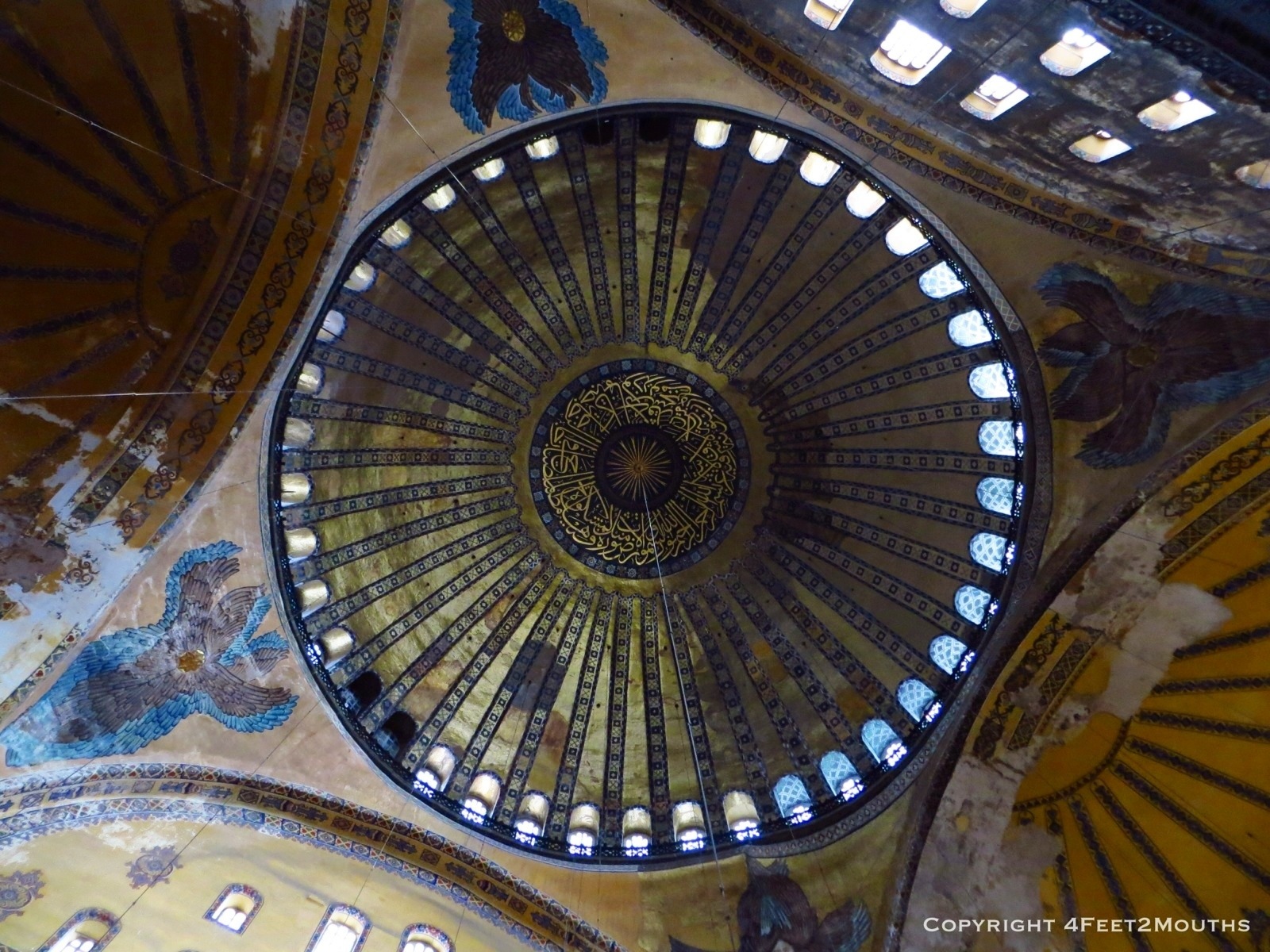
The gold mosaic dome

View of Hagia Sophia from the side nave

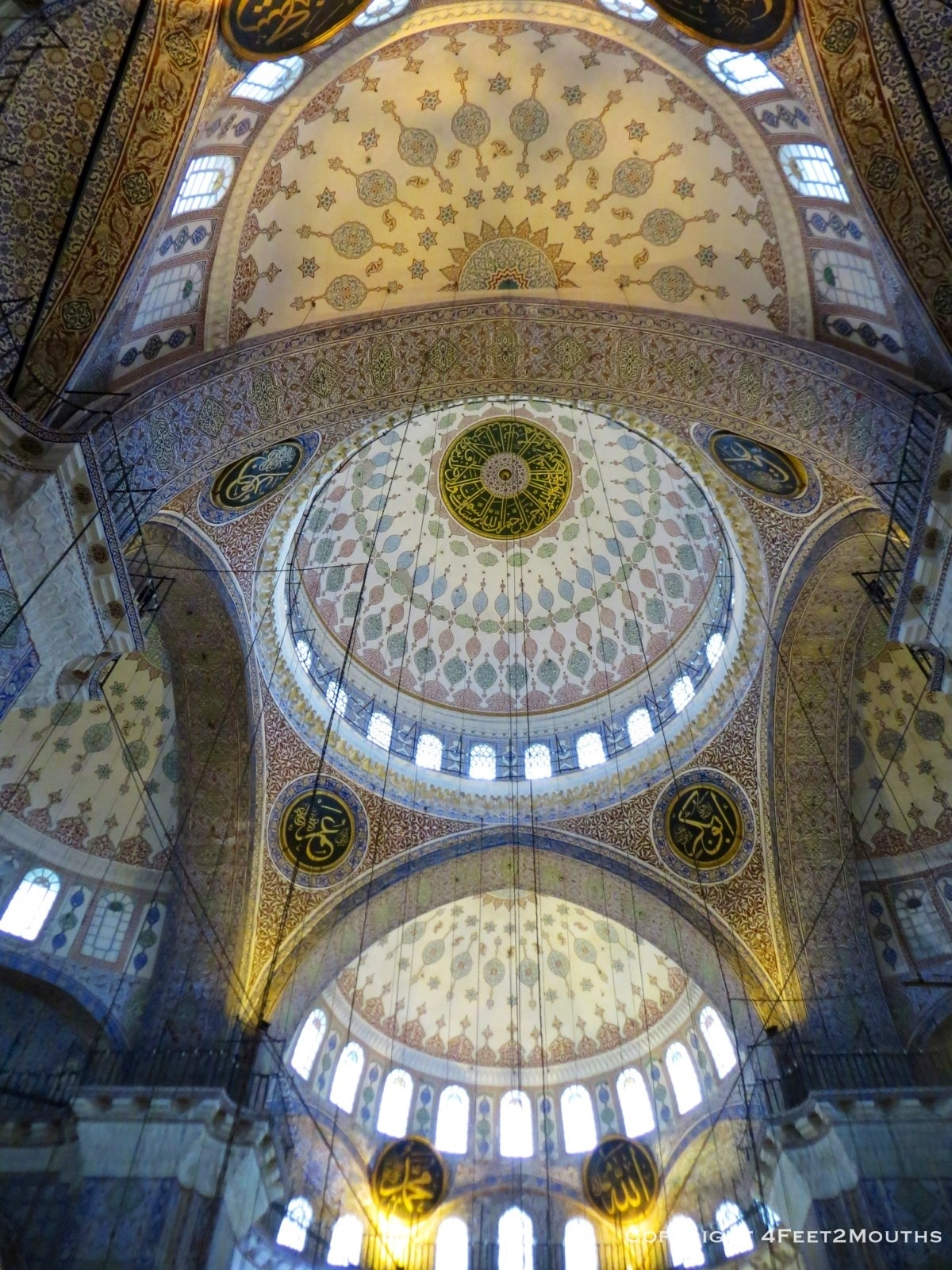
The Hagia Sophia was one of the most magnificent buildings I have ever seen in my life. Stunning. Jaw dropping. And it was built in the 500s(!!!) by the Roman emperor Justinian. I am so happy that this incredible piece of architecture survived the past 1500 years intact. In order to do so it had to change with the times. For its first 1000 years it was a Christian church. But when the Ottomans came they brought Islam with them. The building was converted to a mosque. The most notable additions were large chandeliers hanging from the ceilings, huge disks with Arabic calligraphy and a mihrab showing the direction of Mecca.

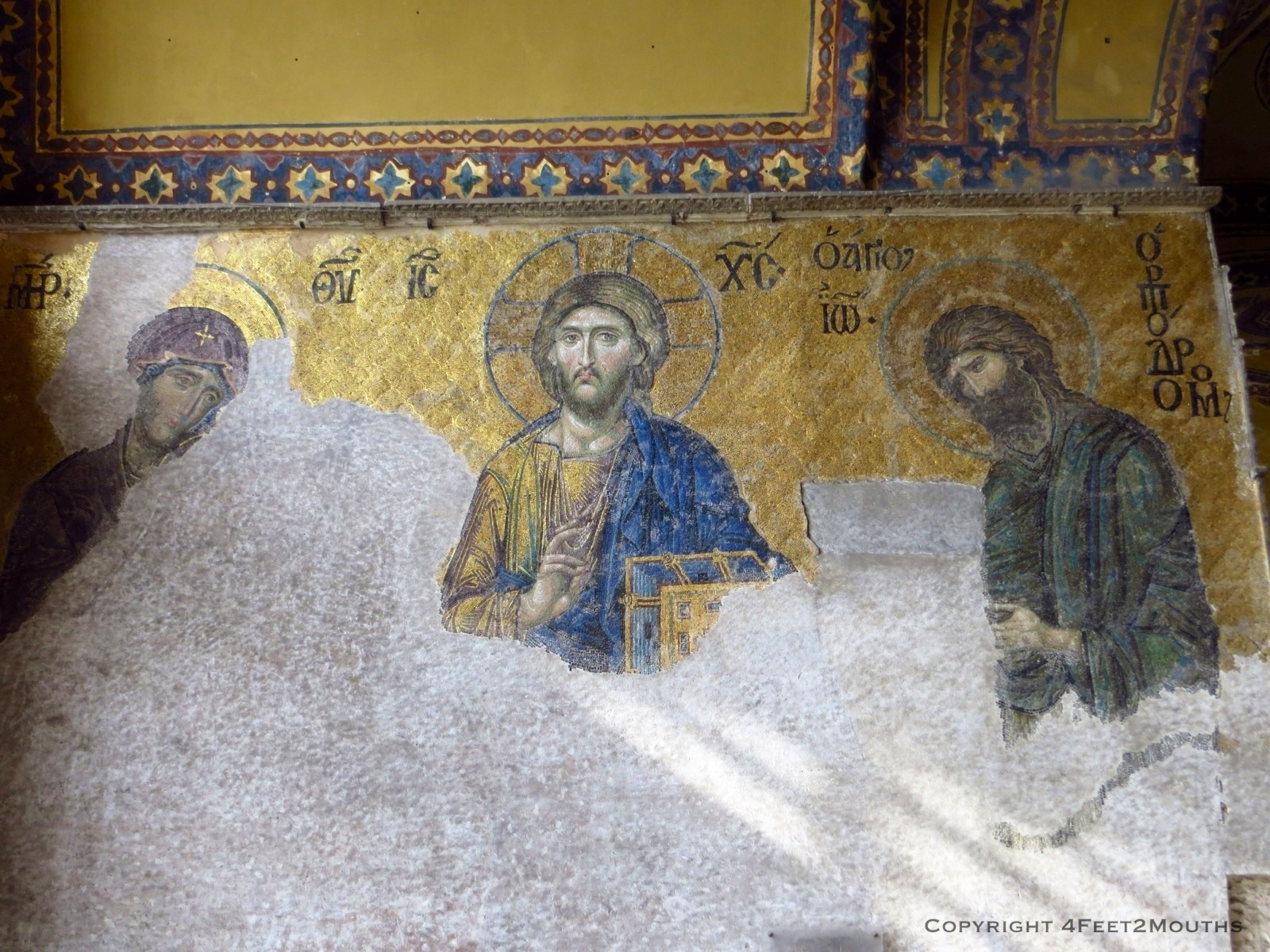
Mosaic of Jesus

Original carved marble capital

Fortunately, the conversion to a mosque did not demolish the Christian art already in place. Gold mosaics of Jesus, Mary and saints are still present. Other original details such as the marble column capitals engraved with Justinian’s crest are also there. In the early 20th century the Hagia Sophia was converted into a museum to earn money for preservation efforts.

Blue Mosque from the courtyard

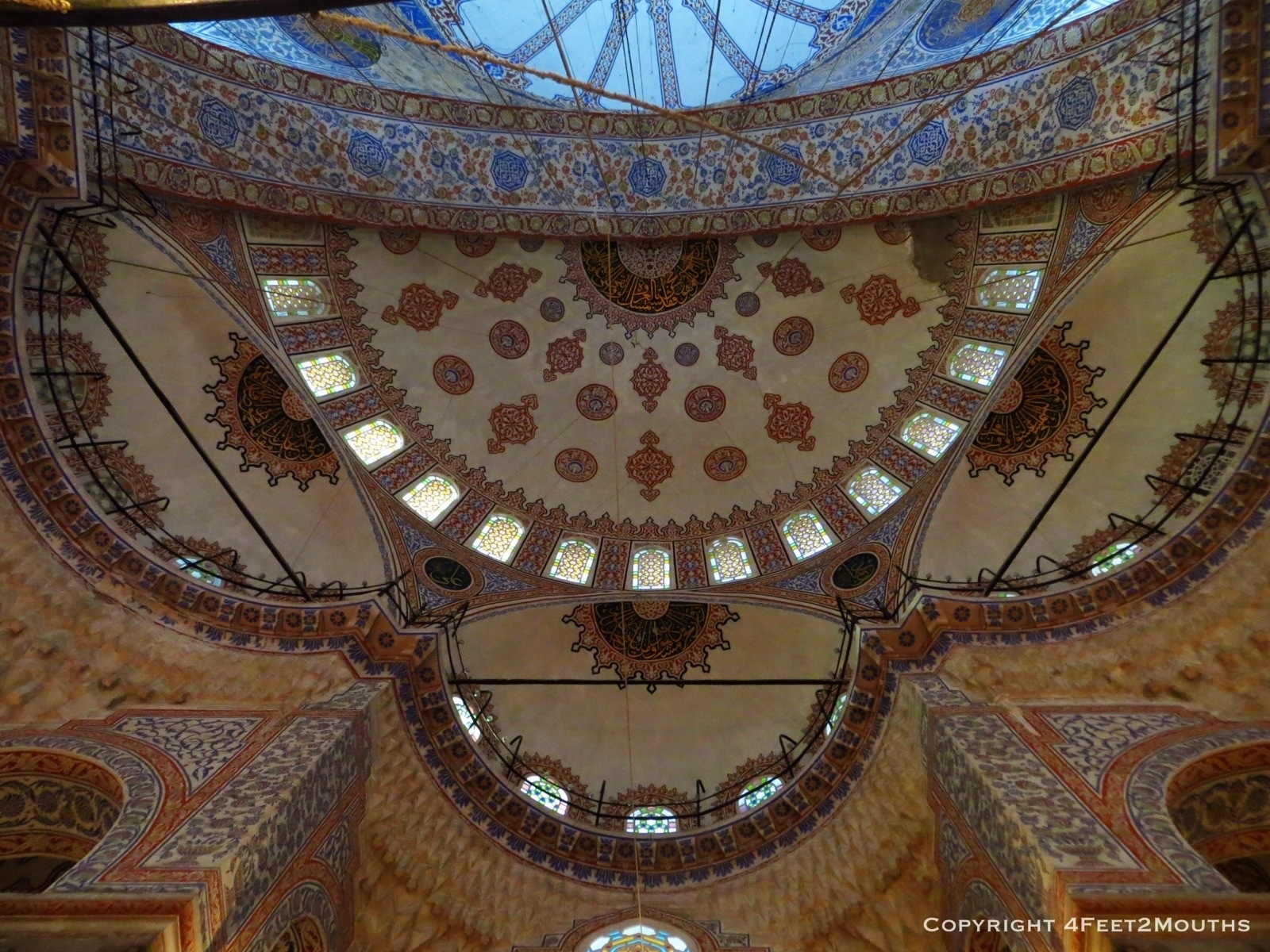
Inside the Blue Mosque

Supposedly, Sultan Ahmet I wanted to outdo the Hagia Sophia. Thus, the Blue Mosque was created very close to it. Overall, he succeeded with the exterior which has a harmonious symmetry. The inside is also grand but not quite as impressive as its much older neighbor.

Roman Cistern

Repurposed Greek Medusa head becomes a column base

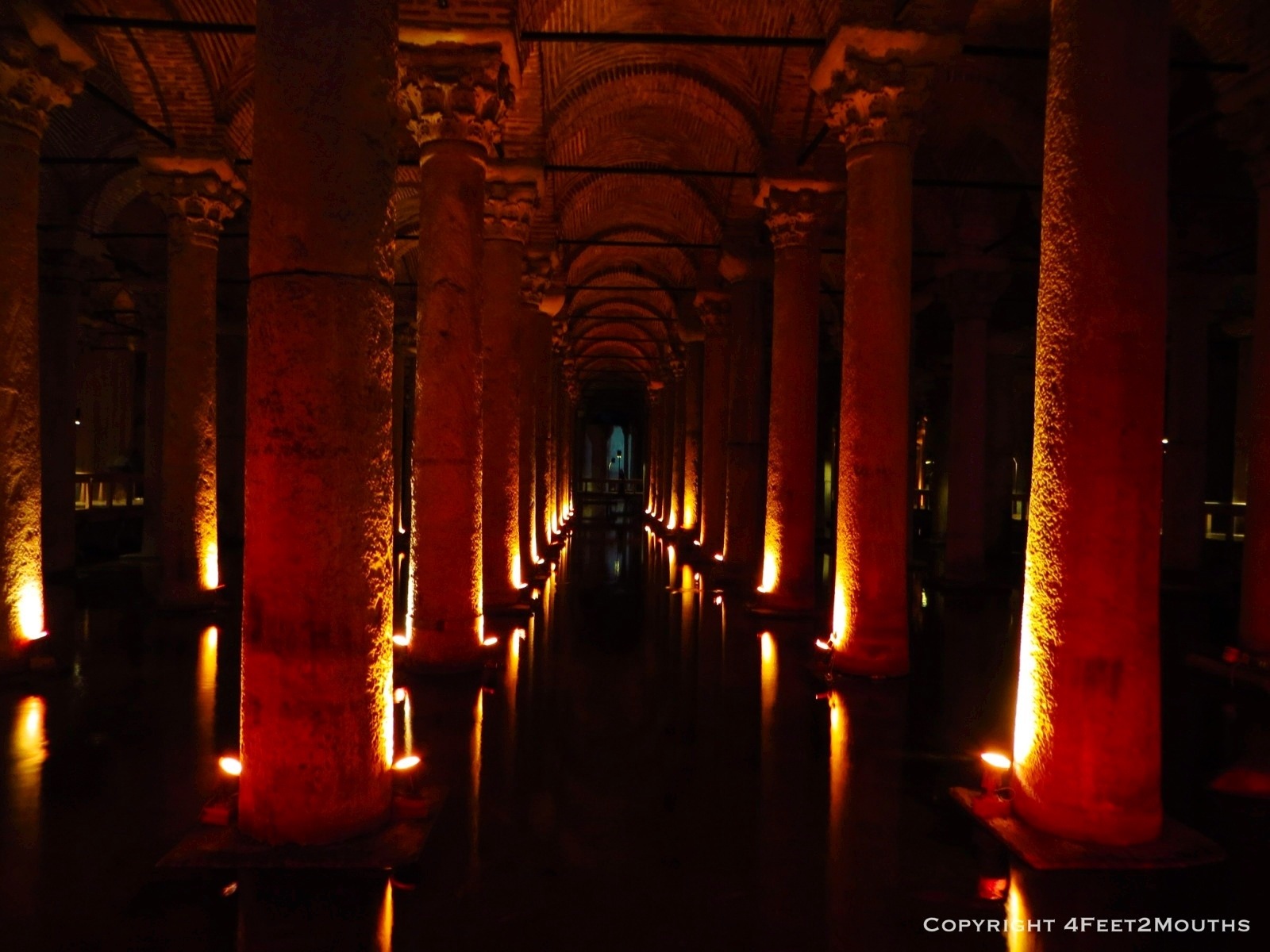
Just across the street was a special surprise, the roman cistern. At first I thought, “what is going to be so special about a big water storage basin?” But as I descended the stairs to go below street level I realized it was much more. Columns taken from other already ruined temples were used for this utilitarian space meant simply to hold water. That’s how a giant Medusa head ended up as a simple column base. But they put her upside down just to make sure she couldn’t cast her deadly stare.

Turkish flag outside the Grand Bazaar

Another highlight of Istanbul is the Grand Bazaar. It is a 600 year old labyrinth of food and market stalls selling carpets, trinkets, jewelry, clothes, textiles, pottery and pretty much everything you could want. Nathan and I were extremely excited to explore every last nook and cranny. But we didn’t get to see any of it. We had been told that the October 25 was an important Muslim holiday. It is the day that Abraham was to demonstrate his devotion to God by sacrificing his own son. However, God allowed him to sacrifice a goat. However, no one mentioned that everyone would also be off the for the four days following the holiday. Therefore, many of the shops, eateries and the entire Grand Bazaar were closed for basically our entire stay. Now we have a reason to return.

Baklava from Hafız Mustafa Şekerlemeleri

Best baklava ever at Karaköy Güllüoğlu

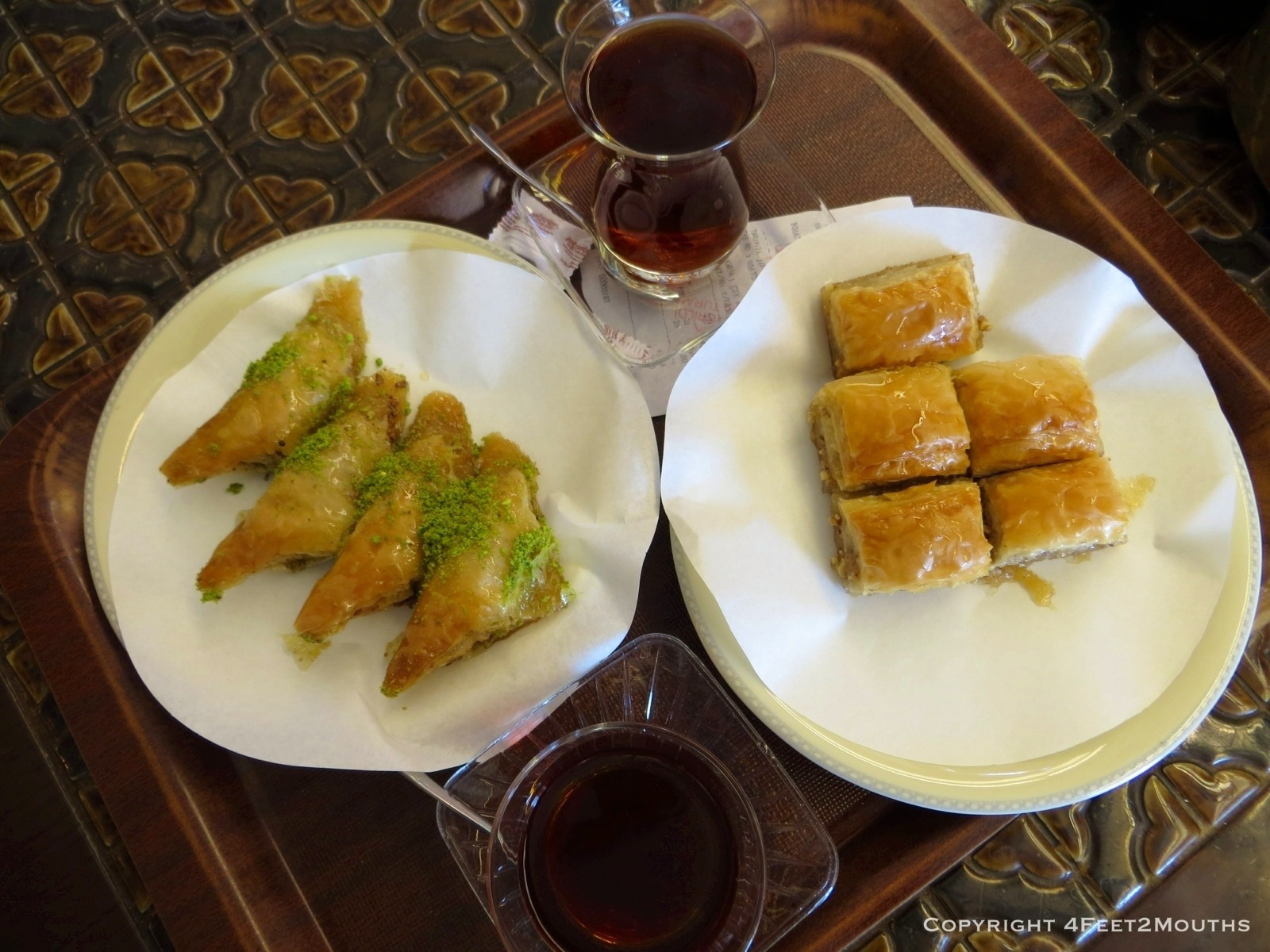
So how does one drown their sorrows in a city that has high alcohol tax to discourage drinking? Eat more baklava. We sampled from several baklava shops. The first was Hafız Mustafa Şekerlemeleri in the old city. We couldn’t resist the trays of baklava variations backed up by mounds of Turkish delight. I happily bought a box to go for a midnight snack at our hotel. It was delicious, but not quite as delicious as Karaköy Güllüoğlu. This place, across the river in the Beyoğlu neighborhood makes magic. The walnuts and pistachios were freshly roasted and dripping in a persimmon simple syrup.

Spice Bazaar

İstiklal filled with people

The baklava made me feel better. And truth be told not everything was closed. For example, we still made it to the spice bazaar. Yes, it’s touristy but the piles of spices, teas and sweets housed in a 400 year old market building are still fun. However, the real action was on İstiklal, a major shopping thoroughfare that is largely pedestrianized. Thousands of people could be found strolling up and down from midday to late night.

River activities – fish and ferries

Fortunately the ferry cruises were still running so we caught one to take a ride up the Bosporus. We followed up with a balık ekmek (fish sandwich) near the dock. Crispy fish is fried up on small boats, stuffed in some bread with onions and handed over for 5 Turkish lira, about $2.50. It’s up to you to douse it with as much lemon sauce as you want. We bought some cucumbers pickled in turnip juice to accompany our quayside meal.

The famous wet burger

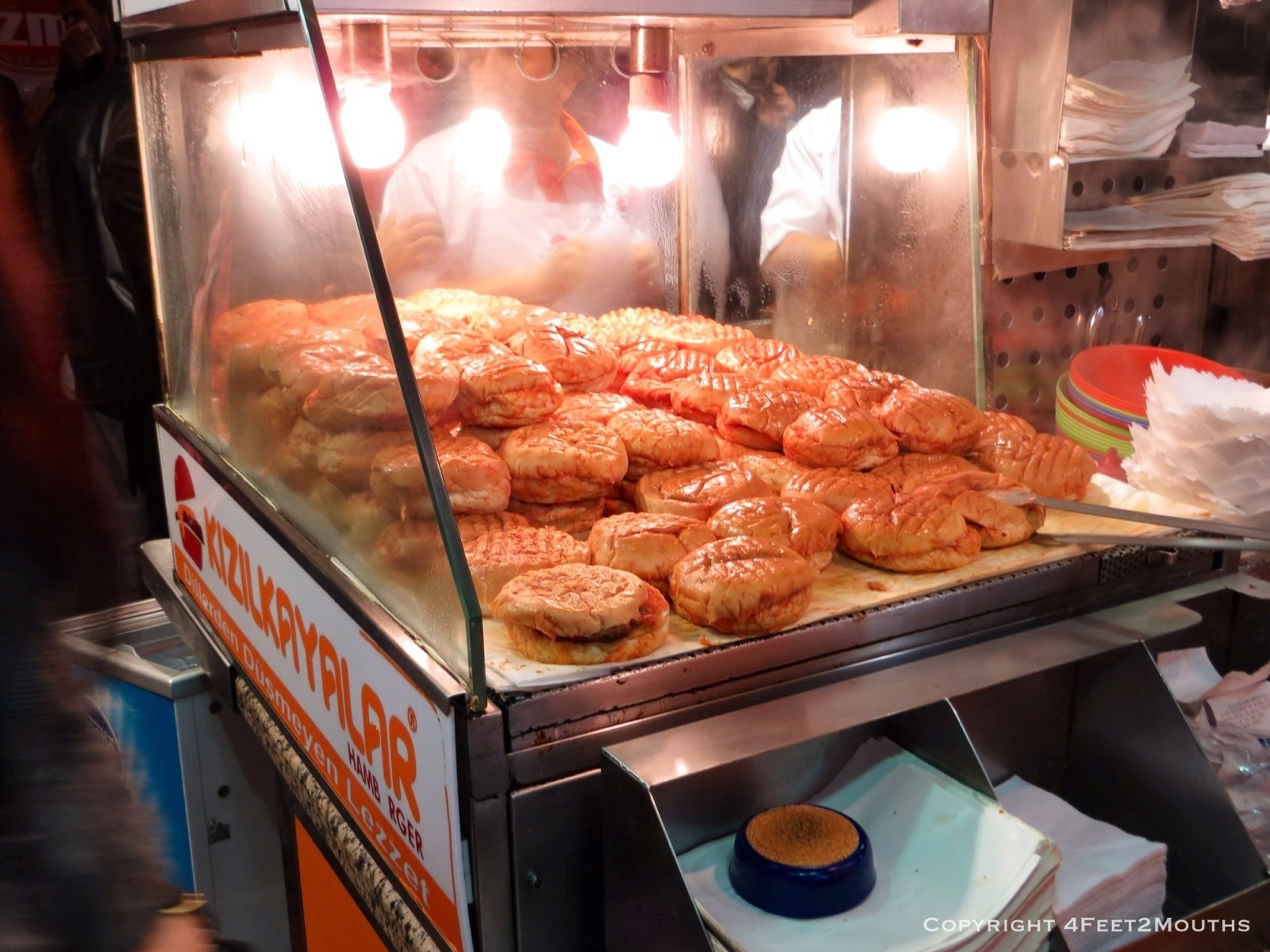
The fish sandwich whet our appetite for more street food. For ideas we turned to Anthony Bourdain. His trip to Istanbul included a late night snack at Kizilkayalar to eat their famous wet burger. We followed suit and found a crowd huddled around the “burger hammam”. Hammams are the Ottoman era public baths/spas. The name burger hammam makes me smile thinking of burgers wrapped in white towels lounging in a sauna. Perhaps they didn’t have towels but they were definitely steaming in their street side case. The burgers were warm and fluffy with a tomato based sauce. Seriously worth the 2 lira.

Crispy, crunchy simit

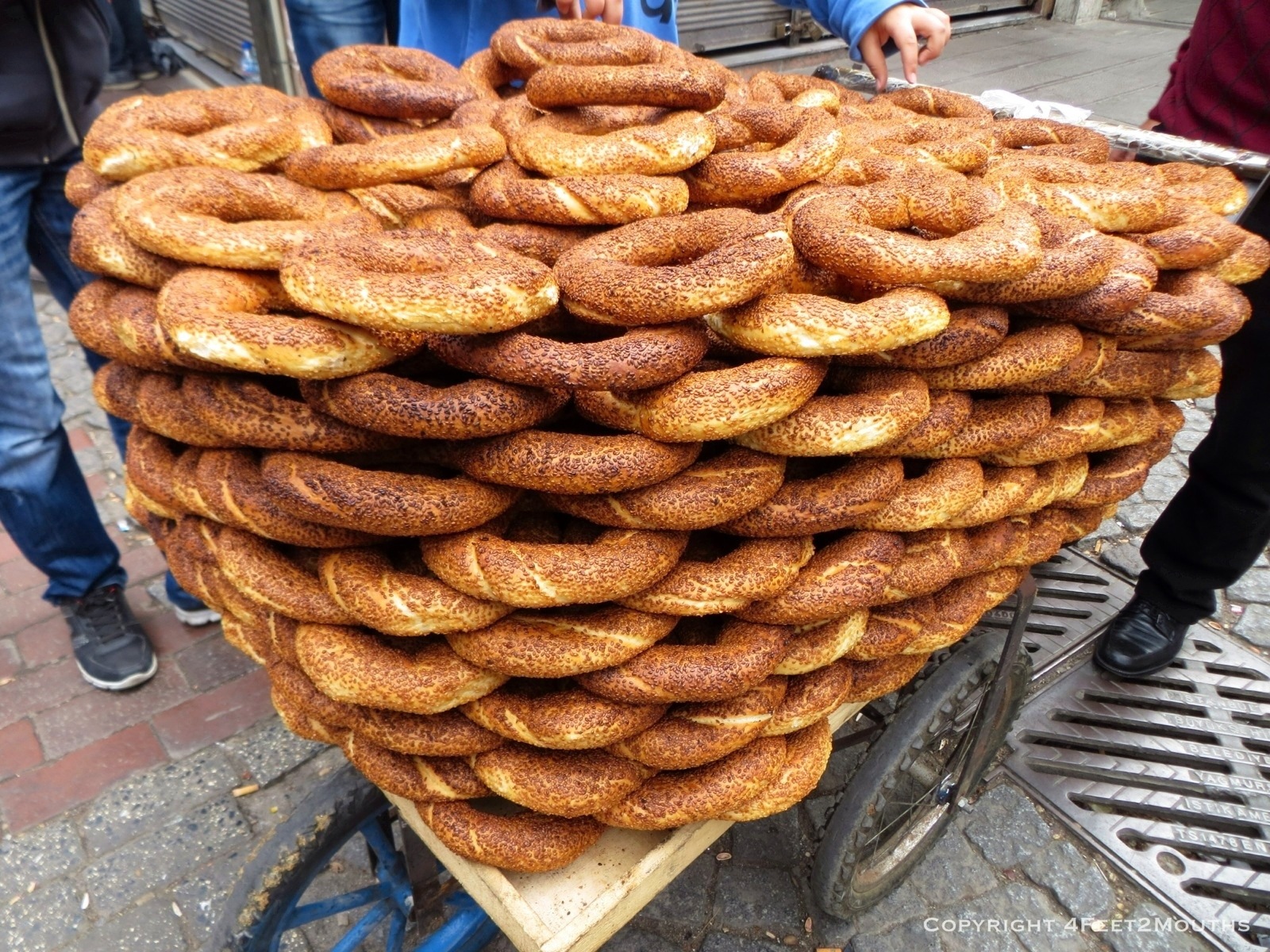
Other popular street food snacks were roasted chestnuts, corn, steamed mussels and popcorn. But when we wanted something to nibble we most often reached for simit, a toasted, sesame crusted bread ring. Dürüm, a simple Turkish wrap of barbecued meats filled our late night cravings. Especially the fine example at Dürümzade.

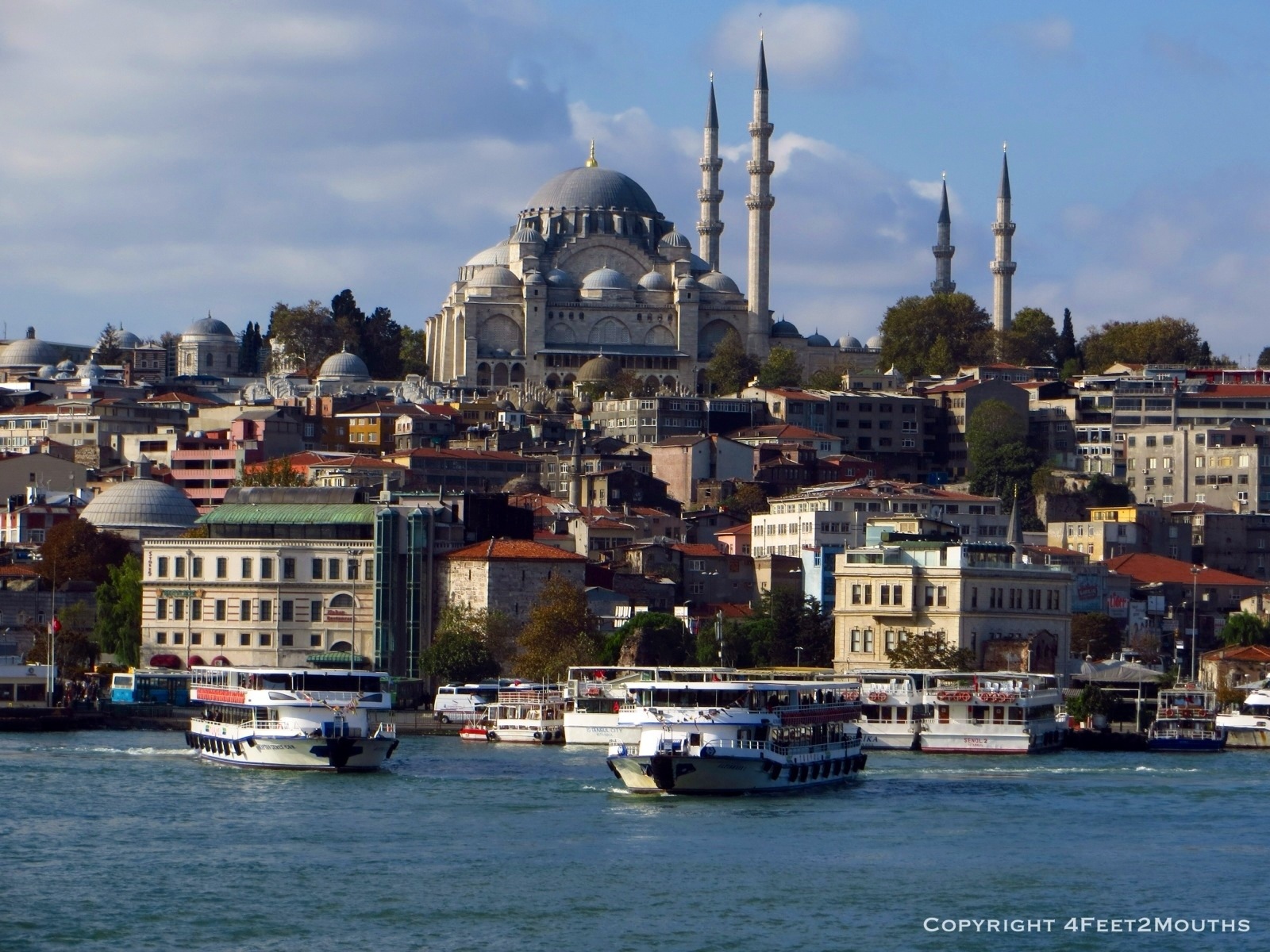
Süleymaniye mosque near the university

Inside Süleymaniye

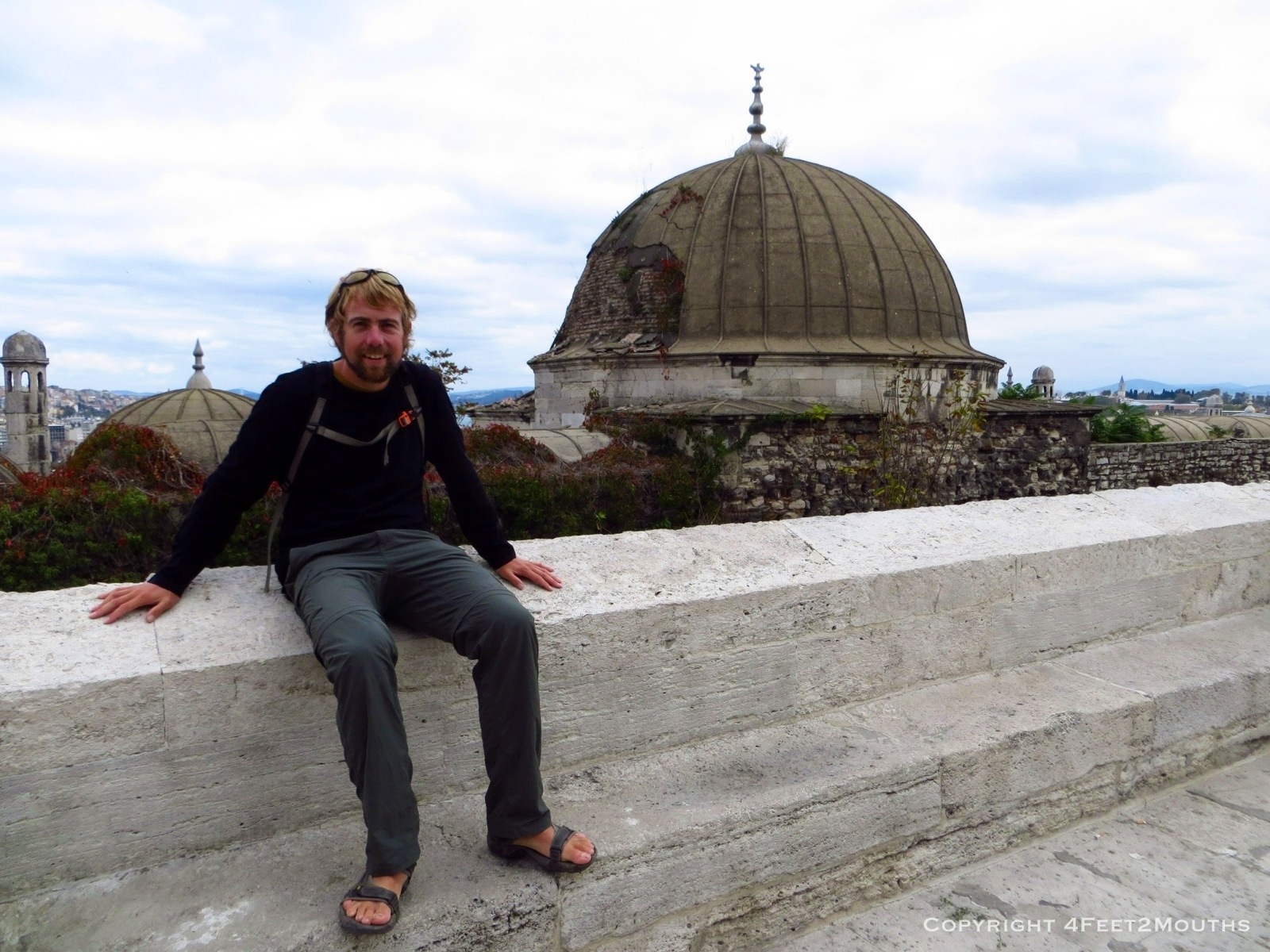
Despite the holidays, the mosques were still open to visitors. High up on a hill we explored the Süleymaniye mosque. A little younger than the Blue Mosque, it was just as grand and elegant.

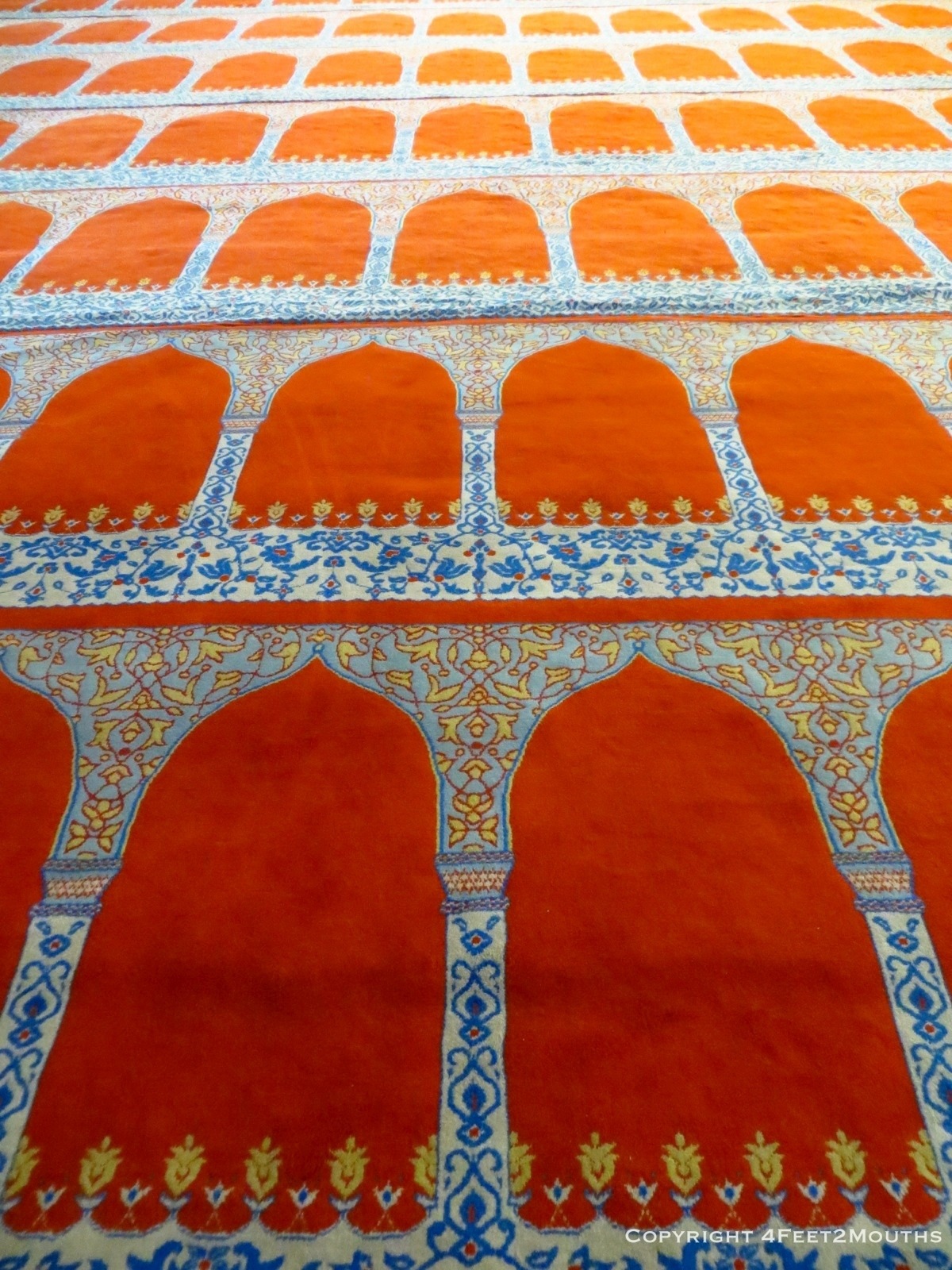
Carpet within the mosque with prayer spaces

Blue İznik tiles

Inside the mosque, the carpet clearly delineates where people should kneel to pray. The same is true at nearby Rüstem Paşa Mosque which was much smaller but adorned with intricate tile work.

Nathan at the lavish Topkapı Palace

Incredible jeweled dagger

More İznik tiles

There was one more major sight on our list, Topkapı Palace. This huge complex is the Ottoman version of the Forbidden City. Access to the lavish courtyards was once confined to the royal family and their closest advisers. Now, tourists explore the grounds oohing and ahhing at the spectacular tile work and gold leafing. The greatest crowd reaction is probably in the treasure room where you can find enormous and dazzling emeralds, rubies and diamonds encrusting everything from cups to daggers.

Datli Maya, a true find

During our stay in Istanbul Nathan and I celebrated a very special holiday of our own, our anniversary. We hoped to find a romantic but laid back place that served delicious food. Fortunately we succeeded on all fronts after scrolling through recommendations on the excellent food blog, Istanbul Eats. Our dinner at Datli Maya featured an incredibly moist kebab baked in a clay dish. We ordered a side of roasted eggplant dip and a couple of lahmacun (crispy, thin flatbreads with toppings). Most of our meal had been baked in the large wood fired oven that dominates the ground floor. It was comfort cooking taken a step further by a chef that knows how to add a special touch. We enjoyed our meal so much we decided to have breakfast there as well. A buffet of crunchy cucumbers, fresh tomatoes, three types of cheese, jams, butter, sesame sauce and fruit salad was spread out in front of us. Of course, this was accompanied by a mix of freshly baked sweet and savory breads.

Nathan overlooking Istanbul

I had a feeling I’d like Istanbul. But as it turned out, I loved it. The city commands your senses – your eyes are drawn to beautiful domes, your nose fills with the aroma of spices, and your taste buds can’t get enough sweets. The architecture, food and culture are a beautiful mix of European and Asian influences. Indeed, Istanbul is a true Turkish delight.

The Unbelievable Cappadocia (by Nathan)

Sunrise hot air balloons in Cappadocia

Want to see a place that is magical, astonishing and entirely unbelievable? Visit Cappadocia in central Turkey for one out-of-this-world experience.  Spectacular land formations converge with exemplary culture for an experience of a lifetime.

Colorful Turkish carpets

Göreme rock tower and former home

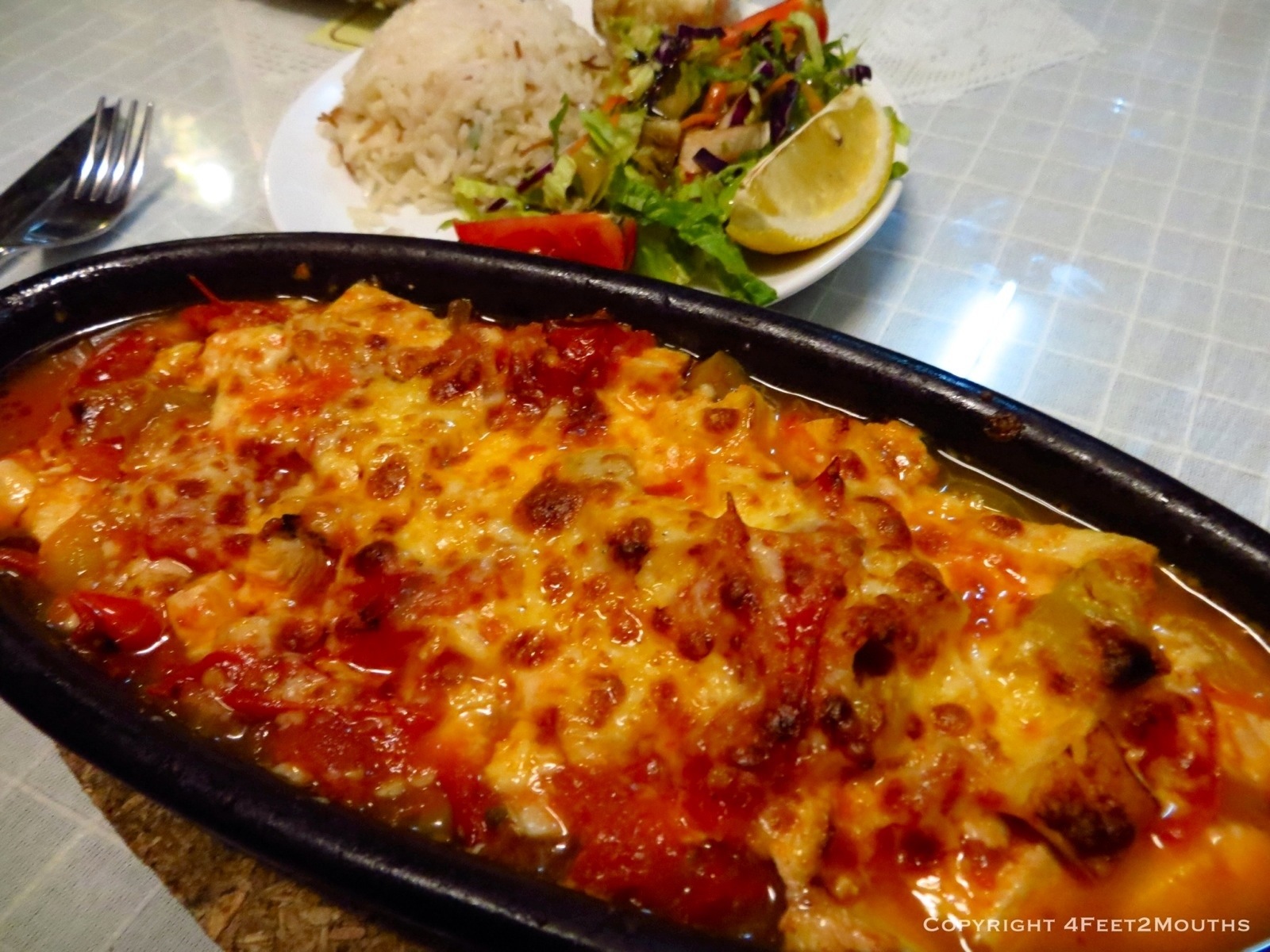
Sizzling clay pot chicken

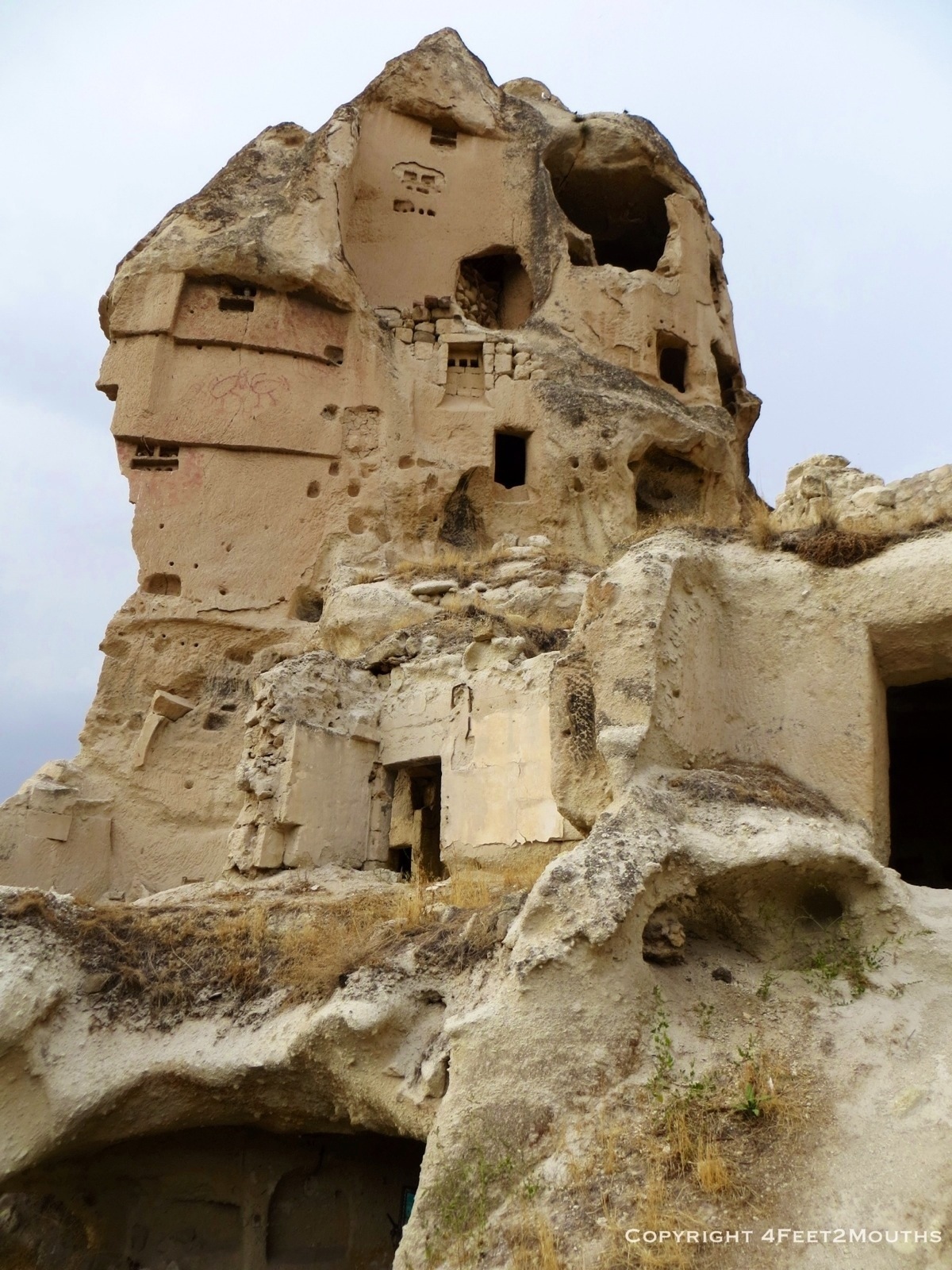
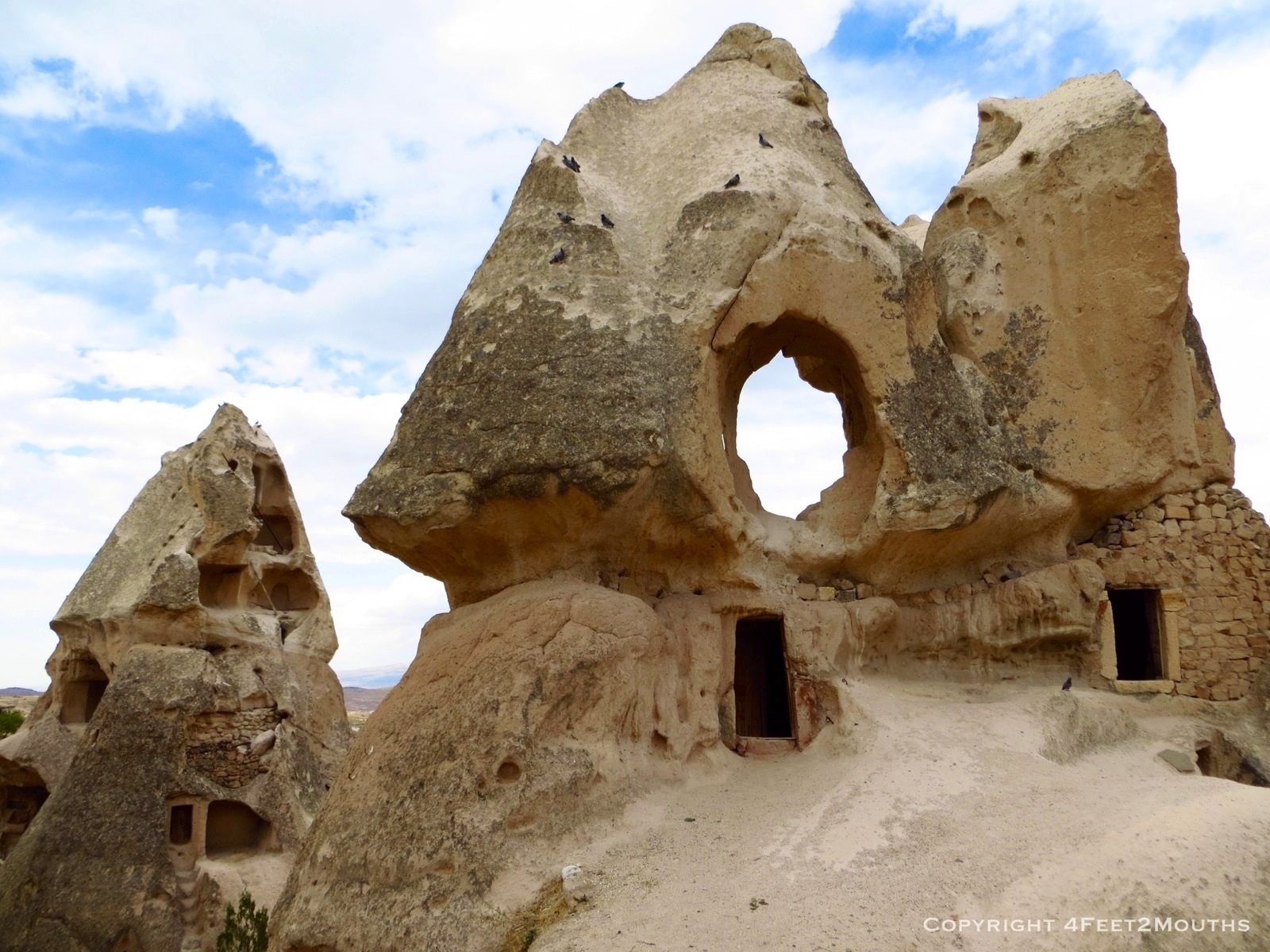
We landed in the city of Göreme from Selçuk on one super long bus ride that passed through Ankara.  It is difficult to know all major holidays while traveling, but our time in Turkey coincided with one of the largest Muslim holidays of the year, Eid al-Adha.  Thus busses were booked and we added an extra four hours of travel time just to get to Cappadocia.  When we finally did arrive, we staggered out of the mini bus completely in awe.  Enormous cones of rock scattered the landscape. Each miniature mountain had been hollowed out with windows, rooms, and elaborate entrances.  Everywhere we looked was a cave home or cave hotel towering over the city.  We explored the city for a short while, but our afternoon ended quickly as the clouds closed in overhead and our daylight disappeared.  For dinner found a cozy restaurant with some pide (Turkish style pizza) and clay pot roast.

Sunrise balloon silhouettes

Checkered hot air balloon drifting through Cappadocia

We awoke in the dark.  Despite our desire to sleep in, we were eager to climb to the Göreme lookout point.  We ascended to the ridge to discover eighty hot air balloons preparing for take off.  There was a silence in the air that was broken by scattered rough coughs of enormous torches heating the gigantic balloons.  In the faint light the balloons slowly rose from the canyon.  They drifted into the air and above the horizon.  The colors and designs of each balloon varied- there were stripes, checkerboards, rings, flags and advertisements decorating the orange sky.  The sun peaked over the mountain ridge in the distance and the balloons rose higher and higher.  After an hour of flight the balloons steer themselves to an opposite canyon and land effortlessly on trailers waiting for them.  The balloon travelers viewed the drastic landscape from the sky, but we wanted to explore the canyons on foot.

Shadowed eroded contours

Our hiking companion Spotty

Colorful contours of the Red Valley

We began our hike at the top of the Red Valley, looped into the Rose Valley and returned to Göreme.  In our first hour of hiking we immediately found a new friend, Spotty, a friendly stray dog that loved to walk and show us around the canyon.  There were some sections where we needed to climb a ladder into narrow tunnels.  Spotty would pout, we would say goodbye, then five minutes later he would return to us jumping up and down excited that he found another way to the trail.  He reminded me of the sweet dogs that hiked with us in South America.

Frescoes of a Red Valley church

Carved cave cathedral in the Red Valley

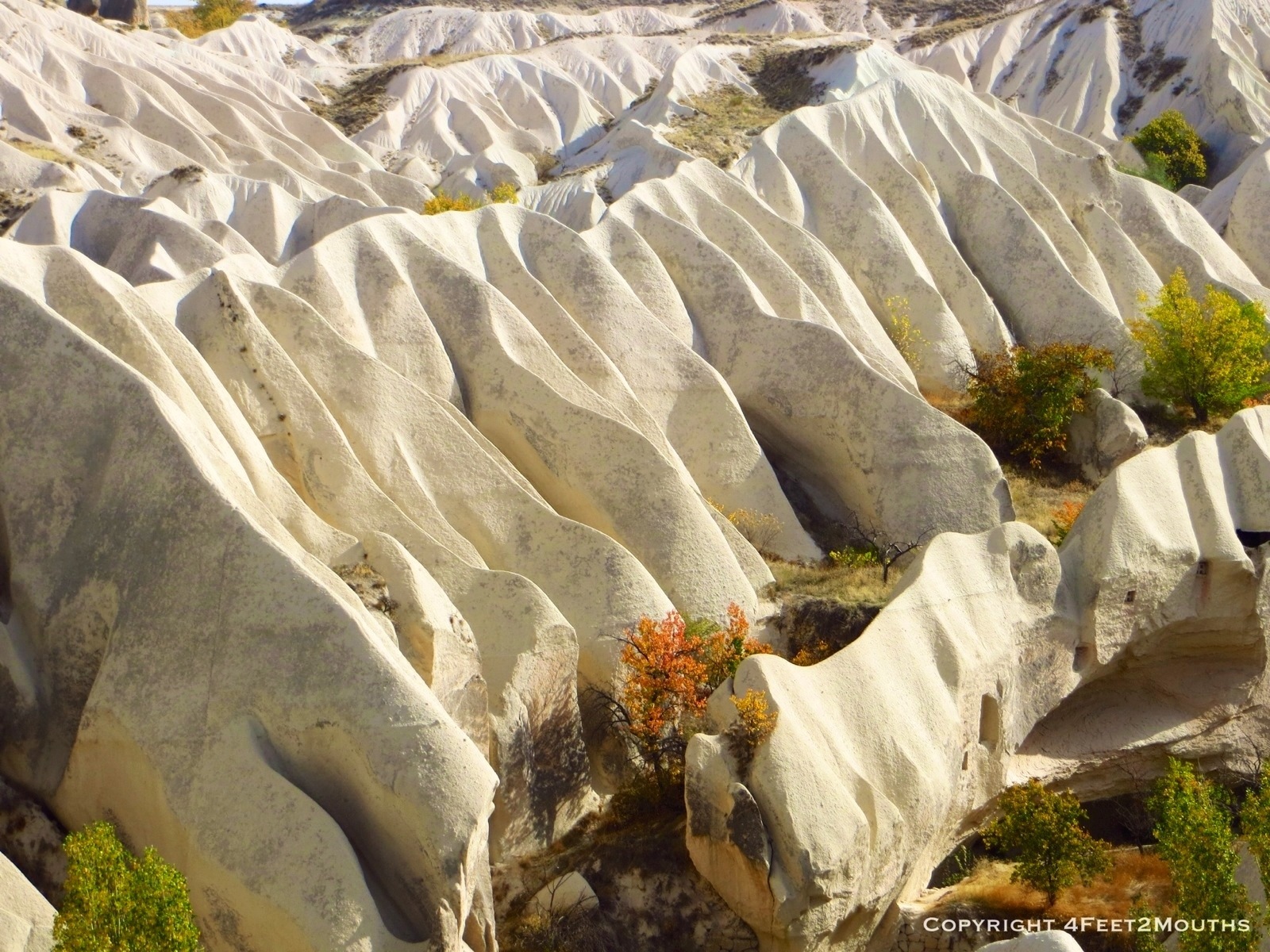
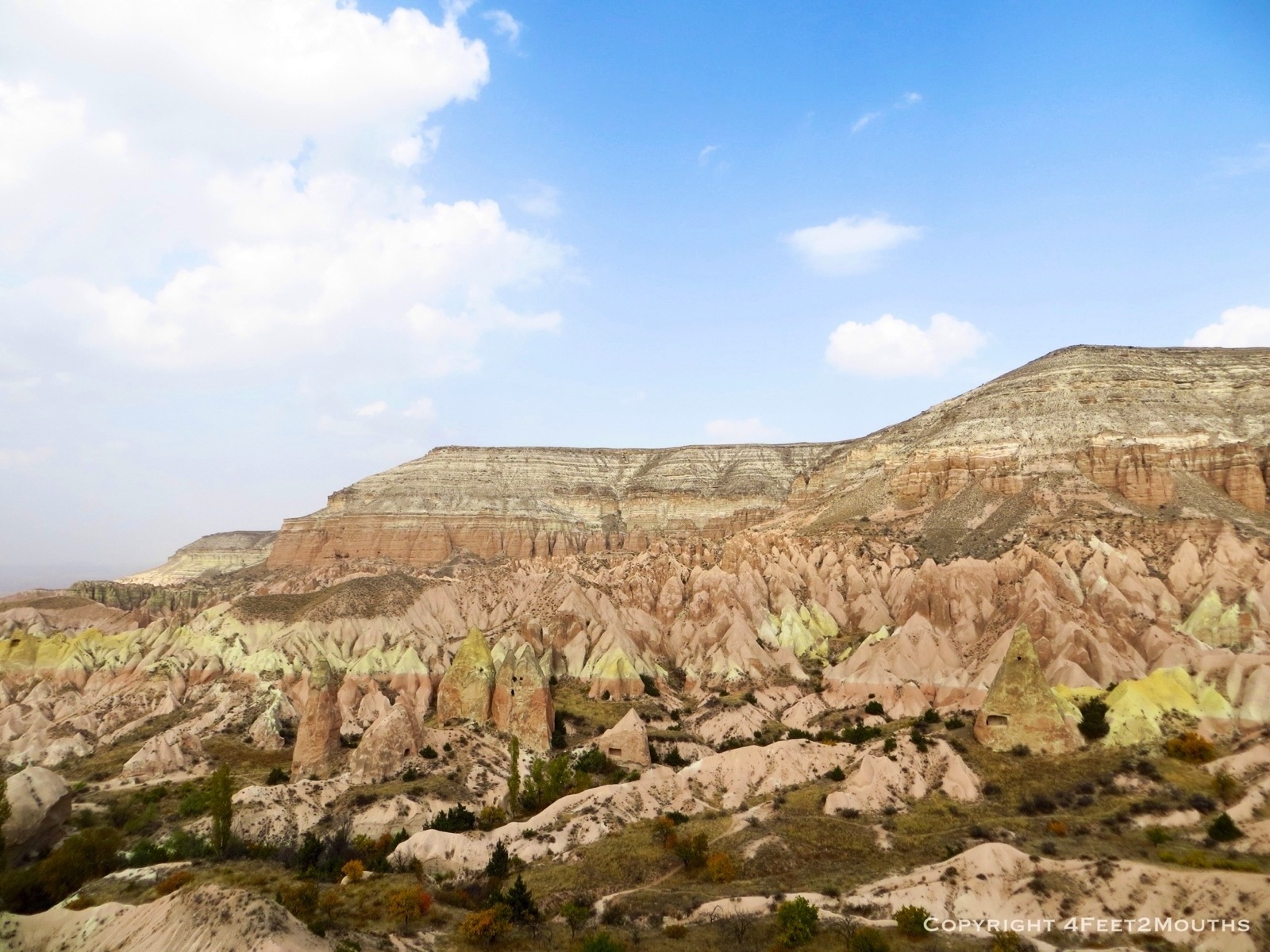
The cliffs in these valleys are amazing.  Huge ridge lines of rock overshadowed our trail.  Looking into the rock face we would see a carved window.  We approached one former habitation to find a beautiful church, full of colorful plastered and painted frescos.  We were mesmerized by another church down the trail; an enormous cathedral, a man-made cavern carved out of the rock.  Columns and beams were cut from the original rock as one continuous formation.  The church was beautiful, welcoming and peaceful.  After a few pictures, we continued our walk through the canyon.  The colors of rock were fantastic with subtle pinks and oranges contrasted with bright whites and drastic wave-like erosion grooves.

Beautiful Cappadocia landscape

Fairy chimneys of Love Valley

Delightful Turkish trail mix

The next day we explored the valleys to the west, the White Valley and Love Valley. We descended from Uçhisar and into the deep canyon.  Within a half hour our perspective was cutoff and hiked deeper into the canyon.  Two hours into our walk and we realized that, although beautiful, we had been hiking the wrong canyon and we were lost.  We refueled with some Turkish delights. We crossed a few ridges and found our way to the Love Valley.  Sixty foot fairy chimneys stood as prominent, and slightly phallic columns in the valley. We continued our hike to the adjacent city of Çavuşin, picked up a local bus and returned to Göreme exhausted.

Lamb döner sandwich

Chicken döner plate

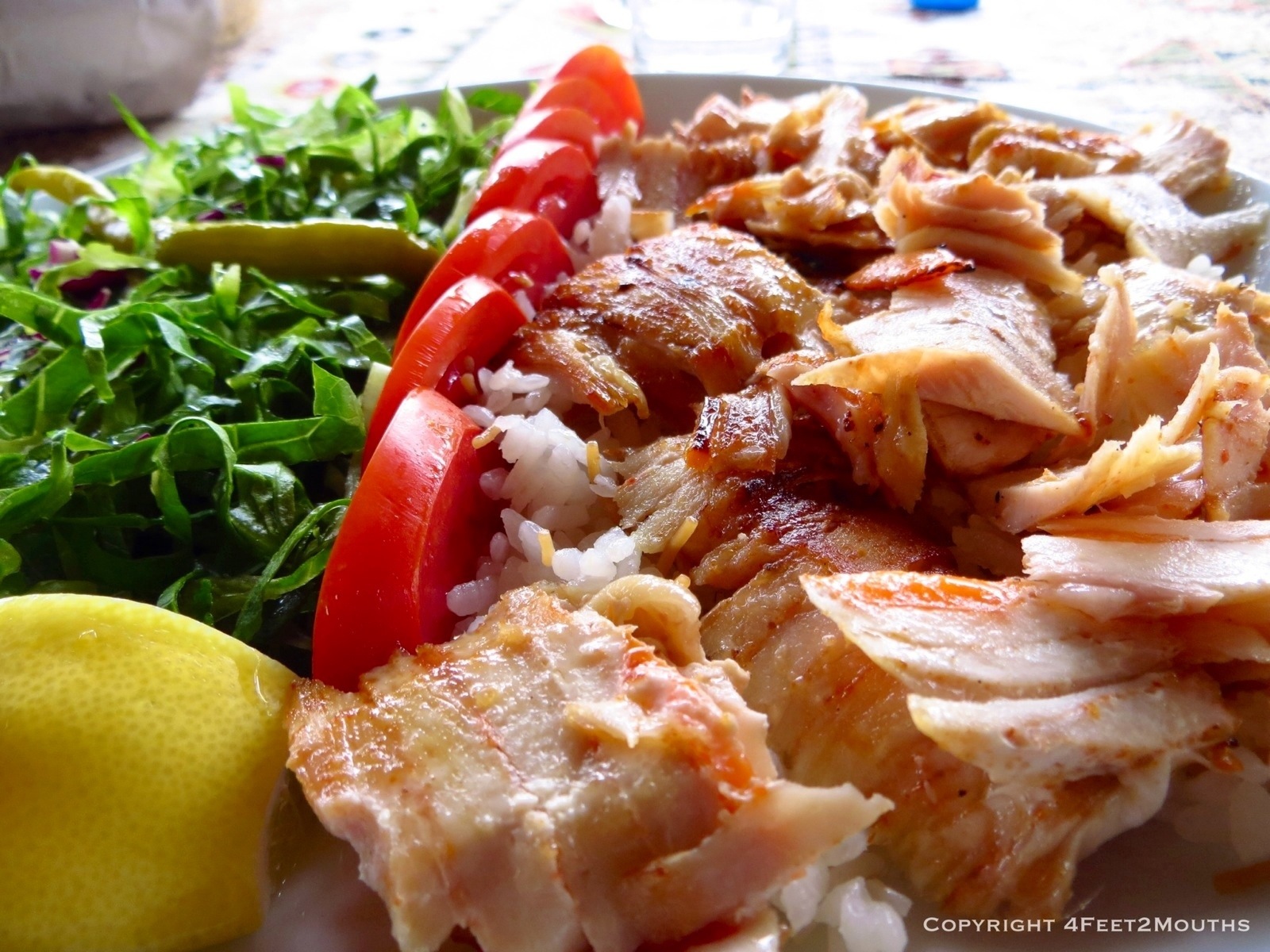
With all this hiking our lunch times have been sporadic and our hunger voracious.  It seems to be a common occurrence for us to push hard to see sights all day and when we finally stop for a break we are eating lunch at 4 o’clock.  The go-to place for a quick and delicious bite are the many döner kebab stands throughout every Turkish city. Chicken or lamb is layered onto a spike and rotated slowly over a flame until the meat becomes juicy and delicious.

Backside of Uçhisar castle

Amazing 800 year old cave home

The cave buildings are everywhere.  One enormous one is Uçhisar castle.  This gigantic rock has been carved with at least ten stories of rooms and chapels.  The look-out point can be accessed around the side of the castle and offers excellent views of the nearby cities and valleys.

Göreme open air museum

The dark church frescoes

The best preserved churches in the area are in the Göreme open air museum.  This collection of eight or so fairy chimneys and cliffs house beautiful chapels decorated exquisitely with colorful frescoes.  One frustrating part of Turkey has been the constant demand for entrance fees from tourists.  I am happy to be a tourist, but frustrated when I am considered a cash-cow.  The last time I felt like this was in Cuzco.  Of course we payed extra to get into the dark church.  Hiding behind one of the columns, I befuddled the security guard and took this photo of the ceiling.  Breaking the law for the blog!

Kaymakli underground city

Deeper into the earth we explored.  A short bus ride from Nevşehir and we were descending a set of stairs into a underground city of Kaymakli.  Eighteen hundred years ago, christianity was just picking up momentum.  In order to protect themselves the people dug out elaborate tunnels, ventilation shafts and locking doors deep into the earth.  We climbed down a stairwell, through a dimly lit hallway and room after room showed a history of food storage, wine making and cooking.  There was even a place for livestock to be kept safe.  The entrance fee covers a lit path the descends one hundred feet (30m) down through six levels of the eleven that exist.  I counted at least six sections of the city that were not lit; I strapped my headlamp on and I climbed into the darkness.  I crawled on my hands and knees and eventually the tiny hallway opened up into a room, another hallway and I found a bigger room.  Sections of rock were carved out to hold a round door used to block the passage way.  Deep and alone and feeling like I was in an Indiana Jones movie, I turned around and returned to Carmen.

Cave buildings in Rose Valley

Cappadocia continued to take our breath away.  The natural formations of rock alone are spectacular.  Combined with colorful balloons, cavernous underground city’s and cave churches makes the region a magical and unbelievable place.  This is one of the best places we have ever been, go here!

Visiting Ancient Rome In Selçuk (by Carmen)

Welcome to Turkey!

Nathan in the lounge at Pension Homeros

The sun was setting over rolling hills.  I had a wine glass in one hand.  The calls to prayer began emanating from minarets throughout the town.  It was a perfect moment at our sweet guesthouse in Selçuk.  This was our first stop in Turkey and we had received a warm welcome of wine on the hotel’s terrace.  I was immediately enchanted with the Turkish decor of thick carpets, a mix of patterned fabrics and comfy pillows.

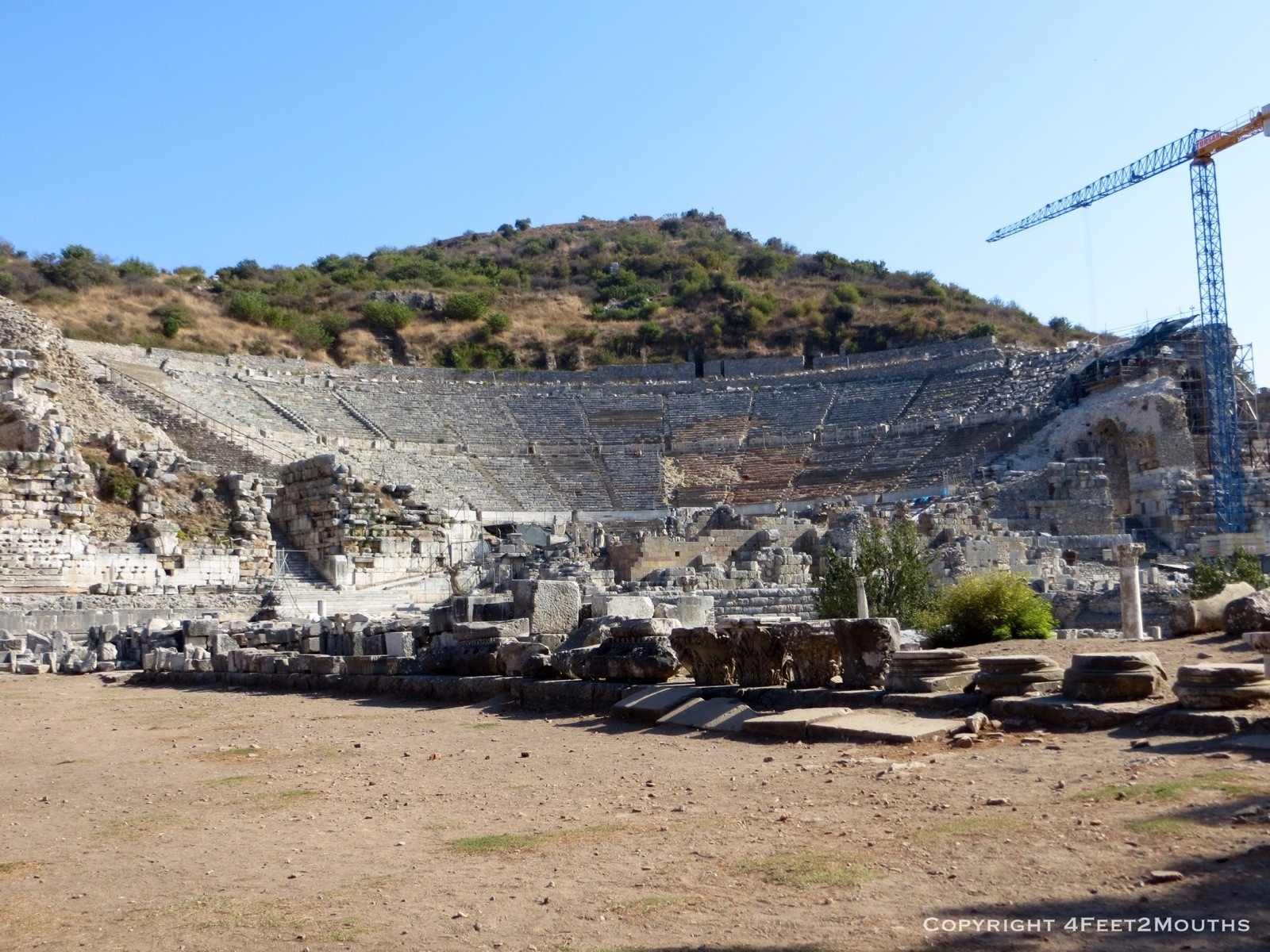
Walking up to the Roman theater at Ephesus

Inside the theater

Selçuk is best known for one magnificent, very special sight – the ruins of the ancient Roman city of Ephesus which peaked in the 2nd century AD.  This archeological site is up there with the likes of Pompeii in terms of intactness.  As we walked in I was immediately blown away by the huge theater built into the hillside.  It could hold an astonishing 25,000 spectators.  This generous capacity hints at the city’s large size, which is estimated at a quarter of a million people.

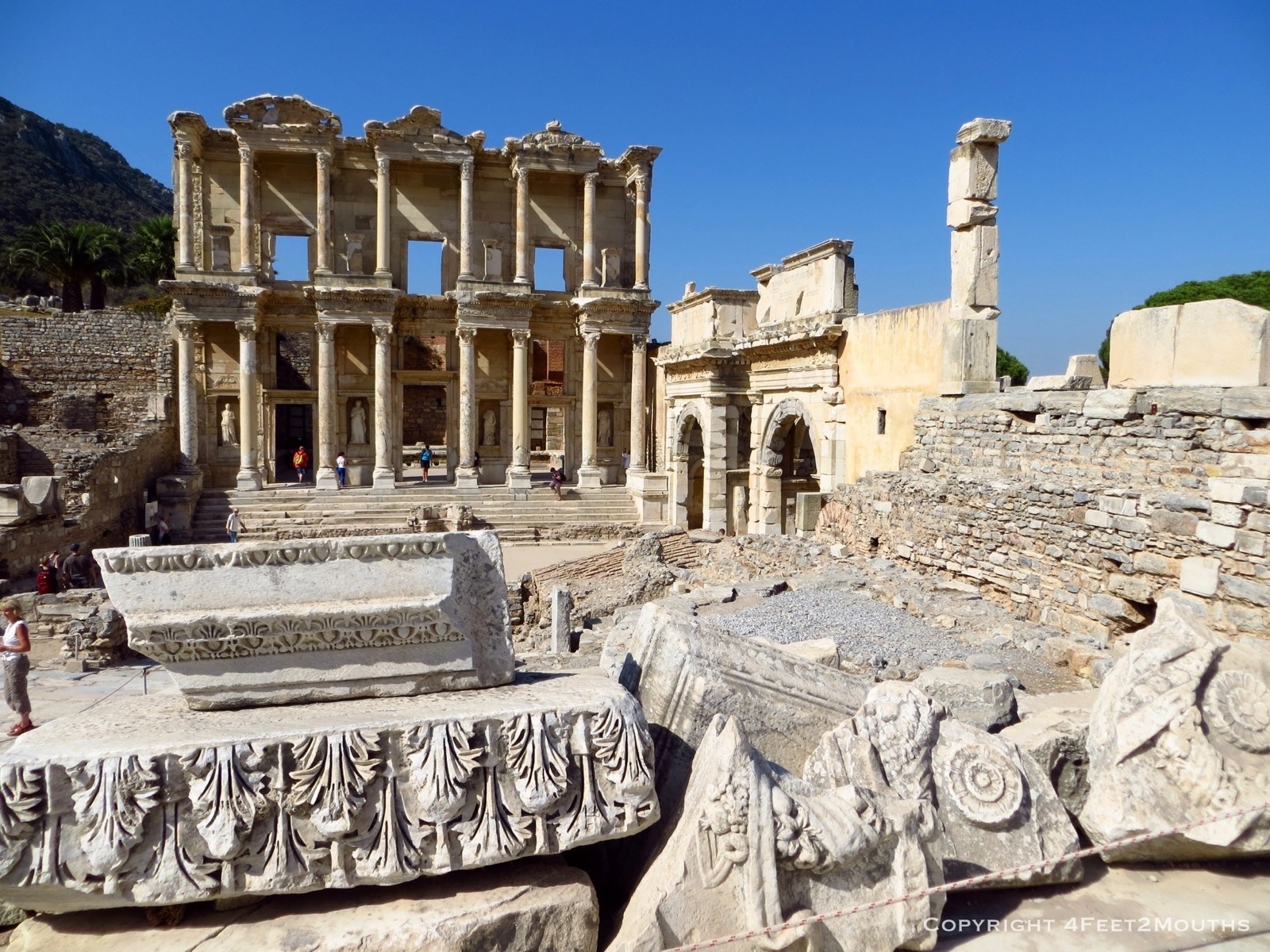
Library of Celsus

One amazing porch

Beautiful carving on the library exterior

The true star of Ephesus lies just beyond the theater.  Up a marble path, past the old agora (market) is the Library of Celsus.  Based on the intricately carved exterior, I can l  only imagine how grand and elegant this three story structure must have been.

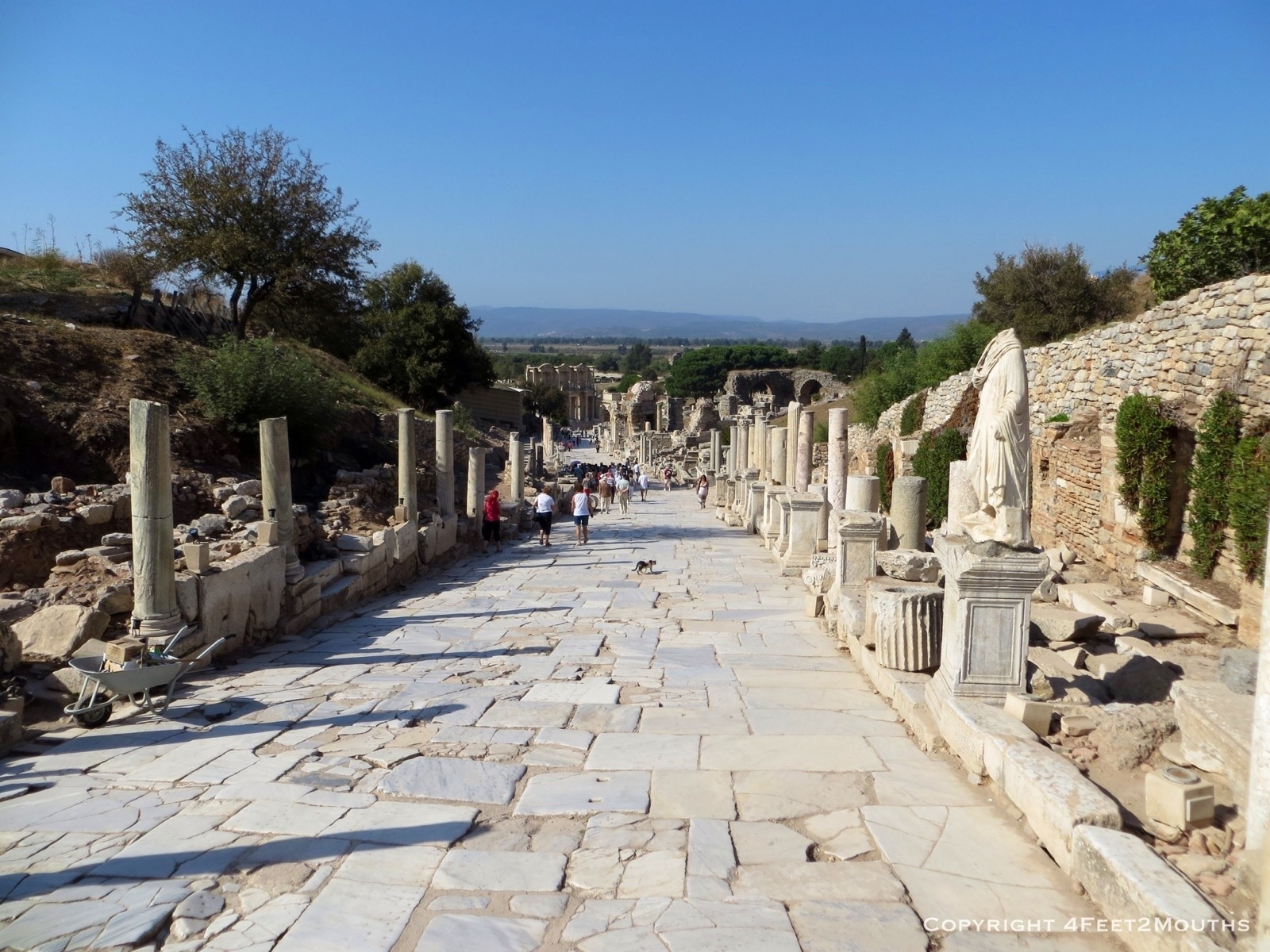
Main Street Ephesus

Yes that would be the communal latrine

From the library the main street leads up hill revealing more and more incredible buildings with each step.  We even found evidence of more mundane spaces, such as the latrine.  Advanced plumbing meant waste was swept away quickly. The Romans understood cleanliness thousands of years ago. It amazes me how far down Europe sank in the dark ages after the fall of Rome, when hygiene was practically nonexistent.

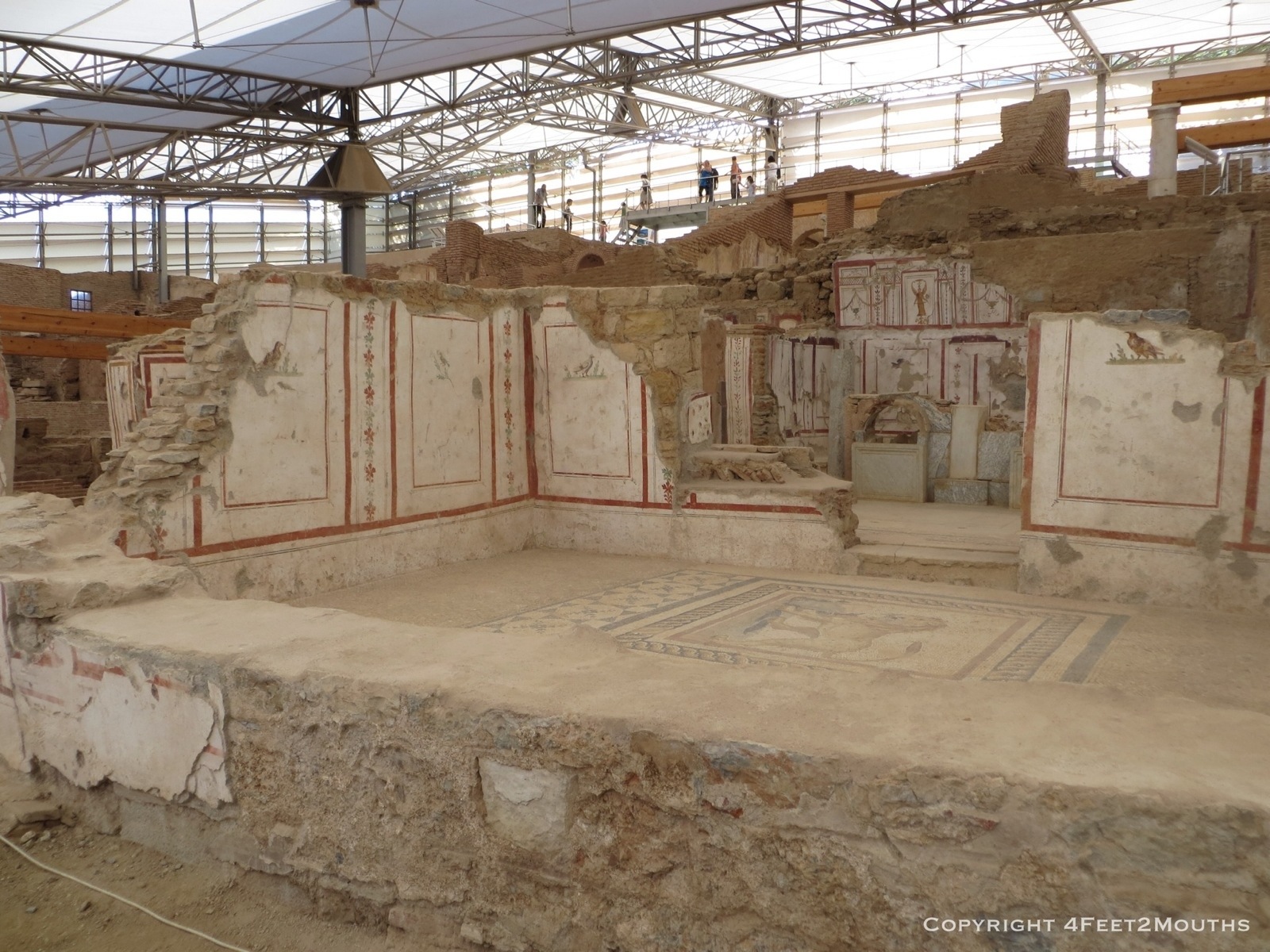
Roman mansions

Intact Roman mosaics

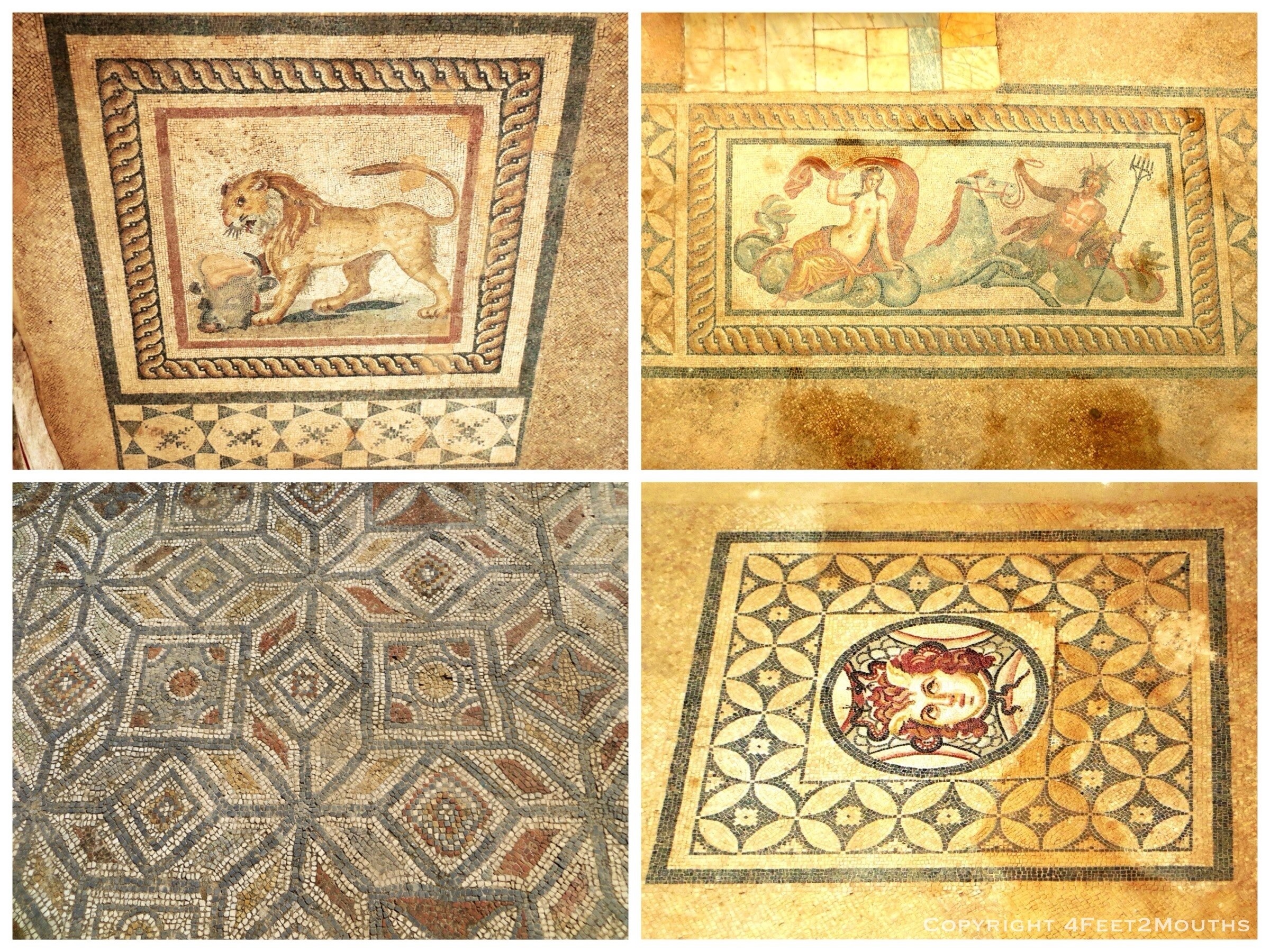
Also on the main street is a collection of lavish homes of the rich.  They were large complexes with every inch of wall space frescoed or covered in marble.  And the mosaics were spectacular, depicting animals or mythical characters such as Medusa or Poseidon.  

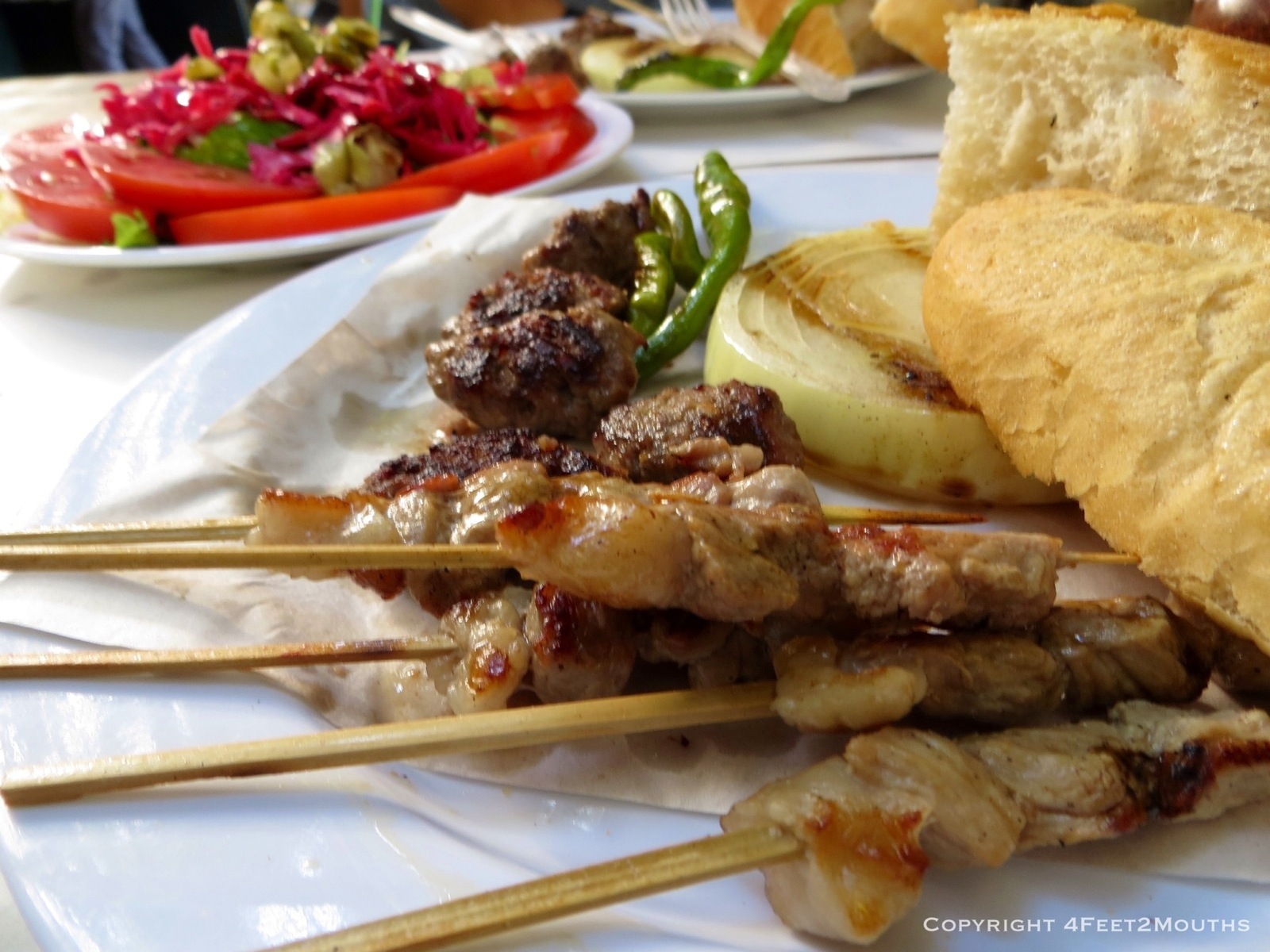
Chicken shish and köfte

Turkish salad mix plate

All that scrambling over ruins got us hungry, so our first stop back in town a plate of chicken shish and juicy köfte (meatballs).  After relaxing at the hotel, we headed out for a simple dinner of Turkish salads.  These included stuffed peppers, sautéed eggplant, tangy thin green veggies, tomatoes with green beans and yogurt. With each new Turkish dish I tried, I was hungry for more.

Delicious cacık

Saturday market in Selçuk

Yogurt is a staple of Turkish cuisine and I love the traditional way to serve it.  Cacık is a thinned yogurt mixed with cucumber, garlic, dill and lemon. Used to dip thick, spongy bread it makes for a delicious snack.  We enjoyed some as we made our way through the lively Saturday market.

The god Artemis

For the rest of the day we headed back to antiquity.  First we visited the one remaining column of the Temple of Artemis.  Once one of the seven wonders of the ancient world, the temple once had 127 columns. Inside, the giant statue of Artemis a symbol of fertility towered over worshipers.  The temple eventually fell into disrepair and the marble harvested for other uses.  But the footprint of the structure is still visible and impressive.

Virgin Mary’s house

We rented a scooter to visit one more historical site.  Virgin Mary’s believed final residence is outside Selçuk in a pretty mountain valley.  We had expected a spiritual place but it turned out to be a rather simple chapel with one wooden, handless statue of Mary.    The government charged to get into the park and it just felt like people went in, lit a quick candle, and left.  Definitely not our favorite visit in Selçuk.

Crescent moon rises over Turkey

Another sunset on the terrace made up for it.  We were welcomed with another glass of wine and the hotel owners even fixed up Nathan’s shoe that had broken that day.  We relaxed, watched the moon rise and got ready for our bus to Cappadocia.

Crossroads Rhodes (by Ναθεν)

Essential theme to life

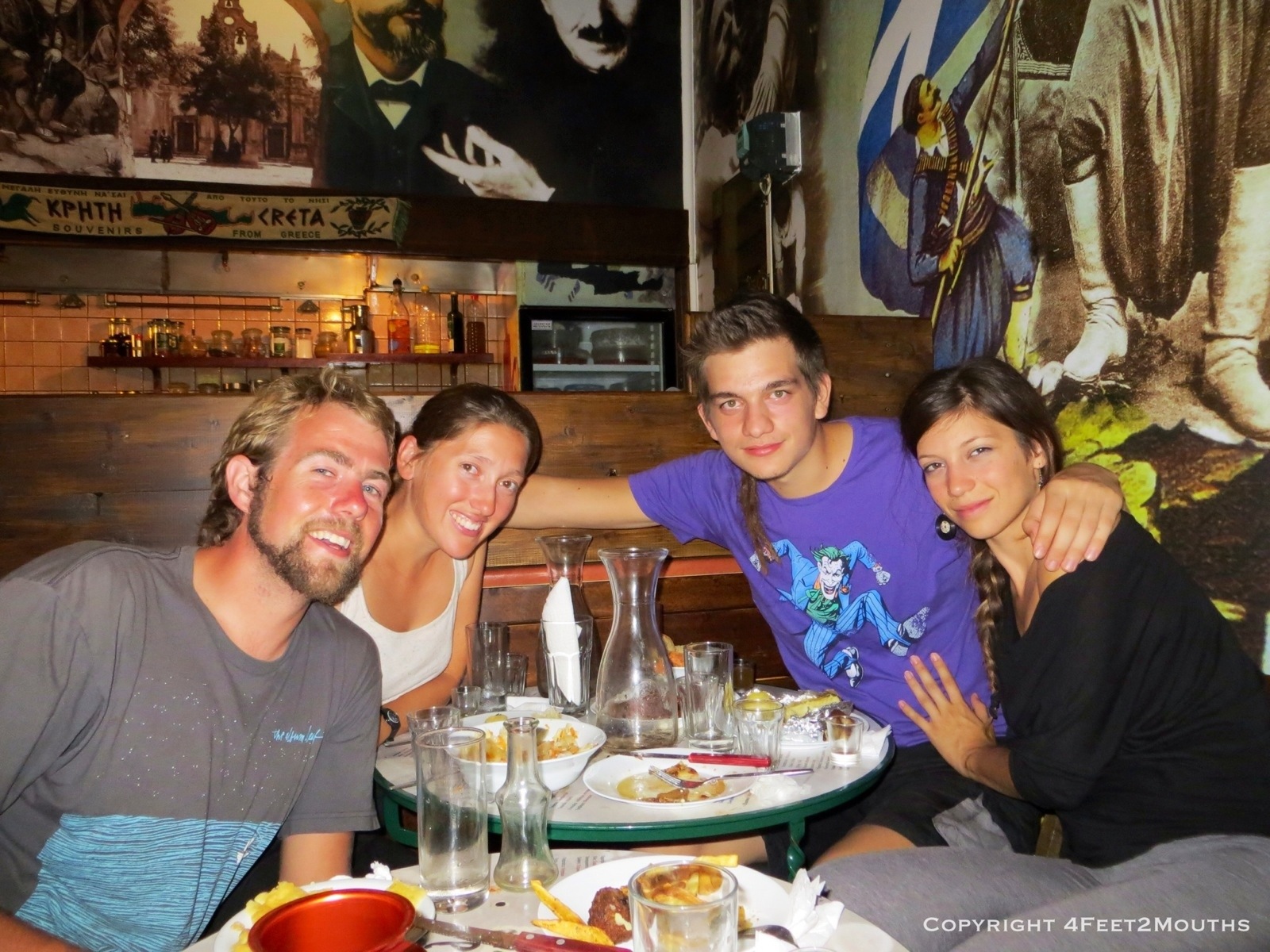
He leaned over the table for what felt like the thirtieth time that night to fill my wine glass; he looks at me straight in the eye and says “Se kalo.” Then he downs his entire glass of wine. Then I choose someone, “Se kalo” and again my glass is empty. We are at a Cretan tavern in Rhodes. Our table is a battleground of Greek and Cretan specialties: dakas, feta, fritters and fries have been landing endlessly on our table all night. The jug of wine always seems full and the traditional music from Crete can be subtly heard over the constant clinking of glasses and loud conversation in the room. This was the conclusion to our time in Rhodes, a celebration of Greece and new friends. We were at crossroads of Europe and Asia and tomorrow we would be going to Turkey. At 2am we stagger walk with dignity through old town to grab a few hours rest.

Our new friends in Rhodes

Meet my friend Mike, who is actually from Crete, and his lovely girlfriend Alexandra. We met them in Rhodes and our three days have been filled with nonstop adventures and good food. They are university students here in Rhodes, studying to become teachers. I am always impressed by the seemingly instant friendship that is possible with people. There is a little bit of circumstance, some willingness and a whole bunch of letting down guards, but we quickly became friends.

Local eatery with stewed meats, veggies and village salad

I should have recognized how the weekend was going to turn out. In our first hours of arriving to Rhodes, Mike pulled out a 5L jug of clear liquid from the back room. “Want to try Cretan Tsikoudi.” Mike’s dad distills his own moonshine in Crete and sends it with his son to keep him company while at school. It only takes a few minutes before we are all talking about hunger. They take us to lunch at this local restaurant around the corner. The waiter ushers us to the glass case in the back; we are shown an array of stews and specialties of the day. Everything looked and smelled fantastic. It only takes a few minutes before steaming plates occupy every free space on the table.

Cosmopolitan buildings for the Knights Hospitaller from the crusades

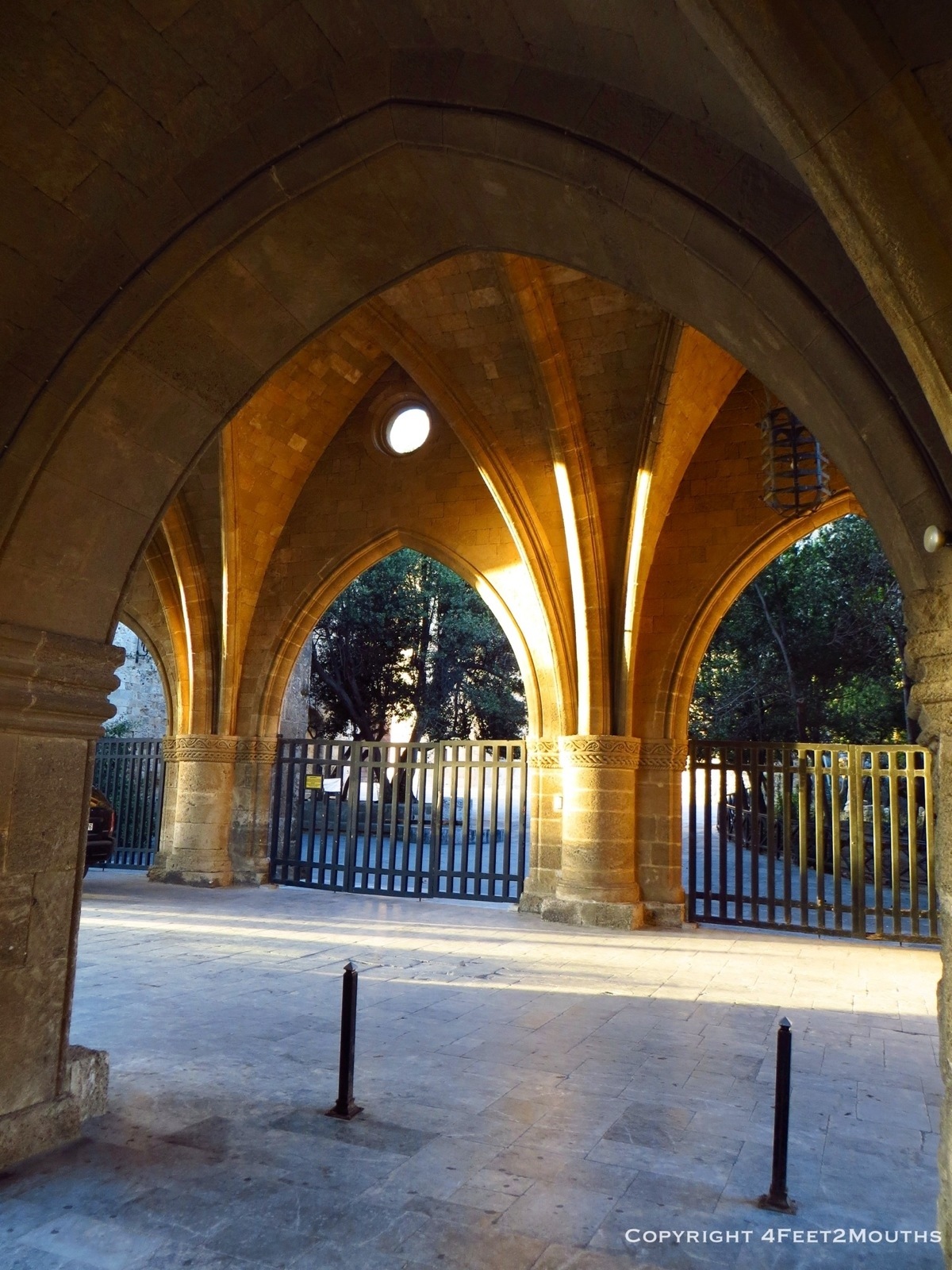
Sunlit arches

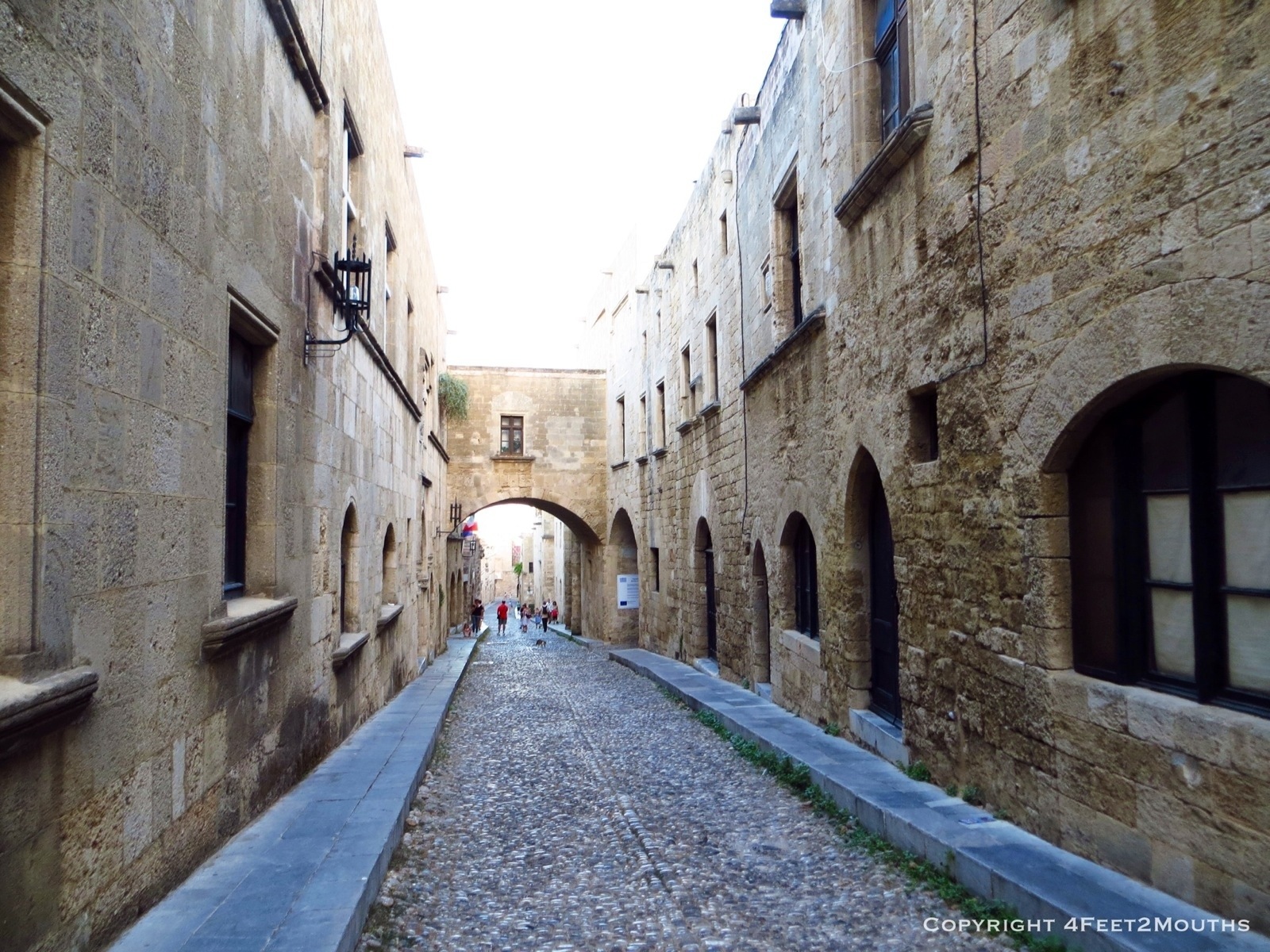
There is substantial history in Rhodes. It has been inhabited for millennia, but the most prominent occupation was during the first crusades. The Knights of St. John established a fortress in the fight for Christianity. The most impressive part of old town is the street that the knights lived, the hospitalier. Each nation had their own building for meetings, organization, dining and lodging. Walking along the cobblestones we saw the Spanish, English and German headquarters for the crusades, each over a thousand years old.

The Colossus of Rhodes (Credit: WikiCommons)

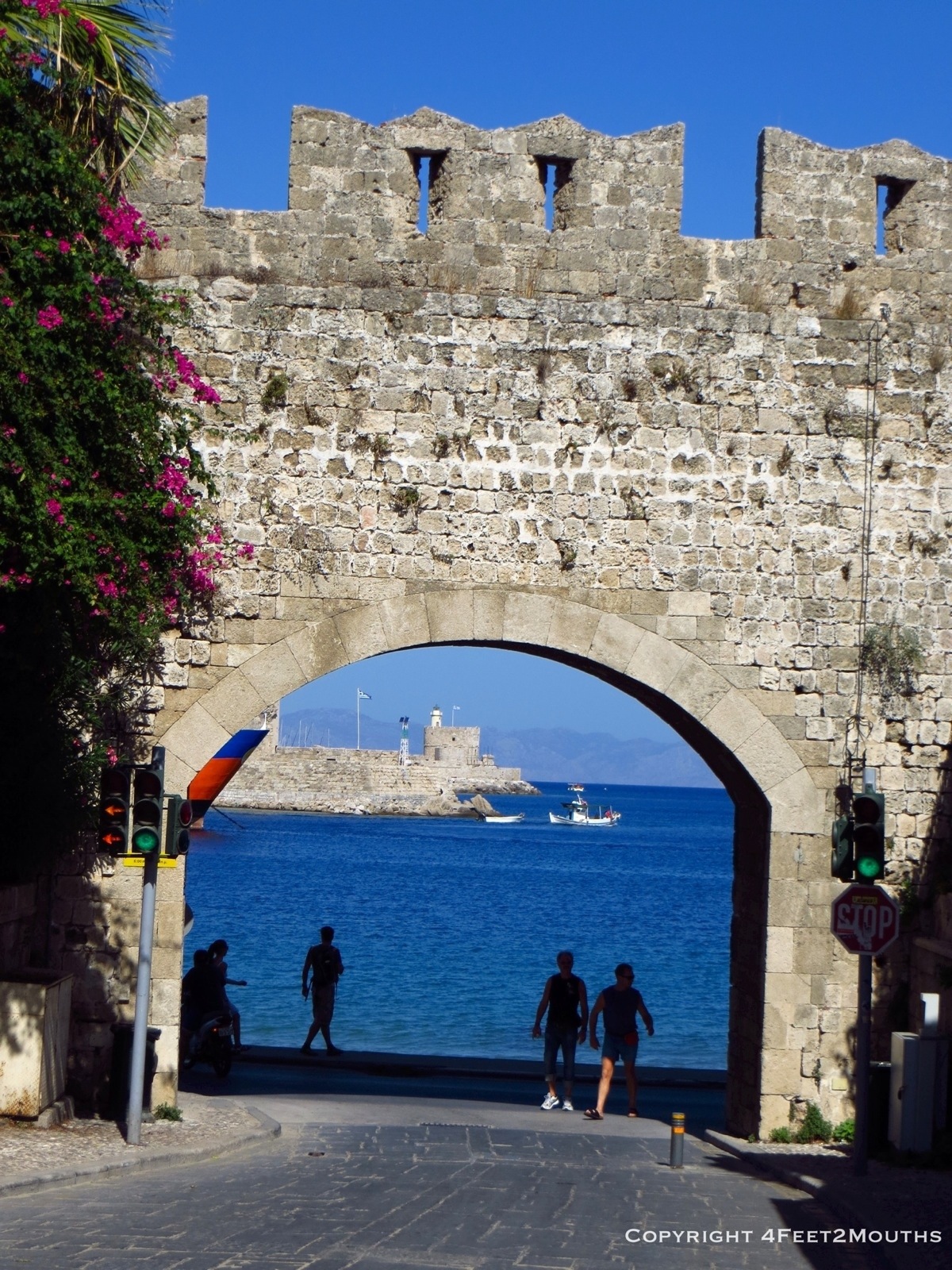
For centuries Rhodes was a stronghold. After defending themselves against Cyprus, they built an enormous statue, The Colossus of Rhodes, to symbolize their victory. This 107ft (32m) wonder of the ancient world no longer exists, but the entrance to the harbor where he once stood is still there.

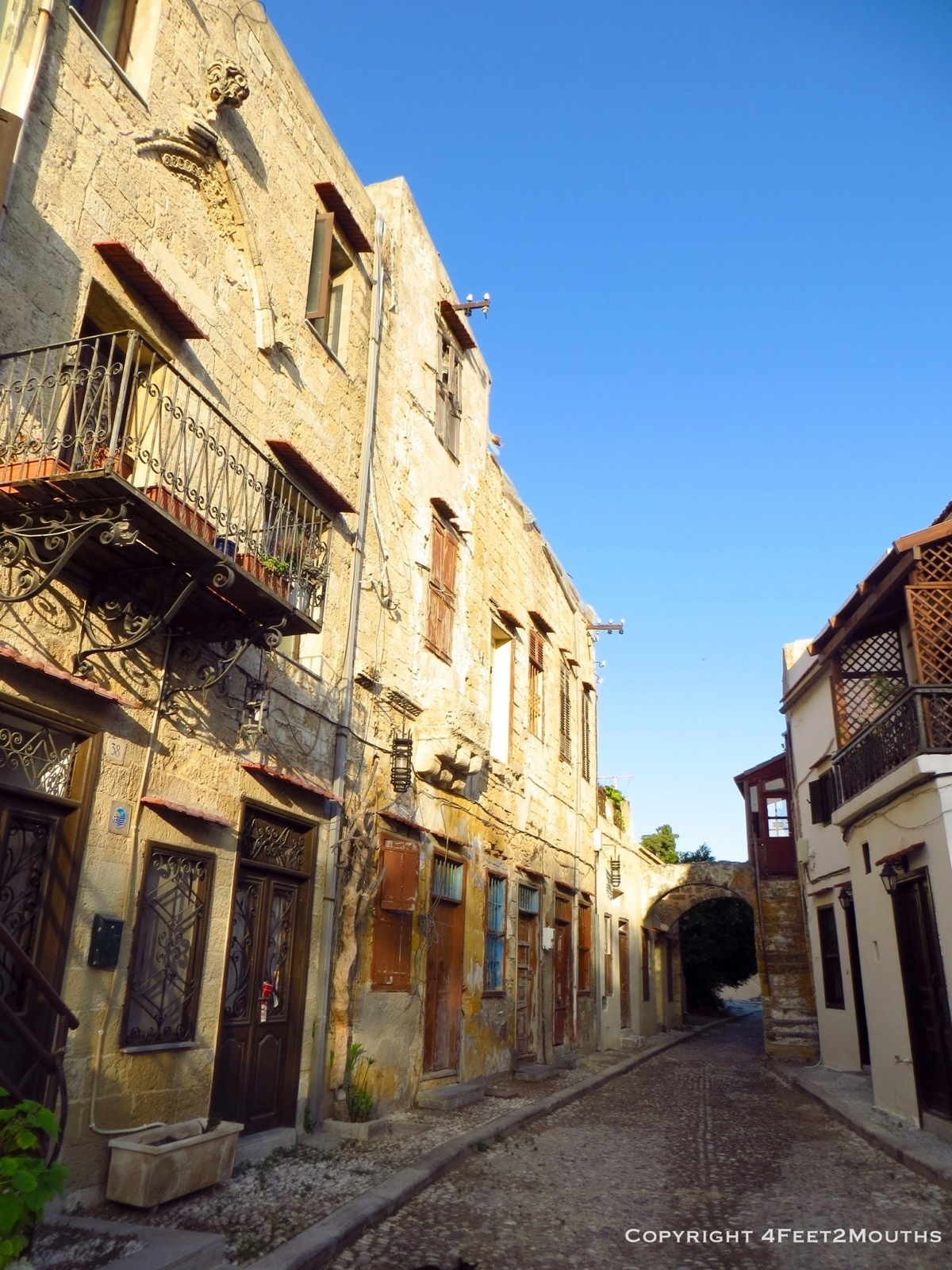
Old town Rhodes typical street

Walking through old town in Rhodes is wonderful. The stone buildings and cobblestones reflect a time hundreds of years ago, but most everything is still in use. Carmen and I walked ancient alleyways and underneath buttresses bracing buildings. It is easy to get lost meandering around Rhodes, but that is the fun of exploring these cities. Eventually we would run into the enormous wall that surrounds the city. Beyond it is a moat that is great for walks and runs.

Medieval town wall of the Knights Hospitaller

Our time in Rhodes was filled with new friendship and the history of an old city. We soaked up the atmosphere, snorkeled one last time in the Mediterranean and wondered through the stone streets. Rhodes is a crossroads between the old and new, but also between Greece and Turkey. We were excited to head east, to a place we’ve never been before. We boarded onto our last ferry boat and said goodbye to Greece.

Swimming In A Volcano In Santorini (by Ναθεν)

… and then we found ourselves on one of the most beautiful places on the PLANET.

Firostefani and ocean

Golden Fira

Santorini deserves all the hype, all the magazine cover shots, and all the glory because it truly is a spectacular place. We arrived on a commuter ferry that chugged along the Mediterranean from Naxos. The arrival to this island was different than the others, everyone on the boat was anxious and giddy in anticipation. When the boat wrapped around the crescent tip of the island, people rushed to take photos. If there is such thing as hunger for sights, then there was definite drooling and jaw dropping as the curved white buildings that frosted chocolate colored cliffs came into focus.

Oia cave and cliffside homes

Carmen and I also became bleary eyed at the sights. Unfortunately for us we were already in island mode. We slowly exited the boat, drifted over to the tourist office and chatted a bit for a map. We went back outside to board the public bus that climbs the steep switchbacks and we realize we missed it. And it was the last bus of the day. A moment of panic when understanding hits us that the closest city of Fira is too far to walk and taxis are expensive because we are the last tourists on the port. We work out a deal with a hostel owner for a one night’s stay and a free shuttle to Perissa. Not exactly our plan, in fact, it is on the opposite side of the island from where we wanted, but we load into the van and set off for a spontaneous adventure.

Sunset Santorini

As expected, Perissa wasn’t our style. The resort-like cafes and lawn chairs in the black sand were beautiful, but we came to Santorini to see the magic of a civilization that lives and dies along the volcano.

Fresco of 3500 year old building

Three story building from 1500BC

The Minoans inhabited Thira (another name for Santorini) for thousands of years. Their civilization was immensely successful with tens of thousands of inhabitants throughout the Greek islands. Unfortunately all these great islands existed because of a dark past. This section of the Mediterranean is a boundary zone of the European and Asian tectonic plates. A volcano erupted around 1,600BC that wiped out their civilization. This was not just any eruption, it is the largest eruption ever recorded and documented by humans. The sound was so enormous that Chinese records describe the sound of it twice as the wave reached them from different directions around the world. Enormous amounts of material blew into the sky, the whole island grew a thousand feet taller and tsunamis expanded the havoc around the world.

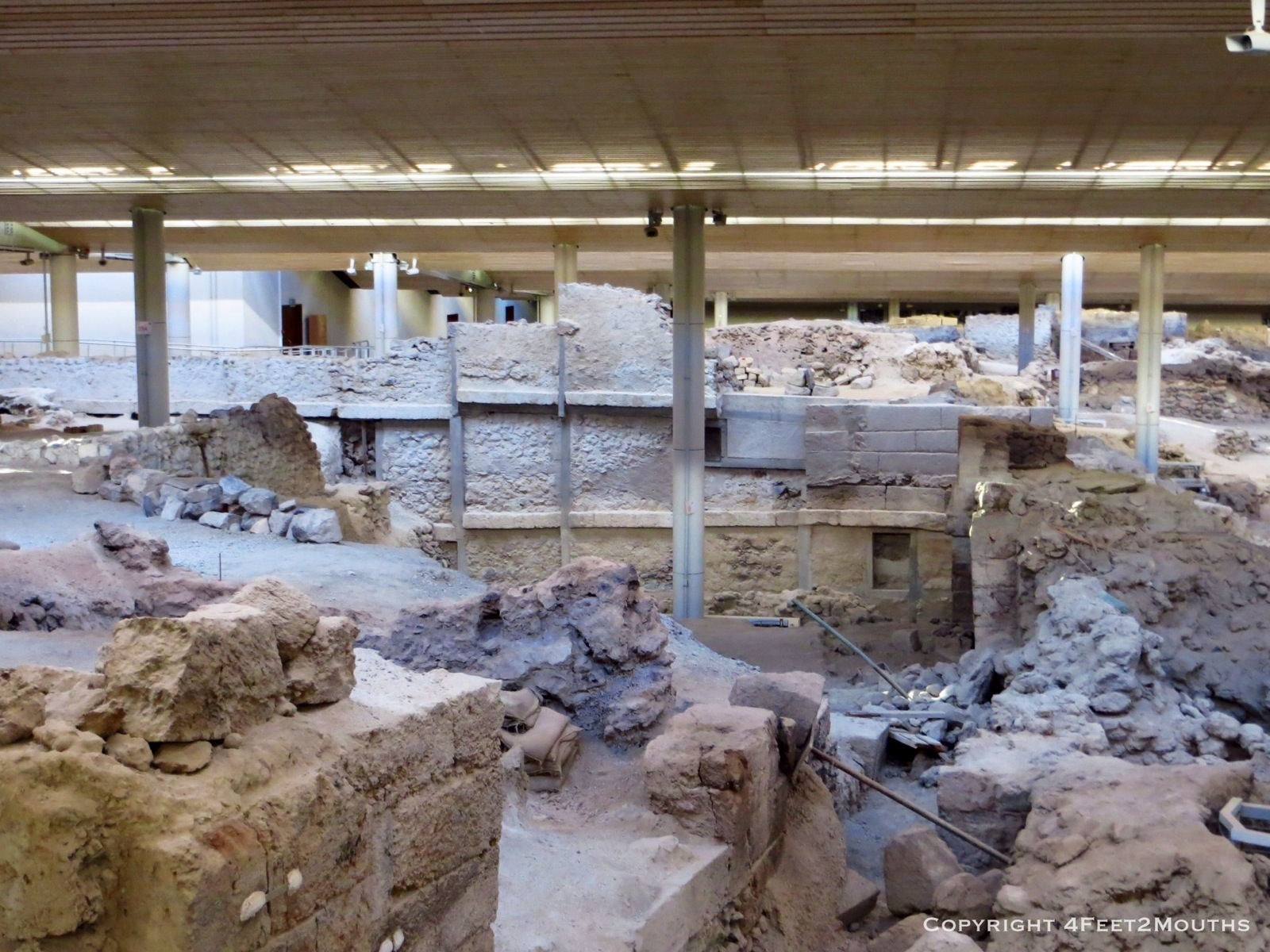
Akrotiri excavations

Evidence of ash and volcanic eruptions

Akrotiri was an ancient city on Thira. When the volcano exploded, the city was covered in thirty feet of pumice and ash. This rare circumstance allowed the what was left of the buildings, that survived the earthquakes before the eruption, to be remarkably preserved for 3,500 years. The city was discovered in the 1960’s and slowly they uncovered buildings and intertwining streets rich with painted frescoes, advanced multi-story buildings and sewer systems. This was an advanced civilization, and there are no records to their existence beyond this enormous volcanic event.

Satellite view of Santorini Volcano (Photo credit: WikiCommons)

Walking on the center of the volcano

The volcano around Santorini has shaped and reshaped the islands for millions of years. Each explosion destroyed whole mountains and continued to build up the layers of Islands that remained. We took a boat to the center of the volcano; we walked on the cooling magma center. Standing on the foreign landscape is surreal, perfectly silent and covered in jagged dark brown rocks. There are small craters on this island showing minor eruptions, but it is the whole group of islands, the caldera that is many miles wide that shows the enormity and unrelenting unimaginable power of the earth. The cliffs communicate this history with portions of black crumbly stone, or jagged red boulders or loose pock-marked ash and pumice. And like all beautiful, but dangerous places, the people eventually forgot the catastrophic event and they reinhabited the island.

Rustic door

Chapels of Santorini

Fira is the main city on the island. It is built on the cliffs in the middle of the crescent-shape and the city is packed with thousands of cute whitewashed buildings that curve and flow with the contours of the mountain. There is a beauty in the haphazard construction of all these buildings right on top of one another. Stairways twist and weave in between the buildings, paths start and stop almost randomly, and buildings occupy every little bit of space. I may even make the jump to say that the buildings on the steep slope remind me of a favela. Trash free, plastered and painted with sewers; Rio could make its densest neighborhoods into high-end real estate.

Locally brewed beer

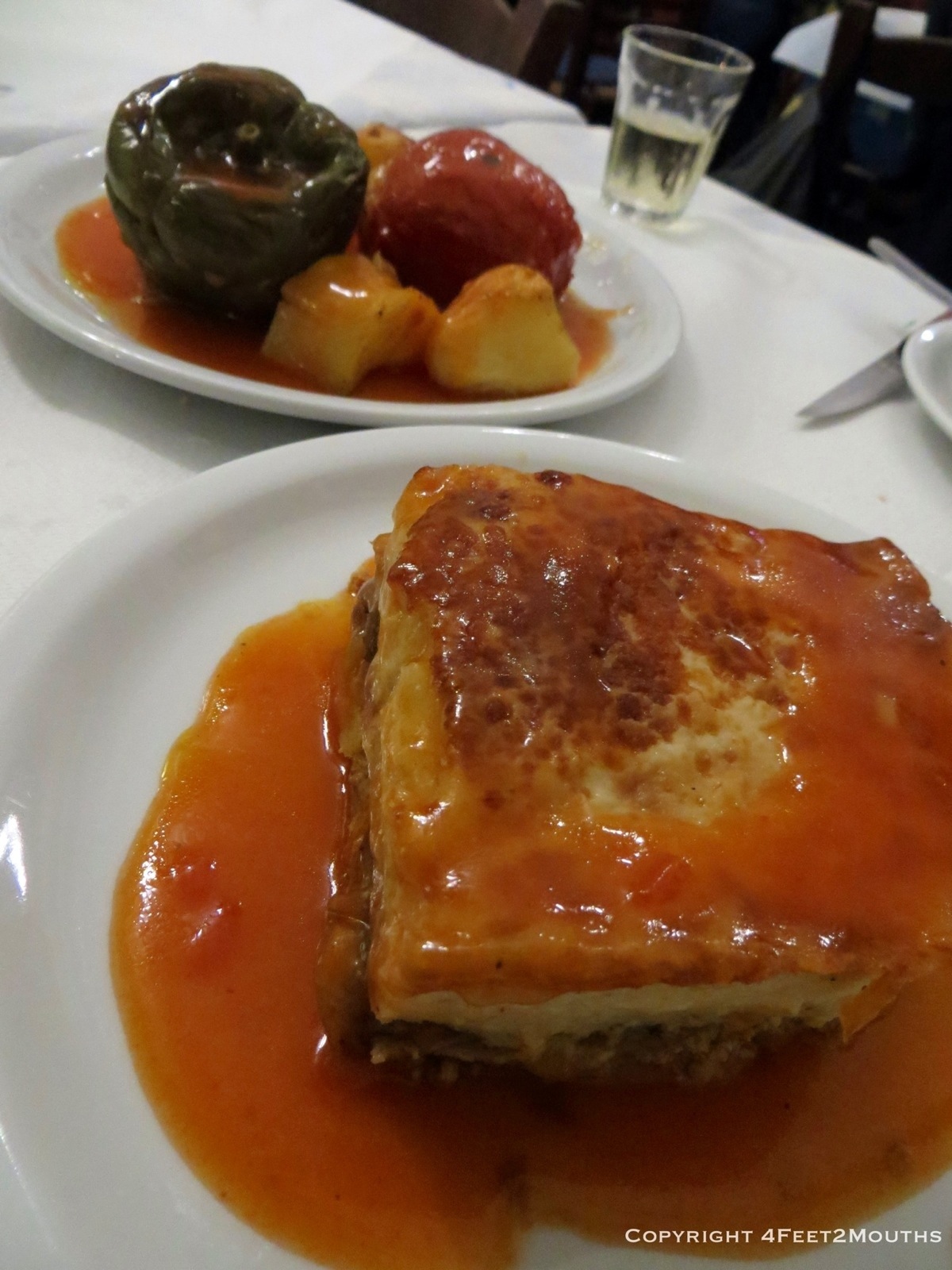
Moussaka from Nikolas Taverna in Fira

Lamb kleftiko

Reward for hiking from sea to cliffside village

We drank locally brewed beer on a picturesque patio. There was moussaka, and kleftiko dinners paired with wine and of course ice cream rewards for those climbs up the steep path from water to city.

Firostefani in the morning light

Carmen and shadow

An essential activity for any visitor to Santorini is to walk the ridge line of the island. The end points of the walk are Oia and Fira and it is about 12km (8mi). We walked it one morning starting at Fira at sunrise with a destination of Oia for lunch. The path works its way through Fira, into the picturesque Firastefani. Outside of town the dirt and cobblestone path follows the ridge and cliff’s edge allowing for endless views around the island. Occasionally a small lonely chapel appears on the path, a remnant of a gracious sailor who braved a storm and lived to fish another day. The sun beats hot on our backs and slowly the buildings of Oia come into view.

Oia, the most beautiful city on the most beautiful island

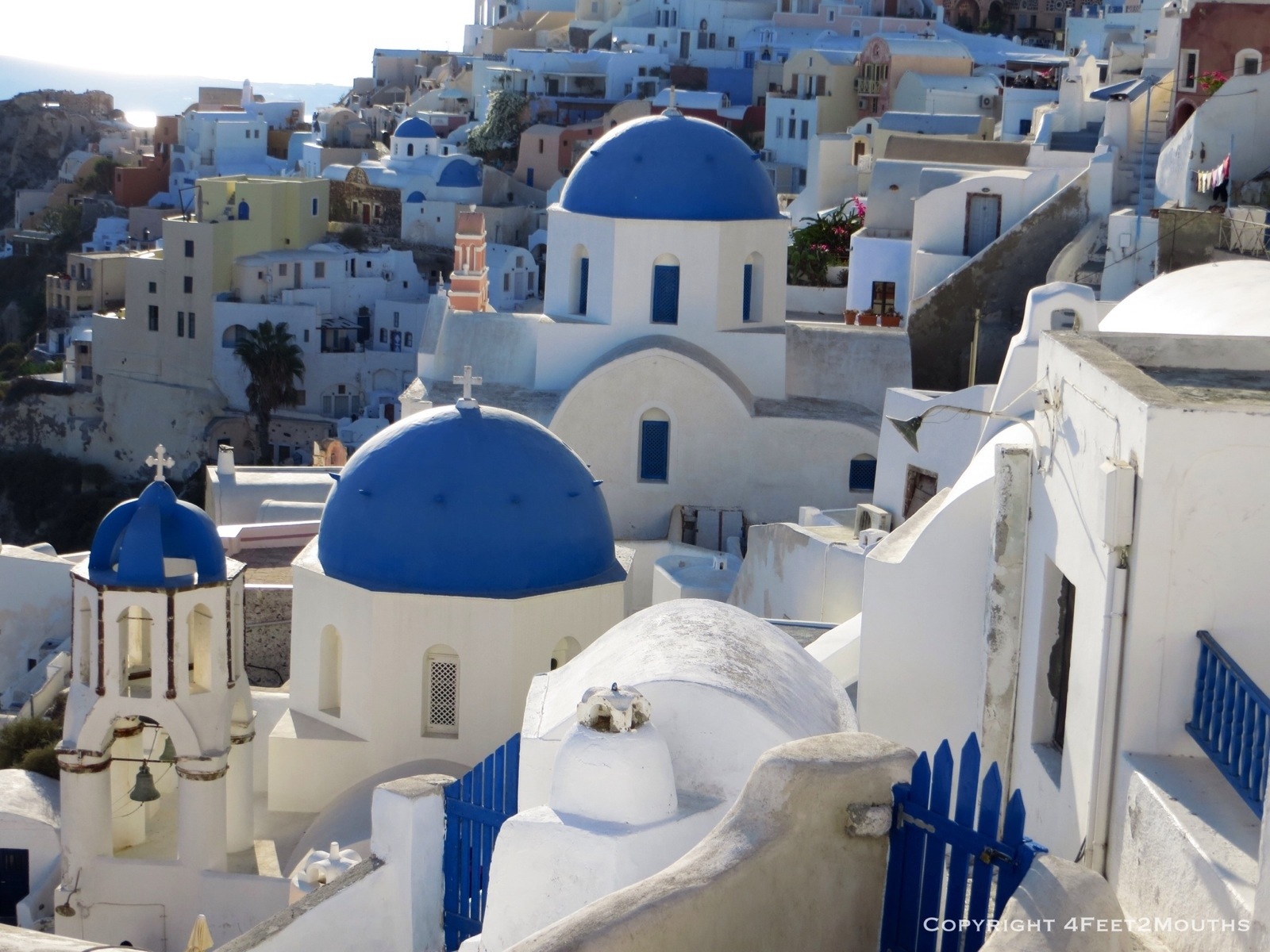
Blue domed churches and contours of Oia

Walking into Oia, is strange and exhilarating, it is hard to believe that a town can be so gorgeous. Every building has a dome or a curved arch or rounded balcony; straight lines are the minority which creates a natural and harmonious addition to the glowing Mediterranean sea below. Churches with their bright blue domes scatter the cityscape and every surface that is not a walkway is a patio for sunbathing.

Our seafood cantina lunch spot

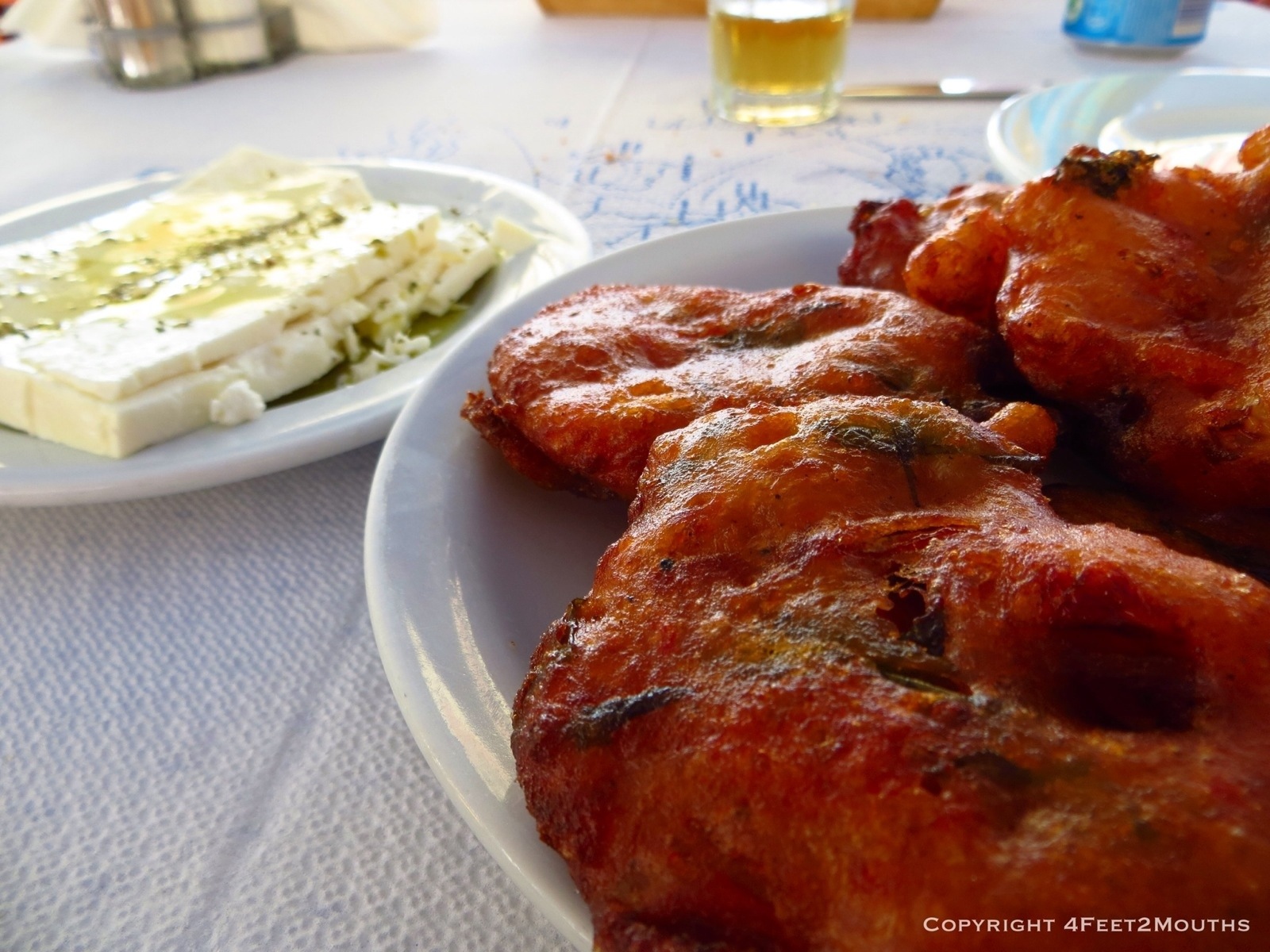
Tomatokeftedes and sliced feta lunch

Swimming hole below Oia

We decided to walk down the several hundred stairs to swim and grab lunch in the tiny marina. Katina served us delicious tomato fritters, a hunk of feta cheese and a grilled whole fish. We walked left from the harbor to a tiny beach overlooking a small island. The water was cool, but not cold, turquoise and crystal clear. There is a thrilling concrete platform on the side of the island that made it possible to cliff jump into this beautiful water. Swimming in a volcano has never been so much fun.

My gracious jump into the Mediterranean

Sunset Santorini x4

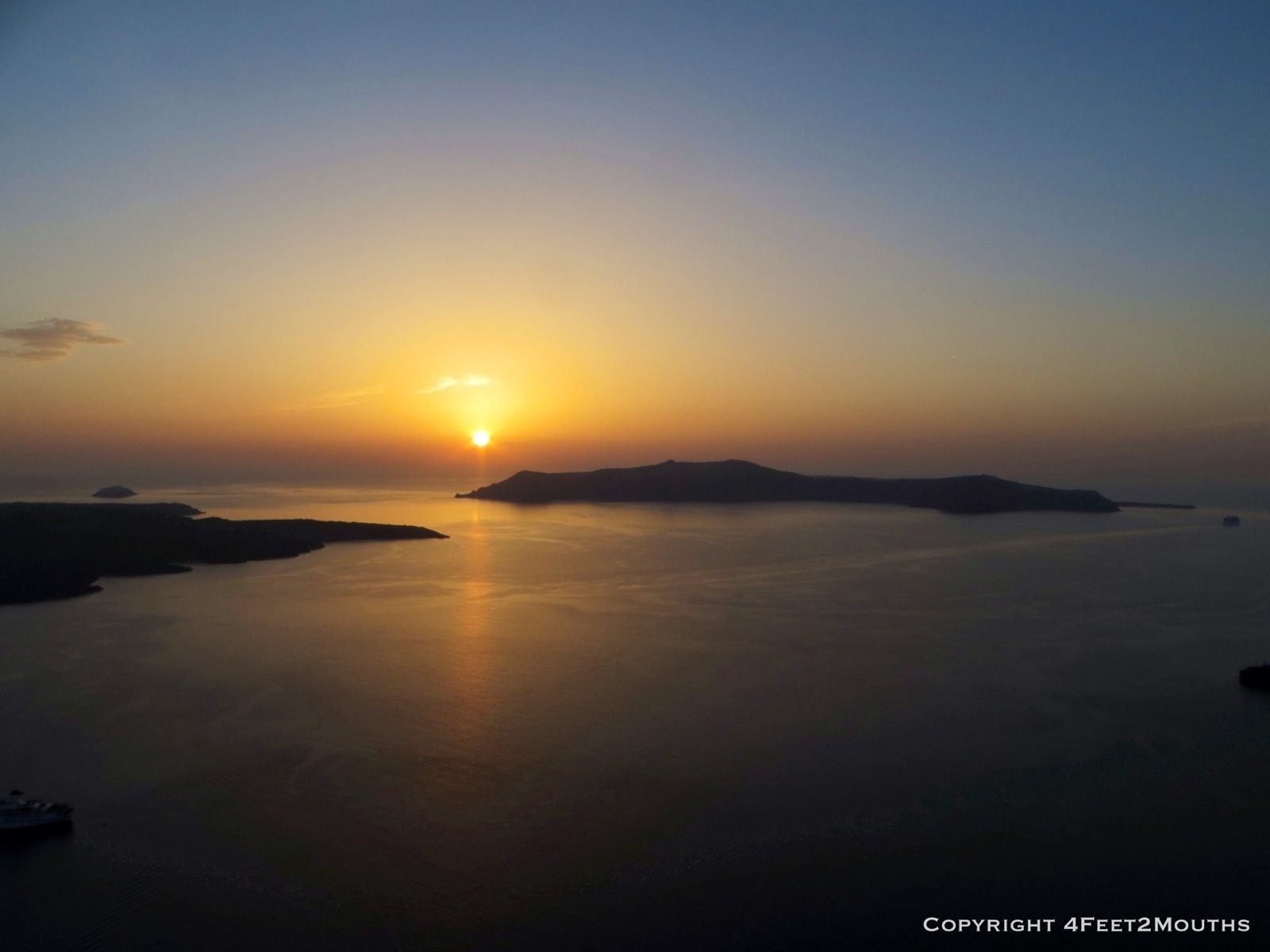
The challenge of any Santorini tourist is where to watch the sunset. I love sunrises and sunsets (as you have seen), but the tourists on Santorini push and shove to get the perfect view of the sun hitting the water. A sunset in Fira showers the city in golden light, in Oia it is possible to stand on the ridge of a peninsula with all periphery consumed by sun, ocean and other camera-wielding tourists. My favorite was Firastefani, a tranquil setting with a more local feel. And the sunsets on Santorini are amazing and worth it. Perched high on a cliff we could see a world vast with beautiful ocean and a scattering of islands. It is hard to imagine a more beautiful place.

Oia silhouette

Sunset from Firastefani

Beaches, Whitewash and Scooters on Syros & Naxos (by Καρμεν)

Bougainvillea on the Greek Island of Syros

View of Syros from the ferry

“Wow. This is perfect”

These were my thoughts as I ate my first meal on the Greek island of Syros. Nathan and I were sitting at a table squeezed onto a lovely, narrow lane. I had just selected some dishes from To Kastri, a restaurant run by a local women’s cooperative. The food was homey and comforting – fish baked with potatoes, broccoli, tzaziki, cabbage rolls stuffed with rice. A wonderful welcome to our first of four islands.

Lunch at To Kastri

After eating, our next thought was beach. We caught a bus to a small cove on the other side of the island and dug our toes into the sand. The water was crystal clear and the beach largely deserted because it was off season. This meant that the restaurants in town were also empty so for dinner we bought a gyro and called it an early night. From our room we could hear the chants of a small, civil protest against the German chancellor’s visit in the distance.

Nathan at a window in Ano Syros

Quaint buildings of Syros

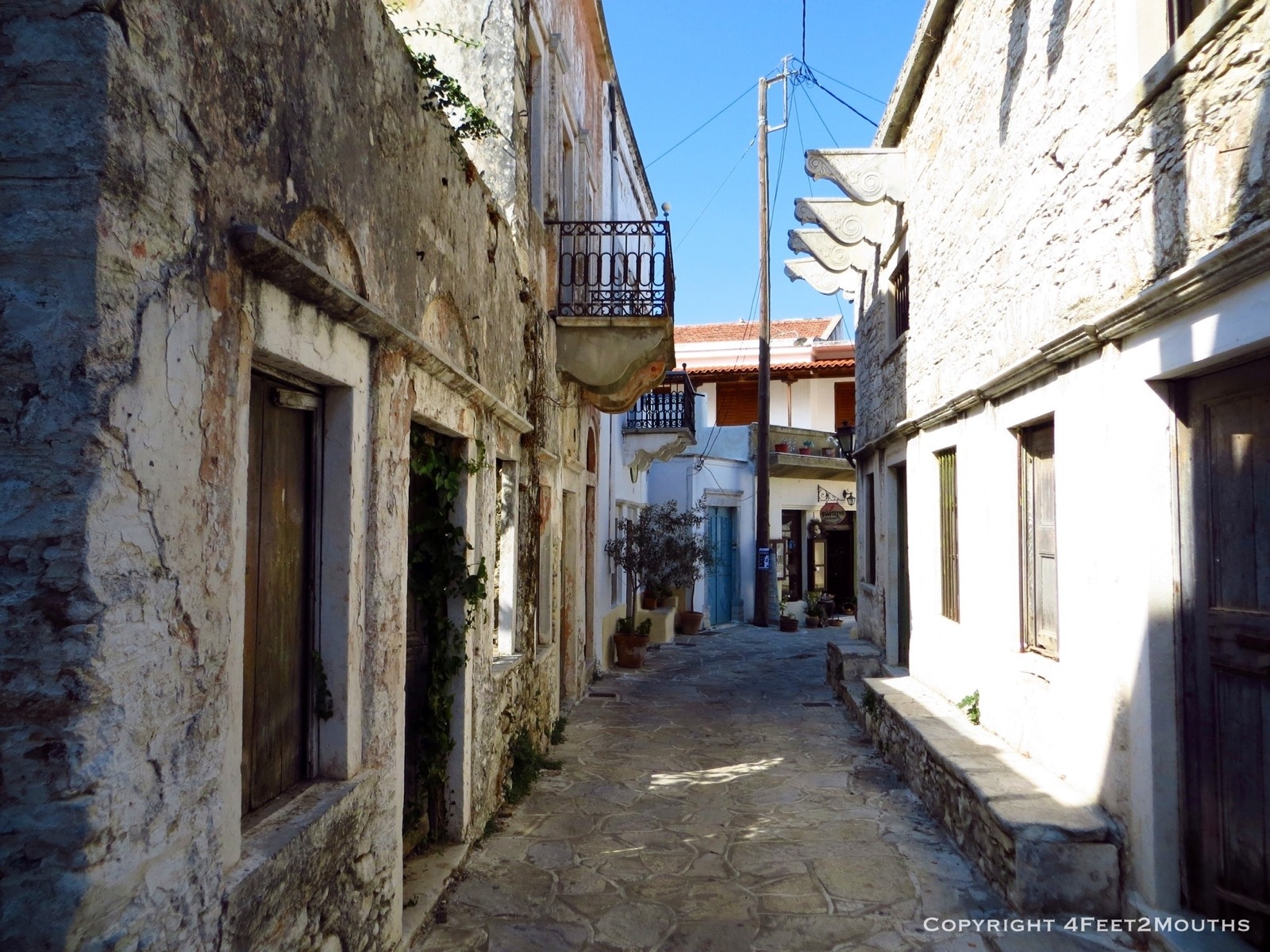
In the morning we awoke early to visit Ano Syros, a picturesque part of town high up on the hill. We snaked our way through adorable alley ways and rustic arches, past weathered doorways and down steep stairs. It was exactly what comes to mind when one thinks of a quaint Mediterranean island village.

Temple of Apollo with Naxos in the background

Rooftop terrace of our hotel

View from our balcony

Next we hopped over to the nearby island of Naxos. At the port we we greeted with another whitewashed town, this time with the ruins of the Temple of Apollo overlooking the water. We also encountered a gaggle of hotel owners vying for our business. Thanks to Nathan’s master negotiating skills we scored a lovely hotel for under $30 a night.

Street in Naxos old town

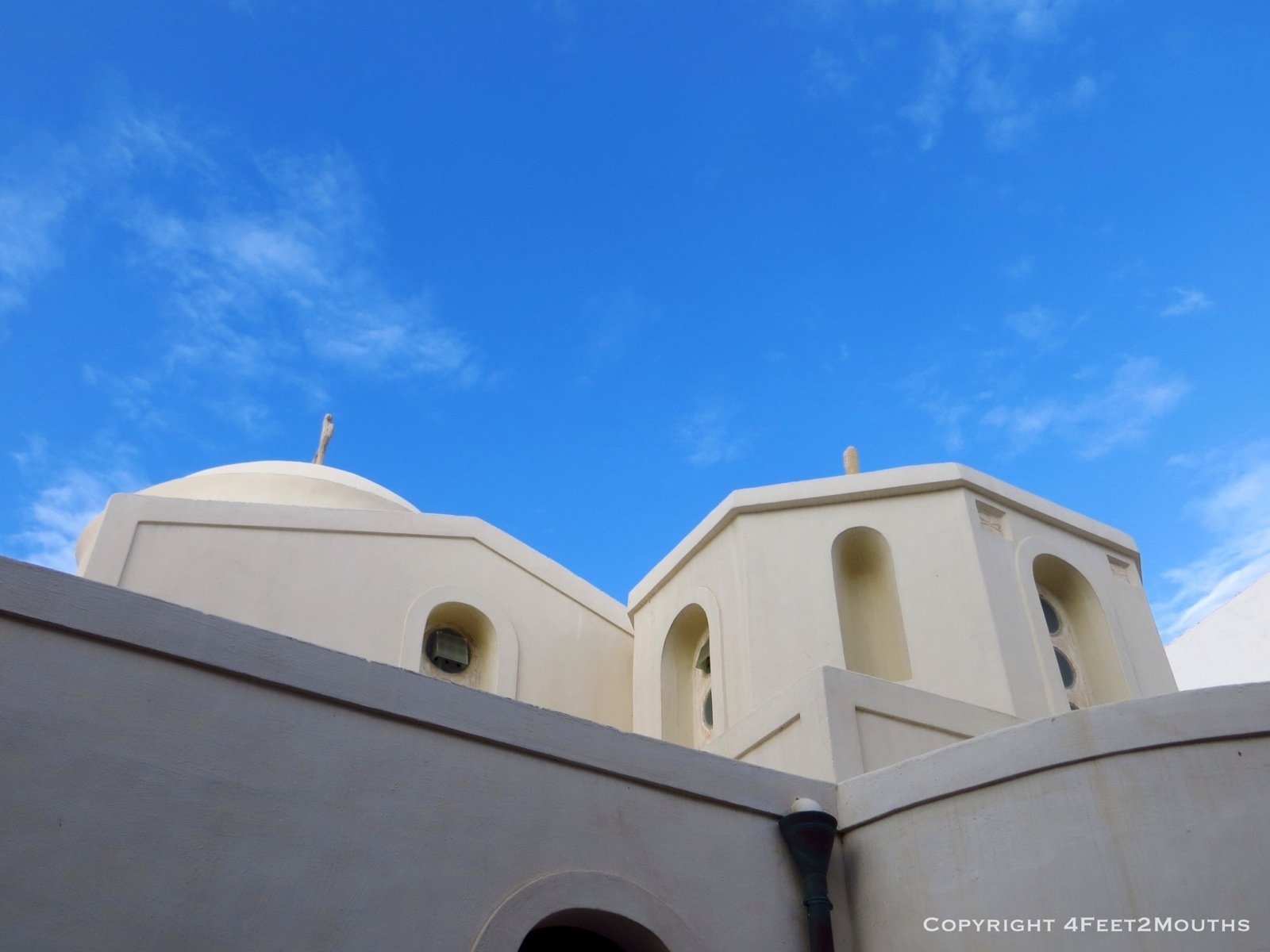
Cubic church

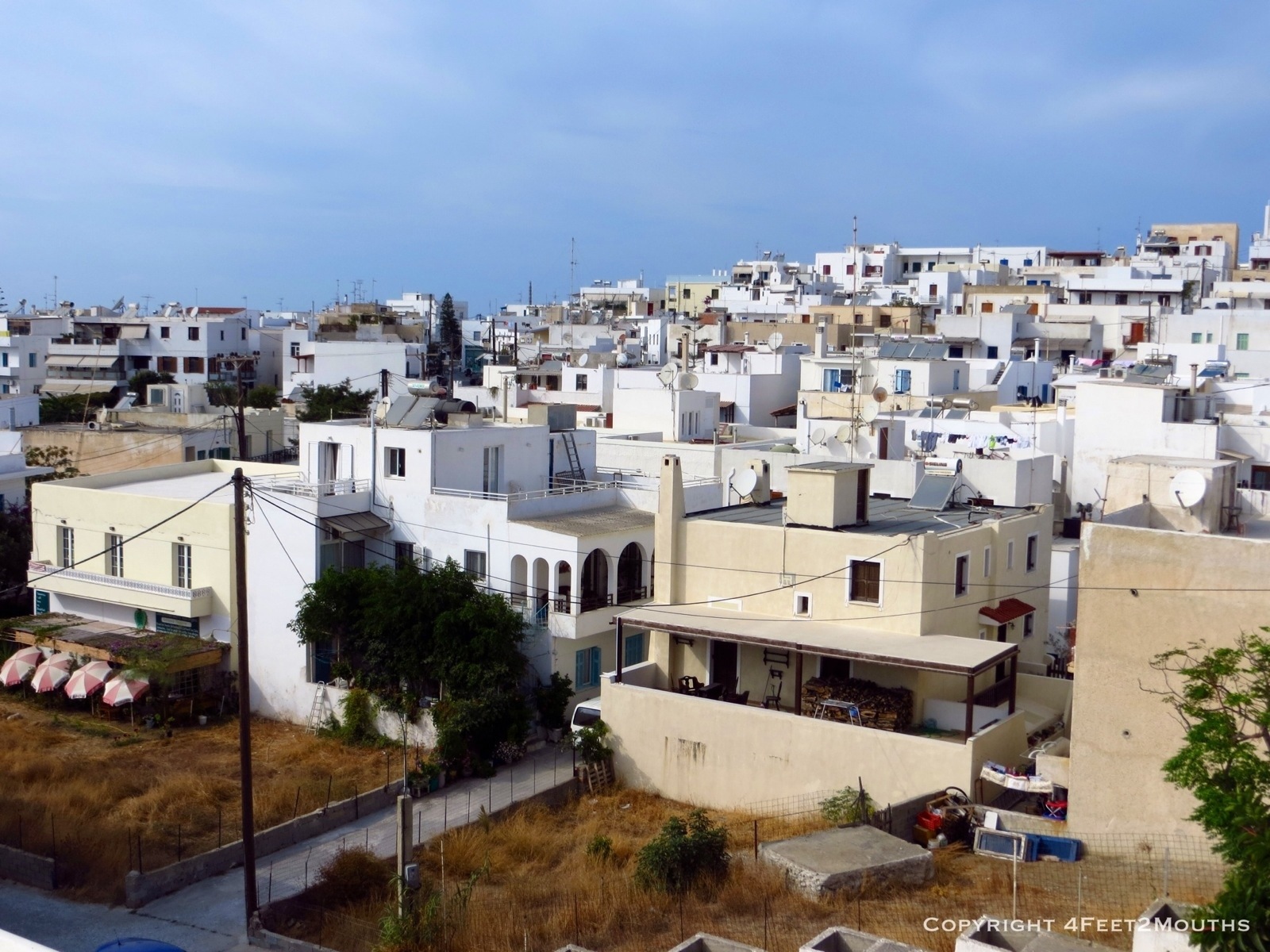
After settling in we explored Naxos old town, which I found even more charming than the one on Syros. It was a true labyrinth with low arches and endless twists and turns. It was the kind of place that beckons your return with the thought that there might be one more passage left unexplored.

Beachside resort

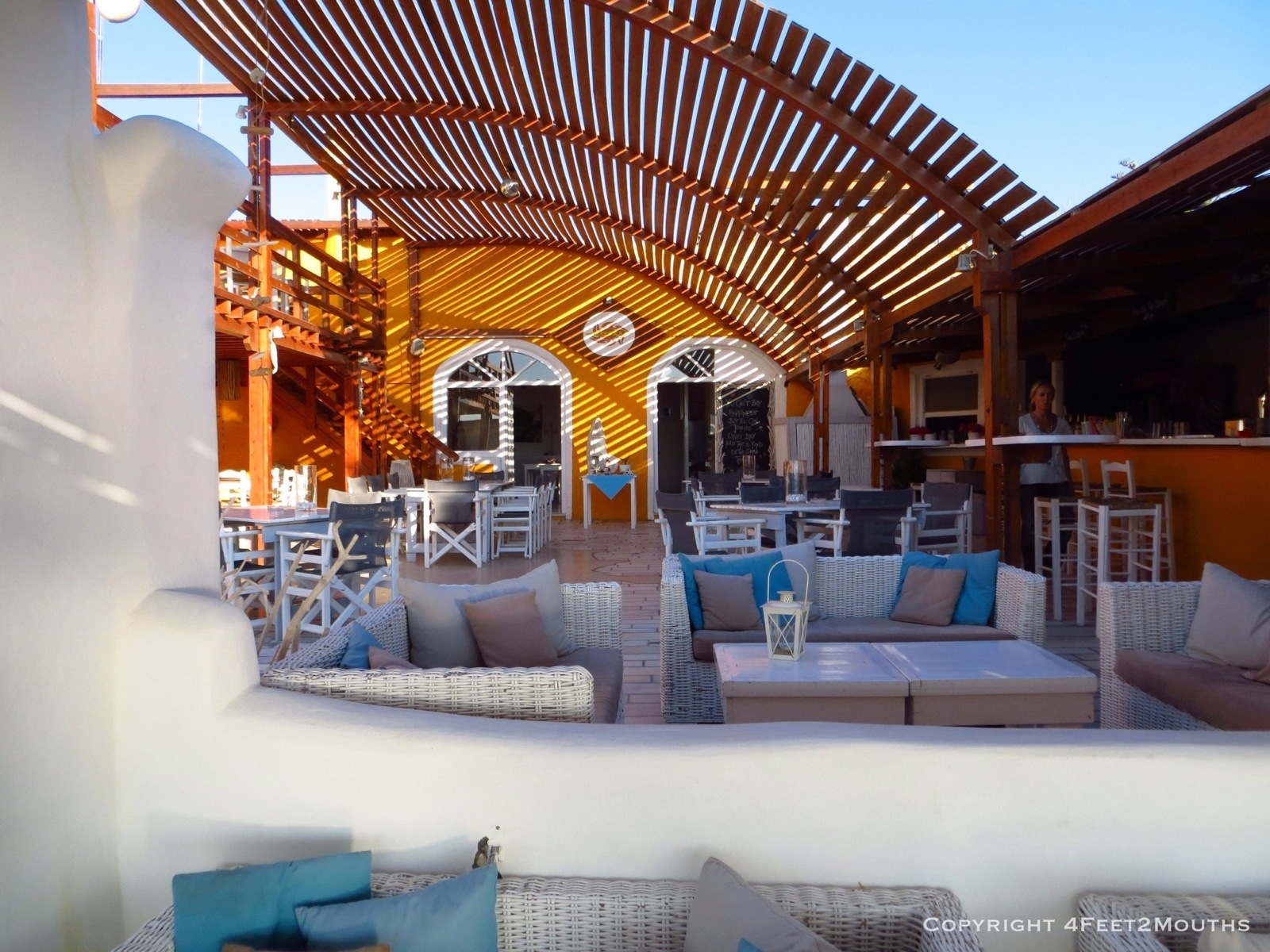
We walked back to our hotel along the beach and stumbled upon a small resort serving a simple BBQ. We joined in to pig out on Greek-style salads, rice, stuffed grape leaves, and grilled meat skewers.

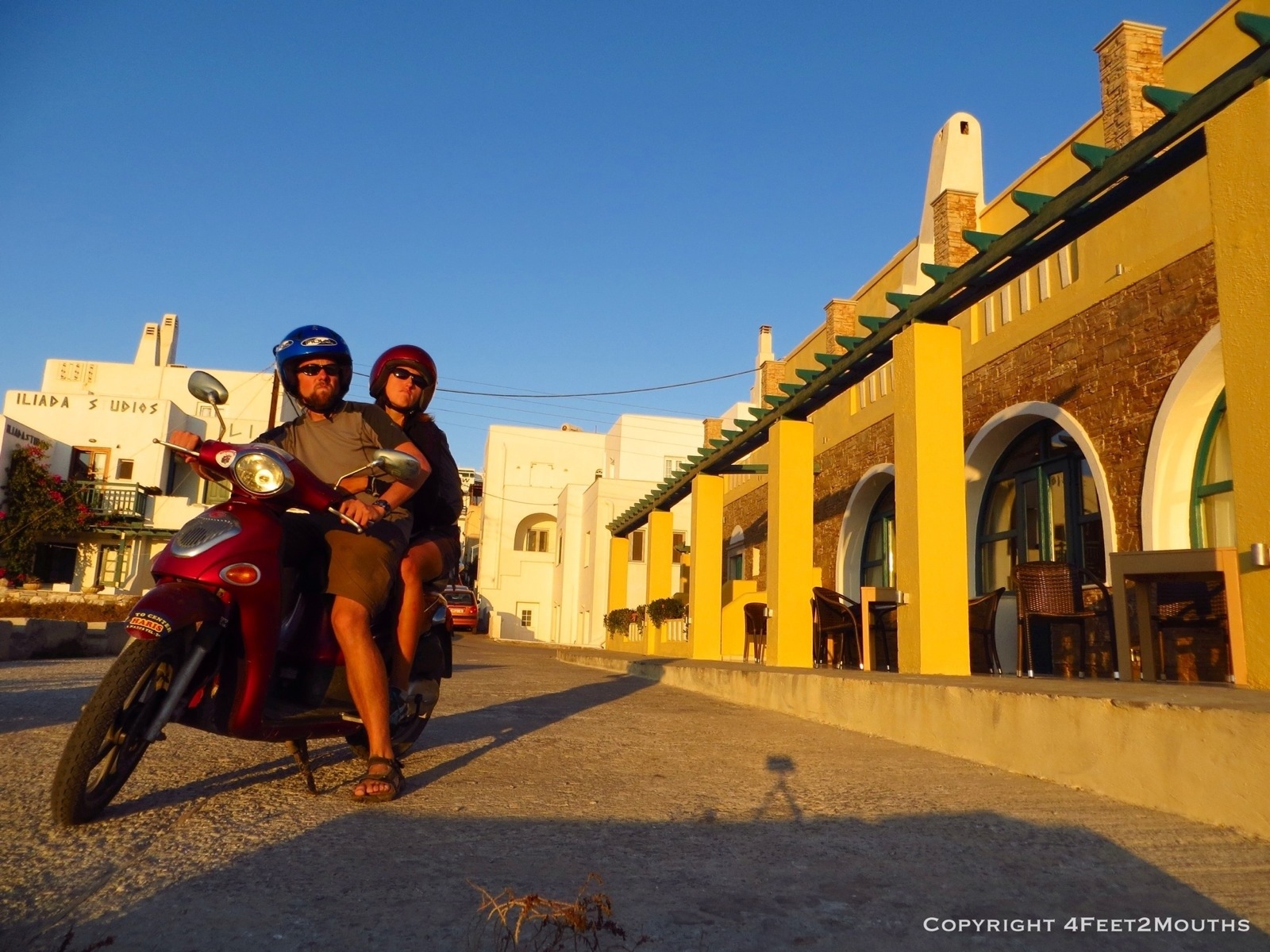
Scooters make you look tough

Naxos is one of the bigger islands in the area and there were more villages in the interior to explore. We decided that the best way to do this was to rent a scooter. Now I always knew Nathan had some experience with motorcycles before I met him. But I was surprised to see how well he picked it up again as we sped off from the Naxos harbor. What an excellent hidden talent. It’s nice to know that after nearly 10 years together you can still learn new things about each other.

Stony path

Nathan on top

Views from Mt. Zeus

Our destination was Halki, a tiny town with a hundred year old distillery producing citron. This is a drink that uses a citrus fruit unique to Naxos distilled with the local grape liqueur, raki. We then scooted on over to Mt Zeus, a 1000m tall mountain with views all around the island. Nathan braved the steep climb while I enjoyed the Mediterranean views from the trailhead.

Lunch at Meze 2

By the time we made it back to Naxos we were hungry for a late lunch. At Meze 2, we ordered a large Greek salad and a mix of dips including tzaziki, eggplant and two feta based spreads. Accompanied by grilled octopus and a jug of retsina wine, we abolished the need for dinner. After lunch we scooted to the beach, albeit more slowly because of the extra weight.

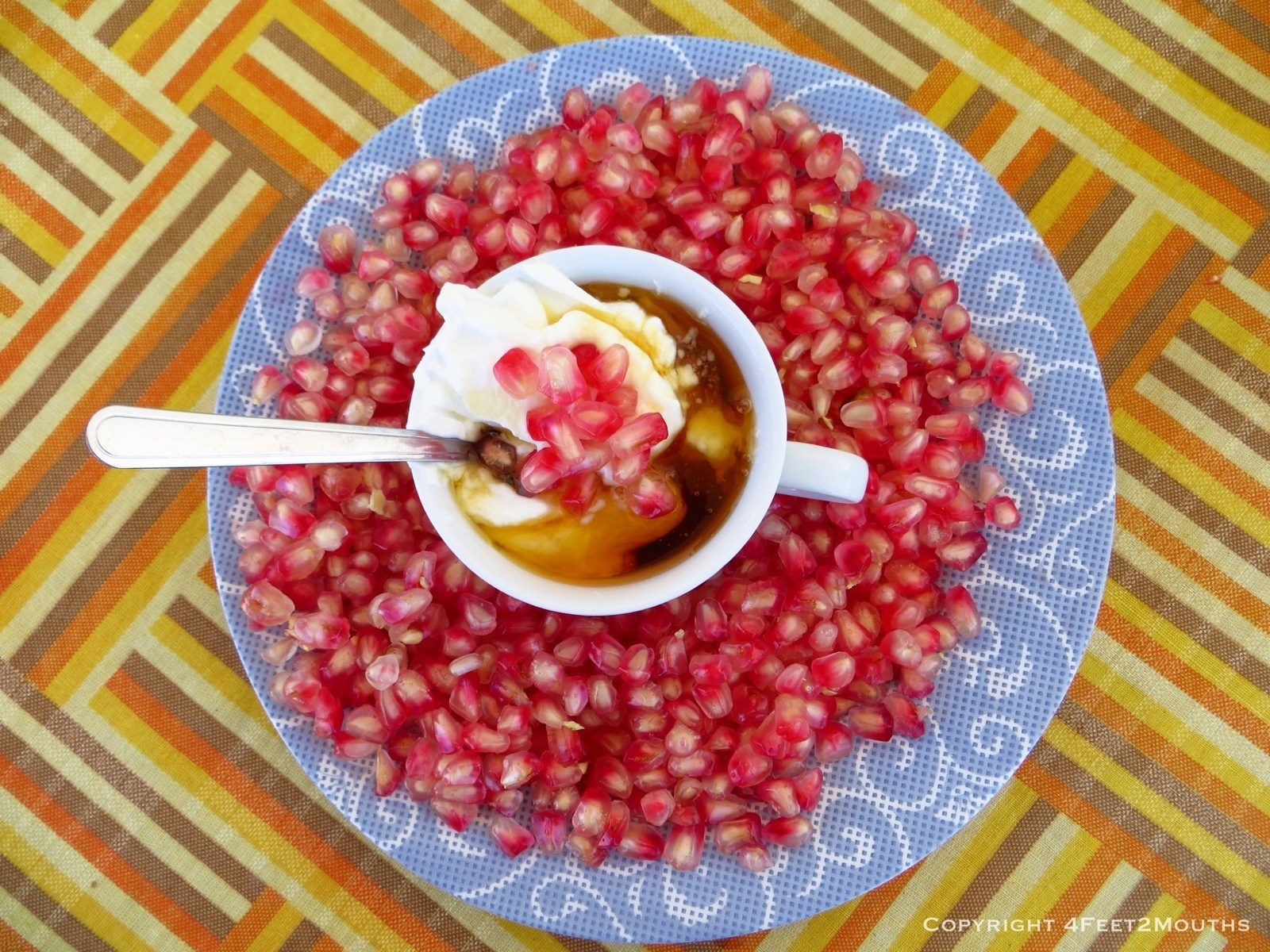
Yogurt, honey, pomegranate…breakfast of champions

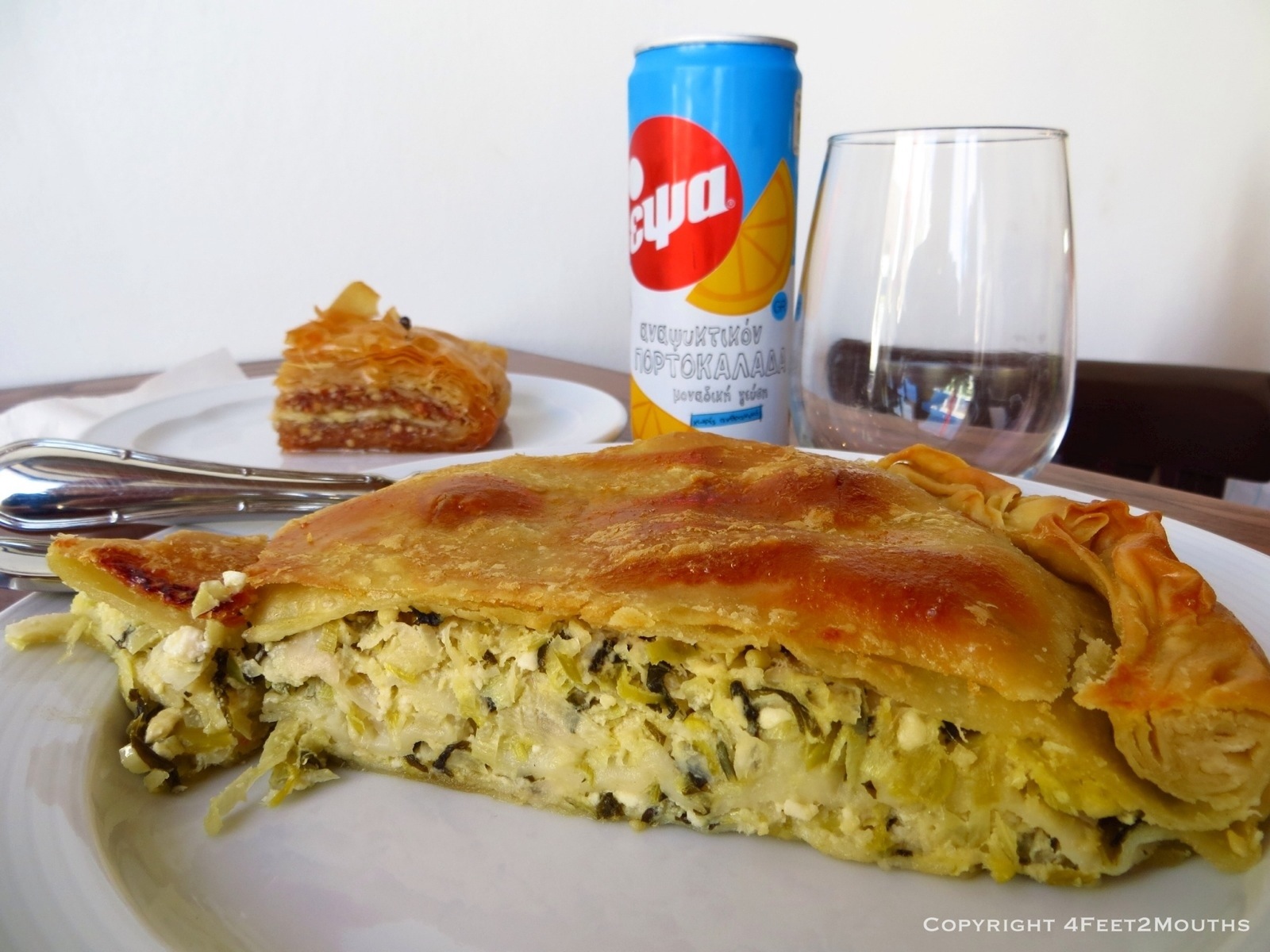
Prasopita

The next morning was another beautiful day. On our balcony we enjoyed a simple breakfast of yogurt, local honey and pomegranate. It was delicious and light, which meant it left room for another delectable snack later that morning. As we passed a small cafe a round filo pastry caught our eye. Within minutes we were devouring a slice of prasopita, a cabbage filled pie of sorts. As the last bite passed my lips I was already plotting my return to the beautiful island of Naxos.

It’s All Greek To Me In Athens (by Ναθεν)

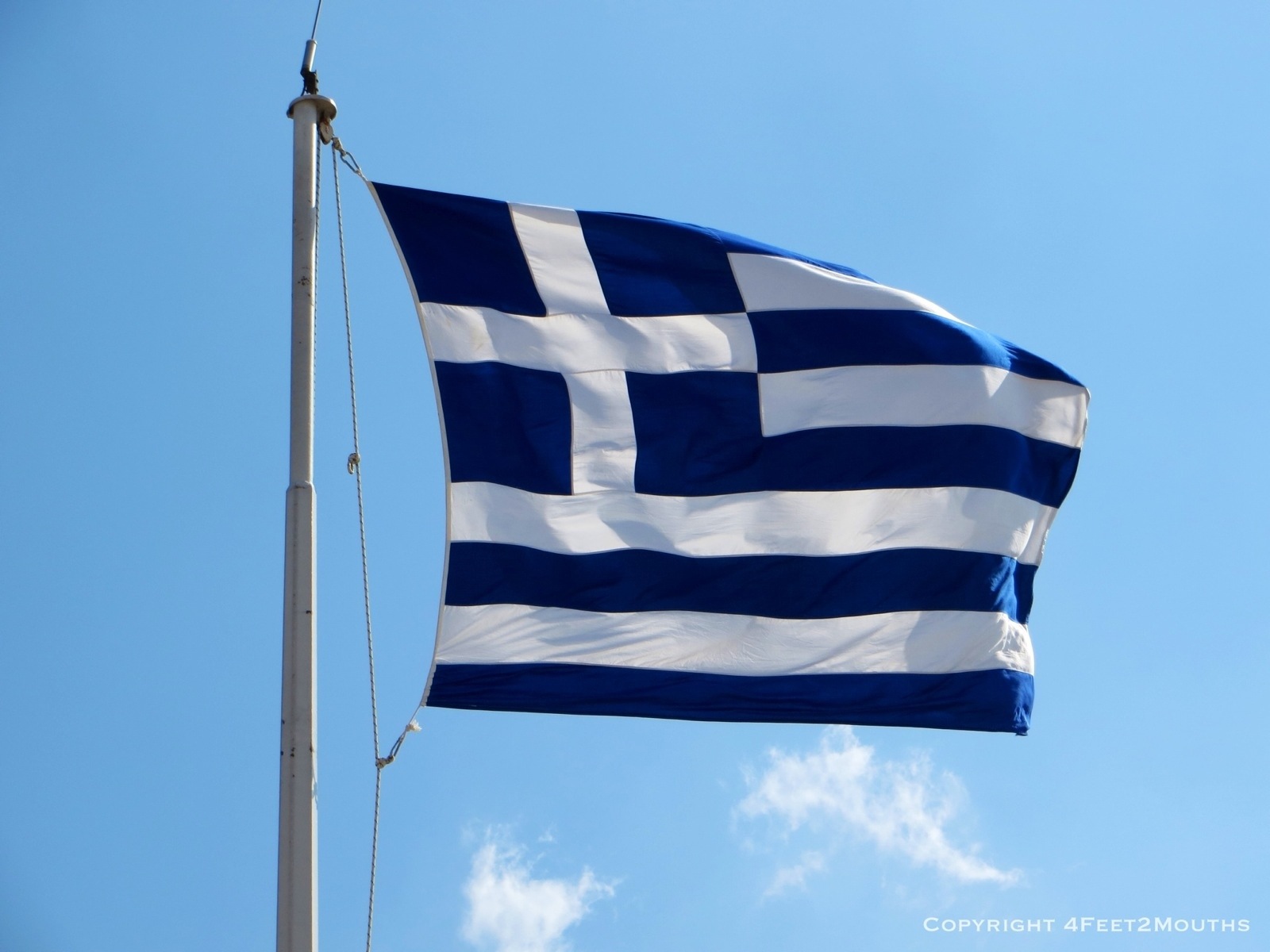
Greek flag in the breeze

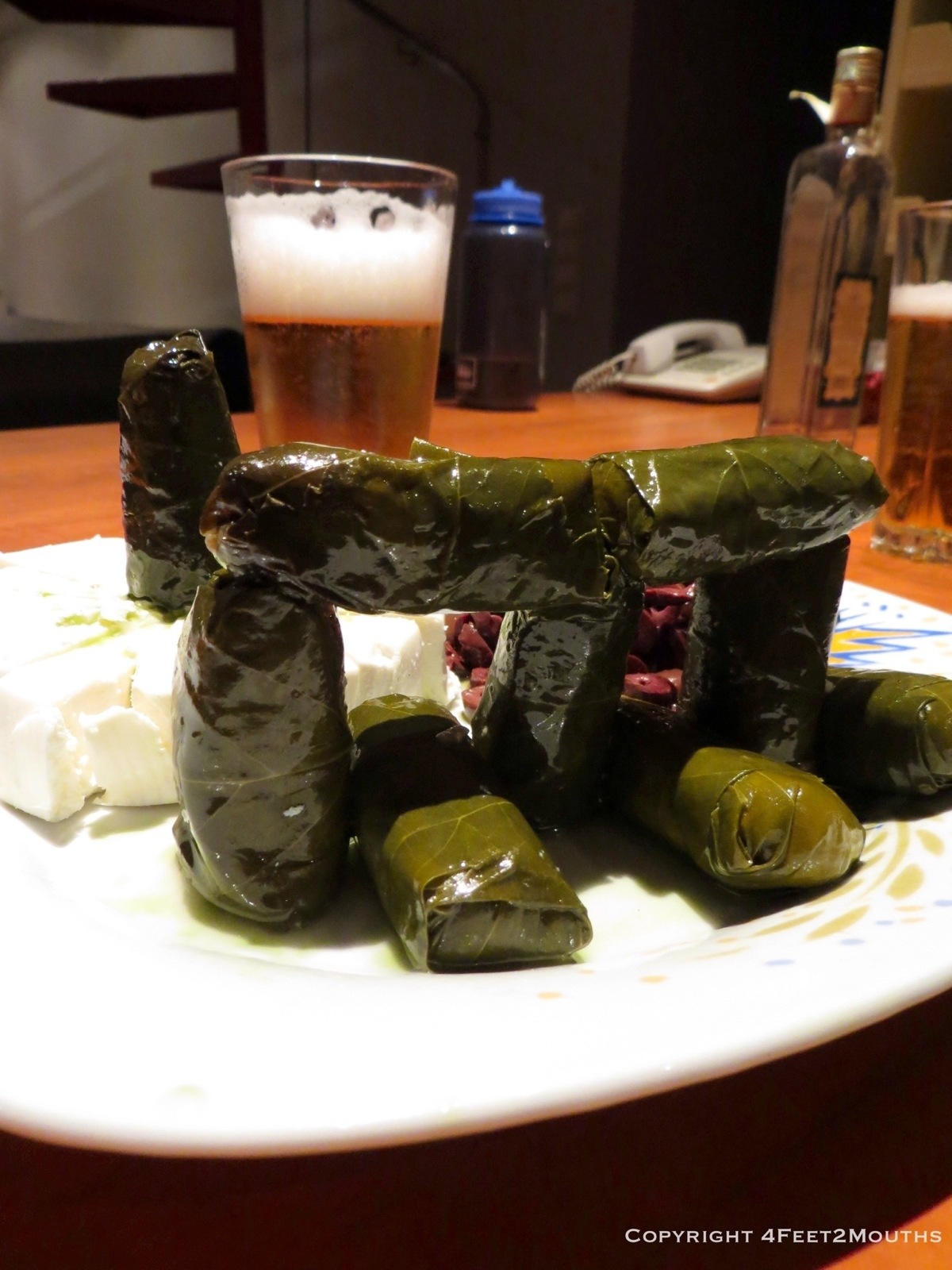
Temple of dolma

Walking into Athens is a step back in time. The city began as a village, blew up into a metropolis and has cycled in glory and defeat for centuries. The historical successes of Greek accomplishments of democracy, astronomy and philosophy were predominantly within the 5th and 6th centuries BC. The other years were controlled by disjointed reigns of Greeks, Persians, ottomans, Romans and even Germans. It is the modern Greece that we visited- rich in culture, deep with history, vibrant with hospitality and delicious with Mediterranean food.

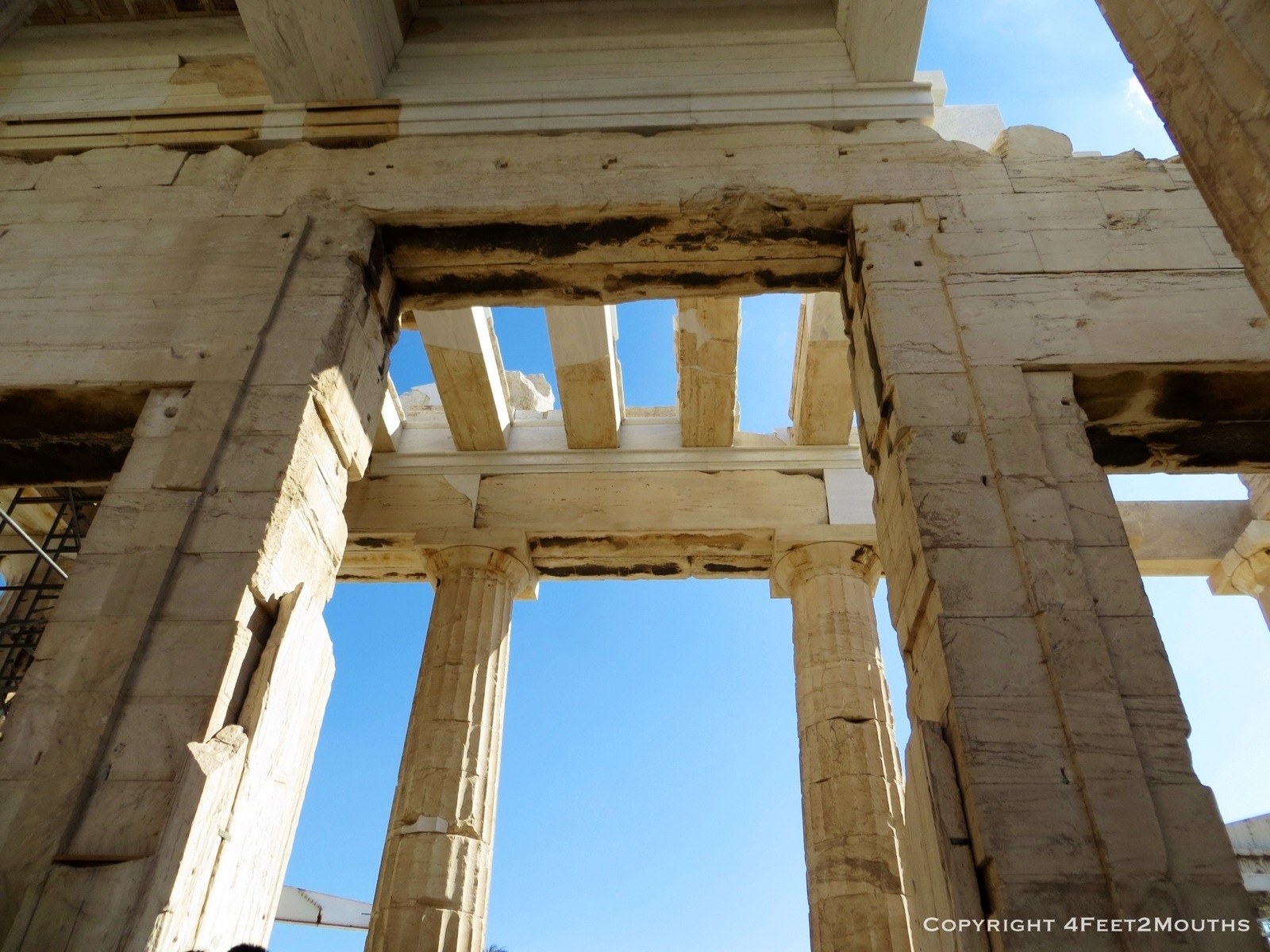
The Acropolis Propyaea

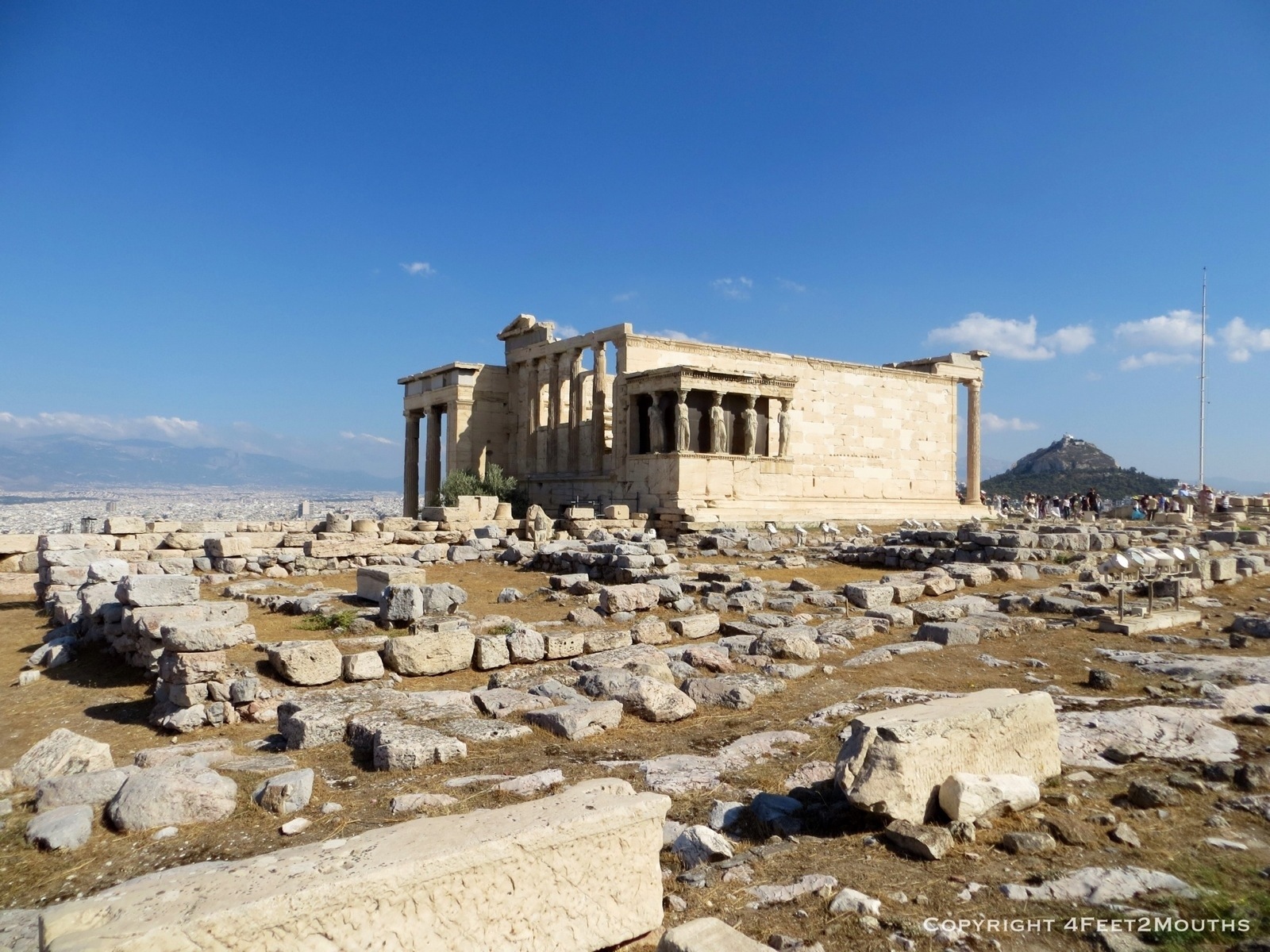
The Erechtheion

People had warned us not to spend much time in Athens as it was an unattractive city. This confused us since we had always related Athens to Rome and we expected centuries of history from the once glorious civilization. Wouldn’t the city be full of beautiful architecture? We learned that at the end of 4th century BC the population of Athens has dropped significantly to village-like numbers. The city’s population of today can be directly attributed to the Greek/Turkish people’s exchange of 1923.

The Caryatids

The Parthenon

Thus, the city is rather modern in feel with large boulevards and rather plain buildings. The spectacular sight is the mountain in the center of the city, the Acropolis, that prominently holds beautiful temples that are 2,500 years old. Everything shows evidence and elaborate detail and a passion to build fantastic structures. The Romans emphasized the use of the arch, but much earlier, the Greeks designed buildings with brute force by increasing the frequency and number of columns. One of my favorites was the Caryatids, the female carved columns supporting the porch of the Erechtheion. The grandest of all is the Parthenon, an enormous building for 2 1/2 millennia ago. And they even bulged and tapered the columns to create an optical illusion of greater height.

Tourist shot on the Acropolis

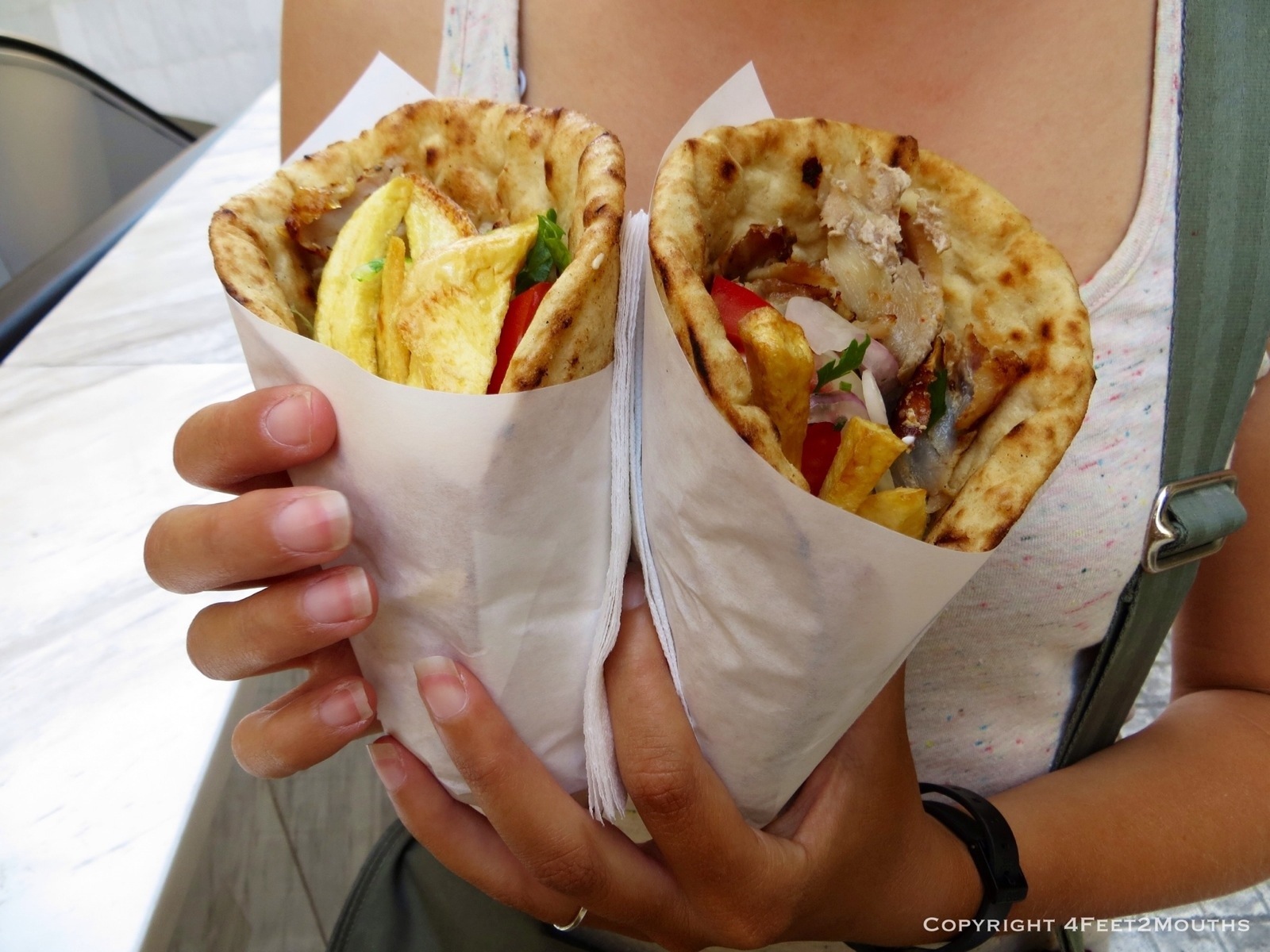
Gyro heroes

The Parthenon and Acropolis are beautiful, but all this history tends to make our heads hurt and stomachs growl. We descended the mountain and found one of the numerous souvlaki shops. We watched as they sliced off pork and chicken from the sizzling and rotating spike. It was stuffed into pita with lettuce, onions, tomatoes, tzatziki (yogurt, cucumber and parsley) and what’s this? Fries. Mmm we found Greek street food, gyros.

Temple of the Olympian Zeus

Ancient marble heads

We hit all of ancient sites. The Temple of the Olympan Zeus showed roman perseverance to complete great temples. There were countless marble statues majestically glorifying gods, heroes, distant queens and prominent merchants. Keramikos was an ancient grave yard and Mount Lycabettus provided stunning views of the city.

Tightly fit roman stonework

Temple of Hephaestus

Ancient ruins are tucked all over the city. The stonework of the Romans showed that many angles and superior tightness could be done 1,500 years before Machu Picchu. The temple of Hephaestus is almost entirely intact, and it was built in 400BC.

Baked whitebait at Cafe Absynna

Baked spicy feta and fava at Cafe Absynna

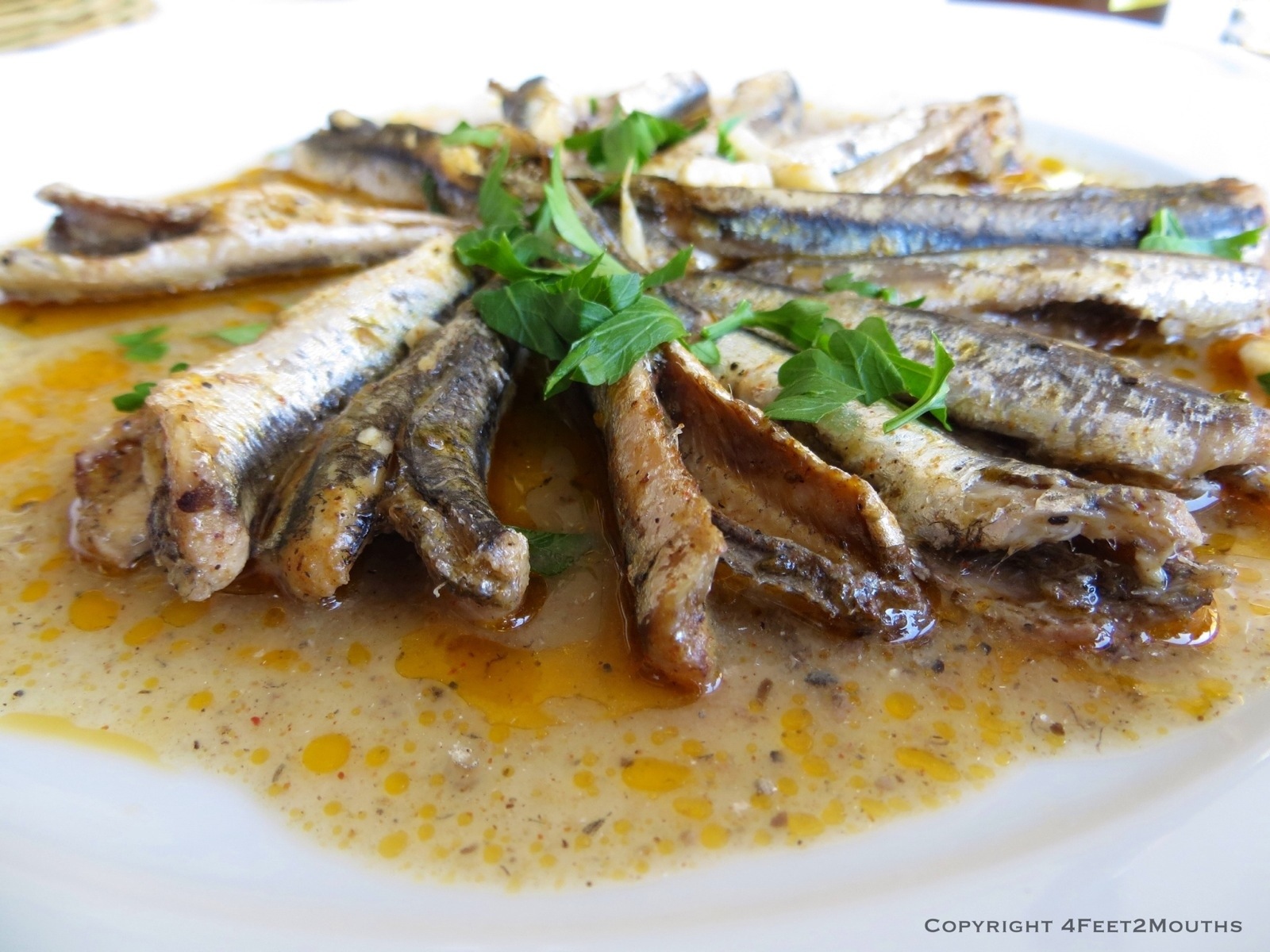
It has taken no time for us to adjust to the Mediterranean food here. A plate full of gavros (whitebait), baked feta cheese and puréed fava beans made an amazing meal at Cafe Absynna. We lingered at our table overlooking a small plaza, but we wanted a place with more action.

Tailor Made coffee and cocktails

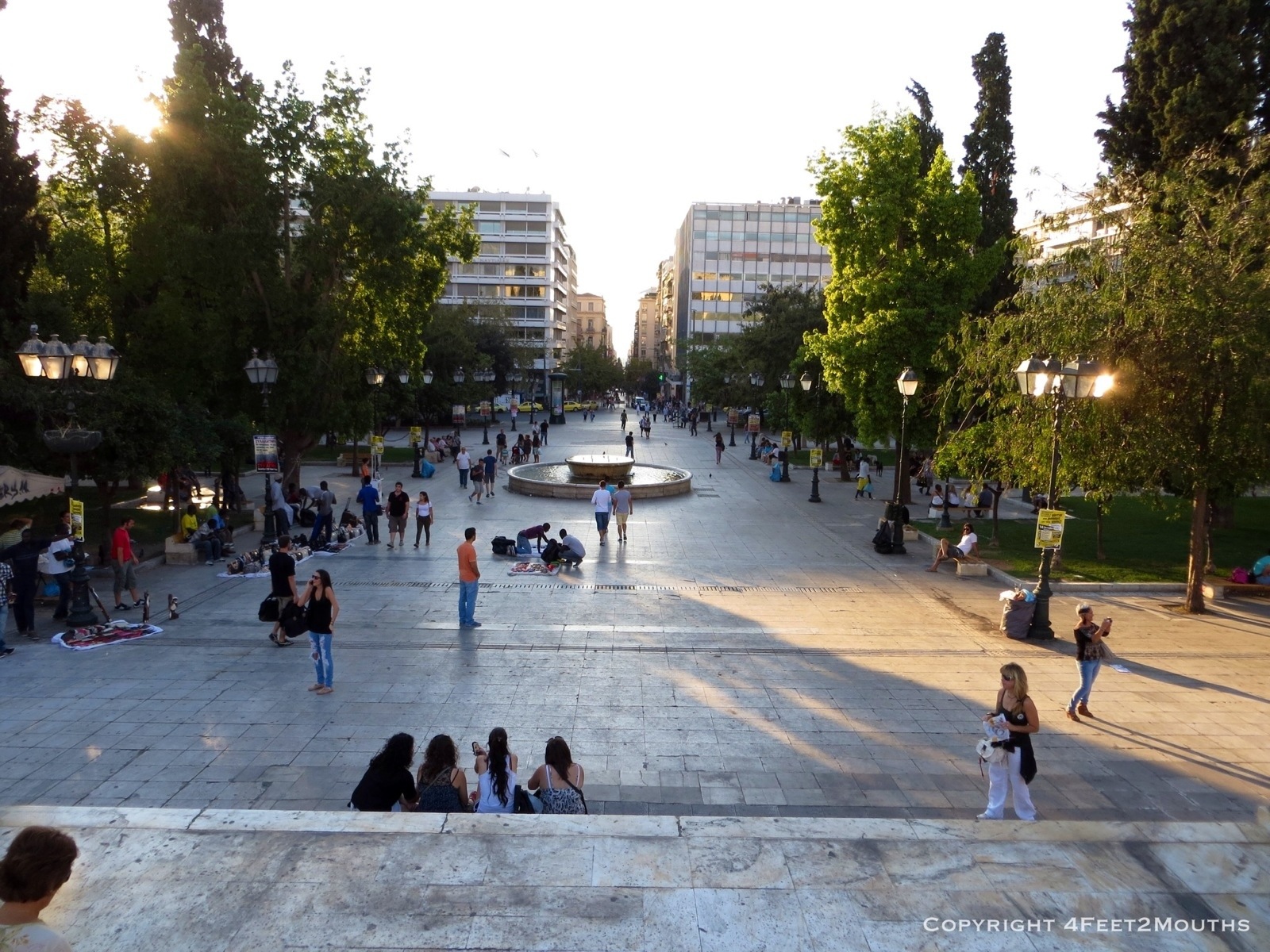
A calm Syntagma Square

Artsy Athens graffiti

Tailor Made demonstrated the cafe culture we wanted. They served delicious coffee and cocktails with a chic rustic atmosphere. The cafe was in a tranquil neighborhood but there were still acres of graffiti on the surrounding buildings. We wondered if the graffiti had increased due to the protests surrounding the economic crisis. Much of the craziness in the last few months was in Syntagma Square which was calm when we saw it. Protesters were absent during our stay, but we left town just before the German chancellor arrived and they started up again. In the meantime we enjoyed meandering through the market streets with an occasional pleasant piece of urban art.

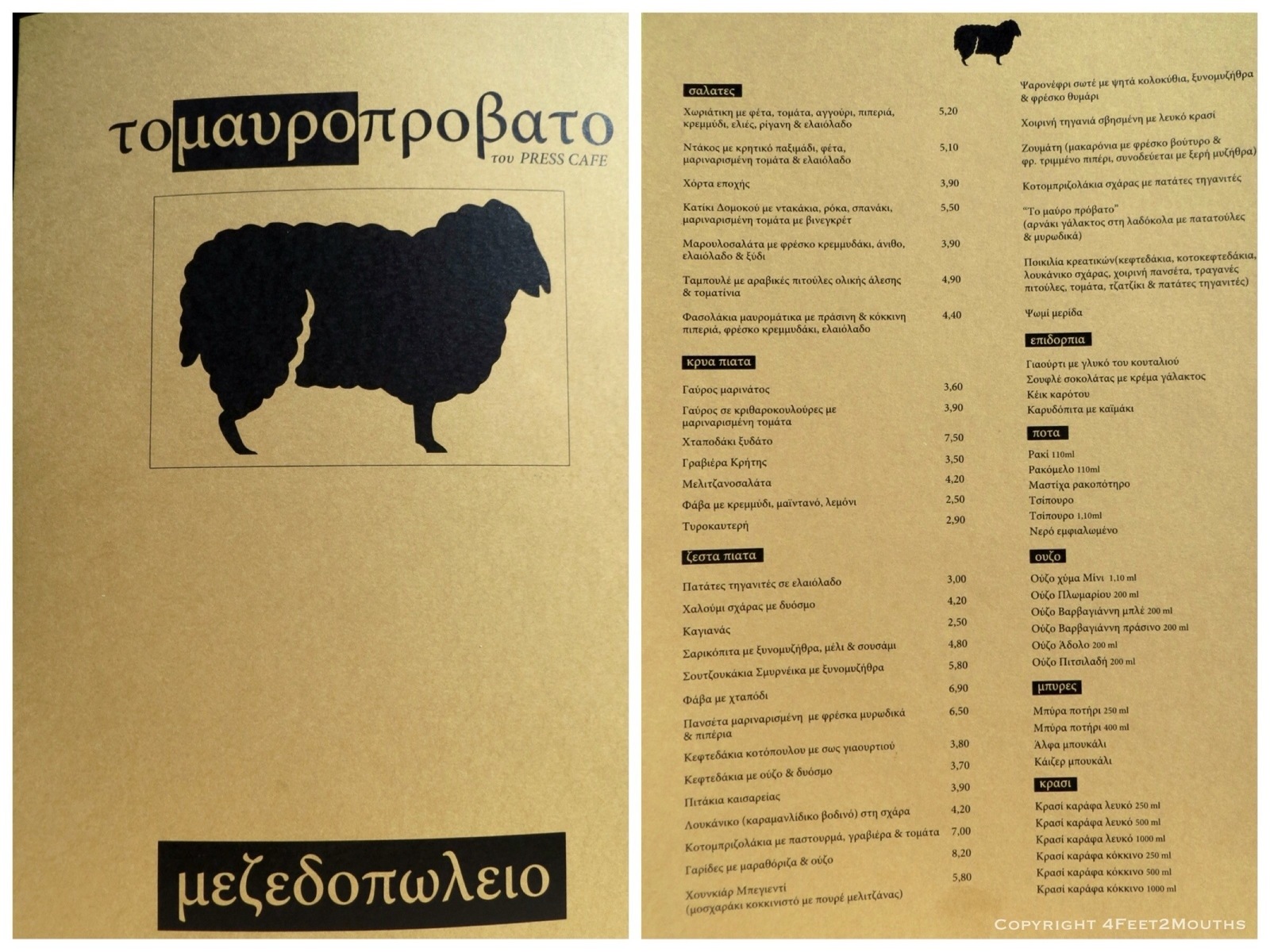
The Black Sheep all Greek menu

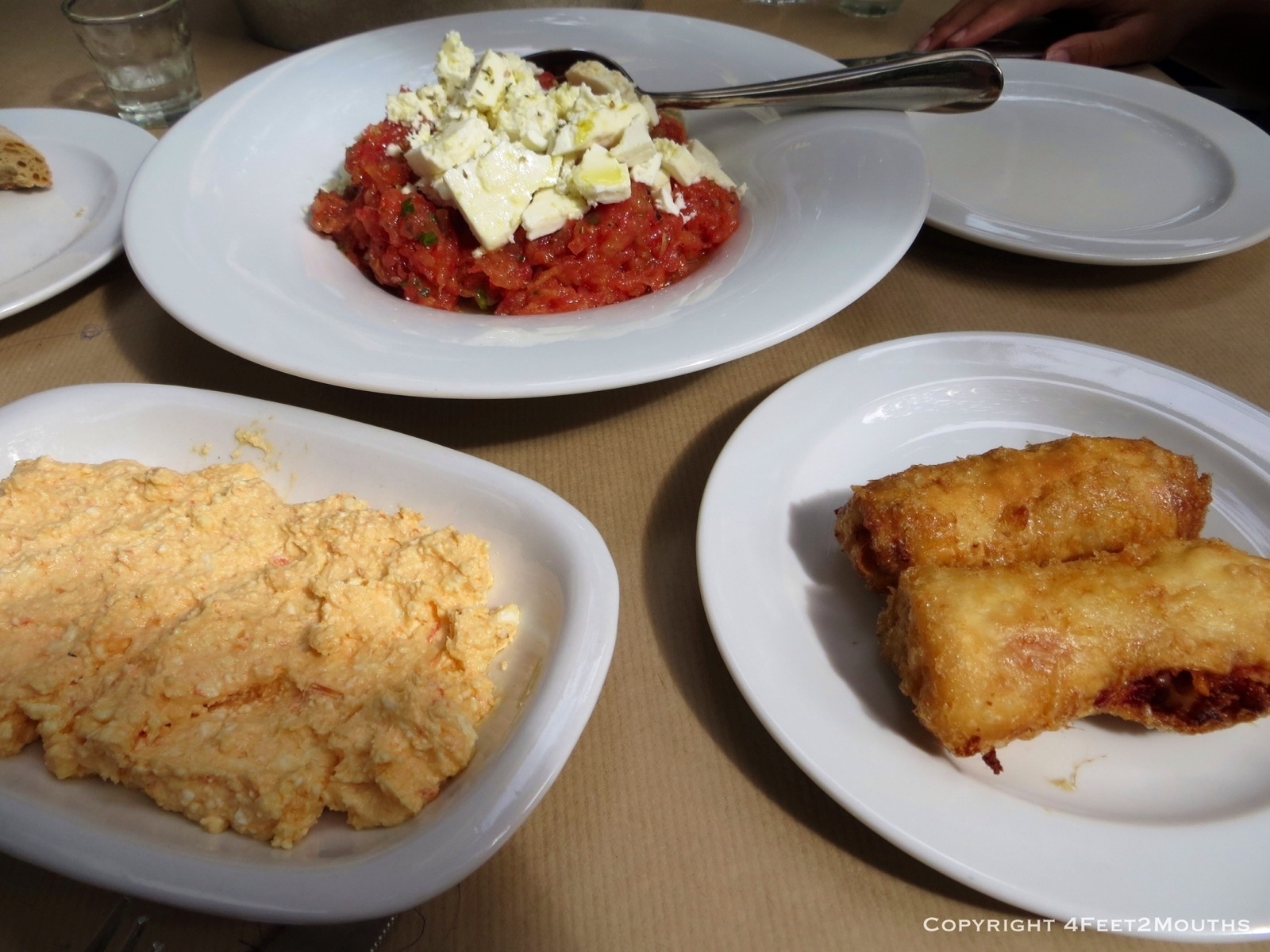
Various mezedes at Black Sheep

One factor making our Athens experience so great was the smooth transition into the city, culture and food. Our friend Theodoros took us to a rock ‘n’ roll/swing dance party, hosted us in a beautiful apartment and deciphered Greek menus for us. Greece is the first country in the last ten months where we have not been able to use Spanish or English. It was special to know a local in the area to provide insight on Athens and the Greek Islands. Athens is a wonderful city with great people and history, but the beach was calling us. We boarded our early morning ferry and within a few hours we would be in the sun, toes in the sand and crystal waters across the skyline.

Fun with Theodoros

Mad About Madrid (by Carmen)

Street in Madrid

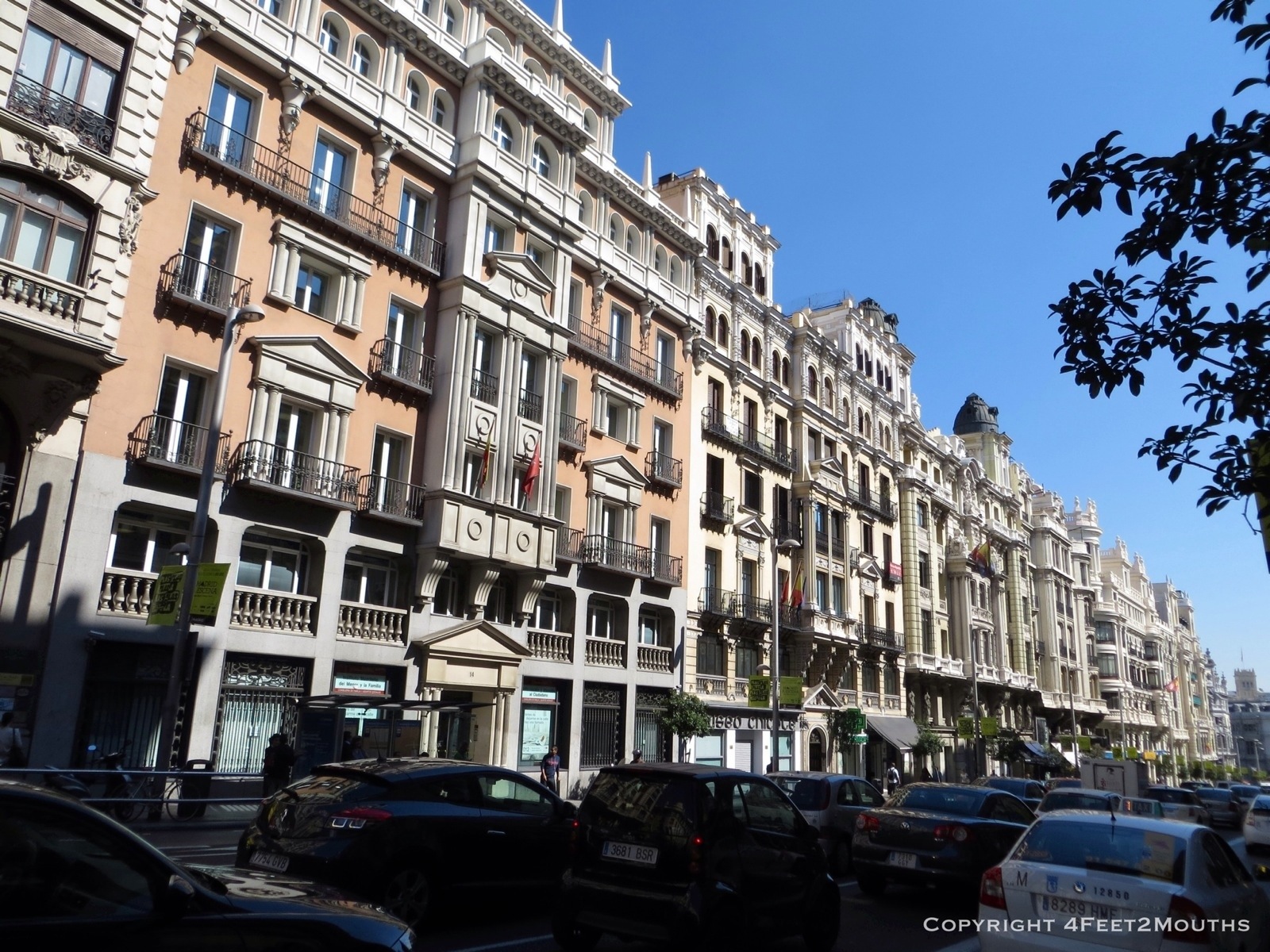
There is something special about Spanish cities and I think I know what it is. It has to do with the fact that Spaniards love just hanging out with others – long lunches, hours spent sipping coffee, inumerable sidewalk benches to chat with neighbors. This love of socializing is relflected in the physical form of their cities. The urban landscape is decidely dense but not overwhelmingly so. And what is amazing (at least from an American’s perspective) is that this density reaches right out to the city’s edge. Instead of a sprawling mass of suburbia, there is a clear division of city and countryside. I observed this in Pamplona, Burgos, Leon and Madrid; for the most part, these cities all follow this pattern.

Old school tapas bar

Nathan enjoying hierbas

Nathan and I were still recovering from the camino so we tooking it easy in Madrid. We slept in. We caught up on the internet. We napped. Although this left us time to only scratch the surface of the city, the neighborhoods we did see enchanted us. First was the ‘hood we stayed in, Malasaña. It was a youthful area where old meets new. For example, we started a night of tapas hopping at an old school bar down the street. Judging by the pictures on the walls, the same bartenders have been working for at least 20 years. We ordered sweet vermouth, which they kept on tap, and a simple snack of bacalao (salt cod) with tomato sauce. We perched ourselves on some bar stoools and watched the crowd ebb and flow. As we prepared to leave the bartender poured us two complimentary shots of homemade hierbas (herb liqueur). He poured one for himself and we all raised our glasses and gave a chant of “salud!”

Fried green tomatoes at La Musa

Me and la bomba

Next we hopped to La Musa, a new school tapas joint conveniently located across the street from our hostel. They stepped it up here with offerings such as fried green tomatoes with cheese and fig jam. It was excellent. We even visited a second time to taste their other specialty, a meat stuffed potato they called la bomba (the bomb).

Beers on Calle de la Cava Baja

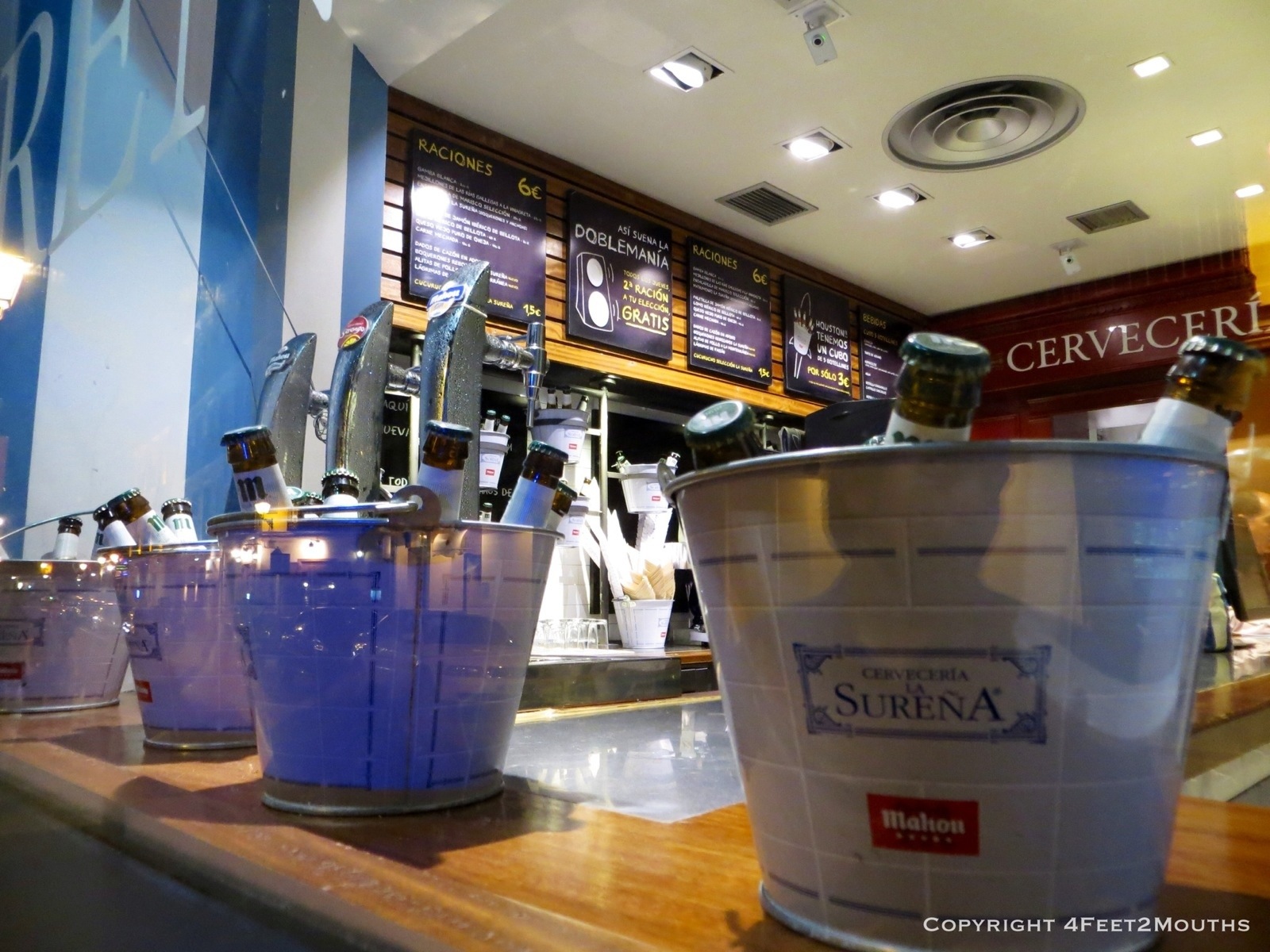
We got more new wave tapas on Calle de la Cava Baja, a bar street that is a little too commercialized but still fun because of all the people and choices. Along with fellow peregrinos Donavon and Suzanne we sampled beers and wine until late into the night. Conveniently, the bars serve cañas or about a third pint of beer. This makes it much easier to bar hop without getting too tipsy.

Stealth shot of a painting in the Prado, where photos are a no no

Another wonderful feature of Madrid is free museums. Ok, they are not free during the day but in the evenings two of the city’s most famous art museums are completely free. I was particularly taken by the surreal paintings from El Greco, especially considering his work is 400 years old! The Prado Museum has a collection that competes with the Louvre.

El Retiro Park

We found that the park provided a wonderful place to nap.

Mercado San Miguel

Of course, we also visited the historic center of Madrid in all its winding street glory. Nearby the Plaza Mayor we found the Mercado San Miguel, a high end market with stalls selling snacks like anchovies or olives. Nearby we settled in for a gigantic paella for two, which was really for four. With one of our favorite Spanish dishes we said goodbye to Spain. It was time to move on to new cuisines and cultures. Also new languages! Nathan and I had traveled for months speaking either English or Spanish. Now, we refreshed our memories of the greek alphabet as our next stop was Athens.

Paella time

Post Navigation