4 feet 2 mouths

walking and eating our way around the world

Hermosa Mendoza (by Nathan)
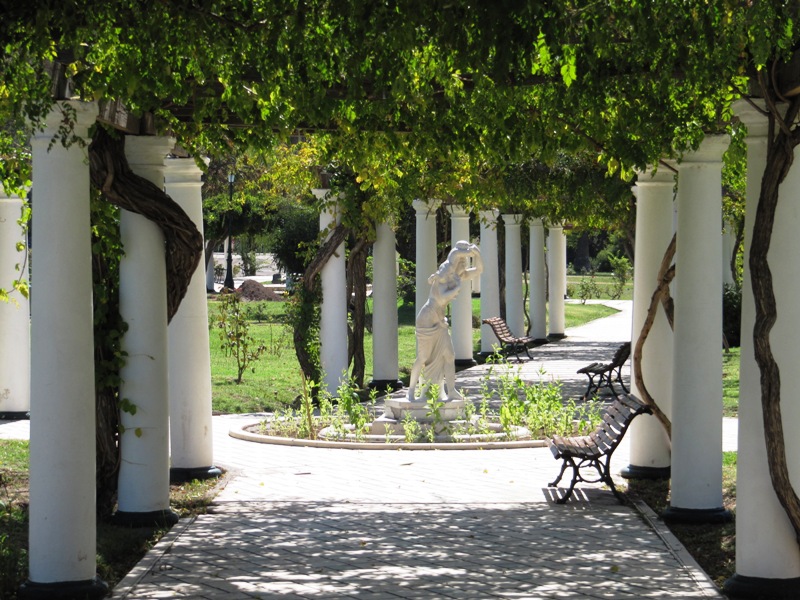
Picturesque parque gerneral San Martín

Picturesque parque gerneral San Martín

It is exciting to be back in Argentina.  After three weeks of beautiful Brazil we were doing pretty well with the Portuguese.  Santiago spanish was incomprehensible to me.  They dropped all hard consonants, slurred the end of every word and spoke at rapid speed.  Although the Spanish is not the purest in Argentina, it was nice to descend from the majestic Andes into a place more familiar.  ¡Bienvenidos a Mendoza!
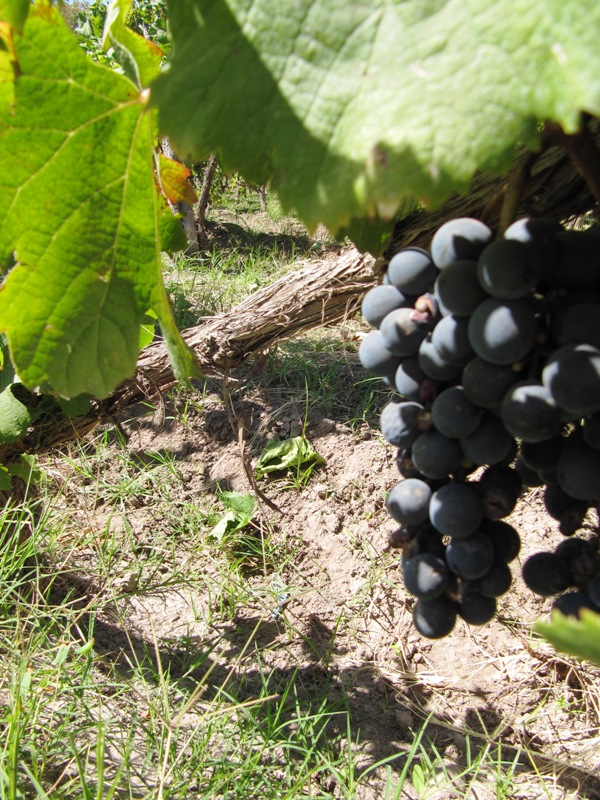
Ripe malbec grapes

Ripe malbec grapes

Our welcoming to Mendoza could not have been better.  Our first steps were met with a glass of malbec and an invitation to a homemade Italian dinner at our awesome accomodation, Hostal Lao.  Mmm licking my lips.
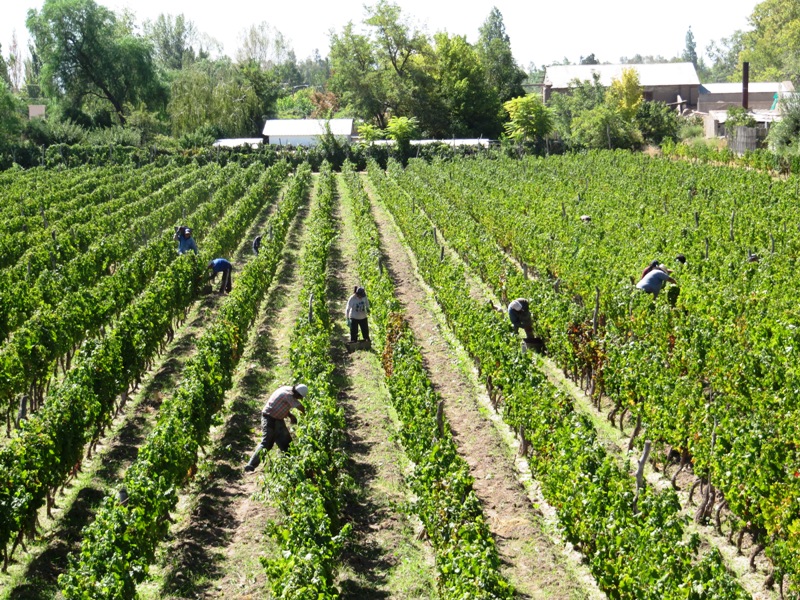
Harvesting grapes

Harvesting grapes

The malbec wine of the world is grown in Argentina and the bulk of it comes out of Mendoza.  Our timing was perfect and we arrived during the two weeks of harvest.  We tasted at several places and at each there was a flurry of work and the deliciously pungent smell of freshly crushed grape juice beginning fermentation.
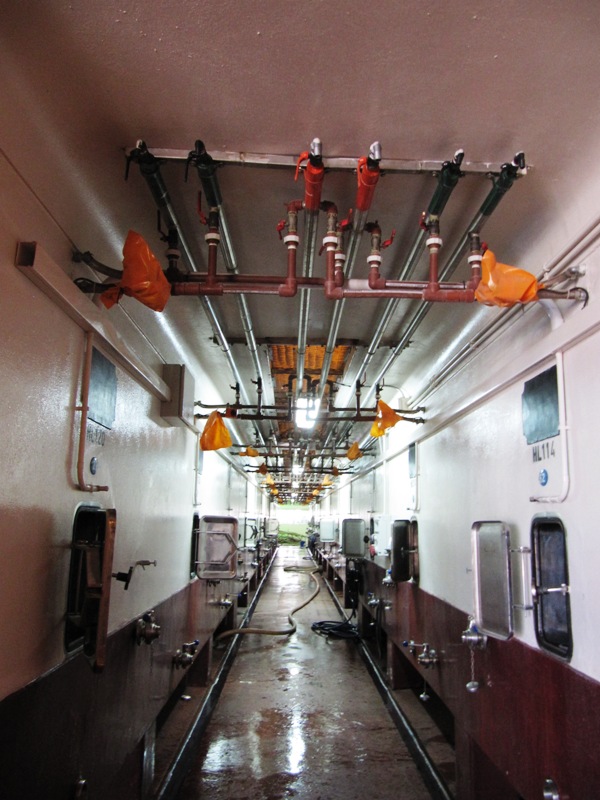
Historic concrete vats

Historic concrete vats

The style of wine making is significantly different from what we see in northern and central California.  First of all, the vineyards are hundreds of years old and each cellar houses enormous concrete tanks.  At each vineyard we learned that they fermented, filtered and blended almost all of their wine entirely from these vats.  They also had their premium wines that they put in oak for three to six months.

Carmen biking to the next winery

Carmen biking to the next winery

The place to go for tasting wine is the Lujan De Cuyo area.  There are about fifty boutique wineries all with their own blends, cabernet, torrontes and of course malbec.  We rented a bike from Bacchus Bikes for $6USD and the owner gave us a map with his recommendations.  He even called ahead so that the wineries could expect us.  Each winery had an extensive walking tour through their facilities describing why their winemaking is superior.  Tours were mostly in English, but at times we would break into Spanish for clarity.
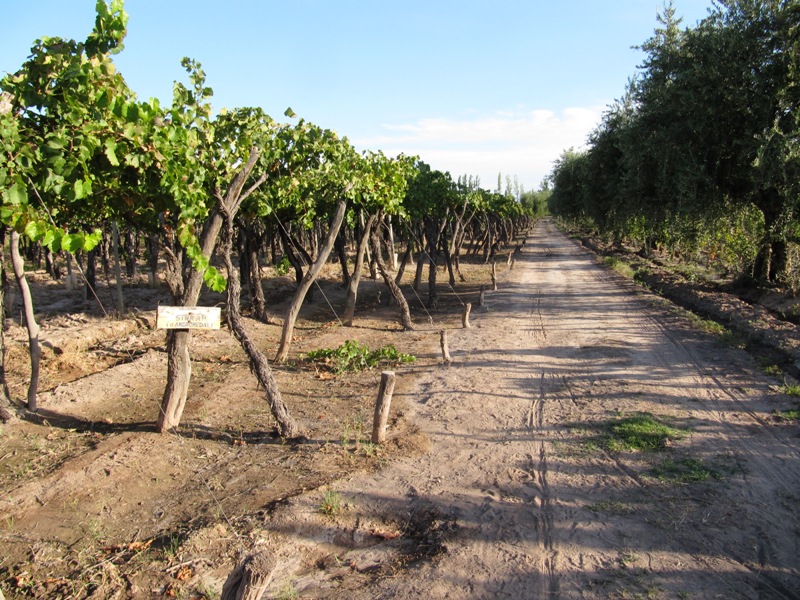
CarinaE vineyard

CarinaE vineyard

After the tour we would be led to a table overlooking the vineyard, or a pair of glasses tucked between rows of barrels in the cellar.  They would pour a delicious variety of wine and even the freshly pressed grape juice.

Our favorite winery was CarinaE which was actually in Maipu Valley.  We tasted an extensive variety of 14 different wines.  They were so good that we lugged two bottles around for two weeks afterwards.  The second best wines were at Alta, a bigger winery with an informative staff and generous pours.  We also tasted at Filosofos and Pulmony and at each place we learned a little bit more about wine and Argentina.

Mendoza bus and huge sidewalk trench

Mendoza bus and huge sidewalk trench

Back in town we had to be careful after our wine tastings.  The gutters of Mendoza are uncovered, meaning a nasty fall if you don’t pay attention!
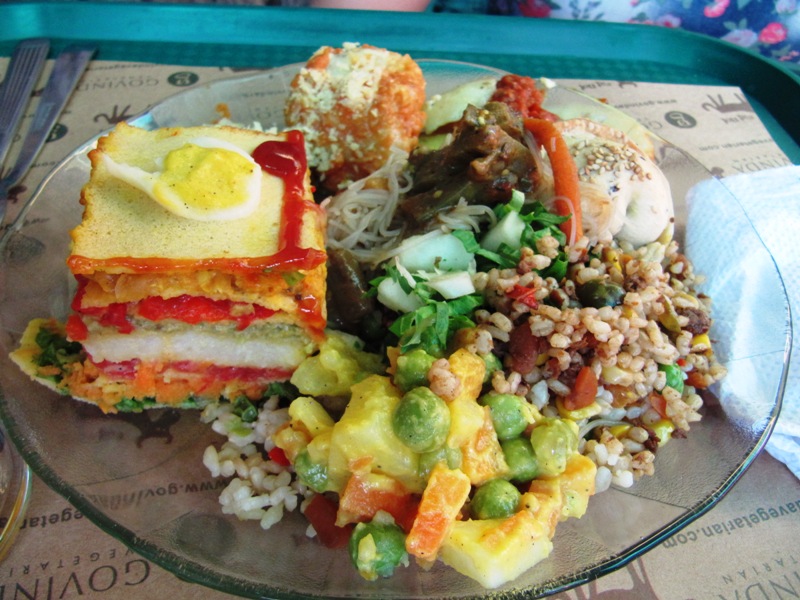
Plate of food assembled at Govinda
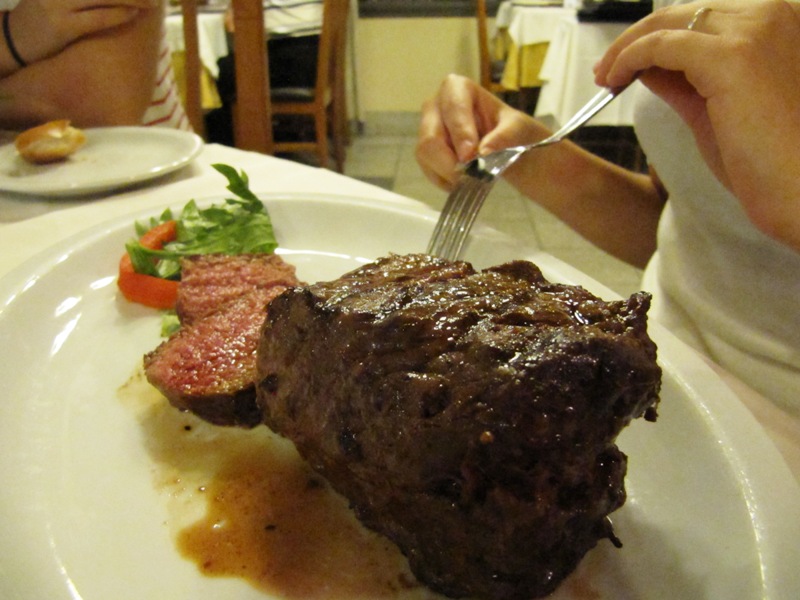
Plate of food assembled at Govinda

Bife de chorizo at Don Mario

Bife de chorizo at Don Mario

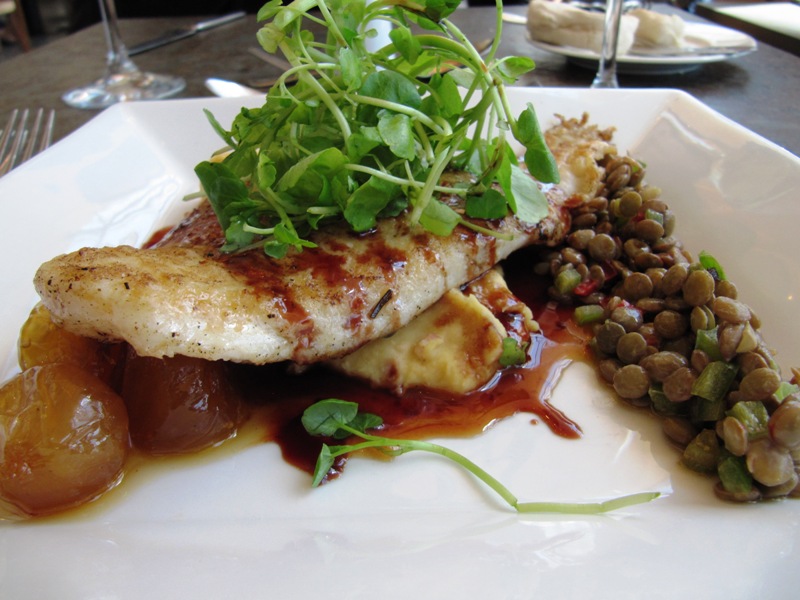
We ate delicious food and we met new friends in Mendoza as well.  It was nice to get some satisfying veggies at the vegetarian per kilo restaurant Govinda.  Our new friends Nick and Caroline invited us to Don Mario for the biggest juiciest steak I have ever attempted to eat.  I learned that Argentinians can cook their meat, really good meat…just not in BsAs.
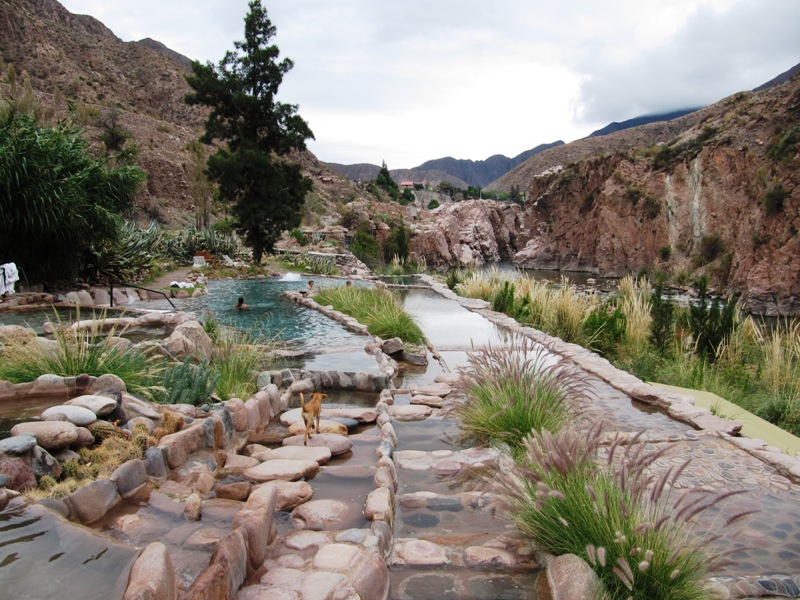
 Termas Cacheuta

Termas Cacheuta

We had an extra day so we decided to splurge and go to the Termas Cacheuta.  It was a spa tucked away inside a jagged and majestic canyon.  The pools varied from burn your back to freeze your ass.  We would bounce between the pools enjoying the various bubble jets and the time to relax.

Buffet lunch at  Termas Cacheuta

Buffet lunch at Termas Cacheuta

Lunch time meant that the pools cleared out and everyone rushed the buffet.  The choices were a large variety of veggies for a make-your-own salad and, of course, an asado of Argentinian meats.

Mini canyon and creek close to the termas

Mini canyon and creek close to the termas

Mendoza had some tantalizing tastes and beautiful views.  I was happy that we had the time to savor them both.

The Best Bus Ride Ever (by Carmen)

Valley and creek

Valley and creek

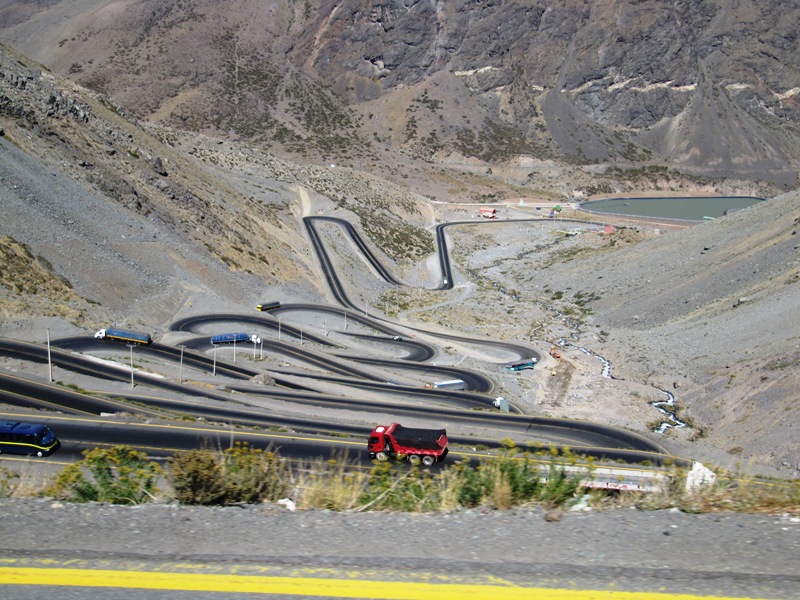
Long bus rides come with the territory when traveling in South America.  Extremely long in some cases – I’m talking 24 hours or more!  Nathan and I have avoided such journeys, keeping our trips to 10 hours or less.  On some of our longer journeys we take an overnight to save on money and time.  These can actually be quite comfortable with seats that recline nearly flat.  But there are some bus rides worth being awake for. Such is the case with the trip from Santiago to Mendoza.

Andes cliffs

Andes cliffs

A few years ago my cousin traveled around South America.  She endured numerous bus hours but one trip in particular stuck out in her mind: Santiagoto Mendoza. Ever since, I’ve actually been looking forward to the eight hour journey.  (Thanks Adri!) The two cities are separated by the Andes. It’s a mean job for the bus to get up and over these mountains, but for us it made for spectacular views. 

A ribbon of road

A ribbon of road

Glacier in the distance

Glacier in the distance

As the bus trudged up switchback after switchback our eyes were practically glued to the windows.  We were enveloped by high cliffs carved by the swift river running alongside the road.  Glaciers peeked out from distant mountain peaks.  The drama of it all made the ride feel much shorter than it actually was.  Bring on the 24 hour bus trip!  Ok, not really but we are looking forward to more scenic drives through northwest Argentina.

Valley with mossy river

Valley with mossy river

Tall Andes valley

Terremotos in Santiago (by Nathan)

View from Santa Lucía

View from Santa Lucía

Sometimes the best way to see a city is with friends by your side.  When those friends live in foreign countries, even better!  Santiago is a flourishing city wrapped with steep mountains and bustling with 50% of Chile’s population.  Many of the best sights and food are only known to locals, so we were excited to temporarily move in with our friends Bobby and Stephanie.

Vinyards and Chilean flag

Vineyards and Chilean flag

Lunch at Bodega Isidrio

Lunch at Bodega Isidrio

The last time we were together we had a great time exploring the wineries of Napa Valley.  For our first day in Santiago, we decided to repeat the experience with a day trip to visit the Casablanca wine region as well as the coast.  There are few better Saturdays than sipping on wine and going to the beach, so we had a perfect day planned.  On a beautiful morning we rented a car and ascended from Santiago to find a valley lush with grape vines.  Our first stop was Emiliana Organic Vineyards.  The excellent tasting took place in a beautiful glass, wood and stone building.  We bought two deliciously inexpensive bottles and we were on to the second winery.  Cerro San Isidro is a modern, bleach white villa perched on the hillside.  Overlooking the valley we enjoyed a delicious lunch.

Viña Beach

Viña Beach

Back in the car and we were on our way through the mountains and then dropping in the colorful beachside communites of Viña del Mar and Valparaíso.  We enjoyed a walk along the beach boardwalk of Viña.  We sipped pineapple juice, ate churros and admired the local crafts.

Valparaíso Streets

Valparaíso Streets

Valparaíso overlook

Valparaíso overlook

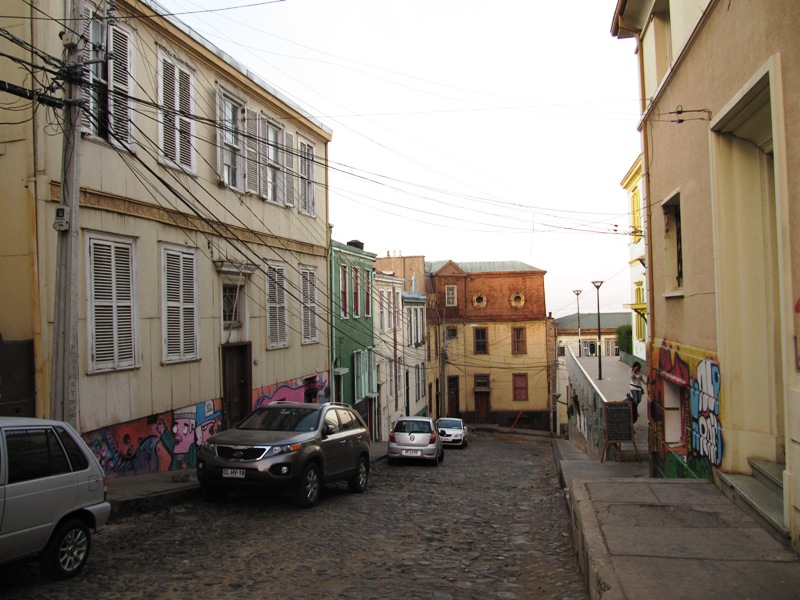
A short subway ride away (yes, they have a subway) and we were in Valparaíso.  This small town has a colorful charm, steep hillsides with boxy buildings clinging to the slope.  The streets are cobblestone and every visible wall and surface is artfully painted with murals.  The art was political, scenic, cultural and sometimes just tagging.  But the graphic images gave the city an intriguing sense of place that was fun to explore.

Backyard Asado

Backyard Asado

A late night drive brought us back to Santiago.  We were able to experience an excellent day trip only possible with local friends.  The next day we tagged along to a backyard asado (BBQ) and birthday party that rocked our world with a wonderful home-cooked meal.  First there was pisco sour made awesomely pink and delicious with imported Arizona tuna (cactus apple).  The main course was a fall off the bone lamb cooked in an stone oven then finished over coals and a brine bath.  Sebastian and Laura were excellent hosts.  Great food and a chance to speak Spanish with some interesting Chileans made for a special afternoon.
Parque Forestal

Parque Forestal

Ice cream from Emporio La Rosa

Ice cream from Emporio La Rosa

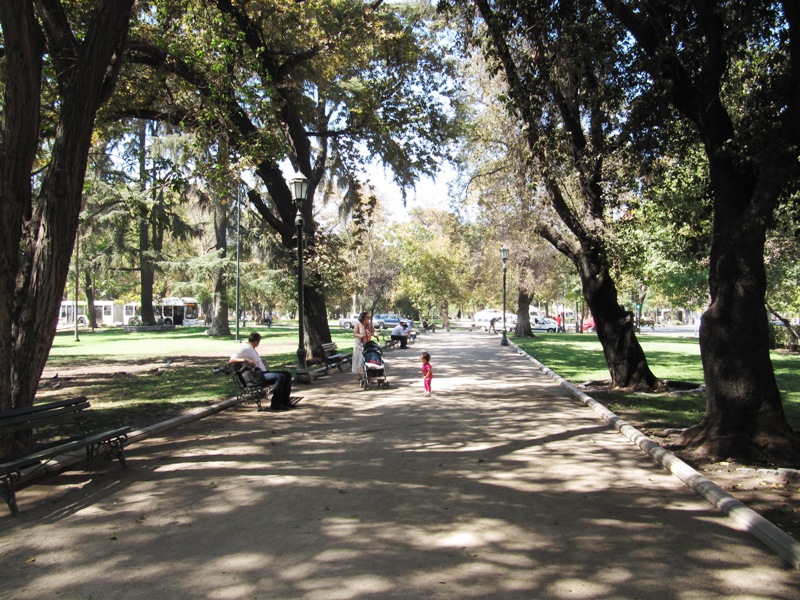
There are more than enough activities to keep busy for a few days here.  We were staying in the Las Condes area that had a beautiful rose-lined park. Close to the center the slender Parque Forestal offered Parisian-like strolls and locally crafted ice cream.  We enjoyed frutas del bosque (forest fruits) and thai ginger. 

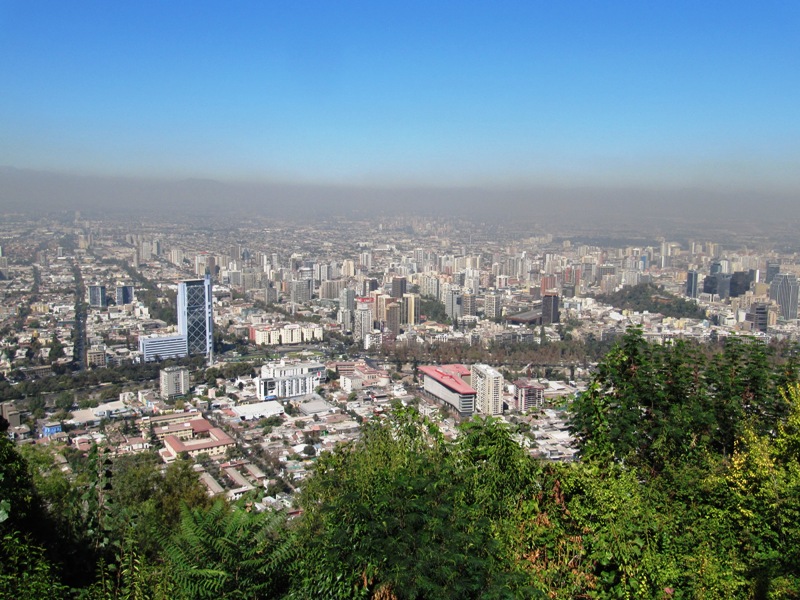
Santiago and its smog

Santiago and its smog

There are a few vistas in the city, but be warned that the air quality is pretty bad.  Santiago is surrounded by mountains that offer crisp snowcapped views in the winter, but in the summer the smog and dust becomes trapped, entombed by the mountains waiting for a storm to clear it out.  Unfortunately our timing in Santiago was one of those bad air times.  With our throats raspy and our skin scaly we climbed the Cerro de Cristóbal.  We were surprised to find that we could only see a third of the city.   In the center of the city we walked to Cerro Santa Lucía and we found an urban look at Santiago under the smog.

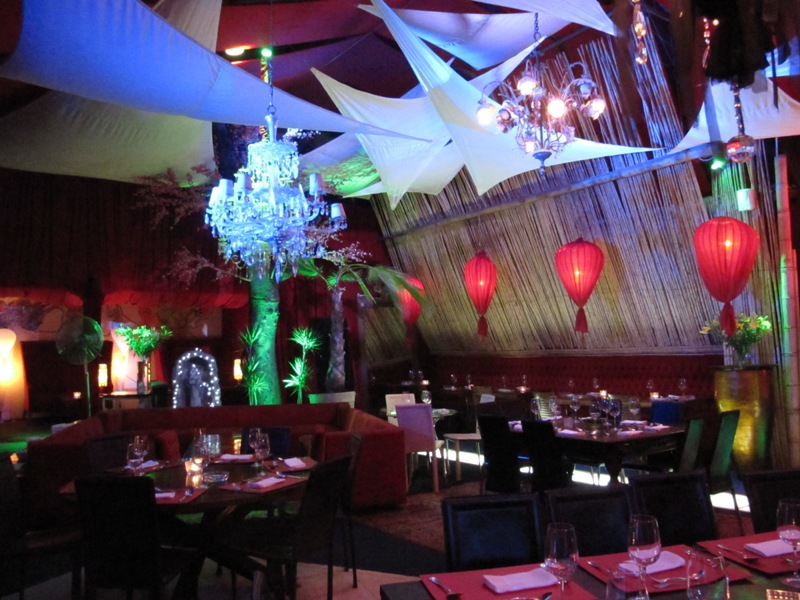
Kai hidden Thai restaurant

Kai hidden Thai restaurant

There were many great places that we found only because of our friends Bobby and Stephanie.  Kai is this vibrantly colorful and ornate Thai restaurant   There was no sign, no entrance, but we walked through an unmarked doorway and found some deliciously spicy food.  It’s funny how I miss certain flavors, and finally after weeks of travel Bobby and Stephanie showed me a place to excite my spicy taste buds.

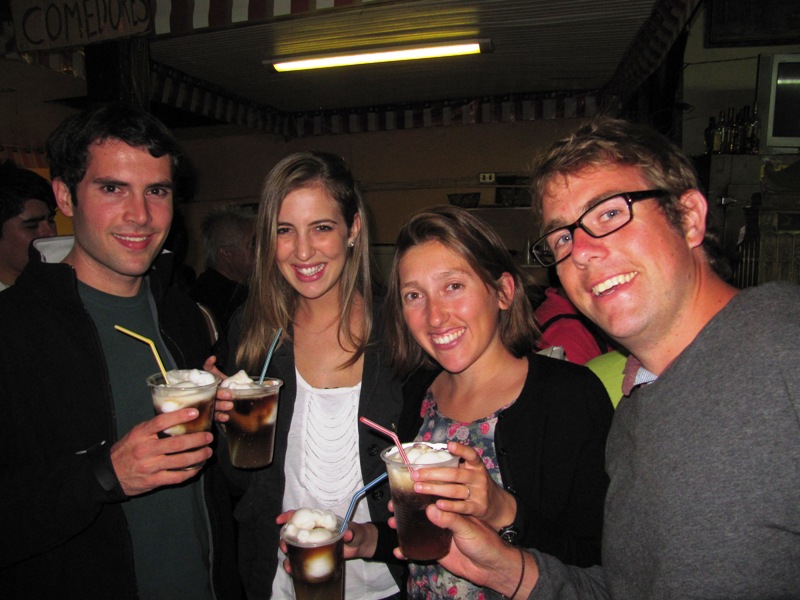
First round of terremotos

First round of terremotos

From one hidden door restaurant to the Chilean drinking hall of La Piojera we were welcomed into a new community of expat and Chilean friends.  It was an initiation into the Chilean culture with cheek kisses and a round of terremotos (earthquakes).  La Piojera definitely makes the ground feel like it’s moving as they scoop an iceberg of pineapple sorbet into a goblet of white wine and top it with a downpour of syrupy mead-like liqueur.  The end result: an off-the-richter drink!

The name terremoto is very apt and almost taunting because, like California, Chile has its share of ground shaking.  To our benefit they have a good grasp on their earthquake engineering.  One shaker caught us on the 25th floor of Bobby and Stephanie’s apartment.  We stood there frozen and watching the building sway against the horizon.

The politically exciting Bar Clinic

The politically exciting Bar Clinic

But the earthquake didn’t stop us from enjoying a few more drinks.  Bar Clinic delivered an excitingly political atmosphere and a few local draft beers for us to enjoy the afternoon sun in downtown.  The walls were decorated with odd parodies and humor reminiscent of “The Onion.”  Close by there were a few nice museums and plazas that dotted the city.  Unfortunately the pre-Columbian museum that we were excited about was closed for renovations.  We settled on the eye opening Botero exhibit on Abu Ghraib which coincidently enough was on loan from the Berkeley Art Museum.

Sizzling shrimp and garlic

Sizzling shrimp and garlic

Santiago has a culinary dish that we frequently spied on other tables.  They grill up tiny shrimp in butter, garlic and optional chili peppers in a small cast-iron pan.  It is delivered sizzling on the table.  Each shrimp turns bright red, perfectly cooked and succulent.  We liked it so much that we ate it twice, once at the excellent restaurant Galindo and then again at the seafood market.

Fresh seafood market

Fresh seafood market

The fresh food market in downtown Santiago is enormous.  Carmen and I spent hours roaming the aisles of meats and produce and we did not nearly see all of it.  The first of the markets is the fresh seafood.  Fifty or so vendors and another fifty or so restaurants called out to us as we walked by.  They held up huge pieces of salmon and others showed off their practically alive mackerel.  We settled for the tiny, perfect little shrimp.

Vega herbs

Vega herbs

Vega vegetables

Vega vegetables

Across the street is where the craziness of fresh food begins.  The first building is relatively empty and almost fooled us, except that this is where we found all the locals eating their farm to table fill of local meats and vegetables.  Further on there are a series of buildings and warehouses each with dense stalls of vendors.  This area is called La Vega (the field).  We found a vendor selling thirty types of peppers, another tomatoes, and another showed a seemingly life-cycle display of the onion.  He had mounds of chives, perfect green onions and even bright purple and plump onions, to complete the family huge leeks overflowed their crate.  We were most excited for the paltas (avocados) which were tender and ready to eat for only $1/lb.  There were dried fruit vendors, grains in bulk and, of course, meat.  Huge sections were devoted to poultry or beef and occasionally we’d see a rack of lamb.  All cuts were displayed their glass cases and ready to take home to cook.

Back in the kitchen

Back in the kitchen

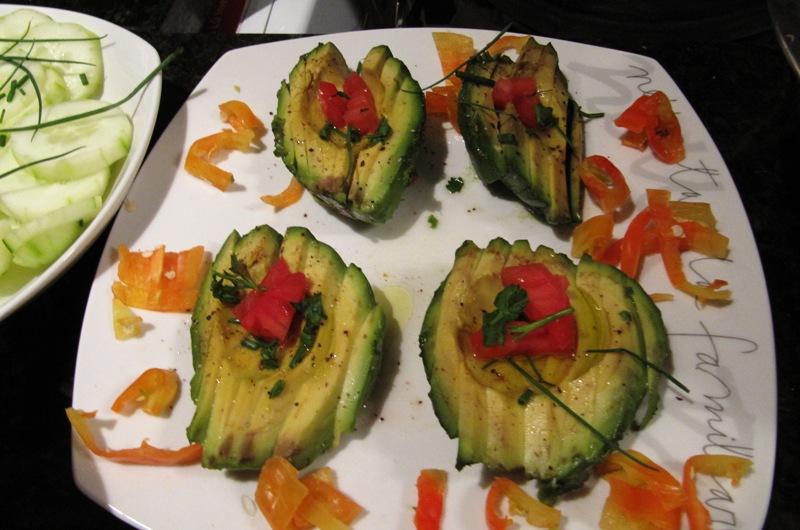
Chilean avocados

Chilean avocados

We wandered through the fresh food market gaining inspiration for a delicious meal.  We picked the spiciest peppers, colorful quinoa, and a mix of plump veggies.  Back at the apartment, we cooked a feast and shared some wine.  A home cooked meal that was perfectly fitting end to our days in Santiago.  Thank you to our wonderful hosts, Bobby and Stephanie!

Shrimp over quinoa and fruit salad

Shrimp over quinoa and fruit salad

The Tiny Island of Ihla Do Mel (by Nathan)

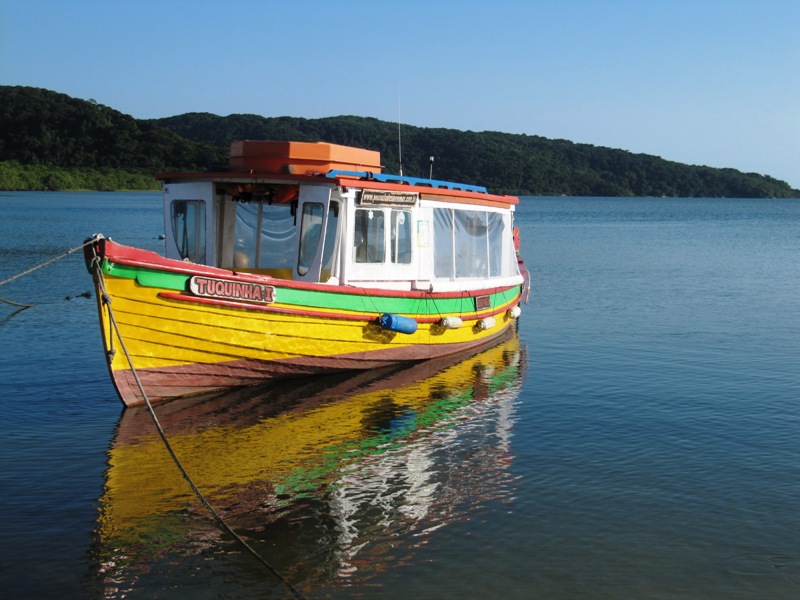
Colorful fishing boat

Colorful fishing boat

Time for a vacation from this vacation.  Traveling is hard work. Every few days we pack our rucksacks and transport ourselves to a new destination.  Each place is an adventure and every city requires planning for places to eat, sights to see and activities to entertain.  To us, this is the fun of traveling, an adventure wherever we go.

We try to spend an afternoon here and there reading or napping, but then we get to the point where we need a few days to really relax. We grabbed our swim suits and headed to the tiny Ilha do Mel (Honey Island).

Docks of Parana

Docks of Paraguaná

Originally it was a colonial fort, but now it has less than 1000 residents, no cars, no roads, just sandy paths, lush forests and pristine beaches.  I’m relaxing just writing about it!

Buffet in Paraná

Buffet in Paraguaná

The only way to get to the island is by ferry from Paraguaná or Ponta do Sol.  Before departing we grabbed lunch at a per kilo restaurant. The variety and quality of food at these places is wonderful.  We filled our plates with feijão (black beans) and salads and then waddled our way onto the boat.   Then we chugged along through the calm blue waters to the island.

Water sunset

Water sunset

There are two villages on the island.  We stayed on the southern edge in Encantadas.  Our hostel was adorable with its own wooden balcony and two hammocks overlooking the beach.  A five minute walk and we were in the water watching the sun disappear behind the mountains.
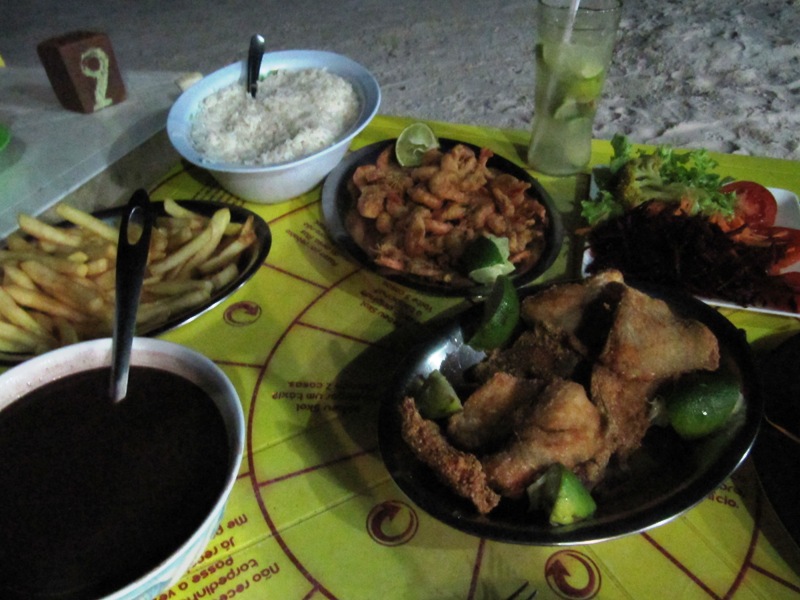
Dinner in the sand

Dinner in the sand

We had several options for dinner that night.  We walked along the beach with our sandals in our hands until we found a place that offered everything we wanted.  The owner suckered us in first complimenting our Portuguese then questioning us if we were Argentinean.  We gorged on fish shrimp, fries, salad, rice and feijão.  With our feet in the sand we quenched our thirst with a caipirinha or two.

Playa Grande

Playa Grande

Travel around the island is by foot along winding sandy trails through the forest that emerge on picturesque beaches.  We traveled here mid-week and the island was empty.  Supposedly the island is packed with thousands of people in January, but we were only aware of fifteen or so tourists during our stay.

Grilled fish with capers at Mar e Sol

Grilled fish with capers at Mar e Sol

We would swim at a beach, bathing in the sun for a few hours, then grab our day pack and hike to another part of the island.  The other village is called Nova Brasilia and there is about an hour and a half walk between there and Encantadas.  There is also a ferry that is about twenty minutes that runs every 1-2 hours.  For lunch we plopped our sandy bodies down on the bench seats of Mar e Sol.  They grilled us a delicious fish, heaped high with capers the size of small grapes, bursting with salty brine in every bite.

Ihla do Mel fort

Ihla do Mel fort

A few hours more in the sun, and miles of beaches later, we arrived at the northern tip.  Here we found the remains of the historic fort with thick ornate white-washed walls and canons to protect the island from the Spanish.

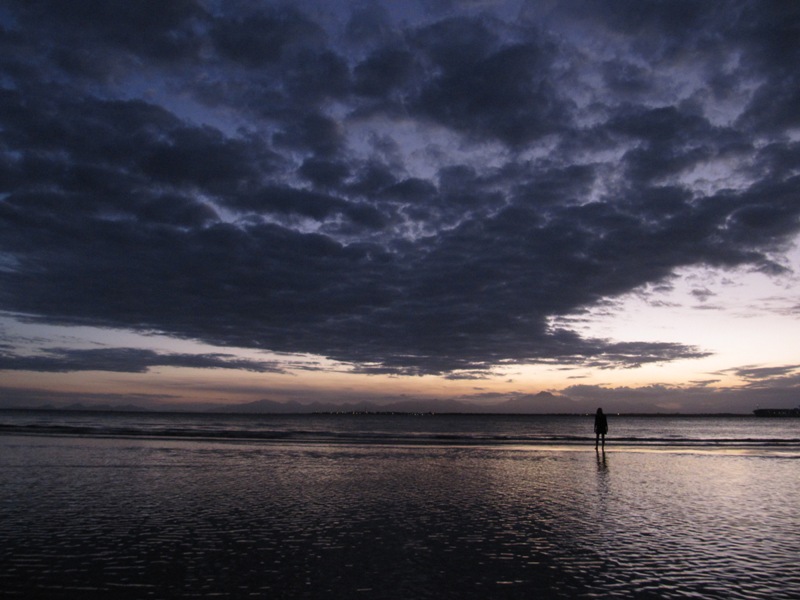
Carmen on a sandbar in the sunset

Carmen on a sandbar in the sunset

Our little beach in Encantadas has this special sand bar.  The tide would recede in the evenings abandoning the fishing boats in the sand.  It was a challenge to become fully submerged.  We walked 300-400 feet from the shore and the water was still knee deep!

In the morning the water would return and wipe away the foot traffic of the previous day.  The revived boats bobbed happily in the water.

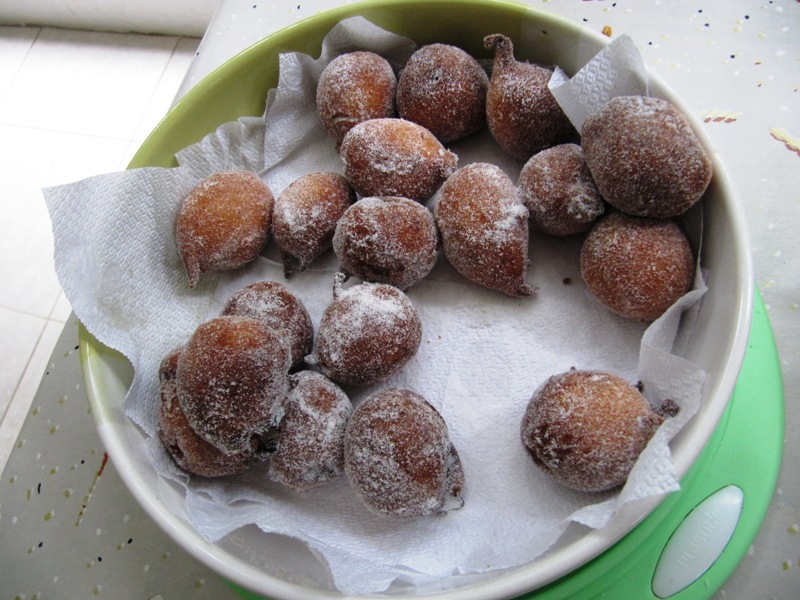
Banana fritters

Banana fritters

Our hostel served us a particularly wonderful breakfast of fresh papaya, mango, watermelon, bananas, bread and jam.  On the last morning  the quiet young woman that ran the hostel made us these delicious banana fritters (if you know the name please comment).  Crispy and sweet on the outside and gooey oozing banana on the inside.  Perfect dumplings of joy from the perfect and beautiful little Isla do Mel.

Checking Out the Hype in Curitiba (by Carmen)

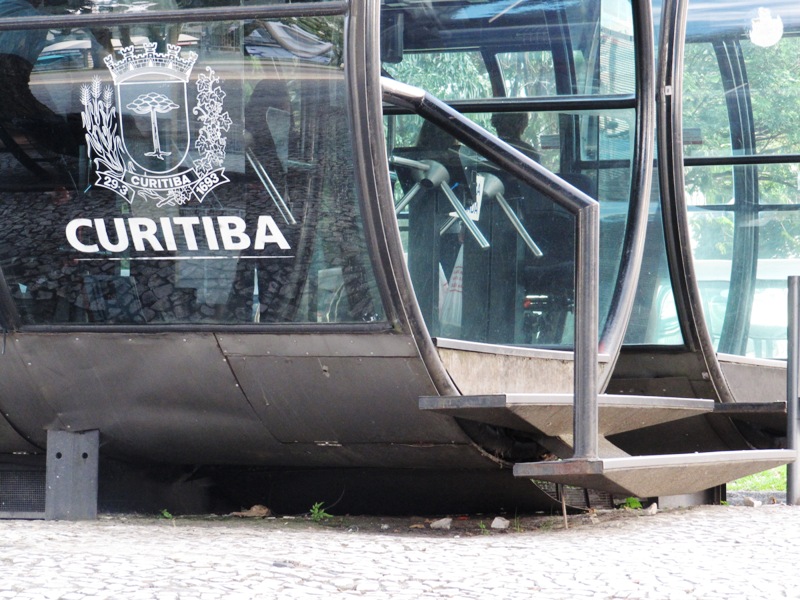
Curitiba seal on bus tube

Curitiba seal on bus tube

Anyone who knows me knows that I love transit.  Buses, trains, streetcars, subways…they all hold a special place in my heart. I had drafted a long paragraph on all the reasons I feel this way; how transit is an important part of environmental sustainability, social equity, economic efficiency and public health.  But Nathan said it was a bit of a snooze for people who aren’t as passionate about this topic.  So I’ll spare you the details.  But I will say this:  Everyone deserves a balanced transportation system (including transit, walking, biking and driving) that gives people choices on how to travel depending on when, why and where they are going.

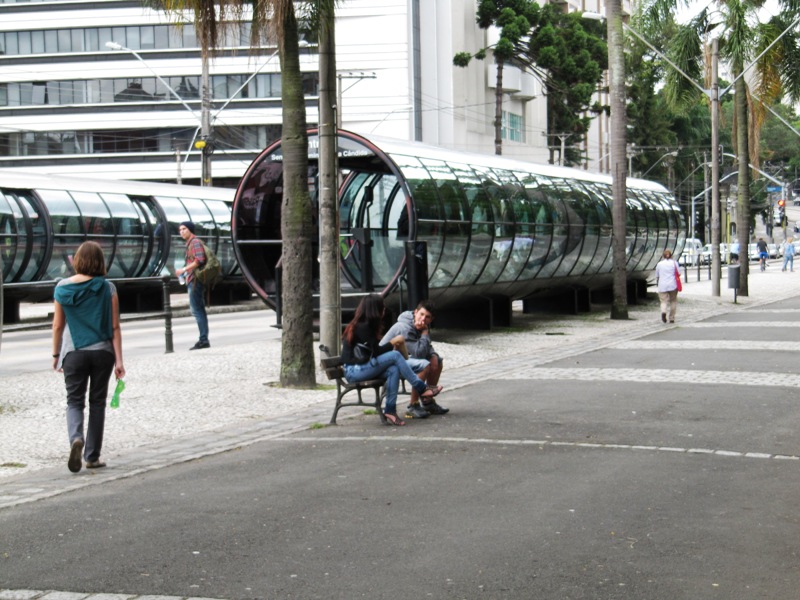
Bus rapid transit stop

Bus rapid transit stop

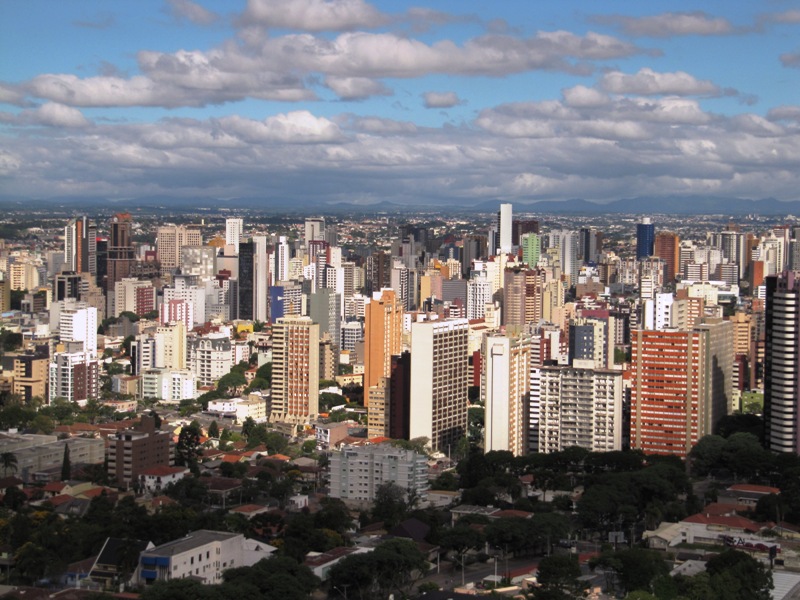
All this transit talk is a preface to my post on Curitiba.  This city in Brazil is known throughout the world for its investment in bus rapid transit (BRT).  The BRT system is essentially an above ground subway with buses instead of train cars.  As they built the BRT in the 1970s, the government encouraged tall buildings along the routes so that more people could benefit from the system.  What more could a transit lover ask for?

Waiting for the bus

Waiting for the bus

I’ve heard a lot about Curitiba over the years and I’ve often wondered if it would live up to the transit hype.  Also, would there be anything worth seeing besides the BRT?  And of course, the bottom line for us –  how is the food? The answer to these questions are yes and good!

Curitiba Skyline

Curitiba Skyline

Curitiba Skyline 2

Curitiba Skyline 2

The success of these bus lines is evidenced by the dense land uses lining the routes.  These development patterns are no accident.  The city planners encouraged tall buildings in these areas to enable more people to take advantage of the transit.  My only complaint is that they did not always do enough for pedestrians.  Once people left the safety of the bus tubes, there are areas with no crosswalks or lights for people to safely cross busy streets.  But in the end, I was impressed and happy to finally see this transit system we (ok, more specifically transit fanatics) so often put on a pedestal.

Colonial plaza

Colonial plaza

There was more to the city than good transit.  It also had a cute colonial center which on Sundays turns into a huge market.  We found everything from bus key chains to pierogies!  Pierogies (Polish dumplings) are a strange thing to find in Brazil but this area actually had a lot of German and Polish immigrants in times past.

Brazil meets Germany at Schwarzwald´s

Brazil meets Germany at Schwarzwald´s

Which is why they had Schwarzwald´s, a German restaurant modeled after a medieval Bavarian beer hall.  I couldn´t get enough of their submarinos or mini-steins with pictures of Curitiba on them.  They would stick these in your glass of beer for no other reason than as a set of trophies to how many drinks you have had.

Tempero Brazilian buffet

Tempero Brazilian buffet

0.65 Kg of deliciousness

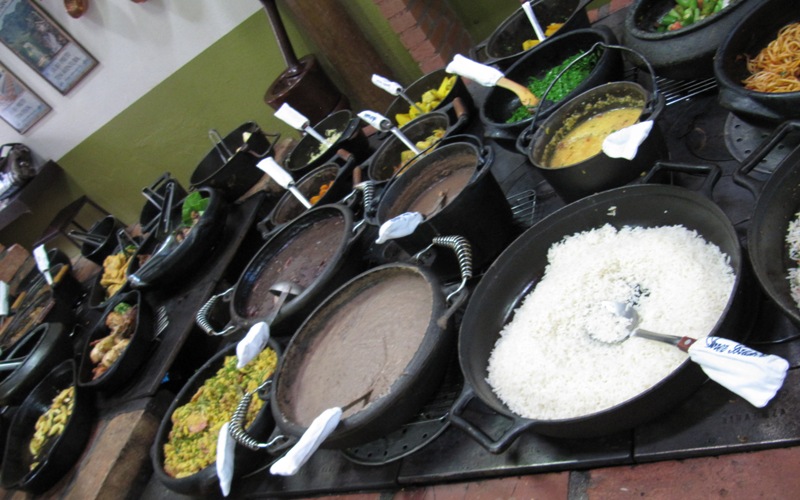
The next day we filled up our bellies with the best buffet we found in Brazil.  Tempero de Minas is a per-kilo restaurant, meaning they charge by the weight of your food.  The stews and veggies looked so good we had no trouble filling our plates to the brim.  Fortunately, it tasted as good as it looked.  Savory, slow-cooked goodness.

Oscar Niemeyer Museum

Oscar Niemeyer Museum

Leaping Nathan

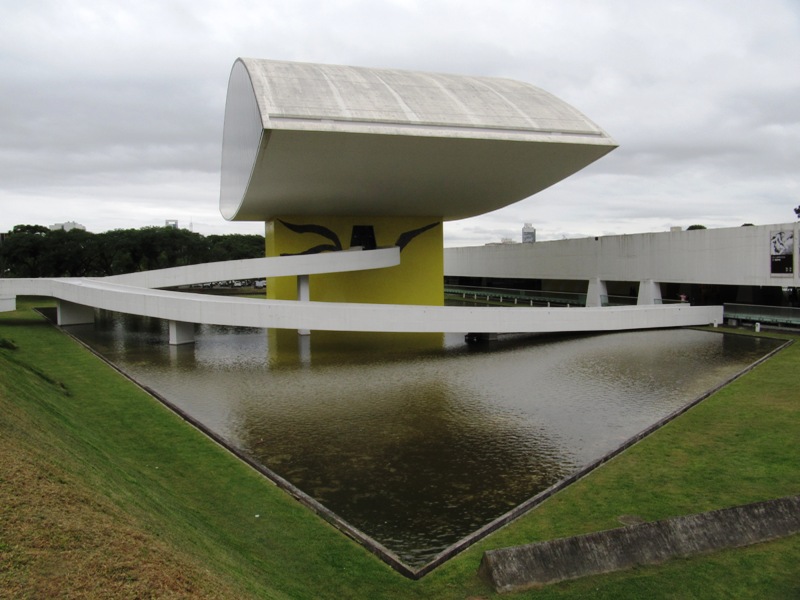
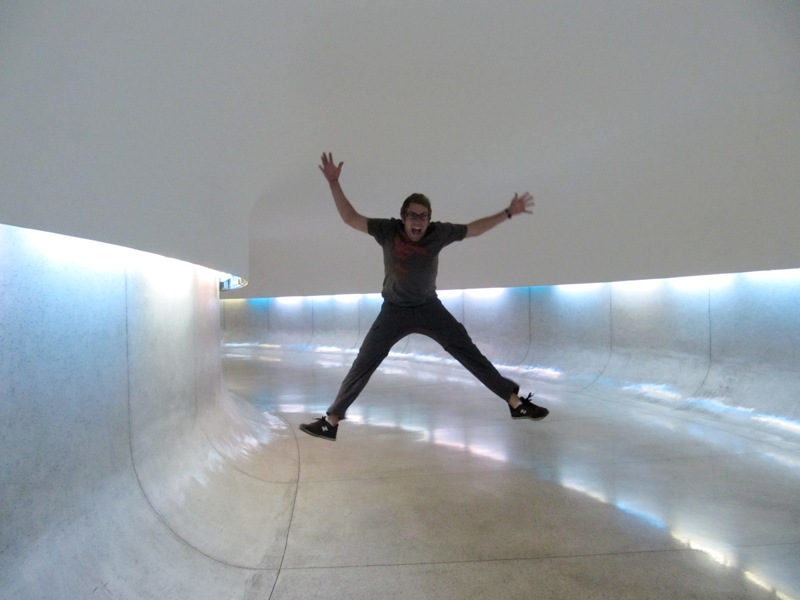
Besides transit, a major attraction of Curitiba is the Oscar Niemeyer Museum.  It mostly consists of modern art in a basic square building with this funky “eye” shaped bit in front.  We enjoyed ambling through the ultra modern architecture although the eye was under renovations.

Opera House

Opera House

Another much advertized sight was the opera house.  It is a bare steel structure that seems to float above a lagoon.

Samba rehersal in a bar

Samba rehersal in a bar

After the sights we still had some energy to go out on the town.  I had heard about a cool samba club and since our time in Brazil was coming to an end, I couldn´t pass it up.  Of course the club was completely empty until 12am so we waited in a bar across the street.  Fortunately, this was where the band was warming up so we got a very personal concert.

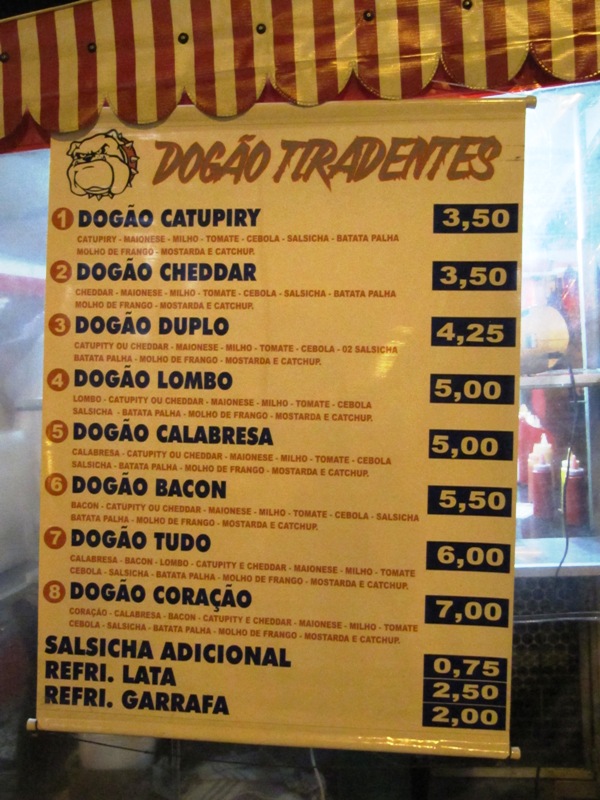
Fun hot dog stand

Fun hot dog stand

One more food adventure: hot dogão.  Everything in Portuguese ends with “ão”, pronounced “ow”, so why would hot dogs be any different?  We found them at a little stand on Plaza Tridentes that was hopping with people.  The strange toppings convinced us to try one.  Truth be told it wasn´t the greatest dog but the novelty factor was worth it.

4 feet on Portuguese style sidewalk

4 feet on Portuguese style sidewalk

Overall, I´m so happy to have made it to Curitiba. It deserves its reputation as an inspiration for bus transit systems.  Also, special thanks to Nathan for supporting my transit geek out excursion : )

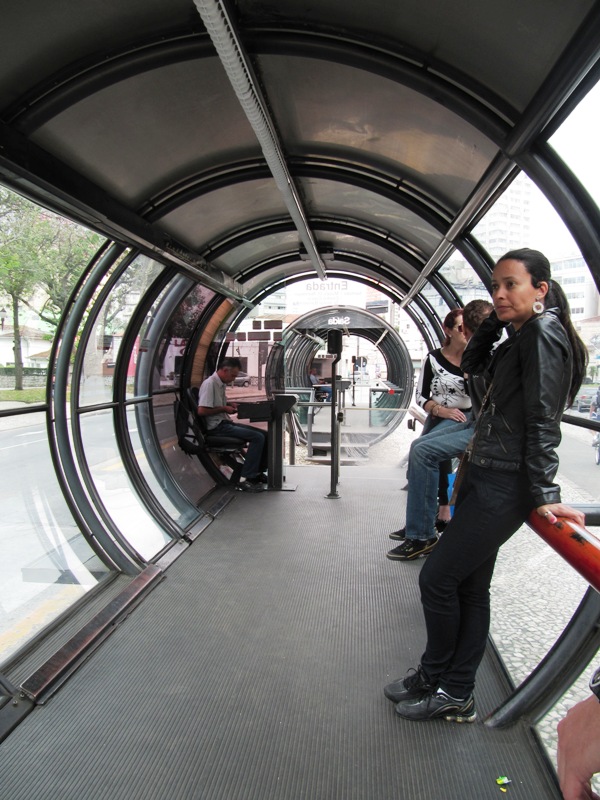
Me headed to the bus rapid transit boarding stations

Me headed to the bus rapid transit boarding stations

Iguazú, Argentina Style (by Carmen)

Nathan beautifully described the experience of Iguazú from the Brazil side.  With its stunning vistas and platform right near the Garganta del Diablo, it may seem like you have seen it all. But Nathan and I found that the Argentina side had a lot to offer as well.  Contrasted with Brazil, it gives a more up close and personal view of the falls.

Garganta del Diablo

Garganta del Diablo

The first thing we did on the Argentina side was to see the Garganta de Diablo from the top.  This is the largest of the falls and one of the most impressive.  There is something strangely mesmerizing about so much water free falling hundreds of feet.

Trees and cascadas

Trees and cascadas

Next we hit the upper trail that looks at a series of waterfalls from the top.  Even though there is a banister, the act of looking down a straight drop into the turbulent water at the bottom made me a bit dizzy.

San Martin waterfall

San Martin waterfall

Finally, we weaved our on the lower trail.  Parts of this almost go under some of the “smaller” waterfalls.  There is even a small ferry that takes you to an island in the middle of it all.   The island has a short walk to one of our favorite vistas.  From here you can feel the power of one of Iguazú´s major cascades, San Martin.

Cascadas, San Martin on left

San Martin is loud.  You can hear the water screaming its way down.  One of the signs nearby had a picture of San Martin during a major drought in the 1970s.  This all mighty waterfall was literally reduced to a trickle.  It is hard to imaging compared to the heavy flow present today.  But it is a reminder of how fragile a seemingly invisible force of nature can be.

Foz do Iguaçu – Brazil (by Nathan)

For being one of the most spectacular natural wonders of the world, I am amazed that more Americans do not know about the Foz do Iguaçu.  It was unknown to us too, but with more trip planning it became an essential site and it fit seamlessly with our gringo trail through South America.

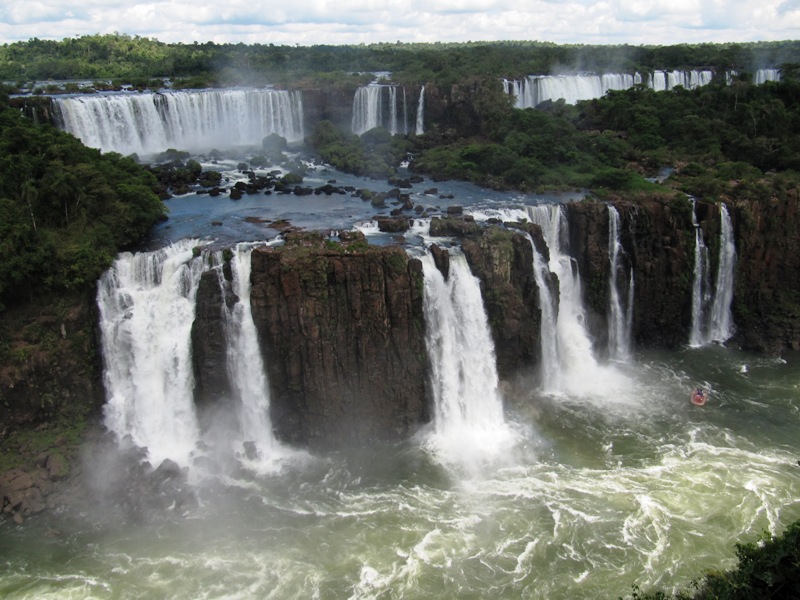
Foz do Iguaçu from Brazil

Foz do Iguaçu from Brazil

The waterfalls are at the border of Brazil, Argentina and Paraguay.  Paraguay used to have waterfalls, Guaíra Falls, they were so big that they had the highest volume of water flow in the world.  Now the Itaipu dam and reservoir sits in its place.  Nevertheless, Iguaçu still exists and it is thrilling.  The main viewing of the waterfalls is from a series of over-looking platforms from the Brazil side and weaving pathways through the waterfalls on the Argentinean side.

Toucan

Toucan

For anyone coming here, see the Brazil side first to get the big picture views, then go to the Argentinean side the next day to get up close, wet and personal.  Spend at least three nights, but these tiny cities have many other great activities and ecological reserves, Carmen and I left thinking we would have liked two more days.  The region is a jungle with lots of great wildlife.  We saw wild monkeys, toucans and coati.

Bahian Moqueca

Bahian Moqueca

When in Brazil, eat moqueca.  This stew of seafood, manioc and vegetables is hearty and perfect for a long day of hot humid hiking.  No car necessary, we grabbed a local bus for about $2 and it took us right to the park entrance.  We started along the south end of the park moving from vista to vista and worked our way to the biggest of the falls.

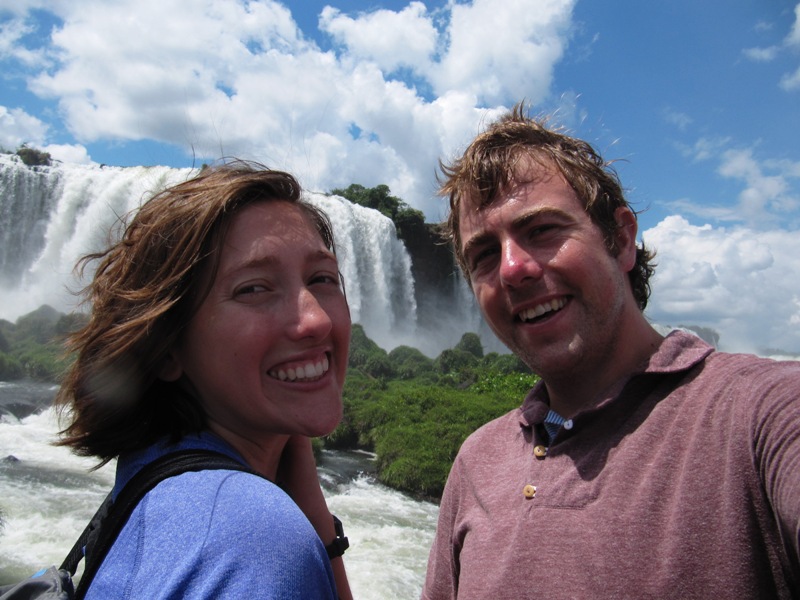
Us at the falls

Us at the falls

The awe-struck feeling that hit me when looking out into the valley was intense. My heart started throbbing rapidly, my ears became deaf by the thunder of the falling water and all that I could do was stare out, mouth open and probably a little drool hanging off my lip.  I was dumbfounded by the beauty of it all.

Foz do Iguaçu 2

Foz do Iguaçu with boat underneath

There is not just waterfall, there are hundreds.  A huge lake drains over cliffs that are 100-350ft.  The volume of water is breathtaking, 62,000 cu. ft. per second!  That is basically the entire volume of Lake Arrowhead in 2.5 seconds and Lake Anza in 0.5 seconds.  You look down and there are boats driving underneath the “smaller” waterfalls.  In a rush of excitement Carmen and I boarded one of these boats and we realized that this off-shoot waterfall was not small! volkswagen volumes of water dumped on us every second. With my yells “¡Ya estoy muy sucio!” and “Otra vez.” The driver dunked me another time.

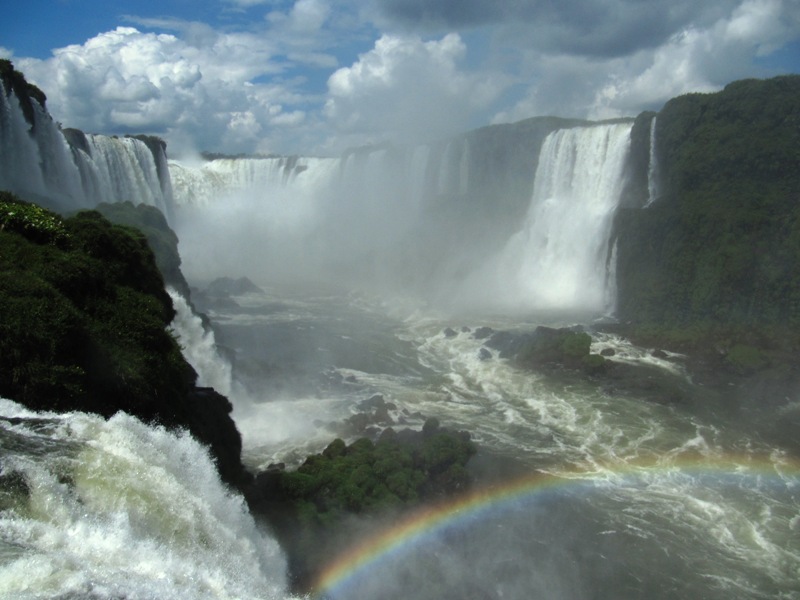
Rainbow and Garganta do Diabo in distance

Rainbow and Garganta do Diabo in distance

The last platform is the grand finally-  a concrete walkway and vista right in the mouth of the Garganta do Diabo (Devil’s Throat).  You stand so close that it is impossible to stay dry or even take pictures.  This is not because we stood underneath the waterfall, but because the mist engulfed us in a wet cloud.  This also made for some colorful rainbows.

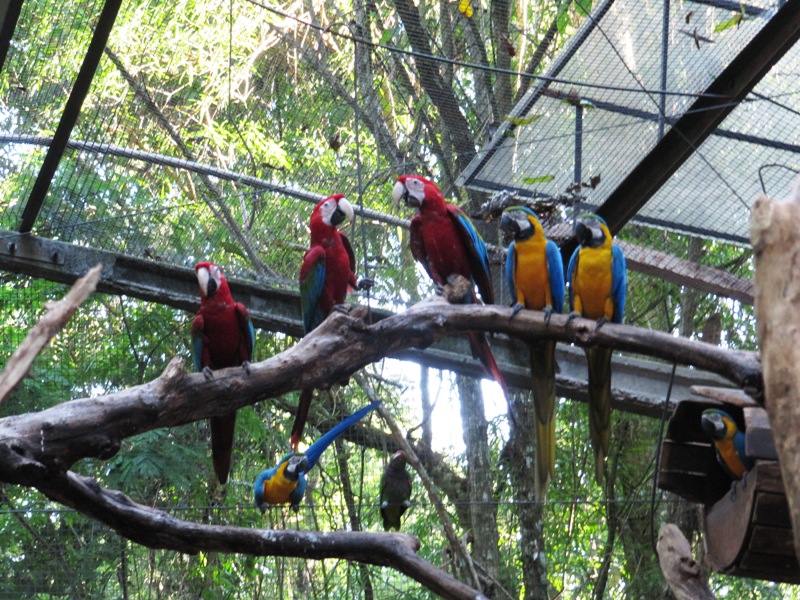
Ominous makaws

Ominous makaws

A five minute walk from the Brazil-side entrance is a phenomenal bird park.  I usually dislike zoos, but I was fascinated to see one dedicated to tropical birds.  There were so many colors and patterns, I had no idea that this many birds even existed.  In one of the “experience” cages Carmen and I stood in a small hangar with thirty or so macaw parrots of bright red, purple, blue and orange.  Suddenly they all dove off of their perches right at us.  They swooped and we dropped to the ground covering our heads imagining that this was a colorful version of the Hitchcock film, “The Birds.”  We survived and were entertained to find out that they were just flying to the other side.

Foz do Iguaçu is a beautiful place.  It is memorable in every way, an essential destination to every South American trip.  I am so ecstatic that Carmen and I had this opportunity.

LA + NYC = São Paulo (by Carmen)

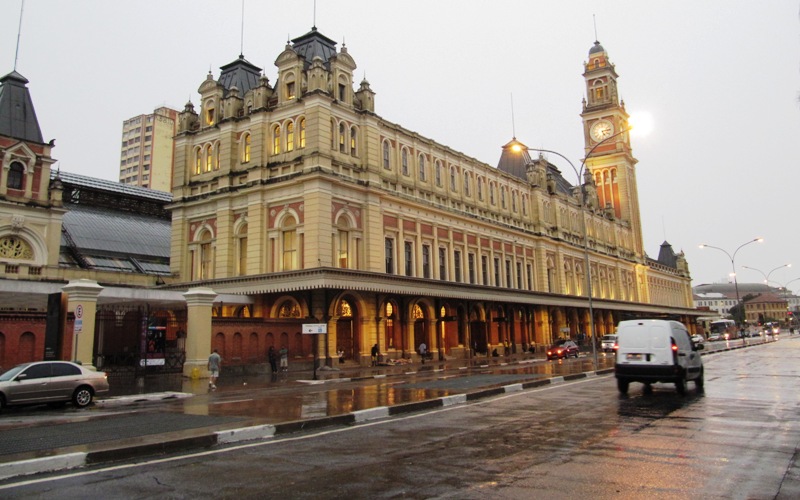
Estacão de Luz

Estacão de Luz - there aren't a whole lot old buildings in SP. Actually, most of it is modern and, well, ugly. But this train station provided us some shelter from a downpour.

In Anthony Bourdain’s episode on São Paulo he mentions that the city feels as if Los Angeles threw up on New York. A rather crude description but pretty accurate as well.  Like NYC, SP has a great subway system, a huge population (20 million people in the metro area!), more than a few skyscrapers and a wide variety of cultural activities.

The clean metro of São Paulo

The clean metro of São Paulo

Like LA, SP is a sprawling city laced with numerous choked up freeways.  Since it’s so spread out it’s not a city to wander around by foot.  It really helps if you have a friend who lives there and can show you around. 

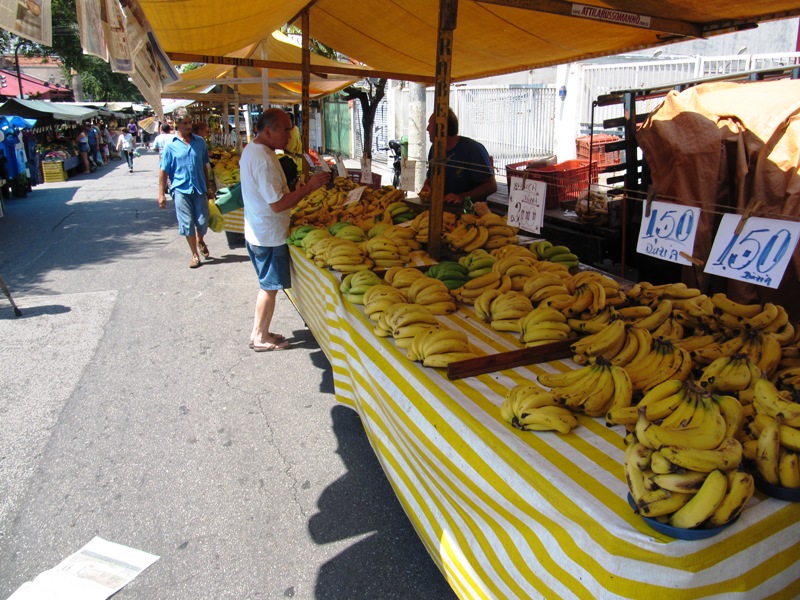
Banana stand at the farmers market

Banana stand at the farmers market

Alas, Nathan and I didn’t have a friend living in SP so we explored on our own.  Slowly, the city grew on us.  Especially as we sampled some of its culinary offerings.  Our first day in the city we wandered around the farmers market.  Being Brazil, the tropical fruits are bountiful and the banana stand in particular was huge.  But almost anything you could want was there.  I have to admit that I missed having my own kitchen to cook all the succulent ingredients.

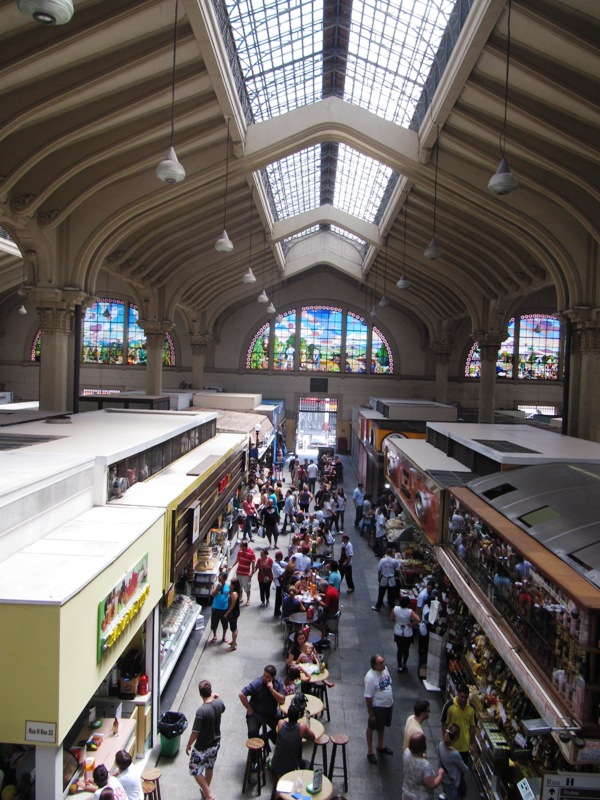
Municipal Market

Municipal Market

Mortadella sandwich

Mortadella sandwich

Later in the trip we stopped at the municipal market to pick up a SP classic, the mortadella. We chose the stand with the most people and scooted up to the counter.  A mortadella is basically a simple bun piled high with warm, thin sliced bologna.  Cheese and mustard completed the sandwich.  Pretty awesome paired with a beer, but I was missing some potato chips to go with it.

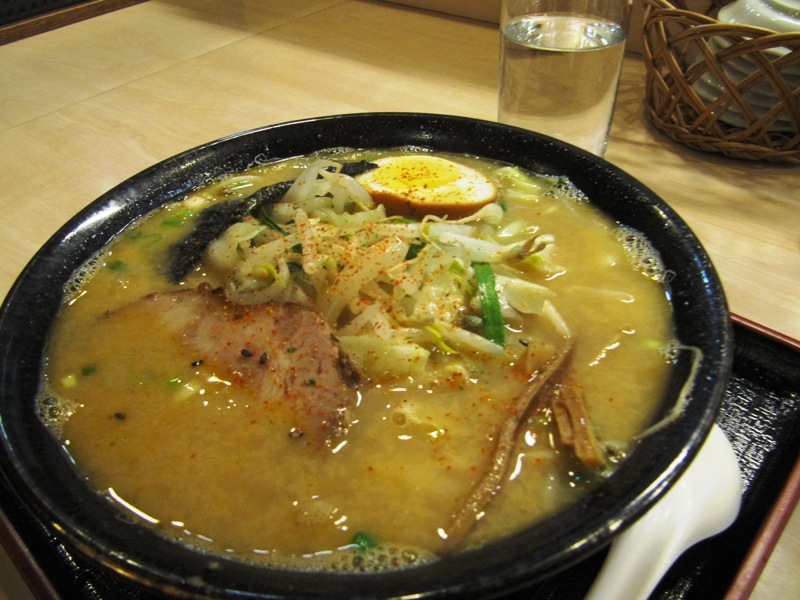
Ramen at Aksa

Ramen at Aksa

It rained everyday in SP so to beat the chill we were craving some soup.  Luckily for us, SP has a large Japanese population.  In Liberdade, essentially the Japantown, we popped into Aksa and ordered a steaming bowl of ramen.  Oh so comforting.

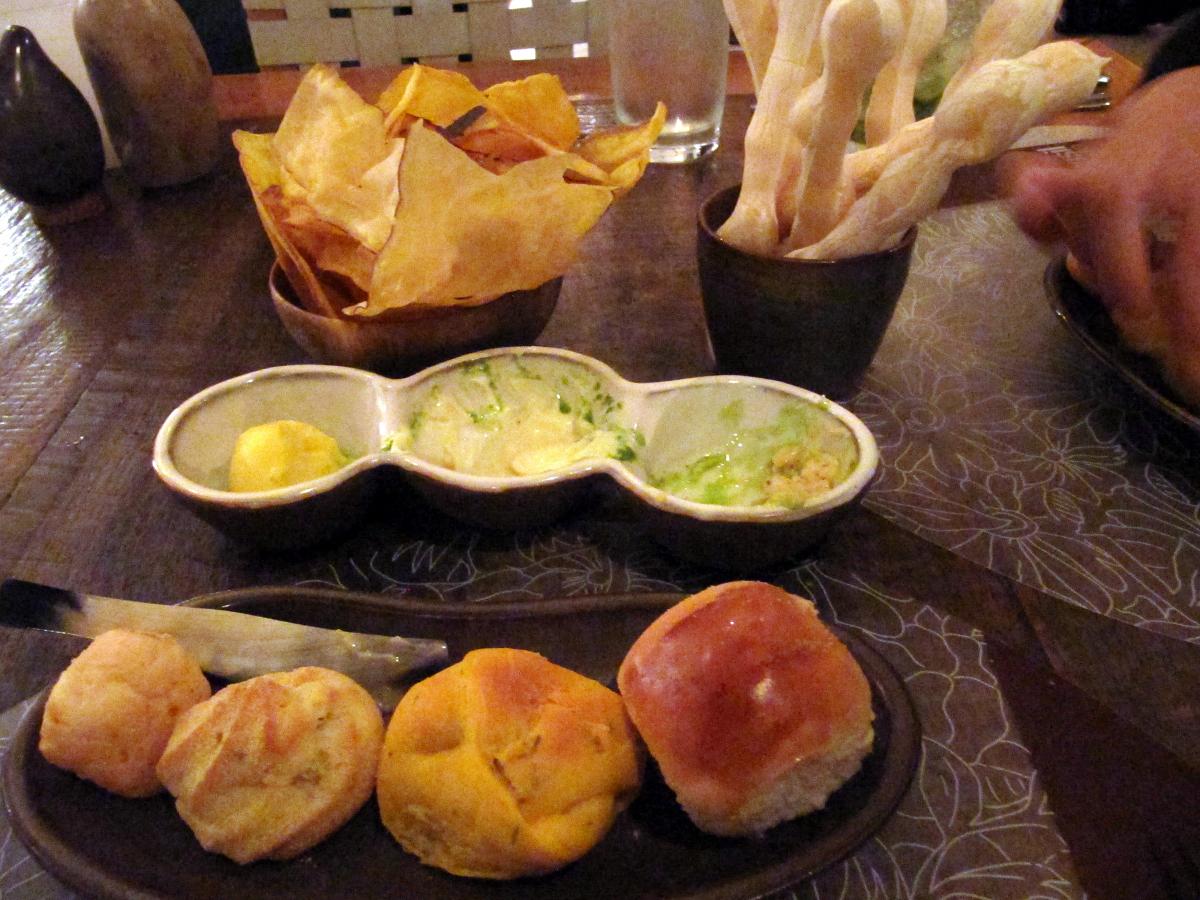
Brasil a Gosto

At Brasil a Gosto you get three types of butter, three types of potatoes and four types of bread!

Our last night in SP we decided to splurge a bit.  Everyone mentions Brasil a Gosto as the place to eat nouveau brazilian cuisine.  This means it takes traditional ingredients but prepares them in new ways.  For example, I had pork smothered with an amazonian berry sauce accompanied with creamed mantioc and lightly fried bananas.  (Sorry, the picture came out too dark to post.) The food and service were superb but borderline pretentious – the menu was a full on book!  But overall I’d recommend it because it was unlike any food I have had before.

Nathan loves his açai

Nathan loves his açai

As we headed out of town we couldn’t help but grab one more bowl of açaí.  Nathan could not get enough of the sweet and earthy flavors.  And then we were on our way to Iguazu Falls!

City, Beaches, and Cristo Oh My (by Nathan)

Rio de Janiero is engulfed by skyward reaching tropical mountains.  At the top of biggest and most prominent peak stands Cristo Redentor (Christ the Redeemer), the famed symbol of the city.  No matter where you are the Cristo is always overhead, always watching.  We wanted to see what he saw.  But we made our way slowly.

First we explored the lowlands, we baked in the sun at Ipanema, we drank coffee at Colombo, hiked the steps at Lapa and always just behind a cloud or shining brightly in the sun, the Cristo Redentor was there.

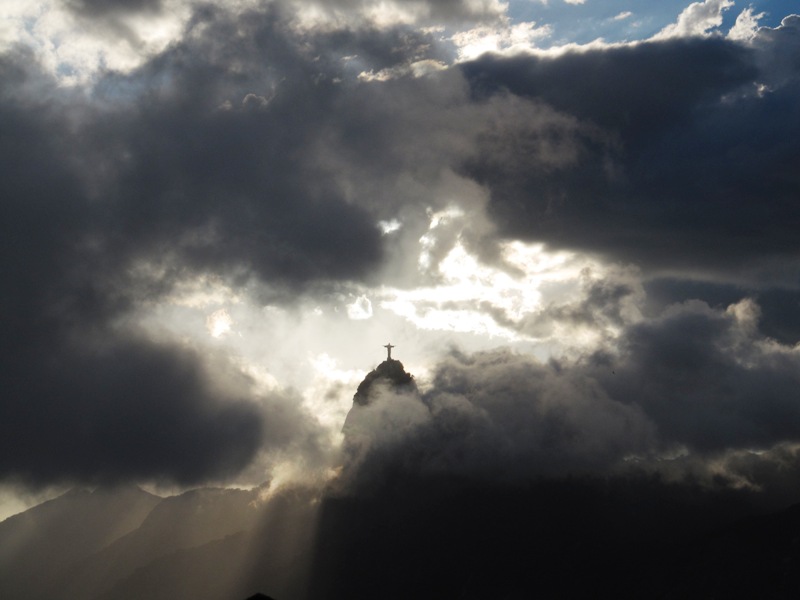
Parting of the clouds at Corcovado

Parting of the clouds at Corcovado

Our first vista of the city from any elevation was from the Morro da Urca.  This smaller mountain was a great little climb leaving us both out of breath and satisfied that this was at least a little training for our eleven days of hiking planned for the Peruvian Andes in May.

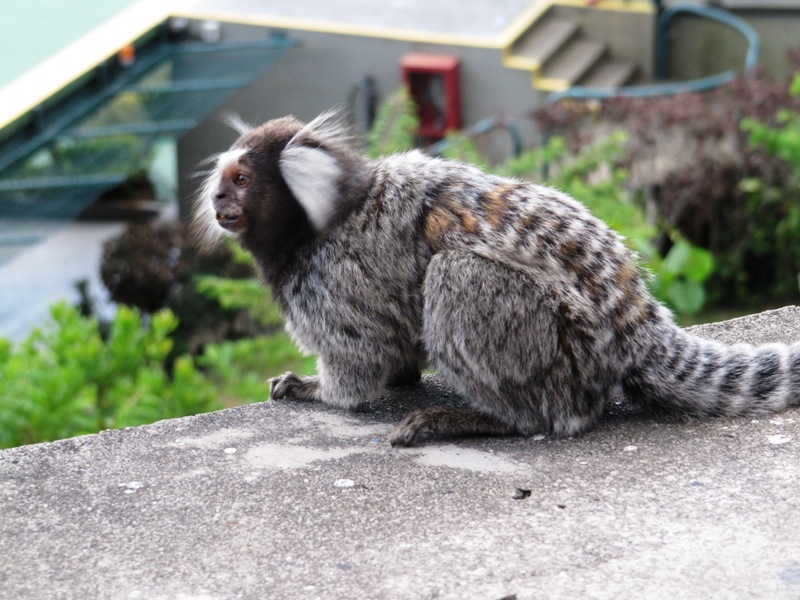
Marmoset at Morro da Urca

Marmoset at Morro da Urca

Upon reaching the summit we found another creature with an omnipresent watchful eye.  This common marmoset and his gang of friends looked like they would jump us and steal our granola bars if we approached too close.

Pão de Açucar from Morro da Urca

Pão de Açucar from Morro da Urca

The Morro da Urca can also be reached by cable-car for those not wanting a hike. From Morro we then took a cable-car to the main attraction, the Pão de Açucar (Sugar Loaf Mountain).  The hill is named after its familiar shape to the loaf of sugar made during pre-industrial refining.  It is a tall (400m) hill with shear and jagged cliffs all-around and of course has some of the best views of the city.

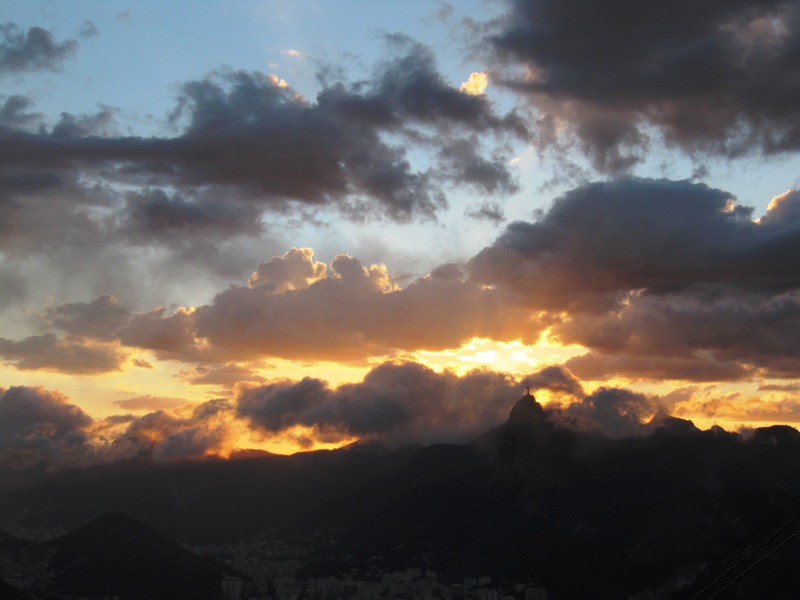
Sunset from Pão de Açucar

Sunset from Pão de Açucar

We arrived at sunset and we gazed out into the golden city.  The Cristo, high up on the Corcovado peak was shrouded by his apostle clouds.  The colors transitioned from a warm tangerine orange, then cadillac pink, then in flowed the deep purples, that, with the darkness brought the cool night.

Cristo Redentor

Cristo Redentor

The day finally came for us to visit the Cristo Redentor statue.  Up close we were able to view the intricate details  cast into the concrete: the seemingly flowing fabric, the tranquil facial expression, and the arms spread wide welcoming everyone to him and to Rio.  The statue is an elegant piece of art deco, angular, flowing and full of emotions.

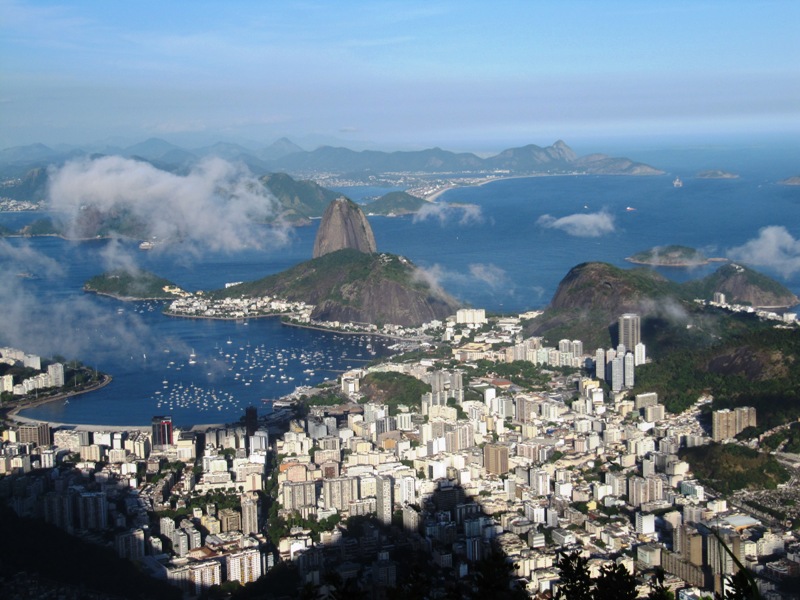
Rio from Corcovado

Rio from Corcovado

Turning around from the Cristo we saw the city of Rio from his perspective.  The botanical gardens, Copacabana, Pão de Açucar were all there, tiny specks in this beautiful city.  The buildings kissed the sand and the ocean appeared endless as it wrapped around the urban landscape.  Rio de Janiero has it all: food, music, dance, beaches, city and transit.  Could we move here and learn Portuguese?

Rio Historic (by Carmen)

Central Rio's narrow streets

Central Rio's narrow streets

I often think of Rio de Janeiro as a modern city complete with problems caused by rapid, unplanned urbanization.   I hadn’t much thought of historic Rio but it was a pleasant surprise to find it.  I know not all of you are not history buffs.  I am no expert either, but I love my hostoric trivia.  For example,  the city was founded in 1565 and has functioned as an important port for centuries.  It was also the seat of Latin America’s only monarchy.  Don Pedro I and Don Pedro II reigned from 1822 to 1889, when Brazil was declared a republic.  Ok… I´ll tone down the trivia for the rest of the post.   :)

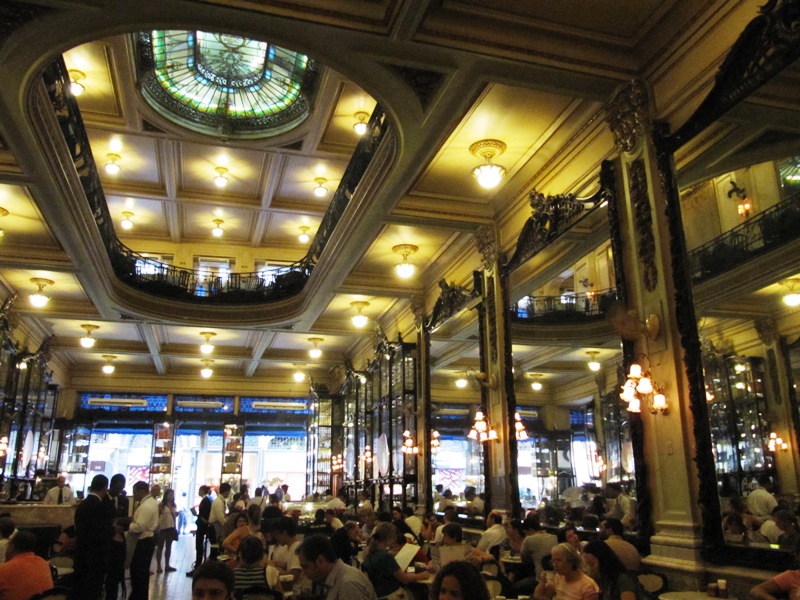
Cafe Columbo

Cafe Columbo

A mix of colonial and modern buildings fill in the narrow streets of Rio’s center. It’s on one of these streets that Cafe Columbo can be found.  After all the historic cafes of Buenos Aires I wasn’t expecting much from this one.  But I was wrong. It was beautiful, bright, elegant and airy.  Huge mirrors lined the walls so that soft light bounced throughout the cafe.  The sweets they offered weren’t as spectacular as the surroundings but they were still good.  Drinking coffee and eating a fruit tart at Cafe Columbo is a lovely way to spend an hour or two.

Sad transit breaks my heart

Sad transit breaks my heart

Just uphill from the center area is the Santa Teresa neighborhood.  We tried to take the historic streetcar that rides along the city’s old aqueduct (history AND transit, woot!) but it wasn’t running.  The strange thing is no one would tell us why.  Finally, a friendly shop owner told us that a few years ago the streetcar had flipped over killing 6 people!  It was a tragic accident that the government says they are fixing.  But they are taking too long and the residents are upset.  Hence the crying tram.  I hope the city gets their act together by 2014 because the tram is an important lifeline for the residents of Santa Teresa.

Funky Brazilian flower

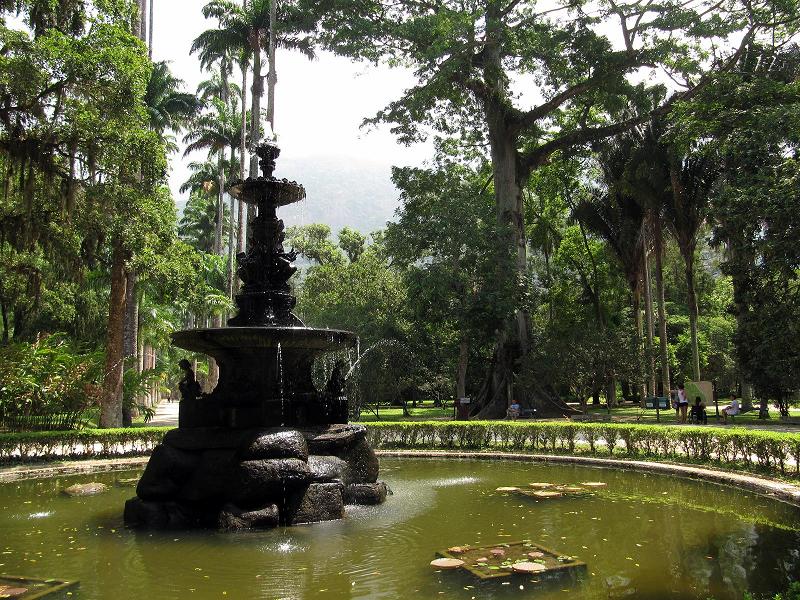
Fountain at Jardim Botanico

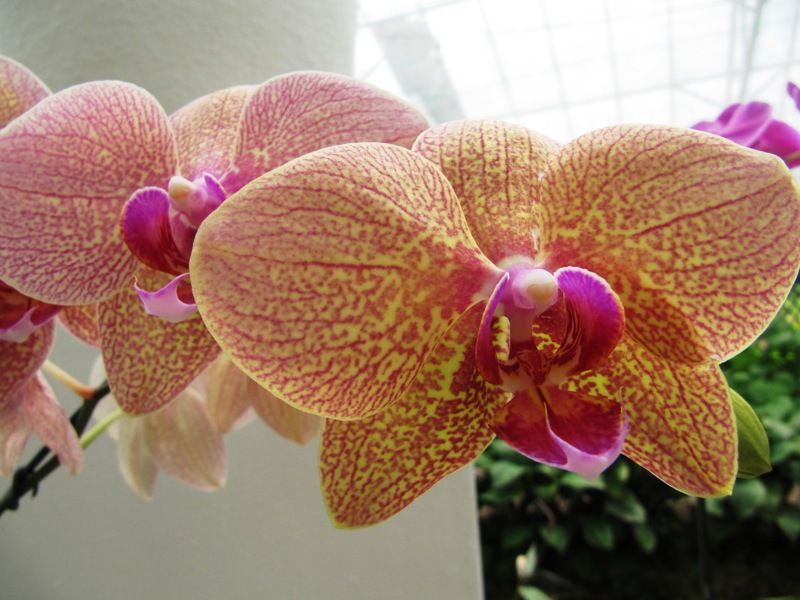
One more history lesson was at the Jardim Botanico, founded in 1808.  Since Rio was our most tropical destination, I was pretty excited about this one. It had some pretty extraordinary flowers, like the one with thick red petals and a prickly yellow center.  And of course, they had plenty of orchids.  But my favorite part turned out to be the historic central fountain.  Palm lined paths led up to it and it was backdropped by the Corcovado (the mountain with the famous Cristo statue on top of it).

Orchid at the Jardim Botanico

Orchid at the Jardim Botanico

Rio’s history added another layer to this beautiful city.

Post Navigation